Print ISSN: 2288-4637 / Online ISSN 2288-4645 doi:10.13106/jafeb.2021.vol8.no5.0679
Corporate Governance, Family Ownership, and Earnings Management: A Case Study in Indonesia*
Ari Kuncara WIDAGDO
1, Rahmawati RAHMAWATI
2, Sri MURNI
3, Ratnaningrum RATNANINGRUM
4Received: January 30, 2021 Revised: April 05, 2021 Accepted: April 15, 2021
Abstract
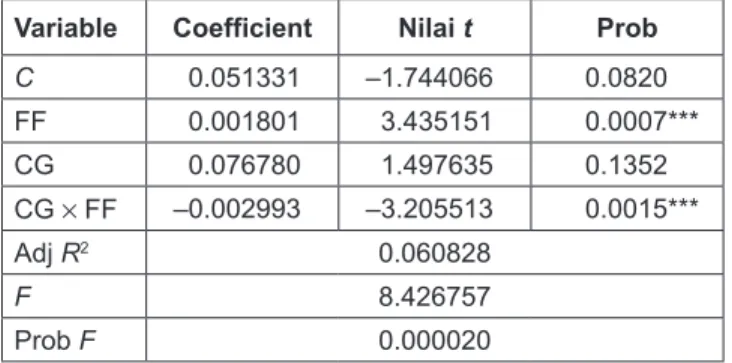
This study aims to verify family ownership’s effect on earnings management by using corporate governance as the moderation variable. This study uses data panel regression with the period of 2011–2017. Corporate governance consisted of three dimensions, namely the board of commissioners, share ownership and transparency, and disclosure and auditing. Discretionary accruals measure earnings management with a model that controls company performance. Samples are manufacturing companies listed on Indonesia Stock Exchange. Observations were conducted on 198 firms throughout the year. The results indicated that corporate governance significantly affected earnings management.
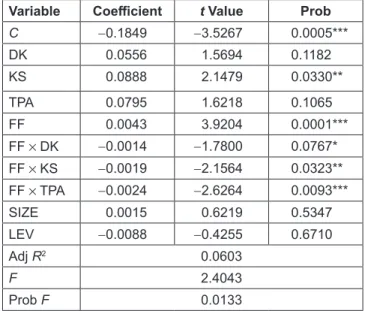
However, it declined the significance of family ownership toward earnings management. Hence, corporate governance can reduce earnings management. Furthermore, of the three components of corporate governance: the board of commissioners, shareholding, and transparency, the term shareholding precisely encouraged managers to conduct earnings management. Besides, the three core bodies of corporate governance lowered the significance of shareholding toward earnings management. This study’s findings suggest that in family firms in Indonesia, earnings management is becoming more intensive than in non-family firms. Additional tests show that there is an entrenchment effect on family firms in Indonesia. Furthermore, corporate governance leads to earnings management.
Keywords: Corporate Governance, Family Ownership, Earnings Management, and Indonesia Stock Exchange JEL Classification Code: G32, G34
the alternate within the company’s value to common equity shareholders throughout a period. Company performance appraisal based on earnings shows the importance of earnings for various parties. Investors are often only focused on earnings information without paying attention to the procedures employed to bring out earnings information (Beattie et al., 1994). This condition becomes the cause that the earnings presentation frequently does not describe the actual condition of the company’s profits. This indicates the existence of manipulation in the earnings presented, which is known as earnings management.
Manipulating information can result in irrelevant information when used as a basis for decision making, so the information becomes useless, and investors are at risk of loss. A survey conducted in America obtained evidence that 78 percent of managers used earnings management policies (Graham et al., 2005). The manipulation case of financial information also occurred in Indonesia. An earnings statement manipulation took place in 2016. The actor behind the manipulation was PT. Hanson International Tbk (MYRX).
The manipulation came into light due to the investigation of another case, a violation of Financial Accounting Standards
*Acknowledgements:
This study was funded by PNBP of Universitas Sebelas Maret in 2020.
1
First Author and Corresponding Author. Associate Professor, Faculty of Economics and Business, Universitas Sebelas Maret, Indonesia [Postal Address: Jl. Ir Sutami 36A Kentingan Jebres Surakarta Jawa Tengah 57126, Indonesia]
Email: [email protected]; [email protected]
2
Professor, Faculty of Economics and Business, Universitas Sebelas Maret, Indonesia. Email: [email protected]
3
Assistant Professor, Faculty of Economics and Business, Universitas Sebelas Maret, Indonesia. Email: [email protected]
4
Assistant Professor, STIE STEKOM, Indonesia.
Email: [email protected]
© Copyright: The Author(s)
This is an Open Access article distributed under the terms of the Creative Commons Attribution Non-Commercial License (https://creativecommons.org/licenses/by-nc/4.0/) which permits unrestricted non-commercial use, distribution, and reproduction in any medium, provided the original work is properly cited.
1. Introduction
Earnings in a financial report are vital for both the internal
and external parties of a firm. According to Nichols and
Wahlen (2004), earnings represent an accounting degree of
no. 44 on Accounting for Real Estate Activities by the same company. PT Bank Bukopin Tbk has revised its 2015, 2016, and 2017 financial statements, led the Financial Services Authority (OJK) to commence an investigation based on an allegation of financial statement manipulations. PT Garuda Indonesia (Persero) Tbk was also found to manipulate its 2018 earnings statement. This case was revealed in 2019 following an examination of its financial statements by The Audit Board of Indonesia (BPK). PT Asuransi Jiwasraya was also proven to have manipulated its financial statements through window dressing in 2006. Furthermore, in 2017 the company received an adverse opinion, after that, in 2018, Jiwasraya had negative equity. Only in early 2020, this case was exposed. PT Garuda Indonesia (Persero) Tbk managed to record a slick performance by the end of 2018, despite struggling until the third quarter of 2018. Garuda Indonesia, for instance, managed to book a net profit of US $ 809 thousand in 2018 or equivalent to Rp 11.56 billion.
Claessens, Djankov, Fan, and Lang (2002) have revealed that companies in East Asia, including Indonesia, were dominated by families. The results of other studies indicated that family control is central in most countries in the world (Prencipe et al., 2014), so the family business has a significant impact on economic growth. Family ownership has a significant effect on the type of earnings management chosen. Companies with a high proportion of family ownership and are included in the non-business group are more likely to choose efficient earnings management than other types of companies (Siregar & Utama, 2008). Bhaumik and Gregoriou (2010) brought together several aspects of ubiquitous family firms in many institutional contexts, often as part of larger business groups. They paid particular attention to the mechanisms by which families retain control over firms and the families’ incentives in control to expropriate other stakeholders by way of tunneling. They examined the role of earnings management in facilitating tunneling and evidence about earnings management incidence in family firms. Their review suggested that while the literature on these aspects of family control is rich, the contexts in which the empirical exercises are undertaken are relatively few. Hence, there is considerable opportunity to expand it to other contexts, particularly in the form of cross-country comparisons of the relative impact of agency conflicts and institutions on these issues (Salvato & Moores, 2010). This condition becomes why the researchers conduct studies because family companies dominate companies in developed and developing countries.
Paiva et al. (2016) had conducted an earnings management review in a family company based on the agency theory. They concluded that the Type II agency problem provides a better explanation for earnings management in a family company than Type I. The Type II agency problem in a family company has a greater motive to take over the minority interests than
non-family companies. Meanwhile, Type I agency problems are more likely to arise in non-family companies due to the differences between management and the owner’s interests.
The literature indicates that boards and owners use the bundle to limit the manager’s opportunism (Al-Baidhani, 2014). Paiva et al. (2016) also stated that Type II agency problems tend to be more aggressive in developing countries because of the adoption of fragile corporate governance.
This allows the founding families to get personal benefit from the minority shareholders.
Various research associated with type II agency issues was conducted, wherein the study results indicated that this hassle often takes place in family firms. Stockmans et al.
(2010) examined the preservation of socioemotional wealth as a motive for earnings management in specific types of private family firms by looking at the generational stage, the management team, and the CEO position. The authors’
results suggested that socioemotional wealth may play a role as a motive for upward earnings management when firm performance is poor. Under this condition, first-generation and founder-led private family firms seem to have greater incentive to engage in upward earnings management because of the preservation of their socioemotional wealth.
Chi, Hung, Cheng, and Tien Lieu (2015) have proved that family firms tend to do earnings management due to weak governance systems and ineffective governance practices.
One of the key traits of a professional is adherence to a rigorous set of ethical guidelines. When someone veers too far from ethical standards, their trustworthiness and judgment come into question. The ethics of professional accountants requires them to observe the laws and regulations arranging their jurisdiction and the bodies of work. Avoiding actions that could negatively affect the profession’s reputation is a reasonable commitment that business partners and others should expect. Corporate governance is used to allocate organizational sources well to maximize advantages for all stakeholders and society. Dang et al. (2020) recommended that strong corporate governance maintains investors’
confidence, whose support can help to finance further growth.
Companies who implement good corporate governance
principles into working environment life will ensure
corporate success and economic growth. They are the basis
on which companies can grow. Good corporate governance
is a key factor in underpinning the integrity and efficiency
of a company. Poor corporate governance can weaken a
company’s potential, can lead to financial difficulties, and
in some cases can cause long-term damage to a company’s
reputation. Companies that practice the main principles of good
corporate governance, especially fairness, accountability,
responsibility, and transparency, will generally outperform
other companies and are in a position to attract investors to
finance corporate growth. Concentrated ownership and the
associated pyramidal and cross-holding structures create
agency conflicts between controlling owners and outside investors. Consequently, controlling owners are perceived to report accounting information for self-interested purposes, causing the reported earnings to lose credibility to outside investors. Second, concentrated ownership is associated with low earnings informativeness as ownership concentration prevents leakage of proprietary information about the firms’
rent-seeking activities (Fan & Wong, 2002; La Porta et al., 1999; Sabir et al., 2019). Family ownership has a significant influence on the type of earnings management selected.
Firms with a high proportion of family ownership and non-business groups are more inclined to choose efficient earnings management than other types of firms. The |studies in Indonesia bring out exceptional possibilities to offer besides insights into company governance’s effectiveness in proscribing earnings management.
2. Literature Review
2.1. The Effects of Family Ownership on Earnings Management
Different ownership structures inspire firms to act differently. Specifically, family ownership will have an effect on the demand and delivery of financial reporting quality due to the impact of entrenchment and the impact of alignment effect (Wang, 2006). The traditional conventional view holds that family companies are much less efficient due to the fact focused ownership creates incentives for controlling shareholders to take wealth from minority shareholders (Shleifer & Vishny, 1986). Wang, (2006) investigated the relationship between founding family ownership and earnings quality using data from the Standard & Poor’s 500 companies. Existing literature has documented that financial reporting is of higher quality when firms have stronger corporate governance mechanisms and greater demand for quality financial reporting.
Wang (2006) has presented two competing theories on the effect of founding family ownership on earnings quality, namely the entrenchment effect and the alignment effect. The empirical results showed that, on average, founding family ownership is associated with higher earnings quality. In particular, Wang (2006) found consistent evidence that founding family ownership is associated with lower abnormal accruals, greater earnings informativeness, and less persistence of transitory loss components in earnings. Besides, the results suggested a nonlinear relation between family ownership and earnings quality (Demsetz & Lehn, 1985; Shleifer & Vishny, 1986). The alignment effect proposes that the interests between principals and agents be more aligned in family- owned companies so that agency problems are minimized (Bhaumik & Gregoriou, 2010).
Family-controlled companies should be more efficient than publicly owned companies because monitoring costs are lower in family-owned companies (Fama & Jensen, 1983). Berrone et al. (2020) found that family-controlled companies prevail, comply with precise strategies, and outperform non- family-controlled companies in countries with excessive business legitimacy index (FBLI) scores.
Anderson et al. (2003) suggested that although founding family ownership is quite prevalent and significant in U.S.
industrial companies, it did not prove that ownership of the founding family in a public company continues to lead to the takeover of the wealth of minority shareholders. Anderson et al. (2003) found that bondholders view the establishment of family ownership as an organizational structure that better protects their interests since family ownership reduced the cost of debt financing relative to non-family firms.
In developing countries, controlling ownership is often in families’ hands (Claessens et al., 2002; La Porta et al., 1999).
As the manifestation of a bigger ideology of shareholder value maximization, the idea of good governance is designed for and supported via way of means of large, manager-managed listed corporations. The increasing adoption and growing legitimacy of good governance have led to the formation of dominant institutional logic, which family firms experience pressure to adopt. Particularly strong is the pressure to increase the independence of the board of directors. While the process of change towards more independent boards may not necessarily contribute to increased economic efficiency or fully fulfill the governance needs of family firms, these firms continue to adopt such practices (Ponomareva & Ahlberg, 2016). They have a really strong commitment that they will do almost anything to ensure the company’s survival, including turning a blind eye to deviant management behaviors such as earnings management (Hasnan et al., 2013).
On the opposite hand, family management can increase the chance of expropriation of non-family minority shareholders (Cueto, 2013). Family owners can take over the company resources and appoint families who do not qualify members to key positions (Claessens et al., 2002). Brotherly rivalry, generational jealousy, unfounded compensation, and
‘irrational’ strategic choices can break a corporation’s value in a family business (Gomez-Mejia et al., 2010). However, managers of publicly indexed firms are closely influenced through powerful block holders, which include institutional investors or founders and their families (Devers et al., 2013).
Efficient structures within family-controlled companies
are less common in companies with business groups,
commonly found in Indonesia. If there is a share of capital
invested in a public company, then the takeover of minority
shareholders and opportunistic earnings management will
generally tend to arise even though the organization is
managed by the family (Siregar & Utama, 2008). According
to Stockmans et al. (2010), the issue of the low quality of
corporate disclosures, in this case, earnings management, is because of the high stage of concentration of share ownership and the dearth of marketplace monitoring which causes the high opportunity of controlling shareholders to expropriate or take over minority shareholders. So, the hypothesis that we propose is as follows:
H1: Family ownership has a positive effect on earnings management.
2.2. The Implementation of Corporate Governance on Earnings Management
Family companies tend to do earnings management.
It is proven that when reporting earnings, for example, family companies in Taiwan announced lower profit values compared to non-family companies (Chi et al., 2015). It is usually recommended in family-managed companies that a more independent board and accurate company governance can keep away from such problems (Anderson et al., 2003).
Therefore, the role of good corporate governance is vital in overseeing the running of the company (Cheng, 2014).
Corporate governance is the combination of rules, processes, or laws by which businesses are operated, regulated, or controlled. The term encompasses the internal and external factors that affect a company’s stakeholders’
interests, including shareholders, customers, suppliers, government regulators, and management (Yoshikawa et al., 2014). Earnings management problems can be minimized by monitoring the company through corporate governance (Nazir & Afza, 2018). Earnings management practices can be reduced through monitoring mechanisms to harmonize differences in owners and management interests (Jensen &
Meckling, 1976).
Most of the earlier studies measured only a few items or components of corporate governance partially, for example, size of the board of commissioners, independent commissioners, board interest commissioners, information and competence of the board of commissioners (Abdul Wahab & Holland, 2012; Khaoula & Ali, 2012). One example of study results that showed the relationship between boards and earnings management is the study of Al-Absy et al. (2020) that alerts policy-makers, stakeholders, and researchers to the influence of a board chairman serving on the audit committee in curbing earnings management.
Whereas Nguyen and Duong (2020) have found that two variables – the foreign members of the board of directors and audit committee – have an opposite effect on the earnings management behavior of Vietnamese listed banks.
Due to the importance of corporate governance in our business world today, especially after the frequent non- stop financial crises, and if only one corporate governance mechanism cannot fulfill its objectives, researchers have
recently got here with a bundle of corporate governance mechanisms, which may supplement or replace one another. The corporate governance of a company involves establishing a set of relationships between the company’s management, its board of directors, its shareholders, and other stakeholders. Companies need governance, and this part of corporate governance, where the main participants are: owners, managers, and the board of directors where the balance between these three actors determines the success of the correct governance of the company (Al-Baidhani, 2014). This study uses corporate governance measurement comprehensively, including mechanisms and principles of corporate governance using the board of commissioners, shared ownership and transparency, and disclosure and auditing. Based on the description above, it is expected that the interaction of corporate governance with family ownership reduces earnings management. Thus, it can be concluded in a hypothesis, namely:
H2: corporate governance decreases the positive influence of family ownership on earnings management.
H2a: The board of commissioners decreases the positive influence of family ownership on earnings management.
H2b: Ownership of shares decreases the positive influence of family ownership on earnings management.
H2c: Transparency, disclosure, and auditing decrease the positive influence of family ownership on earnings management.
3. Research Methods and Materials 3.1. Population and Sample
The population in this study is non-finance companies listed on the Indonesia Stock Exchange in 2011–2017. The purposive sampling method was employed as the sampling technique. It refers to determining the sample by using certain considerations. The sample criteria used must have complete available data, including:
1. Annual Report for 2011–2017
2. Financial Report for the period 2011–2017 3.2. Operational Definition and
Variable Measurement 3.2.1. Earnings Management
Watts and Zimmerman (1986) asserted that earnings
management occurs when managers have discretionary
behaviors related to accounting numbers with or without
restrictions, and such a behavior can be adopted to maximize
company value. Earnings management in this study was
measured using the Kothari Model that is also known as the performance-matched model.
To estimate the discretionary accruals, this study used a cross-sectional version of the Jones model modified by Kothari, Leone, and Wasley (2005). In this model, return on assets (ROA) is added as an additional control variable.
Previous research found that the Jones model was precisely incorrect for a company performing well or performing poorly (Dechow et al., 1995; Kothari et al., 2005).
Accruals
it= a + b(1/Assets
t–1) + cΔSales
t+
dPPE
t+ eROA
t+ μ
t(1) In Regression (1), total accruals (accruals); changes in sales (ΔSales); and gross property, plant, and equipment (PPE) are respectively defined by total assets at the beginning of the year. Where ACCR
it= total accruals for the company in the year t defined as earnings before extraordinary items of cash flow from operational activities; TA
it–1= total assets for the company in the year
t– 1observation. By using estimated parameters to the actual value for each company-year, it yields an estimation of total accruals. The difference between the total of actual accruals and estimation is a proxy for discretionary accruals (AB_DA). AB_DA shows discretionary accruals. Values for the dichotomous variable, AEM is one for firm/years with a positive AB_DA, indicating the incidence of earnings management by increasing earnings. AEM is marked as a zero value for other conditions.
3.2.2. Family Ownership
According to La Porta et al. (1999), a family-owned enterprise can be described as any enterprise wherein more family members are worried and the majority of ownership or management lies inside a family. A family business is a commercial organization in which decision-making is influenced by multiple generations of a family, related by blood or marriage or adoption, who can influence the vision of the business and the willingness to use this ability to pursue distinctive goals. In a family business, two or more management team members are drawn from the owning family. Family businesses can have owners who are not family members. Family businesses may also be managed by individuals who are not family members (Chua et al., 1999).
We categorized family-owned companies if the percentage of the share ownership is 20% or more (Claessens et al., 2002; Singla et al., 2014; Purkayastha et al., 2019), or at least one of the family members is sitting on the board (Banalieva et al., 2015). The family ownership will be measured by using a dummy variable, which puts a value of 1 for companies with family ownership and a value of 0 for companies with non-family ownership.
3.2.3. Corporate Governance
This study uses components of the corporate governance index, according to Javed and Iqbal (2006) and Yorke, Amidu, and Agyemin-Boateng (2016) who have adapted it to the context of corporate governance in Indonesia. The components include mechanisms and principles of corporate governance. The advantage of corporate governance measurement in this study is the components scale of the corporate governance index using a ratio scale whose measurement results can be distinguished, sorted, and compared. Most of the earlier studies measured only a few items or components of corporate governance partially, for example, size of the board of commissioners, independent commissioners, board interest commissioners, information and competence of the board of commissioners (Abdul Wahab & Holland, 2012; Khaoula & Ali, 2012) and using a nominal scale that is using variables dummy in measurement.
Corporate governance is measured comprehensively, including the board of commissioners, shares ownership and transparency, and disclosure and auditing. In this research, corporate governance is measured comprehensively, which includes mechanisms and principles of corporate governance using the corporate governance checklist from the research of Yorke et al. (2016); Financial Services Authority Regulation Number 33 / POJK.04 / 2014; Financial Services Authority Regulation Number 34 / POJK.03 / 2014; Regulations Financial Services Authority Number 55 / PJOK.04 / 2015;
Lin et al., 2011; (Lisowsky et al., 2010).
Based on the information above, this study’s corporate governance includes the board of commissioners items, shared ownership items and transparency, and disclosure and auditing. Furthermore, a checklist is carried out on each corporate governance item and provides a score for each item disclosed. The scoring technique uses an unweighted dichotomy scale with the criteria that if the corporate governance items are disclosed by the company;
they are assigned a number and if not given a zero. The use of an unweighted dichotomy scale aims to avoid different perceptions of items in corporate governance expressed by the company. Besides, it is also to reduce the level of subjectivity in giving weight to corporate governance items. Based on the scores obtained, the next step is to calculate corporate governance percentage using the following formula.
Discl =
ijij
∑
∑
D AD
item