Background and Purpose Patients with refractory myasthenia gravis (MG) experience on- going disease burden that might be reflected in their healthcare utilization. Here we examine the impact of refractory MG on healthcare utilization.
Methods The 825 included participants were aged 18–64 years, enrolled in the Myasthenia Gravis Foundation of America Patient Registry between July 2013 and February 2018, and had been diagnosed with MG ≥2 years previously.
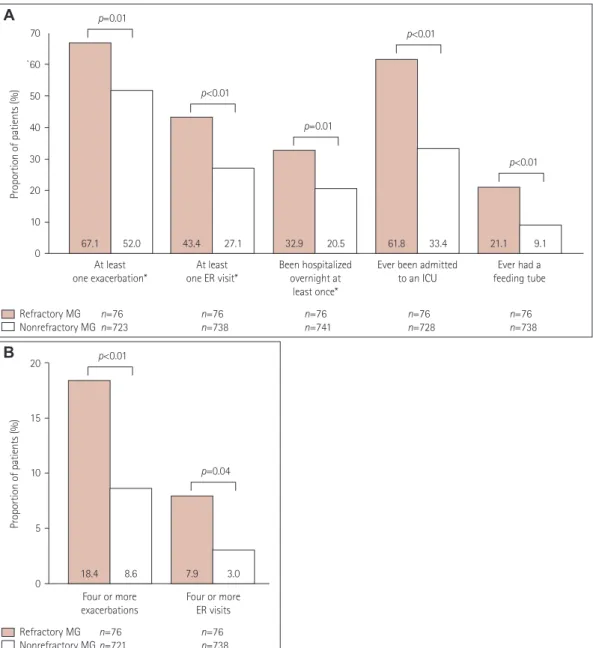
Results Participants comprised 76 (9.2%) with refractory MG and 749 (90.8%) with nonre- fractory MG. During the 6 months before enrollment, participants with refractory MG were significantly more likely than those with nonrefractory MG to have experienced at least one exacerbation [67.1% vs. 52.0%, respectively, p=0.01; odds ratio (OR)=1.882, 95% confidence interval (CI)=1.141–3.104], visited an emergency room at least once [43.4% vs. 27.1%, p<0.01;
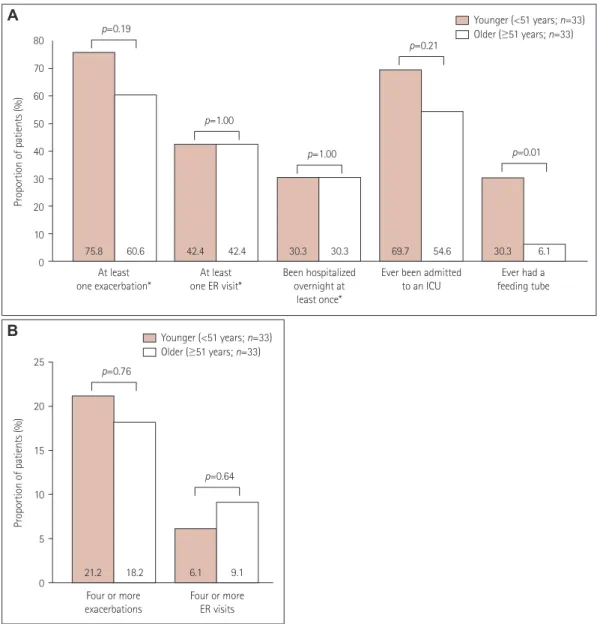
OR=2.065, 95% CI=1.276–3.343], been hospitalized overnight at least once (32.9% vs. 20.5%, p=0.01; OR=1.900, 95% CI=1.140–3.165), ever been admitted to an intensive care unit (ICU) (61.8% vs. 33.4%, p<0.01; OR=3.233, 95% CI=1.985–5.266), or ever required a feeding tube (21.1% vs. 9.1%, p<0.01; OR=2.671, 95% CI=1.457–4.896). A total of 75.8% younger females with refractory disease (<51 years, n=33) experienced at least one exacerbation, 69.7% had been admitted to an ICU, and 30.3% had required a feeding tube. For older females with refractory disease (≥51 years, n=33), 60.6%, 54.6%, and 6.1% experienced these outcomes, respectively (between-group differences were not significant).
Conclusions Refractory MG is associated with higher disease burden and healthcare utiliza- tion than nonrefractory MG.
Key Words myasthenia gravis, refractory disease, disease exacerbations, healthcare resource utilization.
Examining the Impact of Refractory Myasthenia Gravis on Healthcare Resource Utilization in the United States:
Analysis of a Myasthenia Gravis Foundation of America Patient Registry Sample
INTRODUCTION
Myasthenia gravis (MG) is a chronic rare autoimmune disease characterized by severe muscle weakness and caused by the inhibition of neuromuscular transmission due to the binding of autoantibodies at the neuromuscular junction and subsequent complement- mediated destruction of the end-plate region. The prevalence of MG has been estimated as ranging from 107 to 278 per million.1-5 MG often first manifests as weakness of ocular mus- cles (ocular MG), but approximately 70–80% of patients eventually manifest generalized disease that affects other muscles including in the face, neck, hand, and/or limb.6-9 This gen- eralized muscle weakness can lead to symptoms that include slurred speech, difficulty swal- Haichang Xina
Linda A. Harrisb Inmaculada B. Abanc Gary Cutterc
a Department of Health Care Organization and Policy, University of Alabama at Birmingham, Birmingham, AL, USA
b Alexion Pharmaceuticals, Inc., Boston, MA, USA
c Department of Biostatistics, University of Alabama at Birmingham, Birmingham, AL, USA
pISSN 1738-6586 / eISSN 2005-5013 / J Clin Neurol 2019;15(3):376-385 / https://doi.org/10.3988/jcn.2019.15.3.376
Received December 26, 2018 Revised March 8, 2019 Accepted March 12, 2019 Correspondence Inmaculada B. Aban, MS, PhD Department of Biostatistics,
University of Alabama at Birmingham, 1665 University Blvd, Birmingham, AL 35233, USA
Tel +1-205-934-2732 Fax +1-205-975-2541 E-mail [email protected]
cc This is an Open Access article distributed under the terms of the Creative Commons Attribution Non-Com- mercial License (https://creativecommons.org/licenses/by-nc/4.0) which permits unrestricted non-commercial use, distribution, and reproduction in any medium, provided the original work is properly cited.
JCN
Open Access ORIGINAL ARTICLEXin H et al.
JCN
lowing, extreme fatigue, and weakness of the upper and lower extremities, which together can have a considerable impact on the ability to perform the activities of daily living (ADL).10-12 Reportedly, 15–20% of patients experience severe weakness of the respiratory muscles that can lead to life-threatening re- spiratory failure (myasthenic crisis) and result in the need for intubation and mechanical ventilation.13,14
Acetylcholinesterase inhibitors, corticosteroids, or steroid- sparing immunosuppressive therapies (ISTs) are effective against most or all of the disease symptoms for many patients with MG.15,16 However, approximately 15% of patients do not exhibit adequate symptom control or cannot tolerate these treatments, and are therefore considered to have refractory MG.17 The criteria that are frequently used to define refrac- tory disease include 1) failure to respond to adequate doses of conventional therapies, 2) inability to reduce IST use with- out clinical relapse or a need for ongoing rescue therapy in- cluding plasma exchange (PLEX) or intravenous immuno- globulin G (IVIg), 3) severe and/or intolerable side effects to IST, 4) comorbid conditions restricting the use of conventional therapies, and 5) frequent myasthenic crises.13,18 A large num- ber of patients with refractory MG spend many years receiv- ing a range of traditional treatments in attempts to achieve disease control, before progressing to more-intensive treat- ments including chronic IVIg or PLEX.16 The health-related quality of life of patients with MG is negatively impacted when adequate symptom control cannot be achieved and by the possible burden of MG-treatment side effects.19,20
In light of the persistent clinical burden experienced by patients with refractory MG as a result of poor symptom con- trol and increased risk of MG exacerbations, it is reasonable to assume that patients with refractory MG use more health- care resources than those with nonrefractory disease. Data from a United States (US) claims database have shown that compared with those with nonrefractory MG, patients with refractory MG who experience more myasthenic exacerba- tions (including crises) visit the emergency room (ER) more often and have more inpatient hospitalizations.21 Similar find- ings have been reported for a Japanese study analyzing anon- ymized patient health records.22
The present study used patient-reported data to further examine the impact of refractory MG on healthcare resource utilization (HRU) in the USA and to corroborate the find- ings reported based on US claims data.
METHODS
Data source
The Myasthenia Gravis Foundation of America (MGFA) Pa- tient Registry is an active database of individuals with MG
that has been developed for use in research and treatment development. This registry is open to adults who are ≥18 years of age and living in the USA. Participants enter the reg- istry by completing an online enrollment survey that com- prises approximately 200 questions covering categories includ- ing participant demographics, MG history, comorbidities, past and current therapies, family history of MG, functional status [assessed using the myasthenia gravis activities of daily living scale (MG-ADL)], lifestyle, and HRU. The MG-ADL is a validated eight-item, participant-reported outcome mea- sure that was developed to assess MG symptoms and their functional impact; the MG-ADL total score ranges from 0 to 24, with a higher score indicating worse impact on ADL.10,23
The present study included data from enrollment surveys completed between July 2013 (when the MGFA Patient Reg- istry was instigated) and February 2018. Participants receive a shorter online survey to complete every 6 months after enrollment, but no data from these post enrollment surveys were included in the present study. Data were de-identified for research use, and consent for participation was provided by participants electronically at registration before they com- pleted the enrollment survey. The study was approved by the Institutional Review Board of the University of Alabama at Birmingham, Birmingham, AL, USA (IRB No. 130401004).
Use of at least two of azathioprine, cyclophosphamide, cyclosporine, methotrexate, mycophenolate, prednisone, rituximab, and/or tacrolimus
for at least 6 months each OR use of at least one of these immunosuppressants for any duration AND repeated use of intravenous immunogobulin or plasmapheresis, defined as at least
four rounds in the past year
Use of at least one of azathioprine, cyclophosphamide, cyclosporine, intravenous immunoglobulin, methotrexate, mycophenolate,
plasmapheresis, prednisone, rituximab, or tacrolimus
An MG-ADL total score of at least 6 Past treatment
and
and Current treatment
MG-ADL questionnaire
Fig. 1. Criteria used for classifying refractory MG. MG-ADL: myasthe- nia gravis activities of daily living scale.
Impact of Refractory MG on Healthcare Utilization
JCN
Participants
Participants in the MGFA Patient Registry were included in this study if they were aged ≥18 years and <65 years. This age restriction was applied in order to minimize the impact on HRU of comorbidities and mortality that may be experienced by individuals aged ≥65 years. Moreover, US residents aged
≥65 years are eligible for Medicare, a government-funded hospital insurance cover, which may increase the number of times these individuals visit a healthcare establishment for MG-related treatment.
Participants were included in this study if they reported having been diagnosed by their doctor as having MG for ≥2 years before completing the enrollment survey. This time requirement was used to ensure that adequate time had elapsed between the diagnosis of MG and inclusion in the study for the presence of refractory disease (defined as no or inadequate response to therapy) to be determined. Partici- pants were classified as having refractory MG based on their MG treatment history [previous use of at least two ISTs (aza- thioprine, cyclophosphamide, cyclosporine, methotrexate,
mycophenolate, prednisone, rituximab, and/or tacrolimus) for at least 6 months each, or previous use of at least one of these ISTs for any duration and repeated use of IVIg or PLEX (at least four rounds in the previous year)], current use of at least one MG treatment, and having an MG-ADL total score of at least 6 (Fig. 1). Participants who did not meet the previ- ous or current treatment criteria for refractory MG were con- sidered to have nonrefractory MG regardless of their MG- ADL score. Participants for whom there were no data available to enable classification as refractory or nonrefractory were excluded from this analysis.
Study measures
The primary outcome measures were the proportions of par- ticipants who had experienced at least one exacerbation, vis- ited an ER at least once, and/or been hospitalized overnight at least once during the 6 months before enrollment, and the proportions who had ever been admitted to an intensive care unit (ICU) for reasons related to MG and/or required a feed- ing tube. The numbers of MG exacerbations and ER visits Table 1. Summary of the Myasthenia Gravis Foundation of America patient registry enrollment questions used in the study
Question Predefined response categories
Your date of birth MM/DD/YYYY
Your gender Male; female
Are you of Hispanic, Latino, or Spanish origin? Yes; no
What is your current marital status? Never married; married; divorced; widowed; separated; cohabitation/domestic partner
With whom do you currently live? Alone; spouse/partner; sibling; children; parent; other relative; domestic help;
friend/companion; caregiver; in nursing or sheltered/assisted home Please select your highest level of formal education completed Less than high school; high-school degree/GED; associate’s degree; technical
degree; bachelor’s degree; postgraduate degree (master’s or doctorate) Based on the definition above,* have you had an exacerbation
in the last 6 months?
If yes, how many exacerbations have you had?
Yes; no; unsure
1; 2; 3; 4; 5 or more In the last 6 months, how many times did you visit
an emergency room?
0; 1; 2; 3; 4; 5; 6; 7; 8; 9; 10; 11; 12; 13 or more; unknown
In the last 6 months, were you admitted overnight to a healthcare institution? (including general hospital, rehabilitation hospital, or nursing home)
If yes, what were the reasons?
Yes; no
Exacerbation or worsening of MG Rehabilitation
Other MG-related problem Non-MG-related problem Have you ever been admitted to an intensive care unit for your MG? Yes; no; unsure
Have you ever required a feeding tube? Yes; no; unsure Reproduced with permission from the MGFA.
*Definition of an exacerbation of MG: development of new symptoms or worsening of existing symptoms that lasted >7 days and occurred ≥30 days after the last exacerbation. In an exacerbation, MG symptoms generally worsen over a period of days to weeks. They then improve over several weeks or months, usually with specific treatment. An exacerbation can be associated with several different symptoms that worsen simultaneously.
GED: general equivalency diploma, MG: myasthenia gravis.
Xin H et al.
JCN
during the 6 months before enrollment were also recorded.
The numbers of exacerbations and ER visits were each cate- gorized into 0–3 and ≥4 in order to distinguish between lower and higher disease burdens. The enrollment survey de- fined an exacerbation of MG as the development of new symptoms or the worsening of existing symptoms that lasted
>7 days and occurred ≥30 days after the last exacerbation.
Other variables of interest due to their potential association with HRU included age, gender, ethnicity, living arrangement, marital status, and education level. The questions relating to the demographic and HRU data extracted for this study are listed in Table 1.
Statistical analyses
Summary statistics were calculated for all study variables. Bi- variate analyses were used to compare demographic, exacer- bation, and HRU data for the refractory- and nonrefractory- MG groups and to compare exacerbation and HRU data between younger and older female participants with refrac- tory MG. χ2 tests (or Fisher’s exact tests for small samples) were used for categorical variables, and t-tests were used for continuous variables.
Based on the median age of the study population (51 years), participants were classified as being younger if they were aged <51 years and older if they were aged ≥51 years. Anal- yses were based on fitting a logistic model for binary out- Fig. 2. Flow chart showing selection process for the study sample.
MG-ADL: myasthenia gravis activities of daily living scale.
comes, except when analyzing the numbers of exacerbations and ER visits, for which proportional-odds models for or- dinal outcomes were fitted. Unadjusted and adjusted models were fitted to examine the effects of covariates on the associ- ation between refractory status and the exacerbation and HRU outcomes. The covariates included were the living ar- rangement, marital status, age (with 51 years as the cutoff), gender, ethnicity, and education level. Subgroup analyses by age within the refractory group were applied to female par- ticipants only, since an equivalent subgroup analysis with male participants only was not possible due to the small number of males with refractory disease (n=10). No unknown or miss- ing-value categories for any of the outcomes were included in the statistical analyses. Probability values of p<0.05 were deemed significant. Analyses were performed using SAS® (version 9.4, SAS Institute, Cary, NC, USA).
RESULTS
The flow of participants through the sample selection process is summarized in Fig. 2. The 2,341 participants in the MGFA Patient Registry included 825 participants who met the in- clusion criteria of this study: 76 (9.2%) were classified as hav- ing refractory MG based on the criteria defined for this study, and 749 participants (90.8%) were classified as having non- refractory MG (Table 2). The bivariate analyses revealed no statistically significant differences between the refractory and nonrefractory groups with regard to demographic data in- cluding age and gender (Table 2).
The bivariate analyses revealed statistically significant as- sociations between refractory MG and the outcomes for ex- acerbations and HRU. During the 6 months before enroll- ment, a significantly higher proportion of participants with refractory MG than those with nonrefractory MG had expe- rienced at least one MG exacerbation, had visited an ER at least once, or had been hospitalized at least once (Fig. 3A). Fur- thermore, a higher proportion of participants with refractory MG than those with nonrefractory MG had experienced at least four exacerbations or had visited an ER at least four times (Fig. 3B). Compared with participants with nonrefrac- tory MG, a significantly higher proportion of participants with refractory MG had been admitted to an ICU at any time for reasons associated with MG or had previously required a feeding tube (Fig. 3A).
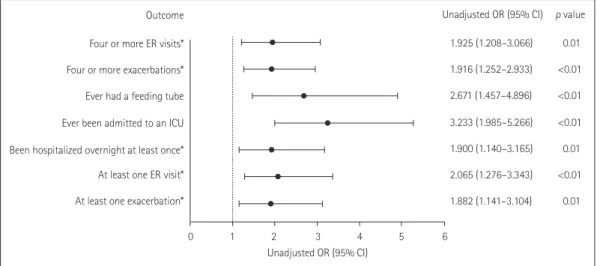
Unadjusted regression analyses confirmed that partici- pants with refractory MG were significantly more likely than those with nonrefractory MG to have experienced at least one MG exacerbation, visited an ER at least once, been hos- pitalized at least once, been admitted to an ICU at any time for reasons associated with MG, or previously required a
Participants aged <18 or
≥65 years excluded (n=841)
Participants without MG diagnosis excluded (n=28)
Participants diagnosed with MG <2 years previously
excluded (n=589) Participants with missing values
for MG-ADL components excluded (n=4) Participants with missing
treatment duration information excluded (n=21) Participants meeting refractory
treatment criteria but with an MG-ADL total score <6
excluded (n=33) July 2013–February 2018
starting sample n=2,341
n=1,500
n=1,472
n=883
n=879
n=858
n=825
Impact of Refractory MG on Healthcare Utilization
JCN
feeding tube (Fig. 4). Similarly, compared with participants with nonrefractory MG, participants with refractory MG were significantly more likely to have experienced at least four exacerbations or had visited an ER at least four times (Fig. 4).
After adjusting for other demographic variables such as age, gender, ethnicity, marital status, and education level, the estimated odds ratios were similar to the unadjusted odds ratios across all outcome measures (data not shown).
Among the 66 female participants with refractory MG, a significantly higher proportion of the younger ones (n=33) than older ones (n=33) had previously required a feeding tube (Fig. 5A). A total of 75.8% of younger female participants with refractory disease experienced at least one exacerbation
and 69.7% had experienced an ICU admission (Fig. 5A). For older female participants with refractory disease, 60.6% and 54.6% had experienced at least one exacerbation or ICU ad- mission, respectively (Fig. 5A). Just over a fifth of younger female participants (21.2%) experienced at least four exacer- bations and 6.1% visited an ER at least four times (Fig. 5B).
For older female participants, 18.2% experienced at least four exacerbations and 9.1% visited an ER at least four times (Fig.
5B). The between-group differences were not significant (Fig. 5).
DISCUSSION
This study was designed to examine the impact of refractory Table 2. Participant demographics
Characteristic Refractory MG (n=76) Nonrefractory MG (n=749) p
Age at time of survey completion, years 48.0±11.4 49.3±11.1 0.31
Age group, years 0.51
18–24 1 (1.3) 14 (1.9)
25–34 12 (15.8) 81 (10.8)
35–44 19 (25.0) 156 (20.8)
45–54 17 (22.4) 216 (28.8)
55–64 27 (35.5) 282 (37.7)
Female 66 (86.8) 590 (78.8) 0.10
Ethnicity 0.47
Hispanic/Latino/Spanish 6 (7.9) 43 (5.7)
Not Hispanic/Latino/Spanish 70 (92.1) 697 (93.1)
Missing/unknown 0 9 (1.2)
Marital status* 0.55
Married or cohabiting/domestic partner 47 (61.8) 477 (63.7)
Unmarried or not cohabiting/no domestic partner 28 (36.8) 245 (32.7)
Missing/unknown 1 (1.3) 27 (3.6)
Living arrangement† 0.39
With others 68 (89.5) 621 (82.9)
Alone 8 (10.5) 102 (13.6)
Missing/unknown 0 26 (3.5)
Education level 0.37
Not graduated from high school 3 (3.9) 10 (1.3)
High-school degree/GED 23 (30.3) 200 (26.7)
Associate’s degree 13 (17.1) 117 (15.6)
Technical degree 6 (7.9) 44 (5.9)
Bachelor’s degree 14 (18.4) 194 (25.9)
Postgraduate degree 17 (22.4) 177 (23.6)
Missing/unknown 0 7 (0.9)
MG-ADL total score 9.6±2.7 6.7±4.0 <0.01
Data are mean±standard deviation or n (%) values. Frequency or mean values of study variables were compared between participants with refractory and nonrefractory MG using χ2 tests for categorical variables and t-tests for continuous variables. p values were calculated after excluding participants with unknown/missing data.
*Six predefined options, which were simplified into married or unmarried, †Ten predefined options, which were simplified into living alone or with others.
GED: general equivalency diploma, MG-ADL: myasthenia gravis activities of daily living scale.
Xin H et al.
JCN
MG compared with nonrefractory MG on the number of ex- acerbations and HRU in the USA using patient-reported data extracted from the MGFA Patient Registry. Our findings from the bivariate and unadjusted regression analyses sup- port the hypothesis that patients with refractory MG have more exacerbations and utilize more healthcare resources than those with nonrefractory MG.
There is currently no widely accepted definition of refrac- tory MG.18 In the present study we considered a patient to have refractory MG if they experienced persistent symptoms
after receiving at least two ISTs or at least one IST and re- peated use of IVIg or PLEX in the past, and were currently receiving treatment and still had an MG-ADL total score of at least 6 (Fig. 1). This conservative definition is similar to those used in other studies.18,24
Participants with refractory MG accounted for 9.2% of the individuals in this study, which is similar to the proportions included in other studies.17,21 The participant demographics, including age and gender, were not significantly different be- tween the refractory and nonrefractory MG groups. The high
Refractory MG n=76 n=76
Nonrefractory MG n=721 n=738
20
15
10
5
0
Proportion of patients (%)
Four or more exacerbations
Four or more ER visits
18.4 8.6 7.9 3.0
p<0.01
p=0.04
B
67.1 52.0 43.4 27.1 32.9 20.5 61.8 33.4 21.1 9.1
70
`60
50 40
30 20
10 0
Proportion of patients (%)
At least
one exacerbation* At least
one ER visit* Been hospitalized overnight at
least once*
Ever been admitted
to an ICU Ever had a
feeding tube p=0.01
p<0.01
p=0.01
p<0.01
p<0.01
A
Refractory MG n=76 n=76 n=76 n=76 n=76
Nonrefractory MG n=723 n=738 n=741 n=728 n=738
Fig. 3. Exacerbations in and healthcare resource utilization by participants with refractory MG and nonrefractory MG (A) and numbers of exacer- bations and ER visits during the 6 months before enrollment in participants with refractory and nonrefractory MG (B). Frequencies of study variables were compared between participants with refractory and nonrefractory MG using χ2 tests for categorical variables and the number of exacerbations, and Fisher’s exact test for the number of ER visits. p values are for comparisons between the refractory- and nonrefractory-MG groups, and were calculated after excluding data from participants with unknown/missing data. *During the 6 months before enrollment. ER: emergency room, ICU:
intensive care unit, MG: myasthenia gravis.
Impact of Refractory MG on Healthcare Utilization
JCN
proportion of females in the study population (80%) may have resulted from excluding participants aged ≥65 years, be- cause females have an earlier mean age at MG onset6,25 and so they will constitute a higher proportion of a young popu- lation than males.
Considering the study population as a whole, over half of the participants (53.4%) reported experiencing an exacerba- tion and almost one-third (28.6%) had visited an ER at least once during the 6 months before enrollment. The findings of this study highlight not only the burden of disease experi- enced by patients with refractory MG, but also the impact of MG on patients with nonrefractory MG. The current study corroborates the findings of previous studies that examined the impact of refractory MG on HRU based on claims data- bases and patient health records.21,22 The present study found that more participants with MG refractory to conventional therapies had experienced exacerbations, ER visits, and over- night hospitalizations during the 6 months before enrollment.
Additionally, participants with refractory-MG were more like- ly than those with nonrefractory MG to have ever been ad- mitted to an ICU for reasons associated with MG, or to have required a feeding tube.
MG is associated with an increased risk of comorbidities including dysthyroidism, dyslipidemia, diabetes mellitus, and other autoimmune diseases (e.g., autoimmune thyroiditis, systemic lupus erythematosus, and rheumatoid arthritis), and the presence of a comorbid disease has been associated with more-frequent myasthenic crises and ER visits.26-28 It might be expected that the occurrence of comorbidities—
and therefore HRU—would increase with age. In the pres- ent study, the proportions of younger and older female par-
ticipants with refractory MG who visited an ER at least four times were 6.1% and 9.1% respectively (p=0.64), although it should be noted that this result was not statistically signifi- cant and that participants in this study were aged <65 years.
A total of 75.8% of younger female participants with refractory disease experienced at least one exacerbation, and 69.7% had experienced an ICU admission. For older female participants with refractory disease, 60.6% and 54.6% had experienced at least one exacerbation or ICU admission, respectively (be- tween-group differences were not significant; p=0.19 and p=
0.21, respectively). A significantly higher proportion of young- er female participants had ever required a feeding tube (30.3%
vs. 6.1%; p=0.01). In addition to age, gender has previously been shown to impact the clinical course of MG.6,25 However, the small number of male participants with refractory MG in this study made it impossible to analyze the effect of age on HRU in males with MG.
This study did not examine the costs associated with treat- ing MG, or the cost implications of refractory MG compared with nonrefractory MG. A US medical claims database re- view of 1,288 patients with MG found that the cost of treating MG was much higher than the cost of treating diseases such as multiple sclerosis, migraine, and Alzheimer’s disease.29 Al- though further research is needed into the difference in the costs of treating refractory and nonrefractory MG, the in- creased HRU of patients with refractory MG suggests higher associated costs.
Some limitations of the present analyses should be noted.
The data collected in the MGFA Patient Registry are self-re- ported, and clinical diagnoses and documented therapies were not confirmed by a healthcare professional. Some par-
Outcome Four or more ER visits*
Four or more exacerbations*
Ever had a feeding tube Ever been admitted to an ICU Been hospitalized overnight at least once*
At least one ER visit*
At least one exacerbation*
0 1 2 3 4 5 6 Unadjusted OR (95% CI)
Unadjusted OR (95% CI) p value 1.925 (1.208–3.066) 0.01 1.916 (1.252–2.933) <0.01 2.671 (1.457–4.896) <0.01 3.233 (1.985–5.266) <0.01 1.900 (1.140–3.165) 0.01 2.065 (1.276–3.343) <0.01 1.882 (1.141–3.104) 0.01
Fig. 4. Unadjusted ordinal logistic model examining the impact of refractory MG on exacerbations and healthcare resource utilization. *During the 6 months before enrollment. Analyses were based on fitting logistic models for binary outcomes except for when analyzing the numbers of exacer- bations and ER visits, for which proportional-odds models for ordinal outcomes were fitted. CI: confidence interval, ER: emergency room, ICU: in- tensive care unit, MG: myasthenia gravis, OR: odds ratio.
Xin H et al.
JCN
ticipants with uncontrolled MG might not have met all of the study-specific criteria for having refractory disease. The inclu- sion of such participants in the nonrefractory-MG group would have reduced the magnitude of differences observed between the refractory- and nonrefractory-MG groups. Con- versely, we acknowledge that some of the participants who met the criteria for refractory disease had uncontrolled disease for reasons such as inadequate treatment dose, short time receiv- ing their current treatment, or poor treatment compliance.
Participants enrolled in the MGFA Patient Registry might constitute a self-selected sample of participants with MG who are more inclined to seek medical information, or who have
a higher education level, higher socioeconomic status, and better Internet access, thereby facilitating their participation.
This may be reflected in the characteristics of the participants in the MGFA Patient Registry, notably the high proportion of females, who are in general more likely than males to access healthcare,30 and the differing ethnicity distribution com- pared with the general MG population in the USA. It is also possible that patients with refractory MG are more motivat- ed to participate in the registry, which may have resulted in the proportion of participants with refractory disease in this study being higher than that in the general MG population.
Such self-selection may reduce the generalizability of these
75.8 60.6 42.4 42.4 30.3 30.3 69.7 54.6 30.3 6.1
80 70 60 50 40 30 20 10 0
Proportion of patients (%)
At least one exacerbation*
At least one ER visit*
Been hospitalized overnight at
least once*
Ever been admitted to an ICU
Ever had a feeding tube p=0.19
p=1.00
p=1.00
p=0.21
p=0.01
25
20
15
10
5
0
Proportion of patients (%)
Younger (<51 years; n=33) Older (≥51 years; n=33)
Younger (<51 years; n=33) Older (≥51 years; n=33)
Four or more exacerbations
Four or more ER visits
21.2 18.2 6.1 9.1
p=0.76
p=0.64
A
B
Fig. 5. Exacerbations in and healthcare resource utilization by younger and older female participants with refractory MG (A) and numbers of ex- acerbations and ER visits during the 6 months before enrollment in younger and older female participants with refractory MG (B). Frequencies of study variables were compared between participants with refractory and nonrefractory MG using χ2 tests for categorical variables and the number of exacerbations, and using Fisher’s exact test for the number of ER visits. p values are for comparisons between the refractory- and nonrefracto- ry-MG groups, and were calculated after excluding data from participants with unknown/missing data. *During the 6 months before enrollment.
ER: emergency room, ICU: intensive care unit, MG: myasthenia gravis.
Impact of Refractory MG on Healthcare Utilization
JCN
findings to the wider MG population.
Participants were asked to provide the total number of times that they had visited an ER during the 6 months before enrollment, with no instruction to include only ER visits for reasons relating to their MG. In addition, participants were given the option to select the reason for any overnight hospi- talizations, which included exacerbation or worsening of MG, rehabilitation, other MG-related problem, or non-MG-re- lated problems. The inclusion of ER visits and overnight hospi- talizations not related to MG might confound the analyses.
Although only exacerbations, ER visits, and overnight hos- pitalizations that had occurred during the 6 months before enrollment were recorded, no time restriction was applied to the history of ICU admission or feeding-tube requirement in the enrollment survey. Future studies should investigate all HRU using the same time frame. Because data regarding age in the refractory group were limited to female participants aged <65 years, these analyses might not be generalizable to the wider population of patients with refractory MG. How- ever, this study builds on the growing evidence that patients with refractory MG suffer from a higher disease burden and negative impacts on their daily lives than patients with non- refractory MG. Further research is required to assess the cost implications of increased HRU due to refractory MG.
In conclusion, this analysis of US participants in the MGFA Patient Registry has highlighted the burden of MG on both patients with refractory and patients with nonrefractory dis- ease. More specifically, this study found that participants with MG that is refractory to traditional therapies experience more disease-related morbidities—which are associated with higher levels of HRU—than participants with nonrefractory MG.
There remains a need for therapies that are effective against refractory MG, improve outcomes, and reduce the HRU by these patients.
Conflicts of Interest
Linda A. Harris is employed by Alexion Pharmaceuticals, Inc.; Gary Cut- ter, Haichang Xin, and Inmaculada B. Aban are employed by the Univer- sity of Alabama at Birmingham, which received financial support from Alexion for this study. Gary Cutter is also President of Pythagoras, Inc., a private consulting company located in Birmingham, AL, USA, and is Pro- fessor of Biostatistics at the School of Public Health at the University of Alabama at Birmingham. Gary Cutter has served as a member of consult- ing or advisory boards (Argenx, Atara Biotherapeutics, Axon, Biogen, BrainStorm Cell Therapeutics, Charleston Laboratories, Click Therapeu- tics, Genentech, Genzyme, GW Pharmaceuticals, Klein Buendel, MedDay Pharmaceuticals, MedImmune, Novartis, Roche, SciFluor Life Sciences, Somahlution, Teva, TG Therapeutics, and UT Houston), and data and safety monitoring boards [AMO Pharma, BioLineRx, Hisun USA, and Horizon Pharma, Merck, Merck/Pfizer, National Heart, Lung, and Blood Institute (NHLBI; Protocol Review Committee), Neurim Pharmaceuticals, National Institute of Child Health and Human Development (NICHD;
OPRU Oversight Committee), Novartis, OPKO Biologics, Orphazyme, Reata Pharmaceuticals, Receptos/Celgene, Sanofi-Aventis, and Teva].
Acknowledgements
This study was funded by Alexion Pharmaceuticals. The University of Alabama at Birmingham, Birmingham, AL, USA received financial sup- port from Alexion to provide the raw data, statistical analyses, and data interpretation for the study. The authors would like to thank the Myas- thenia Gravis Foundation of America (MGFA) for establishing the My- asthenia Gravis Patient Registry and for its continued support, the MGFA Patient Registry Committee, and the coordinating center at the University of Alabama at Birmingham. The authors would also like to thank Róisín Armstrong, Kelley Capocelli, Kenji Fujita, and Sivani Pas- karadevan (Alexion Pharmaceuticals) for critical review of the manu- script. Editorial assistance for this manuscript was provided by Dr Vicky Sanders, Oxford PharmaGenesis, Oxford, UK, with funding from Alex- ion Pharmaceuticals.
REFERENCES
1. Heldal AT, Owe JF, Gilhus NE, Romi F. Seropositive myasthenia gra- vis: a nationwide epidemiologic study. Neurology 2009;73:150-151.
2. Fang F, Sveinsson O, Thormar G, Granqvist M, Askling J, Lundberg IE, et al. The autoimmune spectrum of myasthenia gravis: a Swedish population-based study. J Intern Med 2015;277:594-604.
3. Cetin H, Fülöp G, Zach H, Auff E, Zimprich F. Epidemiology of my- asthenia gravis in Austria: rising prevalence in an ageing society. Wien Klin Wochenschr 2012;124:763-768.
4. Park SY, Lee JY, Lim NG, Hong YH. Incidence and prevalence of my- asthenia gravis in Korea: a population-based study using the National Health Insurance claims database. J Clin Neurol 2016;12:340-344.
5. Murai H, Yamashita N, Watanabe M, Nomura Y, Motomura M, Yo- shikawa H, et al. Characteristics of myasthenia gravis according to onset-age: Japanese nationwide survey. J Neurol Sci 2011;305:97-102.
6. Grob D, Brunner N, Namba T, Pagala M. Lifetime course of myas- thenia gravis. Muscle Nerve 2008;37:141-149.
7. Robertson NP, Deans J, Compston DA. Myasthenia gravis: a popula- tion based epidemiological study in Cambridgeshire, England. J Neu- rol Neurosurg Psychiatry 1998;65:492-496.
8. Melzer N, Ruck T, Fuhr P, Gold R, Hohlfeld R, Marx A, et al. Clinical features, pathogenesis, and treatment of myasthenia gravis: a supple- ment to the Guidelines of the German Neurological Society. J Neurol 2016;263:1473-1494.
9. Zieda A, Ravina K, Glazere I, Pelcere L, Naudina MS, Liepina L, et al.
A nationwide epidemiological study of myasthenia gravis in Latvia.
Eur J Neurol 2018;25:519-526.
10. Muppidi S, Wolfe GI, Conaway M, Burns TM; MG Composite and MG-QoL15 Study Group. MG-ADL: still a relevant outcome measure.
Muscle Nerve 2011;44:727-731.
11. Hoffmann S, Ramm J, Grittner U, Kohler S, Siedler J, Meisel A. Fa- tigue in myasthenia gravis: risk factors and impact on quality of life.
Brain Behav 2016;6:e00538.
12. Paul RH, Cohen RA, Goldstein JM, Gilchrist JM. Fatigue and its im- pact on patients with myasthenia gravis. Muscle Nerve 2000;23:1402- 1406.
13. Silvestri NJ, Wolfe GI. Treatment-refractory myasthenia gravis. J Clin Neuromuscul Dis 2014;15:167-178.
14. Wendell LC, Levine JM. Myasthenic crisis. Neurohospitalist 2011;1:
16-22.
15. Conti-Fine BM, Milani M, Kaminski HJ. Myasthenia gravis: past, present, and future. J Clin Invest 2006;116:2843-2854.
16. Sanders DB, Wolfe GI, Benatar M, Evoli A, Gilhus NE, Illa I, et al. In- ternational consensus guidance for management of myasthenia gra- vis: executive summary. Neurology 2016;87:419-425.
17. Suh J, Goldstein JM, Nowak RJ. Clinical characteristics of refractory myasthenia gravis patients. Yale J Biol Med 2013;86:255-260.
18. Mantegazza R, Antozzi C. When myasthenia gravis is deemed refrac-
Xin H et al.
JCN
tory: clinical signposts and treatment strategies. Ther Adv Neurol Dis- order 2018;11:1756285617749134.
19. Boldingh MI, Dekker L, Maniaol AH, Brunborg C, Lipka AF, Niks EH, et al. An up-date on health-related quality of life in myasthenia gravis-results from population based cohorts. Health Qual Life Out- comes 2015;13:115.
20. Utsugisawa K, Suzuki S, Nagane Y, Masuda M, Murai H, Imai T, et al.
Health-related quality-of-life and treatment targets in myasthenia gra- vis. Muscle Nerve 2014;50:493-500.
21. Engel-Nitz NM, Boscoe A, Wolbeck R, Johnson J, Silvestri NJ. Burden of illness in patients with treatment refractory myasthenia gravis.
Muscle Nerve 2018;58:99-105.
22. Murai H, Hasebe M, Murata T, Utsugisawa K. Clinical burden and healthcare resource utilization associated with myasthenia gravis: as- sessments from a Japanese claims database. Clin Exp Neuroimmunol 2019;10:61-68.
23. Wolfe GI, Herbelin L, Nations SP, Foster B, Bryan WW, Barohn RJ.
Myasthenia gravis activities of daily living profile. Neurology 1999;52:
1487-1489.
24. Howard JF Jr, Utsugisawa K, Benatar M, Murai H, Barohn RJ, Illa I, et al. Safety and efficacy of eculizumab in anti-acetylcholine receptor an-
tibody-positive refractory generalised myasthenia gravis (REGAIN): a phase 3, randomised, double-blind, placebo-controlled, multicentre study. Lancet Neurol 2017;16:976-986.
25. Lee I, Kaminski HJ, Xin H, Cutter G. Gender and quality of life in myasthenia gravis patients from the myasthenia gravis foundation of America registry. Muscle Nerve 2018;58:90-98.
26. Gilhus NE, Nacu A, Andersen JB, Owe JF. Myasthenia gravis and risks for comorbidity. Eur J Neurol 2015;22:17-23.
27. Diaz BC, Flores-Gavilán P, García-Ramos G, Lorenzana-Mendoza NA. Myasthenia gravis and its comorbidities. J Neurol Neurophysiol 2015;6:1-5.
28. Tanovska N, Novotni G, Sazdova-Burneska S, Kuzmanovski I, Bosh- kovski B, Kondov G, et al. Myasthenia gravis and associated diseases.
Open Access Maced J Med Sci 2018;6:472-478.
29. Guptill JT, Marano A, Krueger A, Sanders DB. Cost analysis of myas- thenia gravis from a large U.S. insurance database. Muscle Nerve 2011;
44:907-911.
30. Bertakis KD, Azari R, Helms LJ, Callahan EJ, Robbins JA. Gender dif- ferences in the utilization of health care services. J Fam Pract 2000;
49:147-152.