• 검색 결과가 없습니다.

Anti-inflammatory and Anti-oxidative Effects of Alpiniae Oxyphyllae Fructus Hot Aqueous Extract in Lipopolysaccharide (LPS)-stimulated Macrophages

N/A
N/A
Protected

Academic year: 2021

Share "Anti-inflammatory and Anti-oxidative Effects of Alpiniae Oxyphyllae Fructus Hot Aqueous Extract in Lipopolysaccharide (LPS)-stimulated Macrophages"

Copied!
9
0
0

로드 중.... (전체 텍스트 보기)

전체 글

(1)

Anti-inflammatory and Anti-oxidative Effects of Alpiniae Oxyphyllae Fructus Hot Aqueous Extract in Lipopolysaccharide (LPS)-stimulated Macrophages

Na Young Jo

1

, Pyeong Jae Lee

2

and Jeong Du Roh

1,*

1

Dept. of Acupuncture & Moxibustion Medicine, Je-Cheon Hospital of Traditional Korean Medicine, Semyung University

2

School of Oriental Medicine and Bio Convergence Sciences, Semyung University

[Abstract]

Objectives : AlpiniaeoxyphyllaeFructus (AOF)isanherbalmedicine,whichhasbeenusedfor thetreatmentoffatigue,chills,andpoorphysicalconditions.Theobjectiveofthisstudywas toinvestigatetheanti-inflammatoryandanti-oxidativeeffectsofAOFhotaqueousextract.

Methods : ThecytotoxicityofAOFextractwasevaluatedusingtheMTTassay.Nitricoxide(NO) productionwasmeasuredbytheGriessreaction.ProstaglandinE

2

(PGE

2

)productionwas measuredbyacommercialcompetitiveenzymeimmunoassay.Cytokineproduction(IL-1tion co6,andTNF-F-wasmeasuredbyELISA.

Theanti-oxidativeeffectofAOFextractswasmeasuredbytheDPPHmethod.Polyphenoland flavonoidcontentsweremeasuredbyFolin-Ciocalteu’sphenolreagentandaluminumchloride, respectively.

Results : AOFhotaqueousextractdidnotshowtoxicityatdosesof25,50,100,and200µg/mL.

AOFextractsignificantlyinhibitedNOproductionatdosesof100and200µg/mL.PGE

2

pro- ductionwasinhibitedbyAOFextracttreatmentatdosesof100and200µg/mL.AOFextracts reducedIL-6productioninadose-dependentmanner.IL-1entmaTNF-F-1entmannerdIL- 6productioninuctionatdosesof100andµg/mL.TheDPPHfreeradicalscavengingcapability wasabove50%at200µg/mL.

Conclusion : ThisstudysuggeststhatAOFhotaqueousextractmayexertanti-inflammatoryand anti-oxidativeeffectsinadose-dependentmanner.Furtherstudiesarerequiredforvalidating thesafetyandefficacyofAOF.

✱ Correspondingauthor:Dept.ofAcupuncture&MoxibustionMedicine,Je-CheonHospitalof TraditionalKoreanMedicine,SemyungUniversitySemyungro66,Sinwoul-dong,Jecheoncity, Chungbuk,27136,RepublicofKorea

Tel:+82-43-649-1816 E-mail:[email protected] Key words :

Alpiniaeoxyphyllae Fructus;

Anti-inflammation;

Antioxidant;

HotAqueousExtract;

KoreanMedicine

Received : 2017. 04. 20.

Revised : 2017. 05. 02.

Accepted : 2017. 05. 08.

On-line : 2017. 05. 20.

ThisisanOpen-AccessarticledistributedunderthetermsoftheCreativeCommonsAttributionNon-CommercialLicense(http://creativecommons.org/licenses/by- nc/3.0)whichpermitsunrestrictednon-commercialuse,distribution,andreproductioninanymedium,providedtheoriginalworkisproperlycited.

TheAcupuncture istheJournalofKoreanAcupuncture&MoxibustionMedicineSociety.(http://www.TheAcupuncture.org)

Copyright2017KAMMS.KoreanAcupuncture&MoxibustionMedicineSociety.Allrightsreserved.

(2)

I. Introduction

Inflammation is an important immune response that occurs when the body tissues are damaged.

Thisreactionisadefenseprocessagainstpathogens.

Inflammatory reactions are accompanied by pain, fever, and edema

1)

, and can lead to pain in sprains, tendinitis, aponeurositis, gout, and osteoarthritis

2)

. Alpiniae oxyphyllae Fructus (AOF) is the mature fruit of Alpinia Oxyphylla Miq. belonging to the family Zingiberaceae. The main constituents of AOF are Yakuchinone A and Yakuchinone B. In Korean medicine, AOF has been widely used for the treatment of fatigue, chills, and wasting dis- ease

3)

.

Previous studies have reported muscle- relaxing

4)

, anti-allergic

5)

, nephroprotective

6)

, neu- ronal cell protective

7-10)

, bone loss inhibitory

11)

, anti-cancer

12,13)

, and anti-aging

14)

effects of AOF.

Many studies have suggested that AOF might exert anti-inflammatory and anti-oxidative effects. However, researches on the anti-inflam- matory and anti-oxidative effects of AOF are scarce. In this study, we aimed to investigate the effects of AOF hot aqueous extract by evaluating nitric Oxide (NO) and Prostaglandin E

2

(PGE

2

) pro- duction. To understand the mechanism underlying the anti-inflammatory activity of AOF clearly, the levels of interleukin 1 beta (IL-1terleuki, and tumor necrosis factor a (TNF-NF--tumor necrosis factor atoryOF hot aquethe anti-oxidative effect, weassessed1,1-diphenyl-2-picrylhydrazyl(DPPH) radical scavenging activity in macrophages. The amount of polyphenol and flavonoid present in AOF were also measured. We observed that AOF extract exerted significant anti-inflammatory and anti-oxidative effects.

II. Experimental materials and methods

1.Materials

AOF used in the experiment was purchased from Omniherb (Kyongbuk, Korea). The method of ex- traction was as follows: AOF (200 g) was mixed with 2 L distilled water and boiled for 4 h at 100℃.

The extract was filtered through a filter paper and centrifuged at 3000 x g. Then, a secondary filtra- tion was carried out through a 0.03 mm filter paper (Nalgene, New York, USA). The filtrate was concentrated to 100 mL and frozen at -80℃. The filtrate was freeze-dried for 7 days using a freeze- drying system (Labconco, USA). AOF extract (15.5 g) was obtained and the yield was 7.75%.

2.Cell culture

RAW 264.7 macrophages purchased from ATCC (Manassas, USA) were used in this study. They were placed in Dulbecco’s modified Eagle’s medium (DMEM) containing 10% fetal bovine serum (FBS) and cultured in an incubator at 37℃

under 5% CO

2

.

3.Cytotoxicity evaluation

Cytotoxicity was evaluated using the 3-(4,5-Di-

methylthiazol-2-yl)-2,5-diphenyltetrazoliumbro-

mide (MTT) assay. RAW 264.7 macrophages were

seeded in a 96-well plate at a concentration of 1 ×

10

5

/well and cultured for 18 h at 37℃ under 5% CO

2

.

The macrophages were divided into five experi-

mental groups as follows: control (non-treated),

AOF 25 (25 μg/mL AOF hot aqueous extract-

treated); AOF 50 (50 μg/mL AOF hot aqueous ex-

tract-treated); AOF 100 (100 μg/mL AOF hot

aqueous extract-treated), and AOF 200 (200

μg/mL AOF hot aqueous extract-treated) groups.

(3)

Stable cells were treated with the MTT reagent and absorbance was measured at 570 nm.

4.Measurement of NO production

RAW 264.7 macrophages were seeded in a 96- well plate at a concentration of 1 × 10

5

/well and cul- tured for 18 h at 37℃ under 5% CO

2

. The macrophages were divided into five groups (Control, AOF 25, 50, 100, and 200 μg/mL) and treated with 1 μg/mL of lipopolysaccharide (LPS) reagent. After mixing 100 μL of supernatant with Griess reagent (100 μL), absorbance was measured at 540 nm.

Griess reagent was prepared by mixing 0.1% naph- thylethylenediamine dihydrochloride (50 μL) and 1%

sulfanilamide 50 (μL) in 5% phosphoric acid (H

3

PO

4

).

5.Measurement of PGE

2

production

PGE

2

levels were measured using a commercial competitive enzyme immunoassay kit (R&D sys- tems, Minneapolis, USA). The cells were divided into five groups (control, AOF 25, 50, 100, and 200 μg/mL) and treated with 1 μg/mL of LPS reagent.

LPS-treated RAW 264.7 macrophages were cul- tured for 18 h at 37℃ under 5% CO

2

. The culture fluid (100 μL each) was loaded in a goat anti- mouse coated IgG 96 well plate, mixed with a pri- mary antibody solution (50 μL) and PGE

2

conjugate (50 μL), and stabilized at 4℃ overnight. The treated culture fluid was mixed with the substrate solution (200 μL). After 5–20 min of waiting, stop solution (50 μL) was added. The absorbance was measured at 450 nm.

6.Measurement of cytokine produc- tion

The amount of IL-1amount , and TNF-N pro- duced was measured by an Elisa kit (R&D systems, Minneapolis, USA). The macrophages were treated

with 1 μg/mL of LPS reagent. LPS-treated RAW 264.7 macrophages were cultured for 18 h at 37℃

under 5% CO2. The culture fluid (50 μL each) was loaded in a goat anti-mouse coated IgG 96 well plate and stabilized at 4℃ overnight. The culture fluid was then washed thrice with washing buffer.

Then, antibody reagent (100 μL) was loaded into each well, followed by washing thrice with washing buffer. Subsequently, streptavidin-HRP solution (100 μL) was added to the wells and incu- bated for 1 h at room temperature, followed by washing three times with washing buffer. Then, TMB substrate solution (100 μL) was added, incu- bated for 30 min at room temperature, followed by the addition of stop solution (100 μL). The ab- sorbance was measured at 450 nm.

7.Measurement of anti-oxidative effect

To investigate the anti-oxidative ability of AOF, DPPH free radical scavenging ability was measured. RAW264.7 macrophageswereseededin a 96-well plate at a concentration of 1 es w

5

/well and cultured for 16 h at 37℃ under 5% CO

2

. The cells were divided into four experimental groups (AOF 25, 50, 100, and 200 μg/mL) and diluted with MeOH (Methanol) and 50 μL diluent mixed with 80 μL of 0.15 mM DPPH (Sigma, USA) in a 96-well plate. Isolate the light at room temperature for 3 min. Absorbance was measured using a microplate reader (Tecan, Italy) at 520 nm. DPPH free radical scavenging ability was evaluated using the follow- ing formula:

DPPH free radical scavenging activity (%)

= Absorbance of Control - Experimental

× 100 Absorbance of Control

8.Amount of polyphenol in AOF

Folin & Ciocalteu’s phenol regent method was

(4)

used for measuring the polyphenol content in AOF.

The AOF hot aqueous extract was dissolved in methanol at a concentration of 1 mg/mL. The ex- tract (100 mL) was mixed with 50 mL of Folin &

Ciocalteu’sphenol regent and incubated for 5 min.

Then, 300 μL of 20% (w/v) sodium carbonate was added and incubated for 15 min, followed by the addition of 1 mL distilled water. Absorbance was measured using a microplate reader at 725 nm.

The total amount of polyphenol was calculated as tannic acid equivalents.

9.Amount of flavonoid in AOF

Aluminum chloride method was used for meas- uring the flavonoid content. The AOF hot aqueous extract was dissolved in methanol at a concentra- tion of 1 mg/mL. Then, 20 μL of 10% (w/v) alu- minum, 20 μL of 1 M potassium acetate, and 860

μL of methanol were added and incubated for 40 min. Absorbance was measured using a microplate reader at 415 nm. The total amount of flavonoid was calculated as quercetin equivalents.

10.Statistical analysis

The experimental results were presented as means ± standard deviations using the SPSS for Windows program (Ver. 21.0). Statistical signifi- cance was confirmed by using Student’s t-test.

p<0.05 was considered statistically significant.

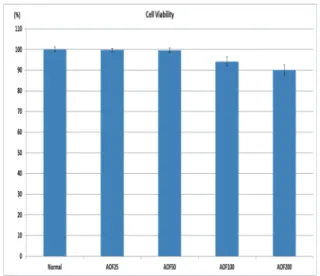
Fig. 1.CytotoxiceffectsofAlpiniaeoxyphyllaeFruc- tus hotaqueousethanolextractinRAW264.7 macrophages

No significant toxicity was observed up to 200 μg/mL.

Normal: Non-treated group

AOF 25: 25 μg/mL AOF hot aqueous extract- treated group AOF 50: 50 μg/mL AOF hot aqueous extract-treated group AOF 100 100 μg/mL AOF hot aqueous extract- treated group AOF 200: 200 μg/mL AOF hot aqueous extract- treated group Values are represented as mean ± SD.

* p < 0.05 was considered a statistically significant difference from the control group, as determined by the student’s t-test.

Fig. 2.Effectof AlpiniaeoxyphyllaeFructus hot aqueousextractonNOproductioninRAW264.7 macrophages

NO production rate was significantly decreased in the AOF 100 and 200 groups.

Control: 1 μg/mL LPS-treated group

AOF 25: 1 μg/mL LPS and 25 μg/mL AOF hot aqueous extract- treated group

AOF 50: 1 μg/mL LPS and 50 μg/mL AOF hot aqueous extract- treated group

AOF 100: 1 μg/mL LPS and 100 μg/mL AOF hot aqueous ex- tract-treated group

AOF 200: 1 μg/mL LPS and 200 μg/mL AOF hot aqueous ex- tract-treated group

Values are represented as mean ± SD.

* p < 0.05 was considered a statistically significant difference

from the control group, as determined by the student’s t-test.

(5)

III. Results

1. The toxicity of AOF hot aqueous extract in the control, AOF 25, 50, 100, and 200 μg/mL groups was 100 ± 1.23, 99.68 ± 0.76, 99.52 ± 1.12, 94.21 ± 2.26, and 90.04 ± 2.49%, respec- tively. This shows that there was no significant toxicity up to 200 μg/mL of AOF (Fig. 1).

2. The production rate of NO in the control, AOF 25, 50, 100, and 200 μg/mL groups was 100.00 ± 0.61, 88.42 ± 3.12, 85.28 ± 3.06, 75.62 ± 2.14, and 67.97 ± 1.16%, respectively.

NO production decreased significantly in the AOF 100 and 200 μg/mL groups (Fig. 2).

3. The production rate of PGE

2

in the control, AOF 25, 50, 100, and 200 μg/mL groups was 100.00 ± 5.14, 99.14 ± 4.72, 94.07 ± 3.24, 82.33 ± 4.96, and 76.31 ± 5.51%, respectively.

PGE

2

production decreased significantly in the AOF 100 and 200 μg/mL groups (Fig. 3).

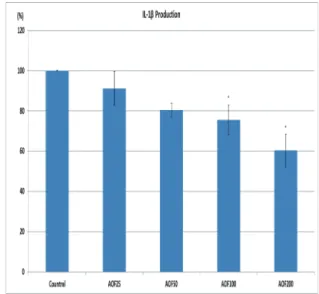
4. IL-1).us extract in the control, AOF 25, 50, 100, and 200 μg/mL groups was 100.00 ± 0.19, 91.21 ± 8.41, 80.39 ± 3.57, 75.50 ± 7.45, and 60.33 ± 4.39%, respectively. IL-1βproduction decreased significantly in the AOF 100 and 200 μg/mL groups (Fig. 4).

5. The rate of IL-6 production in the control, AOF 25, 50, 100, and 200 μg/mL groups was

Fig. 3.Effectof AlpiniaeoxyphyllaeFructus hot aqueousextractonPGE2productioninRAW264.7 macrophages

PGE

2

production rate decreased significantly in AOF 100 and 200 groups.

Control: 1 μg/mL LPS-treated group

AOF 25: 1 μg/mL LPS and 25 μg/mL AOF hot aqueous extract- treated group

AOF 50: 1 μg/mL LPS and 50 μg/mL AOF hot aqueous extract- treated group

AOF 100: 1 μg/mL LPS and 100 μg/mL AOF hot aqueous ex- tract-treated group

AOF 200: 1 μg/mL LPS and 200 μg/mL AOF hot aqueous ex- tract-treated group

Values are represented as mean ± SD.

* p < 0.05 was considered a statistically significant difference from the control group, as determined by the student’s t-test.

Fig. 4.Effectof AlpiniaeoxyphyllaeFructus hot aqueousextractonIL-1graphdescriinRAW264.7 macrophages

IL-1AW 264.7 macrophagdecreased significantly in AOF 100 and 200 groups.

Control: 1 μg/mL LPS-treated group

AOF 25: 1 μg/mL LPS and 25 μg/mL AOF hot aqueous extract- treated group

AOF 50: 1 μg/mL LPS and 50 μg/mL AOF hot aqueous extract- treated group

AOF 100: 1 μg/mL LPS and 100 μg/mL AOF hot aqueous ex- tract-treated group

AOF 200: 1 μg/mL LPS and 200 μg/mL AOF hot aqueous ex- tract-treated group

Values are represented as mean ± SD.

*p < 0.05 was considered a statistically significant difference

from the control group, as determined by the student’s t-test.

(6)

100.00 ± 0.42, 98.69 ± 4.17, 92.39 ± 6.32, 90.05 ± 2.78, and 98.37 ± 4.75%, respectively.

IL-6 production decreased in a concentration- dependent manner, but it was not significant (Fig. 5).

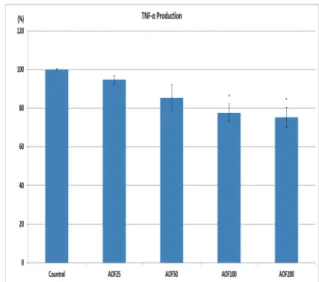
6. The rate of TNF-NF- 5).nl nnin the control, AOF 25, 50, 100, and 200 μg/mL groups was 100.00 ± 0.48, 64.69 ± 2.11, 85.34 ± 6.76, 77.50 ± 4.78, 75.33 ± 5.21%, respectively.

TNF-NF-3 eous extdecreased significantly in the AOF 100 and 200 μg/mL groups (Fig. 6).

7. DPPH free radical scavenging ability in the AOF 25, 50, 100, and 200 μg/mL groups was 7.35 ± 0.73, 12.98 ± 1.32, 41.63 ± 1.03, and

55.31 ± 1.16%, respectively. The scavenging ability of AOF 200 μg/mL group was more than 50% (Fig. 7).

8. The amount of polyphenol in AOF is 29.34 ± 3.10 mg/g (Table 1).

9. The amount of flavonoid in AOF is 8.19 ± 1.27 mg/g (Table 2).

IV. Discussion

In BenCao GangMu, it has been reported that Fig. 5.Effectof AlpiniaeoxyphyllaeFructus hot

aqueousextractonIL-6productioninRAW264.7 macrophages

IL-6 production rate was decreased in a concentration depend- ent manner, but there was no statistical significance.

Control: 1 μg/mL LPS-treated group

AOF 25: 1 μg/mL LPS and 25 μg/mL AOF hot aqueous extract- treated group

AOF 50: 1 μg/mL LPS and 50 μg/mL AOF hot aqueous extract- treated group

AOF 100: 1 μg/mL LPS and 100 μg/mL AOF hot aqueous ex- tract-treated group

AOF 200: 1 μg/mL LPS and 200 μg/mL AOF hot aqueous ex- tract-treated group

Values are represented as mean ± SD.

* p < 0.05 was considered a statistically significant difference from the control group, as determined by the student’s t-test.

Fig. 6.Effectof AlpiniaeoxyphyllaeFructus hot aqueousextractonTNF-α productioninRAW264.7 macrophages

TNF-NF-AW 264.7 mdecreased significantly in AOF 100 and 200 groups.

Control: 1 μg/mL LPS-treated group

AOF 25: 1 μg/mL LPS and 25 μg/mL AOF hot aqueous extract- treated group

AOF 50: 1 μg/mL LPS and 50 μg/mL AOF hot aqueous extract- treated group

AOF 100: 1 μg/mL LPS and 100 μg/mL AOF hot aqueous ex- tract-treated group

AOF 200: 1 μg/mL LPS and 200 μg/mL AOF hot aqueous ex- tract-treated group

Values are represented as mean ± SD.

* p < 0.05 was considered a statistically significant difference

from the control group, as determined by the student’s t-test.

(7)

AOF can strengthen weak constitution and elimi- nate chills

15)

. Therefore, in Korean medicine, AOF has been used for the treatment of elderly patients.

Previous studies have reported the effect of AOF on cell regeneration and damage inhibition

6-14)

. Yakuchinone A and Yakuchinone B

16, 17)

, the main components of AOF, have been reported to possess NO reduction effect. In addition, a previous study reported the free radical scavenging effect of Yakuchinone B

18)

.

In Korean medicine, inflammatory response is considered a competing vital force and bad factor, where vital force refers to resistance power against a disease and bad factor refers to the cause of the disease

19)

. In pathology, inflammatory re- sponse is the process of restoring a damaged area.

This process can cause edema, fever, pain, redness, swelling, and functional disability

2)

.

NO is a free radical that plays an important role in the transfer of substances in the cardiovascular, nervous, and immune systems. In addition, it is in- volved in intracellular homeostasis, transport of

neurotransmitters, and anticancer effects

20)

. How- ever, excessiveNOproductioncausesinflammation and tissue damage. Persistent inflammatory re- sponses can result in myocarditis, chronic arthritis, glomerulonephritis, insulin-dependent diabetes mellitus, and irritable bowel syndrome

21)

. Therefore, recent studies have focused on ways to treat inflammation by effectively suppressing the production of NO

22-24)

.

PGE

2

is an important inflammatory mediator. It is synthesized by cyclooxygenase (COX-2) and ac- tivated by macrophages. COX-2 is not expressed in the resting state, but its expression is induced by inflammatory stimulation. Excessive PGE

2

pro- duction leads to long-lasting inflammatory reaction resulting in rubefaction, edema, stiffness, and pain

25,26)

.

In the human body, oxidative stress is caused by an imbalance between oxidants and antioxidants.

It results in the decomposition of proteins and in- hibition of DNA synthesis, consequently leading to harmful effects in cells and organs

27)

. Reactive oxy- gen species (ROS) and reactive nitrogen species (RNS) are involved in oxidative damage. ROS in- clude free radicals, such as superoxide (O2-), nitric oxide (NO), and hydroxyl radicals (HO-), as well as oxygen-derived species, such as singlet oxygen Table 1. Totalpolyphenoliccompoundsin Alpiniae oxyphyllaeFructus hotaqueousextract

Compounds AOF

TPC

(mg tannic acid

equivalents/g) 29.34 ± 3.10

TPC: Total polyphenolic compounds

AOF: Alpiniae oxyphyllae Fructus hot aqueous extract

Table 2. Totalflavonoidcontentof Alpiniaeoxyphyl- laeFructus hotaqueousextract

Compounds AOF

TF

(mg quercetin equivalents/g)

8.19 ± 1.27

TF: Total flavonoids

AOF: Alpiniae oxyphyllae Fructus hot aqueous extract Fig. 7.EffectofAlpiniaeoxyphyllaeFructus hot

aqueousextractonDPPHfreeradicalscavenging capabilityinRAW264.7macrophages

The scavenging ability of the AOF 200 group was more than 50%.

AOF 25: 1 μg/mL LPS and 25 μg/mL AOF hot aqueous extract- treated group

AOF 50: 1 μg/mL LPS and 50 μg/mL AOF hot aqueous extract- treated group

AOF 100: 1 μg/mL LPS and 100 μg/mL AOF hot aqueous ex- tract-treated group

AOF 200: 1 μg/mL LPS and 200 μg/mL AOF hot aqueous ex-

tract-treated group

(8)

(O2) and hydrogen peroxide (H

2

O

2

) .

DPPH is a free radical. It is purple colored and exhibits absorption band at 520 nm. Generally, DPPH is converted to DPPH-H by proton-radical scavengers in various antioxidant mechanisms, which leads to its discoloration. The results can be verified easily by the naked eye. In addition, DPPH has the advantage of being very stable in organic solvents such as alcohol

29)

.

The viability of RAW 264.7 macrophages did not significantly decrease in the AOF 25, 50, 100, and 200 groups compared to that in the control group.

The AOF 100 and 200 groups showed significant inhibition of NO production in LPS-stimulated RAW 264.7 macrophages compared to the control group. PGE

2

production was significantly inhibited in LPS-stimulated RAW 264.7 macrophages treated with 100 and 200 μg/mL of AOF hot aque- ous extract compared to that in the control group.

IL-1rol group. trwas significantly inhibited in LPS- stimulated RAW 264.7 macrophages treated with 100 and 200 μg/mL of AOF hot aqueous extract compared to that in the control group. AOF de- creased the production of IL-6 in a concentration dependent manner; however, it was not statistically significant. TNF-NF- was not swas significantly inhibited in LPS-stimulated RAW 264.7 macrophages treated with 100 and 200 μg/mL of AOF hot aqueous extract compared to that in the control group. The DPPH radical scav- enging capability was more than 50% in RAW 264.7 macrophages treated with 200 μg/mL extract. The amount of polyphenol and flavonoid in AOF is 29.34 ± 3.10 and 8.19 ± 1.27 mg/g, re- spectively.

By analyzing the results of these experiments, we can suggest that AOF hot aqueous extract de- creased NO, PGE

2

, IL-1eased N, and TNF-NF- TNF--6Oexand DPPH radical scavenging at con- centrations of 50, 100, and 200 μg/mL. Therefore, AOF hot aqueous extract is believed to possess anti-inflammatory and anti-oxidative effects.

More studies will be needed to assess the safety and efficacy of AOF.

V. Conclusion

In conclusion, AOF hot aqueous extract sup- pressed NO, PGE

2

, IL-1 PGEto , and TNF-NF- TNF-tion and improved DPPH free radical scav- enging activity. The polyphenols and flavonoids present in AOF exert antioxidant activity. Thus, we can suggest that AOF hot aqueous extract may exert anti-inflammatory and anti-oxidative activ- ities.

VI. References

1. Chapter of The Korea Society of Pathlogists.

Summarize Pathology. 1st. Seoul: Jungmoon- gak. 2008:81.

2. Song KY, Kim MK, Ji GK. Core Pathology. 2th ed. Seoul: Korea medical books. 2013:45, 61-3, 97.

3. The Korea Society of Oriental Herbal medicine textbook compilation committee. Herbal medi- cine. Seoul: Younglimsa. 2007:609-10.

4. Park SY. The Relaxation Effects of Alpiniae oxyphyllae Fructus on Isolated Corpus Caver- nosum Smooth Muscle. Kor. J. Herbol.

2015;30(4):71-9.

5. Park SO, Lee BW, Jeong EJ. The Screening of antiallergic herbs suppressing egg and milk al- lergy. Kor. J. Dairy Management. 1994;16(4):

343-53.

6. Li YH, Tan YF, Cai HD, Zhang JQ. Metabo- nomic study of the fruits of Alpinia Oxyphylla as an effective treatment for chronic renal in- jury in rats. J. Pharm. Biomed. Anal. 2016;

124(5):236-45.

7. Shi SH, Zhao X, Liu B et al. The effects of

sesquiterpenes-rich extract of Alpinia Oxy-

phylla Miq. on amyloid-d-d-id-- amyloidive

impairment and neuronal abnormalities in the

cortexandhippocampusofmice. OxidMedCell

(9)

Longev. 2014;45(7):18-29.

8. Chang YM, Ye CX, Ho TJ et al. Alpinia Oxy- phylla Miquel fruit extract activates MAPK- mediated signaling of PAs and MMP2/9 to induce Schwann cell migration and nerve re- generation. Int. J. Artif Organs. 2014;37(5):

402-13.

9. Zhang ZJ, Cheang LC, Wang MW et al. Ethano- lic extract of fructus Alpinia Oxyphylla protects against 6-hydroxydopamine-induced damage of PC12 cells in vitro and dopaminergic neurons in zebrafish. Cell Mol Neurobiol.

2012;32(1):27-40.

10. Koo BS, Lee WC, Chang YC, Kim CH.

Protectiveeffectsofalpinaeoxyphyllaefructus (Alpinia Oxyphylla MIQ) water-extracts on neurons from ischemic damage and neuronal cell toxicity. Phytother Res. 2004;18(2):142-8.

11. Ha H, Shim KS, Kim T et al. Water extract of the fruits of Alpinia Oxyphylla inhibits osteo- clast differentiation and bone loss. BMC Com- plement Altern Med. 2014;23(14):352-9.

12. Lin RJ, Yen CM, Chou TH et al. Antioxidant, anti-adipocyte differentiation, antitumor ac- tivity and anthelmintic activities against Anisakis simplex and Hymenolepis nana of yakuchinone A from Alpinia Oxyphylla. BMC Complement Altern Med. 2013;26(13):237-42.

13. He ZH, Ge W, Yue GG, Lau CB, He MF, But PP.

Anti-angiogenic effects of the fruit of Alpinia Oxyphylla. JEthnopharmacol. 2010;132(2):443-9.

14. Zhang X, Shi GF, Liu XZ, An LJ, Guan S. Anti- ageing effects of protocatechuic acid from Alpinia on spleen and liver antioxidative system of senescent mice. Cell Biochem Funct.

2011;29(4):342-7.

15. Lee SJ. BenCaoGangMu. 1st. China: Inminpub- lisher. 1997:175-6.

16. Yoon JW, Ahn HN, Ryu JH, Kim HD. Synthesis of Yakuchinone Derivatives and Their In- hibitory Activities on Nitric Oxide Synthesis. J.

Pharm. Soc. Korea. 2001;45(1):16-22.

17. Lee HJ, Ji Kim JS, Yoon JW, Kim HD, Ryu JH.

Suppression of Inducible Nitric Oxide Synthase

Expression by Yakuchinones and Their Ana- logues. Chem. Pharm. Bull. 2006;54(3):377-9.

18. Samaneh B, Razieh Y. Antioxidant and Free Radical Scavenging Potential of Yakuchinone B Derivatives in Reduction of Lipofuscin For- mation Using H2O2-Treated Neuroblastoma Cells. Iran. Biomedi. J. 2011;15(4):134-42.

19. The Korea Society of Oriental Pathology text- book compilation committee. Oriental Pathol- ogy. 3rd. Seoul: Iljungsa. 2004:109-12.

20. LowensteinCJ, SnyderSH. Nitricoxide, anovel biologic messenger. Cell. 1992;70(5):705-7.

21. Nathan C, Xie QW. Nitric oxide synthases:

Roles, tolls, and controls. Cell. 1994;78(6):915-8.

22. Jung HW, Park YK. Inhibitory effects of Cop- tidis Rhizoma on the LPS-induced production of nitric oxide and TNF-NF-the LPS-induced productionJ. of Herb. 2006;21(2):165-73.

23. Choi YJ. Roh JD. Effects of Angelicae Gigantis Radix pharmacopuncture on Nitric Oxide and Prostaglandin E2 Production in Macrophage. J.

of Pharm. 2011;14(3):81-90.

24. Lee DE, Lee JR, Kim YW et al. Inhibition of Lipopolysaccharide-Inducible Nitric Oxide Synthase, TNF-NF-al. Inhibition2 Expression byFlowerandWholePlantofLonicerajaponica.

KoreanJournalofPhysiology& Pathology.Kor.

J. of Physiology & Pathology. 2005;19(2):481-9.

25. Rocca B, FitzGerald GA. Cyclooxygenases and prostaglandins: Shapinguptheimmuneresponse.

Int. Immunopharmacol. 2002;5(2):603-30.

26. Kang GJ, Kang NJ, Han SC et al. The Chloro- form Fraction of Carpinus tschonoskii Leaves Inhibits the Production of Inflammatory Medi- ators in HaCaT Keratinocytes and RAW264.7 Macrophages. Toxicol. Res. 2012;28(4):255-62.

27. Imlay JA, Linn S. DNA damage and oxygen radical toxicity. Science. 1988;240(3):1302-9.

28. Bunn HF, Poyton RO. Oxygen sensing and mo- lecular adaptation to hypoxia. Physiol. Rev.

1996;76(30):839-85.

29. Blois MS. Antioxidant determination by the use of stable free radical. Nature. 1958;18(1):

1199-200.

수치

Fig. 2.Effectof AlpiniaeoxyphyllaeFructus hot aqueousextractonNOproductioninRAW264.7 macrophages
Fig. 3.Effectof AlpiniaeoxyphyllaeFructus hot aqueousextractonPGE2productioninRAW264.7 macrophages
Fig. 6.Effectof AlpiniaeoxyphyllaeFructus hot aqueousextractonTNF-α productioninRAW264.7 macrophages
Table 2. Totalflavonoidcontentof Alpiniaeoxyphyl- Alpiniaeoxyphyl-laeFructus hotaqueousextract Compounds AOF TF (mg quercetin equivalents/g) 8.19 ± 1.27 TF: Total flavonoids

참조

관련 문서

Anti-inflammatory Activity of Beta vulgaris Extract Using Biorenovation in LPS-stimulated RAW 264.7 Cells.. Hyehyun Hong, Taejin Park, Min-Sung Kang, and

In the present study, we demonstrate that methylene chloride and ethyl acetate fractions inhibited the productions of IL-1β and IL-6 by down-regulating their mRNA levels in

Inhibitory effect of biji on the generation of NO and PGE 2 through the suppression of iNOS and COX-2 expression in LPS-stimulated RAW264.7 cells.. NO and PGE 2 were

However, it has not been reported that barbaloin has anti-inflammatory effects on LPS-stimulated mice peritoneal macrophages by suppressing secretion of inflammatory

Therefore, we examine the anti-inflammatory effects of Lindera erythrocarpa essential oil(LEO) in LPS-stimulated RAW 264.7 cells. The results show that LEO suppressed

Effects of the SPL hot water extract on LPS-stimu- lated inducible nitric oxide synthase protein expression in RAW264.7 macrophages.. LPS, lipopolysaccharides; SPL, Salvia

This study was designed to evaluate the effect of hot water extract (ESW) and 70% ethanol extract (ESE) from Euphorbia supina Rafin on LPS-stimulated inflammatory response in RAW

This study is aimed to investigate the anti-inflammatory effect of Euphorbiae kansui radix methanol extract (ERE) in lipopolysaccharide(LPS)-stimulated mouse