Received November 20, 2014, Revised December 13, 2014, Accepted December 15, 2014 Corresponding author: Yeun-Ja Mun
Department of Anatomy, College of Oriental Medicine, Wonkwang University, 460 Iksan-dearo, Iksan 570-749, Korea Tel: +82-63-850-6942, Fax: +82-63-850-7324, E-mail: [email protected]
This paper was supported by Wonkwang University in 2012.
CCThis is an open access article distributed under the terms of the Creative Commons Attribution Non-Commercial License (http://creativecommons.org/licenses/ by-nc/3.0) which permits unrestricted non-commercial use, distribution, and reproduction in any medium, provided the original work is properly cited.
해당화꽃 추출물의 화장품소재로서 약리활성에 관한 연구
유혜수1ㆍ최지은2ㆍ우원홍3ㆍ문연자2,3
1원광대학교 뷰티디자인학과, 2원광대학교 한의학전문대학원 BK21-plus팀, 3원광대학교 한의과대학 해부학교실
The Study on Pharmacological Activation as Cosmetic Material of Rosa rugosa Thunb. Flowers Extract
Hye-Soo Yu1, Ji-Eun Choi2, Won-Hong Woo3, Yeun-Ja Mun2,3
1Department of Beauty Design School, Wonkwang University, 2BK21-plus Team, Professional Graduate School of Oriental Medicine, Wonkwang University,3Department of Anatomy, College of Oriental Medicine, Wonkwang University
Objectives : In this study, we investigated the effect of ethanol extract from Rosa rugosa Thunb. flowers(ERF) on the activities of antioxidant, antiwrinkle and whitening. Methods : We measured antioxidant efficacy of ERF by using 1,1-diphenyl-2- picrylhydrazyl(DPPH) assay. Also we confirmed the inhibitory effect of ERF on collagenase activity and melanin synthesis by using collagenase assay kit and dihydroxiphenylalanine staining, respectively. To evaluate the anti-inflammatory effects of ERF, we examined the inflammatory mediator IL-6. Results : ERF showed highly efficacy in DPPH radical scavenging activity. ERF dose-dependently suppressed collagenase activity. Ultraviolet-induced production of IL-6 decreased by ERF treatment. In B16F10 cell, ERF significantly reduced tyrosinase activity and melanin synthesis. Conclusions : From the above results, it was indicated that ERF could be utilized as anti-aging and whitening cosmetic ingredients.
Key words : Rosa rugosa Thunb flowers, antioxidant, collagenase, melanin
서 론
해당화(Rosa rugosa Thunb.)는 장미과 장미속의 해안가에 자생 하는 낙엽관목으로 한국, 중국을 비롯한 동아시아 지역에 분포하고 있다. 꽃은 5∼6월 피며 매괴화(玫瑰花)라고 하며 이기해울(理氣解 鬱)하고 화혈산어(和血散瘀)하는 효능이 있어, 간위기통(肝胃氣痛), 급만성 유주성 관절 풍습통, 토혈과 각혈, 월경불순, 적백대하, 이 질, 화농성 유선염, 종독의 치료에 사용하였다1). 꽃은 음건하여 차 나 향료의 원료로 이용되고 있으며, 열매는 잼과 같은 가공식품으 로 이용되고, 한국과 일본에서는 당뇨의 치료와 예방에 사용되고
있다2-5).
현재까지 해당화는 그 부위에 따라 여러 가지 효능이 보고되어 있다. 해당화 뿌리는 항당뇨6), 면역증진7), 항산화 및 혈압강하 작용 이 있으며8), 뿌리에서 추출한 octanordammarane triterpene는 장내 sucrase 억제효과9)가 있으며, catechin은 간보호효과가 있음 이 보고되었다10). 또한 줄기와 잎 추출물은 항산화와 항종양효과가
있으며11,12), 해당화꽃은 항고혈압효과13)가 있고 해당화꽃의 화분
은 항종양효과가 있음이 보고되었다14).
해당화의 성분에 대한 연구로는 유기산과 Vitamin C가 풍부하 며 잎에서 isoquercertin, rutin, quercetin, isoquercitrin, titiro-
side, 꽃에서는 stictinin, pedunculagin, casuarictin, tellima- grandin I, II, rugosin-A-G, 열매에서 β-carotene, γ-carotene, sugar, 뿌리에서는 β-sitosterol, campesterol, quercetin, β- sitosteryl 3-o-β-D glucopyranoside, campesteryl 3-o-β-D glucopyranoside, kaji-ichigoside F1, rosamultin, arjunetin(+)- catechin의 성분이 보고되었다15-19).
피부는 미생물이나 물리화학적 외부환경으로부터 신체 내부를 보호하는 장벽으로서의 역할을 수행할 뿐만 아니라 주름 형성과 색소침착에 연관되어 있으며 면역 기능을 수행하고 있다20). 피부가 자외선(UV)에 과도하게 노출되면 화상, 주름생성, 색소침착 및 matrix metalloproteinases(MMPs)의 발현을 유도하여 광노화를 촉진시키며, 심한 경우 피부암을 비롯한 여러 질환을 일으키게 된
다21,22). 현재 피부노화와 주름을 개선하기 위하여 각질형성세포의
증식과 분화, 활성산소에 의한 노화 억제, MMPs 활성 억제 등으로 세포외기질(extracellular matrix)의 손상을 개선하고 표피진피연 결부(dermal-epidermal junction, DEJ)의 활성을 촉진시키는 방 법들이 이용되고 있다23,24). 한편 미용을 목적으로 한 기능성 천연소 재 개발에 대한 연구가 다양하게 이루어지고 있으며, 항암, 항균, 미백, 여드름, 항알레르기, 피부보습, 항산화, 항노화 등의 효과가 있는 천연 소재에 대한 연구가 진행되고 있다. 해당화는 각 부위에 따라 다양한 효능이 보고되어 있으나 기능성 미용소재로서 잠재적 가능성이 높은 해당화꽃의 약리활성에 대한 연구는 부족한 실정이다.
이에 저자들은 해당화꽃 추출물이 미백효과가 있음을 확인하였고25), 선행연구를 토대로 화장품 소재로서의 개발 가능성이 높은 해당화 꽃 추출물의 항산화 및 주름생성억제 효과를 조사하였다.
재료 및 방법
1. 재료 및 시료 추출
경동시장(서울)에서 구입한 해당화꽃(매괴화, Rosa rugosa Thunb. flower, 중국산) 200 g을 자연건조 후, 100% ethanol 2 L을 넣어 3일 동안 실온에서 추출하였으며, 표본은 원광대학교 해 부학교실에 보관하였다. 추출액은 여과하여 감압 농축(EYELA, Japan) 및 동결 건조하여 추출물 27.60 g(수율 13.8%)을 얻었다.
시료는 냉장 보관하였으며 dimethylsulfoxide(DMSO)에 녹여 실 험에 사용하였다.
2. DPPH 활성산소 소거능 측정
활성산소 소거능은 Blosis26)방법에 의한 1,1-diphenyl-2-pi-
crylhydrazyl(DPPH) 라디칼 소거법으로 측정하였다. 시료를 methanol로 녹여 500 μl를 1.5 ml tube에 넣고 0.3 mM DPPH 500 μl를 넣어 총 양이 1 ml가 되도록 하였다. 실온에서 30분간 반응시킨 후 ELISA reader(Bio-Tek, USA)로 517 nm 파장에서 흡 광도를 측정 하였다. DPPH 라디칼 소거능은 시료 용액의 첨가군과 무첨가군 사이의 흡광도의 차이를 백분율로 나타내었다.
DPPH 라디칼 소거능=
100-{(시료첨가구의 흡광도/무첨가구 흡광도)×100}
3. Collagenase 활성능 측정
Collagenase 활성 억제 평가 실험은 EnzCheck Gelatinase/
Collagenase assay kit(Invitrogen, USA)를 사용하였다. 기질(sub- strate)로 DQTM gelatin from pig skin, fluorescein conjugate을 이용하여 측정하였다. 96 well plate에 reaction buffer 150 μl, 시료 20 μl, collagenase(10 μg/ml) 20 μl, gelatin(100 μg/ml) 10 μl을 처리하고 37oC 암실에서 1시간 동안 반응시킨 후 fluore- scence micro plate reader(Bio-tek, USA)를 사용해 495/ 515 nm에서 측정하였다.
4. IL-6 측정
Pro-inflammatory cytokine인 IL-6 생성에 미치는 시료의 효 과를 조사하기 위하여 UVB를 조사하였다. UVB는 Ultraviolet B TL 20 W/12 RS(Philips, Holland)를 이용하여 20 mJ/cm2로 조사 하였으며, 사람 각질형성세포(HaCaT)를 10% Fetal bovine serum (FBS, Gibco)가 포함된 배지에 1×10⁵개씩 분주하여 48시간 부착 시켰다. 시료를 1시간 전처리 후 배지를 PBS로 수세하고 UVB를 조사하였다. 시료가 포함된 배지에 24시간 배양 후 배지에 분비된 IL-6를 Enzyme-linked immunosorbent assay(ELISA)법으로 정 량하였다. IL-6 assay kit(BD pharmingen, CA, USA)를 이용하여 540 nm에서 측정하였다.
5. 세포배양 및 형태적 관찰
B16F10 mouse melanoma cell은 한국세포주은행에서 분양받 았으며, 5% Fetal bovine serum(FBS, Gibco)가 포함된 Dulbe- cco's modified Eagle medium(DMEM, Gibco) 배지를 이용하여 37oC, 5% CO2 incubator(Forma)에서 배양하였다. B16F10 세포 를 10 cm 배양용기에 1×10⁵개씩 분주하여 24시간 부착시켰다.
시료(12.5, 25 μg/ml)를 처리하고 3일간 배양 후 B16F10 세포의 수지상돌기의 변화를 위상차도립현미경(inverted phase contrast
Fig. 1. Effect of ERF on DPPH radical scavenging activity.
DPPH radicals were generated as described as materials and methods. The values are expressed as optical density and each column represent the mean±S.D. of three independent experi- ments. **p<0.01 compared to the untreated group. ERF : ethanol extract from Rosa rugosa Thunb. flowers.
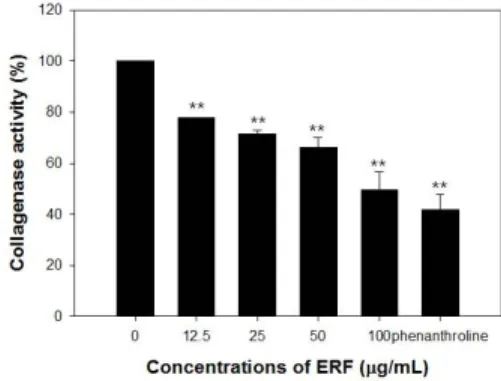
Fig. 2. Effect of ERF on collagenase activity.
Collagenase activity were measured as described in materials and method. The results are averages of triplicate experiments, and the data are expressed as means±S.D. of three independent experiments. **p<0.01 compared to the untreated group. ERF : ethanol extract from Rosa rugosa Thunb. flowers.
microscope, Leica)을 이용하여 관찰하였다.
6. DOPA 염색
Chamber slide에 세포를 5×10³개씩 분주하여 부착 후 시료 (12.5, 25 μg/ml)와 α-MSH(100 nM)를 처리하고 3일 동안 배양 하였다. 배양 후 5% formalin 용액으로 30분간 고정하고 PBS로 세척하여 0.1% L-dihydroxyphenylalanine(DOPA)와 실온에서 4 시간 반응시켰다. PBS로 세척하고 10% formalin 용액으로 30분간 고정한 후 에탄올로 탈수시킨 다음 봉입하여 광학현미경으로 관찰 하였다.
7. 세포 내 멜라닌 함량 측정
멜라닌의 정량은 Hosoi 등27)의 방법을 변형하여 사용하였다. 직 경 6 cm plate에 1×10⁵개씩 분주하여 24시간 부착시킨 후, 시료 (12.5, 25 μg/mL)를 처리하였다. 1시간 후 α-MSH(100 nM)를 처리하고 48시간 배양하였으며, 각 군당 2×10⁶개씩 수거하여 lysis buffer(5 mM EDTA, 0.1 M SPB(pH 6.8), 0.1% triton X- 100)로 세포를 용해하였다. 원심분리 하여 얻은 세포 침전물은 알 코올로 세척한 후 10% DMSO가 첨가된 1 N NaOH 용액으로 90oC에서 1시간 용해하여 405 nm로 흡광도를 측정하였다.
8. 통계처리
실험 결과는 student's t-test를 이용하여 p-value를 구하였으 며, p<0.05인 경우 *로 표기하였고 p<0.01인 경우 **로 표기하 여 유의성을 나타내었다.
결 과
1. 항산화효과
DPPH는 free radical의 안정화된 물질로 항산화 효과를 평가하 는데 일반적으로 사용된다. 실험결과 시료 12.5, 25, 50, 100 μg/
ml의 농도에서 대조군에 비해 각각 42.79±4%, 72.99±1.4%, 85.03±0.6%, 85.57±0.5%의 DPPH 소거능을 보였다(Fig. 1). 양 성대조군인 Ascorbic acid(10 μM)는 89.40±0.2%의 소거능을 보였으며, 시료 50 μg/ml의 농도에서 80% 이상의 높은 DPPH 소거능을 나타냈다.
2. Collagenase 활성 억제효과
피부노화 현상은 피부각질층의 구조 변화, 표피세포 분화 감소, 진피 내의 섬유아세포에 의한 단백질 및 세포간 물질의 합성기능 저하로 나타난다28,29). Collagen은 피부 진피층 세포 외 기질 단백 질의 90%를 이루고 있으며, collagen을 분해하는 collagenase는 주름을 유발하여 피부 노화를 촉진시킨다. 그러므로 피부노화 주원 인 중의 하나인 collagenase의 활성에 미치는 시료의 영향을 조사 하였다. 시료 12.5, 25, 50, 100μg/ml의 농도에서 대조군(100%) 에 비해 77.9±0.1%, 71.7±1%, 66.1±4%, 49.6±7%로 collage- nase의 활성을 억제하였으며, 양성대조군인 1-10-phenanth- roline(0.5 μM/ml)의 경우 41.9±5%였다(Fig. 2). 따라서 시료는 농도의존적으로 collagenase의 활성을 억제하였다.
3. IL-6 생성 억제효과
UV로 유도한 전염증성 cytokine의 생성에 대한 해당화꽃 추출
Fig. 6. Light micrographical observation of B16F10 cells after treated with ERF.
Cells were incubated with ERF(ethanol extract from Rosa rugosa Thunb. flowers.) as indicated concentrations. After 3 days, cells were photographed with phase contrast inverted microscope (×100).
Fig. 4. Effect of ERF on tyrosinase activity in B16F10 cells.
B16F10 cells were incubated with ERF(ethanol extract from Rosa rugosa Thunb. flowers.) at 12.5, 25 μg/ml for 3 days. DOPA stain was evaluated as described in materials and methods.
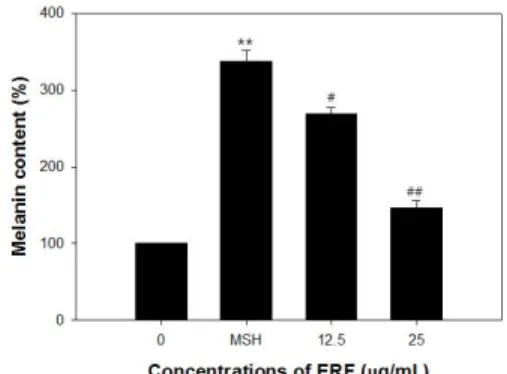
Fig. 5. Effect of ERF on melanin synthesis in B16F10 cells.
The cells were pre-treated with ERF(ethanol extract from Rosa rugosa Thunb. flowers.) as indicated concentrations for 1 h, and then stimulated with or without α-MSH(100 nM). After 3 days, melanin content were measured as described in materials and methods. Data are means±S.D. of three independent experiment.
**p<0.01 compared to the untreated group. ##p<0.01 compared to the α-MSH-stimulated group.
Fig. 3. Effect of ERF on the production of IL-6.
The cells were pre-treated with ERF(ethanol extract from Rosa rugosa Thunb. flowers.) as indicated concentrations for 1 h, and then irradiated with or without UV(20 mJ/cm2). After 24 h, the level of IL-6 was measured by ELISA. Data are means±S.D. of three independent experiment. **p<0.01 compared to the un- treated group. ##p<0.01 compared to the UV irradiated group.
물의 효과를 조사하기 위하여 시료를 1시간 전처리 한 후 UV를 조사하고 24시간 배양 후 ELISA를 이용하여 측정하였다. UV 조사 시 IL-6 생성이 대조군의 약 3.4배 증가하였으나, 시료 12.5 μg/ml 처리군은 1.7배, 시료 25 μg/ml 처리군은 1.1배로 감소하였다. 시 료는 UV에 의해 증가된 IL-6의 생성을 현저히 억제하였다(Fig. 3).
4. 멜라닌생성 억제 효과
멜라닌세포에서 tyrosinase는 tyrosine을 DOPA로 전환시키는 tyrosine hydroxylase와 DOPA를 DOPAquinone으로 전환시키는 DOPA oxidase로서 멜라닌 합성 초기의 두 단계 반응을 촉매하는 중요한 역할을 하고 있다. 피부의 멜라닌 합성에 미치는 영향을 조 사하기 위하여 B16F10 세포의 tyrosinase 활성을 DOPA 염색으로
관찰하였다. B16F10 세포에 시료를 12.5, 25 μg/ml로 처리하고 3일간 배양한 후 DOPA 염색을 실시한 결과, 시료 12.5와 25 μg/ml 처리군은 대조군에 비해 tyrosinase 활성이 감소하였다. 멜라닌 합 성을 촉진하는 호르몬 α-MSH(100 nM) 처리군에서 대조군에 비 해 tyrosinase 활성이 증가하였으며, 시료 처리군에서는 감소하였 다(Fig. 4). 최종산물인 세포내 멜라닌양을 측정한 결과에서도 α- MSH 처리군은 멜라닌양이 증가하였으며, 시료처리군에서는 유의 성 있게 멜라닌양이 감소하였다(Fig. 5).
멜라닌은 수지상돌기를 통해 각질세포로 운반되는데 멜라닌세
포의 형태적 관찰 결과 시료 12.5, 25 μg/ml 처리군은 대조군에 비해 수지상돌기가 감소되었다. α-MSH군에서는 세포의 수지상돌 기가 현저하게 발달하였고, 시료는 α-MSH군에 비하여 수지상 돌 기가 감소하였다(Fig. 6).
고 찰
최근 식물자원으로부터 약물, 식품첨가제, 화장품의 소재로 개 발하는 다양한 연구가 이루어지고 있는데, 화장품소재로서 기능성 으로는 항산화, 주름개선, 미백, 항염증 등이 있다. 해당화는 뿌리 와 줄기에서 항산화, 항염, 혈당개선 및 혈압강화 작용 등 다양한 효능이 보고되었으며, 본 연구에서는 화장품 소재로서 잠재적 가능 성 높은 해당화꽃 추출물의 기능성을 조사하였다.
활성산소(Free radical)는 과다하게 생성될 경우 체내 항산화 방 어벽을 무너뜨리고 단백질 변형을 일으키며 항상성을 파괴하여 자 가면역질환과 같은 다양한 질병을 일으킨다. 피부에서는 진피 내 콜라겐과 세포외기질을 분해하여 주름 생성, 탄력성 저하를 일으키 며, 멜라닌의 생성을 촉진하여 노인성 반점, 주근깨 등을 유발하는 피부노화의 주원인이 된다22,30). 본 실험에서 해당화꽃 추출물의 항 산화능을 측정한 결과 농도에 따라 DPPH radical 소거능이 증가하 였고, 50 μg/ml의 농도에는 80% 이상의 높은 항산화능을 보였다.
세포외기질의 주요 구성성분인 collagen(type I, II, III, IV and V)은 진피층의 약 90%를 차지하고 있으며, 세포내에서 proco- llagen이라는 전구물질로 합성된 후 세포외로 분비되어 collagen 섬유로 중합된다. 이러한 collagen은 트립신과 같은 단백질 분해효 소의 작용을 받지 않고 collagenase에 의해 분해된다31). 한편 자외 선은 TNF-α, IL-6를 비롯한 다양한 cytokine의 분비를 촉진시키 고, 기질단백질을 분해하는 MMPs(Matrix metallo proteinases)의 발현을 증가시킨다. 현재까지 MMPs는 MMP-1(collagenase 1)을 비롯하여 MMP-9(gelatinase B), MMP-13(collagenase 3) 등 약 20여종이 있으며, 이들 MMPs는 염증 및 종양침습을 유발하고 co- llagen이나 elastin, fibronectin과 같은 세포외기질과 기저막 (besement membrane, BM)의 중요한 구성 성분을 분해하여 주름 을 유발하고 노화를 촉진시키는 것으로 알려져 있다23,24). 따라서 UV에 의해 유도된 collagenase 효소의 합성을 억제하거나 활성산 소에 의해 발생되는 손상을 방지하는 물질은 피부 노화를 억제하는 화장품의 소재로서 잠재적 가치가 높다고 할 수 있다. 본 실험결과, 해당화꽃 추출물의 항산화활성이 높게 나타났으며, Fig. 2와 3에서 와 같이 collagenase의 활성과 pro-inflammatory cytokine인
IL-6의 생성을 억제하였다.
멜라닌은 멜라닌세포 자극호르몬인 α-MSH나 UV 등에 의해 활성화 되며 tyrosinase, tyrosinase related protein-1 및 tyro- sinase related protein-2 효소에 의해 합성된다22,32). 특히 tyro- sinase는 tyrosine을 DOPA로 산화하고, DOPA를 DOPAquinone 으로 전환하는 멜라닌합성의 처음 두 단계의 반응을 촉매하는 속도 결정 효소로 작용하며, 이러한 일련의 과정을 거쳐 생성된 멜라닌 은 멜라닌세포의 수지상돌기를 통해 각질형성세포로 이동된다. 자 외선은 멜라닌세포뿐만 아니라 각질형성세포도 자극하여 α-MSH 의 분비를 유도하는데32), α-MSH는 멜라닌세포의 cAMP 경로를 통해 tyrosinase 활성과 멜라닌의 생성을 촉진하며, 또한 수지상돌 기의 형성도 촉진한다33). 본 실험결과, 해당화꽃 추출물은 멜라닌 세포의 tyrosinase 활성과 멜라닌 합성 및 수지상 돌기의 형성을 억제하였다(Fig. 4, 5). 특히 해당화꽃 추출물의 멜라닌생성 억제효 과와 수지상돌기 형성 억제효과는 α-MSH 자극에 의한 과색소침 착 조건에서 더욱 높은 것을 알 수 있었다.
이상의 결과 해당화꽃 추출물은 항산화, 주름개선, 항염증과 더 불어 멜라닌생성 억제효과가 있었으며, 화장품 소재로 활용 가치가 매우 높을 것으로 사료된다.
결 론
본 연구는 해당화꽃 추출물의 피부에서 약리활성을 조사하여 다 음과 같은 결과를 얻었다.
1. 해당화꽃 추출물의 DPPH 라디칼 소거능은 농도 의존적으로 유의성 있게 증가하였다.
2. 해당화꽃 추출물은 collagenase의 활성을 농도 의존적으로 유의성 있게 억제하였다.
3. 해당화꽃 추출물은 UVB에 의하여 증가된 IL-6의 생성을 농 도 의존적으로 유의성 있게 억제하였다.
4. 해당화꽃 추출물은 멜라닌세포의 멜라닌생성, tyrosinase의 활성과 수지상돌기의 형성을 억제하였다.
이상의 연구 결과 해당화꽃 추출물은 항산화, 항염효과가 있으 며 collagenase 활성과 멜라닌 형성을 억제하였다. 따라서 해당화 꽃은 피부노화 예방과 미백 기능성 소재로서 가치가 매우 높은 것 으로 사료된다.
감사의 글
This paper was supported by Wonkwang University in 2012.
References
1. Munhwa Broadcasting Corporation. Encyclopedia to Korean folk remedies. Seoul : Kumbak Publisher Inc. 1987 : 179.
2. Lyuk CJ. An Illustrated Guide to Korean medicine plant. Seoul : Jinmyoung Publisher Inc. 1981 : 186.
3. Akamatsu K. Herb medicine in Japan. Japan : Ishiyaku Publisher Inc. 1974 : 381.
4. Kimura S. China, Japan medical plant-natural medicine. Tokyo : Hirakawa Publisher Inc. 1978.
5. Shanghai Science-technology Publication. Dictionary of Chinese Medicine Vol. 4. Shogakukan. Tokyo. 1985.
6. Hong KP, Na CS, Jang KS, Kim HC, Park MH, Kim JS. Effects of Saengjinyanghyutang-gamibang and Rosa rugosa on the Strep- tozotocin Treated Mice for Induction of Diabetes. J Korean Oriental Med. 2001 ; 22(4) : 79-89.
7. Lee MK, Lee SH, Choi GP, Yu CY, Lee JH, Lee HY. Screening of immune enhancement activities of the extracts from Rosa ru- gosae Radix. Korean J Medicinal Crop Sci. 2003 ; 11(1) : 13-8.
8. Young HS, Park JC, Choi JS, Suh SS. Antihypertensive Activity and Triterpene from the Underground Parts of Rosa rugosa. J Oriental Bot Res. 1990 ; 3(2) : 83-9.
9. Thao NP, Luyen BT, Tai BH, Yang SY, Cuong NX, Nam NH. Rat intestinal sucrase inhibition of constituents from the roots of Rosa rugosa Thunb. Bioorg Med Chem Lett. 2014 ; 24(4) : 1192-6.
10. Hur JM, Kim IH, Park JC. Hepatoprotective Effect of Catechin Isolated from the Root of Rosa rugosa Thunb. Korean J Medicinal Crop Sci. 2007 ; 15(1) : 21-5.
11. Park BJ. Isolation of main component and antioxidant activities on the stem and root of Rosa rugosa. Korean J Plant Res. 2008 ; 21(5) : 402-7.
12. Choi YH, Kim MJ, Lee HS, Hu CX, Kwak SS. Antioxidants in Leaves of Rosa rugosa. Kor J Pharmacogn. 1997 ; 28(4) : 179-84.
13. Yajing X, Wei Z. Antihypertensive activity of Rosa rugosa Thunb.
flowers: Angiotensin I converting enzyme inhibitor. J Ethno- pharmacol. 2012 ; 144(3) : 562-6.
14. Wang B, Diao Q, Zhang Z, Liu Y, Gao Q, Zhou Y. Antitumor ac- tivity of bee pollan polysaccharides from Rosa rugosa. Mol Med Rep. 2013 ; 7(5) : 1555-8.
15. Noguchi M. Flavonoids of various Rosa species. Shigen Kagaku Kenkyusho Iho. 1957 ; 45 : 55.
16. Kaneta M, Hikitshi H, Endo S, Sugiyama N. Identification of fla- vonoids in nineteen Rosaceae species. Agric Bio Chem. 1975 ; 43 : 657.
17. Okuda T, Hatano T, Yazaki K, Ogawa N. Rugosin A, B, C and praecoxin A, tannins having a valoneoyl group. Chem Pharm Bull. 1982 ; 30 : 4230.
18. Okuda T, Hatano T, Ogawa N. Rugosin D, E, F and G, dimeric and trimeric hydrolyzable tannins. Chem Pharm Bull. 1982 ; 30 : 4324.
19. Park JC. Study on the Physicochemical Activities of Rosa rugosa Thunb in the Hyperlipemic Rat. J Oriental Bot Res. 1990 ; 3(1) : 64-70.
20. Ha TK, Lee BG, Mun YJ, Woo WH, Park SH, Lee JC. Inhibitory Effect of Fritillaria Verticillata Willd. Var. Thunbergii Bak Ethanol Extract on Melanin Biosynthesis. Kor J Ori Med Physiol Pathol. 2011 ; 25(3) : 510-5.
21. Fisher GJ, Harvinder S Talwar, Jiayuh Lin, John J Voorhees.
Molecular Mechanisms of Photoaging in Human Skin In Vivo and Their Prevention by All-Trans Retinoic Acid. Photochem- istry and Photobiology. 1999 ; 69(2) : 154-7.
22. Yamaguchi Y, Hearing YJ. Physiological factors that regulate skin pigmentation. Biofactors. 2009 ; 35(2) : 193-9.
23. Vincenti MP, Constance E Brinckerhoff. Transcriptional regu- lation of collagenase (MMP-1, MMP-13) genes in arthritis: in- tegration of complex signaling pathways for the recruitment of gene-specific transcription factors. Arthritis Res. 2002 ; 4 : 157-64.
24. Ryu BM, Zhong JQ, Kim MM, Nam KW, Kim SK. Anti-photo- aging activity and inhibition of matrix metalloproteinase (MMP) by marine red alga, Corallina pilulifera methanol extract.
Radiation Physics and Chemistry. 2009 ; 78 : 98-105.
25. Yu HS, Mun YJ, Woo WH, Song JH. Anti-Melanogenic Effects of
Ethanol Extracts from Rosa rugosa Thunb. J Kor Soc Cosm. 2014
; 20(1) : 36-41.
26. Blois MS. Antioxidant determination by the use a stable free radical. Nature. 1958 ; 26 : 1199-200.
27. Hosoi J, Abe E, Suda T, Kuroki T. Regulation of melanin synthesis of B16 mouse melanoma cells by 1 alpha, 25-dihydroxyvitamin D3 and retinoic acid. Cancer Res. 1985 ; 45(4) : 1474-8.
28. Shin AH, Lyu SY, Noh BN, Kim JI, Kim OK, Park WB. Antioxida- tive Activity of Extracts of Acanthopanax divaricatus Var. albeo- fructus Leaves in Human Dermal Fibroblast Irradiated by UVA.
Yakhak Hoeji. 2007 ; 51(4) : 229-34.
29. Lee YK, Choi SK, Kim YJ, Cha HJ, An SK. Analysis of Alpha-mel- anocyte-stimulating Hormone Dependent Gene Expression in UVA- irradiated Human Dermal Fibroblasts. J Kor Soc Cosm.
2012 ; 18(1) : 120-6.
30. Masaki H. Role of antioxidant in the skin : Anti-aging effects.
Journal of Dermatological Science. 2010 ; 58 : 85-90.
31. Fisher GJ, Wang ZQ, Datta SC, Varani J, Kang S, Voorhees JJ.
Pathophysiology of premature skin aging induced by ultraviolet light. N Engl J Med. 1997 ; 337 : 1419-28.
32. Hunt G, Todd C, Creswell JE, Thody AJ. Alpha-melanocyte stim- ulating hormone and its analogue Nle 4DPhe 7 alpha-MSH af- fect morphology, tyrosinase activity and melanogenesis in cul- tured human melanocytes. J Cell Sci. 1994 ; 107 : 205-11.
33. Lin CB, Babiarz L, Liebel F, Roydon P, Kizoulis M, Gendi menico GJ. Modulation of microphthalmia-associated transcription factor gene expression alters skin pigmentation. J Invest Der- matol. 2002 ; 119 : 1330-40.