45
Available online at http://www.kccp.or.kr pISSN: 1226-6051
지역약국에서 보고된 약물유해반응의 분석
유윤미1,2·최수안1·이모세3·윤소정3·김미혜3·최광훈3·신완균1,2*
1서울대학교 약학대학, 2서울대학교 약학대학 약학교육연수원, 3대한약사회 지역의약품안전센터
(2013년 12월 17일 접수·2014년 2월 4일 수정·2014년 2월 7일 승인)
The Clinical Characteristics of Adverse Drug Reactions Reported from the Community Pharmacy
Yun Mi Yu1,2, Soo An Choi1, Mo Se Lee3, So Jung Youn3, Mi Hye Kim3, Kwang Hoon Choi3, and Wan Gyoon Shin1,2*
1College of Pharmacy, Seoul National University, Seoul 110-799, South Korea
2Continuing Education Center for Advanced Pharmacy, Seoul National University, Seoul 110-799, South Korea
3Regional Pharmacovigilance center, Korean Pharmaceutical Association, Seoul 137-869, South Korea (Received December 17, 2013·Revised February 4, 2014·Accepted February 7, 2014)
Objective: To evaluate the clinical manifestations and causative drugs of the outpatient adverse drug reactions (ADRs) reported by community pharmacy. Methods: From April 2013 to September 2013, all outpatient ADRs reported by community pharmacy to Regional Pharmacovigilance Center of Korean Pharmaceutical Association were included. The causality of ADRs was assessed by the criteria of WHO-Uppsala Monitoring Centre. The clinical features and the offending drugs were analyzed using the WHO-Adverse Reaction Terminology and the classification of American Hos- pital Formulary Service Drug Information, respectively. Results: 2,826 (97.0%) of the total 2,912 ADRs had causal relationship. The 1,923 patients with mean age of 55.1 years and female fraction of 66.5% were included in the ADRs.
Gastrointestinal (33.6%), nervous system (14.9%), and skin (13.5%) symptoms were common in ADRs. Analgesic drugs (19.7%), gastrointestinal drugs (17.7%), and central nervous system drugs (11.0%) were prevalent offending drugs. The leading causative generic drug was the complex of acetaminophen and tramadol. Among 203 ADRs by the nonprescription drugs, the most common clinical features were skin (37.4%) and gastrointestinal (23.6%) symptoms and the most prevalent offending drugs were analgesic drugs (40.0%) and mucocutaneous system drugs (16.3%). The com- bination of acetaminophen and chlorzoxazone was the leading causative generic in nonprescription drugs. Conclusion:
In this study, gastrointestinal symptom was the most common manifestation and analgesic drug was the most common causative drug in outpatient ADRs reported by community pharmacy.
□ Key words - Adverse drug reactions, Community pharmacy, Pharmacovigilance, Outpatients
약물유해반응(adverse drug reaction, ADR)은 정상적인 용 량과 용법으로 약물을 투여한 후 발생한 유해하고 의도하지 않은 반응으로서 해당 의약품과의 인과관계를 배제할 수 없 는 경우를 말한다.1) ADR은 환자의 입원과 치료기간 연장을 유발하고, 치료비용을 상승시켜 환자와 보험제정의 경제적 부담을 가중시킨다. 국내의 경우 아직까지 약물유해사례 발 생규모나 피해 현황에 대해 체계적으로 연구한 결과가 없으
나, 미국의 경우, ADR로 인한 외래진료가 연간 약 4,335,990 건이었고 응급실을 내원한 소아청소년 환자수가 연간 158,520명이었으며, ADR로 인해 입원 1건당 평균 4,685달러 의 추가비용이 발생하는 것으로 보고된 바 있다.2-4)
약물감시활동(pharmacovigilance)은 ADR 사례를 찾아 평 가하고 분석하며 예방책을 세우는 일련의 활동으로, 세계보 건기구(World Health Organization)는 1968년에 약물감시체계 를 구축하였고, 1978년부터 전세계로부터 ADR 사례를 보고 받고 있다. 국내의 경우 1988년 의약품 부작용 모니터링제도 를 도입한 이래 여러 차례 제도의 보완과 수정을 거쳐, 2006년부터는 식품의약품안전처에서 지역의약품안전센터(구 지역약물감시센터, regional pharmacovigilance center)를 지정 하고 이를 통해 자발적인 ADR 보고를 받고 있다.5)
그러나 현재까지 국내의 ADR 보고는 입원환자 사례를 중 Correspondence to : Wan Gyoon Shin
College of Pharmacy & Continuing Education Center for Advanced Pharmacy, Seoul National University, 103 Daehak-ro Jongno-gu, Seoul 110- 799, South Korea
Tel: +82-2-740-8549, Fax: +82-2-874-4169 E-mail: [email protected]
심으로 이루어지고 있다. 2012년 한 해 동안 의약품유해사례 보고관리시스템(Korea Adverse Event Reporting System)에 보고된 ADR 92,615건 중 지역의약품안전센터로 지정된 20 개 종합병원에 의한 보고가 80% 이상이었고 그 중 대부분 이 입원환자에서 발생한 사례이었다.6)또한 ADR 보고내용에 관한 분석연구들이 대부분 입원환자 사례 중심이었으며,7-11) 외 래환자 사례를 다룬 연구는 미비한 실정이다.12) 의료진의 긴밀 한 모니터링하에 있는 입원환자에 비해 외래환자는 환자의 자발적인 의사표현이 없으면 ADR을 알아내기 어렵고, 그로 인해 ADR에 대한 대처도 늦어져 위험과 비용이 더욱 증가 할 수 있다.13)지역약국은 접근성에서 약에 관한 상담이 비교 적 용이하며, 이를 통해 외래환자의 ADR을 효과적으로 모니 터링하고 상담 및 정보를 제공할 수 있는 요양기관이다.14) 따 라서 지역의약품안전센터와 지역약국간의 공조를 통해, 외래 환자에 대해 적극적인 약물감시활동을 수행하고, 수집된 외래 환자의 ADR을 분석하여 예방활동에 이용하려는 노력이 필 요하다.
대한약사회 지역의약품안전센터는, 식품의약품안전처 산하 한국의약품안전관리원에 의해 국립의료원 지역의약품안전센 터와 함께, 전국적 범위의 약물감시활동을 위해 2013년 2월 지역의약품안전센터로 지정되었다. 각 시도 거점지역을 대상 으로 약물감시활동을 하는 기존의 20개 지역의약품안전센터 와는 달리, 국립의료원 지역의약품안전센터는 전국 보건소를 활동대상으로 하고, 대한약사회 지역의약품안전센터는 전국 지역약국과 외래환자를 대상으로 활동을 수행하도록 지정되 었다. 이에 본 연구에서는 전국 지역약국에서 대한약사회 지 역의약품안전센터에 보고된 ADR을 분석하여, 외래환자에서 의 ADR 양상 및 원인약물들을 알아보고자 하였다.
연구방법
연구대상 및 자료수집
2013년 4월부터 9월까지 6개월간, 전국 지역약국과 외래환 자로부터 대한약사회 지역의약품안전관리센터에 보고된 ADR 사례를 대상으로 하였다. 각 ADR 보고로부터 환자의 이름, 성별, 생년월일, ADR 증상, 의심약물의 투여 시작일 및 종료일, 증상발현일, 증상에 대한 조치, 재 투여 시 증상발 현 여부, 의심약물 및 병용약물, 처방의약품 여부(처방조제, 약 국일반의약품, 안전상비의약품, 기타 중 택일), 보고 약국명 및 지부소속에 관한 자료를 수집하였다. 한 보고사례에서 두 가지 이상의 증상이 발생한 경우에 서로 다른 보고 건수로 간주하였으며, 한 가지 증상이 두 가지 이상의 약물에 의해 발생한 경우에 해당 약물 모두를 원인약물로 간주하였다. 또 한, 환자의 이름, 성별, 생년월일, 보고약국의 지부소속, 의심 약물 및 ADR증상이 모두 일치하는 경우, 한 환자가 동일한 약물에 대해 같은 증상의 ADR을 2회 이상 보고한 것으로 판단하여 동일 보고사례로 간주하였다. ADR 사례에서 환자 의 성별이나 나이 정보가 없는 경우, 해당 사례를 성별이나 나이에 따른 분석에서는 제외하였고, 이외 기술통계학적 분 석에는 포함하였다.
약물유해반응의 인과성 평가
약물과 ADR 간의 인과성평가는 World Health Organiza- tion-Uppsala Monitoring Centre (WHO-UMC) 기준을 근거로 하였으며, 확실함 (certain), 가능성 높음(probable), 가능성 있 음(possible), 가능성 적음(unlikely), 평가곤란(conditional/
unclassified), 평가불가(unassessable)의 6단계로 분류하였다.15,16) WHO-UMC 기준에서 가능성 있음(possible) 이상으로 평가된 경우에 대해서만 유의한 ADR로 간주하고 분석에 포함하였다.
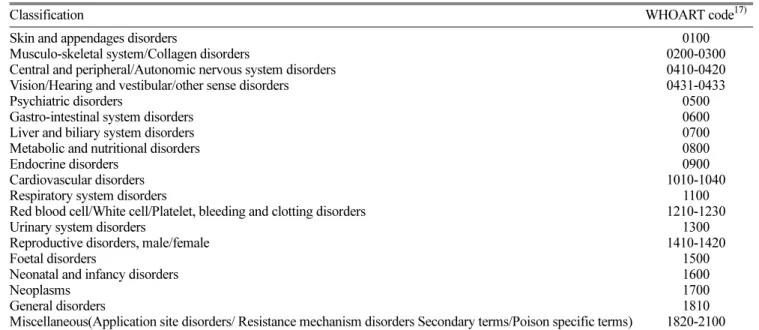
Table 1. Classification of clinical manifestations in adverse drug reactions.
Classification WHOART code17)
Skin and appendages disorders
Musculo-skeletal system/Collagen disorders
Central and peripheral/Autonomic nervous system disorders Vision/Hearing and vestibular/other sense disorders Psychiatric disorders
Gastro-intestinal system disorders Liver and biliary system disorders Metabolic and nutritional disorders Endocrine disorders
Cardiovascular disorders Respiratory system disorders
Red blood cell/White cell/Platelet, bleeding and clotting disorders Urinary system disorders
Reproductive disorders, male/female Foetal disorders
Neonatal and infancy disorders Neoplasms
General disorders
Miscellaneous(Application site disorders/ Resistance mechanism disorders Secondary terms/Poison specific terms)
0100 0200-0300 0410-0420 0431-0433
0500 0600 0700 0800 0900 1010-1040
1100 1210-1230
1300 1410-1420
1500 1600 1700 1810 1820-2100
약물유해반응의 증상 분류
ADR 증상의 분류에는 32개의 기관분류(system organ classes)와 180개의 상급용어(high level terms) 및 2,085개의 우선용어(preferred terms), 3,445개의 포함용어(included terms) 로 이루어져 있는 World Health Organization Adverse Reaction Terminology(WHOART) 코드 체계를 사용하였다.17,18) 먼저 지 역약국이나 외래환자가 보고한 ADR 증상과 일치하는 포함용 어나 우선용어를 검색하였고, 이에 해당되는 기관분류를 선택 하였다. 단, 본 연구에서는 Common Terminology Criteria for Adverse Events (CTCAE) v4.0 분류를 참고로,19) WHOART 의 기관분류 1코드가 동일한 경우 한 분류로 통합하고, 근골 격계 이상과 콜라겐 이상을 근골격계 및 콜라겐 이상으로 통 합하여, 32개로 이루어진 기관분류를 19개의 ADR 증상 분 류로 표시하였다. 19개의 증상 분류는 피부, 근골격계, 신경 계, 안과 및 이비인후과적, 정신과적, 위장관계, 간담도계, 대 사 및 영양관련, 내분비계, 심혈관계, 호흡기계, 혈액계, 비뇨
기계, 생식기계, 태아관련, 신생아 및 유아관련, 종양관련, 전 신성, 기타 증상으로 나누었다(Table 1).
원인약물의 약효별 분류
원인약물의 약효별 분류에는 American Hospital Formulary Service Drug Information 기준을 사용하였다.20)단, 본 연구에 서는 Anatomical Therapeutic Chemical (ATC) Classification System 분류를 참고로 하여,21) 평활근 이완제와 기타약물 항 목에서 비뇨생식기계 약물을 분리하였다. 또한, 기존 연구들 에서 진통제를 별도로 분류하여 ADR 보고빈도를 나타낸 점 을 고려하여,7-12)중추신경계 약물항목에서 진통제를 분리하 여 표시하였다. 이에 따라 원인약물들은 진통제, 항히스타민 제, 항감염제, 항암제, 자율신경계약 및 근이완제, 혈액생성 및 응고관련 약물, 심혈관계 약물, 중추신경계 약물, 진단관 련 약물, 전해질 및 열량 조절제, 안과 및 이비인후과 약물, 위장관계 약물, 비뇨생식기계 약물, 호르몬제, 호흡기계 약물, Table 2. Classification of causative drugs in adverse drug reactions.
Classification20) Drugs
Analgesics and antipyretics Nonsteroidal anti-inflammatory agents, acetaminophen, opiate agonists, opiate partial agonists Antihistamine drugs First and second generation antihistamines
Anti-infective agents Antihelmintics, antibacterials, antifungals, antimycobacterials, antivirals, antiprotozoals Antineoplastic agents
Autonomic drugs & skeletal
muscle relaxants Cholinergic agents, antimuscarinics, skeletal muscle relaxants Blood formation/ coagulation/
thrombosis
Antianemia agents, Antithrombotic agents, platelet aggregation inhibitors, thrombolytic agents, hematopoietic agents, hemorrheologic agents, antihemorrhagic agents
Cardiovascular drugs Cardiac drugs, antilipidemic agents, hypotensive agents, vasodilating agents, adrenergic blocking agents, calcium channel blocking agents, renin -angiotensin-aldostreone system inhibitors, diuretics Central nervous system agents
Barbiturates, opiate antagonists, anticonvulsants, psychotherapeutic agents, anorexigenic agents and respiratory and cerebral stimulants, anxiolytics and hypnotics, antimanic agents, antimigraine agents, antiparkinsonian agents, fibromyalgia agents, cholinergic agents
Diagnostic agents
Electrolytes, caloric and water
balance Acidifying agents, alkalinizing agents, replacement preparations, ion-removing agents, caloric agents, Eye, ear, nose and throat
preparations
Antiallergic agents, anti-infectives, anti-inflammatory agents, mydriatics, mouthwashes and gargles, vasoconstrictors, antiglaucoma agents
Gastrointestinal drugs
Antiacids and adsorbents, antidiarrheal agents, antiflatulents, cathartics and laxatives, cholelitholytic agents, digestants, emetics, antiemetics, antiulcer agents and acid suppressants, prokinetic agents, anti-inflammatory agents, antispasmodics
Genitourinary agents Genitourinary smooth muscle relaxants, 5-α-reductase inhibitors, phosphodiesterase inhibitors, selective α1 blockers
Hormones and synthetic substitutes
Adrenals, androgens, contraceptives, estrogens and antiestrogens, gonadotropins, antidiabetic agents, antihypoglycemic agents, parathyroid, pituitary, somatotropin agonists and antagonists, progestins, thyroid and antithyroid agents
Respiratory agents Antitussives, anti-inflammatory agents, bronchodilators, expectorants, mucolytic agents Skin and mucous membrane
agents
Anti-infectives, anti-inflammatory agents, antipruritics and local anesthetics, astringents, keratolytic agents, keratoplastic agents,
Vitamins and minerals Vitamin A, B, C, D, E, K, multivitamin preparations, minerals
Miscellaneous Antidote, antigout agents, biologic response modifiers, bone resorption inhibitors, complement inhibitors, disease modifying antirheumatic agents, immunosuppressive agents
피부 및 점막 약물, 비타민 및 무기질, 기타 약물 등 18개 약 효군으로 분류하였다(Table 2).
일반의약품 및 안전상비약품의 분석
처방전 없이 구입하여 복용한 일반의약품과 안전상비약품 의 경우를 처방의약품과 구분하여 해당 약물들의 ADR 증상 과 약효별 분류 특성을 분석하였다.
통계적 분석
기술통계분석을 사용하여 연속형 변수는 평균과 표준편차로 나타내었고, 범주형 변수는 빈도수와 백분율로 나타내었다.
연구 결과
약물유해반응의 보고양상 분석
총 1,967명 환자에서 2,912건의 ADR 의심사례가 보고되 었다. ADR 보고사례 수는 4월에 153예에서 5월 263예, 6월 265예, 7월 337예, 8월 404예, 9월에는 545예로 꾸준히 증가 하였다. 지역별 사례 수는 서울지역 492예, 부산지역 481예, 경기지역 330예, 인천지역에서 143예가 보고되었다. ADR 보고에 참여한 약국은 총 316개 약국이었으며, 지역별로는 경기지역 74개, 서울지역 54개, 부산지역 44개, 인천지역에
서 31개 약국이 참여하였다.
약물유해반응의 인과성 평가
전체 2,912건의 보고건수에 대해 약물과 유해반응간의 인 과성을 WHO-UMC 기준으로 평가하였을 때, 확실함 120건 (4.1%), 가능성 높음 524건(18%), 가능성 있음 2,182건 (74.9%), 가능성 적음 72건(2.5%), 평가곤란 14건(0.5%))으로 가능성 있음이 가장 많았다. 가능성 있음(possible) 이상으로 평가된 ADR만을 약물과 인과관계가 있다고 판단하고, 해당 환자 1,923명, 보고건수 2,826건(97.0%)에 대해 분석을 시행 하였다.
환자 특징
유의한 인과관계를 보인 환자 1,923명중 연령이 보고된 환 자는 1,828명이었고, 평균연령±표준편차는 55.1±17.0세였다.
12세 미만의 소아는 40명(2.2%), 12세이상 19세미만의 청소년 층은 24명(1.3%), 19세이상 65세미만의 성인은 1,188명 (65.0%), 65세 이상의 노인은 576명(31.5%)으로 성인이 가장 많았다. 성별이 보고된 환자는 1,812명이었으며, 이중 남성이 607명(33.5%), 여성이 1,205명(66.5%)이었다. 연령대별 여성 의 비율은 소아에서 52.8%, 청소년층에서 50.0%, 성인에서 67.9%, 노인에서 64.2%로, 청소년층을 제외한 전체 연령대
Table 3. Frequency of clinical manifestations in adverse drug reactions.
Classification No. of reports (%) Main manifestations (n)
Gastro-intestinal system disorders 950 (33.6) Abdominal discomfort (164), nausea (154), vomiting (129), diarrhea (101), mouth dry (91)
Nervous system disorders 420 (14.9) Dizziness (250), headache (76), tremor (29), sensory disturbance (25), limpness body (9)
Skin and appendages disorders 382 (13.5) Pruritus (114), Skin eruption (104), urticaria (50), diaphoresis (16), alopecia (13)
General disorders 380 (13.4) Facial or generalized edema (122), asthenia (67), fatigue (35), fever (23), facial flush (21)
Psychiatric disorders 310 (11.0) Somnolence (151), insomnia (95), anorexia (19), anxiety (7) Vision/ Hearing/ vestibular disorders 76 (2.7) Visual disturbance (28), taste alteration (18), red eye (9), eye pain (8) Cardiovascular disorders 63 (2.2) Palpitation (37), hypotension (10), hypertension (7)
Respiratory system disorders 58 (2.1) Coughing (17), dyspnea (15), epistaxis (4), sore throat (4) Urinary system disorders 50 (1.8) Urine discoloration (18), dysuria (16), urinary retention (5) Metabolic and nutritional disorders 43 (1.5) Weight gain (22), hypoglycemia (11)
Musculo-skeletal/ collagen disorders 41 (1.5) Myalgia (25), arthralgia (6)
Reproductive disorders 27 (1.0) Lactation nonpuerperal (9), breast pain (6), Blood cell/ clotting disorders 11 (0.4) Bruise (10), bleeding time increased (1) Liver and biliary system disorders 7 (0.2) Hepatic enzymes increased (6) Endocrine disorders 3 (0.1) Gynecomastia (3)
Neoplasms 2 (0.1) Breast cyst(1), breast fibrosis(1)
Miscellaneous 3 (0.1) Application site burning (2), medication stuck in throat (1)
에서 여성의 비율이 남성보다 높았다. 환자 1인당 ADR 발 생 건수는 평균 1.5건이었고, ADR 발생 건수당 관련 약물 수는 평균 2.2개로 나타났다.
약물유해반응 증상의 분석
ADR 증상의 분류별 발생빈도는 위장관계 증상이 950건 (33.6%)으로 가장 많이 나타났으며, 다음으로 신경계 증상이 420건(14.9%), 피부 증상이 382건(13.5%), 전신성 증상이 380건(13.4%)으로 많았다(Table 3,4). 단일 증상으로 가장 빈 도가 높았던 ADR 증상은 현기증으로 250건(8.8%)이었고, 복부 불편감이 164건(5.8%), 오심이 154건(5.4%), 졸림이 151건(5.3%)으로 빈도가 높게 나타났다(Table 3).
원인약물의 분석
원인약물을 약효별로 분류하였을 때, 진통제가 1,204건 (19.7%)으로 가장 많았으며, 다음으로 위장관계 약물이 1,103 건(17.7%), 중추신경계 약물이 683건(11.0%), 심혈관계 약물
이 594건(9.6%)으로 많았다(Table 4). 성분별 주요 약물로는 acetaminophen/tramadol 복합제 (383건), ranitidine (156건), aceclofenac (145건), mosapride (136건), streptokinase/
streptodornase 복합제 (130건), eperison (114건), rebamipide (112건), loxoprofen (111건), acetaminophen (108건), Artemisia asiatica herb (88건), cefaclor (83건), amoxicillin/clavulanate 복합제 (82건), gabapentin (80건)이 높은 빈도를 보였다.
일반의약품 및 안전상비약품의 약물유해반응 분석 일반판매 의약품 및 안전상비약품에서는 114명의 환자에 서 203건의 ADR이 보고되었으며 해당 약품은 105개 품목 이었다. ADR 증상은 피부 증상이 76건(37.4%)으로 가장 많 이 나타났으며 다음으로 위장관계 증상이 48건(23.6%), 신경 계 증상이 24건(11.8%), 전신성 증상이 22건(10.8%)으로 많 았다. 가장 빈도가 높았던 증상은 가려움증과 발진으로 각각 20건(9.9%)이었고, 다음으로 두드러기가 15건(7.4%), 현기증 과 구토가 각각 11건(5.4%)으로 빈도가 높게 나타났다(Table Table 4. Frequency of drugs to cause the adverse drug reactions.
Classification No. of reports (%) Main drugs (n)
Analgesics 1204 (19.7) Acetaminophen+tramadol (383), acetaminophen (108), tramadol (15), aceclofenac (145), loxoprofen (111), meloxicam (64), talniflumate (56), dexibuprofen(53), ibuprofen (51) Gastrointestinal drugs 1103 (17.7) Ranitidine (156), mosapride (136), rebamipide (112), Artemisia asiatica herb (88), itopride
(68), levosulpiride (57), cimetidine (57) Central nervous system
agents 683 (11.0) Gabapentin (80), pregabalin (77), alprazolam (47), hydroxyzine (44), diazepam (26), clonazepam (23)
Cardiovascular drugs 594 (9.6) Atorvastatin (58), amlodipine+telmisartan (19), amlodipine (46), telmisartan(8), propranolol (30), hydrochlorthiazide + losartan (13), hydrochlorthiazide (23), losartan (14)
Anti-infective agents 571 (9.2) Cefaclor (83), amoxicillin+clavulanate (82), clarithromycin (36), levofloxacin (28), ofloxacin (26)
Respiratory agents 361 (5.8) Guaifenesin+chlorpheniramine+dihydrocodeine+methylephedrine (43), erdosteine (29), acetylcysteine (28), montelukast (26), pseudoephedrine (26)
Hormones and synthetic
substitutes 356 (5.7) Prednisolone (74), methylprednisolone (66), metformin +sitagliptine (8), metformin (47), sitagliptine (7), glimepiride (28)
Antihistamine drugs 276 (4.4) Levocetrizine (51), azelastine (49), bepotastine (37), chlorpheniramine (25), fexofenadine (24)
Autonomic drugs &
skeletal muscle relaxants 203 (3.3) Eperisone (114), chlorphenesin (24), cyclobenzaprine (24), dantrolene (11), baclofen (9) Blood formation/coagula-
tion agents 118 (1.9) Aspirin 100mg (37), clopidogrel (25), ferrous sulfate (15), cilostazol (12), warfarin (10) Genitourinary agents 118 (1.9) Tamsulosin (23), terazosin (15), solifenacin (14), alfuzosin (12), propiverine (12) Antineoplastic agents 95 (1.5) Capecitabine (29), methotrexate (19), sunitinib (10), gefitinib (8), erlotinib (6)
Vitamins 95 (1.5) Cholecalciferol+CaCO3 (13), Cholecalciferol+Ca citrate (12), isotretinoin (15), folic acid (8) Skin and mucous
membrane agents 65 (1.0) ketoprofen (14), Benzoyl peroxide (6), terbinafine (5) Eye, ear, nose and throat
preparations 61 (1.0) Benzydamine (9), hyaluronate (9), timolol (3), timolol+dorzoamide(3), timolol+travoprost (2)
Miscellaneous 292 (4.7) streptokinase+streptodornase (130), risedronate (18), tacrolimus (15), cyclosporine (12), mycophenolate (12)
5). 원인약물로는 진통제가 86건(40.0%)으로 가장 많았으며, 다 음으로 피부점막계 약물이 35건(16.3%), 비타민 및 무기질계 약물이 20건(9.3%)으로 많았다. 약품으로는 acetaminophen/
chlorzoxazone 복합제와 ketoprofen 플라스타제제가 높은 빈도 를 보였다
고 찰
본 연구는 전국 지역약국에서 대한약사회 지역의약품안전 센터에 보고된 외래환자의 ADR 사례를 분석한 것으로, 보고 된 ADR사례 환자는 여성이 남성보다 많았고, 연령대는 50대 가 가장 많았다. ADR 증상은 위장관계 증상과 신경계증상, 피부 증상의 빈도가 높았으며, 원인 약물로는 진통제와 위장 관계 약물, 중추신경계 약물이 높은 빈도로 나타났다.
본 연구에서 ADR사례 환자 중 여성이 66.5%였고, 특히 11세에서 20세의 연령대를 제외한 전체 연령대에서 여성의 비율이 남성보다 높았다. 이 결과는 국내외 ADR 사례연구 들에서 여성의 비율이 55~60%로 남성보다 높게 보고되었고, 기전은 확실하지 않으나 ADR 발생위험이 남성에 비해 여성 에서 1.5~1.7배 많다는 연구결과와 유사하였다.8-10,22,23)
ADR 증상으로 위장관계와 신경계, 피부 증상의 빈도가 높았는데 이는 국내외의 다른 연구에서 세 부문의 증상들이 높은 빈도를 보인 것과 유사하다.8,9,11,22) 그러나 다른 연구들 에서 피부 증상이 가장 흔했던 것과는 달리 본 연구에서는 위장관계 증상이 신경계와 피부 증상에 비해 2배 이상의 높 은 빈도를 보였다.
ADR의 원인약물로 진통제와 중추신경계 외에 위장관계 약물이 17.7%로 높은 빈도를 보여, 국내의 다른 연구에서 위장관계 약물이 2.4~5.0%로 낮은 빈도를 보인 것과는 차이 를 보였다.8,9,11) 상급종합병원 입원환자가 주 대상이었던 다
른 연구들과는 달리, 본 연구는 주로 종합병원이나 병·의원 의 처방을 받는 지역약국 외래환자를 대상으로 하였다. 건강 보험심사평가원이 발표한 2013년 상반기 의료기관별 처방분 석에 따르면 종합병원 및 병·의원의 소화기관용약 처방률이 종합병원 40.2%, 병원 47.8%, 의원 46.7%로, 상급종합병원 27.6%에 비해 높게 나타났다.24) 따라서, 본 연구에서 ADR 의 원인약물로 위장관계 약물이 높은 빈도를 보인 것은, 연 구대상인 외래환자들에서 위장관계 약물의 복용 빈도가 다른 연구들에서 보다 상대적으로 더 높아, 그 영향이 반영된 것 으로 평가된다.
전체 원인 약물 중 성분으로는 acetaminophen/tramadol 복 합제가 가장 많이 보고되었는데, 실제 복용빈도가 반영된 결 과일 수도 있으나, 이 약물의 ADR 모니터링에 주의해야 할 필요성을 제시하였다. Acetaminophen/tramadol 복합제에 의 한 ADR 증상으로는 위장관계와 신경계 증상이 많았으며, 위장관계 증상에는 오심과 구토가 가장 많았고 신경계 증상 에는 현기증이 가장 흔했다.
일반판매의약품 및 비상상비약에 의한 ADR은 203건으로 전체 건수의 7.2%를 차지하였다. ADR의 증상과 원인약물의 양상은 처방의약품을 포함하는 전체 통계와는 다르게 피부 증상이 37.4%로 위장관계 증상(23.6%)보다 높은 빈도를 보 였다. 원인약물로는 진통제(40.0%)에 이어 피부점막계 약물 (16.3%)과 비타민 및 무기질계 약물(9.3%)이 빈도가 높았는 데, 일반판매의약품 중 피부적용 약품과 복합비타민제가 많 이 복용되고 있는 것을 고려할 때 복용빈도가 반영된 결과 라고 생각된다.
본 연구에서 보고에 참여한 약국 수는 316개로, 2013년 9 월 건강보험심사평가원에 등록된 전국의 지역약국수가 20,943개임를 고려할 때,25) 아직까지 참여약국 수가 적은 것 으로 생각된다. 약물감시활동 교육 및 홍보 강화를 통해 낮은 Table 5. Frequency of clinical manifestations of adverse drug reactions on non-prescription drugs.
Classification No. of reports (%) Main manifestations (n)
Skin and appendages disorders 76 (37.4) Pruritus (20), Skin eruption (20), urticaria (15), Gastro-intestinal system disorders 48 (23.6) Vomiting (11), abdominal pain (11), nausea (9) Nervous system disorders 24 (11.8) Dizziness (11), headache (7), sensory disturbance (3)
General disorders 22 (10.8) Facial or generalized edema (11), facial flush (4), allergic reaction(3) Psychiatric disorders 8 (3.9) Insomnia (4), drug addiction or dependence (3), anorexia (1)
Vision/ Hearing/ vestibular disorders 7 (3.4) Red eye (3), visual disturbance (2), eye pain (1), visual field defect (1) Cardiovascular disorders 7 (3.4) Palpitation (7)
Respiratory system disorders 4 (2.0) dyspnea (2), asthma aggravated (1), larynx pain (1) Urinary system disorders 2 (1.0) Urine discoloration (1), urinary retention (1) Blood cell/ clotting disorders 2 (1.0) Bruise (1), gingival bleeding (1)
Reproductive disorders 2 (1.0) Burning feeling vagina (1), withdrawal bleeding missed (1) Miscellaneous 1 (0.5) Application site burning (1)
참여율을 개선해나갈 필요가 있다. 한편 서울, 부산, 경기, 인 천지역의 등록약국 수가 전국 등록약국 수의 56.5%(11,835개) 임을 고려할 때,25)이들 4개 지역에서 참여한 약국수가 203 개로 전체 참여약국 수의 64.2%를 차지한 것은, 과반수 이 상의 약국분포가 반영된 결과로 평가된다.
ADR 보고에 있어 보고자의 태도와 지식에 의해 보고율 뿐만 아니라 보고되는 원인약물의 순위도 달라질 수 있는 것으로 알려져 있다.26-28) 2013년 9월 보고사례수가 2013년 4월에 비해 356%, 2013년 8월에 비해 135% 증가한 점을 볼 때, 지속적인 보고 증가가 예상되므로 추가 연구를 통해 외래환자 ADR 양상의 변화 여부를 점검할 필요가 있다.
본 연구에서는 지역약국을 통한 보고라는 특성상 환자의 약력, 검사기록, 병존질환에 관한 정보가 없어 인과성 평가 에서 한계가 있었다. 이러한 문제를 해결하기 위해서는, 현 재 상급종합병원에서 발행하는 약 처방전 외에 일반병원과 의원에서 발행하는 약 처방전에도 질병코드 기재를 의무화하 는 것이 필요하다. 또한 ADR이 보고된 환자의 최근 처방정 보가 함께 보고되도록 시스템을 보완하여 약력정보를 함께 제공할 필요가 있다.
결 론
전국 지역약국에서 대한약사회 지역의약품안전센터에 보고 된 ADR을 분석하여, 외래환자에서의 ADR 양상 및 원인약 물들을 분석하였다. 가장 빈도가 높은 ADR 증상은 위장관 계와 신경계, 피부 증상이었고, 원인약물로는 진통제와 위장 관계 약물, 중추신경계 약물의 빈도가 높았다. 외래환자 ADR에 대해 분석된 자료를 지역약국 약사에게 알리고 교육 자료에 활용함으로써 효과적인 ADR 모니터링과 예방활동을 모색하는 것이 필요하다.
참고문헌
1. Ministry of Food and Drug Safety (MFDS). Provision of Safety Information Management Regulation of Drugs.
MFDS Notice No.2012-18; 2012.
2. Cohen AL, Budnitz DS, Weidenbach KN, et al. National surveillance of emergency department visits for outpatient adverse drug events in children and adolescents. J Pediatr 2008; 152(3): 416-21.
3. Bourgeois FT, Shannon MW, Valim C, et al. Adverse drug events in the outpatient setting: an 11-year national analysis.
Pharmacoepidemiol Drug Saf 2010; 19(9): 901-10.
4. Bates DW, Spell N, Cullen DJ, et al. The costs of adverse drug events in hospitalized patients. Adverse Drug Events Prevention Study Group. JAMA 1997; 277(4): 307-11.
5. Choi NK, Park BJ. Adverse drug reaction surveillance
system in Korea. J Prev Med Public Health 2007; 40(4):
278-84.
6. Korea Institute of Drug Safefy & Risk Management (KIDS).
Trends in drug safety information reporting No. 3; 2013.
7. Yoon SJ, Lee SM, Soo KJ. Analysis of Active Surveillance of ADR in Eulji Medical Center. J Kor Soc Health-Syst Pharm 2012; 29(4): 430-6.
8. Rew SY, Koh YI, Shin HY, et al. Reporting and Clinical Features of Adverse Drug Reactions from a Single University Hospital. Korean J Asthma Allergy Clin Immunol 2011;
31(3): 184-91.
9. Kim MG, Kang HR, Kim JH, et al. Analysis of adverse drug reactions collected by an electronic reporting system in a single hospital. Korean J Med 2009; 77(5): 601-9.
10. Choi JH, Shin YS, Suh CH, et al. The frequency of adverse drug reactions in a tertiary care hostpital in Korea.
Korean J Med 2004; 67(3): 290-6.
11. Lee JH, Park KH, Moon HJ, et al. Spontaneous reporting of adverse drug reactions through electronic submission from regional society healthcare professionals in Korea.
Yonsei Med J 2012; 53(5): 1022-7.
12. Rhew KY, Cho HK, Lee S. Characteristics of cardiovascular adverse drug reactions reported to KFDA. Kor J Clin Pharm 2012; 22(1): 41-6.
13. Gandhi TK, Weingart SN, Borus J, et al. Adverse drug events in ambulatory care. N Engl J Med 2003; 348(16):
1556-64.
14. van Grootheest AC, de Jong-van den Berg LT. The role of hospital and community pharmacists in pharmacovigilance.
Res Social Adm Pharm 2005; 1(1): 126-33.
15. World Health Oganization (WHO). WHO-UMC causality assessment. http://www.who-umc.org/DynPage.aspx?id=
98029&quicksearchquery=umc+category:
16. Edwards IR, Aronson JK. Adverse drug reactions:
definitions, diagnosis, and management. Lancet 2000;
356(9237): 1255-9.
17. World Health Oganization (WHO). The WHO Adverse Reaction Terminology (WHO-ART). http://www.umc-products.
com/DynPage.aspx?id=73589&mn1=1107&mn2=1664 18. Lim KH, Shin HT, Sohn HS, et al. Comparison of WHO-
ART versus MedDRA, internationally standardized terminology of adverse drug reaction. Kor J Clin Pharm 2007; 17(1): 46-52.
19. National Cancer Institute (NCI). Common Terminology Criteria for Adverse Events (CTCAE) v4.0. http://ctep.
cancer.gov/protocolDevelopment/electronic_applications/ctc.
htm#ctc_40
20. American Society of Health-System Pharmacists (ASHP).
AHFS Drug Information 2013. Bethesda: ASHP. 2013.
21. World Health Oganization (WHO). Anatomical Therapeutic Chemical (ATC) Classification System. http://www.whocc.
no/atc_ddd_index/
22. Thiessard F, Roux E, Miremont-Salame G, et al. Trends in spontaneous adverse drug reaction reports to the French pharmacovigilance system (1986-2001). Drug Saf 2005;
28(8): 731-40.
23. Rademaker M. Do women have more adverse drug reactions? Am J Clin Dermatol 2001; 2(6): 349-51.
24. Health Insurance Review & Assessment (HIRA) Service.
Quality assessment of medical care (2013). http://www.
hira.or.kr/cms/information/05/03/04/01/__icsFiles/ afieldfile/
2013/09/26/01_2.pdf
25. Statistics Korea. Statistical database of Korean Statistical Information Service (KOSIS). http://kosis.kr/statisticsList/
statisticsList_01List.jsp?vwcd=MT_ZTITLE&parentId=D 26. Gavaza P, Brown CM, Lawson KA, et al. Influence of
attitudes on pharmacists' intention to report serious adverse drug events to the Food and Drug Administration. Br J Clin Pharmacol 2011; 72(1): 143-52.
27. Cosentino M, Leoni O, Oria C, et al. Hospital-based survey of doctors' attitudes to adverse drug reactions and perception of drug-related risk for adverse reaction occurrence. Pharmacoepidemiol Drug Saf 1999; 8(Suppl 1): S27-35.
28. Kim H. Attitude and knowlege of community pharmacisits to adverse drug reaction reporting. Kor J Clin Pharm 2009; 19(2): 159-66.