J O U R N A L O F
Veterinary Science
Abstract
2)In te rm e dia te fila m e n ts, in c lu din g n e s tin a n d vi- m e n tin , a re fou n d in s pe cific c e ll ty pe s in ce n tra l n e rv ou s sy ste m (CNS ) tis su e s, pa rticu larly im m atu re glial ce lls a n d m u ltipo te n t pro ge n itor c e lls. In th e pre se n t s tu dy , th e e x pre ss ion p atte rn s of n e stin a n d vim e n tin in th e s pin a l c ord s o f rats w ith e xp e rim e n ta l autoimmune encephalom yelitis (EAE) and the re s po n se of ce lls containing filam ents against acute a u toim m u n e in ju ry w e re e x am in e d by im m u n o h isto ch e m is try.
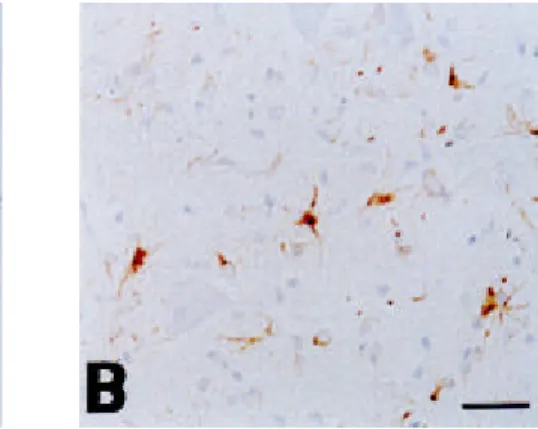
Ne s tin im m u n os tain in g w a s on ly w e ak ly de te cte d in va sc u la r e n do th e lia l ce lls bu t n o t in a n y c e ll ty pe s in th e sp in al c ord in n orm a l an d ad ju v an t-im m u n ize d rats. At the peak stage of EAE, n e stin -im m u n ore a tivity w a s re co gn ize d in so m e as tro cy te s in th e g ra y m a tte r an d w h ite m atte r. Vim e n tin w a s im m u n op os itive in so m e a stroc yte s a n d m ac rop h ag e s in EAE le s ion s , w h ile vim e n tin w as n orm a lly de te cte d in e pe n dy m a l ce lls o f c e n tra l ca n als in th e ra t s pin a l co rd s.
We po stu late th at n orm a l an im als m ay c on ta in m u ltip ote n t p rog e n itor c e lls in th e sp in al co rd p a- re n c h ym a a s w e ll as in th e su bp ial le sio n a n d e p e n - dy m a. Mu ltipo te n t pro ge n ito r ce lls m a y a ctiv ate to tra n sform in to n e ce s sa ry ce lls , in clu d in g n e u ro n s, as tro cy te s or o lig od e n dro cy te s , de pe n d in g on CNS n e e d s. Ap pro priate co n tro l of p ro ge n ito r ce lls in th e in ju re d CN S is a n alte rn ativ e ch o ice fo r CNS re m o de lin g.
Ke y w ords: autoimmune encephalomyelitis, nestin, vimentin, astrocyte
Introduction
Experimental autoimmune encephalomyelitis (EAE) is an
*Corresponding author: Tae-kyun Shin
Department of Veterinary Medicine, Cheju National University, Jeju 690-756, Korea
Tel: +82-64-754-3363; Fax: +82-64-756-3354 E-mail: [email protected]
autoimmune disease of the central nervous system (CNS) that is used to study human demyelinating diseases such as multiple sclerosis [10]. The clinical course of EAE is characterized by weight loss, ascending progressive paralysis, and finally, spontaneous recovery. These steps are matched by an inflammatory response in the CNS, which is cha- racterized by the infiltration of T cells and macrophages, and the activation of microglia and astrocytes at the peak stage [11, 12]. Brain cells, including astrocytes, react to the inflammatory cells infiltrating in the CNS and encase the damaged lesions [8]. During this process, these cells may transform from the resting stage to the activation stage. In a few cases, it has been postulated that precursor cells may activate and transform into neuronal or glial cells around the injured lesion.
Intermediate filaments are composed of different filament proteins depending on cell type, developmental stage, and in some cases on activation stage. Three intermediate filaments, nestin, vimentin, and glial fibrillary acidic protein (GFAP), are found in specific cell types in the CNS, particularly astrocytes. Nestin and vimentin are the main intermediate filaments in immature astroglial cells, whereas maturing astrocytes contain vimentin and GFAP [6]. Replacement of nestin by vimentin and GFAP occurs during the maturation or differentiation of multipotent neural precursor into astrocytes or neurons, particularly during embryonic deve- lopment [13].
Of the three intermediate filaments, expression of vimentin and GFAP is well documented in reactive astrocytes in CNS tissues, including in experimental brain injury [2], autoimmune encephalomyelitis [4], and neurodegenerative diseases such as amyotrophic lateral sclerosis [14, 15]. It has been suggested that nestin-expressing cells reflect a sustaining active stage of embryonic precursor cells, and are involved in repairing damaged CNS tissues. This phenomenon is one of the major features of EAE tissues, and is characterized by cellular infiltration of inflammatory cells, encasement of inflammatory lesions, and finally, reactive astrogliosis [8]. During recovery from EAE inflammation, it is likely that both nestin and vimentin are dynamically changed.
The aim of this study is to examine the expression of
Embryonic Intermediate Filaments, Nestin and Vimentin, Expression in the Spinal Cords of Rats with Experimental Autoimmune Encephalomyelitis
Tae-kyun Shin*, Yong-duk Lee and Ki-bum Sim1
Department of Veterinary Medicine, College of Agriculture and Life Sciences, Cheju National University, Jeju 690-756, South Korea
1Department of Neurosurgery, College of Medicine, Cheju National University, Jeju 690-756, Korea
Received February 2, 2003 / Accept ed Mar ch 18, 2003