Address for correspondence: Kwang Ha Yoo, M.D.
Department of Internal Medicine, Konkuk University Hospital, Konkuk University College of Medicine, Hwayang-dong, Gwanjin-gu, Seoul 143-729, Korea
Phone: 82-2-2030-7522, Fax: 82-2-2030-7458, E-mail: [email protected]
*These two authors equally contributed to this work.
All institutions which participated in this study are designated clinical research center for chronic obstructive airway diseases by Ministry of Health and Welfare.
Received: Feb. 9, 2011 Accepted: Mar. 14, 2011 Tuberc Respir Dis 2011;70:199-205
CopyrightⒸ2011. The Korean Academy of Tuberculosis and Respiratory Diseases. All rights reserved.
새로운 호흡기 장애 판정 기준의 제안
1아주대학교 의과대학 호흡기내과학교실, 2울산대학교 의과대학 서울아산병원 호흡기내과학교실, 3분당서울대병원 내과, 4서울시립 보라매병원 내과, 5경희대병원 내과, 6차의과대학교 분당차병원 내과, 7한림대학교 강동성심병원 내과, 8한림대학교 성심병원 내과,
9성균관대학교 의과대학 삼성서울병원 내과학교실, 10성균관대학교 의과대학 내과학교실 강북삼성병원 호흡기내과, 11연세대학교 의과대학 내과학교실, 12원광대학교 의과대학 산본병원 내과학교실, 13가톨릭대학교 의과대학 서울성모병원 내과학교실, 14가톨릭대
학교 의과대학 의정부성모병원 내과학교실, 15가톨릭대학교 의과대학 여의도성모병원 내과학교실, 16건국대학교 의과대학 내과학교실
박주헌1*, 이재승2*, 허진원2, 오연목2, 이상도2, 이세원3, 윤호일3, 김덕겸4, 이창훈4, 박명재5, 김은경6, 박용범7, 황용일8, 정기석8, 박혜윤9, 임성용10, 정지예11, 김영삼11, 김휘정12, 이진국13, 윤형규15, 김영균13, 김진우14, 유지홍5, 유광하16
Proposal of New Criteria for Assessing Respiratory Impairment
Joo Hun Park, M.D.1*, Jae Seung Lee, M.D.2*, Jin-Won Huh, M.D.2, Yeon-Mok Oh, M.D.2, Sang-Do Lee, M.D.2, Sei Won Lee, M.D.3, Ho Il Yoon, M.D.3, Deog Kyeom Kim, M.D.4, Chang Hoon Lee, M.D.4, Myung Jae Park, M.D.5, Eun Kyung Kim, M.D.6, Yong Bum Park, M.D.7, Yong Il Hwang, M.D.8, Ki-Suck Jung, M.D.8, Hye Yoon Park, M.D.9, Seong Yong Lim, M.D.10, Ji-Ye Jung, M.D.11, Young Sam Kim, M.D.11, Hui Jung Kim, M.D.12, Chin Kook Rhee, M.D.13, Hyoung-Kyu Yoon, M.D.15, Young Kyoon Kim, M.D.13, Jin Woo Kim, M.D.14, Jee-Hong Yoo, M.D.5, Kwang Ha Yoo, M.D.16
1Department of Pulmonary and Critical Care Medicine, Ajou University School of Medicine, Suwon, 2Department of Pulmonary and Critical Care Medicine, Asan Medical Center, University of Ulsan College of Medicine, Seoul, 3Department of Internal Medicine, Seoul National University Bundang Hospital, Seongnam, 4Department of Internal Medicine, Seoul Metropolitan Government-Seoul National University Boramae Medical Center, 5Department of Internal Medicine, Kyung Hee University Hospital, Seoul, 6Department of Internal Medicine, CHA Bundang Medical Center, CHA University, Seongnam, 7Department of Internal Medicine, Hallym University Sacred Heart Hospital, Seoul, 8Department of Internal Medicine, Hallym University Sacred Heart Hospital, Anyang, 9Department of Internal Medicine, Samsung Medical Center, 10Department of Internal Medicine, Kangbuk Samsung Hospital, Sungkyunkwan University School of Medicine, Seoul, 11Department of Internal Medicine, Yonsei University College of Medicine, Seoul, 12Department of Internal Medicine, Wonkwang University Sanbon Hospital, Gunpo, 13Department of Internal Medicine, St. Mary's Hospital, Seoul, 14Department of Internal Medicine, Uijeongbu St. Marry's Hospital, Uijeongbu,
15Department of Internal Medicine, Yeouido St. Marry's Hosital, The Catholic University of Korea College of Medicine,
16Department of Internal Medicine, Konkuk University College of Medicine, Seoul, Korea
Social welfare services for respiratory-disabled persons in Korea are offered based on the respiratory impairment grade, which is determined by 3 clinical parameters; dyspnea, forced expiratory volume in 1 second (FEV1), and arterial oxygen tension. This grading system has several limitations in the objective assessment of respiratory impairment. We reviewed several guidelines for the evaluation of respiratory impairment and relevant articles. Then, we discussed a new grading system with respiratory physicians. Both researchers and respiratory physicians agreed that pulmonary function tests are essential in assessing the severity of respiratory impairment, forced vital capacity (FVC), FEV1 and single breath diffusing capacity (DLco) are the primarily recommended tests. In addition, we agreed that arterial blood gas analysis should be reserved for selected patients. In conclusion, we propose a new respiratory impairment grading system utilizing a combination FVC, FEV1 and DLco scores, with more social discussion included.
Key Words: Respiratory System; Disability Evaluation; Respiratory Function Tests; Spirometry; Pulmonary Diffusing Capacity
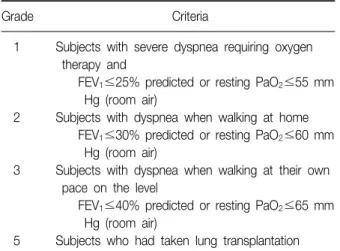
Table 1. Respiratory impairment grading according to Welfare of Disabled Persons Act4
Grade Criteria
1 Subjects with severe dyspnea requiring oxygen therapy and
FEV1≤25% predicted or resting PaO2≤55 mm Hg (room air)
2 Subjects with dyspnea when walking at home FEV1≤30% predicted or resting PaO2≤60 mm Hg (room air)
3 Subjects with dyspnea when walking at their own pace on the level
FEV1≤40% predicted or resting PaO2≤65 mm Hg (room air)
5 Subjects who had taken lung transplantation FEV1: forced vital capacity in 1 second; PaO2: arterial oxygen tension.
서 론
최근 국내 장애인등록 환자수는 지속적으로 증가하고 있으며, 이 중 호흡기장애인은 2005년 10,815명에서 2008 년 14,393명으로 33.3% 증가하였다1. 이와 함께 최근 장 애인연금제도의 시행으로 호흡기장애인의 사회적 복지서 비스 수요가 증가하고 있다. 장애인은 의학적 또는 사회 적 접근방식에 따라 다양하게 정의되는데, 세계보건기구 에서는 장애(Impairment), 능력장애(Disability), 사회적 불리(Handicap)를 기준으로 장애인의 개념을 정의하였다2. 국내법적으로는 장애인복지법에서 장애인을 신체적, 정 신적 장애로 오랫동안 일상생활이나 사회생활에서 상당 한 제약을 받는 자로 정의하고 있다3. 우리나라의 장애인 에 대한 국가복지서비스는 장애인복지법시행규칙에 규정 된 장애등급 판정 기준에 의해 제공되고 있다. 장애인들 에게 공정한 복지서비스를 제공하기 위해서는 반드시 공 정하고 객관적인 장애등급 심사가 전제되어야 하며, 이를 위해서는 일상활동이나 사회활동의 제한 정도를 잘 반영 할 수 있는 검사법을 이용하여야 할 것이다. 현재의 장애 인복지법시행규칙에는 호흡기장애 등급을 호흡곤란 증상 의 정도, 1초간 노력성호기량(forced expiratory volume in 1 second, FEV1)과 동맥혈 산소분압(PaO2)을 기준으로 하여 장애등급을 나누고 있다4. 그러나, 호흡곤란 증상의 정도, FEV1과 PaO2로 다양한 질환에 의해 유발되는 호흡 기장애를 객관적이고 공정하게 평가하기에는 부족한 점이 있다5,6. 이에 저자들은 의학적으로 타당하며 객관적인 호 흡기장애 평가기준을 마련해 보고자 하였다.
대상 및 방법
1. 호흡기장애 등급 판정의 국내외 지침 검토 일차로 4명의 호흡기내과 전문의가 장애인복지법시행 규칙에서의 호흡기장애 평가기준과 최근 발표된 대한의 학회 호흡기장애 평가지침을 우선 검토한 후, 미국흉부학 회(American Thoracic Society, ATS)와 미국의학회 (American Medical Association)의 장애평가지침 및 관련 문헌들을 검토하였다. 미국의학회지침은 2008년에 제6판 (edition)이 나왔으나, 현재 많이 사용되고 있지 않아 5판 을 검토하였다.
2. 새로운 호흡기장애 등급 판정의 기준 제안 호흡기장애 등급 판정에 대한 국내외 지침과 관련 문헌
을 검토한 후 현재의 국내 호흡기 장애 평가기준의 문제점 과 개선책에 대해 근거창출 임상연구 국가사업단 산하 만 성 기도폐쇄성 질환 임상연구센터 참여 호흡기내과 전문 의들간의 토론을 거친 후 새로운 호흡기장애 등급 판정기 준을 제안하였다.
결 과
1. 국내외 호흡기장애 판정 지침의 비교
현재의 장애인복지법시행규칙에는 주관적인 호흡곤란 증상의 정도와 안정시의 FEV1과 PaO2값을 토대로 호흡기 장애 등급을 1∼3급으로 분류하고, 폐이식 환자의 경우 5급으로 분류하고 있다(Table 1)4. 2009년에 발표된 대한 의학회 호흡기장애지침은 FEV1과 PaO2에 추가적으로 노 력성폐활량(forced vital capacity, FVC), 폐확산능(Diffus- ing capacity for carbon monoxide, DLCO), 동맥혈 이산화 탄소분압(PaCO2)값을 이용하여 호흡장애를 5단계로 분류 하였다(Table 2)6. 대한의학회지침에서 호흡기장애 1, 2, 3급 판정 FEV1과 PaO2 기준 값은 장애인복지법시행규칙 상의 1∼3급 판정기준 값과 동일하였다. 대한의학회지침 에서는 환자의 증상 중에서 호흡곤란 정도는 판정기준에 서 제외하였으나, 외상이나 수술 후 흉통을 호흡기장애 기준에 포함시켰다. 또한 대한의학회지침에서는 다음과 같은 여러 특수사항에 대한 장애기준을 정하였다. 흉벽 결손의 치료를 위하여 흉벽창으로 치료를 받는 환자, 흉곽 기형(a distorted chest), 늑막기종(pleural emphysema),
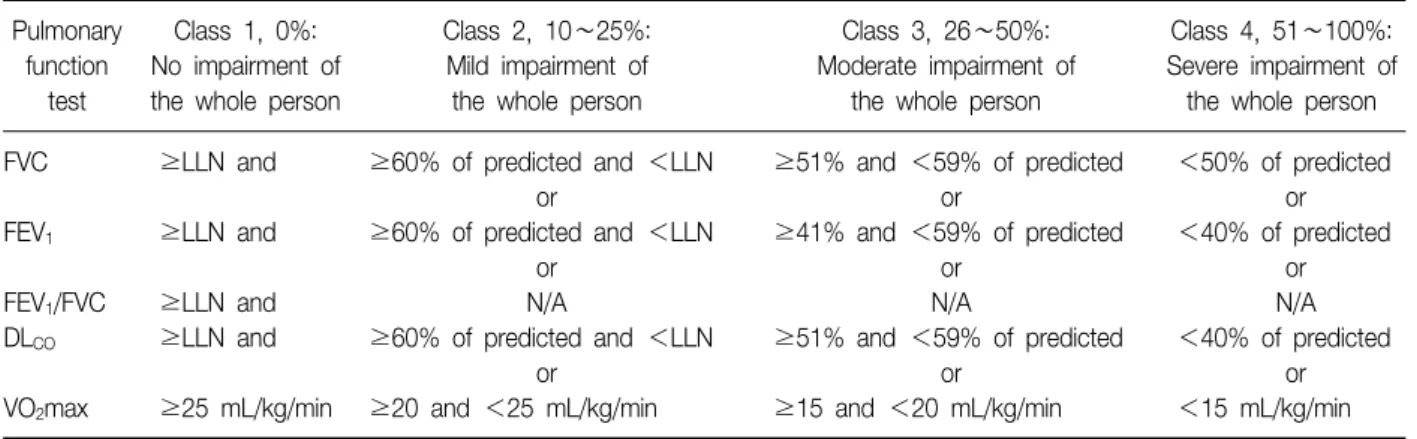
Table 4. American Medical Association classification of respiratory impairment9 Pulmonary
function test
Class 1, 0%:
No impairment of the whole person
Class 2, 10∼25%:
Mild impairment of the whole person
Class 3, 26∼50%:
Moderate impairment of the whole person
Class 4, 51∼100%:
Severe impairment of the whole person FVC ≥LLN and ≥60% of predicted and <LLN ≥51% and <59% of predicted <50% of predicted
or or or
FEV1 ≥LLN and ≥60% of predicted and <LLN ≥41% and <59% of predicted <40% of predicted
or or or
FEV1/FVC ≥LLN and N/A N/A N/A
DLCO ≥LLN and ≥60% of predicted and <LLN ≥51% and <59% of predicted <40% of predicted
or or or
VO2max ≥25 mL/kg/min ≥20 and <25 mL/kg/min ≥15 and <20 mL/kg/min <15 mL/kg/min FVC: forced vital capacity; FEV1: forced vital capacity in 1 second; DLco: diffusing capacity for carbon monoxide; VO2max: maximum oxygen consumption; LLN: lower limit of normal.
Table 2. Respiratory impairment grading according to guidelines of the Korean Academy of Medical Science6
Not impaired 5th 4th 3rd 2nd 1st
FVC, % ≥61 − 51∼60 41∼50 36∼40 ≤35
FEV1, % ≥61 51∼60 41∼50 31∼40 26∼30 ≤25
DLCO, % ≥61 − − 51∼60 41∼50 ≤40
PaO2, mm Hg ≥66 − − 61∼65 56∼60 ≤55
PaCO2, mm Hg ≤44 − − 45∼50 51∼59 ≥60
FVC: forced vital capacity; FEV1: forced vital capacity in 1 second; DLco: diffusing capacity for carbon monoxide; PaO2: arterial oxygen tension; PaCO2: arterial carbon dioxide tension.
Table 3. American Thoracic Society impairment categories, with corresponding description of ability to perform job de- mands8
Categories Criteria Ability to perform job demands
Normal FVC≥80% of predicted, and FEV1≥80% of predicted, and FEV1/FVC×100≥75%, and DLCO≥80% of predicted
Mildly impaired FVC 60~79% of predicted, or Usually not correlated with diminished ability to perform most jobs FEV1 60∼79% of predicted, or
FEV1/FVC×100 60∼74%, DLCO 60∼79% of predicted
Moderately impaired FVC 51∼59% of predicted, or Progressively lower levels of lung function correlated with FEV1 41∼59% of predicted, or diminishing ability to meet the physical demands of many jobs FEV1/FVC×100 41∼59% or
DLCO 41∼59% of predicted
Severely impaired FVC≤50% of predicted, or Unable to meet the physical demands of most jobs, including FEV1≤40% of predicted, or travel to work
FEV1/FVC×100≤40%, or DLCO≤40% of predicted
FVC: forced vital capacity; FEV1: forced vital capacity in 1 second; DLco: diffusing capacity for carbon monoxide.
Table 5. Proposal of new criteria for assessing respiratory impairment
Grade Criteria
1 FVC≤35% of predicted or
FEV1≤25% of predicted or DLCO≤25% of predicted or
2 FVC≤40% of predicted or
FEV1≤30% of predicted or DLCO≤30% of predicted
3 FVC≤50% of predicted or
FEV1≤40% of predicted or DLCO≤40% of predicted or FVC: forced vital capacity; FEV1: forced vital capacity in 1 sec- ond; DLco: diffusing capacity for carbon monoxide.
또는 기관지흉막루(bronchopleural fistula)가 있을 경우 는 3급으로, 유치카테터가 있는 경우는 4급으로, 다발 늑 골 골절로 의미있는 수축 및 기형이 있는 경우는 5급으로 판정하도록 하고 있다.
국내 지침과 달리 미국흉부학회에서는 호흡기장애 판 정 검사법으로 FVC, FEV1, FEV1/FVC, DLco를 제시하고 있으며(Table 3)7,8, 미국의학회지침에는 미국흉부학회검 사법에 심폐운동부하 검사에서의 최대 산소섭취량 (VO2max)을 추가로 제시하였다(Table 4)9. 미국 지침에서 는 국내 지침과 달리 동맥혈가스 검사를 장애 판정기준에 사용하고 있지 않았다. 또한 천식, 과민성폐장염, 진폐증, 수면장애, 폐고혈압, 폐암 등 개별 질환 각각에 대한 장애 판정기준을 따로 제시하였다.
2. 호흡기 장애 판정 기준에 대한 새로운 제안 만성 기도폐쇄성 질환 임상연구센터에서 국내외 지침 과 근거 문헌들을 토대로 호흡기내과 전문의들간 상호 토 론을 거친 후 호흡기장애 판정에 대해 아래와 같은 새로운 기준에 합의하였다(Table 5). 호흡기장애 등급 판정은 폐 기능 검사를 토대로 하여 폐쇄성 질환에서는 FEV1 또는 DLCO를 사용하고, 제한성 질환에서는 FVC 또는 DLCO를 사용한다. 동맥혈 산소분압의 경우 나이와 운동여부에 따 라 차이가 많고, 안정 시 동맥혈 산소분압이 운동능력을 잘 반영하지 못하기 때문에 새로운 제안에서는 제외하기 로 하였다. 대한의학회지침에서는 환기장애 환자와 폐고 혈압 환자의 장애등급 판정을 위해 동맥혈 이산화탄소분 압을 추가하였다. 그러나 동맥혈 이산화탄소분압을 이용 한 장애등급 판정에 대한 근거가 아직 부족하므로 새로운
제안에서는 제외하기로 하였다.
구체적인 장애등급 판정에서는 장애인복지법시행규칙 및 대한의학회 기준과 일관성을 유지하기 위해 FEV1이 정 상예측치의 40% 이하일 경우 3급, 30% 이하는 2급, 25%
이하는 1급으로 하였다. FVC의 경우 대한의학회 기준에 따라 정상예측치의 50% 이하일 경우 3급, 40% 이하는 2 급, 35% 이하는 1급으로 하였다. DLCO의 경우 미국흉부학 회와 미국의학회의 경우 정상예측치의 40% 이하일 경우 중증 장애로 판정하고 있지만, 대한의학회의 경우 60% 이 하에서 3급으로 판정하고 있다. 호흡곤란 등의 증상이 발 생하는 중증 장애가 DLco 40% 이하에서 나타나는 것을 고려하면7, 대한의학회의 기준을 따를 경우 경증 폐질환 환자가 장애로 분류될 가능성이 높아 새로운 제안에서는 정상예측치 40% 이하를 3급, 30% 이하를 2급, 25% 이하 를 1급으로 하였다. 또한, 대한의학회의 제안처럼 특수상 황에 대한 고려가 필요하기 때문에 가정용 인공호흡기를 사용하는 환자는 호흡기장애 1급을 주어야 한다고 의견을 모았다. 또한 한쪽 폐 이상을 절제하는 폐절제술을 받은 환자, 한쪽 폐 이상이 파괴된 환자, 기관지 흉막샛길 (bronchopleural fistula)을 가진 환자 및 흉벽의 결손으로 흉벽창을 만든 환자 등은 호흡기장애 3급을 주어야 한다 고 의견을 모았다.
고 찰
최근 장애인에 대한 복지서비스 확대 정책과 국내 등록 장애인의 증가로 인해 객관적이고 공정한 장애등급 판정 이 매우 중요하게 되었다. 장애를 나타내는 용어로 장애 (Impairment)와 능력장애(Disability)를 혼용해서 사용하 는데, 엄밀히 분류하면 장애는 심리학적, 생리학적, 해부 학적 구조나 기능이 일부 상실되었거나 또는 비정상적인 의학적 상태를 나타내고, 능력장애는 장애로 인해 초래되 는 일상활동의 제한이나 부족을 말한다1,10. 능력장애에는 연령, 교육정도, 경제적 요인, 사회적 환경이 영향을 끼치 게 되어 장애의 정도가 반드시 능력장애와 일치하는 것은 아니다10. 따라서 장애는 의학적으로 객관성 있게 평가되 어야 하나, 능력장애평가에는 의학적 장애 정도 이외의 여러 사회, 정책적 요인들이 고려되어야 한다. 호흡장애 를 평가하는 의사는 일차적으로 호흡기질환으로 인해 영 구적인 장애가 존재하는지 확인하고, 장애의 정도를 정량 화하여 개인의 일상생활활동이나 사회활동 제한에 대한 영향을 평가하여야 한다. 이러한 평가를 위해 호흡기 병
력 청취, 신체검사에 추가적으로 흉부 방사선 검사, 폐기 능 검사 등의 진단적 검사를 시행하게 된다11,12. 이후 호흡 기장애를 초래한 원인질환에 대한 충분한 치료에도 불구 하고 영구적인 장애로 판단될 경우 호흡기장애 진단을 내 려야 한다.
현재 장애인복지법시행규칙에서의 호흡기장애의 기준 은 비교적 간단하고 여러 의료기관에서 쉽게 이용할 수 있는 장점이 있지만, 다음과 같은 제한점을 가지고 있다.
첫째 폐기능 검사 지표 중에서 FEV1만을 기준으로 하여 폐쇄성 장애를 가진 환자들이 제한성 장애를 가진 환자에 비해 상대적으로 장애인 판정을 받는데 유리하게 되어 있 다. 둘째, 안정 시 동맥혈 산소분압은 운동능력을 잘 반영 하지 못하고10 성별, 나이, 운동여부, 측정자세와 측정기기 에 따라 오차가 생기는 단점이 있다13,14. 이러한 이유로 인해 미국흉부학회와 미국의학회에서는 장애등급 판정에 동맥혈 산소분압은 엄격한 정도 관리를 받은 검사실에서 만 시행할 것을 권고하고 있다7-9. 또한 동맥혈 저산소증만 으로 장애 판정을 할 수은 없으며, 폐성심(cor pulmnale) 을 동반한 저산소증일 경우에 한해서 장애등급 판정에 이 용할 것을 권고하였다8. 셋째로 가정용 인공호흡기를 사 용하는 환자, 폐절제술을 받은 환자, 폐의 일부가 파괴된 환자, 기관지 흉막샛길(bronchopleural fistula)을 가진 환 자, 및 흉벽의 결손으로 흉벽창을 만든 환자 등 특수한 상황을 고려하지 않고 있다. 이로 인해 상당수의 호흡기 질환 환자들이 영구적인 장애가 있음에도 호흡기장애인 등록을 하지 못하고 있는 실정이다.
호흡기장애의 중증도를 객관적으로 평가하기 위해서는 다음의 4가지 요건, 즉 타당도(validity), 신뢰도(Reliabil- ity), 반복성(Repeatability)과 재현성(Reproducibility)을 갖춘 검사를 사용하여야 한다11. 호흡기장애 등급 판정에 는 국내외 여러 지침에서 폐기능을 정량적으로 측정할 수 있는 폐활량 검사(Spirometry)와 단회 호흡 폐확산능 검 사(single-breath diffusing capacity)가 추천된다6-9. 폐활 량검사와 단회 호흡 폐확산능 검사는 비교적 검사가 간편 하고, 신속하게 시행할 수 있어 폐기능 검사 중 가장 많이 사용되고 있다. 또한 국제적으로 표준화가 잘 되어 있어 여러 의료기관에서 통일된 검사가 가능한 장점이 있
다15,16. FEV1의 경우 폐쇄성 폐질환 환자의 이환율 및 사
망률과 연관된 가장 중요한 예측인자로17-22, 만성 폐쇄성 폐질환 환자의 중증도 분류 기준으로 사용되고 있다23,24. FVC의 경우에도 전향적 관찰 연구에서 심혈관 질환의 이 환율 및 사망률과 연관이 있었으며25,26, 제한성 질환에서
DLco와 함께 중요한 예후 예측인자로 알려져 있다27. DLco
또한 일반인, 제한성 폐질환, 폐절제술을 시행한 환자들을 대상으로 한 연구에서 중요한 사망 예측인자로 밝혀졌
다27-30. 폐활량 검사와 폐확산능 검사는 정확한 검사를 위
해 반드시 표준화된 지침에 따라 검사가 수행되어야 하며, 검사의 정도 관리가 매우 중요하다. 또한 폐기능 검사의 정상치는 인종에 따른 차이가 있어 반드시 대상자의 인종 에 따른 정상예측식을 이용하여야 한다24. 한국인의 경우 폐활량 검사와 단회 호흡 폐확산능 검사의 정상예측식이 개발되어 있으므로 이를 활용하여야 하겠다31,32. 폐확산능 검사는 폐활량 검사에 비해 재현성이 낮아 검사실간의 차 이가 크며, 여러가지 생리적, 기술적 요인에 의해 많은 영 향을 받는다. 또한 폐확산능 검사치 보고 시에는 측정 고 도(altitude)와 혈색소 수치, 일산화탄소혈색소(carbox- yhemoglobin)에 대한 보정이 필요하다24.
FEV1과 DLco는 운동능력과 산소소모량을 잘 반영하기 때문에 대부분의 호흡기장애 환자에서는 심폐운동부하 검사를 대신할 수 있는 것으로 여러 연구에서 보고되었
다33-37. 그러나 폐활량 검사와 폐확산능 검사 결과에 비해
심한 증상을 호소하거나, 실제 작업 수행 중에 호흡곤란을 호소하는 일부 대상자에서 심폐운동부하 검사가 추천된 다. 일반적으로 사무직의 경우에 요구되는 VO2max는 5
∼7 mL/kg/m, 증등노동의 경우 15 mL/kg/m이며 중노동 의 경우 20∼30 mL/kg/m이다. VO2max를 이용한 장애 판정은 자신의 VO2max의 40% 정도까지는 편안하게 작업 을 수행할 수 있다는 가정에 근거하여, VO2max가 15 mL/kg/m 이하일 경우 대부분의 일을 수행할 수 없는 중 증 장애로 간주된다7-10. 이러한 심폐운동부하 검사는 시간 이 다소 많이 걸리고, 검사가 복잡하며, 정도 관리에 어려 움이 있다. 또한 폐질환 이외의 다른 요인에 의해서 VO2max가 영향을 많이 받으며, 아직까지 심폐운동부하 검사를 시행할 수 있는 기관이 많지 않아 새로운 호흡기장 애 판정 제안에는 포함시키지 않았다.
저자들이 제안한 새로운 호흡기장애 판정기준은 대한 의학회의 DLco 판정기준과 차이가 있다. 그러나 DLco 40%
이하에서 중증의 호흡장애가 발생하고, 동일한 기준을 미 국흉부학회, 미국의학회에서 지속적으로 사용하는 것을 고려할 때 DLco를 이용한 새로운 장애연구 결과가 나오기 전까지 저자들이 제시한 DLco 값의 사용을 제안한다. 본 호흡기장애 판정기준 제안의 제한점으로는 폐활량 검사 와 폐확산능 검사를 통해 장애판정이 어려운 질환들, 예를 들어 상기도 폐쇄, 천식, 과민성 폐장염, 수면장애, 폐고혈
압, 폐암 등에 대한 구체적 기준을 제시하지 못한 것이다.
이에 대해서는 각각의 질환에 대한 전문가들의 추가적인 논의가 필요할 것으로 생각한다. 또한 장애등급 판정에는 의학적 판단을 중심으로 여러 사회, 정책적 요인들을 고려 하여야 하므로 향후 관련 학회뿐만 아니라 유관 단체와의 협의가 중요할 것으로 생각된다.
국내의 호흡기장애 판정은 호흡곤란 증상의 정도, FEV1
과 PaO2를 기준으로 하고 있는데, 이러한 기준은 다양한 질환에 의해 유발되는 호흡기장애를 객관적이고 공정하 게 평가하기에는 부족한 점이 있다. 이에 따라 저자들은 국내외 호흡기장애 평가지침과 관련 문헌을 토대로 폐기 능 검사 중 FVC, FEV1와 DLCO를 이용한 새로운 기준을 제시하였다. 공정하고 객관적인 호흡기장애 판정을 위한 기준을 만들기 위해서는 향후 관련 관계자들의 추가적인 검토와 사회적 합의가 필요할 것으로 생각된다.
감사의 글
This study was supported by a grant of the Korea Healthcare Technology R&D Project, Ministry for Health, Welfare and Family Affairs, Republic of Korea (A102065).
참 고 문 헌
1. Choi MY. Health and medical care for people with disability. Health Welf Policy Forum 2009;153:46-63.
2. World Health Organization. International classification of impairment, activity and participation (ICIDH-2).
Geneva, Switzerland: World Health Organization; 1980.
3. Korea Ministry of Government Legislation. Welfare of Disabled Persons Act. c1997-2011 [cited 2011 Mar 10].
Available from: http://www.law.go.kr/main.html.
4. Ministry of Health and Welfare (Korea). Bulletin 2000- 37. Seoul: Ministry of Health and Welfare; 2003.
5. Kyung SY, Kim YJ, An CH, Lee SP, Park JW, Jeong SH. Clinical findings of the patients with legal pulmo- nary disability: short-term follow-up at a tertiary uni- versity hospital in Korea. Korean J Intern Med 2008;
23:72-7.
6. Kim H, Lee KY, Kim JT, Uh ST; Committee on Respiratory Impairment. Korean Academy of Medical Sciences. Guideline of the Korean Academy of Medical Sciences for assessing respiratory impairment. J Korean
Med Sci 2009;24 Suppl 2:S267-70.
7. American Thoracic Society, medical section of the American Lung Association. Evaluation of impairment/
disability secondary to respiratory disease. Am Rev Respir Dis 1982;126:945-51.
8. Evaluation of impairment/disability secondary to respi- ratory disorders. American Thoracic Society. Am Rev Respir Dis 1986;133:1205-9.
9. Cocchiarella L, Andersson GBJ. Guides to the evalua- tion of permanent impairment. 5th ed. Chicago: Ameri- can Medical Association; 2001.
10. Becklake MR, Rodarte JR, Kalica AR. NHLBI workshop summary. Scientific issues in the assessment of respira- tory impairment. Am Rev Respir Dis 1988;137:1505-10.
11. Epstein P. Evaluation of impairment and disability due to lung disease. In: Fishman AP, Elias JA, Senior RM, Fishman JA, Pack AI, Grippi MA, et al. Pulmonary dis- eases and disorders. 4th ed. New York, NY: McGraw- Hill; 2008. p. 677-90.
12. Mayer AS, Maier L. Evaluation of respiratory impair- ment and disability. In: Adams L, Ayas N, Alberg A, Blkissoon RC, Albert R, Albertine KH, et al. Murray and Nadels Textbook of Respiratory Medicine 1. 5th ed.
Philadelphia, PA: Saunders; 2010. p. 591-610.
13. Malley WJ. Clinical blood gases: assessment and intervention. 2nd ed. St. Louis, Mo: Elsevier Saunders;
2005.
14. Cerveri I, Zoia MC, Fanfulla F, Spagnolatti L, Berrayah L, Grassi M, et al. Reference values of arterial oxygen tension in the middle-aged and elderly. Am J Respir Crit Care Med 1995;152:934-41.
15. Miller MR, Hankinson J, Brusasco V, Burgos F, Casaburi R, Coates A, et al. Standardisation of spirometry. Eur Respir J 2005;26:319-38.
16. Macintyre N, Crapo RO, Viegi G, Johnson DC, van der Grinten CP, Brusasco V, et al. Standardisation of the single-breath determination of carbon monoxide up- take in the lung. Eur Respir J 2005;26:720-35.
17. Kanner RE, Renzetti AD Jr, Stanish WM, Barkman HW Jr, Klauber MR. Predictors of survival in subjects with chronic airflow limitation. Am J Med 1983;74:249-55.
18. Traver GA, Cline MG, Burrows B. Predictors of mortal- ity in chronic obstructive pulmonary disease. A 15-year follow-up study. Am Rev Respir Dis 1979;119:895-902.
19. Anthonisen NR, Wright EC, Hodgkin JE. Prognosis in chronic obstructive pulmonary disease. Am Rev Respir Dis 1986;133:14-20.
20. Tockman MS, Comstock GW. Respiratory risk factors and mortality: longitudinal studies in Washington
County, Maryland. Am Rev Respir Dis 1989;140:S56-63.
21. Foxman B, Higgins IT, Oh MS. The effects of occupa- tion and smoking on respiratory disease mortality. Am Rev Respir Dis 1986;134:649-52.
22. Ortmeyer CE, Costello J, Morgan WK, Swecker S, Peterson M. The mortality of Appalachian coal miners, 1963 to 1971. Arch Environ Health 1974;29:67-72.
23. Rabe KF, Hurd S, Anzueto A, Barnes PJ, Buist SA, Calverley P, et al. Global strategy for the diagnosis, management, and prevention of chronic obstructive pulmonary disease: GOLD executive summary. Am J Respir Crit Care Med 2007;176:532-55.
24. Pellegrino R, Viegi G, Brusasco V, Crapo RO, Burgos F, Casaburi R, et al. Interpretative strategies for lung function tests. Eur Respir J 2005;26:948-68.
25. Kannel WB, Hubert H, Lew EA. Vital capacity as a pre- dictor of cardiovascular disease: the Framingham study. Am Heart J 1983;105:311-5.
26. Kannel WB, Lew EA, Hubert HB, Castelli WP. The val- ue of measuring vital capacity for prognostic purposes.
Trans Assoc Life Insur Med Dir Am 1980;64:66-83.
27. Epler GR, Saber FA, Gaensler EA. Determination of se- vere impairment (disability) in interstitial lung disease.
Am Rev Respir Dis 1980;121:647-59.
28. Neas LM, Schwartz J. Pulmonary function levels as pre- dictors of mortality in a national sample of US adults.
Am J Epidemiol 1998;147:1011-8.
29. Ferguson MK, Little L, Rizzo L, Popovich KJ, Glonek GF, Leff A, et al. Diffusing capacity predicts morbidity and mortality after pulmonary resection. J Thorac Cardiovasc Surg 1988;96:894-900.
30. Ferguson MK, Vigneswaran WT. Diffusing capacity pre-
dicts morbidity after lung resection in patients without obstructive lung disease. Ann Thorac Surg 2008;85:
1158-64.
31. Choi JK, Paek D, Lee JO. Normal predictive values of spirometry in Korean population. Tuberc Respir Dis 2005;58:230-42.
32. Park JO, Choi IS, Park KO. Normal predicted standards of single breath carbon monoxide diffusing capacity of lung in healthy nonsmoking adults. Korean J Intern Med 1985;28:176-83.
33. Armstrong BW, Workman JN, Hurt HH Jr, Roemich WR. Clinico-physiologic evaluation of physical working capacity in persons with pulmonary disease. Rationale and application of a method based on estimating max- imal oxygen-consuming capacity from MBC and O-2ve.
I. Am Rev Respir Dis 1966;93:90-9.
34. Roemmich W, Blumenfeld HL, Moritz H. Evaluating re- maining capacity to work in miner applicants with sim- ple pneumoconiosis under 65 years of age under Title IV of Public Law 91-173. Ann N Y Acad Sci 1972;200:
608-16.
35. Wehr KL, Johnson RL Jr. Maximal oxygen consumption in patients with lung disease. J Clin Invest 1976;58:
880-90.
36. Cotes JE, Posner V, Reed JW. Estimation of maximal exercise ventilation and oxygen uptake in patients with chronic lung disease. Bull Eur Physiopathol Respir 1982;18:221-8.
37. Kass I, Dyksterhuis JE, Rubin H, Patil KD. Correlation of psychophysiologic variables with vocational re- habilitation outcome in patients with chronic ob- structive pulmonary disease. Chest 1975;67:433-40.