Clinical Characteristics and Impact of Diabetes Mellitus on Outcomes in Patients with Nonvalvular Atrial Fibrillation
Bi Huang, Yanmin Yang, Jun Zhu, Yan Liang, Han Zhang, Li Tian, Xinghui Shao, and Juan Wang
State Key Laboratory of Cardiovascular Disease, Emergency and Critical Care Center, National Center for Cardiovascular Diseases, Fuwai Hospital, Chinese Academy of Medical Sciences and Peking Union Medical College, Beijing, People’s Republic of China.
Received: March 31, 2014 Accepted: May 8, 2014
Corresponding author: Dr. Yanmin Yang, State Key Laboratory of Cardiovascular Disease, Emergency and Critical Care Center, National Center for Cardiovascular Diseases, Fuwai Hospital, Chinese Academy of Medical Sciences and Peking Union Medical College, No. 167 Beilishi Road, Xicheng District, Beijing 100037, P R China.
Tel: 86-01088398171, Fax: 86-01088398171 E-mail: [email protected]
∙ The authors have no financial conflicts of interest.
© Copyright:
Yonsei University College of Medicine 2015 This is an Open Access article distributed under the terms of the Creative Commons Attribution Non- Commercial License (http://creativecommons.org/
licenses/by-nc/3.0) which permits unrestricted non- commercial use, distribution, and reproduction in any medium, provided the original work is properly cited.
Purpose: Studies have shown that diabetes mellitus (DM) is a risk factor for car- diovascular disease, including atrial fibrillation (AF); however, the clinical charac- teristics and prognostic impact of DM in patients with nonvalvular AF have not been well understood in China. Materials and Methods: Included were 1644 consecutive patients with nonvalvular AF. Endpoints included all-cause mortality, cardiovascular mortality, stroke, major bleeding, and combined endpoint events (CEE) during a 1-year follow-up. Results: The prevalence of DM was 16.8% in nonvalvular AF patients. Compared with non-diabetic AF patients, diabetic AF pa- tients were older and tended to coexist with other cardiovascular diseases. Most patients with DM (93.5%) were eligible for anticoagulation, as determined by CHADS2 scores. However, only 11.2% of patients received anticoagulation. Dur- ing a 1-year follow-up, the all-cause mortality and CEE rate in the DM group were significantly higher than those of the non-DM group, while the incidence of stroke was comparable. After multivariate adjustments, DM was still an independent risk factor for 1-year all-cause mortality [hazard ratio (HR)=1.558; 95% confidence in- terval (CI) 1.126‒2.156; p=0.007], cardiovascular mortality (HR=1.615; 95% CI 1.052‒2.479; p=0.028), and CEE (HR=1.523; 95% CI 1.098‒2.112; p=0.012), yet not for stroke (HR=1.119; 95% CI 0.724‒1.728; p=0.614). Conclusion: DM is a common morbidity coexisting with nonvalvular AF and is associated with an in- creased risk of 1-year all-cause mortality, cardiovascular mortality, and CEE.
However, no increased risk of stroke was found during a 1-year follow-up in pa- tients with AF and DM.
Key Words: Nonvalvular atrial fibrillation, diabetes mellitus, anticoagulation, outcomes
INTRODUCTION
Atrial fibrillation (AF) is the most common cardiac arrhythmia, occurring in 1‒2%
of the general population.1 The incidence of AF is known to increase with age, and an estimated 8 million people are affected in China.2 Additionally, this number is increasing rapidly due to the accelerated aging of the population. AF is associated with substantial complications, including increased risk of stroke, heart failure, and
and rhythm strip) AF at the time of ED visits, regardless of the reason. Baseline characteristics including sex, age, weight, admission blood pressure, heart rate, and medical histories were collected at admission, and if necessary, re- lated data was also collected from the patients’ hospital charts and electronic medical records. The diagnoses of all medical conditions were based on clinical records. The type of AF included paroxysmal, persistent, or permanent AF.
Paroxysmal AF was defined as AF episodes that terminate spontaneously. Persistent AF was defined as AF episodes that do not terminate spontaneously, yet do convert with ei- ther electrical or pharmacological cardioversion. Cases of AF that did not terminate either spontaneously or with elec- trical or chemical cardioversion or in which cardioversion had not been attempted were all classified as permanent AF.
Follow-up and endpoints
Follow-up was carried out 1 year±4 weeks after enrolment by telephone, outpatient service, or delivery of medical re- cords. The primary endpoint was all-cause mortality during the 12-month follow-up. Secondary endpoints were cardio- vascular mortality, stroke, major bleeding, and combined endpoint events (CEE, including all-cause mortality, stroke, non-CNS embolism, and major bleeding). Outcomes were adjudicated by a committee blinded to the therapy patients according to standardized definitions.
The definitions of every event were as follows. Death and the cause were determined as reported by the relatives of the participants during follow-up by telephone, and if possible, medical records were obtained. Stroke was de- fined as focal neurological deficits lasting at least 24 h and confirmed by computed tomographic scans or magnetic resonance imaging. The imaging data were collected during follow-up. Non-CNS embolism was defined as an acute loss of blood flow to a peripheral artery, supported by evi- dence of embolism from ultrasound tests, surgical speci- mens, angiography, or other objective testing. Major bleed- ing was defined as bleeding in a critical location such as intracranial bleeding, bleeding leading to surgical interven- tion, overt bleeding associated with a drop in hemoglobin concentration of ≥20 g/L or leading to transfusion of 2 or more units of blood, or fatal bleeding. These data were also collected during follow-up.
The patients were divided into a DM group and a non- DM group according to coexistent DM. DM was defined as a previous history of diabetes (treated with insulin or an oral hypoglycemic agent), or a non-fasting blood glucose level mortality,3 resulting in a serious health threat and a costly
health burden.
Diabetes mellitus (DM) is an established risk factor for cardiovascular diseases such as hypertension, coronary heart disease, and heart failure.4,5 Moreover, DM has been regarded as a risk factor associated with stroke in current stroke risk scores.6,7 In recent years, studies have reported an increased risk of developing AF in patients with DM.8-12 Therefore, AF and DM often coexist and make treatment complicated. Individuals with AF and DM are at increased risk of thromboembolic complications, most notably stroke.
It was reported that the incidence of stroke in patients with DM and AF ranges between 3.6% and 8.6% per year.13,14 Furthermore, the presence of DM may enhance the pro- gression from paroxysmal AF to persistent AF15 and mask the cardiac symptoms of AF possibly due to DM neuropa- thy,16 resulting in delayed diagnosis and treatment.
Previous studies have investigated the impact of DM on the outcomes of patients with acute coronary syndrome,17 heart failure,18 and those undergoing coronary artery bypass surgery.19 However, the clinical characteristics, treatment, and prognostic impact of DM in patients with nonvalvular AF have not been well understood in China. The aim of the present study was therefore to investigate the issue from a prospectively designed multicenter registry study in China.
MATERIALS AND METHODS
Study population
From November 2008 to October 2011, a total of 2016 con- secutive patients presenting to the emergency department (ED) with AF in 20 hospitals around China were recruited.
The 20 hospitals were selected to represent different levels of medical care (academic and non-academic, general and spe- cialized, urban and rural). This was a multicenter, prospective registry study with the aim of evaluating the risk factors and treatment of AF, as well as the 1-year outcomes including mortality, stroke, non-central nervous system (non-CNS) em- bolism, and major bleeding. Study protocols were approved by the appropriate Institutional Review Boards of Fuwai hos- pital and complied with the declaration of Helsinki. All sub- jects were provided with written informed consent.
Baseline characteristics
Patients were included in the registry if they had documented (electrocardiographic evidence by electrocardiogram, Holter,
RESULTS
Of 2016 AF patients, 331 patients with valvular AF and 41 nonvalvular AF patients with incomplete data were exclud- ed; consequently, 1644 patients were analyzed, of which 277 patients (16.8%) had concomitant DM.
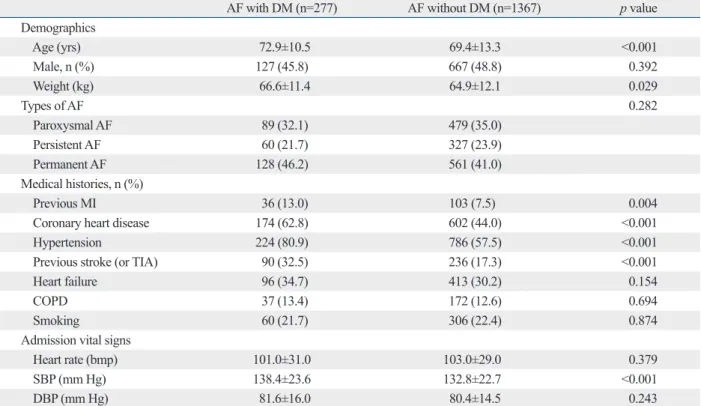
Table 1 summarizes the baseline characteristics in AF pa- tients with and without DM. Compared with non-diabetic patients, patients with DM were more likely to be older (DM: 72.9±10.5 years; non-DM: 69.4±13.3 years; p<0.001) and heavier (DM: 66.6±11.4 kg; non-DM: 64.9±12.1 kg;
p=0.029). As for cardiovascular histories, DM tended to co- exist with coronary heart disease and hypertension, and the DM group also had a significantly higher percentage of stoke or transient ischemic attack, as well as myocardial infarction (MI) (all p<0.01). The admission systolic blood pressure in the DM group was higher than in the non-DM group (DM:
138.4±23.6 mm Hg; non-DM: 132.8±22.7 mm Hg; p<
0.001), while diastolic blood pressure and heart rate was sim- ilar between the two groups (all p>0.05).
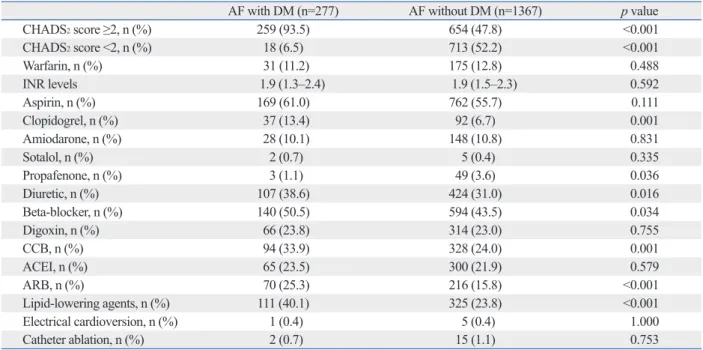
Table 2 shows the treatment during the 1-year follow-up.
Those who were evaluated by CHADS2 scores and ≥2 (con- gestive heart failure=1, hypertension=1, age=1, diabetes=1,
≥11.1 mmol/L (200 mg/dL). The group of DM patients was compared with non-DM patients in terms of demographics, clinical characteristics, and 1-year outcomes.
Statistical analysis
The baseline characteristics of the patients are presented as mean±standard deviation for continuous variables and com- pared by Student’s t-test if the data were normally distribut- ed; otherwise the Wilcoxon signed rank test was used. Cat- egorical variables are presented as percentage and were compared by Pearson’s chi-square test. Survival curves and cumulative hazard function were constructed using the Ka- plan-Meier method. Log-rank tests were used to compare the curves of the two groups. Univariate and multivariate Cox proportional hazard regression models were performed to identify whether there was an association between DM and the 1-year outcomes, and the models were corrected for age, sex, weight, medical history, vital signs at admission, and main medications. The adjusted hazard ratios (HRs), along with their respective 95% confidence intervals (CIs), were calculated for the two groups. All statistical tests were 2-tailed, and p values were statistically significant at <0.05.
All statistical analyses were carried out using SPSS statistical software, version 19.0 (SPSS Inc., Chicago, IL, USA).
Table 1. Baseline Characteristics in Nonvalvular AF Patients with and without DM
AF with DM (n=277) AF without DM (n=1367) p value
Demographics
Age (yrs) 72.9±10.5 69.4±13.3 <0.001
Male, n (%) 127 (45.8) 667 (48.8) 0.392
Weight (kg) 66.6±11.4 64.9±12.1 0.029
Types of AF 0.282
Paroxysmal AF 89 (32.1) 479 (35.0)
Persistent AF 60 (21.7) 327 (23.9)
Permanent AF 128 (46.2) 561 (41.0)
Medical histories, n (%)
Previous MI 36 (13.0) 103 (7.5) 0.004
Coronary heart disease 174 (62.8) 602 (44.0) <0.001
Hypertension 224 (80.9) 786 (57.5) <0.001
Previous stroke (or TIA) 90 (32.5) 236 (17.3) <0.001
Heart failure 96 (34.7) 413 (30.2) 0.154
COPD 37 (13.4) 172 (12.6) 0.694
Smoking 60 (21.7) 306 (22.4) 0.874
Admission vital signs
Heart rate (bmp) 101.0±31.0 103.0±29.0 0.379
SBP (mm Hg) 138.4±23.6 132.8±22.7 <0.001
DBP (mm Hg) 81.6±16.0 80.4±14.5 0.243
AF, atrial fibrillation; DM, diabetes mellitus; MI, myocardial infarction; TIA, transient ischemic attack; COPD, chronic obstructive pulmonary disease; SBP, systolic blood pressure; DBP, diastolic blood pressure.
between the two groups were comparable (DM: 10.1%;
non-DM: 7.4%; p=0.141). The incidences of major bleed- ing were also comparable (DM: 0.3%; non-DM: 1.5%;
p=0.166). The CEE rate in the DM group during the 1-year follow-up was significantly higher than that of the non-DM group (DM: 26.4%; non-DM: 20.4%; p=0.023).
The causes of death for the two groups are displayed in Table 3. It was observed that heart failure and infection were the major causes of death in both groups. The propor- tional mortality rate was similar between the two groups, except that the percentage of those who died of MI was higher in the DM group than in the non-DM group (DM:
and stroke=2) were eligible for anticoagulation treatment. It was shown that a significantly higher percentage of patients with AF and DM needed anticoagulation treatment, com- pared with those without DM (DM: 93.5%; non-DM:
47.8%; p<0.001). However, anticoagulation with warfarin was adopted by only a small number of patients with DM (11.2%) and without DM (12.8%), and less than half of these patients reached the recommended international nor- malized ratio (INR) target. In contrast, more patients in the two groups (DM: 61.0%; non-DM: 55.7%) were prescribed with aspirin, and a small fraction of patients were prescribed clopidogrel instead of anticoagulation. In addition, patients in the DM group were more likely to be prescribed with be- ta-blocker, nondihydropyridine calcium channel blocker, angiotensin receptors blockers (ARB), and lipid-lowering agents (all p<0.05). Furthermore, for achieving and main- taining sinus rhythm, only a small portion of patients were treated with drug cardioversion (e.g., amiodarone), electrical cardioversion, or catheter ablation, and there was no signifi- cant difference between the two groups.
Fig. 1 shows the 1-year outcomes of the two groups. The overall 1-year all-cause mortality was 13.9% (228 of 1644 patients) in the present study. The all-cause mortality in the DM group was significantly higher than in the non-DM group (DM: 19.5%; non-DM: 12.7%; p=0.004). The overall incidence of stroke during the 1-year follow-up was 7.8%
(129 of 1644 patients). However, the incidences of stroke
Table 2. Treatment during 1-Year Follow-Up in Nonvalvular AF Patients with and without DM
AF with DM (n=277) AF without DM (n=1367) p value
CHADS2 score ≥2, n (%) 259 (93.5) 654 (47.8) <0.001
CHADS2 score <2, n (%) 18 (6.5) 713 (52.2) <0.001
Warfarin, n (%) 31 (11.2) 175 (12.8) 0.488
INR levels 1.9 (1.3‒2.4) 1.9 (1.5‒2.3) 0.592
Aspirin, n (%) 169 (61.0) 762 (55.7) 0.111
Clopidogrel, n (%) 37 (13.4) 92 (6.7) 0.001
Amiodarone, n (%) 28 (10.1) 148 (10.8) 0.831
Sotalol, n (%) 2 (0.7) 5 (0.4) 0.335
Propafenone, n (%) 3 (1.1) 49 (3.6) 0.036
Diuretic, n (%) 107 (38.6) 424 (31.0) 0.016
Beta-blocker, n (%) 140 (50.5) 594 (43.5) 0.034
Digoxin, n (%) 66 (23.8) 314 (23.0) 0.755
CCB, n (%) 94 (33.9) 328 (24.0) 0.001
ACEI, n (%) 65 (23.5) 300 (21.9) 0.579
ARB, n (%) 70 (25.3) 216 (15.8) <0.001
Lipid-lowering agents, n (%) 111 (40.1) 325 (23.8) <0.001
Electrical cardioversion, n (%) 1 (0.4) 5 (0.4) 1.000
Catheter ablation, n (%) 2 (0.7) 15 (1.1) 0.753
AF, atrial fibrillation; DM, diabetes mellitus; CHADS, C: congestive heart failure, H: hypertension, A: age, D: diabetes, S: stroke; INR, international normal- ized ratio; CCB, calcium channel blocker; ACEI, angiotensin-converting enzyme inhibitors; ARB, angiotensin receptors blockers.
Fig. 1. 1-year outcomes of nonvalvular AF patients with and without DM.
AF, atrial fibrillation; DM, diabetes mellitus; CEE, combined endpoint events (including all-cause mortality, stroke, non-CNS embolism, and major bleed- ing); CNS, central nervous system.
0 5 10 15 20 25 30
Incidence of 1-year events (%)
All-cause mortality Stroke Major bleeding CEE 19.5
10.1
0.3
26.4
12.7
7.4
1.5 p=0.004 20.4
p=0.141
p=0.166
p=0.023 AF with DM
AF without DM
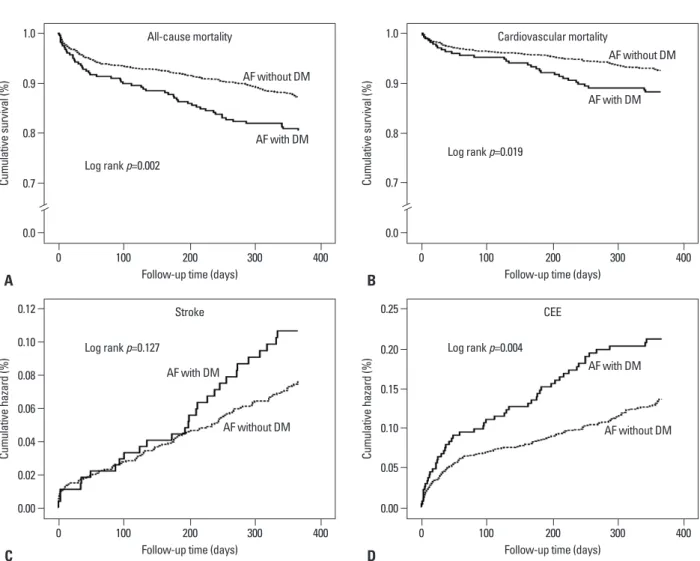
(p=0.002), cardiovascular mortality (p=0.019), and cumula- tive CEE rates (p=0.004). However, the cumulative inci- dences of stroke between the two groups during the 1-year follow-up were comparable (p=0.127).
9.3%; non-DM: 2.3%; p=0.036).
Fig. 2 shows the 1-year event curves of the two groups. It was observed that there were significant differences between the two groups in the survival curves of all-cause mortality
Table 3. Causes of Death during 1-Year Follow-Up in Nonvalvular AF Patients with and without DM
Causes of death, n (%) AF with DM (n=54) AF without DM (n=174) p value
Sudden/arrhythmic death 3 (5.6) 11 (6.3) 1.000
Heart failure 18 (35.1) 62 (35.6) 0.871
Stroke 4 (7.4) 18 (10.3) 0.609
Myocardial infarction 5 (9.3) 4 (2.3) 0.036
Pulmonary embolus 0 (0.0) 1 (0.6) 1.000
Hemorrhage 1 (1.9) 4 (2.3) 1.000
Cancer 5 (9.3) 12 (6.9) 0.559
Trauma 0 (0.0) 1 (0.6) 1.000
Respiratory failure 5 (9.3) 13 (7.5) 0.773
Infection 12 (22.2) 40 (23.0) 1.000
Multi organ failure 0 (0.0) 2 (1.1) 1.000
Unknown cause 1 (1.9) 6 (3.4) 1.000
AF, atrial fibrillation; DM, diabetes mellitus.
Fig. 2. The Kaplan-Meier event rates of nonvalvular AF patients with and without DM. (A) Survival curves of all-cause mortality. (B) Survival curves of cardio- vascular mortality. (C) Cumulative incidence of stroke. (D) Cumulative incidence of CEE (including all-cause mortality, stroke, non-CNS embolism, and major bleeding). AF, atrial fibrillation; DM, diabetes mellitus; CEE, combined endpoint events; CNS, central nervous system.
Follow-up time (days) Follow-up time (days)
Follow-up time (days) Follow-up time (days)
0.00 0.0
0.00 0.0
0.02 0.05
0.7
0.04 0.7
0.10 0.8
0.06 0.8
0.08 0.15
0.10 0.9
0.20 0.9
0.12 1.0
0.25 1.0
Cumulative hazard (%)Cumulative survival (%) Cumulative hazard (%)Cumulative survival (%)
0 0
0 0
200 200
200 200
100 100
100 100
300 300
300 300
400 400
400 400
C A
D B
Stroke All-cause mortality
CEE Cardiovascular mortality
Log rank p=0.127 Log rank p=0.002
Log rank p=0.004 Log rank p=0.019
AF with DM
AF with DM
AF with DM AF with DM
AF without DM AF without DM
AF without DM AF without DM
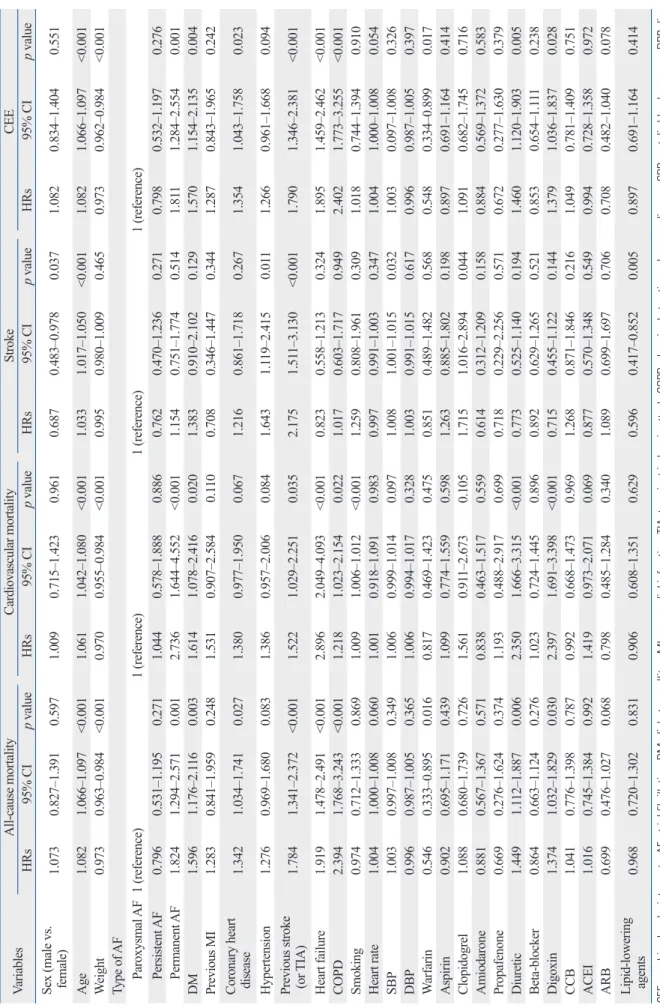
Table 4. Predictors of 1-Year Events by Univariate Cox Analysis VariablesAll-cause mortality Cardiovascular mortalityStrokeCEE HRs95% CIp valueHRs95% CIp valueHRs95% CIp valueHRs95% CIp value Sex (male vs. female)
1.0730.827‒1.3910.5971.0090.715‒1.4230.9610.6870.483‒0.9780.0371.0820.834‒1.4040.551 Age 1.0821.066‒1.097<0.0011.0611.042‒1.080<0.0011.0331.017‒1.050<0.0011.0821.066‒1.097<0.001 Weight 0.9730.963‒0.984<0.0010.9700.955‒0.984<0.0010.9950.980‒1.0090.4650.9730.962‒0.984<0.001 Type of AF Paroxysmal AF1 (reference)1 (reference)1 (reference)1 (reference) Persistent AF0.7960.531‒1.1950.2711.0440.578‒1.8880.8860.7620.470‒1.2360.2710.7980.532‒1.1970.276 Permanent AF1.8241.294‒2.5710.0012.7361.644‒4.552<0.0011.1540.751‒1.7740.5141.8111.284‒2.5540.001 DM1.5961.176‒2.1160.0031.6141.078‒2.4160.0201.3830.910‒2.1020.1291.5701.154‒2.1350.004 Previous MI1.2830.841‒1.9590.2481.5310.907‒2.5840.1100.7080.346‒1.4470.3441.2870.843‒1.9650.242
Coronary heart disease
1.3421.034‒1.7410.0271.3800.977‒1.9500.0671.2160.861‒1.7180.2671.3541.043‒1.7580.023 Hypertension 1.2760.969‒1.6800.0831.3860.957‒2.0060.0841.6431.119‒2.4150.0111.2660.961‒1.6680.094
Previous stroke (or
TIA)1.7841.341‒2.372<0.0011.5221.029‒2.2510.0352.1751.511‒3.130<0.0011.7901.346‒2.381<0.001 Heart failure1.9191.478‒2.491<0.0012.8962.049‒4.093<0.0010.8230.558‒1.2130.3241.8951.459‒2.462<0.001 COPD2.3941.768‒3.243<0.0011.2181.023‒2.1540.0221.0170.603‒1.7170.9492.4021.773‒3.255<0.001 Smoking 0.9740.712‒1.3330.8691.0091.006‒1.012<0.0011.2590.808‒1.9610.3091.0180.744‒1.3940.910 Heart rate1.0041.000‒1.0080.0601.0010.918‒1.0910.9830.9970.991‒1.0030.3471.0041.000‒1.0080.054 SBP1.0030.997‒1.0080.3491.0060.999‒1.0140.0971.0081.001‒1.0150.0321.0030.097‒1.0080.326 DBP0.9960.987‒1.0050.3651.0060.994‒1.0170.3281.0030.991‒1.0150.6170.9960.987‒1.0050.397 Warfarin0.5460.333‒0.8950.0160.8170.469‒1.4230.4750.8510.489‒1.4820.5680.5480.334‒0.8990.017 Aspirin0.9020.695‒1.1710.4391.0990.774‒1.5590.5981.2630.885‒1.8020.1980.8970.691‒1.1640.414 Clopidogrel1.0880.680‒1.7390.7261.5610.911‒2.6730.1051.7151.016‒2.8940.0441.0910.682‒1.7450.716 Amiodarone0.8810.567‒1.3670.5710.8380.463‒1.5170.5590.6140.312‒1.2090.1580.8840.569‒1.3720.583 Propafenone0.6690.276‒1.6240.3741.1930.488‒2.9170.6990.7180.229‒2.2560.5710.6720.277‒1.6300.379 Diuretic1.4491.112‒1.8870.0062.3501.666‒3.315<0.0010.7730.525‒1.1400.1941.4601.120‒1.9030.005 Beta-blocker0.8640.663‒1.1240.2761.0230.724‒1.4450.8960.8920.629‒1.2650.5210.8530.654‒1.1110.238 Digoxin1.3741.032‒1.8290.0302.3971.691‒3.398<0.0010.7150.455‒1.1220.1441.3791.036‒1.8370.028 CCB1.0410.776‒1.3980.7870.9920.668‒1.4730.9691.2680.871‒1.8460.2161.0490.781‒1.4090.751 ACEI1.0160.745‒1.3840.9921.4190.973‒2.0710.0690.8770.570‒1.3480.5490.9940.728‒1.3580.972 ARB0.6990.476‒1.0270.0680.7980.485‒1.2840.3401.0890.699‒1.6970.7060.7080.482‒1.0400.078
Lipid-lowering agents
0.9680.720‒1.3020.8310.9060.608‒1.3510.6290.5960.417‒0.8520.0050.8970.691‒1.1640.414 CEE, combined endpoint events; AF, atrial fibrillation; DM, diabetes mellitus; MI, myocardial infarction; TIA, transient ischemic attack; COPD, chronic obstructive pulmonary disease; SBP, systolic blood pressure; DBP, dia- stolic blood pressure; CCB, calcium channel blocker; ACEI, angiotensin-converting enzyme inhibitors; ARB, angiotensin receptors blockers; HR, hazard ratio; CI, confidence interval.
Table 4 displays the predictors of 1-year outcomes by univariate Cox analysis. It was found that DM was associ- ated with increased risk of all-cause mortality (HR=1.596;
95% CI 1.176‒2.116; p=0.003), cardiovascular mortality (HR=1.614; 95% CI 1.078‒2.416; p=0.020), and CEE (HR=1.570; 95% CI 1.154‒2.135; p=0.004), whereas it was not associated with an increased risk of stroke (HR=
1.383; 95% CI 0.910‒2.102; p=0.129).
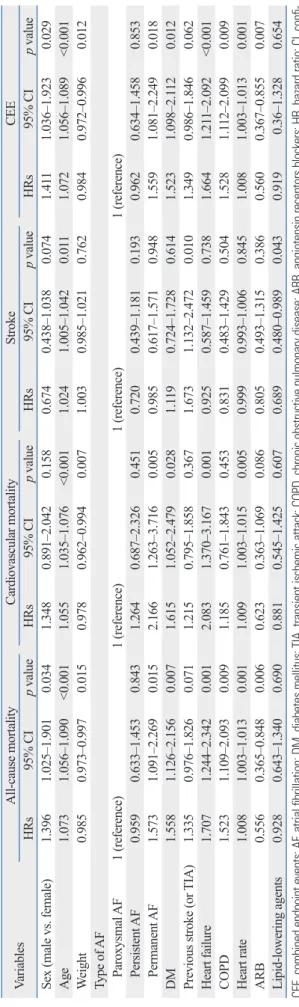
Table 5 shows the results of a multivariate Cox analysis of 1-year outcomes. After adjusting the variables related with the outcomes of patients with AF, DM was still an in- dependent risk factor for 1-year all-cause mortality (HR=
1.558; 95% CI 1.126‒2.156; p=0.007), cardiovascular mor- tality (HR=1.615; 95% CI 1.052‒2.479; p=0.028), and CEE (HR=1.523; 95% CI 1.098‒2.112; p=0.012); however, it was not an independent risk factor for stroke (HR=1.119;
95% CI 0.724‒1.728; p=0.614).
DISCUSSION
The major findings from the present study are as follows.
First, DM was prevalent among patients with nonvalvular AF, and more than 15% of nonvalvular AF patients suf- fered from concomitant DM. Clinically, most patients with nonvalvular AF and DM were at high risk for stroke; how- ever, only a small amount of patients received anticoagula- tion treatment in China. Second, AF patients with DM had higher 1-year all-cause mortality, cardiovascular mortality, and CEE rates, yet had a similar incidence of stroke com- pared with those without DM. Third, after multivariate ad- justment, DM was still an independent risk factor for 1-year all-cause death, cardiovascular death, and CEE, although it was not a risk factor for stroke.
The role of DM in cardiovascular risk and disease has been widely investigated. The adverse influence of DM on the cardiovascular system not only increases the risk of de- veloping cardiovascular diseases but also exacerbates the outcome. Indeed, cardiovascular diseases are the most prevalent cause of morbidity and mortality in patients with DM.20 AF is the most common sustained cardiac arrhyth- mia in the population, and several epidemiologic studies have reported that DM is an independent risk factor for AF.2,4,5,9,10 Although the causal relationship between DM and AF remains to be elucidated,21 one likely explanation is that DM, directly or indirectly, affects cardiac electrophysi- ology supposedly by means of autonomic, electrical, and Table 5. Predictors of 1-Year Events by Multivariate Cox Analysis VariablesAll-cause mortalityCardiovascular mortality StrokeCEE HRs95% CIp valueHRs95% CIp valueHRs95% CIp valueHRs95% CIp value Sex (male vs. female)1.3961.025‒1.9010.0341.3480.891‒2.0420.1580.6740.438‒1.0380.0741.4111.036‒1.9230.029 Age 1.0731.056‒1.090<0.0011.0551.035‒1.076<0.0011.0241.005‒1.0420.0111.0721.056‒1.089<0.001 Weight 0.9850.973‒0.9970.0150.9780.962‒0.9940.0071.0030.985‒1.0210.7620.9840.972‒0.9960.012 Type of AF Paroxysmal AF1 (reference)1 (reference)1 (reference)1 (reference) Persistent AF0.9590.633‒1.4530.8431.2640.687‒2.3260.4510.7200.439‒1.1810.1930.9620.634‒1.4580.853 Permanent AF1.5731.091‒2.2690.0152.1661.263‒3.7160.0050.9850.617‒1.5710.9481.5591.081‒2.2490.018 DM1.5581.126‒2.1560.0071.6151.052‒2.4790.0281.1190.724‒1.7280.6141.5231.098‒2.1120.012 Previous stroke (or TIA)1.3350.976‒1.8260.0711.2150.795‒1.8580.3671.6731.132‒2.4720.0101.3490.986‒1.8460.062 Heart failure1.7071.244‒2.3420.0012.0831.370‒3.1670.0010.9250.587‒1.4590.7381.6641.211‒2.092<0.001 COPD1.5231.109‒2.0930.0091.1850.761‒1.8430.4530.8310.483‒1.4290.5041.5281.112‒2.0990.009 Heart rate1.0081.003‒1.0130.0011.0091.003‒1.0150.0050.9990.993‒1.0060.8451.0081.003‒1.0130.001 ARB0.5560.365‒0.8480.0060.6230.363‒1.0690.0860.8050.493‒1.3150.3860.5600.367‒0.8550.007 Lipid-lowering agents0.9280.643‒1.3400.6900.8810.545‒1.4250.6070.6890.480‒0.9890.0430.919 0.36‒1.3280.654 CEE, combined endpoint events; AF, atrial fibrillation; DM, diabetes mellitus; TIA, transient ischemic attack; COPD, chronic obstructive pulmonary disease; ARB, angiotensin receptors blockers; HR, hazard ratio; CI, confi- dence interval.
current guidelines by means of propaganda and education for both clinicians and patients. Moreover, it is anticipated that new oral anticoagulants characterized by safety, effec- tiveness, convenience, and also inexpensiveness will be widely available in China.
The prognostic impact of DM in patients with AF deserves critical attention. In our data, the overall 1-year mortality was 13.9%, similar to a previous report from the Framingham Heart Study.29 However, patients with AF and DM had high- er all-cause mortality, cardiovascular mortality, and CEE rates during the 1-year follow-up in patients with DM than those without DM, demonstrating the serious macrovascular damage of DM. Indeed, cardiovascular disease is the major cause of morbidity and mortality for individuals with DM.
Although the precise pathophysiological and clinical rela- tionships between DM and cardiovascular disease are not completely understood, it has been suggested that an asso- ciation between hyperglycemia and intracellular metabolic changes can result in oxidative stress, low-grade inflamma- tion, and endothelial dysfunction, which may accelerate atherosclerosis and increase cardiovascular risk.20 More- over, DM may mask the cardiac symptoms during an isch- emic heart attack and also influence the cardiac symptoms related to AF,16 which may lead to delayed treatment and poor outcome in patients with DM.
In the present study, the 1-year incidence of stroke was 7.8% in whole patients and 10.1% in patients with DM, high- er than previous reports.14 One possible explanation was the low level of anticoagulation treatment in patients with AF.
Furthermore, as was found in our study, DM was not asso- ciated with an increased risk of stroke during the 1-year fol- low-up. Although certain previous studies30,31 also came to similar conclusions, pooled data from earlier stroke trials32 all identified DM as an independent risk factor for stroke.
Indeed, the presence of DM predisposes patients to hyper- coagulability characterized by platelet activation, increased production and activation of clotting factors, and hypervis- cosity status.13 Currently, DM is included in commonly used, validated stroke risk scores that are incorporated in interna- tional guidelines.6,7 A possible interpretation for our results is that a relatively short follow-up period (median: 1 year) may not detect a significant difference in the incidences of stroke between DM and non-DM groups, whereas in other studies, such as the Framingham Heart Study,33 the mean fol- low-up period was 4 years, and most other studies had more than 2 years of follow-up.14 However, a trend toward increased in- cidence of stroke was observed in patients with DM at the structural remodeling.22 Given the intimate relationship be-
tween AF and DM, further studies on the clinical character- istics of patients with AF and DM, as well as the impact of DM on clinical outcome in patients with AF, are of great importance for risk stratification and clinical management.
In our study, the prevalence of DM in patients with AF was 16.8%, similar to previous reports from western coun- tries,23-25 though higher than data reported several years ago from China.26 With the development of social economy and an aging population, lifestyle changes related obesity, eat- ing behavior, and physical activity may contribute to the in- creased prevalence of DM in general population, consistent with the findings in our study that patients with DM were more likely to be older and heavier. Meanwhile, patients with AF and DM had a higher prevalence of traditional car- diovascular risk factors such as hypertension, coronary heart disease, and stroke, which also demonstrated the associa- tion between DM and cardiovascular disease.
Anticoagulation is an important component in the man- agement of AF, in that this arrhythmia is associated with an increased risk for stroke. In the present study, up to 93.5%
of patients with AF and DM belonged to a high risk popu- lation stratified by CHADS2 risk scores.6 However, only 11.2% of these patients received warfarin for anticoagula- tion, and the number was even lower than those without DM (12.8%), in which the percentage of patients eligible for anticoagulation (47.8%) was lower than that of the pa- tients with AF and DM (93.5%). Furthermore, less than half of the patients that received warfarin for anticoagula- tion reached the recommended INR target, indicating that the use and monitoring of warfarin remain to be improved.
Although the overall proportion of patients that received anticoagulation with warfarin was low (12.5%) compared with that of the western countries,27 the number has been improved notably compared with several years ago in Chi- na (2.7%),2 reflecting progress in developing awareness for anticoagulation. However, more than half of the patients, regardless of whether they had DM or not, were prescribed aspirin or clopidogrel, which were confirmed to be ineffec- tive in preventing thrombus.28 Moreover, about 20% of pa- tients did not receive any prophylactic anticoagulation ther- apy, reflecting a huge gap between clinical guidelines and real-world practice in China. Fear of bleeding, the inconve- nience of frequent INR monitoring, and excessive interac- tion between warfarin and other medications or foods may result in hesitating to select warfarin. It is expected that more AF patients will receive anticoagulation according to
ing data and all the study coordinators, as well as the pa- tients who participated in the multicenter study.
REFERENCES
1. Chinitz JS, Castellano JM, Kovacic JC, Fuster V. Atrial fibrillation, stroke, and quality of life. Ann N Y Acad Sci 2012;1254:140-50.
2. Hu D, Sun Y. Epidemiology, risk factors for stroke, and manage- ment of atrial fibrillation in China. J Am Coll Cardiol 2008;52:
865-8.
3. Stewart S, Hart CL, Hole DJ, McMurray JJ. A population-based study of the long-term risks associated with atrial fibrillation: 20- year follow-up of the Renfrew/Paisley study. Am J Med 2002;113:
359-64.
4. Benjamin EJ, Levy D, Vaziri SM, D’Agostino RB, Belanger AJ, Wolf PA. Independent risk factors for atrial fibrillation in a popu- lation-based cohort. The Framingham Heart Study. JAMA 1994;
271:840-4.
5. Ostgren CJ, Merlo J, Råstam L, Lindblad U. Atrial fibrillation and its association with type 2 diabetes and hypertension in a Swedish community. Diabetes Obes Metab 2004;6:367-74.
6. Gage BF, Waterman AD, Shannon W, Boechler M, Rich MW, Radford MJ. Validation of clinical classification schemes for pre- dicting stroke: results from the National Registry of Atrial Fibrilla- tion. JAMA 2001;285:2864-70.
7. European Heart Rhythm Association; European Association for Cardio-Thoracic Surgery, Camm AJ, Kirchhof P, Lip GY, Schotten U, et al. Guidelines for the management of atrial fibrillation: the Task Force for the Management of Atrial Fibrillation of the Euro- pean Society of Cardiology (ESC). Europace 2010;12:1360-420.
8. Huxley RR, Filion KB, Konety S, Alonso A. Meta-analysis of co- hort and case-control studies of type 2 diabetes mellitus and risk of atrial fibrillation. Am J Cardiol 2011;108:56-62.
9. Movahed MR, Hashemzadeh M, Jamal MM. Diabetes mellitus is a strong, independent risk for atrial fibrillation and flutter in addi- tion to other cardiovascular disease. Int J Cardiol 2005;105:315-8.
10. Nichols GA, Reinier K, Chugh SS. Independent contribution of diabetes to increased prevalence and incidence of atrial fibrillation.
Diabetes Care 2009;32:1851-6.
11. Huxley RR, Alonso A, Lopez FL, Filion KB, Agarwal SK, Loehr LR, et al. Type 2 diabetes, glucose homeostasis and incident atrial fibrillation: the Atherosclerosis Risk in Communities study. Heart 2012;98:133-8.
12. Johansen OE, Brustad E, Enger S, Tveit A. Prevalence of abnor- mal glucose metabolism in atrial fibrillation: a case control study in 75-year old subjects. Cardiovasc Diabetol 2008;7:28.
13. Asghar O, Alam U, Hayat SA, Aghamohammadzadeh R, Heager- ty AM, Malik RA. Obesity, diabetes and atrial fibrillation; epide- miology, mechanisms and interventions. Curr Cardiol Rev 2012;8:
253-64.
14. Stroke Risk in Atrial Fibrillation Working Group. Independent predictors of stroke in patients with atrial fibrillation: a systematic review. Neurology 2007;69:546-54.
15. Sakamoto H, Okamoto E, Imataka K, Ieki K, Fujii J. Prediction of early development of chronic nonrheumatic atrial fibrillation. Jpn Heart J 1995;36:191-9.
16. Sugishita K, Shiono E, Sugiyama T, Ashida T. Diabetes influences the cardiac symptoms related to atrial fibrillation. Circ J 2003;67:
end of the follow-up from the Kaplan-Meier curves, and a long period of follow-up is required to further detect the long-term impact of DM on risk of stroke.
In view of the high prevalence of DM in patients with AF, the high risk for embolism among patient characteris- tics, and the adverse prognostic influence, aggressive strate- gies are required for those with DM and AF. The risk of stroke varies among DM patients with AF, and treatment relies on risk stratification [CHADS2 or CHA2DS2-VASc (vascular disease, age 65‒74, sex category) scores] and ap- propriate anticoagulation therapy. Currently, catheter abla- tion may be beneficial in the treatment of AF-associated DM.7 Additionally, upstream therapy such as ARBs34 and thiazolidinediones35 may also be beneficial for patients with DM and AF. Our study also suggests that use of ARBs was associated with a decreased risk of all-cause mortality and CEE. Moreover, use of lipid-lowering agents was associat- ed with a decreased risk of stroke in our study. Therefore, more studies are required to further evaluate the impact of these agents on long-term outcomes.
There are some limitations in our study that should be not- ed. First, hemoglobin A1c percentages and fasting blood sug- ars were not recorded, limiting insight into glucose control, a factor that may have an effect on outcomes. Second, the du- ration of DM prior to study enrolment was also not known, which may reflect the severity of DM and associated co-mor- bid conditions; such a potential confounder may also affect the prognosis. Third, DM status in patients with AF was evaluated at enrollment only; we did not ascertain cases of DM that developed during the study follow-up. In addition, despite multivariate adjustments, residual confounding may remain. Finally, in our study, the period of follow-up was rel- atively short. Therefore, the long-term prognostic impact of DM in patients with nonvalvular AF needs to be evaluated by a long-term follow-up.
In conclusion, DM was found to be a common morbidity coexisting with nonvalvular AF and was associated with in- creased 1-year all-cause and cardiovascular mortality, as well as a higher CEE rate. A 1-year follow-up identified the association of DM with increased risk for all-cause mortali- ty, cardiovascular mortality, and CEE; however, there was no increased risk for stroke.
ACKNOWLEDGEMENTS
We thank the investigators from every hospital for provid-
26. Sun Y, Hu D, Li K, Zhou Z. Predictors of stroke risk in native Chinese with nonrheumatic atrial fibrillation: retrospective inves- tigation of hospitalized patients. Clin Cardiol 2009;32:76-81.
27. Lip GY, Brechin CM, Lane DA. The global burden of atrial fibril- lation and stroke: a systematic review of the epidemiology of atrial fibrillation in regions outside North America and Europe. Chest 2012;142:1489-98.
28. Lip GY. The role of aspirin for stroke prevention in atrial fibrilla- tion. Nat Rev Cardiol 2011;8:602-6.
29. Benjamin EJ, Wolf PA, D’Agostino RB, Silbershatz H, Kannel WB, Levy D. Impact of atrial fibrillation on the risk of death: the Framingham Heart Study. Circulation 1998;98:946-52.
30. Aronow WS, Gutstein H, Hsieh FY. Risk factors for thromboem- bolic stroke in elderly patients with chronic atrial fibrillation. Am J Cardiol 1989;63:366-7.
31. Seidl K, Hauer B, Schwick NG, Zellner D, Zahn R, Senges J.
Risk of thromboembolic events in patients with atrial flutter. Am J Cardiol 1998;82:580-3.
32. Risk factors for stroke and efficacy of antithrombotic therapy in atrial fibrillation. Analysis of pooled data from five randomized controlled trials. Arch Intern Med 1994;154:1449-57.
33. Wang TJ, Massaro JM, Levy D, Vasan RS, Wolf PA, D’Agostino RB, et al. A risk score for predicting stroke or death in individuals with new-onset atrial fibrillation in the community: the Framing- ham Heart Study. JAMA 2003;290:1049-56.
34. Fogari R, Zoppi A, Mugellini A, Corradi L, Lazzari P, Preti P, et al. Comparative evaluation of effect of valsartan/amlodipine and atenolol/amlodipine combinations on atrial fibrillation recurrence in hypertensive patients with type 2 diabetes mellitus. J Cardio- vasc Pharmacol 2008;51:217-22.
35. Liu T, Li G. Thiazolidinediones as novel upstream therapy for atrial fibrillation in diabetic patients: a review of current evidence.
Int J Cardiol 2012;156:215-6.
835-8.
17. Alnemer KA, Alfaleh HF, Alhabib KF, Ullah A, Hersi A, Alsaif S, et al. Impact of diabetes on hospital adverse cardiovascular out- comes in acute coronary syndrome patients: data from the Saudi project of acute coronary events. J Saudi Heart Assoc 2012;24:
225-31.
18. Sarma S, Mentz RJ, Kwasny MJ, Fought AJ, Huffman M, Suba- cius H, et al. Association between diabetes mellitus and post-dis- charge outcomes in patients hospitalized with heart failure: find- ings from the EVEREST trial. Eur J Heart Fail 2013;15:194-202.
19. Zhang X, Wu Z, Peng X, Wu A, Yue Y, Martin J, et al. Prognosis of diabetic patients undergoing coronary artery bypass surgery compared with nondiabetics: a systematic review and meta-analy- sis. J Cardiothorac Vasc Anesth 2011;25:288-98.
20. Matheus AS, Tannus LR, Cobas RA, Palma CC, Negrato CA, Gomes MB. Impact of diabetes on cardiovascular disease: an up- date. Int J Hypertens 2013;2013:653789.
21. Sun Y, Hu D. The link between diabetes and atrial fibrillation:
cause or correlation? J Cardiovasc Dis Res 2010;1:10-1.
22. Lin Y, Li H, Lan X, Chen X, Zhang A, Li Z. Mechanism of and therapeutic strategy for atrial fibrillation associated with diabetes mellitus. ScientificWorldJournal 2013;2013:209428.
23. Klem I, Wehinger C, Schneider B, Hartl E, Finsterer J, Stöllberger C. Diabetic atrial fibrillation patients: mortality and risk for stroke or embolism during a 10-year follow-up. Diabetes Metab Res Rev 2003;19:320-8.
24. Secondary prevention in non-rheumatic atrial fibrillation after transient ischaemic attack or minor stroke. EAFT (European Atrial Fibrillation Trial) Study Group. Lancet 1993;342:1255-62.
25. Hart RG, Pearce LA, McBride R, Rothbart RM, Asinger RW. Fac- tors associated with ischemic stroke during aspirin therapy in atrial fibrillation: analysis of 2012 participants in the SPAF I-III clinical trials. The Stroke Prevention in Atrial Fibrillation (SPAF) Investi- gators. Stroke 1999;30:1223-9.