pISSN 1229-3008 eISSN 2287-6251
Progress in Superconductivity and Cryogenics
Vol.19, No.4, (2017), pp.22~25 https://doi.org/10.9714/psac.2017.19.4.022
```
1. INTRODUCTION
After the first demonstration of single photon detection by NbN nanowires by Gol’tsman et al. [1] in 2001, the superconducting nanowire single photon detector (SNSPD) has been developed from devices to the system level and optimized to become a commercial product today [2, 3].
Since the single quantum level detection of photon is a key technology in quantum information technology now, SNSPD has become a very important element in quantum communication and also in quantum computing. Especially in communication wavelength (1550 nm), where conventional InGaAs APD (avalanche photodiodes) detectors has reached about ~20% of detection efficiency at best [3], SNSPD has successfully demonstrated over 90%
detection efficiency [4].
2. CURRENT STATUS OF SNSPD
Simply speaking, the single-photon detection means an energy-absorbing event by a detector device from an electromagnetic mode, and the absorbed energy is quantized by the photon’s energy quantum, ħw. This absorption will break a cooper pair into quasiparticles, and these non-equilibrium quasiparticles will then thermalize through electron-electron and electron-photon interaction in the superconductor. Finally the energy will be transferred to the substrate, which brings the system back to equilibrium. Typical time scale of this relaxation process is tens of picoseconds at a typical operation temperature of 2 to 4 K [5]. Therefore very short dead time between the
successive detection events can be expected. In practice, there are other factors that limit the detection rate, one of which is the kinetic inductance of the long nanowire.
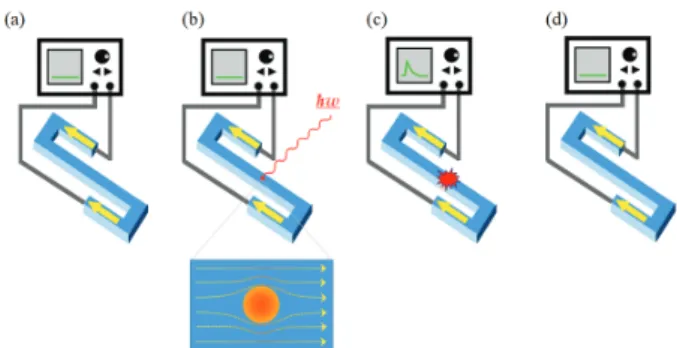
The basic concept of the SNSPD device operation is shown in Fig. 1. A long, narrow superconducting nanowire, typically <10 nm thick and <100 nm wide, is current-biased at around 95% of its critical current. Since it is still biased below the critical current, the voltage across the nanowire is zero. When a photon is absorbed by the nanowire, a cooper pair will be broken into quasiparticles and through the fast relaxation process mentioned above, a hot-spot is formed in the middle of the nanowire by non-equilibrium quasiparticles. As this normal region blocks the current flowing superconducting region (and hence increases the
Fig. 1. Basic concept of the SNSPD operation. (a) a superconducting nanowire is current-biased near the critical current (b) when a photon is absorbed, a hot spot is formed and the current density is increased nearby superconducting region (c) voltage pulse is observed when the whole nanowire width becomes normal, followed by a recovery due to cooling (d) the nanowire becomes superconducting again by cooling through the substrate.
A brief review on the recent progress of superconducting nanowire single photon detectors
Yonuk Chong*,1,2
1 Korea Research Institute of Standards and Science, Daejeon 34113, Korea
2 University of Science and Technology, Daejeon 34113, Korea
(Received 20 November 2017; revised or reviewed 23 November 2017; accepted 24 November 2017)
Abstract
Superconducting nanowire single photon detectors (SNSPD) have become the most competent photon-counting devices in wide range of wavelengths. Especially in the communication wavelength (infrared), SNSPD has shown unbeatable superior performance compared to the state-of-art semiconductor single photon detectors. The technology has matured enough for the last decade so that several commercial systems are now almost ready for routine use in general optics experiments. Here we summarize briefly the recent progress in this research field, and hope to motivate further research on the improvement of the device and the system. We cover the basic key concepts, device and system performances, remaining issues and possible further research directions of SNSPD.
Keywords: single photon detector, superconducting nanowire, detection efficiency
* Corresponding author: [email protected]
Yonuk Chong
(a) (b)
Fig. 2. (a) The SEM image of a typical nanowire meander device made of a MoxSi1-x thin film. (b) Typical current-voltage characteristic curve of a nanowire device.
local supercurrent density), the whole nanowire will turn into normal state and a voltage pulse appears. As the heat is relaxed when the energy is extracted into the substrate, the superconducting state is recovered, and the nanowire becomes again ready for the next detection.
In order to increase the device detection efficiency by increasing the detection area, most devices are patterned into a long meander lines as shown in Fig. 2(a). A typical current-voltage characteristic of these meander device is shown in Fig. 2(b). This large device is suitable for better detection efficiency, but at the same time, the large inductance of the device will make the device slow.
Various materials have been chosen for SNSPD. NbN is still a widely used material because of its relatively higher critical temperature, which reduces the cooling demand.
Similarly, NbTiN has been also used in SPSPD [6]. Smaller gap materials such as WxSi1-x[7], MoxSi1-x[8], MoxGe1-x[9], and NbxSi1-x[10], amorphous metal silicides has been successfully used in demonstrating SNSPD devices. The uniformity of the amorphous materials in the ultra-thin films is another benefit for SNSPD since the non-uniformity in the long meander line (either geometric defects or material inhomogeneity) decreases the detection efficiency due to a weak spot. In addition, compared to the nitrides, these materials are better candidates at longer wavelengths due to their smaller energy gaps, but at the same time, their lower transition temperatures require lower operation temperatures for optimal performance. For an alternative material, SNSPD made of MgB2 has been also demonstrated [11].
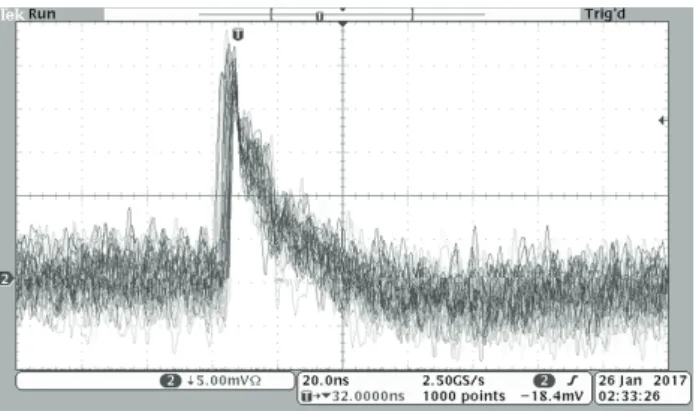
Fig. 3. A typical voltage response of single photon detection in SNSPD.
Figure 3 shows a voltage response of an SNSPD as it detects a single photon. Here we will summarize several key performances of SNSPD. In principle, SNSPD’s are inherently wideband detectors, since the pair-breaking event should not have strong wavelength dependence as long as the photon is absorbed and its energy is far larger than the superconducting energy gap. But in practice, efficient photon absorption requires optical structures in order to enhance the efficiency. SNSPD embedded in an optical cavity structure is used widely, and anti-reflection coating is applied [6, 11]. It is this optical structure that decides the detection bandwidth of SNSPD, and compared to the conventional semiconductor single photon detectors, the communication wavelength (1550 nm) is where the SNSPD performance is far superior to its competitors. As large as 93% of detection efficiency at 1550 nm was reported using WSi SNSPD operated at 0.12K [4]. Since the meander structure itself is anisotropic, the detection efficiency is also dependent on the polarization.
Polarization insensitive devices were also designed and demonstrated [13f].
The nanowire detector generates pulses even without any photon input. The dark count rate (DCR) is caused by various noise and fluctuations, and it sets the background of the detection signal. Typically, an optimized SNSPD shows DCR of a few tens of Hz at its operation point. However, the detection efficiency and the dark count rate have tradeoffs as we change the bias point of the device, so that we may need to choose the optimal operation point depending on the application.
The fast-rising edge of the voltage pulse in Fig. 3. has a small delay from the actual absorption of the photon by the nanowire meander, and this delay is different from event to event. This produces jitter in the detection timing. Typical timing jitter in SNSPD is several tens of picoseconds [14], and it is still significantly smaller than that of semiconductor APDs. The detailed mechanism of this jitter is not yet fully understood, but the geometric effect has been recently well analyzed and was applied to position-resolving photon detection. [MIT]
The voltage relaxation time after the pulse (about ~30 ns in the example of Fig. 3.) determines the maximum count rate, or the dead time. Although the electron thermalization process is much faster than this time scale, the long meander’s kinetic inductance limits the relaxation. The dead time as short as ~5ns has been reported, with the possibility of reaching GHz counting rate [16]. In addition, SNSPD usually doesn’t show after-pulses which is typical in semiconductor APD’s.
We should note that a SNSPD is not a number-resolving detector, that is, it cannot tell single-photon absorption from multi-photon absorption. A voltage pulse represents a photon absorption event but it can be possibly single- or multiple energy quanta absorption. Therefore, the operation of the SNSPD is usually good only for low photon flux, in order to minimize multi-photon effects. Of course, for large photon flux far exceeding the maximum count rate, the detector saturates. However, a photon number-resolving detector can be also built by an array of SNSPD [17, 18].
A brief review on the recent progress of superconducting nanowire single photon detectors
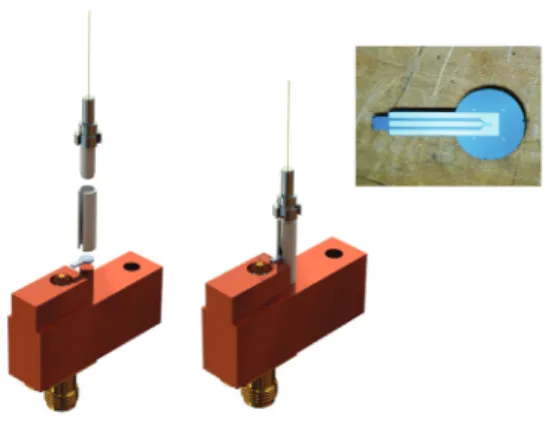
Fig. 4. Self-aligned fiber-coupled package design of a SNSPD device, originally suggested by Miller et al. [20].
The detector chip is etched into a lollipop shape in order to be placed into a ceramic sleeve.
The detectors are typically operated at ~ 2.5 K using a closed-cycle cryocooler, so the photon signal is usually fiber-coupled into the vacuum cryostat. The alignment of the fiber to the device is another critical factor in the system detection efficiency (SDE) [19]. A self-aligned scheme was developed by the NIST group as shown in Fig. 4 and is now widely used [20]. A lollipop-shaped detector chip is coupled to the FC/PC-ferrule, so that chances of misalignment due to different thermal contraction of each part during cooling are minimized.
As the quantum information technology has recently become important, on-chip photonic circuit is suggested as a promising platform for quantum information processing [21]. In order to integrate the nanowire detector on a photonic chip, nanowires directly patterned on top of the on-chip waveguide have been demonstrated. The waveguide integrated SNSPD is also useful in enhancing the absorption efficiency. For waveguide integrated SNSPD, on-chip detection efficiencies above 70% was reported at 1550 nm wavelength, with mHz level DCR and almost unity internal quantum efficiency [22].
Several companies are already providing commercial products of SNSPD system, and the application of SNSPD is now expanding. Examples include, but not limited to, the quantum key distribution [23], entanglement distribution [24], and loophole-free Bell inequality experiments [25-27]. UV wavelength SNSPD can be used in ion-trap quantum computing readout [28]. For metrology applications, since conventional radiometers can measure optical powers only down to 100 fW level, counting photons can be a supplementary measurement tool at lower power lights.
In summary, we have briefly summarized recent development of SNSPD. Several detailed reviews are available [2,3] and recommended for further reading.
ACKNOWLEDGMENT
The author thanks J. Choi during the preparation of the manuscript. This research was supported (in part) by the R&D Convergence Program of NST (National Research
Council of Science and Technology) of Republic of Korea (Grant No. CAP-15-08-KRISS).
REFERENCES
[1] G. Gol’tsman, O. Okunev, G. Chulkova, A. Lipatov, A. Semenov, K.
Smirnov, B. Voronov, A. Dzardanov, C. Williams, and R.
Sobolewski, “Picosecond superconducting single-photon optical detector,” Appl. Phys. Lett., vol. 79(6), pp. 705–707, 2001.
[2] C. M. Natarajan, M. G. Tanner, and R. H. Hadfield,
“Superconducting nanowire single-photon detectors: physics and applications,” Supercond. Sci. Technol., vol. 25(6), pp. 063001, 2012.
[3] R. H. Hadfield, “Single -photon detectors for optical quantum information applications,” Nature Photonics, vol. 3, pp. 696–705, 2009.
[4] F. Marsili, V. B. Verma, J. A. Stern, S. Harrington, A. E. Lita, T.
Gerrits, I. Vayshenker, B. Baek, M. D. Shaw, R. P. Mirin, and S. W.
Nam, “Detecting single infrared photons with 93% system efficiency,” Nature Photonics, vol. 7(3), pp. 210–214, 2013.
[5] K. S. Il’in, M. Lindgren, M. Currie, A. D. Semenov, G. N.
Gol’tsman, Roman Sobolewski, S. I. Cherednichenko, and E. M.
Gershenzon, “Picosecond hot-electron energy relaxation in NbN superconducting photodetectors,” Appl. Phys. Lett., vol. 76, pp.
2752, 2000.
[6] S. Miki, T. Yamashita, H. Terai, and Z. Wang, “High performance fiber-coupled NbTiN superconducting nanowire single photon detectors with Gifford-McMahon cryocooler,” Opt. Express, vol.
21(8), pp. 10208–10214, 2013.
[7] B. Baek, A. E. Lita, V. Verma, and S. W. Nam, “Superconducting a-WxSi1-x nanowire single-photon detector with saturated internal quantum efficiency from visible to 1850 nm,” Appl. Phys. Lett., vol.
98, pp. 251105, 2011.
[8] V. B. Verma, B. Korzh, F. Bussières, R. D. Horansky, S. D. Dyer, A.
E. Lita, I. Vayshenker, F. Marsili, M. D. Shaw, H. Zbinden, R. P.
Mirin, and S. W. Nam, “High-efficiency superconducting nanowire single-photon detectors fabricated from MoSi thin-films,” Opt.
Express, vol. 23(26), pp. 33792–33801, 2015.
[9] V. B. Verma, A. E. Lita, M. R. Vissers, F. Marsili, D. P. Pappas, R.
P. Mirin, and S. W. Nam, “Superconducting nanowire single photon detectors fabricated from an amorphous Mo0.75Ge0.25 thin film,”
Appl. Phys. Lett., vol. 105(2), pp. 022602, 2014.
[10] S. N. Dorenbos, P. Forn-Díaz, T. Fuse, A. H. Verbruggen, T. Zijlstra, T. M. Klapwijk, and V. Zwiller, “Low gap superconducting single photon detectors for infrared sensitivity,” Appl. Phys. Lett., vol. 98, pp. 251102, 2011.
[11] H. Shibata, H. Takesue, T. Honjo, T. Akazaki, and Y. Tokura,
“Single-photon detection using magnesium diboride superconducting nanowires,” Appl. Phys. Lett., vol. 97, pp. 212504, 2010.
[12] K. M. Rosfjord, J. K. W. Yang, E. A. Dauler, A. J. Kerman, V.
Anant, B. M. Voronov, G. N. Goltsman, K. K. Berggren, “Nanowire Single-photon detector with an integrated optical cavity and anti-reflection coating,” Opt. Express, vol. 14(2), pp. 527–534, 2006.
[13] S. N. Dorenbos, E. M. Reiger, N. Akopian, U. Perinetti, V. Zwiller, T. Zijlstra, and T. M. Klapwijk, “Superconducting single photon detectors with minimized polarization dependence,” Appl. Phys.
Lett., vol. 93, pp. 161102, 2008.
[14] L. You, X. Yang, Y. He, W. Zhang, D. Liu, W. Zhang, L. Zhang, L.
Zhang, X. Liu, S. Chen, Z. Wang, and X. Xie, “Jitter analysis of a superconducting nanowire single photon detector,” AIP Advances, vol. 3, pp. 072135, 2013.
[15] Q. -Y. Zhao, D. Zhu, N. Calandri, A. E. Dane, A. N. McCaughan, F.
Bellei, H. -Z. Wang, D. F. Santavicca, and K. K. Berggren,
“Single-photon imager based on a superconducting nanowire delay line,” Nature Photonics, vol. 11, pp. 247-251, 2017.
Yonuk Chong
[16] D. Rosenberg, A. J. Kerman, R. J. Molnar, and E. A. Dauler,
“High-speed and high-efficiency superconducting nanowire single photon detector array,” Opt. Express, vol. 21(2), pp. 1440–1447, 2013.
[17] A. Divochiy, F. Marsili, D. Bitauld, A. Gaggero, R. Leoni, F.
Mattioli, A. Korneev, V. Seleznev, N. Kaurova, O. Minaeva, G.
Gol’tsman, K. G. Lagoudakis, M. Benkhaoul, F. Levy, and A. Fiore,
“Superconducting nanowire photon-number-resolving detector at telecommunication wavelengths,” Nature Photonics, vol. 2, pp.
302–306, 2008.
[18] A transition edge sensor (TES) is a number-resolving detector, but at very low count rates.
[19] This efficiency is the practical efficiency we obtain in real applications. The device’s intrinsic detection efficiency is usually high enough.
[20] A. J. Miller, A. E. Lita, B. Calkins, I. Vayshenker, S. M. Gruber, S.
W. Nam, “Compact cryogenic self-aligning fiber -to-detector coupling with losses below one percent,” Opt. Express, vol. 19(10), pp. 9102–9110, 2011.
[21] J. L. O'Brien, A. Fufusawa, and J. Vuckovic, “photonic quantum technologies,” Nature Photonics, vol. 3, pp. 687-695, 2006.
[22] O. Kahl, S. Ferrari, V. Kovalyuk, G. N. Goltsman, A. Korneev, and W. H. P. Pernice, “Waveguide integrated superconducting single-photon detectors with high internal quantum efficiency at telecom wavelengths,” Scientific Reports, vol. 5, pp. 10941, 2015.
[23] R. H. Hadfield, J. L. Habif, J. Schlafer, R. E. Schwall, and S. W.
Nam, “Quantum key distribution at 1550 nm with twin superconducting single-photon detectors,” Appl. Phys. Lett., vol. 89, pp. 241129, 2006.
[24] T. Inagaki, N. Matsuda, O. Tadanaga, M. Asobe, and H. Takesue,
“Entanglement distribution over 300 km of fiber,” Opt. Express, vol.
21(20), pp. 23241–23249, 2013.
[25] B. Hensen, et al., “Loophole-free Bell inequality violation using electron spins separated by 1.3 kilometres,” Nature, vol. 526, pp.
682–686, 2015.
[26] L. K. Shalm et al., “Strong Loophole-Free Test of Local Realism,”
Phys. Rev. Lett., vol. 115, pp. 250402, 2015.
[27] M. Giustina et al., “Significant-Loophole-Free Test of Bell's Theorem with Entangled Photons,” Phys. Rev. Lett., vol. 115, pp.
250401, 2015.
[28] D. H. Slichter, V. B. Verma, D. Leibfried, R. P. Mirin, S. W. Nam, and D. J. Wineland, “UV-sensitive superconducting nanowire single photon detectors for integration in an ion trap,” Opt. Express, vol. 25(8), pp. 8705–8720, 2017.