D I A B E T E S & M E T A B O L I S M J O U R N A L
This is an Open Access article distributed under the terms of the Creative Commons At- tribution Non-Commercial License (http://creativecommons.org/licenses/by-nc/3.0/) which permits unrestricted non-commercial use, distribution, and reproduction in any medium, provided the original work is properly cited.
The Role of Oxidative Stress in the Pathogenesis of Diabetic Vascular Complications
Shuji Sasaki1, Toyoshi Inoguchi1,2
1Department of Medicine and Regulatory Science, Graduate School of Medical Sciences, 2Innovation Center for Medical Redox Navigation, Kyushu University, Fukuoka, Japan
Oxidative stress has been paid increasing attention to as an important causative factor for diabetic vascular complications. Among possible various sources, accumulating evidence has indicated that NAD(P)H oxidase may be the most important source for re- active oxygen species production in diabetic vascular tissues. The mechanisms underlying activation and up-regulation of NAD(P) H oxidase has been supposed to be mediated by high glucose-induced protein kinase C (PKC) activation. In this review article, activation of local renin-angiotensin II system induced by chymase activation is also shown to amplify such a PKC-dependent activation of NAD(P)H oxidase. Additionally, human evidence showing the beneficial effect of antioxidants on diabetic vascular complications. Bilirubin has been recognized as a strong endogenous antioxidant. Here markedly lower prevalence of vascular complications is shown in diabetic patients with Gilbert syndrome, a congenital hyperbilirubinemia, as well as reduced markers of oxidative stress and inflammation. Lastly, statin, angiotensin II receptor blocker, chymase inhibitor, bilirubin and biliverdin, PKC β isoform inhibitor, and glucagon-like peptide-1 analog, are shown to serve as antioxidants and have some beneficial effect on diabetic vascular complications, via inhibiting PKC-NAD(P)H oxidase activation, supporting the notion that this mechanism may be an effective therapeutic target for preventing diabetic vascular complications.
Keywords: Angiotensin II; Bilirubin; Chymases; NADPH oxidase; Oxidative stress; Protein kinase C
Corresponding author: Toyoshi Inoguchi
Innovation Center for Medical Redox Navigation, Kyushu University, Fukuoka 812-8582, Japan
E-mail: [email protected]
INTRODUCTION
It is well established that hyperglycemia is a major causative factor for micro-vascular disease. In addition, recent epidemi- ological reports have suggested that postprandial hyperglyce- mia is an important risk factor for cardiovascular diseases, al- though the pathological role of chronic hyperglycemia is still controversial. Several well-researched theories have been pro- posed to explain how chronic hyperglycemia or postprandial hyperglycemia causes the micro-and macro-vascular derange- ments. These theories include increased polyol pathway flux, increased advanced glycation end-product (AGE) formation, activation of protein kinase C (PKC) and increased oxidative stress. Among them, oxidative stress has been paid increasing
attention to as a common mediator of these biochemical ab- normalities. Among many possible sources for oxidative stress, recent reports including ours have shown that a PKC-depen- dent activation of NAD(P)H oxidase may be a major source for increased oxidative stress in vascular tissues of diabetes and insulin resistant state. In this article, we show that this mechanism may be an effective therapeutic target for prevent- ing diabetic vascular complications.
INCREASED OXIDATIVE STRESS IN DIABETIC VASCULAR TISSUES AND ITS UNDERLYING MECHANISM
A number of in vitro and in vivo studies have demonstrated http://dx.doi.org/10.4093/dmj.2012.36.4.255
pISSN 2233-6079 · eISSN 2233-6087
that many protein, lipid and DNA markers of oxidative stress are increased in vascular tissues from animals and patients with diabetes [1-4]. We also showed the increase in reactive oxygen species (ROS) production in diabetic animal models by in vivo electron spin resonance method that is non-invasive and more specific than above-mentioned oxidative stress markers [5].
Several mechanisms for increased oxidative stress have been postulated. In the process of mitochondrial respiration, several percentages of oxygen consumed is converted into superoxide.
High glucose level was reported to increase such a mitochon- drial superoxide production in vascular endothelial cells [6].
High glucose level also can increase ROS production through glucose auto-oxidation, increased non-enzymatic glycation of proteins and activation of xanthine oxidase. Among possible various sources, increasing evidence has indicated that NAD(P) H oxidase may be the most important source for ROS produc- tion in diabetic vascular tissues. We first reported that high glucose level stimulated ROS production in cultured vascular cells through a PKC-dependent activation of NAD(P)H oxi- dase [7]. The non-phagocytic NAD(P)H oxidase comprises of a membrane-associated cytochrome b558 composed of Nox family proteins (gp91phox, Nox1, and Nox4) and p22phox, and several cytosolic regulatory components, p47phox, p67phox and small GTP binding protein Rac 1 or Rac 2. Our in vitro evidence has been supported by accumulating evidence show- ing that the activity of NAD(P)H oxidase, in parallel with the increased level of its subunit proteins, is increased in vascular tissues form animal models and diabetic patients [5,8-11]. We also reported that the expression of essential subunits of Nox4 and p22phox in the kidney of diabetic animal models [12]. Ac- tivation of Rac-1 and translocation of p47phox and p67phox, both of which are mediated by PKC activation, are supposed to be the mechanism underlying high glucose level-induced NAD(P)H oxidase activation [13,14]. The superoxide produc- tion from NAD(P)H oxidase is controlled by its expression dynamics as well as by its activation. The mechanism for in- creased expression of NAD(P)H oxidase subunits in diabetic vascular tissues remained to be well established, since the reg- ulatory mechanism of the expression of NAD(P)Oxidase sub- units is generally not fully understood. In the knockout mouse of the PKC β isoform, the normalization of increased expres- sion of Nox4, oxidative stress, proteinuria and tissue abnor- malities in diabetic kidney was observed [15]. These findings also support the role of PKC activation in the increased ex- pression of NAD(P)H oxidase subunits. The detailed molecu-
lar mechanism should be clarified in the further studies.
ROLE OF LOCAL RENIN-ANGIOTENSIN SYSTEM IN OXIDATIVE STRESS
Experimental and clinical trials have suggested that blockade of the renin-angiotensin system (RAS) with angiotensin 1-con- verting enzyme (ACE) inhibitors or angiotensin II (ATII) re- ceptor blocker (ARB) have some protective effects on diabetic nephropathy and cardiovascular events, which appear to be independent of its antihypertensive effect. ATII was reported to mediate NAD(P)H oxidase-dependent superoxide produc- tion via PKC activation. We reported the improvement of Nox4 expression and oxidative stress in the kidney of diabetic mice by administration of ARB [16]. ACE is involved in the production of tissue ATII, but it is recently suggested that chy- mase has more efficient tissue ATII-forming activities than ACE in several species including human and hamsters. In ad- dition, several reports have shown that chymase expression may be up-regulated in diabetic renal tissues [17]. We have confirmed that chymase expression increases in renal tissues, aorta and cardiac tissues of streptozotocin-induced diabetic hamster and examined the effect of chymase-specific inhibitor [18]. Oral administration of the chymase-specific inhibitors protected against elevated intra-renal ATII concentrations, Nox4 expression, oxidative stress, and renal dysfunction in- cluding proteinuria and mesangial expansion in streptozoto- cin-induced diabetic hamsters [18]. It also normalized oxida- tive stress, Nox4 expression and myocardial fibrosis in diabetic hamsters [19]. Because low-grade inflammation is known to occur in diabetic vascular tissues, including renal tissues, infil- trated inflammatory cells, such as mast cells, may be the source of the increased chymase levels. High glucose is the initiator of increased oxidative stress and inflammation, but the subse- quent increases in chymase expression and local ATII produc- tion may further accelerate ROS production and inflamma- tion, ultimately forming a vicious cycle of oxidative stress and inflammation, although this hypothesis should be evaluated in future studies.
HUMAN EVIDENCE FOR THE
EFFECTIVENESS OF ANTIOXIDANT ON DIABETIC COMPLICATIONS
Although the involvement of oxidative stress in diabetic vas-
cular complications has been demonstrated in vitro and in ani- mal studies, the effectiveness of antioxidant therapy is still controversial because there have been very few human studies indicating the beneficial effects of antioxidants on diabetic vascular complications. Bilirubin has been recognized as an important endogenous antioxidant [20] and also reported to have an inhibitory effect on the activity of NAD(P)H oxidase [21]. We therefore compared the prevalence of vascular com-
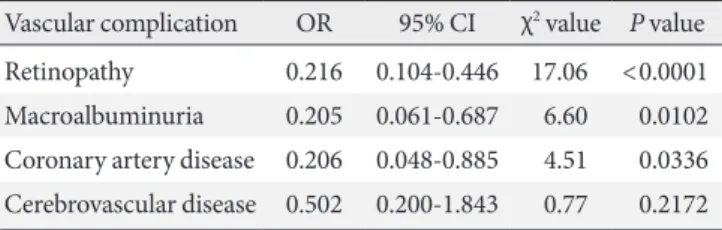
plications in patients with diabetes and Gilbert syndrome (a congenital hyperbilirubinemia) and in patients with diabetes without Gilbert syndrome [22]. The adjusted odds ratio for the association of Gilbert syndrome with retinopathy was 0.22 (P<001); with macroalbuminuria, 0.20 (P=0.01); with coro- nary artery disease, 0.21 (P=0.04); and with cerebrovascular disease, 0.50 (P=0.22) (Table 1). This study showed for the first time the lower prevalence of vascular complications in patients with diabetes and Gilbert syndrome, as well as re- duced markers of oxidative stress and inflammation (Fig. 1).
These findings strongly suggest that antioxidant therapy may be useful for preventing the development of diabetic vascular complications. Furthermore, serum bilirubin concentrations were demonstrated to be negatively associated with albumin- uria in patients with type 2 diabetes [23]. Another group of Japanese investigators reported in their cross-sectional study on more than 3,000 participants, that compared to subjects with in the lowest bilirubin quartile, those with the highest bilirubin levels had a four times lower prevalence of diabetic retinopathy [24]. Interestingly, our cross-sectional study of 12,949 general persons revealed an inverse relation between serum bilirubin level and the prevalence of type 2 diabetes [25]. In a large Korean cross-sectional study on almost 94,000 subjects, high serum bilirubin was also found to be associated with the reduced risk of diabetes mellitus and diabetic ne- phropathy [26]. Consistent with these data, low prevalence of Table 1. Adjusted odds ratio for retinopathy, macroalbumin-
uria, coronary artery disease and cerebrovascular disease in diabetic patients with Gilbert syndrome compared with those without it
Vascular complication OR 95% CI χ2 value P value Retinopathy 0.216 0.104-0.446 17.06 <0.0001 Macroalbuminuria 0.205 0.061-0.687 6.60 0.0102 Coronary artery disease 0.206 0.048-0.885 4.51 0.0336 Cerebrovascular disease 0.502 0.200-1.843 0.77 0.2172 In stepwise logistic regression analysis, the prevalence of retinopathy was significantly associated with Gilbert syndrome (GS), duration of diabetes, HbA1c; the prevalence of macroalbumiuria was associated with GS, duration of diabetes, triglyceride; the prevalence of coronary artery disease was associated with GS, duration of diabetes, systolic blood pressure; the prevalence of cerebrovascular disease was associ- ated with age, triglyceride, but not GS.
Odds ratio (OR) for retinopathy, macroalbuminuria, coronary artery disease and cerebrovascular disease was adjusted for significantly de- terminant variables, respectively.
Fig. 1. Serum high sensitivity C-reactive protein (hs-CRP) levels and the amounts of urinary 8-hydroxy-2’-deoxyguanosine (8- OHdG) excretion. (A) Comparison between diabetic patients with Gilbert syndrome, GS (+), and those without it, GS (-). Due to their skewed distribution, serum hs-CRP levels (ng/mL) and the amounts of urinary 8-OHdG excretion (urinary 8-OHdG to creatinine ratio, μg/gCr) were log10 transformed before all analyses. (B) Correlation between total bilirubin levels and serum hs- CRP levels. Spearman correlation analysis: r=-0.213, P<0.0001.
log hs-CRP (ng/mL)
Serum hs-CRP level 4.0
3.0
2.0
1.0
0 GS (+) GS (-)
P=0.0003
log 8-OHdG (μg/gCr)
Urinary 8-OHdG excretion
1.30
1.20
1.10
1.00
0 GS (+) GS (-)
P=0.0050
log hs-CRP (ng/mL)
Total bilirubin concentration (mg/dL) 4.5
4.0 3.5 3.0 2.5 2.0
1.5 0 1.0 2.0 3.0 4.0
A B
metabolic syndrome in subjects with phenotypic Gilbert syn- drome was described in a recent large Korean study on more than12,000 participants [27]. Antioxidant therapy may be use- ful for inhibiting the onset of diabetes itself as well as inhibit- ing diabetic complications.
ANTIOXIDANT THERAPY TARGETING THE MECHANISM FOR PKC-NAD(P)H OXIDASE ACTIVATION
We have proposed an antioxidant therapy using the drugs or chemicals which target the mechanism for PKC-NAD(P)H oxidase activation for preventing diabetic vascular complica- tions [28]. The possible mechanism underlying PKC-NAD(P) H oxidase activation and drugs or chemicals targeting its mech- anism are shown in Fig. 2.
Statin
We noted the ability of statin to inhibit geranylgeranylation of small GTP binding protein Rho family including Rac. We found that pitavastatin inhibited high glucose-induced increase in ROS production in parallel with inhibition of Rac-1 activity in cul- tured aortic smooth muscle cells [13]. Such inhibition by
pitavastatin was reversed by coincubation with mevalonic acid.
In addition, we found that pitavastatin treatment prevented the increased free ROS production in diabetic rats using the above-mentioned in vivo electron spin resonance method [13].
Furthermore, we showed that pitavastatin administration im- proved albuminuria and histologic abnormalities such as in- creased renal mesangial expansion in db/db mice, along with the improvement of renal Nox4 expression and oxidative stress [29]. The results in recent our clinical trial may be in support for the effectiveness of pitavastatin treatment on albu- minuria in diabetic patients [30].
ARB and chymase-specific inhibitor
In addition to the beneficial effect on vascular complications, we have shown that oral administration of ARB attenuated the increased expression of NAD(P)H oxidase in pancreatic islets together with the inhibition of oxidative stress and restored decreased insulin contents in islets of db/db mice [31]. These drugs may have a protective effect on the onset of type 2 dia- betes.
Bilirubin and biliverdin
To directly examine the beneficial effect of bilirubin and bili- Fig. 2. The mechanism underlying increased oxidative stress in diabetic vascular tissues and possible antioxidant therapies tar- geting its mechanism for inhibiting diabetic vascular complications. ARB, angiotensin II receptor blocker; PKC, protein kinase C; ATII, angiotensin II; GLP-1, glucagon-like peptide-1.
Hyperglycemia PKC activation
Inflammation
Diabetic vascular complications
Bilirubin Biliverdin Phycobilin PKC β inhibitor Statin
ARB
GLP-1 analog
Chymase inhibitor
Endothelial dysfunction Cell growth
Apoptosis Fibrosis Tissue AT II
production Increased chymase expression
NAD(P)H oxidase activation
Oxidative stress
Increased NAD(P)H oxidase expression
verdin (a precursor of bilirubin), we determined whether he- reditary hyperbilirubinemic Gunn rats and biliverdin-treated diabetic db/db mice were resistant to the development of renal dysfunction. Both rodent models had less albuminuria and complete protection against the progression of mesangial ex- pansion, accompanied by the normalization of oxidative stress and Nox4 expression [32]. These results suggested that biliver- din and biliverdin may protect against diabetic nephropathy and this may lead to a novel antioxidant therapy for diabetic nephropathy. Similar beneficial effect was also found in oral administration of phycocyanin derived from Spirulina platen- sis, a blue-green algae, and its chromophore phycocyanobilin, which has a chemical structure similar to that of biliverdin (unpublished data).
In addition, biliverdin treatment delayed progressive wors- ening of glucose tolerance in db/db mice mainly via inhibition of oxidative stress-induced β-cell damage, suggesting the pos- sible effectiveness of antioxidant therapy for preventing the onset type 2 diabetes as well as preventing diabetic complica- tions [33].
PKC β2 inhibitor
Among various isoforms, preferential activation of PKC β iso- form is reported to occur in many vascular tissues in the dia- betic state [34]. PKC β isoform-specific inhibitor LY33531 im- proves dysfunction and tissue changes in kidney and retina of the experimental diabetic animal model [35] and the results in the clinical trial are reported to be useful [36], although it does not yet reach a clinical application. The participation of the antioxidant action is presumed in part of the mechanism.
Glucagon-like peptide-1 (GLP-1) analog
Currently, the GLP-1 receptor agonist exendin-4 and the GLP- 1 analog liraglutide are used to treat type 2 diabetes. The major downstream pathway of GLP-1 receptor activation is genera- tion of the second messenger cAMP followed by activation of PKA or Epac2, and NAD(P)H oxidases have been reported to be inhibited by PKA activation in phagocytes. We therefore hypothesized that GLP-1 receptor agonists may inhibit renal NAD(P)H oxidase. In the streptozotocin-induced type 1 dia- betes models, liraglutide treatment did not significantly affect plasma glucose levels or body weights, but it still normalized urinary albuminuria in diabetic rats in parallel with normal- ization of oxidative stress and expression of renal NAD(P)H oxidase components (Nox4, gp91phox, p22phox, p47phox),
independently of a glucose-lowering effect [37]. Liraglutide inhibited NADPH-dependent superoxide production from cultured renal mesangial cells, and its inhibitory effect was re- versed by the adenylate cyclase inhibitor SQ22536 and the PKA inhibitor H89, but not reversed by Epac2 inhibition. These re- sults suggested that the effect of liraglutide on NAD(P)H oxi- dase was mediated by the cAMP-PKA pathway. Its clinical ef- ficacy should be tested in human trial.
CONCLUSION
In this review, the experimental and clinical studies on the role of oxidative stress in the development of diabetic vascular com- plication and the molecular mechanism underlying oxidative stress are discussed. These studies strongly show that antioxi- dant therapy is potentially effective to protect against diabetic vascular complications and one of the therapeutic targeting mechanism is activation or up-regulation of PKC-NAD(P)H oxidase. In this article, the effectiveness of several drugs or chemicals which can inhibit this mechanism is shown. These drug or chemicals are expected to be clinically effective for preventing diabetic vascular complications, but the develop- ment of more effective drugs for clinical use is also expected.
CONFLICTS OF INTEREST
No potential conflict of interest relevant to this article was re- ported.
ACKNOWLEDGMENTS
We appreciate the excellent assistance of Ms. Eri Nagashima for making this manuscript. This work was supported in part by the Special Coordination Funds for Promoting Science and Technology, Japan (SCF funding program “Innovation Center for Medical Redox Navigation”).
REFERENCES
1. Baynes JW. Role of oxidative stress in development of compli- cations in diabetes. Diabetes 1991;40:405-12.
2. Oberley LW. Free radicals and diabetes. Free Radic Biol Med 1988;5:113-24.
3. Ha H, Kim C, Son Y, Chung MH, Kim KH. DNA damage in the kidneys of diabetic rats exhibiting microalbuminuria. Free
Radic Biol Med 1994;16:271-4.
4. Kakimoto M, Inoguchi T, Sonta T, Yu HY, Imamura M, Etoh T, Hashimoto T, Nawata H. Accumulation of 8-hydroxy-2’-deox- yguanosine and mitochondrial DNA deletion in kidney of dia- betic rats. Diabetes 2002;51:1588-95.
5. Sonta T, Inoguchi T, Tsubouchi H, Sekiguchi N, Kobayashi K, Matsumoto S, Utsumi H, Nawata H. Evidence for contribution of vascular NAD(P)H oxidase to increased oxidative stress in animal models of diabetes and obesity. Free Radic Biol Med 2004;37:115-23.
6. Nishikawa T, Edelstein D, Du XL, Yamagishi S, Matsumura T, Kaneda Y, Yorek MA, Beebe D, Oates PJ, Hammes HP, Giardi- no I, Brownlee M. Normalizing mitochondrial superoxide production blocks three pathways of hyperglycaemic damage.
Nature 2000;404:787-90.
7. Inoguchi T, Li P, Umeda F, Yu HY, Kakimoto M, Imamura M, Aoki T, Etoh T, Hashimoto T, Naruse M, Sano H, Utsumi H, Nawata H. High glucose level and free fatty acid stimulate re- active oxygen species production through protein kinase C:
dependent activation of NAD(P)H oxidase in cultured vascu- lar cells. Diabetes 2000;49:1939-45.
8. Hink U, Li H, Mollnau H, Oelze M, Matheis E, Hartmann M, Skatchkov M, Thaiss F, Stahl RA, Warnholtz A, Meinertz T, Griendling K, Harrison DG, Forstermann U, Munzel T. Mech- anisms underlying endothelial dysfunction in diabetes melli- tus. Circ Res 2001;88:E14-22.
9. Kim YK, Lee MS, Son SM, Kim IJ, Lee WS, Rhim BY, Hong KW, Kim CD. Vascular NADH oxidase is involved in impaired endothelium-dependent vasodilation in OLETF rats, a model of type 2 diabetes. Diabetes 2002;51:522-7.
10. Guzik TJ, Mussa S, Gastaldi D, Sadowski J, Ratnatunga C, Pil- lai R, Channon KM. Mechanisms of increased vascular super- oxide production in human diabetes mellitus: role of NAD(P) H oxidase and endothelial nitric oxide synthase. Circulation 2002;105:1656-62.
11. Inoguchi T, Sonta T, Tsubouchi H, Etoh T, Kakimoto M, Sono- da N, Sato N, Sekiguchi N, Kobayashi K, Sumimoto H, Utsumi H, Nawata H. Protein kinase C-dependent increase in reactive oxygen species (ROS) production in vascular tissues of diabe- tes: role of vascular NAD(P)H oxidase. J Am Soc Nephrol 2003;
14(8 Suppl 3):S227-32.
12. Etoh T, Inoguchi T, Kakimoto M, Sonoda N, Kobayashi K, Ku- roda J, Sumimoto H, Nawata H. Increased expression of NAD(P)H oxidase subunits, NOX4 and p22phox, in the kidney of streptozotocin-induced diabetic rats and its reversibity by in-
terventive insulin treatment. Diabetologia 2003;46:1428-37.
13. Tsubouchi H, Inoguchi T, Sonta T, Sato N, Sekiguchi N, Ko- bayashi K, Sumimoto H, Utsumi H, Nawata H. Statin attenu- ates high glucose-induced and diabetes-induced oxidative stress in vitro and in vivo evaluated by electron spin resonance measurement. Free Radic Biol Med 2005;39:444-52.
14. Kitada M, Koya D, Sugimoto T, Isono M, Araki S, Kashiwagi A, Haneda M. Translocation of glomerular p47phox and p67phox by protein kinase C-beta activation is required for oxidative stress in diabetic nephropathy. Diabetes 2003;52:2603-14.
15. Ohshiro Y, Ma RC, Yasuda Y, Hiraoka-Yamamoto J, Clermont AC, Isshiki K, Yagi K, Arikawa E, Kern TS, King GL. Reduction of diabetes-induced oxidative stress, fibrotic cytokine expres- sion, and renal dysfunction in protein kinase Cbeta-null mice.
Diabetes 2006;55:3112-20.
16. Sonta T, Inoguchi T, Matsumoto S, Yasukawa K, Inuo M, Tsub- ouchi H, Sonoda N, Kobayashi K, Utsumi H, Nawata H. In vivo imaging of oxidative stress in the kidney of diabetic mice and its normalization by angiotensin II type 1 receptor blocker.
Biochem Biophys Res Commun 2005;330:415-22.
17. Huang XR, Chen WY, Truong LD, Lan HY. Chymase is upreg- ulated in diabetic nephropathy: implications for an alternative pathway of angiotensin II-mediated diabetic renal and vascu- lar disease. J Am Soc Nephrol 2003;14:1738-47.
18. Maeda Y, Inoguchi T, Takei R, Sawada F, Sasaki S, Fujii M, Ko- bayashi K, Urata H, Nishiyama A, Takayanagi R. Inhibition of chymase protects against diabetes-induced oxidative stress and renal dysfunction in hamsters. Am J Physiol Renal Physiol 2010;
299:F1328-38.
19. Maeda Y, Inoguchi T, Takei R, Hendarto H, Ide M, Inoue T, Ko- bayashi K, Urata H, Nishiyama A, Takayanagi R. Chymase in- hibition prevents myocardial fibrosis through the attenuation of NOX4-associated oxidative stress in diabetic hamsters. J Diabe- tes Investig. Epub 2012 Feb 21. DOI: http://dx.doi.org/10.1111/
j.2040-1124.2012.00202.x.
20. Stocker R, Yamamoto Y, McDonagh AF, Glazer AN, Ames BN.
Bilirubin is an antioxidant of possible physiological importance.
Science 1987;235:1043-6.
21. Lanone S, Bloc S, Foresti R, Almolki A, Taille C, Callebert J, Conti M, Goven D, Aubier M, Dureuil B, El-Benna J, Motterli- ni R, Boczkowski J. Bilirubin decreases nos2 expression via in- hibition of NAD(P)H oxidase: implications for protection against endotoxic shock in rats. FASEB J 2005;19:1890-2.
22. Inoguchi T, Sasaki S, Kobayashi K, Takayanagi R, Yamada T.
Relationship between Gilbert syndrome and prevalence of
vascular complications in patients with diabetes. JAMA 2007;
298:1398-400.
23. Fukui M, Tanaka M, Shiraishi E, Harusato I, Hosoda H, Asano M, Hasegawa G, Nakamura N. Relationship between serum bilirubin and albuminuria in patients with type 2 diabetes.
Kidney Int 2008;74:1197-201.
24. Yasuda M, Kiyohara Y, Wang JJ, Arakawa S, Yonemoto K, Doi Y, Ninomiya T, Ishibashi T. High serum bilirubin levels and di- abetic retinopathy: the Hisayama Study. Ophthalmology 2011;
118:1423-8.
25. Ohnaka K, Kono S, Inoguchi T, Yin G, Morita M, Adachi M, Kawate H, Takayanagi R. Inverse associations of serum biliru- bin with high sensitivity C-reactive protein, glycated hemoglo- bin, and prevalence of type 2 diabetes in middle-aged and el- derly Japanese men and women. Diabetes Res Clin Pract 2010;
88:103-10.
26. Han SS, Na KY, Chae DW, Kim YS, Kim S, Chin HJ. High se- rum bilirubin is associated with the reduced risk of diabetes mellitus and diabetic nephropathy. Tohoku J Exp Med 2010;221:
133-40.
27. Choi SH, Yun KE, Choi HJ. Relationships between serum total bilirubin levels and metabolic syndrome in Korean adults.
Nutr Metab Cardiovasc Dis. Epub 2011 Jun 22. DOI: http://
dx.doi.org/10.1016/j.numecd.2011.03.001.
28. Inoguchi T, Nawata H. NAD(P)H oxidase activation: a poten- tial target mechanism for diabetic vascular complications, pro- gressive beta-cell dysfunction and metabolic syndrome. Curr Drug Targets 2005;6:495-501.
29. Fujii M, Inoguchi T, Maeda Y, Sasaki S, Sawada F, Saito R, Ko- bayashi K, Sumimoto H, Takayanagi R. Pitavastatin amelio- rates albuminuria and renal mesangial expansion by downreg- ulating NOX4 in db/db mice. Kidney Int 2007;72:473-80.
30. Kimura S, Inoguchi T, Yokomizo H, Maeda Y, Sonoda N, Takayanagi R. Randomized comparison of pitavastatin and pravastatin treatment on the reduction of urinary albumin in
patients with type 2 diabetic nephropathy. Diabetes Obes Metab 2012;14:666-9.
31. Nakayama M, Inoguchi T, Sonta T, Maeda Y, Sasaki S, Sawada F, Tsubouchi H, Sonoda N, Kobayashi K, Sumimoto H, Nawa- ta H. Increased expression of NAD(P)H oxidase in islets of an- imal models of type 2 diabetes and its improvement by an AT1 receptor antagonist. Biochem Biophys Res Commun 2005;332:
927-33.
32. Fujii M, Inoguchi T, Sasaki S, Maeda Y, Zheng J, Kobayashi K, Takayanagi R. Bilirubin and biliverdin protect rodents against diabetic nephropathy by downregulating NAD(P)H oxidase.
Kidney Int 2010;78:905-19.
33. Ikeda N, Inoguchi T, Sonoda N, Fujii M, Takei R, Hirata E, Yo- komizo H, Zheng J, Maeda Y, Kobayashi K, Takayanagi R. Bili- verdin protects against the deterioration of glucose tolerance in db/db mice. Diabetologia 2011;54:2183-91.
34. Inoguchi T, Battan R, Handler E, Sportsman JR, Heath W, King GL. Preferential elevation of protein kinase C isoform beta II and diacylglycerol levels in the aorta and heart of diabetic rats:
differential reversibility to glycemic control by islet cell trans- plantation. Proc Natl Acad Sci U S A 1992;89:11059-63.
35. Ishii H, Jirousek MR, Koya D, Takagi C, Xia P, Clermont A, Bursell SE, Kern TS, Ballas LM, Heath WF, Stramm LE, Feener EP, King GL. Amelioration of vascular dysfunctions in diabetic rats by an oral PKC beta inhibitor. Science 1996;272:728-31.
36. He Z, King GL. Can protein kinase C beta-selective inhibitor, ruboxistaurin, stop vascular complications in diabetic patients?
Diabetes Care 2005;28:2803-5.
37. Hendarto H, Inoguchi T, Maeda Y, Ikeda N, Zheng J, Takei R, Yokomizo H, Hirata E, Sonoda N, Takayanagi R. GLP-1 analog liraglutide protects against oxidative stress and albuminuria in streptozotocin-induced diabetic rats via protein kinase A-me- diated inhibition of renal NAD(P)H oxidases. Metabolism. Epub 2012 May 1. DOI: http://dx.doi.org/10.1016/j.metabol.2012.
03.002.