• 검색 결과가 없습니다.

Revitalization Methods of EIFS for High-rise Residential Buildings through Using TACT and Gangform System with Hanging Scaffolding

N/A
N/A
Protected

Academic year: 2021

Share "Revitalization Methods of EIFS for High-rise Residential Buildings through Using TACT and Gangform System with Hanging Scaffolding"

Copied!
12
0
0

로드 중.... (전체 텍스트 보기)

전체 글

(1)

pISSN 1598-2033 eISSN 2233-5706

Journal of the Korea Institute of Building Construction, Vol. 11, No. 4

http://dx.doi.org/10.5345/JKIBC.2011.11.4.407 www.jkibc.org

Revitalization Methods of EIFS for High-rise Residential Buildings through Using TACT and Gangform System with Hanging Scaffolding

1)

Lee, Sang-Hyun Yi, June-Seong

*

Shin, Seung-Woo Kang, Hae-Min

Department of Architectural Engineering, Ewha Womans University, Seodaemun-Gu, Seoul, 120-170, Korea

Abstract

Recently energy management measures at the political level, for the purpose of reducing energy consumption in the building sector, are being actively introduced. As a practical method, the exterior insulation method, which is proven to effective in reducing the energy loss through walls, has been favored. In this study, detailed implementations are suggested to activate exterior insulation system which can improve the housing insulation performance. The newly designed Gang-form system with hanging scaffolding was suggested to revamp constructability for finishing outer wall. The research results are based on a multifaceted analysis of the current problems of exterior insulation systems, and on recommendations proposed by exterior insulation experts in the Charrette discussion. The study has indicates that the customized TACT schedule considering the site condition has shortened the construction period to 5 months from 7.5 months. Through utilizing the suggestions of this study, the prevalence of exterior insulation systems is expected to become widespread.

Keywords : exterior insulation and finishing system, tact, gangform, hanging scaffolding

1. Introduction

1.1 Background and Research Objectives

In recent years in Korea, due to climate change and heightened international concern about the rising cost of energy caused by high oil prices, energy-related policies for controlling energy efficiency, resource development, and renewable energy has received great attention. According to the Korea Energy Economics Institute's ‘Energy Consumption Report’(2008), the 2020 building energy consumption was increased approximately twice compared to 1995, and is

Received : April 21, 2011 Revision received : May 30, 2011 Accepted : June 2, 2011

* Corresponding author : Yi, June-Seong [Tel: 82-2-3277-4096, E-mail: [email protected]]

ⓒ2011 The Korea Institute of Building Construction, All rights reserved.

expected to reach 60.9 million TOE, which accounts for about 24 percent of total domestic energy consumption and 13 percent of emissions of greenhouse gas. Accordingly, a variety of energy policy options to reduce energy consumption in this country are being taken. As an example, the Seoul metropolitan government officially adopted

“Regulations of Total Building Energy Consumption,"

aimed at a 20 percent reduction in energy consumption by 2030[1].

Especially, for housing, since energy consumption for heating, hot water, and energy consumption reached 77 percent of the total energy, a more effective plan for dealing with this issue is needed.

Basically, as there is a need to increase the thermal

efficiency of the building itself in order to save money

on heating bills, it has been reported that there is

approximately a 40% heat loss in the outer wall where

(2)

the most heat lost occurs during winter heating.

Because there is such a large proportion of energy loss in the walls, an exterior wall insulation system has recently been suggested as solutions.

In developed countries such as Europe, exterior insulation construction is already activate and widespread, and in China since 2004 all housing construction requires exterior insulation as mandatory[2]. In the case of Korea in the 1980s, an exterior insulation finishing construction method was introduced for various buildings, but construction defects occurred more frequently so the introduction could not be implemented. However, as it was due to the absence of appropriate construction management rather than problems such as construction-related materials and the process of exterior insulation, the system introduce and activate could be essential when the out-inside countries interest of energy consumption are increasing as now.

Specifically, given that apartment houses in the overall housing market account for a high percentage when considering domestic conditions, it is expected that exterior insulation applied to apartment houses will play a major role in reducing energy consumption.

This study proposes a concrete plan to introduce exterior insulation which has shown a significant effect in reducing energy consumption and to activate the construction facilitation. For this, based on various exterior insulation construction practices that occurred prior to that was derived from analysis of issues and stakeholders to present exterior insulation construction and construction management improvement plan, we propose the integrated gang-form installation equipment to improve the workability and work safety of external wall finishing. In addition, as we need TACT process management technique to improve the practical applicability to the field, we have suggested and developed a TACT utilizing exterior insulation system.

1.2 Research Methods and Scope

In this study, the research was performed by analyzing and comparing Interior insulation system that is generally applied to the current housing construction to exterior insulation system that has good superior energy efficiency through reducing the thermal bridge. Especially, in a variety of exterior insulation methods, the wet process and the dry process has been selected for this comparison. Analysis based on various factors was performed with specific investigation using problematic cases analysis reported in the previous studies, and experts’ reviews to suggest specific improvements of exterior insulation materials manufacturers, contractors and other relevant professional. To do this, public Charette 1) was introduced as a effective method for multilateral discussion in various field, to prevent possible flaws when applying the exterior insulation system to the housing and help to construct effectively. In this study, unit-per-building project (20 stories, 78-houses- 85m² inch of exclusive area) was selected for the application model, and construction management analysis were performed prerequisite for practical field application. Process analysis was performed when the ground floor’s erection of framework starts, except for the earthwork which is changeable. And the ventilation type exterior insulation was also excluded from this study, having low comparability by being commonly utilized at the lower part of the housing regardless of wet and dry process.

1) Charrette is a technique for resolving problems by the

discussion of experts’ in the various fields. Public

Charrette, one type of Charrette techniques, is a method

that the persons concerned and experts select best

ideas and review it, so intensify the pros and

supplement the cons. It is expected to be useful for all

participants discuss freely about the problem and

reaching an agreement for a short time, so in this

study, it was used to get comprehensive conclusions

and efficient communication between engineer’s

representatives and materials supply companies.

(3)

2. Consideration of the Exterior Insulation System

2.1 Classification of the Insulation Systems

Insulation systems can be classified as interior, central, and exterior according to the location where the insulation has installed(Figure 1). Because the heat transfer from the outside to the inside of the structure is different based on the method where the insulation are located, it each effects on the building energy load. The interior insulation system, installs the insulation in the inner wall and finish with the gypsum board, is the most commonly applied method as easy to construction and relatively inexpensive.

The central insulation system installs the insulation such as rock wool, styrofoam or fill with urethane foam inside the space between cement bricks of the outer wall. The external insulation system, installs the insulation at the outer side of the wall and finish with the material which has water-resistance and impact-resistance, is the most correspondent method with the energy policy as it minimizes the heat loss by wrapping the structure completely.

Figure 1. Insulation method classification by the location of insulation material

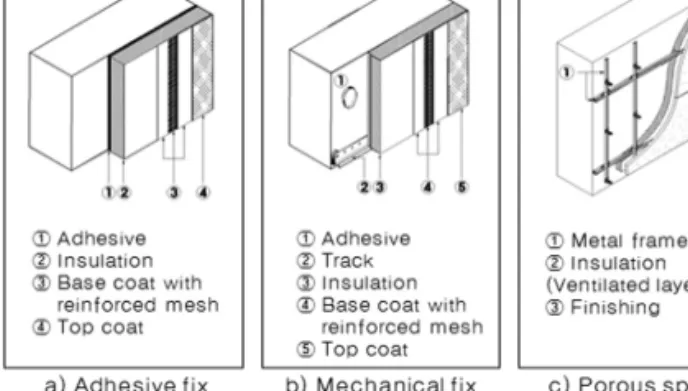
The external insulation system can be classified in more detail based on how the insulation is fixed at the outer wall, largely as wet, dry, and ventilation type(Figure 2). The wet type uses an adhesive to attach insulation and do the finishing work. The dry type installs the track in the structure and inserts the insulation, fix it and do the finishing work, preferred at winter construction or at the site where the wind speed is high. Meanwhile, the ventilation

type uses the metal frame installing the insulation to make ventilated between the insulation and the exterior finis. The ventilation type is used when the exterior finish material is stone or metal frame, and commonly applied at the lower part of the housing.

Figure 2. Insulation system classification by bonding method

2.2 Comparisons of the Main Processes of the Interior and Exterior Insulation

Existing research on exterior insulation system focuses more on the insulation performance comparing the interior insulation system to exterior insulation system in terms of energy and environmental assessment. The Related researches has verified the insulation performance such as heat transmission coefficient, where the thermal bridge occurs, thermal property and energy consumption of thermal efficiency and has suggested that exterior insulation system can significantly improve the insulation and energy performance by excluding the thermal bridge which made the insulation performance degrade in the existing interior insulation system[3,4,5] Although there were several studies that suggested the improvement for the exterior insulation systems to vitalize its dissemination[6,7,8], these studies had limitations to the objective and the study was restricted to the quality management of the construction and material.

In the following section, for the purpose of improving

housing insulation performance that is high-impact

in the aspect of energy management, each process of

(4)

the interior and exterior insulation system will be analyzed multilateral to draw the items that can be improved in the process management.

2.2.1 Schedule Interval Analysis of Insulation System To create the milestone for comparison of the construction process such as the process order and construction period of the interior and exterior insulation system, the milestones of the 15-25 stories apartment houses were collected which was constructed since 2001 and be completed before 2015 in Seoul and Gyeonggi Province. Based on the review of this project, flat-type apartment housing composed of 78 houses, 20 story and 85m² of exclusive area were selected as the verification subject, and made the milestone by creating sequential relationships of the processes between the ground floor’s erection of framework to completion cleaning work for confirming the process section which can be performed of the interior and exterior insulation system. By the results of the created milestone of the verification subject, it was calculated to take approximately 17.5 months from the ground floor’s erection of framework to the completion of the finishing work.

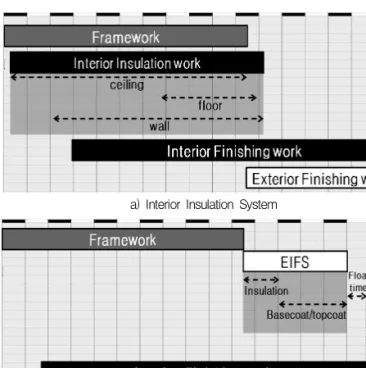
Represented as in Figure 3, each of the starting point and the ending point of the construction segments(ceiling, wall, floor) are different and it starts constructing after the erection of frameworks then be in progress superimposed with the processes such as masonry, waterproof processes. Typically, the insulation construction completes in the early of the finishing works after the erection of frameworks. On the other hand, the exterior insulation system needs to install the railing and window frames and fill insulation around the window frame before installing the insulation at the outer, and can install insulation from the ground floor after the erection of frameworks has completed. In general, after installing the insulation from the bottom to the top,

plaster the mortar mesh and insert the mesh from the top floor to the bottom, and after that the finishing work is progressed in batches from the top to the bottom or otherwise. The exterior insulation system related works are performed independently with the internal finishing work, and the completion time was selected when the internal finishing process is completed. Based on one building, the wet type of the exterior insulation system takes 15-20 working days and the dry type takes 30 working days in need of additional days for the track installation. But both types of the exterior insulation system needs to consider that there are lots of variables according to the external environmental factors and site conditions because it is constructed outside, and enough free time should be considered when planning.

a) Interior Insulation System

b) Exterior Insulation System

Figure 3. Schedule comparison between interior and exterior method

2.2.2 Comparison of the Major Elements of Process Management on methods

The process of the insulation system are largely

classified as clean the background, install the

insulation, and finishing works, and the details of the

(5)

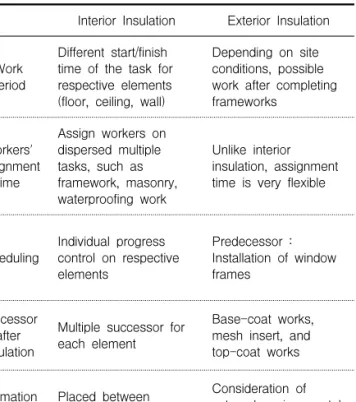
process of the interior and exterior insulation system are almost the same. However, the major elements of the process management on methods are significantly different, because of the insulation installed position and difference of the working conditions. Thus, the comparison between the interior and exterior insulation systems in terms of process management such as the timing, working group operations, detailed procedures, subsequent processes, and free time could be rendered as Table 1.

Interior Insulation Exterior Insulation

Work period

Different start/finish time of the task for respective elements (floor, ceiling, wall)

Depending on site conditions, possible work after completing frameworks

Workers' assignment

time

Assign workers on dispersed multiple tasks, such as framework, masonry, waterproofing work

Unlike interior insulation, assignment time is very flexible

Scheduling

Individual progress control on respective elements

Predecessor : Installation of window frames

Successor after insulation

Multiple successor for each element

Base-coat works, mesh insert, and top-coat works

Estimation of float

Placed between individual tasks

Consideration of external environmental conditions

Table 1. Comparison between in/exterior insulation system in terms of scheduling

3. Analysis of Current Construction

Situations of Exterior Insulation System

3.1 Analysis of Causative Factors Based on Defect Types

For apartment housings, the construction using the exterior insulation system is paucity of cases, and the years of use are not sufficient for periodic analysis of actual conditions of defect types as the

residence period passes. Hence, this study analyzed comprehensively about the defections occurred so far not only the apartment housing but also the nonresidential buildings, and considered various problems that can occur when applying the exterior insulation system to find out how to apply it to the apartment housings. This study, therefore, synthesized the feedback from practitioners working on the exterior insulation system construction based on contractor and manufacturer related records and reports and the analysis of the defect types in the existing researches.

The defection cases occurred after the exterior insulation system were classified into three categories on the basis of the existing researches[6,7,8]:

elimination, contamination, and cracks. Chung[6]

visualized the frequency of cracks that occurred in certain area’s subjects(Figure 4). According to previous studies, many defection cases were related to contamination and cracks, but the professionals concerned about the increasing rate of the elimination cases caused by the increase of high-rise construction and unstable weather conditions. The specific causes of defection types were exposed that elimination occurs cause of improper mixing of adhesive mortar and board deformation, cracks occurs cause of faulty cement content of mesh mortar, improper mixing of product, and board deformation.

Meanwhile, in the case of contamination, the use of

acrylic or similar-silicone products with low

resistance in ventilation and water-repellent has been

considered as the major causes. However, the causes

of defections are acting multiply so acts like the same

causes for various defections, not acting that the

each individual factors cause one defection only. The

construction management was classified into three

categories in terms of preventing defections

effectively of performing each phases : material

management, construction skills, and working

conditions(Table 2).

(6)

a) Crack occurrences by location [6]

b) Defect classification by types [7]

c) Defect classification by types [8]

Figure 4. Defects analysis on exterior insulation

Depend on the defection classification proposed on this study, more comprehensive and specific ways to prevent defections are expected to be developed by systematic recognition of exterior insulation construction-related defections. The items to prevent and manage defection effectively in terms of construction management based on the multiple statistics analysis and the expert review of exterior insulation is as in the following. First, making the shop drawing of the major elements must be preceded in order to standardization the construction of exterior insulation system. Secondly, needs to establish appropriate construction guidelines and manuals for exterior insulation system. Finally, work space must be secured that can enhance constructability and safety of the exterior insulation construction-related

works. Especially, to assure the quality of exterior insulation system, the standardized design, construction, and maintenance guidelines should be established and written on the standard specifications so suggested as construction and management standard. 14 parts having the high possibility to occur defects was selected and the shop drawing of each part has written, and in this study, based on those details the major elements of construction management to preventing defection were discussed.

In the following section, in terms of construction management to prevent defection, working conditions, especially installation equipment for outer-wall finishing work will be mainly discussed.

Mgmt. factors Detailed causes of defects

Material management

◦Procurement failure - beyond the quality standard

◦Carelessness for material storage after site delivery

◦Lack of curing period

◦Deterioration

Unskilled workmanship

◦Lack of drawing review

◦Inappropriate mixing ratio of adhesives and cements

◦Inappropriate mortar or compression

◦Misuse of fastener - location, quantity

◦Poor construction joints

◦Excessive amount of water

Work environment

◦Accidents caused by worker and material falling

◦Loss of workability derived from high work places

◦Low temperature in the winter season

◦High temperature in the summer season

◦Wet surface of concrete during the rainy season

Table 2 Detailed defect causes for management factors

3.2 Analysis of Current Status of the Installation Equipment

One of the elements in the working environment

which affects on the quality and safety of exterior

insulation system construction is having adequate

work space. As all of the work performs outside

like exterior insulation system, a comprehensive

plan to control installation equipment is needed for

the safety of workers and construction efficiency.

(7)

a) Scaffolding b) Gondola

Currently, the most popular installation equipment to support exterior insulation is scaffolding for the lower part and gondolas for high-rise buildings(Figure 5). This section presents the results of comparisons and analysis of the two systems to suggest the use of installation equipment for apartment housing in actual conditions.

When using the scaffolding on the outside of the housings, the construction workability can be improved and multiple layers of construction can be proceeded in parallel. However, due to the increase of the load in the substructure caused by the installation of walk plate, apartment housings exceed 20 floors needs additional reinforcement for the lower 10 floors. Besides, additional time for installation and removal is required, and has constraints that cannot use the surrounding workspace until the removal is done. Moreover, the necessity for scaffolding is decreasing due to the use of gangform.

Figure 5. Temporary equipment for exterior insulation and finishing works

Gondola has a big advantage of moving up and down smoothly, and it is preferred for most of the high-rise apartment housings when constructing exterior insulation system. However, in order to install and operate the gondola, a framework must be erected, and the installation of the equipment will cause many constraints on horizontal movement. In addition, a subsequent process can be constrained because of the limited material loading and the amount of work per device. Moreover, external environmental factors such as weather and wind can directly affect the operation of the gondola and

additional safety personnel management is required for the upper and lower sections during the uses. In recent years, as the plane of the apartment housing is diversified and the uneven shape is installed reflecting the appearance of the various deployment, the fact that the number of the gondola for construction exterior insulation significantly increased should be considered.

4. Construction Management Improvement for the Activation of the Exterior Insulation System

Works Object Management point

Insul- ation

Material

◦Prevent variation by keeping sufficient curing period before cutting EPS board

◦Usually 6 weeks(8 weeks in the winter) for curing

Work- manship

◦Avoid straight joint

◦Construct stagger joint at EPS boards' end located in the corner

◦Ensure flat surface for EPS boards by sanding work

Base coats

&

Mesh

Material

◦Maintain the cement mixing ratio below 1.0

◦Requiring adhesive strength - adherend of concrete : 720 KN/m

2

- adherend of insulation : 100 KN/m

2

- the bond strength of mesh adhesive mortar : 100 KN/m

2

Work- manship

◦Tighten the edge to bottom surface

◦Secure adhesive area over 40% of insulation board

◦Submerge mesh patterns in adhesives

◦Reinforce openings and corners by placing additional mesh

Top coat

Material ◦Prevent a different color by maintaining consistent amount of water

Work- manship

◦Assign the same workmen group on individual task

◦Install construction joint between stories in wide area

Table 4. Critical management points for improvement

4.1 Considerations for Improving Performance in Exterior Insulation Construction

In this study, the defection cases in construction were reclassified by major management topics in terms of construction management, and the improvement for the application to the apartment housings were suggested.

For this, various experts in the field of exterior insulation

construction was collected, and public charrette was used

to gather their opinions. The charrette were held two

times(07/01/2011, 02/11/2011), and the major and the

(8)

work experience of the participated experts are shown in Table 3. The material suppliers/construction workers of the exterior insulation system who also participated in the charrette exchanged their professional opinions in order to deduct the management items in aspects of construction management to improve quality assurance and enhance workability.

EIFS

Vendor/Constructor General contractor

Participants 4 2

Career years 6 -15 11 - 18

Table 3. Charrette outline

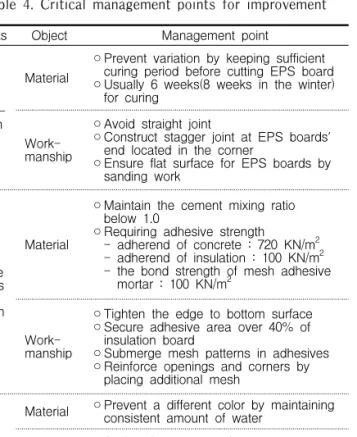
For the systematic progress of combing a variety of opinions, the process of the exterior insulation was segmented as installing insulation, base coating and mesh inserting operations, and finishing works, and the management items of each progress were drawn in aspects of material management and construction skill.

Important points discussed are summarized in Table 4.

Works Object Management point

Insul- ation

Material

◦Prevent variation by keeping sufficient curing period before cutting EPS board

◦Usually 6 weeks(8 weeks in the winter) for curing

Work- manship

◦Avoid straight joint

◦Construct stagger joint at EPS boards' end located in the corner

◦Ensure flat surface for EPS boards by sanding work

Base coats

&

Mesh

Material

◦Maintain the cement mixing ratio below 1.0

◦Requiring adhesive strength

- adherend of concrete : 720 KN/m

2

- adherend of insulation : 100 KN/m

2

- the bond strength of mesh adhesive mortar : 100 KN/m

2

Work- manship

◦Tighten the edge to bottom surface

◦Secure adhesive area over 40% of insulation board

◦Submerge mesh patterns in adhesives

◦Reinforce openings and corners by placing additional mesh

Top coat

Material ◦Prevent a different color by maintaining consistent amount of water

Work- manship

◦Assign the same workmen group on individual task

◦Install construction joint between stories in wide area

Table 4. Critical management points for improvement

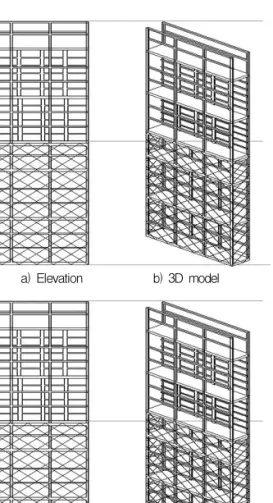
4.2 Utilization of Scaffoling-Integrated Gangform Currently, gondolas and scaffolding are the generally used installation equipment, but as the use of gangform has been gradually implemented, a comprehensive plan for installation equipment is required. The use of gangform system is being expanded because the quality of framework can be assured and the time can be reduced. Currently, gangform developed as almost the completion, and now it is the main installation equipment for high-rise apartment housings. Therefore, to minimize the rising costs that can be incurred by material changes and additional installation equipments when applying exterior insulation system, using gangform which is highly used currently could be efficient. Thus, a cage with a walkplate which can support operating exterior insulation was placed on the bottom of the gangform as a way to use the gangform, which is outside installation equipment, constructing exterior insulation-related works. That is, a kind of hanging scaffolding is placed on the bottom of the gangform, which is designed to work exterior insulation in parallel with the erection of framework. As shown in Figure 6, the cage which can enable simultaneous operations on two or three floors are connected to the bottom of the gangform, to assure additional working space. Because of this, the construction of exterior insulation can be performed simultaneously on the bottom of the gangform, separate with the sub-operation on the top of the gangform. In other words, exterior insulation can efficiently proceed with the erection of framework, as the underlying workspace makes available for installation of base coating and insert mesh, and finishing work.

A sequential progress of each task makes it possible

to construct continuously without waiting time

between the works, not by constructing the processes

separately such as insulation, base coating, and

finishing materials. In particular, as performed directly

(9)

connected with the erection of framework, shortening the time of the entire project by applying exterior insulation system is available. As installation of exterior scaffolding is not required and outside finishing work completes at the same time with the erection of framework simultaneously, sub-floor grading and landscaping process can have enough time to be set up. However, there are some additional things to be considered unlike the benefits of shortening time. Exterior insulation work-groups need to reside relatively longer during the erection of framework, an appropriate increasing of the extra indirect costs for the workers should be reflected.

Furthermore, more specific ways are needed to prevent the installed insulation material being impact damage and contamination of finishing materials which can be caused by moving the gangform to upper sections.

a) Elevation b) 3D model

a) Elevation b) 3D model

Figure 6. Concept drawing for the proposed equipment

4.3 Construction Process Management Techniques of TACT in the Application of Exterior Insulation System

When applying the exterior insulation to apartment housings, usually after the erection of framework is completed then an additional equipments(gondolas) are installed on the outside, and operated to do the related works. Due to the characteristic of the gondola, there are constraints in terms of construction workability and on-site safety management, as well as additional costs due to the building floor/elevation plan. It is inflaming the economic feasibility along with the materials cost increases when changing from existing interior insulation to exterior insulation system. Accordingly, and multifaceted review is necessary to explore ways to minimize additional costs to activate exterior insulation. This study referred to the various opinions from experts in exterior insulation field, and suggests TACT to utilize exterior insulation as a positive alternative, which was discussed by the workshop(Charrette) in twice. Since there are some concerns about the risk of deterioration of the quality according to the efforts to reduce direct cost, the suggestions were prosecuted to shorten the construction period so reduce the indirect cost.

TACT is an effective construction management technique that defines each detailed works, plan and manage that the sequential works can be connected regularly so enables to minimize inventory and waste, improve manageability, improve capacity to manage variations, and reduce time and cost[5].

When building apartment housing, each unit is built repeatedly while construction workers move the workspace in order and repeat the given tasks[10].

This process makes waiting time between the works

by the constraint of space, time, and material. In

this case, TACT makes possible to save the

nonproductive waiting times, and can shorten the

construction period. In addition, as a few people

(10)

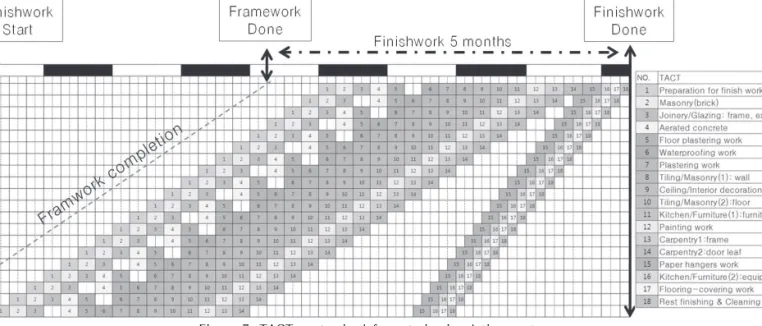
Figure 7. TACT customized for exterior insulation system

repeats the same work, this will assure the equalized and outstanding quality of works.

Research on the application of TACT was carried out targeting on various finishing methods in domestic[9,10,11,12], and most of the studies have suggested the TACT process models and have focused mainly on about the effects and effectiveness when applying it to the construction site. By the results of the previous studies, the application of TACT reported that the finishing time were reduced approximately 20-30%, and it was possible to reduce the total project cost as the indirect and financing cost was reduced associated with it[11]. Given the proven performance of previous studies, it is expected that using both the exterior insulation system and TACT for apartment housings can offset the increase of direct cost applying exterior insulation by the decreased indirect cost of shorten the construction period.

The number of TACT operating units and its composition can be varied according to the characteristic of the construction site. In the case of the apartment housing, for the connected unit process of the framework and finishing work, the unit of time for TACT is set-up based on the cycle

of erection of framework. And, the finishing work which were proceeded as a household-unit in the existing apartment housing construction are adjusted to be done in floor-unit. This study introduced the TACT process with a goal of completing finishing works of four-household for each floor. Each of the TACT units includes the detailed activity, and the detailed schedule is distributed according to the each unit of time. In this study, synthesizing the existing research results in reference and expert opinions, the TACT unit of time was applied as 6 days, coordinating the floor-unit for 18 units of the internal finishing and the 6days cycle of the framework construction.

Considering the case of the main task process, the

finishing works on 1st floor starts when the

frameworks on 4th floor completes. In order to

secure the amount of work activity per-day, air

entrained concrete and floor plastering works were

scheduled to finish by two floors. In the case of the

TACT unit from 15 to 18(papering, furniture work,

flooring and other finishing work), float time was

given to prevent the damage caused by starting the

finish work early, assure the quality, and solve the

accumulation of the workspace caused by the work

(11)

overlapped. In addition, this allocated float time can give some operational flexibility managing the process, by making possible to reflect the demand about the design trend of the installed furniture when is required at the completion. The same unit project(20 stories, 78-houses- 85m² inch of exclusive area) suggested in Chapter 2(Figure 7) was applied to the process schedule, and based on this, exterior insulation construction schedule which were suggested in this study was made. From this study, the time for the finish work which starts after the framework is completed has reduced approximately 7.5 months to 5 months, so it is expected that it can save not only the operating cost but the financing cost by shortening the construction period.

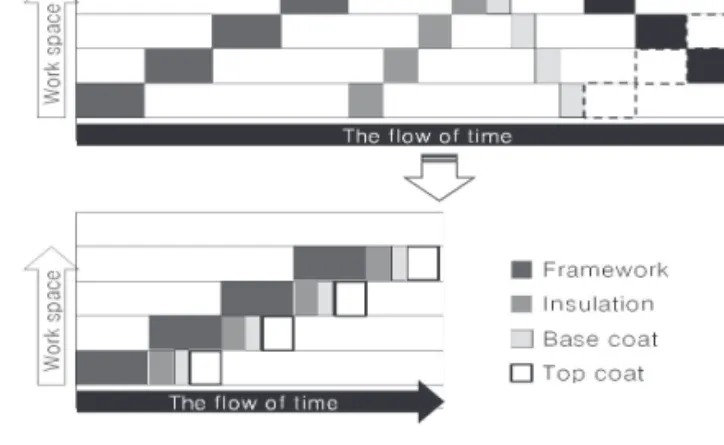
In the case of exterior insulation using scaffolding and gondola, after when the framework completes, then install the insulation from the bottom to the top, do the base coating operation from the top to the bottom, and then do the finishing work from the bottom to the top or otherwise. But these sequential operating tasks are not connected and worked as a cut off process, waiting time between the tasks occurred. However, as suggested in Section 4.2, the proposed scaffolding-integrated gangform provides an appropriate work space for exterior insulation construction on the bottom of the gangform, so makes it possible to effectively manage the process of the outer-finishing work at the beginning of the construction with a connection with erection of framework. In other words, by applying the basic concepts of TACT to the outer-finishing work of the apartment housings, it is possible to complete a construction project more effectively when implementing framework, insulation, base coating, and finishing without waiting time (Figure8).

Figure 8. TACT application for external insulation

5. Conclusion

As efforts to reduce energy consumption were intensified both domestically and internationally, the exterior insulation system has received increasing attention. In most developed countries, as guidelines and systems related to exterior insulation have already been established, its implementation is generally propagated. However, in Korea, due to the absence of appropriate guidelines to support exterior insulation, the work on exterior insulations relies on construction guidelines provided by each manufacturing company. Under these conditions, it is hard to assure the identical quality of construction throughout the entire process. This puts it difficult in promoting exterior insulation and finishing systems in the nation. Thus, it should be comprehensive such that it covers the economy, product quality, and work safety based on outside building construction. The need for proper guidelines for construction and management of exterior insulation in accordance with domestic regulations are strongly demanded. Also the newly suggested guidelines should be practical and compatible with the current institutions and policies.

This study has investigated the possibility of

applying exterior insulation systems for an

apartment housing projects from the view of

(12)

construction management. In order to implement these efforts, main causes for construction defects, such as elimination, cracks, and contamination were classified into three categories; materials management, construction skills, and work environment. Meanwhile, more systematical management items were proposed according to the construction processes: insulation installation, adhesive application, and finishing works, which are expected to effectively prevent potential flaws.

The use of gangforms integrated with scaffolding shows a high-rate of application in the current construction projects, especially in high-rise apartment housing projects. Moreover, the time required for the entire construction was reduced by shortening the time for finishing construction from 7.5 months to 5months. It was possibly obtained by implementing the TACT customized for exterior insulation conditions. Consequently more synergetic results are expected by applications of TACT and gangforms with scaffolding, which are effectively customized for exterior insulation systems.

Acknowledgement

This work was supported by the National Research Foundation of Korea (NRF) grant funded by the Korea government (MEST) (No. 20100027717)

References

1. Nam SJ. Introduction of building regulations for total amount of energy consumption in seoul[Internet]. Korea: The korea energy news; 2011 Feb 21. Available from:http://www.

koenergy.co.kr/news/articleView.html?idxno=55277

2. No SY. Energy conservation 'passive houses' spread; green energy technologies, on our owm[Internet]. Korea : Munhwanews; 2009 Sep 28. Available from: http://www .munhwa.com/news/view.html?no=20090928010307241040042 3. Song SY, Koo BK, Choi BH. Insulation performances of the

typical floor's front wall-slab and side wall-slab joints of

apartment buildings with internal and external insulation systems. Journal of the Architectural Institute of Korea Planning &Design. 2008 August;24(8):277-84.

4. Song SY, Koo BK, Lee BI. Energy performance of internally and externally insulated apartment buildings according to the location of thermal insulation and mass. Journal of the Korean Institute of Architectural Sustainable Environment and Building Systems. 2010 March;2010(3):167-70.

5. Lee JC, Shim JW, Lee MH, Lee SH. A study of development on the physical performance improvement of the exterior insulation and finish system of building. Journal of the Architectural Institute of Korea Structure &Construction.

2005 June;21(6):41-8.

6. Chung JY. A study on the exterior insulation development method of a building - Focusing on the farm house in pusan metropolitan city neighborhood. Journal of the Architectural Institute of Korea Structure&Construction. 2002 October;

22(2):463-6.

7. Kim JS. A study on the analysis and development method of incomplete works on exterior insulation and finishing system [master's thesis]. Seoul (Korea): Hanyang University; 2001.

74 p.

8. Shin SS. A study on the an analysis of defect in exterior insulation finishing method and suggestion of improved method [master's thesis]. Seoul (Korea): Korea University;

2009. 73 p.

9. Kim YJ, Han JY, Shin DW, Kim KR, Kim CD, Seo SW. A Tact planning and scheduling process model for reduction of finishing work duration in building construction projects.

Journal of the Architectural Institute of Korea Structure

&Construction. 2003 January;19(1):161-8.

10. Kim JH, Yoon YS, Jang MH, Suh SW. Workflow-based TACT planning &scheduling process - Focused on the finish work of apartment building. Journal of the Architectural Institute of Korea Structure &Construction. 2007  June;23(6):153-62.

11. Shin DH, Park HS, Yun SH, Koo KJ. Application plan of TACT process for finish works in apartment housing projects. Journal of the Architectural Institute of Korea Structure &Construction. 2010  July;26(1):129-36.

12. Joung YK, Yoon YS, Suh SW, Shin DW, Kin CD, Kim KR. The

improvement of tact planning &scheduling by reliable zoning

of work area in building construction. Journal of Korea

Institute of Construction Engineering and Management. 2003

June;4(2):59-65.

수치

Figure  1.  Insulation  method  classification  by  the  location  of  insulation  material
Figure  3.  Schedule  comparison  between  interior  and  exterior  method
Table  1.  Comparison  between  in/exterior  insulation  system  in  terms  of  scheduling
Table  2  Detailed  defect  causes  for  management  factors
+6

참조

관련 문서

And as the number of ODA projects related to rural development has been on the rise, many relevant institutions, including the Korea International Cooperation Agency (KOICA),

Although the coastal area of Jeju has already been developed, it has high pressure and demands for development continually increasing due to the increase

The study derived the problems according to results of field-centered synthetic analysis on yellow croakers of fishery system currently used in Chujado, Korea

Ejectors is a fluid transportation device for which a principle is used that high-pressure fluid are spouted through driving pipe and the pressure

After liberation, it has been suggested that the objective of Korean police activities and duties are maintenance of social order and public interest, but

But, the adjusted - R 2 of book values and earnings produced through deferred tax accounting has no change, compared with that of book values and earnings

Finally, chapter 3 presents methods of education and those are classified the teaching methods for virtues of character, such as justice, temperance, and

: A structural steel bulk weight factor of 47% of total topsides weight (i.e. equipment + bulks + structural) has been used for integrated deck areas, and : 50% of total