Research Article Weed & Turfgrass Science
321
Weed & Turfgrass Science was renamed from both formerly Korean Journal of Weed Science from Volume 32 (3), 2012, and formerly Korean Journal of Turfgrass Science from Volume 25 (1), 2011 and Asian Journal of Turfgrass Science from Volume 26 (2), 2012 which were launched by The Korean Society of Weed Science and The Turfgrass Society of Korea found in 1981 and 1987, respectively.
Weed & Turfgrass Science was renamed from formerly both Korean Journal of Weed Science from Volume 32(3), 2012, Korean Jour- nal of Turfgrass Science from Volume 25(1), 2011 and Asian Journal of Turfgrass Science from Volume 26(2), 2012 which were launched by The Korean Society of Weed Science and The Turfgrass Society of Korea founded in 1981 and 1987, respectively.
Evaluation of Herbicidal Potential of Essential Oils and their Components under In vitro and Greenhouse Experiments
Hae-Jin Choi1, Kandhasamy Sowndhararajan1, Nam-Gyu Cho2, Ki-Hwan Hwang2, Suk-Jin Koo2, and Songmun Kim1,3*
1Department of Biological Environment, Kangwon National University, Chuncheon 24341, Korea
2Moghu Research Center Ltd., Daejeon 34141, Korea
3Gangwon Perfume Alchemy Co. Ltd., Chuncheon 24341, Korea
Introduction
Weeds are one of the most important pests causing economic losses in the world agriculture. In commercial crop cultivation, the competitions caused by the growth of weeds are influencing the reduction of crop yield and quality of their products. The weed control can be achieved by manual, herbicidal or biological control methods (Hulme, 2012).
Manual control method using hand weeding is a good weed control strategy, but requires more number of workers and also consuming more time. The use of synthetic herbicides to control weeds is common and the most effective method.
Although synthetic herbicides have showed promising results, the continuous use of synthetic herbicides produce negative impacts on human health and environment, and linked to increasing herbicidal resistance in weed species (Vyvyan,
2002; Batish et al., 2007). Thus, there is an important to search for environmentally safer and novel compounds with more effective, more specic targets for the management of weeds. In this regard, allelopathy is one of the alternative methods to control weed species biologically through the production and release of phytotoxic chemicals from different parts of living or decomposing plant materials (Weston, 1996).
Phytotoxic compounds may help to reduce the use of synthetic herbicides and environmentally friendly method to attain high quality agricultural products (Singh et al., 2003;
Khanh et al., 2006). Recently, many studies have investigated the phytotoxic potentials of plant extracts and individual compounds and their ability to control weeds in crop production. Among the various natural plant products, essential oils constitute an important group of that provide a versatile source of bioactive components. Essential oils are ABSTRACT. The present study aimed to evaluate the phytotoxic potential of essential oils. For this purpose, 18 essential oil samples extracted from Korean plants and 64 commercial essential oils were screened for their phytotoxic potential against the seedling growth of Brassica napus L. (rapeseed). Among the 82 samples, 11 commercial oils (cinnamon, citronella, clove, cumin seed, geranium, jasmine, lemongrass, palmarosa, pimento, rose otto and spearmint) strongly inhibited the seedling growth with GR50 value <150 µg mL−1. Major components from these effective essential oils were identified by solid phase microextraction/gas chromatography-mass spectrometry (SPME/GC-MS). GC-MS analyses revealed that the effective samples mainly consist of benzyl benzoate, carvone, citral, citronellol, eugenol, geraniol, D-limonene and terpinene. Subsequently, bioactivity of these individual components was evaluated against the seedling growth of B. napus, Echinochloa crus-galli and Aeschynomene indica.
The components from different chemical groups exhibited different potency in inhibiting the seedling growth with varied GR50 values ranged from 29µg mL−1 to >1,000µg mL−1. In the greenhouse experiment, citral and geraniol completely suppressed the growth of all the tested 10 plants at 100 kg ha−1. In conclusion, the individual essential oil components geraniol and citral could be used as natural herbicides for weed management.
Key words: Citral, Essential oil, Geraniol, Herbicide
Received on October 1, 2015; Revised on December 10, 2015; Accepted on December 14, 2015
*Corresponding author: Phone) +82-33-250-6447, Fax) +82-33-241-6440; E-mail) [email protected]
© 2015 The Korean Society of Weed Science and The Turfgrass Society of Korea
This is an Open-Access article distributed under the terms of the Creative Commons Attribution Non-Commercial License (http://cre- ativecommons.org/licenses/by-nc/3.0) which permits unrestricted noncommercial use, distribution, and reproduction in any medium, provided the original work is properly cited.
natural, volatile and complex mixtures of terpenes in addition to some other non-terpene components as phenylpropanoids (Buchbauer, 2010). A number of studies have reported that the essential oils and their components are potent inhibitors of seed germination and retard plant growth (Batish et al., 2007;
Kaur et al., 2010; Yun et al., 2013). In phytotoxic activity, plant cuticle is the first barrier for diffusing the active component into the leaf tissue. Essential oils are known to promote the penetration of the active component through solubilizing or disrupting the nature of the cuticular waxes (Izadi-Darbandi et al., 2013).
The present study was undertaken to evaluate the phyotoxic potential of essential oils and their components. For this purpose, essential oils extracted from different plants in Korea and commercially available essential oils were screened through a seed bioassay of Brassica napus (rapeseed). Further, major components of effective essential oil samples were identified by SPME/GC-MS analysis. In addition, a greenhouse experiment was carried out using effective individual essential oil components against different plant species.
Materials and Methods
Essential oils and individual chemicals
A total of 64 commercially available essential oils were
purchased from Aroma House, Seoul, Republic of Korea (Table 2). Benzyl benzoate, carvone, citral, citronellol, eugenol, geraniol, D-limonene, and terpinene were purchased from Sigma-Aldrich (St. Louis, MO, USA).
Extraction of essential oils
Fresh plant parts of 18 plants (Table 1) were collected in June 2012 from different places in Republic of Korea. The essential oil was extracted from the samples by steam distillation for 60 min (1 kg sample) using a Clevenger-type apparatus. The collected essential oils were dried with anhydrous sodium sulfate and stored under refrigeration (4oC).
Seed materials
The seeds of rapeseed (Brassica napus L.), Indian jointvetch (Aeschynomene indica L.), velvet leaf (Abutilon theophrasti Medik.), cotton (Gossypium hirsutum L.), soybean (Glycine max L.), roundleaf morning-glory (Ipomoea angulata Lam.) barnyardgrass (Echinochloa crus-galli var. echinata (Willd.) Honda), Southern crabgrass (Digitaria ciliaris (Retz.) Koeler), green foxtail (Setaria virdis L.), annual bluegrass (Poa annua L.) and maize (Zea mays L.) were purchased from local market, Chuncheon, Republic of Korea. Undersized or damaged seeds were discarded.
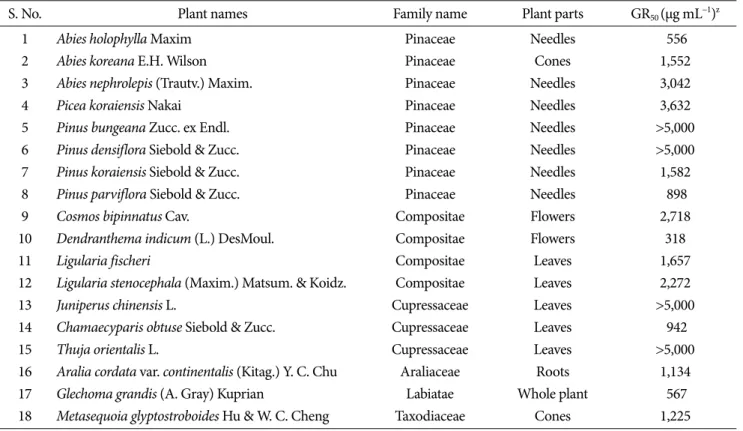
Table 1. Inhibitory activity of essential oils extracted from Korean plants against the seedling growth of Brassica napus.
S. No. Plant names Family name Plant parts GR50 (μg mL−1)z
1 Abies holophylla Maxim Pinaceae Needles 556
2 Abies koreana E.H. Wilson Pinaceae Cones 1,552
3 Abies nephrolepis (Trautv.) Maxim. Pinaceae Needles 3,042
4 Picea koraiensis Nakai Pinaceae Needles 3,632
5 Pinus bungeana Zucc. ex Endl. Pinaceae Needles >5,000
6 Pinus densiflora Siebold & Zucc. Pinaceae Needles >5,000
7 Pinus koraiensis Siebold & Zucc. Pinaceae Needles 1,582
8 Pinus parviflora Siebold & Zucc. Pinaceae Needles 898
9 Cosmos bipinnatus Cav. Compositae Flowers 2,718
10 Dendranthema indicum (L.) DesMoul. Compositae Flowers 318
11 Ligularia fischeri Compositae Leaves 1,657
12 Ligularia stenocephala (Maxim.) Matsum. & Koidz. Compositae Leaves 2,272
13 Juniperus chinensis L. Cupressaceae Leaves >5,000
14 Chamaecyparis obtuse Siebold & Zucc. Cupressaceae Leaves 942
15 Thuja orientalis L. Cupressaceae Leaves >5,000
16 Aralia cordata var. continentalis (Kitag.) Y. C. Chu Araliaceae Roots 1,134
17 Glechoma grandis (A. Gray) Kuprian Labiatae Whole plant 567
18 Metasequoia glyptostroboides Hu & W. C. Cheng Taxodiaceae Cones 1,225
zGR50 values were calculated from four replicates of each sample.
Seed bioassay
The seed bioassay of essential oils was evaluated on seeds of Brassica napus (rapeseed). To accomplish this experiment, 1%
agar in distilled water was used as growth medium. The rapeseeds were surface sterilized with 0.5% sodium hypochlorite for 3 min then washed with sterile distilled water.
Essential oils were prepared with series of concentrations from 0-5,000μg mL−1 (diluted using 0.01% Tween 20 v/v). The seeds were placed in a 24-well cell culture plate contains 1%
agar medium (5 seeds per well). Then, one mL of each test
solution was added to respective wells with four replicates per treatment. The plates were covered with plastic bags to maintain humidity and allowed to germinate in the growth chamber at 25oC/ 23oC (day/night), 60% relative humidity, and 250μmol m−2 s−1 light intensity for 5 days.
After the incubation period, the effect of essential oils on seedling growth was determined by measuring the weight of the seedlings. Inhibitory activity of essential oils against rapeseed growth was calculated based on growth rate50 (GR50) Table 2. Inhibitory activity of commercial essential oils against the seedling growth of Brassica napus.
S. No. Essential oil GR50 (μg mL−1)z S. No. Essential oil GR50 (μg mL−1)
1 Angelica 2,832 33 Lemongrass 64
2 Basil 484 34 Lime 1,577
3 Bergamot 1,308 35 Magnolia 275
4 Black pepper 1,156 36 Majoram 399
5 Cajaput 241 37 Mandarin 3,762
6 Camphor 763 38 Myrtle 906
7 Caraway 223 39 Neroli 337
8 Cardamom 1,748 40 Niaouli 911
9 Carrot seed 2,374 41 Nutmeg 1,401
10 Cedar wood 1,382 42 Orange 2,007
11 Chamomile German >5,000 43 Patchouli 1,206
12 Chamomile Roman 1,561 44 Palmarosa 26
13 Cinnamon 79 45 Peppermint 209
14 Citronella 79 46 Petitgrain 457
15 Clary sage 684 47 Pimento 52
16 Clove 48 48 Pine 1,338
17 Coriander 315 49 Rose absolute 599
18 Cumin seed 149 50 Rosemary 873
19 Cypress >5,000 51 Rose otto 70
20 Eucalyptus >5,000 52 Rose wood 1,349
21 Fennel 667 53 Sage 537
22 Fir 1,019 54 Sandalwood >5,000
23 Frankincense 1,370 55 Savory 208
24 Galbanum 1,458 56 Spearmint 149
25 Geranium 81 57 Tagetes 758
26 Ginger 2,443 58 Tangerin 575
27 Grapefruit 1,351 59 Teatree 425
28 Hyssop 180 60 Thyme 218
29 Jasmine 107 61 Vanilla >5,000
30 Juniper >5,000 62 Vetiver 855
31 Lavender 492 63 Yarrow 503
32 Lemon >5,000 64 Ylang ylang 705
zGR50 values were calculated from four replicates of each sample.
values (effective concentrations capable of inhibiting 50% of plant growth). Further studies were carried out with most effective essential oil samples.
SPME conditions
One mL of essential oil was introduced into SPME vial. The SPME device coated (fused-silica fiber) with a 100 μm layer of polydimethylsiloxane (Supelco, Bellefonte, PA, USA) was used for extraction of the plant volatiles and the vial was sealed with a silicone septum. They were exposed in the SPME vial at 60oC for 30 min and immediately introduced in the gas chromatography injector.
Gas chromatography/mass spectrometry (GC/MS) analysis
GC-MS analysis was performed with a Varian CP 3800 gas chromatography equipped with a VF-5 MS polydimethylsiloxane capillary column (30×0.25 mm×0.25μm) and a Varian 1200 L mass detector (Varian, CA, USA). Helium was used as a carrier gas at the rate of 1 mL min−1. Oven temperature was kept at 50oC for 5 min initially, and then raised with rate of 5oC min−1 to 250oC min−1. The injector temperature was set at 250oC. The mass spectra were recorded in the electrospray ionization mode at 70 eV in a scan range of 50-600 m z−1. The major components of essential oils were identified by comparing the retention indices of the GC peaks obtained using homologous series of n-alkanes (C8-C20) with those reported in literature (Adams, 2007). The mass spectra of the peaks were also matched with standards reported in literature and National Institute of Standards and Technology (NIST, 3.0) library.
Effect of major components on seedling growth The individual major components, namely benzyl benzoate, carvone, citral, citronellol, eugenol, geraniol, D-limonene and terpinene were used to evaluate their inhibitory activity against the seedling growth of Brassica napus, Echinochloa crus-galli and Aeschynomene indica. The effect of individual components on seedling growth was carried out by following the procedure as mentioned earlier in the seed bioassay section.
Greenhouse experiment
For greenhouse experiment, eight pure compounds, namely benzyl benzoate, carvone, citral, citronellol, eugenol, geraniol, D-limonene and terpinene were used to evaluate their herbicidal potential. In this experiment, five dicot plants (Aeschynomene indica, Abutilon theophrasti, Gossypium hirsutum, Glycine max and Ipomoea angulata) and five monocot plants (Echinochloa crus-galli, Digitaria ciliaris, Setaria virdis, Poa annua and Zea mays) were used. The nursery trays were filled with sandy soil.
Ten seeds of each species were sown separately in each tray
(350 cm2). Five days after seed sowing, different concentrations (25, 50 and 100 kg ha−1) of eight pure individual components were prepared separately (Tween-20 0.01% v/v) and sprayed (1000 L ha−1) using CO2 pressure belt-driven track sprayer (R
& D sprayer, 8002 EVB nozzle, 40 psi, 40 cm height). The observation was made post spray treatment of the test materials and the data were recorded at 3, 7 and 14 days after treatment by visually counting the plants in each treatment.
Statistical analysis
The seed bioassay was conducted with four replications and the statistical analysis was carried out by analysis of variance (ANOVA) followed by Duncan’s test, and values of P<0.05 were considered significantly different. The data were evaluated with SPSS 18.0 software package (SPSS Inc., Chicago, IL, USA).
Results and Discussion
Phytotoxic effect of essential oils on seedling growth of rapeseed
It is well known that phytotoxic compounds from plants are considered to be safe and beneficial to the environment and human beings (Khanh et al., 2006). A variety of plant species have phytotoxic effects on weed species. The growth inhibitory activity of essential oils has remarkably increased the interest in exploring essential oil from plants for potential weed management. Germination and seedling growth bioassays are important preliminary screening methods to determine phytotoxic potential of plant extracts and compounds. In the present study, herbicidal activity of 18 essential oil samples extracted from Korean plants and 64 commercial essential oil samples was evaluated by seed bioassay using rapeseed. The results are expressed as GR50 that is an effective concentration capable of inhibiting the seedling growth of rapeseed by 50%
(Table 1 and 2). Among the 18 essential oil samples extracted from Korean plants, D. indicum showed higher inhibitory activity (GR50 of 318μg mL−1) followed by A. holophylla (GR50
of 556μg mL−1) and G. grandis (GR50 of 567μg mL−1).
In the case of commercial oil samples, GR50 values against rapeseed seedling growth were ranged between 26 and
>5,000 μg mL−1. Out of 64 commercial essential oil samples, 11 oils (cinnamon, citronella, clove, cumin seed, geranium, jasmine, lemongrass, palmarosa, pimento, rose otto and spearmint) showed remarkable inhibitory activity against rapeseed seedling growth with GR50 values of below 150 μg mL-1. Among them, palmarosa oil showed the highest inhibitory activity on seedling growth (GR50 of 26μg mL−1) followed by clove (GR50 of 48μg mL−1) and pimento (GR50 of 52μg mL−1) oils. Previously, many authors have investigated the inhibitory effect of essential oil from various aromatic plants. Essential oil from Artemisia scoparia Waldst. & Kit.
reduced the emergence and seedling growth of weed species such as Achyranthes aspera L., Cassia occidentalis L., Parthenium hysterophorus L., Echinochloa crus-galli (L.) P.
Beauv. and Ageratum conyzoides L. (Kaur et al., 2010). The essential oils from the aerial parts of catmint (Nepeta meyeri Benth.) effectively inhibited the seedling growth of weed species such as Amaranthus retroflexus L., Bromus danthoniae Trin., Bromus intermedius Guss., Chenopodium album L., Cynodon dactylon L., Lactuca serriola L., and Portulaca oleracea L. by inducing oxidative stress (Mutlu et al., 2011).
Poonpaiboonpipat et al. (2013) reported that the essential oil from Cymbopogon citratus Stapf remarkably inhibited germination and seedling growth of E. crus-galli and affecting α-amylase activity of seeds.
Identification of major components using SPME/
GC-MS
Further studies in relation to identification of chemical components were carried out with these 11 effective essential oil samples. In order to identify the major components from the effective 11 essential oil samples, SPME-GC/MS analyses were performed. Area percentage of major components identified from the essential oil samples is presented in Table 3.
Eugenol was detected as a major component in clove (92.27%), cinnamon (91.89%) and pimento (72.9%) oils. In citronella oil, the major components were citronellal (50.56%) and geraniol (24.52%). The main components of the essential oil from cumin seed oil were 2-mehtyl-3-phenyl-proponal (42.48%), safranal (15.88%), terpinene (12.48%) and cymene (10.30%). Citronellol was found to be a major component in geranium (38.41%) and rose otto (58.64%) oils. In jasmine oil, benzyl benzoate (35.88%) and benzyl acetate (30.80%) were found to be main components. Citral (52.59%) and β-citral (33.66%) were major ones in lemongrass oil. Geraniol (86.56%) and carvone (76.65%) are found to be main components in palmarosa and spearmint oils, respectively.
The results revealed that the analyzed essential oil samples mainly composed of oxygenated monoterpenes.
Phytotoxic effect of individual essential oil components
Based on the results of chemical composition, individual components namely, benzyl benzoate, carvone, citral, citronellol, eugenol, geraniol, D-limonene and terpinene were used to evaluate their inhibitory activity against the seedling growth of three different species. All the tested 8 components effectively inhibited the seedling growth of B. napus, E. crus- galli and A. indica (Table 4). Among the three plants, B. napus and E. crus-galli are more susceptible than A. indica. Citral showed significantly higher inhibitory activity (P<0.05) against B. napus with GR50 of 34 μg mL-1. In the case of E. crus- galli, geraniol exhibited significantly higher inhibitory activity
(P<0.05) of seedling growth than other components with GR50 of 29μg mL−1. Out of eight components, terpinene and D-limonene showed lower inhibitory activity. The herbicidal potential of tested compounds varied enormously against the three plant species. Four components of 8 (geraniol, citronellol, citral and carvoen) are coming under oxygenated monoterpene group, two components (terpinene and limonene) are monoterpene and eugenol is a phenylpropanoid and benzyl benzoate is esters of benzyl alcohol and benzoic acid.
Previous studies have shown that essential oils and their individual components isolated from various plant species, exhibited potent herbicidal effects on weed germination and primary root growth of several other species. Martino et al.
(2010) studied the anti-germinative potential of twenty seven monoterpenes, including monoterpene hydrocarbons and oxygenated ones, against seed germination and subsequent primary radicle growth of Raphanus sativus L. and Lepidium sativum L. Among the 27 components tested, geraniol, borneol, β-citronellol and α-terpineol are the most active components. Further, the authors reported that the radicle Table 3. Chemical composition of 11 effective essential oil samples.
Sample Compound name Area % Component group
Cinnamon Eugenol 91.89 Alcohol
Citronella Citronellal 50.56 Aldehyde
Geraniol 24.52 Alcohol
Clove Eugenol 92.27 Alcohol
Cumin seed Cymene 10.30 Hydrocarbon
Terpinene 12.48 Hydrocarbon 2-Methyl-3-phenyl-
propanal 42.48 Aldehyde
Safranal 15.88 Aldehyde
Geranium Citronellol 38.41 Alcohol
Geraniol 31.73 Alcohol
Jasmine Benzyl acetate 30.80 Acetate
Benzyl benzoate 35.88 Acetate
Lemongrass Citral 52.89 Aldehyde
β-Citral 33.66 Aldehyde
Palmarosa Geraniol 86.56 Alcohol
Geranyl acetate 11.47 Acetate
Pimento Eugenol 72.9 Alcohol
Caryophyllene 6.3 Hydrocarbon
Rose otto Citronellol 58.64 Alcohol
Geraniol 15.48 Alcohol
Spearmint Limonene 16.70 Hydrocarbon
Carvone 76.65 Ketone
elongation of two test species was inhibited mainly by alcohols and ketones. Similar to our data, various authors have reported that the essential oil components (1,8-cineole, camphor citronellal, citronellol, linalool, α-pinene and limonene) effectively inhibited seed germination and seedling growth (Abrahim et al., 2000; Kordali et al., 2007; Singh et al., 2002, 2006). In the present study, the results showed that the oxygenated monoterpenes (carvone, citronellol, citral, eugenol, and geraniol) had higher inhibitory activity on seedling growth than monoterpene hydrocarbons. Vokou et al. (2003) studied the effects of 47 individual monoterpenoids from different chemical group, acting alone or in pairs, on seed germination and subsequent seedling growth of Lactuca sativa, and they concluded that the most active components were terpinen-4-ol, dihydrocarvone, and two carvone stereoisomers.
Phytotoxic effect of individual components under greenhouse experiment
Seed bioassay was an important preliminary screening method to determine the phytotoxic potential of plant extracts or compounds. However, greenhouse and field experiments are important criteria in order to understand the efficacy of herbicidal compounds under field conditions for further utilization of products commercially. Based on the results from seed bioassay, a greenhouse experiment was conducted using eight individual components such as benzyl acetate, carvone, citral, citronellol, eugenol, geraniol, D-limonene and terpinene against 5 monocot plants (D. ciliaris, S. virdis, P.
annua, E. crus-galli and Z. mays) and 5 dicot plants (A.indica, A. theophrasti, G. hirsutum, G. max and I. angulata). The phytotoxic activity of 8 components showed considerable variation among the plant species tested. Except D-limonene and terpinene, all other components showed appreciable phytotoxic activity against the tested plants at the highest concentration (100 kg ha−1). The most phytotoxic components among them were geraniol and citral. After 14 days of spray treatment, citral and geraniol showed potent phytotoxic activity by totally killed all the tested 10 plants at the concentration of 100 kg ha-1. Moreover, citral and geraniol also killed all the tested plants at the concentration of 50 kg ha−1 with the exception of P. annua (Table 5). The compound citral completely suppressed the growth of A. indica, A. theophrasti, G. hirsutum, I. angulata and Z. mays even at the lowest concentration (25 kg ha−1). Whereas geraniol suppressed the growth of A. indica and A. theophrasti at the lowest concentration tested. However, the concentrations of citral and geraniol used in this study were higher than that of commercial herbicides (4 kg ha−1). Therefore, further large scale field studies are required to understand the phytotoxic effect of these compounds.
The most effective components, citral and geraniol are coming under the group of oxygenated monoterpene. The primary oxidation products of geraniol/nerol are geranial (citral A) and neral (citral B) known together as citral (Dapurkar et al., 2011). Citral and geraniol exhibit various biological properties and found abundantly in large number of aromatic plants. These are the most important avoring compounds used widely in beverages, foods, and fragrances for their characteristic avor prole. Previous studies have stated that the phytotoxic effects of these compounds might be due to anatomical and physiological changes in seedlings by reducing some organelles like mitochondria, accumulation of lipid globules in the cytoplasm, inhibiting the synthesis of DNA or disruption of membranes and suppression of metabolic enzymes activity that involved in glycolysis and in oxidative pentose phosphate pathway (Podesta and Plaxton, 1994; Muscolo et al., 2001; Nishida et al., 2005). The essential Table 4. Effect of individual essential oil components on seedling
growth of Brassica napus, Echinochloa crus-galli and Aeschynomene indica.
S. No. Compound Name
GR50 (μg mL−1)z Brassica
napus
Echinochloa crus-galli
Aeschynomene indica 1 Benzyl benzoate 205e >1,000e 547f
2 Carvone 88d 50b 259e
3 Citral 34a 283d 163d
4 Citronellol 66c 67c 135a
5 Eugenol 43b 72c 155c
6 Geraniol 82d 29a 144b
7 D-Limonene 574f >1,000e 936h 8 Terpinene >1,000g 280d 891g
zGR50 values were calculated from four replicates of each sample. Mean values followed by different superscripts in a column are significantly different (P< 0.05).
Fig. 1. Structure of the compounds citral and geraniol.
oil of Artemisia scoparia inhibited germination and plant root growth by generating ROS-induced oxidative stress (Singh et al., 2009). The mechanism behind its phytotoxic effect might be affecting chlorophyll content, cellular respiration and electrolyte leakage of weed plants (Kaur et al., 2010). Sanchez- Moreiras et al. (2008) suggested that the inhibitory effects of essential oils have been associated with their inuence on the regulation of shoot elongation and cell division of the target plants. In addition, plant essential oils have been shown some other mechanisms including delay crystallization, reduce the volatilization and photo-degradation of the herbicides on the leaf surface (Bunting et al., 2004; Si et al., 2004; Ramsey et al., 2006). Phytotoxic compounds released from plants that aid
them in both interspecific and intraspecific competitions (Meyer et al., 2007). Overall results showed that the citral and geraniol have strong herbicidal potential than other compounds. The findings of present investigation indicated that the individual components provided a good platform to develop novel and effective herbicides.
Conclusions
The present study reveals that the different essential oil samples showed a considerable variation in the phytotoxic effect on rapeseed seedling growth. The effective essential oil samples mainly composed of oxygenated monoterpenes. The Table 5. Herbicidal effect of individual essential oil components with early post-emergence treatment on ten plants in a greenhouse.
Component Name
Dose (kg ha−1)
Abutilon theophrasti
Aeschynomene indica
Gossypium hirsutum
Glycine max
Ipomoea angulata
Echinochloa crus-galli
Digitaria ciliaris
Setaria virdis
Poa annua Zea
mays
Benzyl benzoate
25z 4y 2 0 3 2 2 2 0 0 5
50 7 10 0 4 3 3 7 2 2 10
100 10 10 10 10 9 7 10 10 6 10
Carvone
25 1 4 0 2 1 1 0 1 1 6
50 10 9 10 5 4 3 4 7 2 9
100 10 10 10 10 10 6 10 10 10 10
Citral
25 10 10 10 6 10 3 2 8 2 10
50 10 10 10 10 10 10 10 10 4 10
100 10 10 10 10 10 10 10 10 10 10
Citronellol
25 10 2 10 4 4 3 7 7 3 9
50 10 10 10 10 6 4 8 10 4 10
100 10 10 10 10 10 7 10 10 10 10
Eugenol
25 6 9 4 4 1 1 1 2 1 2
50 10 10 10 9 10 2 3 3 5 8
100 10 10 10 9 10 10 10 10 10 9
Geraniol
25 10 10 0 7 3 4 4 6 2 9
50 10 10 10 10 10 10 10 10 6 10
100 10 10 10 10 10 10 10 10 10 10
D-Limonene
25 0 0 0 0 0 0 0 0 0 9
50 0 0 0 1 0 0 2 1 2 10
100 1 10 0 2 0 3 3 10 4 10
Terpinene
25 0 0 0 0 0 0 0 0 0 1
50 0 8 2 1 1 1 0 0 0 7
100 2 8 2 3 2 2 7 1 2 10
zEach treatment has 10 plants with four replicates. Herbicidal activity was determined 14 days after treatment by visual injury.
yResults were expressed as 0-no effect; 10-totally killed.
results confirmed that citral and geraniol provided excellent phytotoxic activity under in vitro seed bioassay as well as in greenhouse experiment than other essential oil components. It could be concluded that citral and geraniol may be favorably used for incorporating in agricultural practices as natural herbicides for the management of weeds. Further studies in relation to mechanism of action and field experiment are under progress.
Acknowledgement
This work was supported by the R&D Program of MOTIE/
KEIT [10035240, Development of New Herbicides for Resistant Weeds with Mutated Genes].
References
Abrahim, D., Braguini, W.L., Kelmer-Bracht, A.M. and Ishii-Iwa- moto, E.L. 2000. Effects of four monoterpenes on germination, primary root growth, and mitochondrial respiration of maize. J.
Chem. Ecol. 26:611-624.
Adams, R.P. 2007. Identification of essential oil components by gas chromatography/ mass spectrometry. 4th ed. Allured Publishing Co. Carol Stream, IL. USA.
Buchbauer, G. 2010. Biological activities of essential oils. pp. 235-280.
In: Baser, K.H.C. and Buchbauer, G. (Eds.). Handbook of Essential Oils: Science, Technology, and Applications. CRC Press, Boca Raton, FL. USA.
Batish, D.R., Lavanya, K., Singh, H.P. and Kohli, R.H. 2007. Phenolic allelochemicals released by Chenopodium murale affect the growth, nodulation and macromolecule content in chickpea and pea. Plant Growth Regul. 51:119-128.
Bunting, J.A., Sprague, C.L. and Riechers, D.E. 2004. Proper adjuvant selection for foramsulfuron activity. Crop Prot. 23:361-366.
Dapurkar, S.E., Kawanami, H., Chatterjee, M., Rode, C.V., Yokoyama, T., et al. 2011. Selective catalytic oxidation of geraniol to citral with molecular oxygen in supercritical carbon dioxide.
Appl. Catal. A-Gen. 394:209-214.
Hulme, P.E. 2012. Weed risk assessment: a way forward or a waste of time? J. Appl. Ecol. 4:10-19.
Izadi-Darbandi, E., Aliverdi, A. and Hammami, H. 2013. Behavior of vegetable oils in relation to their influence on herbicides’
effectiveness. Ind. Crop. Prod. 44:712-717.
Kaur, S., Singh, H.P., Mittal, S., Batish, D.R. and Kohli, R.K. 2010.
Phytotoxic effects of volatile oil from Artemisia scoparia against weeds and its possible use as a bioherbicide. Ind. Crop. Prod.
32:54-61.
Khanh, T.D., Chung, I.M., Tawata, S. and Xuan, T.D. 2006. Weed suppression by Passiflora edulis and its potential allelochemicals.
Weed Res. 46:296-303.
Kordali, S., Cakir, A. and Sutay, S. 2007. Inhibitory effects of monoterpenes on seed germination and seedling growth. Z.
Naturforsch. 62c:207-214.
Martino, L.D., Mancini, E., de Almeida, L.F.R. and Feo, V.D. 2010.
The antigerminative activity of twenty-seven monoterpenes.
Molecules 15:6630-6637.
Meyer, J.J.M., Van der Kooy, F. and Joubert, A. 2007. Identification of plumbagin epoxide as a germination inhibitory compound through a rapid bioassay on TLC. S. Afr. J. Bot. 73:654-656.
Muscolo, A., Panuccio, M.R. and Sidari, M. 2001. The effects of phenols on respiratory enzymes in seed germination respira- tory enzyme activities during germination of Pinus laricio seed treated with phenols extracted from different forest soils. Plant Growth Regul. 35:31-35.
Mutlu, S., Atici, O., Esim, N. and Mete, E. 2011. Essential oils of catmint (Nepeta meyeri) induce oxidative stress in early seedlings of various weed species. Acta Physiol. Plant. 33:943-951.
Nishida, N., Tamotsu, S., Nagata, N., Saito, C. and Sakai, A. 2005.
Allelopathic effects of volatile monoterpenoids produced by Salvia leucophylla: inhibition of cell proliferation and DNA synthesis in the root apical meristem of Brassica campestris seedlings. J. Chem. Ecol. 31:1187-1203.
Podesta, E.E. and Plaxton, W.C. 1994. Regulation of cytosolic carbon metabolism in germinating Ricinus communis cotyledons. I.
Developmental profiles for the activity, concentration, and molecular structure of the pyrophosphate and ATP-dependent phosphofructokinases, phosphoenolpyruvate carboxylase and pyruvate kinase. Planta 194: 374-380.
Poonpaiboonpipat, T., Pangnakorn, U., Suvunnamek, U., Teerarak, M., Charoenying, P., et al. 2013. Phytotoxic effects of essential oil from Cymbopogon citratus and its physiological mechanisms on barnyardgrass (Echinochloa crus-galli). Ind. Crop. Prod.
41:403-407.
Ramsey, R.J.L., Stephenson, G.L. and Hall, J.C. 2006. Effect of humectants on the uptake and efficacy of glufosinate in wild oat (Avena fatua) plants and isolated cuticles under dry conditions.
Weed Sci. 54:205-211.
Sanchez-Moreiras, A.M., De La Pena, T.C. and Reigosa, M.J. 2008.
The natural compound benzoxazolin-2(3H)-one selectively retards cell cycle in lettuce root meristems. Phytochem.
69:2172-2179.
Si, Y., Zhou, J., Chen, H., Zhou, D. and Yue, Y. 2004. Effects of humic substances on photodegradation of bensulfuron-methyl on dry soil surfaces. Chemosphere 56:967-972.
Singh, H.P., Batish, D.R., Kaur, S., Arora, K. and Kohli, R.K. 2006.
α-Pinene inhibits growth and induces oxidative stress in roots.
Ann. Bot. 98:1261-1269.
Singh, H.P., Batish, D.R., Kaur, S., Ramezani, H. and Kohli, R.K.
2002. Comparative phytotoxicity of four monoterpenes against Cassia occidentalis. Ann. Appl. Biol. 141:111-116.
Singh, H.P., Batish, D.R. and Kohli, R.K. 2003. Allelopathic inter- actions and allelochemicals: new possibilities for sustainable weed management. Crit. Rev. Plant Sci. 22:239-311.
Singh, H.P., Kaur, S., Mittal, S., Batish, D.R. and Kohli, R.K. 2009.
Essential oil of Artemisia scoparia inhibits plant growth by gen-
erating reactive oxygen species and causing oxidative damage. J.
Chem. Ecol. 35:154-162.
Vokou, D., Douvli, P., Blionis, G.J. and Halley, J.M. 2003. Effects of monoterpenoids, acting alone or in pairs, on seed germination and subsequent seedling growth. J. Chem. Ecol. 29:2281-2301.
Vyvyan, J.R. 2002. Allelochemicals as leads for new herbicides and
agrochemicals. Tetrahedron 58:1631-1646.
Weston, L.A. 1996. Utilization of allelopathy for weed management in agroecosystems. Agron. J. 88:860-866.
Yun, M.S., Cho, H.M., Yeon, B.R., Choi, J.S. and Kim, S. 2013. Her- bicidal activities of essential oils from pine, nut pine, larch and khigan fir in Korea. Weed Turf Sci. 2:30-37. (In Korean)