Copyright ⓒ 2010, The Microbiological Society of Korea
자색비유황세균 Rhodopseudomonas faecalis의 식물생장촉진능
이은선·송홍규*
강원대학교 자연과학대학 생명과학과
Plant Growth Promotion by Purple Nonsulfur Rhodopseudomonas faecalis Strains
Eun Seon Lee and Hong-Gyu Song*
Department of Biological Sciences, Kangwon National University, Chuncheon 200-701, Republic of Korea (Received January 26, 2010/Accepted March 3, 2010)
Photosynthetic purple nonsulfur bacterial strains were isolated from the sediments collected from rice paddy fields and sludges of wastewater treatment plant, and their plant growth promoting capabilities were examined. Most well known phytohormones, auxin such as indole-3-acetic acid (IAA) and indole-3-butyric acid (IBA) and 5'-aminolevulinic acid (ALA) were detected by HPLC in the culture broth of these isolates. Among the isolated bacteria, Rhodopseudomonas faecalis D15 showed the highest production rate of 769.8 μg/mg protein of IAA, 1323 μg/mg protein of IBA and 7.4 mM/mg protein of ALA in the modified Biebl and Pfennig's medium. R. faecalis C9 showed the highest production rate of 20.82 μg/mg protein of gibberellin. In consequence, the root length and dry weight of the germinated tomato seedling treated with R. faecalis isolates were longer and heavier than those of uninoculated control after 15 days of incubation in the soil. Especially, the dry weight of germinated tomato seedling increased by 119.4% in C9-treated samples after 15 days. These purple nonsulfur bacteria may be utilized as environment-friendly biofertilizer in the agriculture.
Keywords: ALA, gibberellin, IAA, plant growth promotion, R. faecalis
최근 참살이(well-being)에 대한 관심이 높아지면서 청정 환 경에서 재배된 깨끗한 먹거리가 주목받고 있다. 이에 따라 친 환경농법을 이용한 웰빙 농산물을 생산하기 위해 화학비료와 화학합성 농약 대신에 생물비료와 생물농약의 이용이 점차 증 가하고 있다. 생물비료로는 현재 많은 근권세균들이 사용되고 있다(8). 근권세균 이외에도 생물비료로서 혐기성 광합성세균 을 여러 농가에서 이용하고 있는데(5), 식물생장촉진에 대한 체계적인 연구 없이 경험적으로 이용하고 있는 실정이다.
혐기성 광합성세균 중 자색비유황세균(purple nonsulfur bacteria)은 혐기적 조건이나 호기적 조건에서 생장이 가능하며 여러 유기물과 무기물을 이용하여 다양한 대사활동을 한다(18, 19). 또한 아미노산과 비타민 함량이 높고 식물생장촉진의 효 과가 있는 것으로 알려져 있다(20). 그러나 이들 광합성 세균 에 의한 농작물 생육촉진 효과와 투여 방법에 대한 체계적인
* For correspondence. E-mail: [email protected]; Tel: +82-33- 250-8545; Fax: +82-33-251-3990
연구결과가 많지 않으며 특히 투여세균에 대한 생존 및 동태에 대해 연구가 거의 없기 때문에 이에 대한 지속적인 연구가 필 요한 실정이다. 식물생장촉진세균이 생산하는 대표적인 식물호 르몬으로 옥신 계열의 IAA (indole-3-acetic acid)와 IBA (indole-3-butyric acid)는 줄기 절편의 길이생장을 촉진하고 줄 기와 뿌리의 발달, 꽃과 과실의 발생, 그리고 굴성 운동 등을 유도한다(7, 13). ALA (5-aminolevulinic acid)는 광합성에 중 요한 엽록소의 전구물질이고 여러 작물에서 염분에 대한 내성 을 높이며 또한 식물에 고농도로 처리 시 제초 효과가 있는 물 질이다(6). Gibberellin은 식물신장과 종자발아 촉진작용을 하 며 zeatin은 세포분열과 기관발생을 촉진한다(12). 이런 식물호 르몬들은 식물이 생성하지만 광합성 자색비유황세균에서 생성 되며, 근권에서 세균들이 이를 분비할 때 식물이 흡수, 이용하 여 생장이 촉진될 수 있다고 보고되었다(15).
본 연구에서는 혐기적 환경 시료로부터 자색비유황세균을 분리하고 동정한 후 여러 식물호르몬의 생성능을 조사하고 우
수균주를 선발하여, 접종하였을 때 토양에서 토마토 종자의 발 아와 생장을 측정하여 생물비료로서의 가치를 조사하였다.
재료 및 방법
식물생장 촉진 세균의 분리
춘천 분뇨처리장의 슬러지와 논의 퇴적토를 채취하여 modified Biebl and Pfennig's 배지(4)에서 혐기적 광조건 (30°C, 3000 lux)의 상태로 농화배양 하였다. 배양액에서 자색 색소 생성을 확인한 후 MYC (Maleic acid 1 g, yeast extract 3 g, casein, acid hydrolysate 2 g; pH 6.8-7, agar 15 g, 증류수 1 L) (13)에 배양액을 0.1 ml 도말접종하여 7일 이상 배양한 후 집락의 색깔, 크기, 모양 등을 비교하여 각기 다른 집락을 확보하였다. 이러한 집락들을 순수분리하기 위해 획선배양을 반복 시행한 후 배양병에서 액상배양을 반복하였다(4). 현미경 관찰을 통해 단일 균주를 확인하였고 배양 상등액을 회수하여 분광광도계(Shimadzu UV-1700, Shimadzu Co., Japan)를 이 용하여 식물호르몬 생성능이 높은 4개의 균주를 선별하였 다. 순수 분리된 각 균주의 동정 및 계통분석을 위해 16S rDNA를 증폭하고 염기서열 결정을 마크로젠(주)에 의뢰하여 분석결과로부터 phylogenetic tree를 Neighbour-joining 방법에 따라 작성하였다.
식물호르몬 생성능
4개의 분리균주를 Modified Biebl and Pfennig's 배지에 접 종 후 IAA의 전구물질인 L-tryptophan을 3 mM을 첨가하여 배 양하면서 24시간 간격으로 배양액을 취하여 10,000×g로 20분 동안 원심분리한 후 그 상등액 0.5 ml에 Salkowski 용액 (H2SO4 150 ml, H2O 250 ml, 1.5 M FeCl3․ 6H2O 7.5 ml) 2 ml 을 혼합하여 상온에서 30분 반응시킨 다음 분광광도계를 이용 하여 IAA는 535 nm, IBA는 450 nm에서 흡광도를 측정하였 고, 표준 IAA와 IBA (Sigma Chemical Co., USA)를 사용하 여 얻은 표준곡선을 이용하여 정량하였다(9).
ALA는 전구물질인 succinate와 glycine이 균주의 초기 생장 을 억제시킨다는 보고(16)에 따라 modified Biebl and Pfennig's 배지에서 선행 실험에 의한 생장 최적 조건인 3일간 선배양한 후 전구물질인 succinate와 glycine을 각각 15 mM 첨가하고 30°C에서 배양하면서 24시간 간격으로 다음과 같이 측정하였 다. 배양액을 10,000×g로 20분 동안 원심분리하여 얻은 상등 액 0.5 ml에 1 M sodium acetate buffer (pH 4.7) 0.5 ml과 acetyl acetone 50 μl를 혼합하여 항온수조에서 100°C로 15분 간 가열한 후 상온에서 서서히 냉각시켰다. 여기에 Erlich 용액 (acetic acid 42 ml, 70% perchloric acid 8 ml, dimethylamino- benzaldehyde 1 g) 3.5 ml을 혼합하여 20분간 반응시킨 후 분 광광도계를 이용하여 556 nm에서 흡광도를 측정하였고, 표준 ALA (Fluka Co., Germany)를 사용하여 얻은 표준곡선을 이 용하여 정량하였다(17).
선별된 4개의 균주를 brain heart broth [BHB, peptone 26.5 g, D(+) glucose 2 g, NaCl 5 g, Na2HPO4 2.5 g, 증류수 1 L] 배지
에서 배양하면서 24시간 간격으로 배양액 100 ml을 원심분리 (3,000×g, 30 min)하여 회수된 상등액에서 HPLC (high per- formance liquid chromatography)를 이용하여 zeatin과 gibberellin 을 측정하였다(11). Zeatin과 gibberellin 분석을 위해 상등액의 pH를 각각 7.0과 2.5로 보정한 뒤 15 ml의 ethyl acetate를 첨 가하고 extraction shaker (Recipro shaker RS-1, JEIO TECH, Korea)에서 300 rpm으로 10분간 진탕하고 3번씩 추출하여 총 45 ml의 ethyl acetate층을 회수하였다. 회수된 ethyl acetate를 증발시키고 각각의 시료를 5 ml의 methanol에 녹인 뒤 0.45 μm 공극의 nitrocellulose 여과막(Millipore, USA)으로 여과하여 분석시료로 사용하였다. 분석은 HPLC (Waters, Breeze Model, USA)로 Luna 5μ C18 (2) 250×4.60 mm column (Phenomenex, USA)을 이용하였고, gibberellin은 30% methanol (0.1M H3PO4
를 이용하여 pH를 3.0으로 보정), zeatin은 70% methanol을 이동상으로 하였으며, 각각 265와 208 nm의 파장에서 분석하 였다(10).
한편 균주의 단백질량 분석을 위해 위 실험의 원심분리를 통해 취한 침전물에 1 ml의 증류수를 혼합하고 CBG-250 시약 (coomassie blue G-250 0.1 g, 95% ethanol 50 ml, 85%
perchloric acid 100 ml, 증류수 1 L)을 넣어 30분간 반응시킨 후 분광광도계를 이용하여 595 nm에서 흡광도를 측정하였고, bovine serum albumin을 이용한 표준곡선을 이용하여 정량하 였다. 결과는 식물호르몬 생성량을 단백질 정량 대비 값으로 나타내었다.
소규모 토양재배 실험
분리균주를 대상으로 소규모 토양에서 토마토(Lycopersicon esculentum) 씨앗의 생장촉진 가능성을 알아보기 위하여 대조 군과 균주접종 실험군으로 진행하였다. 크기가 같은 플라스틱 pot에 각각 250 g의 흙을 담고 토마토 종자[‘제우스42’, 세미니 스코리아(주)]를 파종하였다. 토마토 씨앗은 0.08% sodium hypochloric acid를 포함한 증류수에 10분간 소독한 뒤 사용하 였다. 각 균주는 BHB 배지에서 배양한 후 원심분리(3,000×g, 30 min)하여 세포를 회수하고 증류수로 세척한 후 현미경과 hemocytometer를 이용하여 계수하여 각 포트 당 1×10⁷ cells/g soil이 되도록 보정하여 28 ml의 멸균 증류수에 현탁시켜 접종 하였다.
한 균주 당 triplicate pot로 진행하였으며 각 pot에는 발아된 유묘가 10개씩 포함되게 하였다. Pot 하부까지 공급될 정도인 28 ml의 멸균 증류수를 매일 첨가하고 24시간 중 12시간 간격 으로 광조건(3,000 lux)과 암조건을 반복하여 30°C에서 15일 간 재배하였다. 배양 종료 후 발아한 토마토 유묘의 줄기와 뿌 리의 길이생장 그리고 건조중량을 측정하였다.
결과 및 고찰
자색비유황세균 분리 및 동정
액체선택배지에서 농화배양 후 고체배지에서 순수 분리한 혐기성 자색비유황세균 균주 중에서 식물호르몬 IAA와 IBA
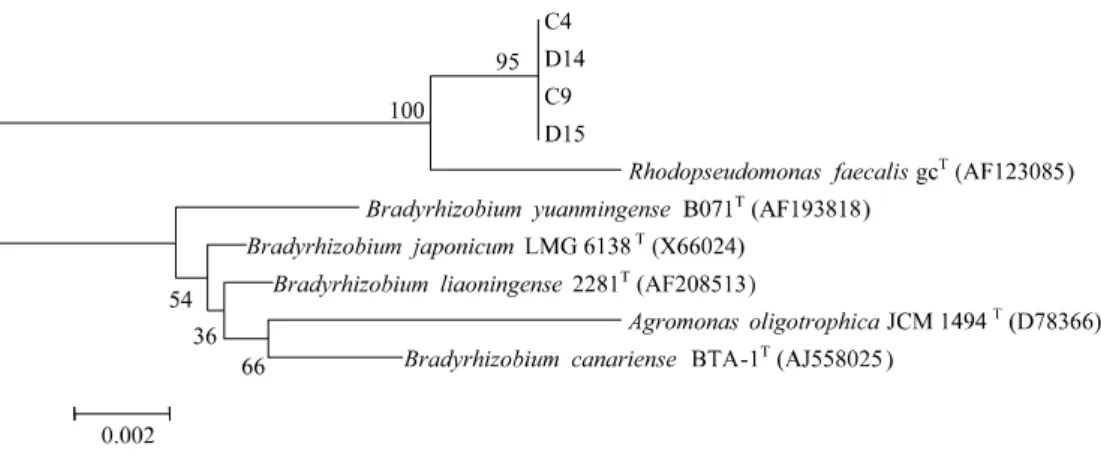
Fig. 1. Phylogenetic tree for the isolated purple nonsulfur bacteria constructed by Neighbour-joining method of NCBI blast program using approximately 1,400 bp of 16S rDNA sequences.
Fig. 2. IAA production by R. faecalis C4(■), C9(◆), D14(▲), and D15(●) in modified Biebl and Pfennig's medium. The experiment was carried out in triplicate, and the mean values with standard deviation were presented.
Fig. 3. IBA production by R. faecalis C4(■), C9(◆), D14(▲), and D15(●) in modified Biebl and Pfennig's medium. The experiment was carried out in triplicate, and the mean values with standard deviation were presented.
생성능이 높은 4개의 균주를 선별하여 이것을 각각 C4, C9, D14와 D15라고 명명하였다. 이들의 약 1,400 bp 16S-rDNA 염기서열을 결정하고 NCBI blast program으로 분석한 결과 자색 비유황세균인 Rhodopseudomonas faecalis와 100% 상동 성을 나타내었고 4개의 분리균주 사이에서는 95%의 유사성을 보였다(Fig. 1).
식물호르몬 생성 측정
각 분리 균주에서 여러 식물호르몬의 생성능을 조사 하였다. IAA 생성의 전구물질인 L-tryptophan을 3 mM 첨가한 배지에서 시간에 따른 생성을 조사한 결과 R. faecalis D15가 769.8 μg/mg protein으로 가장 우수한 IAA 생성능을 보였다 (Fig. 2). 이는 이미 식물호르몬 생성능이 높다고 보고된 바 있 는 Rhodopseudomonas sp. KL9의 IAA의 생성량이 743.3 μg/mg protein (15)인 것에 비해 높은 수치이다. IBA는 830.8 μg/mg protein을 생성하는 Rhodopseudomonas sp. KL9 (15) 보다 4 개의 분리균주 모두 높은 생성량을 나타냈으며(Fig. 3), 그 중 분리균주 R. faecalis D15가 1,323 μg/mg protein의 가장 높은 생성량을 나타냈으며 R. faecalis D14 균주도 1,170 μg/mg protein으로 높은 수치의 식물 호르몬 옥신을 분비하는 것으로
나타났다. 저농도로 존재시 식물광합성 증진효과와 생장 촉진 을 하며, 작물의 염분 내성을 강화시키고 고농도에서 제초효과 가 있는 ALA (3)도 4균주들이 모두 분비하고 있었으며 R.
faecalis D15가 4.6 μg/mg protein으로 가장 높은 생성능을 보 였다(Fig. 4). ALA는 0.01-10 mg/L 정도의 농도에서 식물생장 촉진효과가 있는 것으로 보고되었으므로(11) 이 분리균주들이 ALA에 의한 생장촉진 효과를 충분히 나타낼 수 있을 것으로 추정된다.
분리균주가 분비하는 다른 식물호르몬을 HPLC로 정성분석 을 한 결과, 세포분열을 촉진하는 zeatin과 식물신장과 종자발 아를 촉진하는 gibberellin이 검출되었다(Table 1). R. faecalis C9이 20.8 μg/mg protein의zeatin을 생성하였으며, 이는 식물 생장촉진능이 우수한 Bacillus subtilis RFO41의 19.6 μg/mg protein보다 많은 양의 호르몬을 생성한 것이다(2). 또한 R.
faecalis D15도 18.8 μg/mg protein으로 상당량의 zeatin을 생 성하였다. Gibberellin 역시 R. faecalis C9가 4.5 μg/mg protein 으로 네 균주 중 가장 높은 생성능을 보였으며 분리균주 D15와 D14도 각각 3.5와 3.3 μg/mg protein으로 많은 양의 gibberellin 을 생성하였다. 이 결과는 gibberellin을 3.04 μg/mg protein 생 성하는 B. subtilis RFO41 (2) 보다 높은 수치로서 본 연구에
Table 1. Production of zeatin and gibberellin by R. faecalis isolates in brain heart broth medium
Production of phytohormones (μg/mg protein)
Strain C4 C9 D14 D15
Zeatin 11.5±8.2 20.8±2.8 16.8±3.2 18.8±0.7 Gibberellin 2.9±0.7 4.5±0.5 3.3±0.7 3.5±0.3
Fig. 4. ALA production by R. faecalis C4(■), C9(◆), D14(▲), and D15(●) in modified Biebl and Pfennig's medium. The experiment was carried out in triplicate, and the mean values with standard deviation were presented.
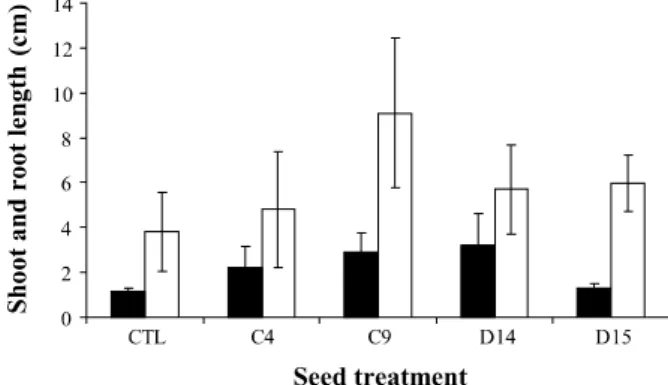
Fig. 5. Root and shoot lengths of the germinated tomato seedlings after 15 days in pot soil with application of isolated R. faecalis (closed bar, root; open bar, shoot; CTL, uninoculated control). The experiment was carried out in triplicate, and the mean values with standard deviation were presented.
Fig. 6. Dry weight of the germinated tomato seedlings after 15 days in pot soil with application of isolated R. faecalis (CTL;
uninoculated control). The experiment was carried out in triplicate, and the mean values with standard deviation were presented.
서 분리된 균주들의 다양한 식물호르몬 생성능이 매우 우수함 을 보여주고 있다. 그러나 본 연구에서는 균주의 배양 상등액 에서만 측정하였는데 이 외에도 접종 후 식물체 내의 식물호르 몬의 농도도 직접 측정하여 균주 접종의 영향을 보다 명확하게 조사할 필요가 있다. 또한 R. faecalis의 식물호르몬 생성능 조 사 이외에도 불용성인산 가용화능이나 질소고정능 등의 다른 식물생장 촉진기작에 대해 연구가 더 진행되어 미생물제제로 서의 가능성을 확립해야 할 것이다.
소규모 토양재배 실험
식물호르몬을 생성하는 분리균주를 대상으로 토마토 씨앗의 발아와 유묘의 생장촉진 가능성을 위한 재배 실험을 소규모 토 양 pot에서 진행하였는데 균주 처리군에서 미생물을 접종하지 않은 대조군보다 모두 토마토 유묘의 뿌리길이와 줄기길이가 증가했다. 15일째 측정한 줄기의 길이는 대조군에 비해 R.
faecalis C9를 처리한 pot의 토마토(Lycopersicon esculentum) 가 139.1% 증가하였으며 뿌리길이는 분리균주 D14와 C9 처 리 시 각각 174.3%와 148.6% 증가하였다(Fig. 5). 이 결과는 Rhodopseudomonas sp. KL9을 토마토 종자에 처리한 실험에 서 대조군 대비 유묘 줄기의 길이를 136.5% 증가시킨 것 보다 높은 수치이다(15). 이는 분리균주에서 검출된 다양한 식물 호 르몬이 토마토 줄기와 뿌리에 민감하게 작용하여 생장촉진에 영향을 미친 것으로 사료된다. 특히 줄기의 길이 생장과 뿌리 를 발달시키는 IAA의 생성능이 높았던 R. faecalis D15와 D14 균주 처리 pot에서 토마토의 줄기 길이와 뿌리 길이가 증 가하였으며 식물신장을 촉진시키는 gibberellin의 생성능이 매 우 높았던 C9 균주를 처리한 토마토 pot에서도 줄기 길이가 2
배 이상 증가하였다.
토마토 유묘의 건조중량도 분리된 자색비유황세균 균주를 처리한 pot에서 모두 증가했으며 R. faecalis C9와 D15를 처리 한 경우 대조군 대비 건조중량이 각각 119.4%와 103% 증가하 였다(Fig. 6). R. faecalis D15를 처리한 유묘는 줄기길이 증가 에 비해 건조중량이 많이 증가하였는데 이는 C9 처리군에 비 해 줄기는 덜 길지만 직경이 굵은 형태의 생장을 보였기 때문 인 것으로 추정된다(자료 미제시). 이 결과는 근권세균으로 알 려진 Pseudomonas sp. 189 균주를 처리한 상추씨 종자의 생장 촉진실험에서 각각 건조중량 8.7%와 길이생장 16.7%가 증가 한 결과(1)와 비교하여 R. faecalis C4, C9, D14와 D15 균주 를 처리한 효과가 모두 더 우수하다고 볼 수 있다.
이러한 실험결과로 분리균주들의 식물생장촉진효과 가능성 을 증명하였으며 친환경농산물에 대한 관심이 급증하고 있는 이 시기에 실제 농가에서 작물 재배시 생물비료로 사용되어 청 정 농산물 생산으로 인한 농가의 소득 증대 효과가 기대된다.
그러나 소규모 토양 pot 내에서 단기간 실행한 실험과 실제 농 경지 환경 및 전체 재배기간에서의 결과는 큰 차이가 있으며,
토양 내 다른 미생물의 생존 여부에 따라서도 큰 영향이 있을 것으로 사료되므로 대규모 농경지 현장 연구가 앞으로 진행되 어야 할 것이다. 나아가 식물호르몬을 생성하는 균주를 이용해 농작물뿐만 아니라 야생식물 생장을 촉진할 수 있는 방법이 될 수도 있으므로 인공호 주변의 나대지, 절개지 등의 훼손된 토 양환경의 식생복원에 이용가치가 매우 높을 것으로 기대된다.
적요
광합성 자색비유황세균으로 동정된 균주들을 논 퇴적토와 분뇨처리장 슬러지로부터 분리하였고 그들의 식물생장촉진능 을 조사하였다. 이 균주들의 배양액에서 대표적인 식물호르몬 인 indole-3-acetic acid (IAA)와 indole-3-butyric acid (IBA) 및 5’-aminolevulinic acid (ALA)의 생성을 측정하였다. 분리 균주 중 Rhodopseudomonas faecalis D15가 modified Biebl and Pfennig 배지에서 IAA는 769.8 μg/mg protein, IBA는 1323 μg/mg protein 그리고 ALA는 7.4 mM/mg protein의 가 장 높은 생성률을 나타내었으며, R. faecalis C9는 20.8 μg/mg protein의 가장 높은 gibberellin 생성률을 나타내었다. 이 균주 들을 토양에 파종한 토마토 종자에 접종하고 15일 후에 자라 난 유묘의 뿌리 길이와 건조중량은 비접종 대조군보다 더 컸으 며 특히 C9 균주 처리 시료는 건조중량이 대조군에 비해 119.4% 증가하였다. 이 자색비유황세균 분리균주는 식물생장 촉진을 위한 친환경적 생물비료로 사용할 수 있을 것이다.
감사의 말
본 연구는 지식경제부의 지역산업기술개발사업(과제번호 7004363-2009-02)의 지원으로 수행되었습니다.
참고문헌
1. 권장식, 서장선, 오세종. 2004. 근권미생물의 작물생육촉진 기능해 석에 관한 연구: 농촌진흥청 국립농업과학원 토양미생물의 기능평 가에 관한 연구 2차년도 보고서.
2. 이강형, 송홍규. 2007. 근권에서 분리한 Bacillus sp.의 적용에 의한 토마토의 생장 촉진. Kor. J. Microbiol. 43, 279-284.
3. 천상욱, 국용인, 구자옥. 2004. Tetrapyrrole 의존형 광합성 제초제 δ-aminolevulinic acid의 미생물학적 생산 및 제초기작. J. Kor.
Weed Sci. 24, 161-173.
4. Archana, A., Ch. Sasikala, Ch. V. Ramana, and K. Arunasri. 2004.
“Paraffin wax-overlay of pour plate”, a method for the isolation and enumeration of purple non-sulfur bacteria. J. Microbiol.
Methods 59, 423-425.
5. Cho, J.Y., K.C. Nah, and S.J. Chung. 1998. Effects of seed immersion and bacterialization into peat moss compost with culture solution of photosynthetic bacteria on the early growth of tomato plug seedlings. J. Kor. Soc. Hort. Sci. 39, 24-29.
6. Chon, S.U. 2003. Herbicidal activity of δ-aminolevulinic acid on several plants as affected by application methods. Kor. J. Crop Sci. 48, 50-58.
7. Costacurta, A., P. Mazzafera, and Y. Rosato. 1998. Indole-3-acetic acid biosynthesis by Xanthomonas axonopodis pv. citri is increased in the presence of plant leaf extracts. FEMS Microbiol. Lett. 159, 215-220.
8. Egamberdiyeva, D. 2007. The effect of plant growth promoting bacteria on growth and nutrient uptake of maize in two different soils. Appl. Soil Ecol. 36, 184-189.
9. Glickmann, E. and Y. Dessaux. 1995. A critical examination of the specificity of the Salkowski reagent for indolic compounds produced by phytopathogenic bacteria. Appl. Environ. Microbiol.
61, 793-796.
10. Gray, E.J. and D.L. Smith. 2005. Intracellular and extracellular PGPR: commonalities and distinctions in the plant-bacterium signaling processes. Soil Biol. Biochem. 37, 395-412.
11. Hotta, Y., T. Tanaka, H. Takaoka, Y. Takeuchi, and M. Konnai.
1997. Promotive effects of 5-aminolevulinic acid on the yield of several crops. Plant Growth Regul. 22, 109-114.
12. Karadeniz, A., S.F. Topcuoglu, and S. Inan. 2006. Auxin, gibberellin, cytokinin and abscisic acid production in some bacteria. World J.
Microbiol. Biotechnol. 22, 1061-1064.
13. Kende, H. and J. Zeevaart. 1997. The five “classical” plant hormones. Plant Cell 9, 1197-1210.
14. Kim, J.K., B.K. Lee, S.H. Kim, and J.H. Moon. 1999.
Characterization of denitrifying photosynthetic bacteria isolated from photosynthetic sludge. Aquacult. Eng. 19. 179-193.
15. Koh, R.H. and H.G. Song. 2007. Effects of application of Rho- dopseudomonas sp. on seed germination and growth of tomato under axenic conditions. J. Microbiol. Biotechnol. 17, 1805-1810.
16. Lascelles, J. 1956. The synthesis of porphyrine and bacterio- chlorophyll by cell suspensions of Rhodopseudomonas sphaeroides.
Biochem. J. 62, 78-93.
17. Mauzerall, B.Y.D. and S. Granick. 1955. The occurrence and determination of δ-aminolevulinic acid and porphobilinogen in urine. J. Biol. Chem. 219, 435-446.
18. Sasikala, Ch. and ChV. Ramana. 1995a. Biotechnological potentials of anoxygenic phototrophic bacteria. 1. Production of single cell protein, vitamins, ubiquinones, hormones and enzymes and use in waste treatment. Adv. Appl. Microbiol. 41, 173-226.
19. Sasikala, Ch. and ChV. Ramana. 1995b. Biotechnological potentials of anoxygenic phototrophic bacteria. 2. Biopolyesters, biopesticide, biofuel and biofertilizer. Adv. Appl. Microbiol. 41, 227-278.
20. Sunayana, M.R., Ch. Sasikala, and Ch.V. Ramana. 2005. Rhode- strin: a novel indole terpenoid phytohormone from Rhodobacter sphaeroides. Biotechnol. Lett. 27, 1897-1900.