가중치 분석을 통한 농업용 저수지 평가항목 산정에 관한 연구
Determination of Agricultural Reservoirs Checklist by Analysis of the Weights
신은철 1 , 신창건 2 , 유종모 3 , 이종근 4 *
Eun Chul Shin 1 , Chang Gun Shin 2 , Jong Mo Ryu 3 , Jong Keun Lee 4 *
1
Member, Professor, Dept. of Civil and Environmental Engineering, Incheon National University, 119, Academyro, Yeonsu-gu, Incheon, 406-772, Republic of Korea
2
Project Manager, Korea Infrastructure Safety & Technology Corporation, Republic of Korea, 315, Goyang-Daero, Ilsansdo-Gu, Goyang-City, Gyeonggi-Do, 411-758, Republic of Korea
3
Member, Ph.D. Student, Dept. of Civil and Environmental Engineering, Incheon National University, 119, Academyro, Yeonsu-gu, Incheon, 406-772, Republic of Korea
4
Member, Ph.D. Student, Dept. of Civil and Environmental Engineering, Incheon National University, 119, Academyro, Yeonsu-gu, Incheon, 406-772, Republic of Korea
ABSTRACT
The object of this study is to determine checklists of agriculture reservoirs which local government managed at routine inspection by Analysis Hierarchy Process (AHP). Suggest definition of agriculture reservoirs and distinguish type of destruction of reservoirs through the analysis of domestic reservoirs or overseas. Draw damage factors of reservoirs from survey on specific area. Combine type of destruction and damage factors of reservoirs for decision of evaluation type of reservoirs. Then, determine optimized routine inspection checklists for agriculture reservoirs and reservoirs by means of AHP considering a weighting.
요 지
본 연구의 목적은 가중치 분석을 통하여 지자체에서 수행하는 정기점검 리스트를 결정하는 것이다. 국내・외 저수지 파괴의 유형을 사례점검과 함께 분석하고 저수지의 파괴 및 손상요인을 종합하여 점검항목을 결정하였다. 따라서 가중치를 고려한 분석을 통하여 농업용 저수지에 최적화된 평가항목을 제안하였다.
Keywords : Agriculture reservoirs, Routine inspection, Analysis of the wight, Damage factors, Evaluation items
한국토목섬유학회논문집 제12권 3호 2013년 9월 pp. 81 ∼ 86J. Korean Geosynthetics Society Vol.12 No.3 September. 2013 pp. 81 ~ 86
DOI: http://dx.doi.org/10.12814/jkgss.2013.12.3.081
Received 21 Aug. 2013, Revised 21 Sep. 2013, Accepted 23 Sep. 2013
*Corresponding author
Tel: +82-32-765-6551; Fax: +82-32-835-0775 E-mail address: [email protected] (J. K. Lee)
1. 서 론
현재 국내에서 운영 중인 17,531개소의 댐・저수지 중 시특법에 의한 1종 댐・저수지는 75개, 2종은 449개로 매 우 적은 수에 지나지 않으며, 이외 전체의 97 %의 댐・저수 지는 종외 시설물이다.
종외 시설물 중 필댐 형식이 98 % 이상이며, 유효저수
량이 100천톤 이하인 댐・저수지가 90 % 이상으로 전반적
으로 필댐 형식의 소규모의 댐・저수지가 대부분인 것으로
조사된바 있다(Lee, 2012). 또한, 소규모 댐・저수지는 관
리 전문인력의 부족, 점검시 제도적 평가 기준의 미비 등
으로 체계적인 유지관리가 이루어지고 있지 못한 실정으
로 규모가 큰 댐・저수지에 비해 파괴 가능성이 높은 것으
로 알려져 있으며, 실제 소규모 댐・저수지에 대한 점검 결
과 규모가 중・대규모 댐・저수지와는 손상의 정도 및 형식,
취약요소, 피해정도 등이 상이하여 “안전점검 및 정밀안
전진단 세부지침(Korea Infrastructure Safety Corporation,
2008)” 등 기존의 평가기준을 적용하기에는 무리가 있다.
(a) Type of destruction reservoirs in Korea (b) Type of destruction reservoirs in overseas Fig. 1. Destruction type of reservoirs
따라서, 시설물의 현 상태를 정확히 파악하여 사전에 위험 요인을 신속히 평가하기 위한 점검 항목 및 항목별 평가방 법 등의 소규모 저수지에 최적화된 평가기법의 개발이 요 구된다. 따라서, 문헌조사와 실태조사를 통하여 도출된 정 기점검 평가항목을 AHP 분석을 통하여 평가인자의 가중 치를 고려한 농업용 저수지에 최적화된 평가항목을 제시 하고자 한다.
2. 농업용 저수지 평가항목 산정 방법 2.1 전제조건
국내의 경우 국내 파괴사례를 조사한 자료(주요한, 2010) 에 따르면 총 47개소에서 월류에 의한 파괴는 24개소, 월 류 위기는 5개소. 활동은 6개소, 파이핑은 3개소, 제체의 붕괴는 5개소. 취수시실의 파손 1개소, 여수로의 파손은 2 개소 그리고 산사태는 1개소로 조사되었다. 국외의 경우 는 월류, 침투, 파이핑 그리고 활동에 대한 비율을 Fig. 1에 나타내었으며, 국내・외 댐・저수지의 파괴유형으로는 월류 와 파이핑에 의한 파괴가 가장 많이 발생하는 것으로 분석 되었다.
본 연구에서는 농업용 저수지붕괴 주요원인에 대한 가 중치를 결정하는데 있어 실무자의 판단이나 단순한 사례 분석 통계처리, 비과학적인 평가기법을 이용한 기존의 의 사결정방식을 개선, 현재 다양하게 적용되고 있는 계층분 석방법을 이용하여 평가모형을 정립하고자 한다. 농업용 저수지의 조사 및 평가단계에서 저수지 붕괴 원인에 대한 우선순위 평가모형의 전제조건은 현재 운용중이며, 지자 체에서 관리하는 농업용 저수지의 육안현장조사 상황에 적용토록 작성하고자 하였다. 또한, 농업용 저수지붕괴 주
요원인에 대한 우선순위 평가를 위해 소규모 저수지는 높 이 10m 미만, 저수용량 100천톤 미만을 대상으로 하였다.
또한 농업용 저수지의 붕괴의 주요원인에 대한 우선순위 를 평가하기 위하여 국내외 사례를 통하여 분석한 저수지 파괴인자들을 종합하여 농업용 저수지에서 가장 중요하다 고 판단되는 제체, 여수로, 취수시설로 분류하였다.
2.2 평가항목 선정
본 연구에서는 각종 규정 및 지침에서 수행하고 있는 저수지 점검리스트와 파괴사례 및 붕괴원인을 도출하여 각 구성요소의 평가항목으로 선정하기 위해 각종 해외참 고문헌(Indiana Dam Safety Inspection Manual, 2007) 및 점검사례를 분석하여 평가항목으로 도출하고, 이를 근거 로 소규모 저수지에 적합한 점검리스트를 작성하였다 (MIFAFF, 1995).
우선, 농업용 저수지는 제체, 여수로, 취수시설의 구성
요소로 분류하였다. 농업용 저수지의 붕괴 주요 요인분석
을 통하여 제체의 경우 댐마루, 상류사면, 하류사면 및 기
초부 등 3가지 항목으로 구성하였고, 여수로의 경우 수로
부, 수문부, 공도교 등 3가지 항목으로 구성하였으며, 취수
시설은 취수부와 방류부 2가지 항목으로 구성하였다. 여
수로의 수로부는 세부적으로 개수로와 관수로로 구분하였
고, 개수로는 토사의 경우와 콘크리트의 경우로 구분하였
다. 작성된 리스트로 부재별 우선순위를 결정하고, 전문가
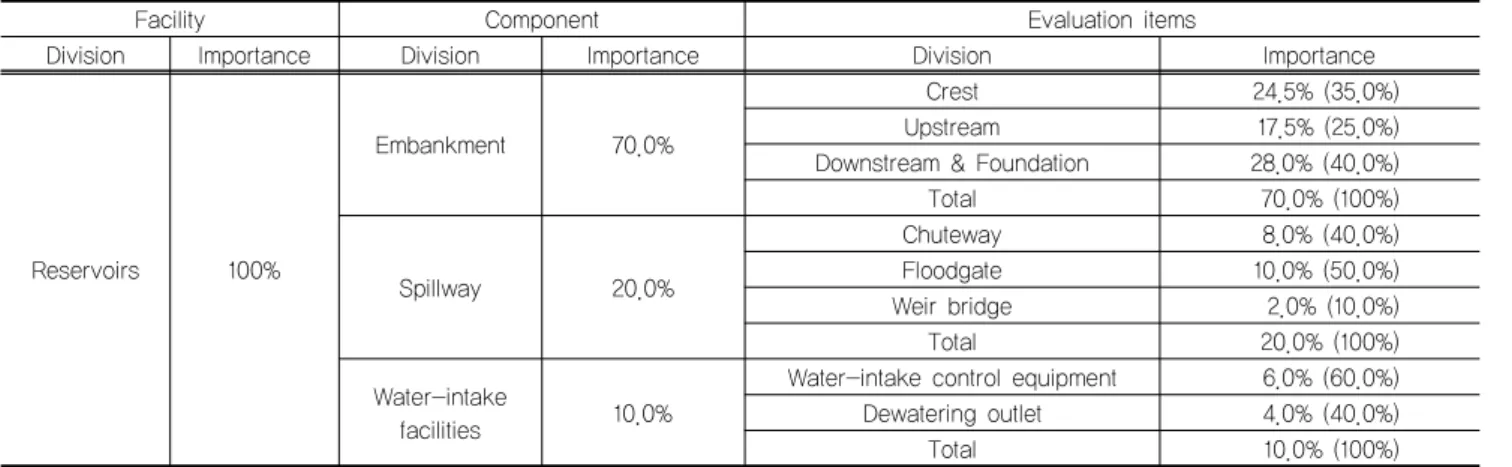
들에게 설문을 실시하여 가중치를 결정하고자 한다. Table 1
과 같이 저수지 현장조사 시 손상원인에 대한 우선순위 평
가항목을 저수지 구성요소별로 설정하고, 중요도를 제안
하였다. Table 2와 같이 구성요소별 하위평가항목을 2단
계와 3단계로 분류하였다.
Table 1. Proposed importance of evaluation items
Facility Component Evaluation items
Division Importance Division Importance Division Importance
Reservoirs 100%
Embankment 70.0%
Crest 24.5% (35.0%)
Upstream 17.5% (25.0%)
Downstream & Foundation 28.0% (40.0%)
Total 70.0% (100%)
Spillway 20.0%
Chuteway 8.0% (40.0%)
Floodgate 10.0% (50.0%)
Weir bridge 2.0% (10.0%)
Total 20.0% (100%)
Water-intake
facilities 10.0%
Water-intake control equipment 6.0% (60.0%) Dewatering outlet 4.0% (40.0%)
Total 10.0% (100%)
Table 2. Evaluations items of small dam
Step 1 Step 2 Step 3
Embankment
Crest
Cracks and displacement Seepage Settlement
Erosion Vegetation
Upstream
Cracks Seepage Settlement
Erosion
Damage of slope protection Slide
Vegetation
Downstream & Foundation
Cracks Seepage Settlement
Erosion
Damage of slope and end protection Slide
vegetation
Spillway
Chuteway
Open channel
Soil Trash
Erosion Concrete
Trash
Damage and aging of Side wall Damage and aging of bottom Side wall and bottom seepage Pipe line
Trash
Damage and aging of pipe line Seepage in pipe line Floodgate
Uncontrolled
Damage and aging of gate (steel) Damage and aging of concrete facility
Weir bridge Damage and aging of highroad
Water-intake facilities
Water-intake control equipment
Uncontrolled
Damage and aging of gate (steel) Damage and aging of concrete facility Damage and aging of connection bridge Dewatering outlet
Damage and aging of outlet pipe Seepage in outlet pipe Damage and aging of drainage way
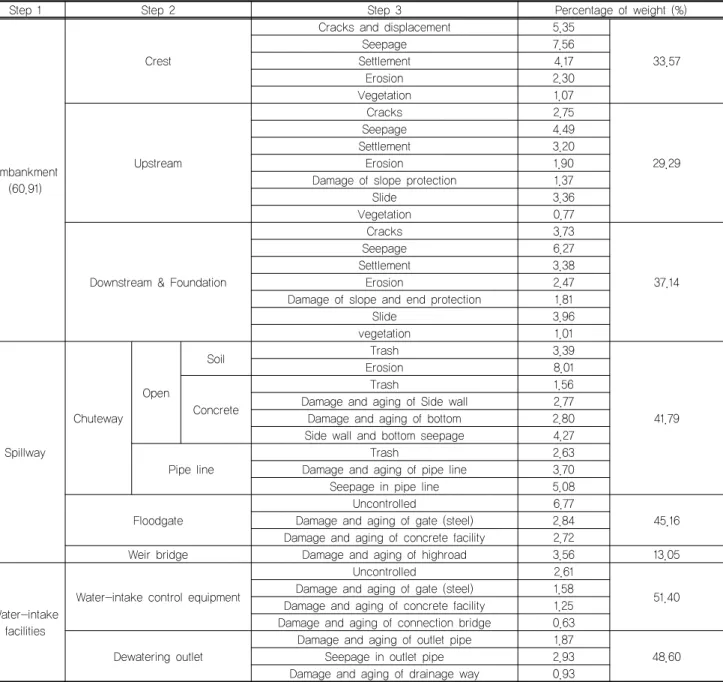
Table 3. Results of weights analysis using AHP
Step 1 Step 2 Step 3 Percentage of weight (%)
Embankment (60.91)
Crest
Cracks and displacement 5.35
33.57
Seepage 7.56
Settlement 4.17
Erosion 2.30
Vegetation 1.07
Upstream
Cracks 2.75
29.29
Seepage 4.49
Settlement 3.20
Erosion 1.90
Damage of slope protection 1.37
Slide 3.36
Vegetation 0.77
Downstream & Foundation
Cracks 3.73
37.14
Seepage 6.27
Settlement 3.38
Erosion 2.47
Damage of slope and end protection 1.81
Slide 3.96
vegetation 1.01
Spillway
Chuteway
Open
Soil Trash 3.39
41.79
Erosion 8.01
Concrete
Trash 1.56
Damage and aging of Side wall 2.77 Damage and aging of bottom 2.80 Side wall and bottom seepage 4.27
Pipe line Trash 2.63
Damage and aging of pipe line 3.70
Seepage in pipe line 5.08
Floodgate Uncontrolled 6.77
45.16 Damage and aging of gate (steel) 2.84
Damage and aging of concrete facility 2.72
Weir bridge Damage and aging of highroad 3.56 13.05
Water-intake facilities
Water-intake control equipment
Uncontrolled 2.61
51.40 Damage and aging of gate (steel) 1.58
Damage and aging of concrete facility 1.25 Damage and aging of connection bridge 0.63 Dewatering outlet Damage and aging of outlet pipe 1.87
48.60
Seepage in outlet pipe 2.93
Damage and aging of drainage way 0.93
2.3 우선순위 결정식 및 AHP 계층구조의 설정
2.3.1 우선순위 결정식
우선순위는 저수지 붕괴사례 및 참고문헌을 통하여 획 득한 소규모 저수지 구성요소별 각각의 붕괴원인에 의하 여 평가한다. 우선순위 평가를 위한 평가항목 선정 및 평 가항목에 대한 가중치 부여 시 체계적이지 못한 점을 고려 하여, 본 연구에서는 우선 평가항목을 선정하고, 평가항목 별 가중치를 고려하여 종합점수를 산출할 수 있도록 계층 분석법을 이용한다. 따라서, 농업용 저수지 붕괴 주요 원 인에 대한 우선순위는 다음 식 (1)~식 (4)와 같이 나타낼 수 있다.
농업용 저수지 붕괴 원인 우선순위 = f(제체, 여수로, 취수시설) (1) 제체 붕괴원인i = {댐마루i + 상류사면i + 하류사면 및 기초부i} (2) 여수로 붕괴원인i = {수로부i + 수문부i + 공도교i} (3) 취수시설 붕괴원인i = {취수부i + 방류부i} (4)
2.3.2 AHP 계층구조의 설정
AHP 의 문제해결 접근방식을 단계별로 제시하고, 이러 한 방법론을 다양한 사례에 적용해 각 단계별 평가항목들 간의 우선수위 결정문제를 체계적으로 해결해야 한다.
본 계층구조는 여러 전문가들의 다양한 지식과 경험을
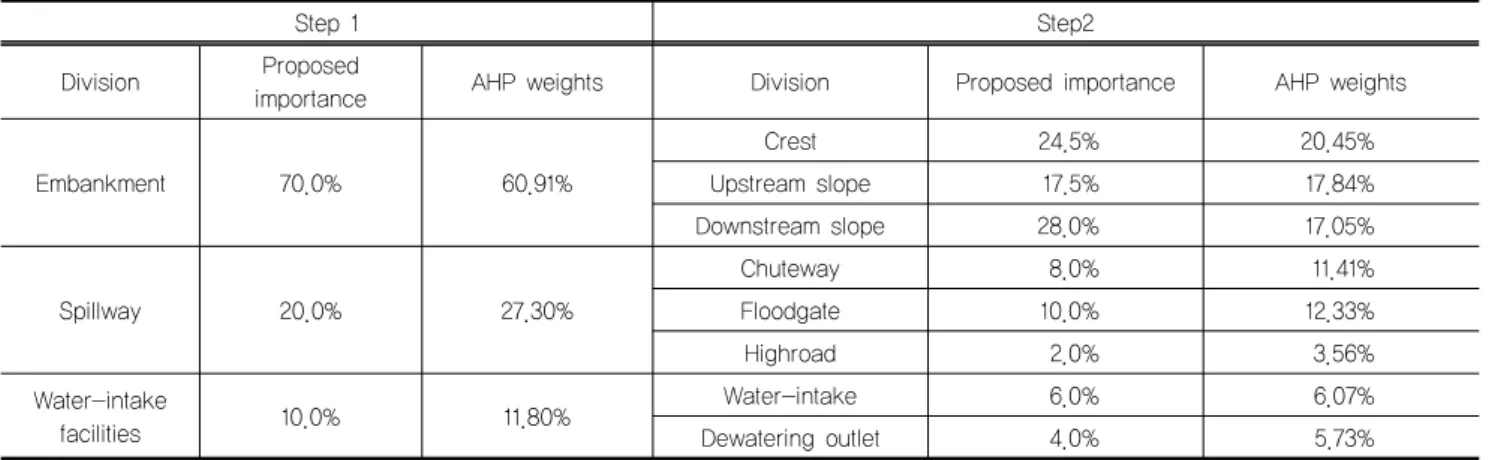
Table 4. Comparison proposed importance with AHP weights
Step 1 Step2
Division Proposed
importance AHP weights Division Proposed importance AHP weights
Embankment 70.0% 60.91%
Crest 24.5% 20.45%
Upstream slope 17.5% 17.84%
Downstream slope 28.0% 17.05%
Spillway 20.0% 27.30%
Chuteway 8.0% 11.41%
Floodgate 10.0% 12.33%
Highroad 2.0% 3.56%
Water-intake
facilities 10.0% 11.80% Water-intake 6.0% 6.07%
Dewatering outlet 4.0% 5.73%