Introduction
As Korea has recently become a high-income economy and is entering into the aged society, demand on health functional foods has been constantly increasing along with an interest in the quality of life. Such demand has led to the development of functional foods that have emerged as breakthrough in the future food industry. Korea's health functional food market is estimated to be worth 2.5 trillion won annually, expanded by about more than 10 percent each
year.1 Health functional food is referred to a food prepared or processed from raw materials or components which have functionality beneficial to the body as stipulated and regulated by the Korea Food and Drug Administration, and is mainly classified into product specific health functional foods and foods listed in Korean Food Codex.2
Health functional foods, mainly sold to middle-aged and older adults in the past, are used by different age groups from babies and children to 20s and 30s in recent years.
This implies that consumers of health functional foods have
Received: November 3, 2014 Revised: January 18, 2015 Accepted: January 28, 2015
Address for Correspondence: Tae-Hee Kim, Department of Obstetrics and Gynecology, Soonchunhyang University Bucheon Hospital, 170 Jomaru-ro, Bucheon 14584, Korea
Tel: +82-32-621-5380, Fax: +82-32-621-5015, E-mail: [email protected]
Original Article
pISSN: 2288-6478, eISSN: 2288-6761 http://dx.doi.org/10.6118/jmm.2016.22.1.20 Journal of Menopausal Medicine 2016;22:20-30
J MM
A Study on Perception and Usage Status on Health Functional Foods in Women according to Menopause Status
Heesook Lim1, Tae-Hee Kim2, Hae-Hyeog Lee2
1Department of Nutrition, Soonchunhyang University Bucheon Hospital, Bucheon, 2Department of Obstetrics and Gynecology, Soonchunhyang University College of Medicine, Bucheon, Korea
Objectives: This study was performed to provide a reference base for suggesting proper guidelines for the health of the people by analyzing perception and intake pattern on health functional foods and by identifying needs in pre- and postmenopausal women.
Methods: We conducted a self-administered survey in women admitted to the Department of Obstetrics and Gynecology at a university hospital between July and August, 2014. The survey questionnaire consisted of 8 items on general characteristics, 4 items on awareness on health functional foods, and 16 items on usage status.
Results: Of all 133 women with ages ranging between 19 to 67 years, postmenopausal women were 57 accounting for 42.9% of all subjects. Mean age was 55.4 ± 6.2 and menopausal age was 49.6 ± 4.3 in the postmenopause group. Mean age was 38.7 ± 9.0 in the postmenopause group. With respect to components of health functional foods, 76.3% of women answered “important”
in the postmenopause group, significantly higher than 49.1% in the postmenopause group (P < 0.01). In regard to price, those who answered “important” accounted for the largest percentage in the premenopausal group at 56.6%, and those who answered
“moderately important” accounted for 57.9% in the postmenopausal women. A significant difference was found between the two groups (P < 0.05).
Conclusion: Development of products reflecting consumer needs can be considered. It is important to foster an environment allowing individuals to choose right health functional foods and further studies are warranted. (J Menopausal Med 2016;22:20-30) Key Words: Food habits · Functional food · Perception · Postmenopause
Heesook Lim, et al. Use of Health Funtional Foods in Women
been expanded to all age groups.3 Since the rate of female consumers, in particular, has surged, previous studies have investigated the usage status on health functional foods in the elderly4 and women living in specific areas.5 Chang6 reported that 89.7% of respondents answered that they had experience of intaking health functional foods in the past or were currently in use among women aged 20 and over. The higher the age, the more likely it is to use functional foods.
In studies of Hwang7 and Kim8, women in their 40s and 50s accounted for the largest proportion of all respondents consuming health functional foods.
From the perspective of life cycle of women, middle-aged women are less likely to be concerned about their health, caring for family members and spend about one-third of their lives after menopause.9 For these reasons, health and dietary management is crucial in improving the quality of life. Since it is important to exert efforts to overcome various health concerns encountered during and after menopause, the use of health functional foods is forecasted to grow even larger in middle-aged women. However, health functional foods, unlike conventional foods, have positive effects by having a direct impact on health promotion and disease prevention and by increasing the intake of food components beneficial to health. On the other hand, they also have negative aspects by generating safety concerns by using too much components to emphasize functionality and presenting unreliable proofs leading to confusion through various marketing approaches.3 Furthermore, since consumption of health functional foods is affected by several factors including environment, the usage of those foods needs to be analyzed thoroughly for proper use. However, only a few studies have been done in Korea.
Therefore, this study aimed to analyze the trends of recognition and intake pattern on health functional foods in pre- and postmenopausal women and to provide a reference base for suggesting proper guidelines for the health of the people and activating desirable health functional food industry by identifying their needs.
Materials and Methods
We conducted a self-administered survey in women
admitted to the Department of Obstetrics and Gynecology at a university hospital between July and August 2014.
The study theme was corrected and revised appropriate for the theme and content of this survey based on the data used in previous studies,5,6,10 and the main survey item is about the perception and usage status on health functional foods.
The survey questionnaire consisted of 8 items on general characteristics (age, menopausal age, educational background, average monthly income, occupation, living arrangement, self-assessed health status and medical history), 4 items on awareness on health functional foods (recognition, interest, reliability and information source on health functional foods), and 16 items on usage status (usage experience, product items, place of purchase, reasons for non-purchase, choice criteria, buying criteria, reasons for purchase, a top priority for purchase, preferred packaging type, purchase quantity, purchase cost, purchase satisfaction, negative effect, repurchase intention, and needs and fields for development of women-only products).
Health functional foods involved a total of 15 different types (nutritional supplement, ginseng, red ginseng, dietary fiber, aloe, mushrooms, glucosamine, omega-3 fatty acids, chitosan, probiotics, gamma linoleic acid, chlorella, grape seed oil, plant extracts and royal jelly).
A total of 142 questionnaires were distributed. Excluding questionnaires with missing answers, the remaining 133 questionnaires were used (a return rate of 70%).
Respondents were grouped into pre- and postmenopause groups to compare differences between them. Although most respondents answered the questionnaire sincerely, omitted answers for specific items were used in statistical analyses, but they were treated as missing values. With respect to types of health functional foods used, only answered items were examined.
All statistical analyses were performed with SPSS version 18.0 program (SPSS Inc., Chicago, IL, USA). An independent student t-test was conducted to analyze age according to menopausal status, and frequency and percentage were calculated for other variables. A χ2-test was used to analyze significance. P values of less than 0.05 were considered statistically significant.
Journal of Menopausal Medicine 2016;22:20-30
J MM
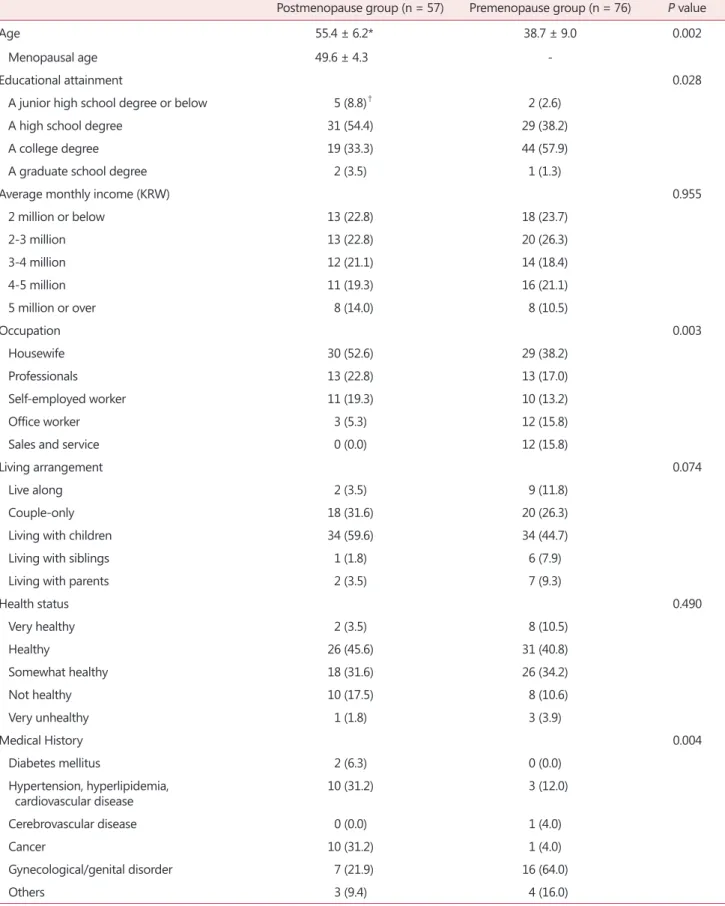
Table 1. General characteristics
Postmenopause group (n = 57) Premenopause group (n = 76) P value
Age 55.4 ± 6.2* 38.7 ± 9.0 0.002
Menopausal age 49.6 ± 4.3 -
Educational attainment 0.028
A junior high school degree or below 5 (8.8)† 2 (2.6)
A high school degree 31 (54.4) 29 (38.2)
A college degree 19 (33.3) 44 (57.9)
A graduate school degree 2 (3.5) 1 (1.3)
Average monthly income (KRW) 0.955
2 million or below 13 (22.8) 18 (23.7)
2-3 million 13 (22.8) 20 (26.3)
3-4 million 12 (21.1) 14 (18.4)
4-5 million 11 (19.3) 16 (21.1)
5 million or over 8 (14.0) 8 (10.5)
Occupation 0.003
Housewife 30 (52.6) 29 (38.2)
Professionals 13 (22.8) 13 (17.0)
Self-employed worker 11 (19.3) 10 (13.2)
Office worker 3 (5.3) 12 (15.8)
Sales and service 0 (0.0) 12 (15.8)
Living arrangement 0.074
Live along 2 (3.5) 9 (11.8)
Couple-only 18 (31.6) 20 (26.3)
Living with children 34 (59.6) 34 (44.7)
Living with siblings 1 (1.8) 6 (7.9)
Living with parents 2 (3.5) 7 (9.3)
Health status 0.490
Very healthy 2 (3.5) 8 (10.5)
Healthy 26 (45.6) 31 (40.8)
Somewhat healthy 18 (31.6) 26 (34.2)
Not healthy 10 (17.5) 8 (10.6)
Very unhealthy 1 (1.8) 3 (3.9)
Medical History 0.004
Diabetes mellitus 2 (6.3) 0 (0.0)
Hypertension, hyperlipidemia,
cardiovascular disease 10 (31.2) 3 (12.0)
Cerebrovascular disease 0 (0.0) 1 (4.0)
Cancer 10 (31.2) 1 (4.0)
Gynecological/genital disorder 7 (21.9) 16 (64.0)
Others 3 (9.4) 4 (16.0)
*Mean ± standard deviation (SD), †number (%)
Journal of Menopausal Medicine 2016;22:20-30 Heesook Lim, et al. Use of Health Funtional Foods in Women
Results
1. General characteristics
Of all 133 women with ages ranging between 19 to 67 years, postmenopausal women were 57 accounting for 42.9%
of all subjects. Mean age was 55.4 ± 6.2 and menopausal age was 49.6 ± 4.3 in the postmenopause group. Mean age was 38.7 ± 9.0 in the premenopause group. With respect to educational background, 59.2% of premenopausal women were college or graduate school graduates, significantly higher than 36.8% of postmenopausal women (P < 0.05).
The ratio of average monthly income between 2 to 3 million won represented the highest proportion in both groups. However, there was no significant difference.
Housewife (52.6%) accounted for the largest percentage of all occupations in postmenopause group, followed by professionals (22.8%), self-employed worker (19.3%), and office worker (5.3%). Meanwhile, housewife (38.2%) also accounted for the largest proportion of all occupations in premenopause group, followed by professionals (17.0%), office worker (15.8%), sales and service (15.8%), and self- employed worker (13.2%). A significant difference was found between two groups (P < 0.01). In regards to co-residential arrangements, the most common living arrangements were
“living with children” and “couple-only”. In terms of health status, “healthy” was the most common answer, followed by
“somewhat healthy”. According to medical history, a total of 32 postmenopausal women (56.1%) had illnesses. The most common condition was cardiovascular disease (31.2%), followed by cancer (31.2%) and genital disorders (21.9%).
Meanwhile, a total of 25 premenopausal women (32.9%) had illnesses. The most commonly detected condition was genital disorders (64.0%), showing a significant difference between two groups (P < 0.01; Table 1).
2. Perception on health functional foods
In regards to the question about the recognition on health functional foods, the most common answer was
“I just know the type of the food” in both groups. With respect to the degree of interest, women who answered
“somewhat interested” represented 49.1%, followed by
“moderately interested” at 29.8% in postmenopause group.
In contrast, those who answered “somewhat interested”
represented 51.3%, followed by “very little interested”
at 25.0% in premenopause group. Difference was found in the order of answers between two groups. Regarding product reliability, a majority of respondents answered
“moderately” in both groups, followed by “reliable”. The most common information source was “TV/Radio” or “family members/acquaintances” in both groups. However, 25.0%
of premenopausal women obtained related information from
“internet/smart devices”, showing a difference compared with postmenopausal women (Table 2).
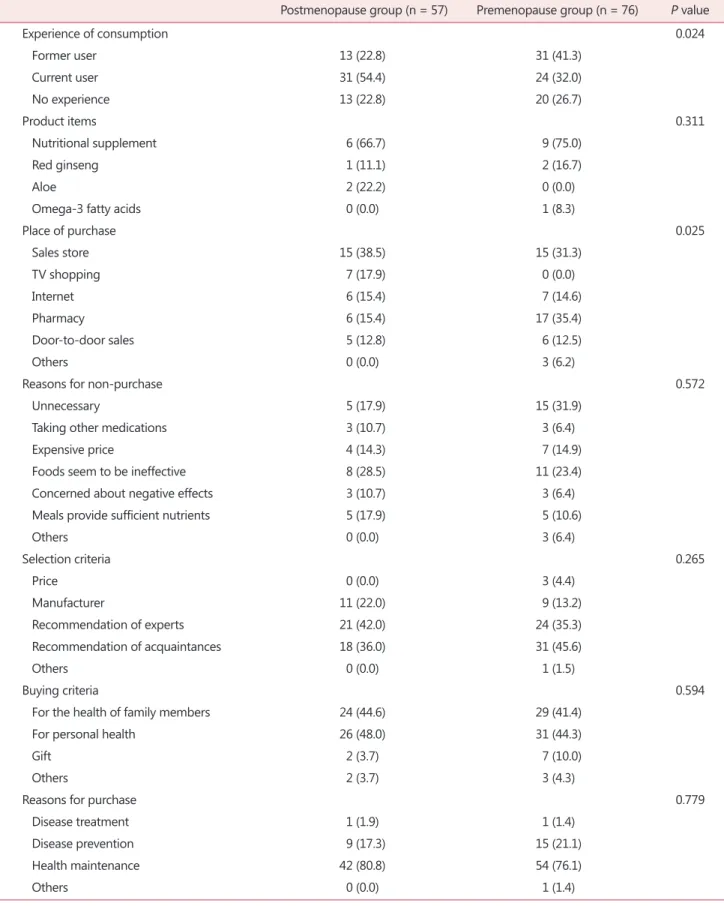
3. Usage patterns on health functional foods With respect to the intake experience of health functional foods, the ratio of “current users” was 54.4%, followed by
“former users” at 22.8% and “no experience” at 22.8%
in postmenopause group. On the other hand, the ratio of
“former users” was 41.3%, followed by “current users”
at 32.0% and “no experience” at 26.7%. There was a significant difference between two groups (P < 0.05).
In both groups with former or current users, the most commonly consumed product items were vitamin or mineral supplement, followed by red ginseng, aloe, and omega-3 fatty acids. The most common place of purchase was sales store at 38.5%, followed by pharmacy at 17.9%, TV/home shopping at 15.4% and internet at 15.4% in postmenopause group. Meanwhile, the most common place of purchase was pharmacy at 35.4%, followed by sales store at 31.3% and internet at 14.6% (P < 0.05). Respondents with no experience of using functional foods were asked for reasons why they have no experience or plan of purchasing those products.
The most common reason was “foods seem to be ineffective”
at 28.5%, followed by “unnecessary because I am currently healthy” at 17.9% and “meals provide sufficient nutrients”
at 17.9% in postmenopause group. Meanwhile, the most common reason was “unnecessary because I am currently healthy” at 31.9%, followed by “foods seem to be ineffective”
at 23.4% and “expensive price” at 14.9% in premenopause group. The most common criterion for food choice was
“recommendation of experts” at 42.0% in postmenopause group, and “recommendation of acquaintances” at 45.6%
in premenopause group. The most common criterion for purchase decision was “for personal health” in both groups.
In addition, the most common reason for purchase was
Journal of Menopausal Medicine 2016;22:20-30
J MM
“health maintenance” (Table 3).
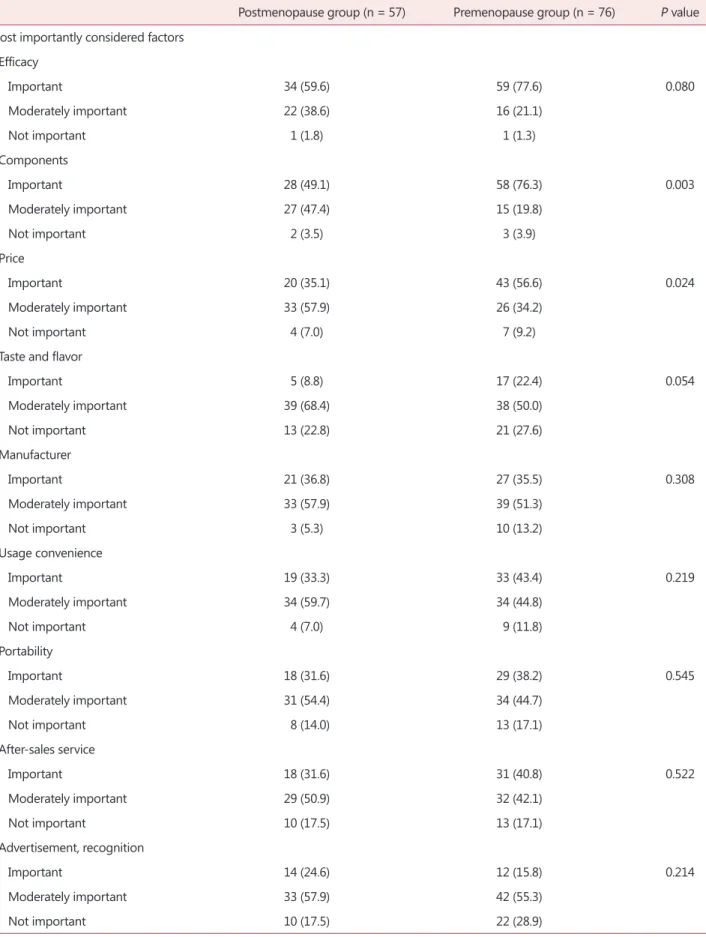
The most importantly considered factors for selecting health functional foods were efficacy, food components, body constitution features, expiration date and manufacture date in both groups. In particular, those who answered that food components are “important” accounted for 76.3%
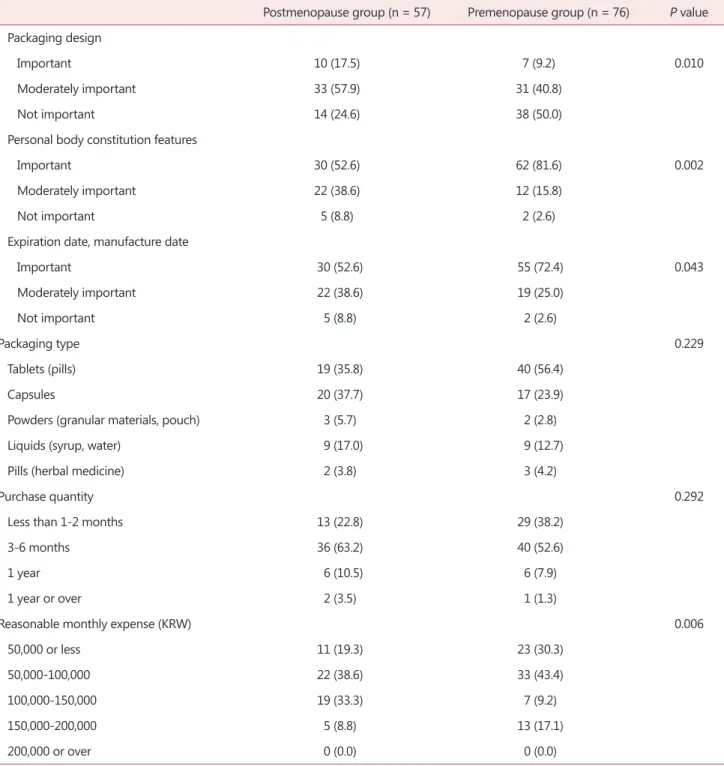
of all premenopausal women, significantly higher than 49.1% of postmenopausal women (P < 0.01). Regarding price, the answer “important” represented the largest percentage at 56.6% in premenopausal women, while the answer “moderately” represented the largest percentage at 57.9% in postmenopausal women. A significant difference was observed between two groups (P < 0.05). Relatively insignificant differences were shown in the importance of taste and flavor, manufacturer, usage convenience, portability, after-sales service, advertisement and packaging design. With respect to packaging type, both groups preferred tablets or capsules and their single purchase quantity was amount for 3 to 6 months, ranking the highest. Reasonable average monthly expense for functional foods was ranked in the order of 50,000 to 100,000 won at 38.6% and 100,000 to 150,000 won at 33.3%
in postmenopause group, and 50,000-100,000 won at 43.4%
and less than 50,000 won at 30.3% in premenopause group, showing a significant difference between two groups (P <
0.01; Table 4)
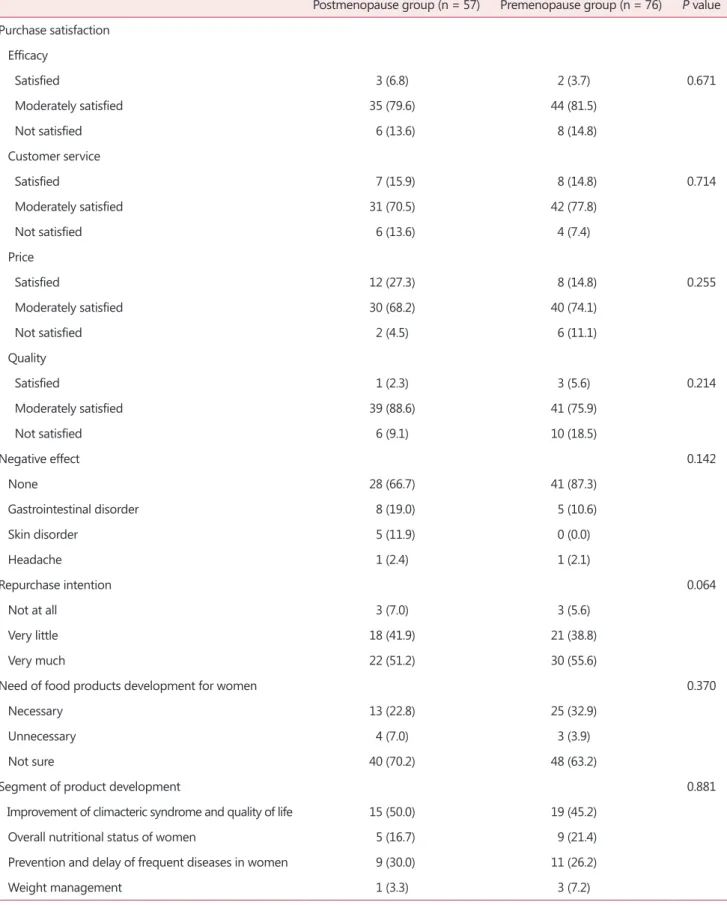
According to satisfaction, regarding food efficacy, the ratio of “moderately” hovered around 80% in both groups.
In terms of after-sales service, price and quality, the ratio of “moderately” also ranked highest. After consuming functional foods, the most commonly experienced adverse events were gastrointestinal disorder, vomiting and skin disorder in both groups. With respect to repurchase intention, 47.8% of postmenopausal women answered
“very much”, and “very little” at 39.1%. Meanwhile, 55.6% of premenopausal women answered “very much”, and “very little” at 38.9%, implying a slightly higher repurchase intention. Regarding the question about the need of functional foods development for women, the answer “not sure” ranked highest in both groups, followed by “necessary” at 22.8% in postmenopause group and 32.9% in premenopause group. In both groups, desired segments of product development were ranked in the order Table 2. Recognition on health functional foods
Postmeno- pause group (n = 57)
Premeno- pause group (n = 76)
valueP
Recognition 0.294
I exactly know the type and efficacy of the food
13 (22.8) 13 (17.1)
I just know the
type of the food 25 (43.9) 39 (51.3) I just know the
efficacy of the food 17 (29.8) 16 (21.1) I do not know at all 2 (3.5) 8 (10.5)
Interest 0.053
Very much 5 (8.8) 6 (7.9)
Moderately 17 (29.8) 10 (13.2)
Somewhat 28 (49.1) 39 (51.3)
Very little 5 (8.8) 19 (25.0)
Not at all 2 (3.5) 2 (2.6)
Scientific reliability 0.323
Very reliable 1 (1.8) 1 (1.3)
Moderately reliable 15 (26.3) 13 (17.1) Somewhat reliable 35 (61.4) 54 (71.1) Not very reliable 6 (10.5) 5 (6.6)
Not at all 0 (0.0) 3 (3.9)
Information source 0.161
TV, Radio 17 (34.0) 20 (31.2)
Internet, smart
devices 2 (4.0) 16 (25.0)
Brochure 3 (6.0) 2 (3.1)
Door-to-door sales 3 (6.0) 3 (4.7) Family members
of acquaintances 19 (38.0) 19 (29.6)
Sales store 2 (4.0) 1 (1.6)
Related book 0 (0.0) 1 (1.6)
Home shopping ad 2 (4.0) 1 (1.6) Professionals
(physician, pharmacist, etc.)
2 (4.0) 1 (1.6) Number (%)
Journal of Menopausal Medicine 2016;22:20-30 Heesook Lim, et al. Use of Health Funtional Foods in Women
Table 3. Usage patterns of health functional foods I
Postmenopause group (n = 57) Premenopause group (n = 76) P value
Experience of consumption 0.024
Former user 13 (22.8) 31 (41.3)
Current user 31 (54.4) 24 (32.0)
No experience 13 (22.8) 20 (26.7)
Product items 0.311
Nutritional supplement 6 (66.7) 9 (75.0)
Red ginseng 1 (11.1) 2 (16.7)
Aloe 2 (22.2) 0 (0.0)
Omega-3 fatty acids 0 (0.0) 1 (8.3)
Place of purchase 0.025
Sales store 15 (38.5) 15 (31.3)
TV shopping 7 (17.9) 0 (0.0)
Internet 6 (15.4) 7 (14.6)
Pharmacy 6 (15.4) 17 (35.4)
Door-to-door sales 5 (12.8) 6 (12.5)
Others 0 (0.0) 3 (6.2)
Reasons for non-purchase 0.572
Unnecessary 5 (17.9) 15 (31.9)
Taking other medications 3 (10.7) 3 (6.4)
Expensive price 4 (14.3) 7 (14.9)
Foods seem to be ineffective 8 (28.5) 11 (23.4)
Concerned about negative effects 3 (10.7) 3 (6.4)
Meals provide sufficient nutrients 5 (17.9) 5 (10.6)
Others 0 (0.0) 3 (6.4)
Selection criteria 0.265
Price 0 (0.0) 3 (4.4)
Manufacturer 11 (22.0) 9 (13.2)
Recommendation of experts 21 (42.0) 24 (35.3)
Recommendation of acquaintances 18 (36.0) 31 (45.6)
Others 0 (0.0) 1 (1.5)
Buying criteria 0.594
For the health of family members 24 (44.6) 29 (41.4)
For personal health 26 (48.0) 31 (44.3)
Gift 2 (3.7) 7 (10.0)
Others 2 (3.7) 3 (4.3)
Reasons for purchase 0.779
Disease treatment 1 (1.9) 1 (1.4)
Disease prevention 9 (17.3) 15 (21.1)
Health maintenance 42 (80.8) 54 (76.1)
Others 0 (0.0) 1 (1.4)
Number (%)
Journal of Menopausal Medicine 2016;22:20-30
J MM
Table 4. Usage patterns of health functional foods II
Postmenopause group (n = 57) Premenopause group (n = 76) P value Most importantly considered factors
Efficacy
Important 34 (59.6) 59 (77.6) 0.080
Moderately important 22 (38.6) 16 (21.1)
Not important 1 (1.8) 1 (1.3)
Components
Important 28 (49.1) 58 (76.3) 0.003
Moderately important 27 (47.4) 15 (19.8)
Not important 2 (3.5) 3 (3.9)
Price
Important 20 (35.1) 43 (56.6) 0.024
Moderately important 33 (57.9) 26 (34.2)
Not important 4 (7.0) 7 (9.2)
Taste and flavor
Important 5 (8.8) 17 (22.4) 0.054
Moderately important 39 (68.4) 38 (50.0)
Not important 13 (22.8) 21 (27.6)
Manufacturer
Important 21 (36.8) 27 (35.5) 0.308
Moderately important 33 (57.9) 39 (51.3)
Not important 3 (5.3) 10 (13.2)
Usage convenience
Important 19 (33.3) 33 (43.4) 0.219
Moderately important 34 (59.7) 34 (44.8)
Not important 4 (7.0) 9 (11.8)
Portability
Important 18 (31.6) 29 (38.2) 0.545
Moderately important 31 (54.4) 34 (44.7)
Not important 8 (14.0) 13 (17.1)
After-sales service
Important 18 (31.6) 31 (40.8) 0.522
Moderately important 29 (50.9) 32 (42.1)
Not important 10 (17.5) 13 (17.1)
Advertisement, recognition
Important 14 (24.6) 12 (15.8) 0.214
Moderately important 33 (57.9) 42 (55.3)
Not important 10 (17.5) 22 (28.9)
Journal of Menopausal Medicine 2016;22:20-30 Heesook Lim, et al. Use of Health Funtional Foods in Women
of improvement of climacteric syndrome and quality of life, prevention and delay in progression of frequent diseases in women, and overall nutritional status of women (Table 5).
Discussion
This study was performed to examine the perception and usage status on health functional foods and demands on product development in pre- and postmenopausal women.
Table 4. Continued
Postmenopause group (n = 57) Premenopause group (n = 76) P value Packaging design
Important 10 (17.5) 7 (9.2) 0.010
Moderately important 33 (57.9) 31 (40.8)
Not important 14 (24.6) 38 (50.0)
Personal body constitution features
Important 30 (52.6) 62 (81.6) 0.002
Moderately important 22 (38.6) 12 (15.8)
Not important 5 (8.8) 2 (2.6)
Expiration date, manufacture date
Important 30 (52.6) 55 (72.4) 0.043
Moderately important 22 (38.6) 19 (25.0)
Not important 5 (8.8) 2 (2.6)
Packaging type 0.229
Tablets (pills) 19 (35.8) 40 (56.4)
Capsules 20 (37.7) 17 (23.9)
Powders (granular materials, pouch) 3 (5.7) 2 (2.8)
Liquids (syrup, water) 9 (17.0) 9 (12.7)
Pills (herbal medicine) 2 (3.8) 3 (4.2)
Purchase quantity 0.292
Less than 1-2 months 13 (22.8) 29 (38.2)
3-6 months 36 (63.2) 40 (52.6)
1 year 6 (10.5) 6 (7.9)
1 year or over 2 (3.5) 1 (1.3)
Reasonable monthly expense (KRW) 0.006
50,000 or less 11 (19.3) 23 (30.3)
50,000-100,000 22 (38.6) 33 (43.4)
100,000-150,000 19 (33.3) 7 (9.2)
150,000-200,000 5 (8.8) 13 (17.1)
200,000 or over 0 (0.0) 0 (0.0)
Number (%)
Journal of Menopausal Medicine 2016;22:20-30
J MM
Table 5. Usage satisfaction and needs for development of health functional foods
Postmenopause group (n = 57) Premenopause group (n = 76) P value Purchase satisfaction
Efficacy
Satisfied 3 (6.8) 2 (3.7) 0.671
Moderately satisfied 35 (79.6) 44 (81.5)
Not satisfied 6 (13.6) 8 (14.8)
Customer service
Satisfied 7 (15.9) 8 (14.8) 0.714
Moderately satisfied 31 (70.5) 42 (77.8)
Not satisfied 6 (13.6) 4 (7.4)
Price
Satisfied 12 (27.3) 8 (14.8) 0.255
Moderately satisfied 30 (68.2) 40 (74.1)
Not satisfied 2 (4.5) 6 (11.1)
Quality
Satisfied 1 (2.3) 3 (5.6) 0.214
Moderately satisfied 39 (88.6) 41 (75.9)
Not satisfied 6 (9.1) 10 (18.5)
Negative effect 0.142
None 28 (66.7) 41 (87.3)
Gastrointestinal disorder 8 (19.0) 5 (10.6)
Skin disorder 5 (11.9) 0 (0.0)
Headache 1 (2.4) 1 (2.1)
Repurchase intention 0.064
Not at all 3 (7.0) 3 (5.6)
Very little 18 (41.9) 21 (38.8)
Very much 22 (51.2) 30 (55.6)
Need of food products development for women 0.370
Necessary 13 (22.8) 25 (32.9)
Unnecessary 4 (7.0) 3 (3.9)
Not sure 40 (70.2) 48 (63.2)
Segment of product development 0.881
Improvement of climacteric syndrome and quality of life 15 (50.0) 19 (45.2)
Overall nutritional status of women 5 (16.7) 9 (21.4)
Prevention and delay of frequent diseases in women 9 (30.0) 11 (26.2)
Weight management 1 (3.3) 3 (7.2)
Number (%)
Journal of Menopausal Medicine 2016;22:20-30 Heesook Lim, et al. Use of Health Funtional Foods in Women
In this survey, the recognition rate on health functional foods was 96.5% in postmenopause group and 89.5% in premenopause group, higher than a recognition rate of 85.7%
in a study of Ohn and Kim11 However, women well aware of the exact type and efficacy of functional foods accounted for 17.1% in premenopause group, slightly lower than 22.8%
in postmenopause group. Those interested in functional foods were 38.6% in postmenopause group and 21.1% in premenopause group. Meanwhile, 28.1% of women had trust in food in postmenopause group and 18.4% in premenopause group, indicating that those with negative views accounted for a large proportion. Despite growth in health functional food industry along with high recognition level and more diversified demands, an increasing number of false or exaggerated advertisements on the effectiveness of health functional foods,12 imply that a safety net for consumers is crucial. According to the analysis result of usage status, 77.2% of postmenopausal women had experience of or were currently using health functional foods, slightly higher than 73.3% of premenopausal women and results from previous studies.13,14 Information sources of functional foods were predominantly TV/radio or family members/acquaintances.
The actual place of purchase was mainly a health functional food store or pharmacy, comparable to the findings of Chung and Lee.15 The purchase rate was 17.9% from TV shopping in postmenopause group. The most common selection criteria were expert in postmenopause group and other people's suggestion in premenopause group. Since people share a variety of information through internet and advanced mass media, proper product promotion and education for product selection and dosage instructions have to be integrated. In regards to buying criteria and reasons for purchase, similar findings were shown in two groups, indicating that respondents had a high interest in functional foods. The most importantly considered factors in purchase were food components and price. The importance of price in purchase decisions was greater in premenopausal women than in postmenopausal women. A reasonable monthly expense of 50,000 won or less accounted for a larger percentage. Factors influencing purchase decisions are identified to be household socioeconomic status, residence, intake of nutritional supplement and others.16 The younger the age, the lower the monthly expense ratio
tends to be in premenopause group. Moreover, the response ratio on spending between 150,000 to 200,000 won was higher in premenopause group than postmenopause group.
Nevertheless, there is a difficulty in discussing this outcome since the difference in economic level has not been analyzed between two groups.
When purchase satisfaction was examined in past and current users, the ratio of dissatisfaction was higher, and repurchase intention was higher in premenopause group, excluding customer services for usage details and complaint handling. Although repurchase intention has not been investigated in details, this outcome is anticipated to be attributable to premenopausal women’s health needs leading to the expectation and purchase of a product. Even though no significant difference was found between two groups regarding the development of products for women's health, needs for improvement in climacteric syndrome and quality of life was greater in postmenopause group compared to premenopause group. According to a previous study of Kim,17 the intake ratio of functional foods was significantly higher in women at menopausal transition and after menopause than those of women before menopause.
In a study of Kim and Lee,18 taking into consideration the fact that the severer the climacteric symptoms recognized by middle-age women before and after menopause, the greater the dependency on health functional foods, women is identified to have an interest in health and expectation on alleviation of climacteric symptoms.
There are limitations to note in the present study. This investigation was unable to thoroughly analyze clinical symptoms of climacteric syndrome and examine various food products commercially sold. Moreover, since the choice of subjects was biased toward women who visited the Department of Obstetrics and Gynecology, the usage of health functional foods is limited. Nevertheless, we were able to find out that postmenopausal women had a high rate of functional foods use and considered food components as the most important factor. Meanwhile, the importance of price in purchase decisions was considerably high in premenopausal women. We identified needs for product development in improving climacteric syndrome and quality of life.
Through this process, we were able to take into account the development of effective food products by reflecting a variety
Journal of Menopausal Medicine 2016;22:20-30
J MM
of needs from premenopausal to postmenopausal periods for health management in middle-aged women going through a transitional period in life. We suggest that it is essential to foster an environment allowing individuals to choose right health functional foods and further studies are warranted.
Acknowledgement
This research was supported by High Value-added Food Technology development program , Ministry of agriculture, Food and Rural Affairs, Republic of Korea (114025-03-1- HD030).
Conflict of Interest
No potential conflict of interest relevant to this article was reported.
References
1. Hwang JS, Kim SJ, Kim HB. Development and industry of health functional food in Korea. Food Sci Technol Res 2009;
15: 1-4.
2. Korea Food & Drug Administration. Information for health functional food. Cheongwon: Korea Food & Drug Administration, 2012. [Cited by 2012 Nov 19]. Available from: http://hfoodi.kfda.go.kr.
3. Park JS, Lee JH. Elementary school children's intake patterns of health functional foods and parent's requirements in Daejeon area. Korean J Community Nutr 2008; 13: 463-75.
4. Choi HJ. A study on detailed classification of health functional food market according to lifestyle of female seniors [master's thesis]. Gyeongsan: Daegu Haany Uni- versity; 2009.
5. Jung SJ. Knowledge and consumption pattern on health functional food of middle aged women in Busan [master's thesis]. Busan: Dong A University; 2010.
6. Chang YH. A survey on the actual state on use and
awareness for health functional foods of female residents in Daegu [master's thesis]. Daegu: Kyungpook National University; 2010.
7. Hwang KH. An investigation of functional health food intakes and satisfaction of housewives [master's thesis].
Gyeongsan: Yeungnam University; 2010.
8. Kim SH. A survey on the use of and significant variables for health functional foods among Korean elderly. J Korean Soc Food Cult 2012; 26: 30-8.
9. Statistics Korea. Population projections for Korea: 2010- 2060. Daejeon: Statistics Korea; 2011.
10. Kim SH, Han JH, Kim WY. Health functional food use and related variables among the middle-aged in Korea. Korean J Nutr 2010; 43: 294-303.
11. Ohn J, Kim JH. Intake pattern and needs assessment for the development of web-contents on health functional foods according to age of adults. Korean J Community Nutr 2012;
17: 26-37.
12. Kim M, Lim MK. A comparison of the characteristics between intake and non-intake respondents of health foods, and analysis of factors affecting the willingness to consume health foods in Busan and Gyeongnam region. J East Asian Soc Diet Life 2007; 17: 798-807.
13. Lee JY. A study on adults' recognition and intakes of health functional foods in Jeju [master's thesis]. Cheju: Cheju National University; 2008.
14. Hwang IK. Survey on metropolitan middle-aged men's perception and consumption pattern of health/functional foods [master's thesis]. Seoul: Yonsei University; 2007.
15. Chung HK, Lee HY. Consumption on health functional foods according to age group in some regions of Korea. J Korean Diet Assoc 2011; 17: 190-205.
16. Yi HH, Park HA, Kang JH, Kang JH, Kim KW, Cho YG, et al. What types of dietary supplements are used in Korea?
Data from the Korean national health and nutritional examination survey 2005. Korean J Fam Med 2009; 30:
934-43.
17. Kim M. The relationship between food supplement intake and dietary habits according to the menopausal stage of middle-aged women [master's thesis]. Changwon:
Changwon Natonal University; 2014.
18. Kim MJ, Lee KH. Dietary habits and climacteric symptoms according to the level of food supplement use of middle- aged women. J Korean Soc Food Sci Nutr 2013; 42: 1054-64.