INTRODUCTION
Hill and Lupton [1] described maximal oxygen uptake (VO2max) as the level of oxygen intake during exercise beyond which no physical effort can raise it.Since then, numerous studies have used it to indicate the status
of and predict changes in cardiovascular health and physical performance. A PubMed search performed in February 1, 2019, resulted in 3,925 scientific articles on humans (1953–2018) mentioning ‘maximal oxygen uptake’ in the title or abstract. Indeed, VO2max has es- tablished itself as a valid measure of cardiorespiratory
Received: Apr 1, 2020 Revised: Jun 22, 2020 Accepted: Jun 25, 2020 Published online Jul 21, 2020 Correspondence to: Ari Voutilainen https://orcid.org/0000-0002-0664-2675
Institute of Public Health and Clinical Nutrition, University of Eastern Finland, Yliopistonranta 1 C, P.O. Box 1627, Kuopio FI-70211, Finland.
Tel: +358-40-355-2826, E-mail: [email protected] Copyright © 2021 Korean Society for Sexual Medicine and Andrology
Estimating Maximal Oxygen Uptake from the Ratio of Heart Rate at Maximal Exercise to Heart Rate at Rest in Middle-Aged Men
Ari Voutilainen ,Mounir Ould Setti ,Tomi-Pekka Tuomainen
Institute of Public Health and Clinical Nutrition, University of Eastern Finland, Kuopio, Finland
Purpose:
Purpose: To estimate the maximum mass-specific oxygen uptake (VO2max) from the ratio of the heart rate at maximal exercise (HRmax) to heart rate at rest (HRrest) in middle-aged men. VO2max is an essential measure of cardiorespiratory fitness, but it is difficult to utilize in clinical practice. The proportionality factor HRmax to HRrest is known to approximate 15 in young well- trained adults. Presumably, the same value is inaccurate for middle-aged men.
Materials and Methods:
Materials and Methods: Six-hundred thirty-four men belonging to the Kuopio Ischaemic Heart Disease Risk Factor Study.
Their mean age, body mass index (BMI), the daily total physical activity (TPA), VO2max, HRmax, and HRrest were: 49.4±6.4 years, 26.3±3.2 kg/m2, 48.5±10.1 metabolic equivalent hours per day, 33.7±7.6 mL/min/kg, 170.1±15.4 beats/min, and 63.3±10.8 beats/min. They included never-smokers 38%, former smokers 29%, and current smokers 33%.
Results:
Results: The proportionality factor HRmax to HRrest in around 50-year-old men approximated 12. One year in age, one step change in BMI (normal weight, overweight, obese), smoking status (never, former, current), and TPA (moderately active, ac- tive, highly active) reduced the proportionality factor by 0.1, 0.6, 0.4, and 0.1, respectively. The proportionality factor in obese or current smoking middle-aged men was one point lower compared to normal weight or never-smoking peers. This corresponds to approximately 10 years in chronological age.
Conclusions:
Conclusions: In around 50-year-old men with no cardiovascular diseases, bronchial asthma, or cancer, the HRmax to HRrest ra- tio should be multiplied by approximately 12 to estimate VO2max. BMI and smoking status can be considered in calculations to improve accuracy.
Keywords:
Keywords: Healthy lifestyle; Heart rate; Men’s health; Oxygen consumption; Physical exertion
This is an Open Access article distributed under the terms of the Creative Commons Attribution Non-Commercial License (http://creativecommons.org/licenses/by-nc/4.0) which permits unrestricted non-commercial use, distribution, and reproduction in any medium, provided the original work is properly cited.
pISSN: 2287-4208 / eISSN: 2287-4690 World J Mens Health 2021 Oct 39(4): 666-672 https://doi.org/10.5534/wjmh.200055
fitness (CRF), the upper limit for the cardiorespiratory system to transport oxygen from the air to the tissues [2]. From epidemiological and public health perspec- tives, VO2max is an important measure, as it predicts the risks of cardiovascular conditions and mortality [3]. A meta-analysis of 33 studies and over 100,000 partici- pants concluded that one metabolic equivalent higher CRF corresponding to 1-km/h higher running speed as- sociates to 0.87 times the risk of all-cause mortality and 0.85 times the risk of a cardiovascular disease event [4].
An accurate direct measurement of VO2max requires expensive equipment and trained staff and is time- consuming. Moreover, the direct measurement using a graded aerobic exercise test to exhaustion is not conve- nient or even completely safe for patients with severe cardiovascular diseases and other high-risk individu- als. Consequently, there is a need for indirect methods to estimate VO2max [5] in clinical practice.One of these indirect methods is to divide the heart rate at maximal exercise (HRmax) by the heart rate at rest (HRrest) and, then, multiply this quotient by a coefficient. This coef- ficient, termed as the proportionality factor in the text hereafter, corresponds to a theoretical value of about 15 in healthy well-trained young adult men and women [6,7].By and large, the maximal accuracy of VO2max es- timations based on HR is approximately ±15% mainly because of normal day-to-day variations in HR [8].
Chronological age per se is the main explanator of the relationship between VO2max and HR. Both VO2max and HRmax are tightly related to age due to the natural aging process [9,10].In addition to age, many health-related be- haviors have potential to affect the relationship between VO2max and HR. Indicators of these behaviors could in- clude, at least, smoking habits and physical activity as well as obesity that indirectly associates with diet. Alco- hol consumption, excluding patients with severe alcohol- related diseases [11],on the contrary, appear not to have evident short- or long-term effects on VO2max [12,13].
So far, the proportionality factor has been verified only in young adults and very little is known about effects of common health-related behavior on the rela- tionship between VO2max and HR.
In this study, our purpose was to estimate the maxi- mum mass-specific oxygen uptake (VO2max) from the ratio of the HRmax to HRrest in middle-aged men rep- resenting the general population. We also aimed at demonstrating effects of age, body mass index (BMI), smoking, and the daily total physical activity (TPA) on
the relationship between VO2max and the ratio of HRmax to HRrest. To describe and compare strengths of these effects, we utilized the proportionality factor.
MATERIALS AND METHODS
1. Ethics statement
The Research Ethics Committee of Kuopio Univer- sity approved the Kuopio Ischemic Heart Disease Risk Factor Study (KIHD) on December 1, 1983. All par- ticipants have given an informed written consent at KIHD baseline in 1980s.
2. Study design and sample
This was a population-based cross-sectional study.
We used data from the KIHD study that is an ongo- ing follow-up study originally designed to investigate risk factors for cardiovascular diseases among men living in the city of Kuopio and surrounding areas in Eastern Finland [14]. The KIHD study consists of two parts, the first including only 54-year-old men (n=1,166), and the second part including men from four different age cohorts, 42, 48, 54, and 60, at baseline examina-
Excluded for reasons
751 refused
1,166 belonged to the sub-cohort of 54-year-old men
520 had a cardiovascular disease(s)
112 took medication for high blood pressure
29 had bronchial asthma
13 had cancer
208 lacked measurements (VO ,
HR , HR , BMI)
2max rest max
634 had all results of measurements needed
available for analyses 842 had no cancer
855 had no bronchial asthma 884 took no medication for high blood pressure
996 had no cardiovascular
disease(s) 1,516 belonged to the sub-cohort of 42-, 48-, 54-, and 60-year-old
2,682 participated A random sample of
3,433 men
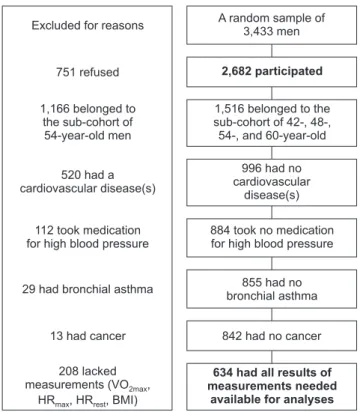
Fig. 1. Flow chart of the Kuopio Ischemic Heart Disease Risk Factor Study. Bold fonts indicate the starting and end points for this study.
VO2max: maximum mass-specific oxygen uptake, HRmax: ratio of the heart rate at maximal exercise, HRrest: heart rate at rest, BMI: body mass index.
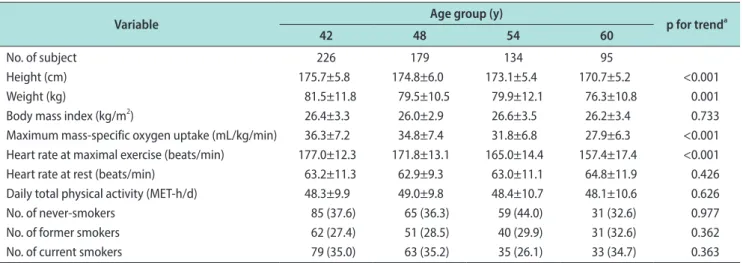
tions carried out 1984–1989 (n=1,516). Our data excerpt consisted of men belonging to the second part. We did not combine the first and second parts because they applied different methods to measure VO2max. After ex- cluding 882 participants from the second part based on their condition and measurements available, see Fig. 1 for detailed reasons, the final number of them included in the analysis was 634. Specifically, we excluded men with cardiovascular illnesses, as these conditions per se affect CRF and may distort VO2max estimations based on HR. All KIHD participants underwent a thorough cardiovascular examination at baseline and self-reported their diseases and medications. Register data regarding the use of medication for high blood pressure including beta blockers completed self-reports (Kela license 35/522/2014). Table 1 shows number and mean±standard deviation values for height, weight, BMI, systolic blood pressure, diastolic blood pressure, VO2max, HRmax, HRrest, and TPA in each age cohort to- gether with smoking habits.
3. Measurements
CRF tests were carried out at the Kuopio Research Institute of Exercise Medicine (Kuopio, Finland). An electrically braked cycle ergometer (400L; Medical Fit- ness Equipment, Mearn, the Netherlands) with a linear increase in the workload by 20 W/min was used for the assessment of the amount of physical work done and a breath-by-breath method (MGC 2001; Medical Graphics, St. Paul, MN, USA) for the measurement of
VO2max referring to the average of values recorded over 8 seconds. An ECG recorder (Kone, Turku, Finland) recorded a standard 12-lead ECG before, during, and after the exercise test. Lakka et al [15] explain the test techniques in detail.
Weight and height were measured, and BMI calcu- lated at KIHD baseline. We distributed study partici- pants into three groups referring to normal weight (BMI<25 kg/m2, n=240), overweight (BMI=25–30 kg/m2, n=312), and obesity (BMI>30 kg/m2, n=82).
Smoking status is based on study participants’ own reports. Non-smokers reported that they have never smoked (n=240), former smokers reported that they have not smoked within a month (n=184), and current smokers reported that they smoke (n=210).
In this study, the daily TPA refers to metabolic equivalent hours (MET-h). One MET approximates the rate of energy expenditure at rest that corresponds to 1 kcal/kg/h and 3.5 mL O2 kg/min. For example, rest- ing for 14 hours (14×1 MET) plus walking to work for 2 hours (2×3.5 MET, about 3.5 times harder than rest) plus working for 8 hours at light intensity (8×2 MET) result in 37 MET-h/d [15]. We distributed study par- ticipants into tertiles referring to moderately active (less than 43 MET-h/d, n=211), active (43–50 MET-h/d, n=212), and highly active (51 or more MET-h/d, n=211).
This distribution is in accordance with TPA quantiles in similar cohorts, such as 40,708 Swedish men aged 45–79 [16].No participants were sedentary. In KIHD, participants self-recorded all physical activities for 24
Table 1. Characteristics of age groups
Variable Age group (y)
p for trenda
42 48 54 60
No. of subject 226 179 134 95
Height (cm) 175.7±5.8 174.8±6.0 173.1±5.4 170.7±5.2 <0.001
Weight (kg) 81.5±11.8 79.5±10.5 79.9±12.1 76.3±10.8 0.001
Body mass index (kg/m2) 26.4±3.3 26.0±2.9 26.6±3.5 26.2±3.4 0.733
Maximum mass-specific oxygen uptake (mL/kg/min) 36.3±7.2 34.8±7.4 31.8±6.8 27.9±6.3 <0.001 Heart rate at maximal exercise (beats/min) 177.0±12.3 171.8±13.1 165.0±14.4 157.4±17.4 <0.001
Heart rate at rest (beats/min) 63.2±11.3 62.9±9.3 63.0±11.1 64.8±11.9 0.426
Daily total physical activity (MET-h/d) 48.3±9.9 49.0±9.8 48.4±10.7 48.1±10.6 0.626
No. of never-smokers 85 (37.6) 65 (36.3) 59 (44.0) 31 (32.6) 0.977
No. of former smokers 62 (27.4) 51 (28.5) 40 (29.9) 31 (32.6) 0.362
No. of current smokers 79 (35.0) 63 (35.2) 35 (26.1) 33 (34.7) 0.363
Values are presented as number only, mean±standard deviation, or number (%).
MET-h: metabolic equivalent hours.
aThe Jonckheere trend test.
hours and researchers determined their MET-h in each 30-minute period. Lakka and Salonen [17] explain the measurement of TPA in detail.
To describe the relationship between VO2max and the HRmax to HRrest ratio, we applied the proportionality factor that, in this study specifically, refers to a num- ber used to multiply the HRmax to HRrest ratio to yield an estimate of VO2max.
4. Statistical analysis
To discover the proportionality factor, we performed a regression through the origin (RTO) in which VO2max served as a dependent variable, and the HRmax to HRrest ratio served as an independent variable. To determine effects of age, BMI, smoking status, and TPA on the proportionality factor, we carried out simple and mul- tiple linear regressions. To detect trends in baseline characteristics across age cohorts, we used the Jonck- heere trend test. IBM SPSS Statistics 25 (IBM Corp., Armonk, NY, USA) and GraphPad Prism 5 for Win- dows (GraphPad Software, Inc., San Diego, CA, USA) served as statistical platforms.
RESULTS
There were statistically significant (p<0.05) trends in height, weight, VO2max, and HRmax across age cohorts.
Younger men were taller and heavier, and they had higher VO2max and HRmax (Table 1).
The equation for the estimated VO2max based on the HRmax to HRrest ratio was: VO2max=10.46+8.43×(HRmax/
HRrest). The p-values for the constant and coefficient of the HRmax to HRrest ratio were <0.001. The equation for an RTO was: VO2max=12.11×(HRmax/HRrest) with a p-value of <0.001. The coefficient of the HRmax to HRrest ratio in the RTO expresses the proportionality factor.
The proportionality factor related inversely with age (Fig. 2). The mean (95% confidence interval [CI]) proportionality factor was 12.79 (95% CI=12.47–13.10) in the youngest group, 12.55 (95% CI=12.19–12.90) in the second youngest group, 11.99 (95% CI=11.57–12.40) in the second oldest group, and 11.32 (95% CI=10.82–11.82) in the oldest group. To sum, in around 50-year-old men
42 14
13
12
11
10
9
Proportionalityfactor
Age (y) 60
48 54 42
14
13
12
11
10
9
Proportionalityfactor
Age (y) 60
48 54 42
14
13
12
11
10
9
Proportionalityfactor
Age (y) 60
48 54
Never Former Current Smoking status
<25 kg/m 25 30 kg/m
>30 kg/m
2 2 2
Body mass index
>50 MET-h/d 43 50 MET-h/d
<43 MET-h/d Total physical activity
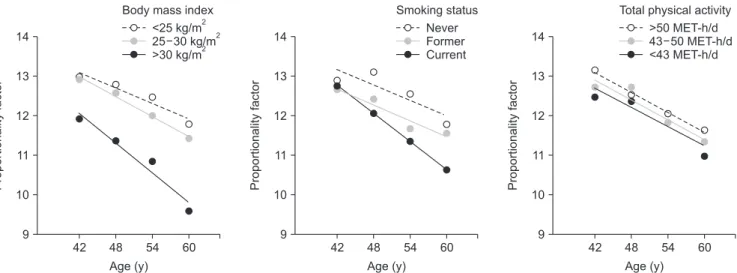
Fig. 3. Effects of body mass index, smoking status, and total physical activity on the relationship between maximal oxygen uptake and heart rate expressed as the proportionality factor (y-axis) at different age groups (x-axis). The dots indicate means and the lines indicate linear regressions.
MET-h: metabolic equivalent hours.
30 16 15 14 13 12 11
10
60
Proportionalityfactor
Age (y)
54 48
42
Fig. 2. The relationship between the proportionality factor express- ing the association of maximal oxygen uptake to heart rate (y-axis) and age (x-axis). The dots indicate means, the errors bars indicate their 95% confidence intervals (CIs), the solid line indicates a linear regression, and the dotted lines indicate its 95% CI. The black square indicates 10 well-trained 30-year-old men [6].
with no cardiovascular diseases, the ratio of HRmax to HRrest should be multiplied by approximately 12 to cre- ate estimates of VO2max.
Based on simple linear regressions, being overweight or obese as well as being a former or current smoker modified the effect of age on the proportionality fac- tor (Fig. 3). The decrease from 42 to 60 years in the proportionality factor was among obese participants (slope -0.125/y) nearly twice as large than among nor- mal weight participants (-0.065). The phenomenon was almost as strong between current smokers (-0.118) and non-smokers (-0.065). The level of physical activity did not affect the slope of the relationship between the proportionality factor and age, it was -0.08 at all TPA levels.
Based on a multiple regression, one year in age, one step change in BMI (normal weight, overweight, obese), smoking status (never, former, current), and TPA (mod- erately active, active, highly active) altered the pro- portionality factor used to multiply the ratio of HRmax to HRrest by 0.08, 0.59, 0.40, and 0.14, respectively. The equation was: the proportionality factor=17.27-0.08×age- 0.59×BMI category-0.40×smoking status+0.14×TPA. The p-values for the constant and coefficients of age, BMI, and smoking were <0.001, and that for the coefficient of TPA was 0.237.
Within the age range studied, 42–60, the negative effect of being obese exceeded those of smoking and being only moderately active. The change from normal weight to obese decreased the proportionality factor by 1.2, whereas the change from a never-smoker to a cur- rent smoker decreased it by 0.8, and the change from highly active to moderately active only by 0.3.
DISCUSSION
Uth et al [6] and Uth [7] demonstrated that in healthy well-trained 30-year-old men (n=46) and women (n=27) the ratio of HRmax to HRrest should be multiplied by approximately 15 to predict VO2max.In this study, we showed that this proportionality factor relates inversely to age and, therefore, the factor of 15 is invalid in the case of middle-aged men representing the general population.
The present sample of 634 middle-aged Finnish men resembles other Finnish and Swedish cohorts with respect to TPA, living habits, and common sociodemo- graphic and health factors [16,18,19].Consequently, we
suggest that as a rule of thumb, in 50-year-old men with no cardiovascular diseases, bronchial asthma, or cancer the proportionality factor is 12.
BMI affects the relationship between VO2max and HR.
From the viewpoint of CRF, being obese roughly corre- sponds to being 10 years older. This denotes that BMI could be more often considered a predictor of mortality and morbidity in cohort studies involving middle-aged men. Moreover, BMI is an important covariate in mor- tality and morbidity analyses because it, per se, does not correlate with age, as many other typical covari- ates do. Regarding the relationship between VO2max and HR it is worth noticing that in indirect VO2max estima- tions, age is considered as chronological age but also via HRmax that is strongly related to age [20].
Studies have proven, already decades ago, the nega- tive effect of smoking on VO2max in all age groups from adolescence to early senescence [13,21].Our results agreed with the existing knowledge, the negative effect of smoking becomes stronger with increasing age [22], and suggest that smoking habits can be considered to create more precise estimates of VO2max based on HR.
Although the effect of smoking on the relationship between VO2max and HR appears to be slightly weaker than the effect of being obese, in practice, smoking reduces the proportionality factor by one, likewise obe- sity does.
Our finding that the effect of physical activity on the relationship between VO2max and HR is minor, indirectly, strengthens the opinion that self-reported physical activity, specifically, non-vigorous activity, and VO2max do not strongly associate with each other [23,24].
A probable reason for this somewhat surprising find- ing is that mainly genetic factors determine VO2max [25], which for its part means that a sedentary lifestyle does not inevitably lead to a low VO2max. The association between VO2max and vigorous physical activity [23,24], on the contrary, is stronger and, possibly, reflects the self-evident fact that if a person has a genetically de- termined high VO2max, it is easier for him or her to do vigorous activities.
Clinical practice can apply our results as follows. A 40-year-old normal weight never-smoking man serves as a starting point. His VO2max can be estimated by multiplying the ratio of HRmax to HRrest by 14. Every 10 years of age reduces the factor by one, or every year by 0.1. Similarly, the change in body weight from normal weight to obese as well as the change from never-smok-
er to current smoker decrease the factor by one. As a result, VO2max of a 60-year-old obese current smoker should be estimated by multiplying the ratio of HRmax to HRrest by 10. TPA is ignored because the difference in the proportionality factor between moderately and highly active men was almost negligible, and because our data do not include physically inactive men.
The main strength of this study is the sample size (n=634). Typically, studies investigating the relation- ship between VO2max and HR enrolls dozens of partici- pants [6,7]. As a potential limitation we acknowledge that the linear estimation of VO2max based on HR is not an optimal method, because HR increases linearly with VO2max only at submaximal, circa 90%–95%, level [8].
We chose the linear approach nevertheless for practi- cal reasons, to contribute applicability of results. An- other limitation of this study relates to self-reporting with questionnaires as a data collection method. For example, the measurement method may significantly affect the observed level of physical activity [26].
CONCLUSIONS
Based on our findings, in around 50-year-old men with no cardiovascular diseases, bronchial asthma, or cancer, the ratio of HRmax to HRrest should be multiplied by approximately 12 to yield an estimate of VO2max. This number considerably differs from that related to well-trained 30-year-old men and women reported in earlier studies. BMI and smoking status can be consid- ered in calculations to improve accuracy.
ACKNOWLEDGEMENTS
This research was supported by the Institute of Pub- lic Health and Clinical Nutrition, University of East- ern Finland, Kuopio, Finland.
Conflict of Interest
The authors have nothing to disclose.
Author Contribution
Conceptualization: TPT, AV, MOS. Data curation: AV, TPT.
Formal analysis: AV. Investigation: AV, TPT, MOS. Methodol- ogy: AV, TPT. Supervision: TPT. Validation: TPT, MOS. Visual- ization: AV. Writing – original draft: AV. Writing – review &
editing: AV, MOS, TPT.
Data Sharing Statement
The data required to reproduce these findings cannot be shared at this time as the data also forms part of an ongoing study.
REFERENCES
1. Hill AV, Lupton H. Muscular exercise, lactic acid, and the supply and utilization of oxygen. QJM 1923;16:135-71.
2. Hawkins MN, Raven PB, Snell PG, Stray-Gundersen J, Levine BD. Maximal oxygen uptake as a parametric measure of car- diorespiratory capacity. Med Sci Sports Exerc 2007;39:103-7.
3. Kaminsky LA, Arena R, Ellingsen Ø, Harber MP, Myers J, Ozemek C, et al. Cardiorespiratory fitness and cardiovascular disease: the past, present, and future. Prog Cardiovasc Dis 2019;62:86-93.
4. Kodama S, Saito K, Tanaka S, Maki M, Yachi Y, Asumi M, et al. Cardiorespiratory fitness as a quantitative predictor of all- cause mortality and cardiovascular events in healthy men and women: a meta-analysis. JAMA 2009;301:2024-35.
5. Abut F, Akay MF, George J. Developing new VO2max predic- tion models from maximal, submaximal and questionnaire variables using support vector machines combined with fea- ture selection. Comput Biol Med 2016;79:182-92.
6. Uth N, Sørensen H, Overgaard K, Pedersen PK. Estimation of VO2max from the ratio between HRmax and HRrest--the Heart Rate Ratio Method. Eur J Appl Physiol 2004;91:111-5.
7. Uth N. Gender difference in the proportionality factor between the mass specific VO2max and the ratio between HR(max) and HR(rest). Int J Sports Med 2005;26:763-7.
8. Davies CT. Limitations to the prediction of maximum oxygen intake from cardiac frequency measurements. J Appl Physiol 1968;24:700-6.
9. von Dôbeln W, Astrand I, Bergström A. An analysis of age and other factors related to maximal oxygen uptake. J Appl Physiol 1967;22:934-8.
10. Astrand I, Astrand PO, Hallbäck I, Kilbom A. Reduction in maximal oxygen uptake with age. J Appl Physiol 1973;35:649- 54.
11. Galant LH, Forgiarini Junior LA, Dias AS, Marroni CA. Maxi- mum oxygen consumption predicts mortality in patients with alcoholic cirrhosis. Hepatogastroenterology 2013;60:1127-30.
12. Bobo MW. Effects of alcohol upon maximum oxygen uptake, lung ventilation, and heart rate. Res Q 1972;43:1-6.
13. Montoye HJ, Gayle R, Higgins M. Smoking habits, alcohol
consumption and maximal oxygen uptake. Med Sci Sports Exerc 1980;12:316-21.
14. Salonen JT. Is there a continuing need for longitudinal epide- miologic research? The Kuopio Ischaemic Heart Disease Risk Factor Study. Ann Clin Res 1988;20:46-50.
15. Lakka TA, Venäläinen JM, Rauramaa R, Salonen R, Tu- omilehto J, Salonen JT. Relation of leisure-time physical activ- ity and cardiorespiratory fitness to the risk of acute myocar- dial infarction. N Engl J Med 1994;330:1549-54.
16. Orsini N, Mantzoros CS, Wolk A. Association of physical activity with cancer incidence, mortality, and survival: a pop- ulation-based study of men. Br J Cancer 2008;98:1864-9.
17. Lakka TA, Salonen JT. Intra-person variability of various physical activity assessments in the Kuopio Ischaemic Heart Disease Risk Factor Study. Int J Epidemiol 1992;21:467-72.
18. Norman A, Bellocco R, Vaida F, Wolk A. Total physical ac- tivity in relation to age, body mass, health and other factors in a cohort of Swedish men. Int J Obes Relat Metab Disord 2002;26:670-5.
19. Hu G, Tuomilehto J, Silventoinen K, Barengo NC, Peltonen M, Jousilahti P. The effects of physical activity and body mass in- dex on cardiovascular, cancer and all-cause mortality among 47 212 middle-aged Finnish men and women. Int J Obes (Lond) 2005;29:894-902.
20. Tanaka H, Monahan KD, Seals DR. Age-predicted maximal
heart rate revisited. J Am Coll Cardiol 2001;37:153-6.
21. Ingemann-Hansen T, Halkjaer-Kristensen J. Cigarette smok- ing and maximal oxygen consumption rate in humans. Scand J Clin Lab Invest 1977;37:143-8.
22. Bernaards CM, Twisk JW, Van Mechelen W, Snel J, Kem- per HC. A longitudinal study on smoking in relationship to fitness and heart rate response. Med Sci Sports Exerc 2003;35:793-800.
23. Aadahl M, Kjaer M, Kristensen JH, Mollerup B, Jørgensen T. Self-reported physical activity compared with maximal oxygen uptake in adults. Eur J Cardiovasc Prev Rehabil 2007;14:422-8.
24. Kurtze N, Rangul V, Hustvedt BE, Flanders WD. Reliability and validity of self-reported physical activity in the Nord- Trøndelag Health Study: HUNT 1. Scand J Public Health 2008;36:52-61.
25. Schutte NM, Nederend I, Hudziak JJ, Bartels M, de Geus EJ. Twin-sibling study and meta-analysis on the heritabil- ity of maximal oxygen consumption. Physiol Genomics 2016;48:210-9.
26. Prince SA, Adamo KB, Hamel ME, Hardt J, Connor Gorber S, Tremblay M. A comparison of direct versus self-report measures for assessing physical activity in adults: a systematic review. Int J Behav Nutr Phys Act 2008;5:56.