This is an Open Access article distributed under the terms of the Creative Commons Attribution Non-Commercial License (http://creativecommons.org/licenses/by-nc/3.0/) which permits unrestricted non-commercial use, distribution, and reproduction in any medium, provided the original work is properly cited.
© 2016 The Korean Society of Clinical Nutrition Clin Nutr Res 2016;5:65-78
http://dx.doi.org/10.7762/cnr.2016.5.2.65 pISSN 2287-3732 ∙ eISSN 2287-3740
Review Article
*Corresponding author Jeongseon Kim
Address Molecular Epidemiology Branch, Division of Cancer Epide- miology and Prevention, Research Institute, National Cancer Center, 323 Ilsan-ro, Ilsandong-gu, Goyang 10408, Korea
Tel +82-31-920-2570 Fax +82-31-920-2579 E-mail [email protected]
Received January 26, 2016 Revised March 18, 2016 Accepted March 31, 2016
Introduction
Over the past few decades, the prevention of gastric cancer has been considered as one of the most important aspects of cancer control strategy due to high incidence and low survival rates [1,2]. As reported by the GLOBOCAN in 2012 [3], gastric cancer is the third leading cause of cancer deaths (8.8% of total cancer deaths) worldwide. The incidence was 952 per 100,000 population in both sexes, and age-standardized inci- dence rate was about twice as high in male as it was in female (621 and 320 per 100,000, respectively). The mortality rate of gastric cancer is highest in Eastern Asia (mainly in China) (24%
and 9.8% in male and female, respectively), whereas the rate is lowest in North America (2.8% and 1.5%, respectively). Also, 5-year survival rate among gastric cancer patients is still low across many regions worldwide [4,5]. In Korea, the incidence of
Nutritional Care of Gastric Cancer Patients with Clinical Outcomes and Complications: A Review
Wook Jin Choi, Jeongseon Kim*
Molecular Epidemiology Branch, National Cancer Center, Goyang 10408, Korea
The incidence and mortality of gastric cancer have been steadily decreased over the past few decades. However, gastric cancer is still one of the leading causes of cancer deaths across many regions of the world, particularly in Asian countries. In previous studies, nutrition has been considered one of significant risk factors in gastric cancer patients. Especially, malnourished patients are at greater risk of adverse clinical outcomes (e.g., longer hospital stay) and higher incidence of complications (e.g., wound/
infectious complications) compared to well-nourished patients. Malnutrition is commonly found in advanced gastric cancer patients due to poor absorption of essential nutrients after surgery. Therefore, nutritional support protocols, such as early oral and enternal feeding, have been proposed in many studies, to improve unfavorable clinical outcomes and to reduce compli- cations due to delayed application of oral nutritional support or parental feeding. Also, the supplied with enternal immune- enriched diet had more benefits in improving clinical outcomes and fewer complications compared to a group supplied with control formula. Using nutritional screening tools, such as nutritional risk index (NRI) and nutritional risk screening (NRS 2002), malnourished patients showed higher incidence of complications and lower survival rates than non-malnourished patients.
However, a long-term nutritional intervention, such as nutritional counseling, was not effective in the patients. Therefore, early assessment of nutritional status in patients using a proper nutritional screening tool is suggested to prevent malnutrition and adverse health outcomes. Further studies with numerous ethnic groups may provide stronger scientific evidences in association between nutritional care and recovery from surgery in patients with gastric cancer.
Key Words: Gastric cancer, Nutrition, Clinical outcome, Complication, Review
gastric cancer accounted for 13.8% in both sexes, which was the second highest of all cancer sites in 2012 (e.g., 18.5% and 9.0% in male and female, respectively) [6].
Insufficient nutrient absorption may cause severe weight loss, particularly in patients with advanced cancer stage after surgery [7]. These patients are at a high risk of malnourished status and may increase the risk of complications due to poor absorption of essential nutrients (e.g., vitamin B12). Malnutrition, defined as alteration in nutritional status, can negatively influence the ca- pacity of defensive system in our body and may cause adverse clinical manifestations [8]. Adverse clinical outcomes are com- monly seen in malnourished patients, such as increased length of hospital stay and high incidence of complications, morbidity, and/or mortality [9-11]. Therefore, effective nutritional inter- vention and/or assessment may play a significant role in early detection and screening of malnourished patients to promote recovery of cancer-associated treatment and to improve further prognosis [12]. The purpose of this review is to evaluate the ef- fects of nutritional care on clinical outcomes and complication of gastric cancer by systemic review of relevant literatures.
Methods
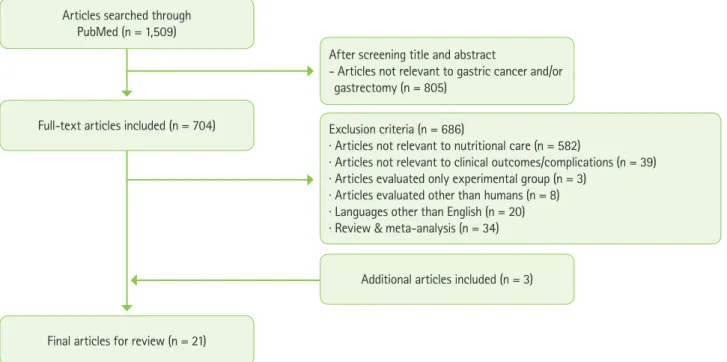
A literature search was conducted through PubMed for ar- ticles published between January 1st, 1995 and December 31st,
2015. The keywords were searched for the following terms:
‘(gastric OR gastric cancer) AND (gastrectomy OR gastric cancer surgery) AND (diet OR nutrition).’ A total of 1,509 studies were shown searching with the key words (Figure 1). After screening the title and abstract of articles, articles which contain other than gastric cancer and/or gastrectomy were excluded (n = 805). Of the full-text articles (n = 704), additional articles were excluded due to following reasons: 1) studies not relevant to gastric cancer patients with nutritional care (e.g., oral, enternal/
parental feeding, and nutritional intervention and screening tool) (n = 582), 2) results not relevant to clinical outcomes (e.g., hospital stay, morbidity, and mortality, etc.) and/or complica- tions (n = 39), 3) studies evaluated only experimental group (n = 3), 4) studies evaluated other than humans (n = 8), 5) languages other than English (n = 20), and 6) review and meta-analysis (n
= 34). Three articles were additionally included by following ref- erences of other articles. Through this selection of eligible stud- ies, final 21 studies were identified for this review. Considering geological regions, there were 17 studies identified from Asian countries (e.g., China, Japan, Korea, and Singapore) and 4 stud- ies from Europe (e.g., Spain, U.K., Poland, and Italy).
Results
In gastric cancer patients, the effectiveness of nutritional
Articles searched through PubMed (n = 1,509)
After screening title and abstract
- Articles not relevant to gastric cancer and/or gastrectomy (n = 805)
Exclusion criteria (n = 686)
· Articles not relevant to nutritional care (n = 582)
· Articles not relevant to clinical outcomes/complications (n = 39)
· Articles evaluated only experimental group (n = 3)
· Articles evaluated other than humans (n = 8)
· Languages other than English (n = 20)
· Review & meta-analysis (n = 34) Full-text articles included (n = 704)
Final articles for review (n = 21)
Additional articles included (n = 3)
Figure 1. Selection process for eligible studies.
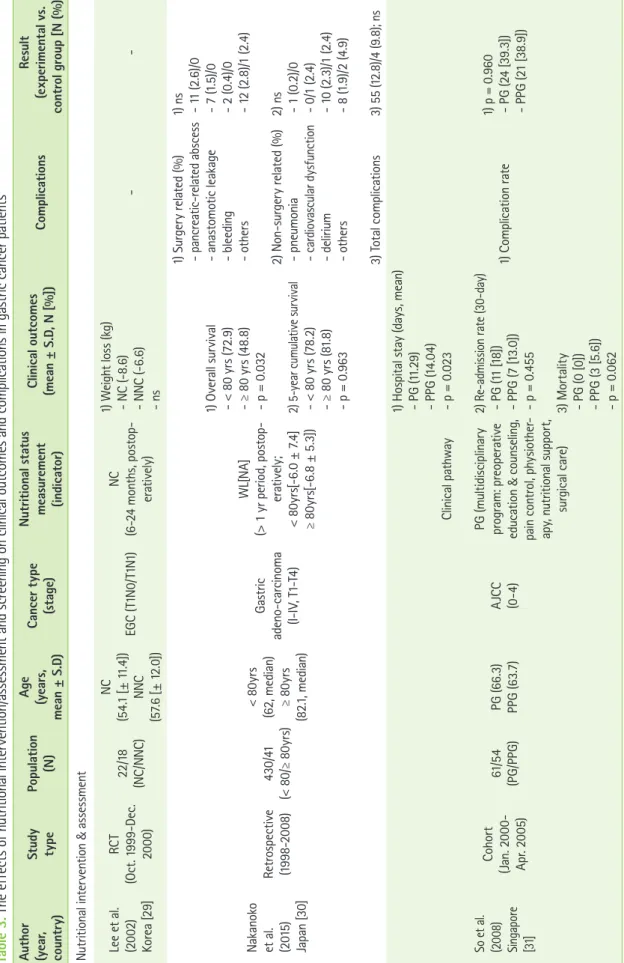
feeding (e.g., oral and enternal/parental feeding), interven- tion (e.g., nutritional counseling), and screening tools (e.g., nutritional risk index [NRI] and nutritional risk screening [NRS 2002]) were evaluated to find association with gastric cancer.
Each method of nutritional care was compared between ex- perimental and control groups in several types of studies to find differences in clinical outcomes and complications.
The effects of preoperative oral feeding
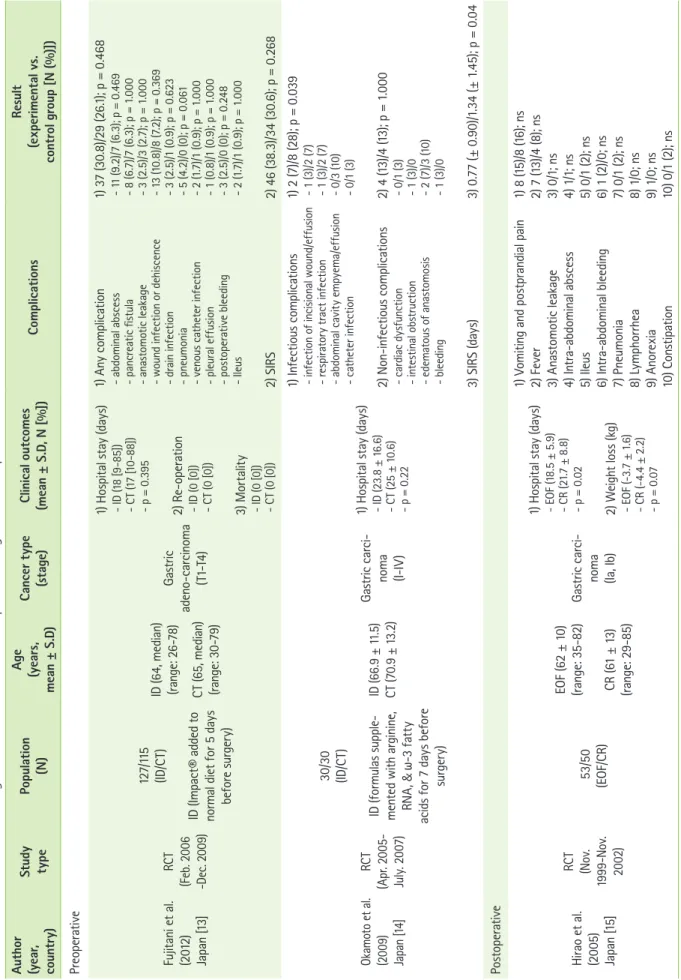
The effects of immunonutrition in patients before surgery were evaluated by comparing early postoperative days (POD) (Table 1). Well-nourished patients given with 1,000 mL/day of preoperative oral supplementation in the form of an immune- enriched enteral feed (Impact®, Ajinomoto Pharmaceutical Company, Tokyo, Japan) added to normal diet for 5 consecu- tive days before surgery showed no significant differences in postoperative outcomes compared to a group with regular diet [13]. In other study, patients given with preoperative oral immunonutrition (e.g., oral immune-enhanced formulas sup- plemented with arginine, ribonucleic acid [RNA] and omega-3 fatty acids) for 7 consecutive days before surgery had signifi- cantly shorter duration of systemic inflammatory response syndrome (SIRS) (0.77 [± 0.90]/1.34 [± 1.45] days as experi- mental vs. control group, p = 0.04), and fewer infectious com- plications (N = 2 [7%]/8 [28%], p = 0.039), such as infection of incisional wound and effusion (N = 1 [3%]/2 [7%]), respiratory tract infection (N = 1 [3%]/2 [7%]), abdominal cavity empyema and effusion (N = 0 [0%]/3 [10%]), and catheter infections (N
= 0 [0%]/1 [3%]) compared to a group with standard formulas [14].
The effects of postoperative oral feeding
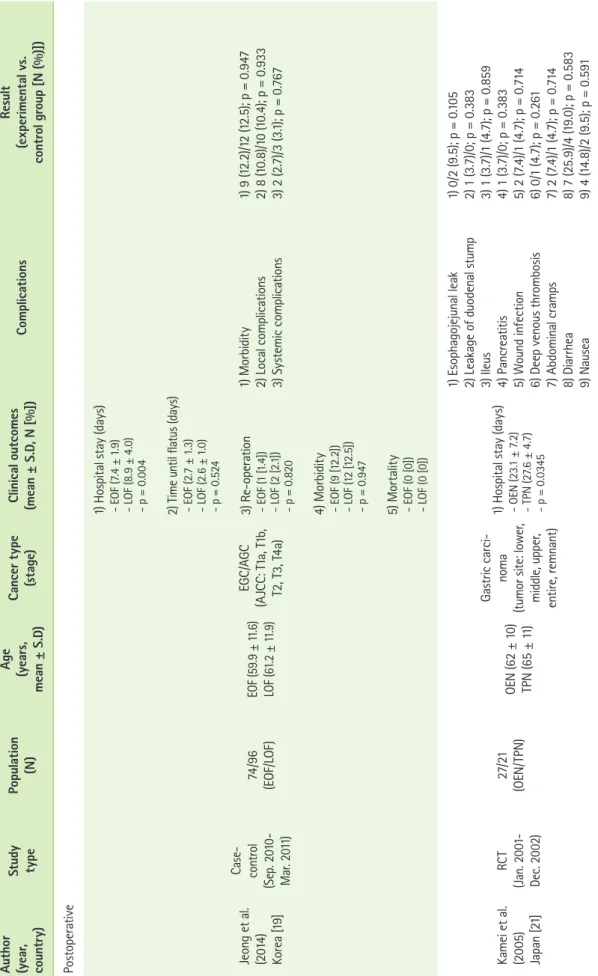
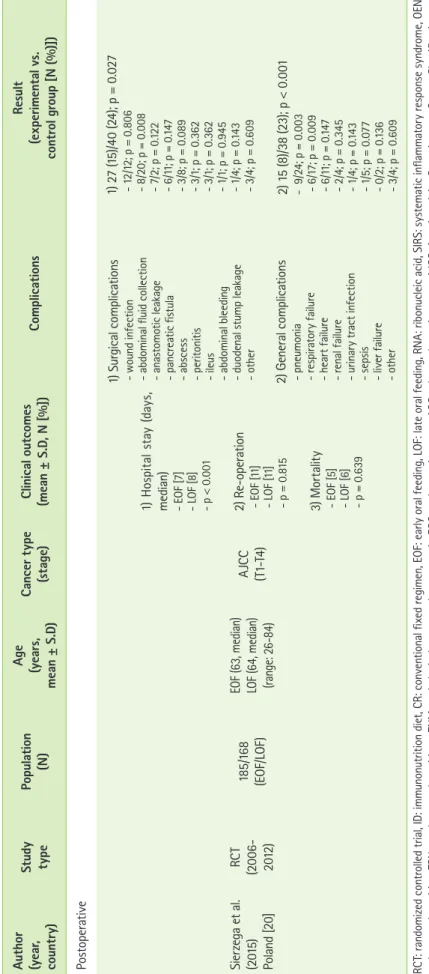
The effects of early and late oral feeding (EOF/LOF) in surgi- cal patients were compared on postoperative days (Table 1).
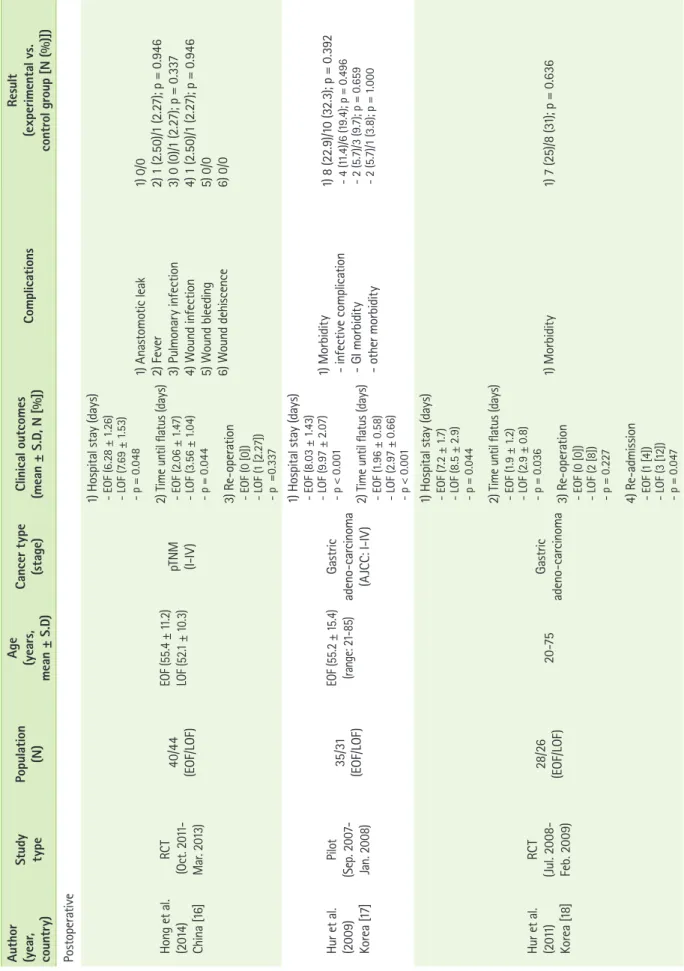
Patients with EOF had shorter duration of hospital stay (days) (18.5 [± 5.9]/21.7 [± 8.8], p = 0.02 [15]; 6.28 [± 1.26]/7.69 [±
1.53], p = 0.048 [16]; 8.03 [± 1.43]/9.97 [± 2.07], p < 0.001 [17];
7.2 [± 1.7]/8.5 [± 2.9], p < 0.044 [18]; 7.4 [± 1.9]/8.9 [± 4.0], p
= 0.004 [19]; 7/8, p < 0.001 [20]) and time until flatus (days) (2.06 [± 1.47]/3.56 [± 1.04], p = 0.044 [16]; 1.96 [± 0.58]/2.97 [±
0.66], p < 0.001 [17]; 1.9 [± 1.2]/2.9 [± 0.8], p = 0.036 [18]), less number of hospital re-admission rate (N = 1 [4%]/3 [12%], p = 0.047 [18]), and surgical complications (N = 27 [15%]/40 [24%], p = 0.027; abdominal fluid collection [N = 8/20, p = 0.008]) and general complications (N = 15 [8%]/38 [23%], p < 0.001; pneu-
monia [N = 9/24, p < 0.003] and respiratory failure [N = 6/17, p = 0.009]) [20] compared to a group with LOF. Oral enternal nutrition for surgical patients was also effective in reducing hospital stay (23.1 [± 7.2]/27.6 [± 4.7] days, p = 0.034) [21].
The effects of enternal and parental feeding
The effects of enternal and parental feeding were compared by assessing early postoperative outcomes (Table 2). Patients with early enternal nutrition (EEN) showed significantly shorter hospital stay (16.2 [± 3.6]/19.7 [± 4.5] days, p < 0.001) and time until flatus (2.2 [± 0.3]/3.7 [± 0.5] days, p < 0.001 [22]), whereas no significant differences were found between EEN and total parental nutrition (TPN) [23]. Compared to traditional perioperative treatment (TP) (e.g., nasoenteral feeding tube and postoperative intravenous infusion), hospital stay (7.73 [±
2.13]/9.77 [± 1.76] days, p = 0.002), time until flatus (78.8 [±
9.3]/85.3 [± 8.4] hours, p = 0.011), and duration of fever (80.2 [± 6.0]/88.1 [± 8.1] hours, p = 0.012) were also shorter in pa- tients with EEN [24].
The effects of enternal immune-enriched diet (ID) and con- trol formula were compared postoperatively (Table 2). Surgical patients given with ID (e.g., formula supplemented with argi- nine, omega-3 fatty acids and RNA) had significantly shorter hospital stay (13/15 days, p = 0.02) and fewer postoperative complications, such as suture failure (N = 0 [0%]/5 [16.6%], p = 0.03), and wound-healing (N = 0 [0%]/8 [26.7%], p = 0.005), infectious (N = 2 [6.7%]/9 [30%], p = 0.01) and global complications (N = 4 [13.3%]/13 [43.3%], p = 0.01) compared to a group given with isocaloric-isonitrogenous formula [25].
These findings were also similar to other study in hospital stay (e.g., shortened hospital stay (12.7 [± 2.3]/15.9 [± 3.4] days, p
= 0.029) and duration of SIRS (1.1 [± 0.89]/2.2 [± 1.02] days, p
= 0.036), and fewer infectious complications (N = 4 [7.4%]/11 [20%], p = 0.041), such as wound (N = 1 [1.8%]/3 [5.4%]), re- spiratory tract (N = 2 [3.7%]/5 [9%]), and urinary tract infec- tion (N = 1 [1.8%]/2 [3.6%]), sepsis (N = 0 [0%]/1 [1.8%]), and anastomotic leakage (N = 2 [3.7%]/4 [7.3%], p = 0.045) [26].
However, both nutritional intervention groups did not show significant differences in mortality.
The differences between PN and other feeding types were compared postoperatively (Table 2). Surgical patients given with PN showed significantly less weight loss (-3.8/-5.2 kg, p
= 0.008) [27] and fewer total complications (N = 1/6, p = 0.033) [28] compared to a group with intravenous fluids (IVF) and soybean oil.
Table 1. The effects of oral feeding on clinical outcomes and complications in gastric cancer patients Author (year, country)Study typePopulation (N)
Age (yeReltsu icClcomeut oalinseypr tceCan ionxpars, atics(eerplimental vs. Com S.]) [%(stage)(mean ± D, N [N l g(%)])uproan ±roco Sme).Dnt Preoperative t al. Fui eanjit (2012) Japan [13]
RCT (Feb. 2006 -Dec. 2009) 127/115 (ID/CT) ID (Impact® added to normal diet for 5 days before surgery)
ID (64, median) (range: 26-78) CT (65, median) (range: 30-79) Gastric adeno-carcinoma (T1-T4)
1) Hospital stay (days) - ID (18 [9-85]) - CT (17 [10-88]) - p = 0.395 2) Re-operation - ID (0 [0]) - CT (0 [0]) 3) Mortality - ID (0 [0]) - CT (0 [0]) 1) Any complication - abdominal abscess - pancreatic fistula - anastomotic leakage - wound infection or dehiscence - drain infection - pneumonia - venous catheter infection - pleural effusion - postoperative bleeding - Ileus 2) SIRS
1) 37 (30.8)/29 (26.1); p = 0.468 - 11 (9.2)/7 (6.3); p = 0.469 - 8 (6.7)/7 (6.3); p = 1.000 - 3 (2.5)/3 (2.7); p = 1.000 - 13 (10.8)/8 (7.2); p = 0.369 - 3 (2.5)/1 (0.9); p = 0.623 - 5 (4.2)/0 (0); p = 0.061 - 2 (1.7)/1 (0.9); p = 1.000 - 1 (0.8)/1 (0.9); p = 1.000 - 3 (2.5)/0 (0); p = 0.248 - 2 (1.7)/1 (0.9); p = 1.000 2) 46 (38.3)/34 (30.6); p = 0.268 Okamoto et al. (2009) Japan [14]
RCT (Apr. 2005- July. 2007) 30/30 (ID/CT) ID (formulas supple- mented with arginine, RNA, & ω-3 fatty acids for 7 days before surgery)
ID (66.9 ± 11.5) CT (70.9 ± 13.2) Gastric carci- noma (I-IV) 1) Hospital stay (days) - ID (23.8 ± 16.6) - CT (25 ± 10.6) - p = 0.22
1) Infectious complications - infection of incisional wound/effusion - respiratory tract infection - abdominal cavity empyema/effusion - catheter infection 2) Non-infectious complications - cardiac dysfunction - intestinal obstruction - edematous of anastomosis - bleeding 3) SIRS (days)
1) 2 (7)/8 (28); p = 0.039 - 1 (3)/2 (7) - 1 (3)/2 (7) - 0/3 (10) - 0/1 (3) 2) 4 (13)/4 (13); p = 1.000 - 0/1 (3) - 1 (3)/0 - 2 (7)/3 (10) - 1 (3)/0 3) 0.77 (± 0.90)/1.34 (± 1.45); p = 0.04 Postoperative Hirao et al. (2005) Japan [15]
RCT (Nov. 1999-Nov. 2002)
53/50 (EOF/CR) EOF (62 ± 10) (range: 35-82) CR (61 ± 13) (range: 29-85)
Gastric carci- noma (Ia, Ib) 1) Hospital stay (days) - EOF (18.5 ± 5.9) - CR (21.7 ± 8.8) - p = 0.02 2) Weight loss (kg) - EOF (-3.7 ± 1.6) - CR (-4.4 ± 2.2) - p = 0.07 1) Vomiting and postprandial pain 2) Fever 3) Anastomotic leakage 4) Intra-abdominal abscess 5) Ileus 6) Intra-abdominal bleeding 7) Pneumonia 8) Lymphorrhea 9) Anorexia 10) Constipation 1) 8 (15)/8 (16); ns 2) 7 (13)/4 (8); ns 3) 0/1; ns 4) 1/1; ns 5) 0/1 (2); ns 6) 1 (2)/0; ns 7) 0/1 (2); ns 8) 1/0; ns 9) 1/0; ns 10) 0/1 (2); ns
Table 1. Continued Author (year, country)Study typePopulation (N)
Age (yeReltsu icClcomeut oalinseypr tceCan ionxpars, atics(eerplimental vs. Com S.]) [%(stage)(mean ± D, N [N l g(%)])uproan ±roco Sme).Dnt ativeeropstPo Hong et al. (2014) China [16]
RCT (Oct. 2011- Mar. 2013) 40/44 (EOF/LOF) EOF (55.4 ± 11.2) LOF (52.1 ± 10.3)pTNM (I-IV)
1) Hospital stay (days) - EOF (6.28 ± 1.26) - LOF (7.69 ± 1.53) - p = 0.048 2) Time until flatus (days) - EOF (2.06 ± 1.47) - LOF (3.56 ± 1.04) - p = 0.044 3) Re-operation - EOF (0 [0]) - LOF (1 [2.27]) - p =0.337 1) Anastomotic leak 2) Fever 3) Pulmonary infection 4) Wound infection 5) Wound bleeding 6) Wound dehiscence
1) 0/0 2) 1 (2.50)/1 (2.27); p = 0.946 3) 0 (0)/1 (2.27); p = 0.337 4) 1 (2.50)/1 (2.27); p = 0.946 5) 0/0 6) 0/0 Hur et al. (2009) Korea [17]
Pilot (Sep. 2007- Jan. 2008) 35/31 (EOF/LOF) EOF (55.2 ± 15.4) (range: 21-85)Gastric adeno-carcinoma (AJCC: I-IV) 1) Hospital stay (days) - EOF (8.03 ± 1.43) - LOF (9.97 ± 2.07) - p < 0.001 2) Time until flatus (days) - EOF (1.96 ± 0.58) - LOF (2.97 ± 0.66) - p < 0.001
1) Morbidity - infective complication - GI morbidity - other morbidity
1) 8 (22.9)/10 (32.3); p = 0.392 - 4 (11.4)/6 (19.4); p = 0.496 - 2 (5.7)/3 (9.7); p = 0.659 - 2 (5.7)/1 (3.8); p = 1.000 Hur et al. (2011) Korea [18]
RCT (Jul. 2008- Feb. 2009) 28/26 (EOF/LOF)20-75Gastric adeno-carcinoma
1) Hospital stay (days) - EOF (7.2 ± 1.7) - LOF (8.5 ± 2.9) - p = 0.044 2) Time until flatus (days) - EOF (1.9 ± 1.2) - LOF (2.9 ± 0.8) - p = 0.036 3) Re-operation - EOF (0 [0]) - LOF (2 [8]) - p = 0.227 4) Re-admission - EOF (1 [4]) - LOF (3 [12]) - p = 0.047
1) Morbidity1) 7 (25)/8 (31); p = 0.636
Table 1. Continued Author (year, country)Study typePopulation (N)
Age (yeReltsu icClcomeut oalinseypr tceCan ionxpars, atics(eerplimental vs. Com S.]) [%(stage)(mean ± D, N [N l g(%)])uproan ±roco Sme).Dnt ativeeropstPo Jeong et al. (2014) Korea [19]
Case- control (Sep. 2010- Mar. 2011) 74/96 (EOF/LOF)EOF (59.9 ± 11.6) LOF (61.2 ± 11.9) EGC/AGC (AJCC: T1a, T1b, T2, T3, T4a)
1) Hospital stay (days) - EOF (7.4 ± 1.9) - LOF (8.9 ± 4.0) - p = 0.004 2) Time until flatus (days) - EOF (2.7 ± 1.3) - LOF (2.6 ± 1.0) - p = 0.524 3) Re-operation - EOF (1 [1.4]) - LOF (2 [2.1]) - p = 0.820 4) Morbidity - EOF (9 [12.2]) - LOF (12 [12.5]) - p = 0.947 5) Mortality - EOF (0 [0]) - LOF (0 [0]) 1) Morbidity 2) Local complications 3) Systemic complications
1) 9 (12.2)/12 (12.5); p = 0.947 2) 8 (10.8)/10 (10.4); p = 0.933 3) 2 (2.7)/3 (3.1); p = 0.767 Kamei et al. (2005) Japan [21]
RCT (Jan. 2001- Dec. 2002) 27/21 (OEN/TPN)OEN (62 ± 10) TPN (65 ± 11) Gastric carci- noma (tumor site: lower, middle, upper, entire, remnant)1) Hospital stay (days) - OEN (23.1 ± 7.2) - TPN (27.6 ± 4.7) - p = 0.0345 1) Esophagojejunal leak 2) Leakage of duodenal stump 3) Ileus 4) Pancreatitis 5) Wound infection 6) Deep venous thrombosis 7) Abdominal cramps 8) Diarrhea 9) Nausea 1) 0/2 (9.5); p = 0.105 2) 1 (3.7)/0; p = 0.383 3) 1 (3.7)/1 (4.7); p = 0.859 4) 1 (3.7)/0; p = 0.383 5) 2 (7.4)/1 (4.7); p = 0.714 6) 0/1 (4.7); p = 0.261 7) 2 (7.4)/1 (4.7); p = 0.714 8) 7 (25.9)/4 (19.0); p = 0.583 9) 4 (14.8)/2 (9.5); p = 0.591
Table 1. Continued Author (year, country)Study typePopulation (N)
Age (yeResult icClcomeut oalinseypr tceCan ion(es, araticsxperplimental vs. Com S.])(s ND,± an [%(mege)ta up) [N )]l g(%roan ±roco Sme).Dnt ateivsteropPo el. t aSigazeer (2015) Poland [20]
RCT (2006- 2012)
185/168 (EOF/LOF) EOF (63, median) LOF (64, median) (range: 26-84)
AJCC (T1-T4)
1) Hospital stay (days, median) - EOF [7] - LOF [8] - p < 0.001 2) Re-operation - EOF [11] - LOF [11] - p = 0.815 3) Mortality - EOF [5] - LOF [6] - p = 0.639 1) Surgical complications - wound infection - abdominal fluid collection - anastomotic leakage - pancreatic fistula - abscess - peritonitis - ileus - abdominal bleeding - duodenal stump leakage - other 2) General complications - pneumonia - respiratory failure - heart failure - renal failure - urinary tract infection - sepsis - liver failure - other
1) 27 (15)/40 (24); p = 0.027 - 12/12; p = 0.806 - 8/20; p = 0.008 - 7/2; p = 0.122 - 6/11; p = 0.147 - 3/8; p = 0.089 - 3/1; p = 0.362 - 3/1; p = 0.362 - 1/1; p = 0.945 - 1/4; p = 0.143 - 3/4; p = 0.609 2) 15 (8)/38 (23); p < 0.001 - 9/24; p = 0.003 - 6/17; p = 0.009 - 6/11; p = 0.147 - 2/4; p = 0.345 - 1/4; p = 0.143 - 1/5; p = 0.077 - 0/2; p = 0.136 - 3/4; p = 0.609 RCT: randomized controlled trial, ID: immunonutrition diet, CR: conventional fixed regimen, EOF: early oral feeding, LOF: late oral feeding, RNA: ribonucleic acid, SIRS: systematic inflammatory response syndrome, OEN: oral enternal nutrition, TPN: total parental nutrition, pTNM: pathological tumor-node-metastasis, EGC: early gastric cancer, AGC: advanced gastric cancer, AJCC: American Joint Committee on Cancer Classification, ns: not significant, CT: control group, GI: Gastrointestinal.
![Table 2. The effects of enternal and parental feeding on clinical outcomes and complications in gastric cancer patients Author (year, country)StudytypePopulation(N)Age(years, mean ± S.D)Cancer type(stage)Clinical outcomes(mean ± S.D, N [%])ComplicationsRe](https://thumb-ap.123doks.com/thumbv2/123dokinfo/5216704.122283/8.892.100.774.132.1101/enternal-parental-clinical-outcomes-complications-studytypepopulation-clinical-complicationsre.webp)
![Table 2. Continued Author (year, country)StudytypePopulation(N)Age(years, mean ± S.D)Cancer type(stage)Clinical outcomes(mean ± S.D, N [%])ComplicationsResult(experimental vs](https://thumb-ap.123doks.com/thumbv2/123dokinfo/5216704.122283/9.892.104.624.122.1101/continued-author-studytypepopulation-cancer-clinical-outcomes-complicationsresult-experimental.webp)