유채( Brassica napus)화분에 대한 감마선 조사가 미생물 제어 및 화분의 품질특성에 미치는 영향
김경희1․김광훈1,2․정수지1․김 담1․육홍선1†
1충남대학교 식품영양학과
2그린피아기술주식회사
Effects of Gamma Irradiation on Quality Characteristic and Microbiological Safety of Rape (Brassica napus) Pollen
Kyoung-Hee Kim1, Kwang-Hun Kim1,2, Su-ji Jeong1, Dam Kim1, and Hong-Sun Yook1†
1Dept. of Food and Nutrition, Chungnam National University, Daejeon 305-764, Korea
2Greenpia Technology, Gyeonggi 469-810, Korea
ABSTRACT This study is carried out to sanitize rape (Brassica napus) pollen by gamma irradiation. Rape pollens were treated with 0, 5, 10 and 15 kGy gamma irradiations, and then analyzed for the following: general composition, microbial population, reducing sugar, Hunter color values, TBARS (2-thiobarbituric acid reactive substances) values, and VBN (volatile basic nitrogen). Mold and coliform bacteria were not detected in the samples irradiated at 5 kGy or more. Yeasts and total aerobic bacteria were not detected in the samples irradiated at 10 kGy or more (<102 CFU/g).
Moisture, ash, crude protein, crude fat, carbohydrate, reducing sugar and the contents of volatile basic nitrogen in the irradiated pollen did not show any significant changes by irradiation. Hunter color values, L*, a* and b* values were decreased with increment of irradiation dose. TBARS values were increased with an increment of irradiation dose. In conclusion, gamma irradiation at 5 kGy was considered to be an effective treatment to control for mycotoxin producing fungi in rape pollen to minimize changes of general composition and physicochemical properties. Further studies should be investigated to reduce the detrimental effects induced by irradiation.
Key words: gamma irradiation, physicochemical change, microbiological safety, rape (Brassica napus) pollen
Received 12 July 2013; Accepted 29 August 2013
†Corresponding author.
E-mail: [email protected], Phone: 82-42-821-6840
서 론
화분(pollen)은 영양, 생리적 기능이 뛰어나며 화분하는 꿀벌이 화밀을 수집하면서 모아온 화분입자에 화밀과 꿀벌 의 타액 등이 혼합된 꽃가루 덩어리로서 꿀벌의 먹이로 저장, 이용된다. 화분은 단백질, 유리당, 무기질, 지방산, 아미노 산, 비타민 등의 영양성분을 함유하고 있으며, 이들 성분 조 성은 밀원식물의 종류, 생육환경, 혼합 정도 등에 따라서 함 유량이 달라진다고 알려져 있다(1). 이러한 화분은 오래전부 터 영양공급을 위한 식품이나 의약품으로 사용되어 왔으며 (2-4) 현재 미국에서는 꿀벌화분이 dietary supplement (5), 독일에서는 의약품으로 공식 인정되었으며(6), 국내에 서도 건강기능식품으로 판매되고 있다. 화분의 생리적 기능 으로는 항산화(7-9), 면역증가(10), 간 손상 방어(9,11), 무 기질 이용성 증진(12) 및 장내 소화 작용을 돕는(13,14) 등 다양한 효능들이 있으며 이러한 생리적 기능과 풍부한 영양
성분은 화분에 대한 소비를 증가시킬 것이다(15).
국내에 유통되는 화분은 가공식품으로서 건강식품 원료 와 양봉산업에서 벌먹이 사료로 대별될 수 있는데, 국내 생 산량이 낮아 매년 중국이나 뉴질랜드 등에서 거의 전량이 수입되어 수요를 대체하는 것으로 집계되고 있다. 일반적으 로 자연에서 채집되는 화분들은 주로 대장균(Escherichia coli)과 같은 병원성 세균이나 Aspergillus 속 등과 같은 해 로운 독소를 생산하는 진균성 병원균에 상시적으로 노출되 어 위생적 품질이 낮은 경우가 많이 있다. 화분의 품질은 화분이 유래된 꽃의 품종 및 보존 상태에 따라 달라진다.
화분이 유래된 꽃의 품종에 따라 항산화 효능을 비롯한 여러 생리활성 성분에 차이가 생기며, 꿀벌통에서 수집되어진 화 분은 위생화된 후 건조하여 포장을 하는 단계를 거치게 되는 데 화분의 보존 상태는 이러한 단계가 어떻게 조절되는가에 따라 차이를 나타나게 된다. González 등(15)은 90여개의 상품화된 벌화분을 대상으로 분석한 결과 80% 이상의 시료 에서 Aspergillus속이 발견되었으며 Penicillium은 90% 이 상의 시료에서 발견되었다고 보고하였고 이러한 곰팡이들 은 열에 안정한 aflatoxin과 ochratoxin과 같은 mycotoxin 을 생성하여 가열에 의한 건조공정에서도 제거되지 않고 제
품에 존재하게 될 가능성이 있으며, 양봉농가의 입장에서 벌의 유충들의 사멸을 가져오는 석고병(stonebrood)의 원 인균인 Ascosphaera apis와 같은 질병균이 벌 먹이 화분에 오염되면 한 지역 전체의 양봉농가에 막대한 피해를 유발시 킬 수 있다고 한다. 특히 질병 감염은 해외에서 수입되는 외래 화분에 오염된 진균류에 더욱 깊은 관계가 있다고 보고 되어 있다(16,17). 현재 방제 대책으로 진균성 원인균들을 항생제나 화학약품으로 살균하는 방법이 있는데 차아염소 산, trichloroisocyanuric acid(TCA), 프로피온닉산(pro- pionic acid), 이산화염소, 에틸렌옥사이드(EtO gas) 등 살 진균제 화학약품을 이용해 봉구 주변의 소독이나 급이를 통 해 투여하는 방법들이 주로 이용되고 있다(18).
감마선 조사기술은 1950년대부터 구미 선진국을 중심으 로 식품은 물론 각종 보건 의료용품의 살균에 널리 사용되어 왔으며 물질투과에 의해 살균이 이루어지고 잔류되는 성질 이 전혀 없는 살균법이다. 우리나라에서는 지난 1987년 국 제연합(UN)의 첨단기술 기술이전 계획에 따라 국내 최초로 설립된 그린피아기술 주식회사(경기도 여주군 소재)에서 상 업적인 감마선 조사기술이 행하여지고 있다. 지금까지 화분 에 대한 감마선 조사 기술의 적용에 관한 연구들을 살펴보면 화분의 오염미생물 제거와 지방산 조성에 미치는 영향에 관 한 보고(19,20)와 꿀 화분에 오염된 곰팡이들의 방사선 감 수성에 관한 연구(21) 등이 보고되어 있고 그밖에 일부 꿀벌 의 방제에 대한 감마선 조사 기술의 적용에 관한 살균효과와 그에 따른 주요 영양 성분의 연구에 관해서 매우 부분적으로 규명되어 있으나(22), 국내로 수입되는 유채 화분에 대한 식품조사기술의 적용에 관한 전반적인 연구들은 아직 많이 수행되지 않은 형편이다. 따라서 수입 화분들의 미생물 제어 를 위한 효과적인 기술로 식품조사기술의 적용 검토는 다양 한 측면에서 연구되어야 하며 본 연구에서는 유채 화분에 감마선 조사를 실시한 후 일반성분 및 이화학적 성분 변화, 미생물 변화를 살펴보고 효과적으로 미생물을 제어할 수 있 으면서 화분의 품질에는 영향을 미치지 않는 감마선 적정 선량을 확인하고자 하였다.
재료 및 방법
실험 재료
본 실험에 사용된 시료는 국내 J사를 통해 중국에서 수입 된 유채화분을 살균하기 전에 구입하였다. 시료는 직경 약 2~2.5 mm의 부정형 상태의 과립형으로 짙은 황색을 띄고 있다. 각 실험에 사용하기 위해 멸균된 PE 비닐 포장에 약 500 g씩 공기가 함유되어 있는 상태로 담아 각 실험에 필요 한 적정량을 나누어 사용하였다. 보관 조건은 일반 화분의 유통조건과 동일한 마닐라 박스 포장에 나누어 담은 시료를 상온조건에 보관하였다.
감마선 조사
감마선 조사는 그린피아기술 주식회사 방사선 조사시설 에 설치된 코발트-60 조사기(IR-149 irradiator, Co-60 panel source)를 이용하여 실온(15±1°C)에서 시간당 0.98 kGy의 흡수 선량율로 조사하였다. 각 시료의 흡수선량은 0, 5, 10, 15 kGy로 각 구간별 목표선량 값±5% 이내로 감마 선 조사하였고 각 시료의 흡수선량을 보증하기 위한 선량측 정계로 PMMA dosimeter(Harwell, UK)를 사용하였다.
미생물 분석
시료 10 g에 0.1% peptone수 90 mL를 첨가하여 Bag mixerⓇ(Model 400, Interscience, St. Nom, France)를 사 용하여 120초 동안 혼합한 후 1/10씩 단계별로 희석한 희석 액을 각각의 배지에 도말하였다. 미생물의 증식은 표준한천 배양방법으로 37°C에서 세균은 48시간, 효모 및 곰팡이는 72시간 배양한 후 계수하였다. 사용한 배지는 일반 호기성 미생물의 경우 total plate count agar(Difco Laboratories, Sparks, MD, USA)를 사용하였으며, 효모 및 곰팡이 검출을 위한 배지는 멸균된 10% tartaric acid를 멸균된 potato dextrose agar(Difco Laboratories)에 첨가하여 pH 3.6이 되도록 조절한 후 실험에 사용하였다. 대장균군의 경우 eo- sin methylene blue agar(Difco Laboratories)를 사용하였 다.
일반성분 분석
화분의 일반성분분석은 AOAC법(23)에 의해 정량하였 다. 수분함량의 경우 105°C 상압가열건조법, 회분은 550°C 에서 직접 회화법으로, 조지방 함량은 Soxhlet 추출법으로 측정하였다. 조단백질 함량은 semi-micro Kjeldahl법으로 측정하였으며, 질소 환산계수는 6.25를 사용하였다. 탄수화 물의 함량은 100에서 수분, 회분, 조지방 및 조단백질 함량 을 뺀 값으로 나타내었다.
환원당 함량 측정
화분의 환원당 함량은 DNS법으로 측정하였다. 화분추출 물 1 mL에 DNS solution 2 mL를 가한 후 끓는 물에 10분간 반응시킨 다음 냉각하였다. 반응용액의 흡광도(UV 1600 PC, Shimadzu, Tokyo, Japan)를 550 nm에서 측정하였다.
측정된 흡광도를 표준곡선에 따라 환원당 함량을 %로 나타 내었다.
TBARS 측정
화분의 TBARS(2-thiobarbituric acid reactive sub- stances)값은 Jo와 Ahn(24)의 방법을 참고하여 측정하였 다. 시료 3 g을 7.2% BHA 50 μL 증류수 9 mL를 사용하여 균질시키고, 균질액 2 mL를 취하여 2-thiobarbituric acid (TBA)/ trichloroacetic acid(TCA) 용액(20 mM TBA in 15% TCA) 4 mL를 혼합하였다. 그리고 반응용액을 90°C의
Table 1. Microbial population of the pollen treated by gamma irradiation
Treatments Viable cell counts (log CFU/g)
Total aerobic bacteria Yeast Mold Coliform
Control 5 kGy 10 kGy 15 kGy
4.90±0.01 2.15±0.21 ND1)
ND
3.75±0.032) 2.38±0.12
ND ND
2.15±0.21 ND ND ND
3.37±0.03 ND ND ND
1)Viable colony was not detected at detection limit <102 CFU/g.
2)Mean±standard deviation (n=4).
Table 2. General composition of pollen treated by gamma irradiation (%)
Composition Treatments
Control 5 kGy 10 kGy 15 kGy
Moisture Ash
Crude protein Crude fat Carbohydrate1)
14.61±0.16a2) 2.70±0.06a 25.01±0.36b 11.01±1.10a 46.64±0.03c
14.35±0.06a 2.68±0.02a 25.50±0.08a 10.91±0.85a 46.56±0.05d
14.45±0.24a 2.64±0.02a 25.69±0.19a 9.89±0.43a 47.31±0.03a
14.46±0.17a 2.67±0.06a 25.39±0.26ab 10.73±0.88a 46.72±0.03b
1)Carbohydrate content was calculated subtracting moisture, ash, crude fat and crude protein contents from total weight (100).
2)Mean±standard deviation (n=3).
a-dMeans with the different letters in each sample are significantly different (P<0.05).
수조에서 15분간 가열한 후 얼음물에서 10분간 냉각하였 다. 반응용액을 2,000×g에서 15분간 원심분리(VS-5500, Vision scientific Co. Ltd., Seoul, Korea)한 후 그 상등액 의 흡광도(UV 1600 PC, Shimadzu)를 532 nm에서 측정하 였다. 측정된 흡광도를 기준으로 표준곡선에 따라 TBARS 값을 mg malondialdehyde/kg sample로 계산하였다.
휘발성 염기태질소(volatile basic nitrogen, VBN) 휘발성 염기태 질소함량은 Conway unit 미량확산법으로 분석하였다. 시료 10 g을 취한 후 10% TCA 30 mL를 가하 여 균질기를 이용하여 2분간 마쇄하고 50 mL로 정용한 후 여과하였다. 여액 1 mL를 conway 수기 외실에 넣고 내실에 0.01 N H3BO3 1 mL를 넣은 후 50% K2CO3 1 mL를 빠르게 외실에 주입하고 밀폐한 다음 조심스럽게 흔들어 혼합한 후 37°C에서 120분간 정치하였다. 정치가 끝난 수기는 0.02 N H2SO4 용액으로 적정하여 VBN가를 측정하였다.
통계 분석
모든 실험은 3회 반복 실시하였으며 얻어진 결과들은 SPSS(Statistical Package for Social Sciences, 10.0, IBM, Armonk, NY, USA) 를 이용하여 one way ANOVA 분석 후, 시료간의 유의성은 Duncan's multiple range test 로 P<0.05 수준에서 비교하였다.
결과 및 고찰
미생물 변화
감마선 조사에 의한 화분의 미생물 분석 결과는 Table 1 에 나타내었다. 총 호기성 세균은 비조사구의 경우 4.90 log
CFU/g 수준으로 검출되었으나 조사구의 경우 5 kGy 조사 로 2.15 log CFU/g 수준으로 감소하였고 10 kGy 이상의 조사로 검출되지 않았다. 효모의 경우 비조사구의 3.75 log CFU/g에 비해 5 kGy 조사 시 2.38 log CFU/g으로 감소하 였고 역시 10 kGy 이상 조사 시 미생물이 검출되지 않았으 며, 곰팡이 및 대장균은 비조사구에서 각각 2.15 및 3.37 log CFU/g으로 나타났으나 5 kGy 이상의 조사 시 검출되지 않았다. 이는 Yook 등(19)의 연구에서 화분의 감마선 조사 시 5 kGy의 조사로 곰팡이 및 대장균은 검출되지 않았고 총 호기성 세균 및 효모의 경우 각각 2.81 및 2.58 log CFU/g 수준으로 검출되었다는 결과와 비슷하며, 따라서 10 kGy 이상의 감마선 조사는 화분의 미생물학적 안정성을 확 보할 수 있을 것으로 사료된다.
일반성분 및 환원당 함량 변화
감마선 조사된 화분의 수분함량, 회분, 조단백, 조지방, 탄수화물 함량 등 일반성분을 분석한 결과는 Table 2와 같 다. 본 실험에 사용된 유채 화분의 경우 비조사구에서 수분 14.61±0.16%, 단백질 25.01±0.36%, 지질 11.01±1.10%, 회분 2.70±0.06%를 나타내었으며 이는 브라질에서 수집된 10여 종의 건조된 벌화분의 성분을 조사한 결과 평균적으로 수분은 7.4%, 단백질 20%, 지질 6%, 회분 2.2%의 결과를 얻었다고 보고한 Almeida-Muradian 등(25)의 연구와 약간 의 차이를 나타내었으며 이는 화분이 유래된 꽃의 품종에 따라 차이 때문으로 여겨진다. 조사선량의 증가에 따른 영향 에서 전반적인 일반 성분의 함량에 비조사구와 조사구의 측 정값에서 유의적인 차이가 관찰되지 않았다. 환원당 함량 측정 결과는 Table 3에 나타내었는데 탄수화물 함량의 경우 와 마찬가지로 비조사구에 비해 조사구에서 조사선량에 따
Table 3. Reducing sugar contents of pollen treated by gamma irradiation
Treatments Reducing sugar contents (%) Control
5 kGy 10 kGy 15 kGy
0.42±0.00NS1) 0.41±0.00 0.41±0.00 0.42±0.00
1)Mean±standard deviation (n=3).
NSNot significant.
Table 4. Changes in Hunter's color of pollen treated by gamma irradiation
Treatments Hunter's color values1)
L a b
Control 5 kGy 10 kGy 15 kGy
72.23±0.07a2) 72.21±0.09a 72.09±0.08b 72.00±0.15b
-3.17±0.06a -3.21±0.02ab -3.20±0.03ab -3.24±0.06b
56.90±0.07a 56.75±0.09b 56.68±0.10b 56.13±0.16c
1)L: degree of lightness, a: degree of redness, b: degree of yellowness.
2)Mean±standard deviation (n=16).
a-cValues with different letters within a column differ signifi- cantly (P<0.05).
Table 5. Changes in 2-thiobarbituric acid reactive substance (TBARS; mg malondialdehyde/kg sample) value and contents of volatile basic nitrogen of pollen treated by gamma irradiation
Treatments TBA (μg malondialdehyde/kg) Control
5 kGy 10 kGy 15 kGy
2.39±0.24NS1) 2.47±0.12 2.53±0.06 2.57±0.13
1)Mean±standard deviation (n=3).
NSNot significant.
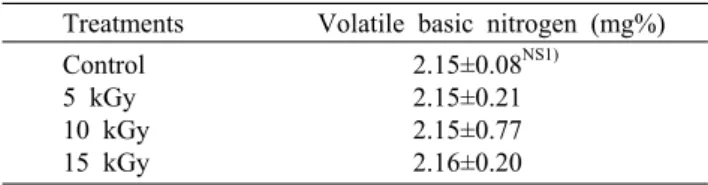
Table 6. Contents of volatile basic nitrogen of pollen treated by gamma irradiation
Treatments Volatile basic nitrogen (mg%) Control
5 kGy 10 kGy 15 kGy
2.15±0.08NS1) 2.15±0.21 2.15±0.77 2.16±0.20
1)Mean±standard deviation (n=3).
NSNot significant.
른 측정값에 유의적인 변화가 관찰되지 않았다.
색도 변화
화분의 색은 화분에서 유래된 꽃의 품종에 황, 적, 흑 및 청색 등이 있으며 본 실험에 사용된 유채화분은 약간의 회색 이 섞인 짙은 황색을 가지고 있으며 과립형태의 화분을 곱게 갈아 10회 반복 측정하여 Table 4에 나타내었다. 명도의 경우 비조사구에 비해 조사선량이 증가될수록 감소하는 경 향을 나타내었다. 황색도와 적색도 역시 조사구에서 비조사 구에 비해 다소 감소하였다. 이와 같은 결과는 민들레나 녹 차 추출물의 경우 적색도 및 황색도에서 색소 성분의 파괴가 일어나 감소한다는 보고와 일치하는 결과이지만 선량증가 에 따라 유의적인 변화는 나타나지 않았다(26,27). 반면 감 마선 조사된 식용색소에서 적색도와 황색도가 증가되었다 는 Kim 등(28)의 연구 결과와 차이가 있는 것으로 나타났다.
일반적으로 농산물들은 감마선 조사에 의해 조사선량과 시 료의 주요 성분에 따라 색도에 미치는 영향이 다르기 때문에 다른 결과를 나타내며, 유채화분의 경우 조사선량 증가에 따라 L, a, b 값이 감소하는 경향을 나타내었으나 선량의존 도가 높지 않고 회색이 섞인 짙은 황색을 띠고 있어 실험에 사용한 선량범위 내에서는 식품조사기술을 적용하여 위생 안전성 확보가 용이할 것으로 사료된다.
TBA가 변화
감마선 조사된 화분의 지방산패도 변화를 Table 5에 나 타내었다. 비조사구에 비해 조사구의 TBARS값이 조사선량 이 증가함에 따라 증가하는 경향을 나타내었으나 유의차는 보이지 않았다. 일반적으로 식품의 감마선 조사는 지질의
자동산화와 이취 발생을 증가시키며 free radical 농도는 조사선량에 비례하여 증가한다(29,30). 화분에서도 감마선 조사의 영향으로 지방질 성분의 산화가 촉진되어 선량의 증 가에 따라 다소 증가하는 경향을 나타내었으나 유의적인 차 이는 보이지 않아 15 kGy까지의 감마선 조사는 지질 산패도 측면에서 화분의 품질에 큰 영향을 나타내지 않을 것으로 사료된다.
휘발성 염기태 질소(volatile basic nitrogen, VBN) 단백질 함량이 높은 화분의 감마선 조사에 의한 신선도 변 화를 확인하기 위해 감마선 조사된 화분의 휘발성 염기태 질소 변화를 Table 6에 나타내었다. 휘발성 염기태질소의 함량은 비조사구의 2.15±0.08 mg%에 대해 조사구의 함량 변화가 거의 없는 것으로 나타나 감마선 조사에 의해 영향을 받지 않는 것으로 확인되었다. 이는 기존의 감마선 조사된 오징어 젓갈 및 양념 창란 젓갈의 실험에서 감마선 조사에 의해 휘발성 염기태 질소의 함량은 영향을 받지 않는 것으로 보고된 것(31,32)과 일치하는 결과이다.
요 약
유채화분에 대한 일반성분 및 이화학적 변화를 최소화 시키 면서 효과적으로 미생물을 제어할 수 있는 감마선 조사의 적정 선량을 확인하고자 유채화분에 0 kGy, 5 kGy, 10 kGy, 15 kGy로 감마선 조사를 실시하였다. 품질 특성 및 미생물 실험결과 조사선량에 따른 차이는 나타내었지만 전 체적인 유채화분의 일반성분에 큰 차이는 없었으며 미생물 의 경우 곰팡이 및 대장균군은 5 kGy 조사로 총균 및 효모는 10 kGy 조사로 검출되지 않았다(<102 CFU/g). 환원당 함 량은 조사선량 증가에 따른 유의차를 보이지 않았다. 명도,
적색도, 황색도는 조사선량이 증가할수록 감소하는 경향을 나타내었으며 지질산화는 조사선량이 증가할수록 증가하는 경향을 나타낸 반면 휘발성 염기태 질소의 함량은 감마선 조사에 의해 영향을 받지 않았다. 따라서 감마선 조사에 대 한 일반성분 및 이화학적 변화를 최소화하면서 화분에서 독 소를 생성하는 곰팡이를 효과적으로 제어할 수 있는 감마선 조사선량은 5 kGy인 것으로 사료된다.
REFERENCES
1. Choi SJ, Jeong YH. 2004. Effect of protease on the ex- traction of crude protein and reducing sugar in pollen. J Korean Soc Food Sci Nutr 33: 1353-1358.
2. Lynghein L, Scagnetti J. 1979. Bee pollen-nature's miracle health food. Wilshire Book Co., Hollywood, CA, USA. p 1-90.
3. Abreu M. 1992. Food use of pollen in relation to human nutrition. Alimentaria 235: 45-46.
4. Block G, Sinha R, Gridley G. 1994. Collection of dietary- supplement data and implication for analysis. Am J Clin Nutr 59(Suppl 1): S234-S239.
5. Kroyer G, Hegedus N. 2001. Evaluation of bioactive proper- ties of pollen extracts as functional dietary food supplement.
Innov Food Sci Emerging Technol 2: 171-174.
6. Linskens HF, Jorde W. 1997. Pollen as food and medicine-
A review. Econ Bot 51: 78-86.
7. Dudov IA, Starodub NF. 1994. Antioxidant system of rat erythrocytes under condition of prolonged intake of honey- bee flower pollen load. Ukr Biochem Zn 66: 94-96.
8. Uzbekova DG, Makarova VG, Khvoynitskaya LG, Slepnev AA. 2003. Evaluation of bee-collected pollen influence on lipid peroxidation, antioxidant system and liver function in old animals. J Hepatol 38(suppl 2): 203.
9. Lee YJ, Park MH, Bae MJ, Han JP. 1994. Effect of pine pollen on serum and liver lipids in rats in a fed high fat diet. J Korean Soc Food Sci Nutr 23: 192-197.
10. Dudov IA, Morenets AA, Artiukh VP, Starodub NF. 1994.
Immunomodulatory effect of honeybee flower pollen load.
Ukr Biochem Zh 66: 91-93.
11. Yeo JY, Lee YJ, Han JP. 1996. Effect of pine pollen proteins on rat liver injury induced CCl4. J Korean Soc Food Nutr 25: 34-38.
12. Haro A, López-Aliaga I, Lisbona F, Barrionuevo M, Alférez MJ, Campos MS. 2000. Beneficial effect of pollen and/or propolis on the metabolism of iron, calcium, phosphorus, and magnesium in rats with nutritional ferropenic anemia.
J Agric Food Chem 48: 5715-5722.
13. Zhao L, Windisch W, Kirchgessner M. 1996. A study on the nutritive value of pollen from the Chinese masson pine (Pinus massonina) and its effect on fecal characteristics in rats. Z Ernahrungswiss 35: 341-347.
14. Orzaez Villanueva MT, De Frutos Prieto A, Téllez González M, Blázquez Abellan. 2002. Consumption habits of apiary products in an elder collective. Arch in Nutr 52: 362-367.
15. González G, Hinojo MJ, Mateo R, Medina A, Jiménez M.
2005. Occurrence of mycotoxin producing fungi in bee
pollen. Int J Food Microbiol 105: 1-9.
16. Mehr Z, Menapace DM, Wilson WT, Sackett RR. 1976.
Studies on the initiation and spread of chalkbrood within an apiary. Am Bee J 116: 266-268.
17. Moffett JO, Wilson WT, Stoner A, Wardecker A. 1978.
Feeding commercially purchased pollen containing mum- mies caused chalkbrood. Am Bee J 118: 412-414.
18. Lee ML Nam SH, Kim YS, Lee MY, Chang SJ. 2003. Status on the infection and control measures of honeybee chalk- brood in Korea. Korean J Apiculture 18: 127-130.
19. Yook HS, Lim SI, Byun MW. 1998. Changes in micro- biological and physicochemical properties of bee pollen by application of gamma irradiation and ozone treatment. J Food Prot 61: 217-220.
20. Yook HS, Chung YJ, Kim JO, Kwon OJ, Kim S, Byun MW.
1997. Effects of ionizing energy and ozone treatments on the microbial decontamination and physicochemical proper- ties of aloe powders and bee pollen. J Food Sci Nutr 2:
89-95.
21. Lee JW, Kim YB, Choi EH. 1986. Radiosensitivity of molds isolated from honey pollen. J Korean Agric Chem Biotech 29: 416-421.
22. Katznelson H, Robb JA. 1962. The use of gamma radiation from cobalt-60 in the control of diseases of the honeybee and the sterilization of honey. Can J Microbiol 8: 175-179.
23. AOAC. 1990. Official methods of analysis. 15th ed. Associ- ation of Official Analytical Chemists, Washington, DC, USA. p 777-784.
24. Jo C, Ahn DW. 2000. Production of volatile compounds from irradiated oil emulsions containing amino acids or proteins. J Food Sci 65: 612-616.
25. Almeida-Muradian LB, Pamplona L, Coimbra S, Barth OM.
2005. Chemical composition and botanical evaluation of dried bee pollen pellets. J Food Compos Anal 18: 105-111.
26. Jo C, Son JH, Lee HJ, Byun MW. 2003. Irradiation applica- tion for color removal and purification of green tea leaves extracts. Radiat Phys Chem 66: 179-184.
27. Sohn SH, Jo CR, Oh MJ, Sohn CB, Byun MW. 2006. Studies on the changes of biological activity and physicochemical characteristics of gamma irradiated dandelion extracts. Food Eng Prog 10: 40-47.
28. Kim BK, Lim SY, Song HP, Chung JW, Sung BK, Kim DH.
2006. Effect of irradiation on color values of food colorants.
Korean J Food Preserv 13: 115-118.
29. Formanek Z, Lynch A, Galvin K, Farkas J, Kerry JP. 2003.
Combined effects of irradiation and the use of natural anti- oxidants on the shelf-life stability of overwrapped minced beef. Meat Sci 63: 433-440.
30. Ahn DU, Jo C, Du M, Olson DG, Nam KC. 2000. Quality characteristics of pork patties irradiated and stored in differ- ent packaging and storage conditions. Meat Sci 56: 203-209.
31. Lee KH, Kim JH, Lee JW, Lee EM, Kim YJ, Byun MW.
1999. Effect of gamma irradiation on taste compounds in processing of low salted and fermented squid. J Korean Soc Food Sci Nutr 28: 1051-1057.
32. Lee NY, Jo CH, Lee WD, Kim JH, Byun MW. 2003. Phys- icochemical characteristics of gamma irradiated Changran jeotkal during storage at 10°C. Korean J Food Sci Technol 35: 1129-1134.