Corresponding author : Ok Hwa Hwang. Animal Environment Division, National Institute of Animal Science, RDA. Suwon 441-706, Korea. Tel: +81-31-290-1724, E-mail: [email protected] 2013년 8월 28일 투고, 2013년 9월 19일 심사완료, 2013년 9월 24일 게재확정
돈사 종류별 슬러리의 악취물질 농도 비교
조성백⋅양승학⋅이준엽⋅김중곤⋅전중환⋅한만희⋅한덕우⋅정광화⋅곽정훈⋅
최동윤⋅황옥화*
농촌진흥청 국립축산과학원
The Comparison of Concentration of Volatile Fatty Acids, Ammonia, and Volatile Organic Compounds in Pig Slurry
Sung Back Cho, Seung Hak Yang, Jun Yeop Lee, Jung Kon Kim, Jung Hwan Jeon, Man Hee Han, Duck Woo Han, Gwang Hwa Jeong, Jeong Hoon Kwag,
Dong Yun Choi, Ok Hwa Hwang*
National Institute of Animal Science, RDA. Suwon 441-706, Korea
ABSTRACT
This study was performed to analyse the concentration of odorous compounds in the piggeries.
Piggeries for different types of pigs include piglets, growing pigs, gestating and lactating sows.
Slurry from these piggeries was sampled every month for chemical analysis. Short chain fatty acid (SCFA) was 9,862 ppm (piglet), 8,410 ppm (growing pigs), 6,791 ppm (fattening pigs), 3,508 ppm (lactating sows) and 1,687 ppm (gestating sows). Branched chain fatty acid (BCFA) was 1,634 ppm (piglet), 1,206 ppm (growing pigs), 868 ppm (fattening pigs), 493 ppm (lactating sows) and 185 ppm (gestating sows). Concentration of phenols was 209 ppm (piglet), 166 ppm (growing pigs), 127 ppm (fattening pigs), 85 ppm (lactating sows) and 36 ppm (gestating sows). Indoles was 18 ppm (piglet), 14 ppm (growing pigs), 8 ppm (fattening pigs), 6 ppm (lactating sows) and 4 ppm (gestating sows). Altogether, concentration of odorous compounds was decreased as pigs got aged.
(Key words : Pig operation, Volatile organic compound, Volatile fatty acid, Pig slurry, Odor)
서 론
가축이 급여한 사료의 영양소가 분과 뇨로 배설되면 혐기발효되어 악취물질이 생성된다 (Spoelstra, 1977; Williams and Evans, 1981).
이들이 모여서 농촌의 환경을 오염시키고 있
기 때문에 지속가능한 축산을 위해서는 반드 시 악취를 제어하여야 한다. 돈사악취를 구 성하는 주요 악취물질은 황화합물류, 페놀류, 인돌류 등이며 (Le et al., 2005), 이들의 생성 경로는 휘발성지방산 (Volatile fatty acid;
VFA)의 생성경로와 같기 때문에 VFA 농도
가 분뇨의 휘발성유기물 (Volatile organic compound; VOC) 농도의 지표로 이용되고 있 다 (Zhu et al., 1999). 아세트산, 프로피온산 및 부티르산은 탄수화물과 단백질이 분해되 어 생성된다 (Rasmussen et al., 1988; Sutton et al., 1999). 그러나 i-발레르산과 i-부티르산 같은 이성체지방산은 발린, 류신, 이소류신과 같은 측쇄아미노산의 탈아미노 및 탈카르복 실 반응에 의해 생성된다 (Mackie et al., 1998). 양돈분뇨의 C/N 비율을 높이도록 발 효탄수화물이 사료나 분뇨에 첨가되면 VFA 중에서 측쇄지방산 (Branched-chain fatty acid;
BCFA)의 비율이 감소된다 (Conn et al., 2007).
Kim et al. (2012)은 돈사의 복합악취가 비육 사에서 가장 높았으며, 육성사, 자돈사, 포유 돈사, 임신사 순으로 감소되었고, 황화수소도 비육돈사에서 가장 높았는데, 이것은 섭취한 사료의 조단백질이 분에서 발효되었기 때문 이라고 하였다. 사료의 단백질 수준을 줄이 면 암모니아 가스 (NH
3), VFA 그리고 다른 악취물질이 감소된다고 한다 (Otto et al., 2003). 또한 육성돈사나 비육돈사보다 번식돈 사에서 세정수를 많이 사용하기 때문에 분뇨 가 희석되어 번식돈사에서 악취강도가 낮을 수도 있다 (Conn et al., 2007).
본 연구는 돼지의 성장 및 생리단계별 슬러 리의 악취물질 농도를 비교 분석하여 돈사의 악취발생 패턴에 따른 악취저감 대책을 수립 하기 위한 기초자료를 얻고자 수행되었다.
재료 및 방법
1. 돈사 종류 및 분뇨시료 채취
돈사 피트의 깊이가 약 80 cm 되는 슬러리 돈사 중에서 성장단계 및 생리특성을 구분하 기 위하여 자돈사, 육성돈사, 비육돈사, 임신
돈사 및 포유돈사를 시험돈사로 이용하였다.
각 돈사별로 4개의 돈방을 선정하여 돈방의 중앙에서 슬랏바닥을 기준으로 20 cm 하단의 슬러리를 매월 1회 20 L씩 10개월간 채취하 였다.
2. 악취물질 분석
매월 액상시료를 채취하여 VFA, VOC, 암 모니아태 질소 (NH
4+-N)를 측정하였다. VFA 를 분석하기 위한 시료는 25% 인산용액을 이용하여 전처리 한 후 준비되었고, VOC 분 석용 시료는 Jensen et al. (1995)의 방법에 따 라 준비한 후 Gas Chromatography (6890N, Agilent, USA)를 이용하여 분석되었다. Inlet 과 detector의 온도는 250 ℃로 하였고, Split ratio는 VFA 10:1과 VOC 5:1로 설정하였다.
column은 직경 0.25 mm, 길이 30 m의 HP- INNOWax와 DB-1을 각각 사용하였다. 검출 기는 두 물질 모두 Flame Ionization Detector (FID)를 이용하였다. NH
4+
-N은 시료 내 암모 니아를 황산용액에 흡수시키고 수산화나트륨 용액으로 적정하는 중화적정법으로 전처리하 고 킬달질소분해장치 (1035 Analysis, Foss, Denmark)를 이용하여 분석되었다.
3. 통계처리
모든 실험은 각각 4반복으로 실험을 하였
으며, 실험결과에 대한 통계분석은 SAS
(Statistical Analysis System, 1996) package
GLM (General Linear Model)을 이용하여 분산
분석을 실시하였고, 평균간 차이는 Duncan
(1955)의 다중검정법에 의해 95% 유의수준으
로 분석되었다.
Table 1. Relationship between type of pig operation and the VFA concentration of the slurry.
Parameter
Type of pig operation
MS Piglet Growing Finishing Gestation Lactating
Acetic acid 5,739
a5,013
a4,522
a1,292
b2,436
b2,572 Propionic acid 2,188
a1,795
a1,353
b343
c764
c760 Butyric acid 1,935
a1,603
a917
b52
c308
bc1,106 i-Butyric acid 778
a554
b387
bc65
d212
cd339 i-Valeric acid 856
a653
b481
b120
c282
c337 SCFA
†9,862
a8,410
ab6,791
b1,687
c3,508
c3,918 BCFA
‡1,634
a1,206
b868
bc185
d493
cd672 NH
4+
-N 1,715
a1,442
ab1,050
ab922
b968
b648
†SCFA = Acetic acid + Propionic acid + Butyric acid.
‡BCFA = i-Butyric acid + i-Valeric acid.
a, b, c, d
Figures with different superscripts within the same row are significantly different (p<0.05).
결과 및 고찰
1. 슬러리의 VFA 농도 변화
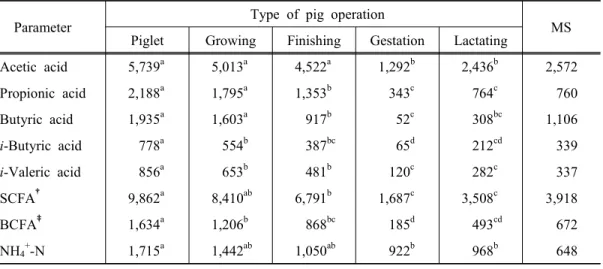
Table 1은 농장종류별 VFA와 NH
4+
-N 농도 를 보여주고 있다. 양돈 슬러리에서 SCFA 농도는 1,687~9,862 ppm 이었다 (Table 1). 다 른 연구에서도 돼지의 성장단계 및 생리특성 별 액상분뇨에서 총 VFA 농도는 30~400 mM로 돈사별로 차이가 많았다 (Cooper and Cornforth, 1978; Paul and Beauchamp, 1989;
Zhu et al., 1999). SCFA 농도는 자돈사 9,862 ppm, 육성돈사 8,410 ppm, 비육돈사 6,791 ppm, 포유돈사 3,508 ppm, 임신돈사 1,687 ppm 이 었다 (Table 1). 자돈사의 SCFA 농도를 100으 로 하였을 때 육성돈사 85, 비육돈사 69, 포 유돈사 36, 임신돈사 17 수준이었다. 육성비 육돈사에 비하여 번식돈사에서 SCFA 농도가 낮은 것은 다른 연구결과와도 일치한다 (Conn et al., 2007).
BCFA 농도는 자돈사 1,634 ppm, 육성돈사
1,206 ppm, 비육돈사 868 ppm, 포유돈사 493 ppm, 임신돈사 185 ppm 순으로 낮았으며, 자 돈사의 BCFA 농도를 100으로 하였을 때 육 성돈사 74, 비육돈사 53, 포유돈사 30, 임신 돈사 11 수준이었다. SCFA처럼 BCFA 농도 도 번식돈사보다 육성비육돈사에서 더 높았 으며, SCFA와 같은 패턴을 보였다 (Table 1).
NH
4+
-N 농도는 자돈사 1,715 ppm, 육성돈 사 1,442 ppm, 비육돈사 1,050 ppm, 포유돈사 968 ppm, 임신돈사 922 ppm 이었으며, 자돈 사 (100) 대비 육성돈사 84, 비육돈사 61, 포 유돈사 56, 임신돈사 58 수준이었다 (Table 1).
돈사 슬러리의 NH
4+
-N 농도는 922~1,715 ppm 으로 다양하였으며, 다른 연구에서도 돈사별 농도 차이가 많았다 (Arogo et al., 2003; Conn et al., 2005; Le et al., 2005). 이런 결과는 SCFA 및 BCFA와 비슷하였다.
SCFA, BCFA 및 NH
4+
-N 농도는 모두 자돈
사에서 가장 높았고, 다음으로 육성돈사, 비
육돈사 순으로 감소하였으며, 임신돈사에서
가장 낮았다. 돼지의 성장단계 및 생리특성
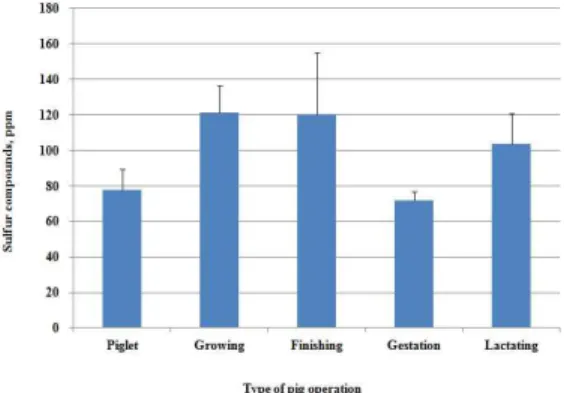
Fig. 1. Concentration of sulfur compounds from type of pig operation.
별 사료 내 권장 아미노산 수준에 따르면 (NIAS, 2012), 체중 7~11, 25~45, 65~85 kg 돼 지, 포유돈 및 임신돈의 경우 사료 내 라이 신 함량이 각각 1.56, 1.22, 0.91, 0.78, 0.40%
이다. 따라서 돼지가 성장함에 따라 사료의 단백질 수준이 감소하고, 번식돈의 경우 육 성비육돈보다 단백질 수준이 낮을 것으로 판 단된다. 따라서 자돈사에서 가장 많은 농도 의 SCFA, BCFA 및 NH
4+
-N 농도를 보였을 것으로 추정된다. 다른 연구에서도 사료의 단백질 양을 줄이면 NH
3, VFA 그리고 다른 악취물질이 감소되었다 (Otto et al., 2003).
2. 슬러리의 황화합물 농도 변화
돈사의 액상 슬러리에서 황화합물 농도는 육성돈사 121 ppm, 비육돈사 120 ppm, 포유돈 사 103 ppm, 자돈사 78 ppm, 임신돈사 72 ppm 순으로 나타났다. 그러나 같은 돈사에서 분석치의 반복 간에 변이 폭이 크게 작용하 여 돈사의 종류별 황화합물의 농도 차이는 나타나지 않았다 (p>0.05). 양돈분뇨에서 불쾌 감을 일으키는 대표적인 황화합물로 황화수 소와 메탄티올이 알려져 있으며 (Spoelstra, 1980), 이들 중에서 황화수소 (39%)와 메탄티
올 (34%)이 큰 비율을 차지하는데 (Beard and Guenzi, 1983), 황화수소의 강력한 휘산에 의해 반복 간 분석오차가 크게 작용하여 통 계적인 차이가 나타나지 않은 것으로 판단 된다.
3. 슬러리의 VOC 농도 변화
페놀류 농도는 자돈사 209 ppm, 육성돈사 166 ppm, 비육돈사 127 ppm, 포유돈사 85 ppm, 임신돈사 36 ppm 순으로 감소하였다.
페놀류 농도는 자돈사 (100) 대비 육성돈사 79, 비육돈사 61, 포유돈사 41, 임신돈사 17 수준이었다. 분뇨의 페놀류 화합물은 대부분 사료의 페닐알라닌과 타이로신이 대사되어 생성된다. NIAS (2012)은 체중 7~11, 25~45, 65~85 kg 돼지, 포유돈 및 임신돈의 사료 내 페닐알라닌과 타이로신을 합한 양이 각각 1.48, 1.16, 0.86, 0.90, 0.40% 이상이 될 것이 라고 하였다. 따라서 자돈사의 분뇨에서 가 장 높은 수준의 페놀류 농도를 보였다고 평 가된다.
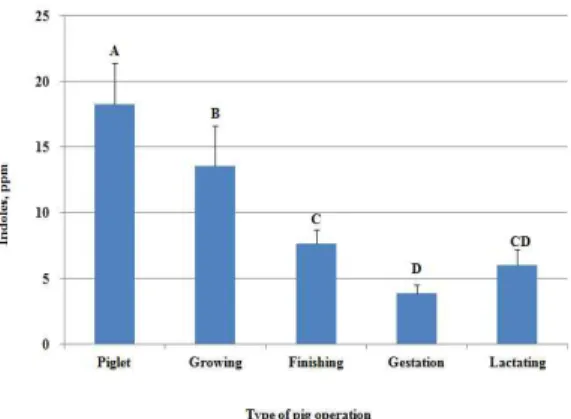
인돌류 농도는 자돈사 18 ppm, 육성돈사 14 ppm, 비육돈사 8 ppm, 포유돈사 6 ppm 및 임신돈사 4 ppm 순으로 감소하였다. 인돌류 농도는 자돈사 (100) 대비 육성돈사 78, 비육 돈사 44, 포유돈사 33, 임신돈사 22 수준이 었다.
고단백질 (육성기 21%, 비육기 19%) 사료 를 섭취하였을 때보다 저단백질 (육성기 14
%, 비육기 13%) 사료를 섭취한 돼지의 분뇨
에서 BCFA, p-크레졸, 인돌, 스카톨 농도가
감소하였다 (Hobbs et al., 1996). 사료의 단백
질 수준이 감소되었을 때 쥐의 맹장에서 페
놀 및 p-크레졸의 양이 감소되었다 (Bakke,
1969). 사료는 보통 동물의 요구량보다 많은
양의 단백질을 함유하고 있는데, 돼지가 과
Fig. 2. Concentration of phenols from type of pig operation.
Fig. 3. Concentration of indoles from type of pig operation.
다하게 섭취한 질소는 분뇨를 통하여 배설됨 으로써 미생물이 필요로 하는 질소기질로 활 용되어 악취의 전구물질이 된다. 또한 기초 사료에 섬유소를 첨가하면 신선분에서 p-크 레졸과 스카톨의 발생량이 감소하였다 (Goa et al., 1999). 사탕수수 비트펄프가 풍부한 사 료를 먹은 돼지의 대장에서는 미생물의 단백 질 합성을 위해 아미노산이 요구되기 때문에 상대적으로 트립토판이 스카톨과 인돌로 전 환되는 비율이 감소하여 분뇨에서 인돌과 스 카톨 농도가 낮았다 (Knarreborg et al., 2002).
분뇨의 미생물은 증식을 위해 단백질을 이 용하고, 에너지원으로 발효탄수화물을 이용 하게 된다 (Gibson and Roberfroid, 1995). 발효 탄수화물의 양이 절대적으로 적거나 발효탄 수화물에 비하여 단백질이 많으면 미생물은 에너지원으로 단백질을 사용하기 때문에 악 취가 많이 발생될 수 있다 (Reid and Hillman, 1999; Sutton et al., 1999). 따라서 사료나 분 뇨에서 단백질과 발효탄수화물의 비율이 최 적화되면 축산시설에서 발생되는 악취가 크 게 감소 될 것으로 기대된다. 번식돈 사료에 는 육성비육돈 사료보다 섬유소 함량이 많기 때문에 비육돈사보다 번식돈사에서 악취가 더 적을 수 있을 것이다. 또한, 번식농장에
비하여 비육농장에서 돼지 사육두수가 더 많 고, 비육돈사보다 번식돈사에서 더 많은 세 정수를 사용하기 때문에 비육돈 분뇨의 건물 양이 모돈의 건물 양보다 많아 (Conn et al., 2007), 모돈사 보다 비육돈사의 분뇨에서 더 많은 악취가 발생될 수도 있다.
결 론
본 연구는 돼지의 성장 및 생리단계별 슬 러리의 악취물질 농도를 비교 분석하여 돈 사의 악취발생 패턴에 따른 악취저감 대책 을 수립하기 위한 기초자료를 얻고자 수행 되었다.
SCFA 농도는 자돈사 9,862 ppm, 육성돈사
8,410 ppm, 비육돈사 6,791 ppm, 포유돈사
3,508 ppm, 임신돈사 1,687 ppm 이었다. 자돈
사의 SCFA 농도를 100으로 하였을 때 육성
돈사 85, 비육돈사 69, 포유돈사 36, 임신돈
사 17 수준이었다. BCFA 농도는 자돈사
1,634 ppm, 육성돈사 1,206 ppm, 비육돈사 868
ppm, 포유돈사 493 ppm, 임신돈사 185 ppm
순으로 낮았으며, 자돈사의 BCFA 농도를
100으로 하였을 때 육성돈사 74, 비육돈사
53, 포유돈사 30, 임신돈사 11 수준이었다.
NH
4+-N 농도는 자돈사 (100) 대비 육성돈사 84, 비육돈사 61, 포유돈사 56, 임신돈사 58 수준이었다. 페놀류 농도는 자돈사 209 ppm, 육성돈사 166 ppm, 비육돈사 127 ppm, 포유돈 사 85 ppm, 임신돈사 36 ppm 순으로 감소하 였다. 페놀류 농도는 자돈사 (100) 대비 육성 돈사 79, 비육돈사 61, 포유돈사 41, 임신돈 사 17 수준이었다. 인돌류 농도는 자돈사 18 ppm, 육성돈사 14 ppm, 비육돈사 8 ppm, 포유 돈사 6 ppm 및 임신돈사 4 ppm 순으로 감소 하였다. 인돌류 농도는 자돈사 (100) 대비 육 성돈사 78, 비육돈사 44, 포유돈사 33, 임신 돈사 22 수준이었다.
SCFA, BCFA 및 NH
4+
-N 농도는 자돈사에 서 가장 높았고 임신돈사에서 가장 낮았다.
돼지가 성장함에 따라 사료의 단백질 수준이 감소하기 때문에 자돈사에서 가장 많은 농도 의 악취물질이 생성되고, 번식돈 사료에는 육성비육돈 사료보다 섬유소 함량이 많기 때 문에 비육돈사보다 번식돈사에서 악취가 더 적은 것으로 판단된다. 따라서 지속 가능한 축산을 위해서는 돼지의 성장 및 생리 상태 별 분뇨의 특성을 파악하여 악취물질을 제어 하는 노력을 기울려야 할 것이며, 돼지의 영 양소 수준과 분뇨의 악취물질간의 상관관계 에 대한 연구가 필요하다고 생각된다.
사 사
본 논문은 농촌진흥청 공동연구사업 (과제 번호: PJ008606012013)의 지원에 의해 이루어 진 것임
인 용 문 헌