Yeungnam Univ J Med 2018;35(2):171-178
Oncological and functional outcomes following robot-assisted laparoscopic radical prostatectomy at a single institution: a minimum 5-year follow-up
Jun-Koo Kang1, Jae-Wook Chung1, So Young Chun2, Yun-Sok Ha1, Seock Hwan Choi1, Jun Nyung Lee1, Bum Soo Kim1, Ghil Suk Yoon3, Hyun Tae Kim1, Tae-Hwan Kim1, Tae Gyun Kwon1
1Department of Urology, Kyungpook National University School of Medicine; 2Biomedical Research Institute, Kyungpook National University Hospital; 3Department of Pathology, Kyungpook National University School of Medicine, Daegu, Korea Background: To evaluate mid-term oncological and functional outcomes in patients with prostate cancer treated by robot-assisted laparoscopic radical prostatectomy (RALP) at our institution.
Methods: We retrospectively reviewed the medical records of 128 patients with prostate cancer who under- went RALP at our institution between February 2008 and April 2010. All patients enrolled in this study were followed up for at least 5 years. We analyzed biochemical recurrence (BCR)-free survival using a Kaplan-Meier survival curve analysis and predictive factors for BCR using multivariate Cox regression analy- sis. Continence recovery rate, defined as no use of urinary pads, was also evaluated.
Results: Based on the D’Amico risk classification, there were 30 low-risk patients (23.4%), 47 intermediate- risk patients (38.8%), and 51 high-risk patients (39.8%), preoperatively. Based on pathological findings, 50.0%
of patients (64/128) showed non-organ confined disease (≥T3a) and 26.6% (34/128) had high grade disease (Gleason score ≥8). During a median follow-up period of 71 months (range, 66-78 months), the frequency of BCR was 33.6% (43/128) and the median BCR-free survival was 65.9 (0.4-88.0) months. Multivariate Cox regression analysis revealed that high grade disease (Gleason score ≥8) was an independent predictor for BCR (hazard ratio=4.180, 95% confidence interval=1.02-17.12, p=0.047). In addition, a majority of patients remained continent following the RALP procedure, without the need for additional intervention for post-pro- statectomy incontinence.
Conclusion: Our study demonstrated acceptable outcomes following an initial RALP procedure, despite 50%
of the patients investigated demonstrating high-risk features associated with non-organ confined disease.
Keywords: BCR; Prostate cancer; Prostatectomy; Urinary incontinence
Copyright ©2018 Yeungnam University College of Medicine
This is an Open Access article distributed under the terms of the Creative Commons Attribution Non-Commercial License (http://creative- commons.org/licenses/by-nc/4.0/) which permits unrestricted non-commercial use, distribution, and reproduction in any medium, provided the original work is properly cited.
Received: January 25, 2018, Revised: May 30, 2018 Accepted: June 1, 2018
Corresponding Author: Tae Gyun Kwon, Department of Urology, Kyungpook National University School of Medicine, 807, Hoguk-ro, Buk-gu, Daegu 41404, Korea
Tel: +82-53-200-2166, Fax: +82-53-200-2027 E-mail: [email protected]
INTRODUCTION
Prostate cancer (PCa) is the second most commonly diag- nosed cancer in the world, behind only lung cancer. It is
the most common cancer in men, accounting for 25% of all cancers affecting men. The increased incidence of PCa has resulted primarily from improved prostate specific antigen (PSA) screening, which can detect many early-stage PCa cases [1]. In Korea, PCa incidence doubled between 2007 and 2013, and the PCa mortality rate increased slightly [2]. A variety of treatment options are available for the management of lo- calized PCa. Radical prostatectomy is a common treatment modality, which can be performed via an open, laparoscopic, or robot-assisted laparoscopic approach [3,4]. Although seve- ral reports have described short-term oncological and func-
tional outcomes associated with robot-assisted laparoscopic radical prostatectomy (RALP) procedures, few studies have described outcomes after a sufficiently long follow-up period.
As highlighted by a previous formal systematic review, there is no solid body of evidence establishing the superiority of any one surgical approach over the others. Some studies has shown that RALP has been increasingly adopted worldwide as a surgical treatment option for localized PCa because of its minimally invasive nature and excellent oncological and functional outcomes following the procedure [5]. RALP is as- sociated with lower perioperative morbidity and a lower rate of positive surgical margins, compared to a laparoscopic pros- tatectomy, although it is also associated with considerable methodological uncertainty. Some studies have reported an earlier recovery of urinary continence and erectile function in patients undergoing RALP compared to a contemporary series involving patients who underwent other prostatectomy procedures [6]. However, most studies have suggested that no formal differences in the occurrence of cancer-related con- tinence or erectile dysfunction outcomes are present [7]. We evaluated mid-term oncological and functional outcomes in patients with PCa who underwent RALP at our institution, using at least 5 years of follow-up for assessment.
MATERIALS AND METHODS
1. Patients
The da Vinci Surgical System (Intuitive Surgical, Sunnyvale, CA, USA) was introduced at our institution in 2008. We re- viewed the records of the initial 128 patients who underwent RALP between February 2008 and April 2010. All patients were available for at least 5 years of follow-up.
Our technique for RALP is as follows: a 4-arm robot is used and a total of six ports are placed. Patients were placed on the operating table in the standard 30º Trendelenburg po- sition. Following the development of the Retzius space, we performed standard lymph node dissection (lateral limit, gen- itofemoral nerve; cephalad limit, bifurcation of the common iliac artery; caudal limit, endopelvic fascia; medial limit, blad- der) and the preprostatic fat was removed. The bladder and prostate border were dissected first and then the bladder and prostate were divided using a Bovie knife along the bladder- prostate imaginary borderline, until the prostatic urethra was
exposed. The prostatic urethra was then incised and a pre- viously placed Foley urinary catheter was observed, before continuing the division of the bladder and prostate. When the prostate was completely divided, the seminal vesicles and vas deferens were exposed and divided, and the vascular struc- tures around them were ligated. After opening Denonvilliers’
fascia, periprostatic tissue was then dissected in an antegrade fashion on each side, with scissors. Neurovascular bundles on both sides of the prostate gland were protected using an inter- fascial technique. With cephalad traction on the prostate, the urethra and the recto-urethralis muscle were then divided, close to the prostate. After posterior reconstruction (Rocco stitch), an urethrovesical anastomosis is performed according to the standard method. Adjuvant androgen deprivation therapy (ADT) was initiated in patients with a high probability of lymph node and distant organ metastases, with lymphovascular inva- sion (LVI) or margin positive 2 weeks after surgery [8].
Biochemical recurrence (BCR) was defined as an elevated PSA
≥0.2 ng/mL at least 6 weeks after surgery. The D’Amico cla- ssification, which evaluates the risk of recurrence following lo- calized treatment of PCa categorizes patients into three groups based on blood PSA levels, Gleason scores, and tumor stages [4].
2. Statistical analyses
All data were collected based on a protocol approved by the Institutional Review Board. Analyzed variables included pathological parameters such as LVI and secondary treatments (androgen deprivation therapy or radiotherapy). Continuous variables assessed were median follow-up (in months), age of patient, body mass index (BMI), PSA, and prostate volume, measured using a transrectal ultrasound (TRUS). Categorical variables assessed were the clinical stage of disease, biopsy-re- lated variables and the surgical Gleason score (GS), patholo- gical stage of disease, LVI, and surgical margin status. The surgical GS was categorized as ≤6, 7, or ≥8. BCR-free sur- vival rates were analyzed using Kaplan-Meier survival curve and Cox regression analysis. All statistical evaluations were performed using SPSS version 18.0 for Windows (SPSS Inc., Chicago, IL, USA), and a p-value <0.05 (two-tailed) was con- sidered statistically significant. The Chi-square test was used to determine the difference in proportions for categorical va- riables, while the Student t-test was used to assess continuous variables.
Table 1. Preoperative characteristics of patients
Variable Value
Median follow-up period (mon) 71 (66-78)a)
Mean patient age (yr) 68.1±7.5
Mean BMI (kg/m2) 24.0±2.4
Mean PSA (ng/mL) 16.0±14.8
Mean prostate volume (cc) 36.6±16.1
Neoadjuvant hormonal therapy 6 (4.7) D'Amico risk
Low 30 (23.4)
Intermediate 47 (38.8)
High 51 (39.8)
Values are presented as mean±standard deviation or number (%).
BMI, body mass index; PSA, prostate-specific antigen.
a)Mean (minimum-maximum).
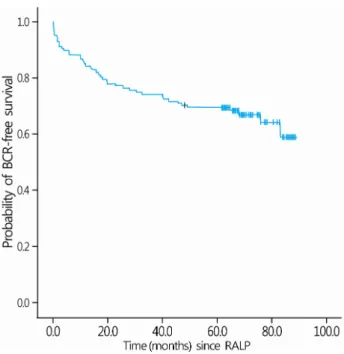
Fig. 1. Kaplan-Meier survival curve analysis of biochemical recur- rence-free survival for all patients. BCR, biochemical recurrence;
RALP, robot-assisted laparoscopic radical prostatectomy.
Table 2. Postoperative pathological findings, follow-up results of patients
Variable Value
Pathological T stage
T2 64 (50.0)
T3a 42 (32.8)
T3b 22 (17.2)
Pathologic Gleason score
6 24 (18.7)
7 70 (54.7)
8-10 34 (26.6)
Pathological nodal stage
N0 125 (97.7)
N1 3 (2.3)
Lymphovascular invasion
No 112 (87.5)
Yes 16 (12.5)
Surgical margin status
Negative 63 (49.2)
Positive 65 (50.8)
T2 20/64 (31.3)
T3a 30/42 (71.4)
T3b 15/22 (68.2)
BCR 43 (33.6)
Median BCR-free survival, months 65.9 (0.4-88.0)
Distant metastasis 4 (3.1)
Adjuvant Androgen deprivation therapy
No 70 (54.7)
Yes 58 (45.3)
Duration, months 13.73 (3-55)
Salvage radiotherapy 4 (3.1)
Chemotherapy 4 (3.1)
Mortality
Overall death 3 (2.3)
Death from PCa 2 (1.6)
Values are presented as mean (minimum-maximum) or number (%).
BCR, biochemical recurrence; PCa, prostate cancer.
RESULTS
Preoperative characteristics of patients are shown in Table 1. The mean age at RALP was 68.1±7.5 years, and the median follow-up period was 71 months (range, 66-78 months). The mean preoperative PSA was 16.0±14.8 ng/mL and the mean prostate volume was 36.6±16.1 cc. Based on the D’Amico risk classification, patients were separated into three groups: low-,
intermediate-, and high-risk categories with 30 (23.4%), 47 (38.8%), and 51 (39.8%) members, respectively.
Postoperative pathological findings and follow-up results are shown in Table 2. Organ-confined disease (T2), extrapros- tatic extension (T3a), and seminal vesicle invasion (T3b) were present in 64 (50.0%), 42 (32.8%), and 22 (17.2%) patients, respectively. Pathologic Gleason scores of 6, 7, and 8-10 were detected in 24 (18.8%), 70 (54.7%), and 34 (26.6%) patients,
Table 3. Factors associated with biochemical recurrence (BCR)
Variable BCR (-)
(n=85, 66.4%)
BCR (+)
(n=43, 33.6%) p-value
Age (yr) 69.0±8.0 67.4±6.6 0.275
BMI (kg/m2) 24.1±2.5 24.0±2.1 0.589
D’Amico risk 0.003
Low 22 (25.9) 8 (18.6)
Intermediate 38 (44.7) 9 (20.9)
High 25 (29.4) 26 (60.5)
Preoperative PSA (ng/mL) 13.4±9.8 20.6±20.1 0.013
Prostate volume on TRUS (cc) 37.3±17.5 35.1±12.7 0.522
Pathological stage 0.001
T2 47 (55.3) 17 (39.5)
T3a 31 (36.5) 11 (25.6)
T3b 7 (8.2) 15 (34.9)
Pathologic Gleason score 0.005
6 21 (24.7) 3 (7.0)
7 48 (56.5) 22 (51.2)
8-10 16 (18.8) 18 (41.9)
Lymphovascular invasion (+) 7 (8.2) 9 (20.9) 0.041
Surgical margin status (+) 40 (47.1) 25 (58.1) 0.159
Values are presented as mean±standard deviation or number (%).
BMI, body mass index; PSA, prostate-specific antigen; TRUS, transrectal ultrasound.
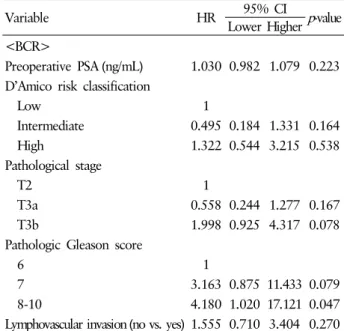
Table 4. Multivariate Cox regression analysis of variables for predicting biochemical recurrence (BCR)
Variable HR 95% CI p-value
Lower Higher
<BCR>
Preoperative PSA (ng/mL) 1.030 0.982 1.079 0.223 D’Amico risk classification
Low 1
Intermediate 0.495 0.184 1.331 0.164
High 1.322 0.544 3.215 0.538
Pathological stage
T2 1
T3a 0.558 0.244 1.277 0.167
T3b 1.998 0.925 4.317 0.078
Pathologic Gleason score
6 1
7 3.163 0.875 11.433 0.079
8-10 4.180 1.020 17.121 0.047
Lymphovascular invasion(no vs. yes) 1.555 0.710 3.404 0.270 HR, hazard ratio; CI, confidence interval.
respectively. Pathological stage N1 disease was detected in 3 (2.3%) patients. Positive surgical margin was observed in 65 patients (50.8%), and LVI was detected in 16 (12.5%) pa- tients. The overall BCR rate was 33.6%(43/128 patients), and median BCR-free survival was 65.9 months (range, 0.4-88.0 months) (Fig. 1, Table 2). Adjuvant ADT following RALP was administered to 58 patients (45.3%). Among all patients, four patients underwent salvage radiotherapy and four patients re- ceived chemotherapy due to the development of castration resistant prostate cancer. We found that three (2.3%) patients died during the follow-up period; two of these deaths were determined to be disease-related.
Univariate analysis demonstrated that the high-risk category based on the D’Amico classification (p=0.003), elevated pre- operative PSA (p=0.013), pathologic T stage (p=0.001), LVI (p=0.041), and GS ≥8 (p=0.005) were significantly associa- ted with an increased risk of developing BCR (Table 3). Age, BMI, and prostate volume were not associated with BCR. Mul- tivariate Cox regression analysis showed that a GS ≥8 was the only independent predictor of BCR (hazard ration [HR]=
4.180, 95% confidence interval [CI]=1.02-17.12, p=0.047) (Table 4).
BCR-free survival periods based on the preoperative D’Amico risk classification were 76.5 months, 67.5 months, and 50.7
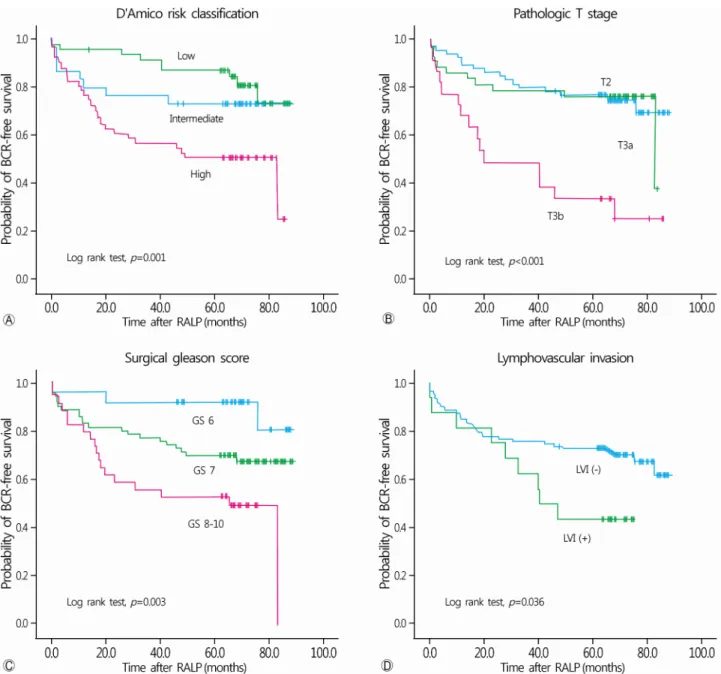
Fig. 2. Kaplan-Meier survival curve analysis of biochemical recurrence-free survival comparing the three D’Amico risk groups (A), patients based on pathological staging (B), Gleason score (C), and Lymphovascular invasion (D), using the log-rank test. RALP, robot- assisted laparoscopic radical prostatectomy.
months, for the low-, intermediate-, and high-risk groups, re- spectively (p=0.001, Fig. 2A). Stratifying patients based on the pathological stage of disease showed that BCR-free survival periods were 70.8 months for organ-confined disease (T2), 66.3 months for T3a stage disease, and 38.7 months for T3b (p<0.001, Fig. 2B). BCR-free survival periods, stratified by the Gleason score showed 79.8 months, 66.5 months, and 50.0 months for a GS ≤6, 7, or ≥8, respectively (p=0.001, Fig. 2C). The presence of LVI also showed a statistically signi-
ficant difference in terms of BCR-free survival rates (LVI (-), 66.8 months; LVI (+) 46.7 months; p=0.036) (Fig. 2D).
At the 1-year postoperative follow-up, we found that 33/
128 (25.8%) patients experienced incontinence. However, 30 of 33 patients with urinary incontinence required only safety pads while the remaining three required additional inter- vention such as artificial urethral sphincter (AUR) implanta- tion, for significant post-prostatectomy incontinence. Based on univariate analysis, a statistically significant difference was
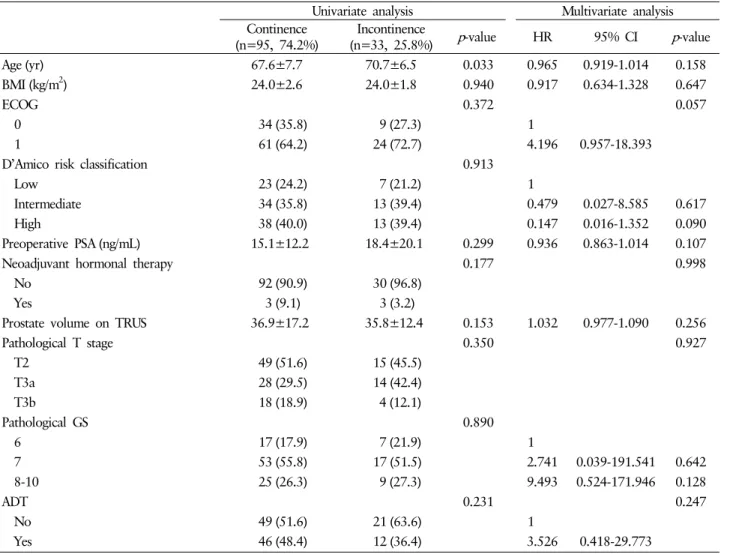
Table 5. Univariate and multivariate analysis for predicting incontinence
Univariate analysis Multivariate analysis Continence
(n=95, 74.2%) Incontinence
(n=33, 25.8%) p-value HR 95% CI p-value
Age (yr) 67.6±7.7 70.7±6.5 0.033 0.965 0.919-1.014 0.158
BMI (kg/m2) 24.0±2.6 24.0±1.8 0.940 0.917 0.634-1.328 0.647
ECOG 0.372 0.057
0 34 (35.8) 9 (27.3) 1
1 61 (64.2) 24 (72.7) 4.196 0.957-18.393
D’Amico risk classification 0.913
Low 23 (24.2) 7 (21.2) 1
Intermediate 34 (35.8) 13 (39.4) 0.479 0.027-8.585 0.617
High 38 (40.0) 13 (39.4) 0.147 0.016-1.352 0.090
Preoperative PSA (ng/mL) 15.1±12.2 18.4±20.1 0.299 0.936 0.863-1.014 0.107
Neoadjuvant hormonal therapy 0.177 0.998
No 92 (90.9) 30 (96.8)
Yes 3 (9.1) 3 (3.2)
Prostate volume on TRUS 36.9±17.2 35.8±12.4 0.153 1.032 0.977-1.090 0.256
Pathological T stage 0.350 0.927
T2 49 (51.6) 15 (45.5)
T3a 28 (29.5) 14 (42.4)
T3b 18 (18.9) 4 (12.1)
Pathological GS 0.890
6 17 (17.9) 7 (21.9) 1
7 53 (55.8) 17 (51.5) 2.741 0.039-191.541 0.642
8-10 25 (26.3) 9 (27.3) 9.493 0.524-171.946 0.128
ADT 0.231 0.247
No 49 (51.6) 21 (63.6) 1
Yes 46 (48.4) 12 (36.4) 3.526 0.418-29.773
Values are presented as mean±standard deviation or number (%).
BMI, body mass index; ECOG, ECOG performance status; PSA, prostate-specific antigen; TRUS, transrectal ultrasound; GS, Gleason score; ADT, androgen deprivation therapy.
noted in terms of age between the continence and inconti- nence groups, however, no such statistically significant diffe- rences were observed using multivariate analysis (Table 5).
DISCUSSION
In our study, we analyzed mid-term oncological and func- tional outcomes in patients with PCa who underwent RALP at our institution. Fifty-one (39.8%) patients were classified as belonging to the high-risk group on preoperative D'Amico risk stratification. Postoperative pathologic results showed 34 (26.6%) patients with GS ≥8 and 64 (50%) of patients with T3, suggesting a relatively high ratio of high-risk patients.
BCR was found in 43 (33.6%) patients and the median BCR-
free survival period was 65.9 (0.4-88.0) months. The presence of high grade disease (Gleason score ≥8) was an independent factor affecting BCR development. At 1-year follow-up, uri- nary incontinence occurred in 33 (25.8%) patients, but only three patients required AUS. There were no factors influen- cing post-operative urinary incontinence.
In several studies of 400 to 1,384 men treated by RALP, the median time to BCR was 2.3-2.9 years. BCR-free survival rates were 74.0-87.1% and 81.0-84.5%, at 5 and 7 years [9-11]. According to BCR-free survival rate stratified by the D’Amico risk group in several studies, BCR-free survival rates were 96.8%, 95.1% and 92-92.6% in low-risk patients;
86.7%, 80.2% and 69.8-75% in intermediate-risk patients;
and 78.2%, 72%, and 64-67.5% in high-risk patients at 3,
5, and 7 years after RALP, respectively [9,11,12]. In an Asian study, Abdel Raheem et al. [13] investigated 800 patients who underwent RALP with a median 64 months of follow-up.
They revealed that BCR rates at 5-year follow-up were 54%, 45% and 58.1% for a high-risk D’Amico, GS ≥8, and clinical disease stage ≥cT2c, respectively. In our study, BCR-free survival rates were 71, 69.4, and 67.0% at 40-, 60-, and 80- months follow-up, respectively. Based on assessment of pati- ents using the D’Amico risk classification, the 5-year BCR- free survival rate was 87.0% for the low-risk, 73.3% for the intermediate-risk, and 51.0% for the high-risk groups. Accor- ding to pathologic T stage and GS, 5-year BCR-free survival rate were 76.2% for pT2 stage cancers, 76.5% for pT3a stage cancers, and 34.1% for T3b stage cancers and 91.7% for GS6, 67.5% for GS7, and 49.2% for GS 8-10. Overall BCR rate in our study was higher than that in other studies. We suggest that the higher BCR rate in this study was due to the initial experience performed with the first introduced robot system, and a relatively high proportion of high-risk group patients.
There are several views on the predictive factors of BCR when reviewing several studies. Rajan et al. [10] showed that preoperative PSA, GS, cT stage, pT stage, and >3 mm multi- focal PSMs were predictive factors of BCR. Lee et al. [12]
showed that cT stage, pT stage, and pathological GS were independent predictive factors of BCR. Diaz et al. [14] sug- gested that D’Amico risk groups, pathologic GS, pathologic stage, and surgical margin status were predictive factors. Soo- riakumaran et al. [11] revealed that preoperative PSA, patho- logic GS, pathologic stage, surgical margin status and reduced surgeon volume were predictive factors. In this study, we observed that the high-grade disease (GS ≥8) was a predictive factor affecting BCR.
With respect to functional outcomes, a recent study showed that 366 men (21.3%) were incontinent 12 months after RALP [7]. Another study observed that 114 (63.3%) patients had post-prostatectomy incontinence (PPI) 1 month after RALP, and PPI persisted in 19 (16.0%) patients at 24 months [15].
The PPI rate in our study seems to be similar with other stu- dies, despite the result based on early experiences of RALP.
The factors affecting incontinence after surgery remain con- troversial. Some studies showed that the length of the mem- branous urethra and anatomical grades of nerve sparing can be risk factors associated with incontinence after RALP
[16,17]. Another study [15] revealed that older age and lon- ger operative time were highly relevant to short- and long- term PPI occurrence after RALP. In this retrospective study, we did not identify any significant factor for PPI.
This study has several limitations. First, our study was a retrospective and not a randomized, case-controlled study.
Thus, detailed analysis was not performed for patient charac- teristics such as preoperative voiding patterns. Second, our data were based on results of surgery performed when the surgeon was uncomfortable with robot system, so the oncolo- gical outcomes of surgery might not be completely valid as they could represent results obtained during the surgeons’
learning curves. Third, our data did not provide information regarding patients’ potency and whether or not a nerve-spa- ring procedure had been performed. Therefore, we could not effectively analyze and comment upon the restoration of post- operative erectile function and effect of nerve-sparing proce- dures on postoperative continence or BCR-free survival rates.
Fourth, we did not use a questionnaire to conduct patient interviews. Therefore, we subjectively divided patients into continence and incontinence groups based on chart reviews.
In conclusion, our study demonstrated acceptable outcomes following an initial RALP procedure, although 50% of the patients investigated demonstrated high-risk features associa- ted with non-organ confined disease.
ACKNOWLEDGEMENTS
This research was supported by the Basic Science Research Program through the National Research Foundation of Korea (NRF), which is funded by the Ministry of Science, ICT & Fu- ture Planning (2014M3A9D3034164) (2014R1A1A3049460).
Additional funding was provided by the Korean government (MSIP) (2015R1C1A1A01053509) (2016R1C1B1011180) and the Ministry of Education (2015R1D1A3A03020378).
CONFLICT OF INTEREST
No potential conflict of interest relevant to this article were reported.
ORCID
Jun-Koo Kang, https://orcid.org/0000-0002-8857-3406
Tae Gyun Kwon, https://orcid.org/0000-0002-4390-0952
REFERENCES
1. Siegel RL, Miller KD, Jemal A. Cancer statistics, 2015. CA Cancer J Clin 2015;65:5-29.
2. Han HH, Park JW, Na JC, Chung BH, Kim CS, Ko WJ.
Epidemiology of prostate cancer in South Korea. Prostate Int 2015;3:99-102.
3. Chopra S, Srivastava A, Tewari A. Robotic radical prostatec- tomy: the new gold standard. Arab J Urol 2012;10:23-31.
4. D’Amico AV, Moul J, Carroll PR, Sun L, Lubeck D, Chen MH. Cancer-specific mortality after surgery or radiation for patients with clinically localized prostate cancer managed dur- ing the prostate-specific antigen era. J Clin Oncol 2003;21:
2163-72.
5. Luciani LG, Mattevi D, Mantovani W, Cai T, Chiodini S, Vat- tovani V, et al. Retropubic, laparoscopic, and robot-assisted radical prostatectomy: a comparative analysis of the surgical outcomes in a single regional center. Curr Urol 2017;11:36-41.
6. Nossiter J, Sujenthiran A, Charman SC, Cathcart PJ, Aggarwal A, Payne H, et al. Robot-assisted radical prostatectomy vs laparoscopic and open retropubic radical prostatectomy: func- tional outcomes 18 months after diagnosis from a national cohort study in England. Br J Cancer 2018;118:489-94.
7. Haglind E, Carlsson S, Stranne J, Wallerstedt A, Wilderäng U, Thorsteinsdottir T, et al. Urinary incontinence and erectile dysfunction after robotic versus open radical prostatectomy: a prospective, controlled, nonrandomised trial. Eur Urol 2015;
68:216-25.
8. Kang YJ, Kim HS, Jang WS, Kwon JK, Yoon CY, Lee JY, et al. Impact of lymphovascular invasion on lymph node me- tastasis for patients undergoing radical prostatectomy with negative resection margin. BMC Cancer 2017;17:321.
9. Menon M, Bhandari M, Gupta N, Lane Z, Peabody JO, Rogers
CG, et al. Biochemical recurrence following robot-assisted radical prostatectomy: analysis of 1384 patients with a me- dian 5-year follow-up. Eur Urol 2010;58:838-46.
10. Rajan P, Hagman A, Sooriakumaran P, Nyberg T, Wallerstedt A, Adding C, et al. Oncologic outcomes after robot-assisted radical prostatectomy: a large European single-centre cohort with median 10-year follow-up. Eur Urol Focus 2018;4:351-9.
11. Sooriakumaran P, Haendler L, Nyberg T, Gronberg H, Nilsson A, Carlsson S, et al. Biochemical recurrence after robot-assisted radical prostatectomy in a European single-centre cohort with a minimum follow-up time of 5 years. Eur Urol 2012;62:768- 74.
12. Lee SH, Seo HJ, Lee NR, Son SK, Kim DK, Rha KH. Robot- assisted radical prostatectomy has lower biochemical recur- rence than laparoscopic radical prostatectomy: systematic re- view and meta-analysis. Investig Clin Urol 2017;58:152-63.
13. Abdel Raheem A, Kim DK, Santok GD, Alabdulaali I, Chung BH, Choi YD, et al. Stratified analysis of 800 Asian patients after robot-assisted radical prostatectomy with a median 64 months of follow up. Int J Urol 2016;23:765-74.
14. Diaz M, Peabody JO, Kapoor V, Sammon J, Rogers CG, Stric- ker H, et al. Oncologic outcomes at 10 years following ro- botic radical prostatectomy. Eur Urol 2015;67:1168-76.
15. Shao IH, Chang YH, Hou CM, Lin ZF, Wu CT. Predictors of short-term and long-term incontinence after robot-assisted radical prostatectomy. J Int Med Res 2018;46:421-9.
16. Kadono Y, Ueno S, Kadomoto S, Iwamoto H, Takezawa Y, Nakashima K, et al. Use of preoperative factors including uro- dynamic evaluations and nerve-sparing status for predicting urinary continence recovery after robot-assisted radical pros- tatectomy: nerve-sparing technique contributes to the reduc- tion of postprostatectomy incontinence. Neurourol Urodyn 2016;35:1034-9.
17. Honda M, Kawamoto B, Morizane S, Hikita K, Muraoka K, Sejima T, et al. A prognostic model for predicting urinary incontinence after robot-assisted radical prostatectomy. Int J Med Robot 2017;13. doi: 10.1002/rcs.1780.