• 검색 결과가 없습니다.

Phonetic investigation of epenthetic vowels produced by Korean learners of English

N/A
N/A
Protected

Academic year: 2021

Share "Phonetic investigation of epenthetic vowels produced by Korean learners of English"

Copied!
10
0
0

로드 중.... (전체 텍스트 보기)

전체 글

(1)

Journal of the Korean Society of Speech Sciences Vol.6 No.4 (2014.12.31) www.speechsciences.or.kr

ISSN 2005-8063, pp. 17~26 http://dx.doi.org/10.13064/KSSS.2014.6.4.017

Phonetic investigation of epenthetic vowels produced by Korean learners of English

Shin, Dong-Jin 1) ․Iverson, Paul 2)

ABSTRACT

The present study examined epenthetic vowels produced by Korean learners of English in read sentences, in terms of acoustic measures and extra-phonological factors. The results demonstrated three main findings. First, epenthetic vowels had relatively high F1 values and a wide range of F2 values. Most of the epenthetic vowels were inserted near Korean high central vowels, but some vowels were inserted near front vowels due to co-articulation with surrounding vowels. Second, vowel epenthesis was affected by the context. The results showed that the epenthesis was frequently seen with word junctions between obstruents (e.g., stops-fricatives). Third, Korean learners were not affected by English background and were very weakly affected by orthography. English experience, which is one of the extra-phonological factors, was not related to epenthesis production. However, orthography, the other extra-phonological factor, very weakly affected the amount of epenthesis production. Nine percent of all epenthesis production was affected by the English past-tense suffix ‘-ed’;

approximately 70% of the participants were affected by this suffix. The findings of the present study contributed to understanding vowel epenthesis. First, the study revealed that the epenthetic vowels produced by Korean learners of English were close to the high central vowel, supporting previous studies that the epenthetic vowel is quite close to the shortest vowel. Second, the study examined the various phonetic environments of epenthetic vowels, revealing that vowel epenthesis occurred more frequently in a certain phonetic circumstance.

Keywords: epenthetic vowel, epenthesis environment, extra-phonological factors, English experience, orthographical effects

1. Introduction

Adult Korean speakers have many difficulties learning English segments and prosody. For example, they need to learn additional categories for English because Korean has only eight vowels (e.g., Han, 1999). They also sometimes insert an epenthetic vowel when perceiving and producing English consonant clusters (e.g., Kabak and Idsardi, 2003) as Korean does not have consonant clusters.

1) Center for Spoken Language Research (CSLR) Hankuk University of Foreign Studies, [email protected]

2) SHaPs, University College London, [email protected], corresponding author

This paper is written and revised on the basis of first author's PhD dissertation (University College London, 2014).

Received: August 7, 2014 Revised: September 18, 2014 Accepted: December 11, 2014

The goal of this study was to investigate the acoustic characteristics of epenthetic vowels and the environment of epenthesis production. The present study examined the acoustic characteristics of 1505 epenthetic vowels to see whether an epenthetic vowel is closest to the shortest Korean vowel, as previous studies have shown (Kim & Kochetov, 2011). Previous studies have shown that the shortest vowel is chosen for epenthesis (Pitt, 1998; Monahan et al., 2008; Dupoux et al., 2011). For example, Japanese speakers tended to insert the shortest or lightest vowel among their native vowels, which is /u/. Monahan et al. (2008) investigated 16 Japanese speakers to see whether they perceptually insert equal epenthetic vowels or change the epenthetic vowels in terms of phonetic circumstance.

They prepared the target words with a coronal consonant (e.g., /etoma/, /etuma/ and /etma/), velar consonant (/ekoma/, /ekuma/

and /ekma/) and bilabial nasal consonant (e.g., /emoma/, /emuma/

and /emma/). The results showed that Japanese speakers did not

perceptually insert the /o/ vowel in any condition, suggesting that

(2)

/o/ cannot be an epenthetic vowel for Japanese speakers.

However, they perceptually inserted the /u/ and /i/ vowel, demonstrating that the short vowels, which are a high vowel in Japanese, were used for the epenthetic vowel because high vowels in Japanese are easily devoiced.

In terms of Korean studies, previous studies have shown that the /ɨ/ vowel is the shortest vowel among Korean vowels (Koo, 1998), and epenthetic vowels spoken by Korean learners of English are closest to the /ɨ/ vowel (Kim & Kochetov, 2011).

For example, Koo (1998) recorded three Korean females speaking eight Korean vowels in a carrier sentence: /i/, /ɨ/, /u/, /ɛ/, /ʌ/, /o/, /ɑ/ and/ӕ/. The results showed that the /ɨ/ vowel was the shortest. Here, it is expected that Korean learners of English may insert /ɨ/ vowel. The current study acoustically analysed the characteristics of epenthetic vowels to see if they are close to the shortest vowel in Korean.

Epenthetic vowels were compared to three English vowels, /i/, /u/ and /ɑ/, to determine where epenthetic vowels are in the vowel chart. All vowels were normalised to remove anatomical and physiological variations. If the epenthetic vowels occur between two high vowels, such as /i/ and /u/, it could be interpreted that epenthetic vowels by Korean learners of English are close to the /ɨ/ vowel, supporting previous studies that the shortest vowel is chosen for epenthesis (Kim & Kochetov, 2011).

Previous studies have shown that vowel epenthesis can be different in terms of context, such as preceding or following consonants (Kang, 2003; Kim, 2009; Kim & Kochetov, 2011;

Ahn, 2012). For example, Kang (2003) phonologically revealed that the likelihood of epenthetic vowel placement varies due to the tenseness of a non-adjacent preceding vowel, as well as place and voicing of the preceding consonants. After completing a phonological analysis, the results suggested that the count of vowel epenthesis was different, showing that only 28% of epenthetic vowels were found after lax vowels, whereas 89%

occurred after tense vowels. The count was also different in accordance with the place of articulation. Epenthetic vowels were likely to occur after coronal stops (72%), dorsal stops (34%) and labial stops (21%). Compared with voiceless stops (29%), vowel epenthesis more frequently occurred after the voiced stops (88%).

The study concluded that vowel epenthesis occurs to enhance

‘perceptual similarity’ between Korean and English.

The context of epenthesis was investigated to see if it was affected by its environment, such as preceding or following consonants. By analysing the corpus, it was possible to examine various contexts of vowel epenthesis, such as between words

(e.g., The lorry carried fruit), within words (e.g., brushed /brʌʃt/) or coda position (e.g., bed /bedɨ/). The analyses facilitated understanding whether Korean learners of English produced epenthetic vowels within consonant clusters, as previous studies have shown (Kabak & Idsardi, 2007), or in other contexts such as coda position or between words.

Extra-phonological factors such as English experience were examined because they might be related to vowel epenthesis, as previous studies have shown (Lee, 2009; Masuda & Arai, 2010).

For example, Lee (2009) investigated Korean learners of English with varying degrees of English experience to see whether it affected vowel epenthesis. The subjects were divided according to their English experience level into three groups based on these criteria: 35 advanced speakers, 32 intermediate speakers and 26 beginner speakers. The subjects in each group heard three stimuli (e.g., pelm - pelm - pelɨm) and were asked to identify whether the first stimulus was identical to the second or third stimulus.

The results showed that advanced learners were better at detecting epenthetic vowels than the other two groups, with their accuracy reaching 85.7% (advanced group) compared to 80.2%

(intermediate group) and 77.6% (beginner group).

The relationship between the amount of epenthesis and English experience, such as the length of time learning English and living in an English-speaking country, was investigated through questionnaires to see whether those factors affected epenthesis production. All subjects completed the questionnaire.

The present study did not consider the scores of an English proficiency test because most tests tend to focus on measuring English grammar or reading comprehension.

Previous studies have shown that orthography can affect speech perception (Grainger et al., 2001) and vowel epenthesis (Vendelin & Peperkamp, 2006; Detey & Nespoulous, 2008). For example, Detey and Nespoulous (2008) examined Japanese native speakers learning French, demonstrating that orthography affected syllable segmentation among second-language learners and produced epenthesis. They created nonword stimuli containing consonant clusters in the initial-, medial- and final-word positions. Sixty Japanese native speakers learning French were asked to count the number of syllables in a given word in auditory, visual and audio-visual conditions. The results showed that the visual condition had the highest epenthesis rate (77.05%). The audio-visual condition and auditory condition followed with 66.5% and 58.5% epenthesis, respectively. They explained that the participants were able to perceive the

‘phonetic syllable’ in the auditory condition, whereas their

(3)

‘phonological representations’ were activated in the visual condition.

The present study also examined orthographical effects. When investigating orthography effects, the present study focused on investigating the English ‘-ed’ because previous studies have shown that L2 speakers are affected by this past-tense suffix (Delatorrer & Koerich, 2006). Similar to Brazilian L2 speakers, it is possible that Korean L2 speakers are also affected by orthography because they were asked to read English sentences.

When speaking the given sentences, Korean learners of English might intentionally insert an epenthetic vowel when reading English past-tense words (e.g., brushed in She brushed her hair) because the past-tense suffix ‘-ed’ orthographically contains the letter < e >. To measure this effect, the count of epenthesis related to ‘-ed’ was counted, and the proportion of this epenthesis was calculated.

In summary, the aim of this study is to investigate the acoustic characteristics and contexts of epenthetic vowels produced by 36 Korean learners of English. First, the present study examined the acoustic characteristics of epenthetic vowels, measuring F1, F2, F3, vowel duration and F0. The contexts of epenthesis were analysed to examine which condition affected epenthesis the most. Extra phonological factors such as English experience and orthography were investigated to decipher whether these factors affected the amount of epenthesis. The aspects of length of time learning English and living in an English-speaking country were correlated with the amount of epenthesis.

2. Methods

2.1 Subjects

Thirty-six Korean learners of English completed the experiment. All subjects were collected from London, United Kingdom. Two subjects were Kyungsang dialect speakers and the rest of subjects were Seoul dialect speakers. Their ages ranged from 20 to 41 years (median = 25.5 years). Subjects reported that they had lived in an English-speaking country for 2 months to more than 10 years (median = 10 months). They reported that they started learning English from the age of 11 to 30 years old (median = 15 years old). None of the subjects reported any hearing disorders.

F1, F2 and vowel duration of epenthetic vowels were measured. The vowels shorter than 40ms were not considered as an epenthetic vowel because previous study showed that the mean duration of vocoid sounds was about 40ms and they were

distinguished from epenthetic vowels (Shaw & Davidson, 2011).

The vocoid sounds shorter than 40ms was less than 8% of total epenthetic vowels. Furthermore, the vowels without clear F1 and F2 patterns were not considered as epenthetic vowel even though the duration was over 40ms.

All acoustic cues (F1, F2 and vowel duration) were acoustically measured by Praat. A waveform was used to label the epenthetic vowels. The beginning of the epenthetic vowel was the point of the first movement of waveform and the end was the point of the last movement of the waveform. In the case of the F1 and F2, the formant value of F1 and F2 at the middle of the epenthetic vowel were measured. For clarity, two phonetically trained phoneticians were examined each epenthetic vowel.

2.2 Procedure

Sixty-one BKB (Bench et al., 1979) sentences with different types of context questions were prepared, and the subjects were asked to read the sentences in terms of the given questions.

Each question and BKB sentence was displayed on a computer monitor one at a time. Before the experiment, the subjects were able to ask for assistance if they found any ambiguous or unclear sentences. The subjects could take a break if they wanted, and there was no time limit for test completion. All subjects completed the entire procedure three times. Each speaker produced 366 recordings {61 BKB sentences (Children like strawberries) × 2 feeder questions (Who like strawberries? / Children like what?) × 3 repeat}, and all recordings of Korean subjects were automatically segmented and manually realigned.

Next, the acoustic measures of each recording were calculated.

Three samples of /i/, /u/ and /ɑ/ were extracted from each speaker for normalisation, removing inter-speaker variation caused by different lengths of vocal tract.

All Korean learners of English completed the speech-in-noise

recognition test. The subjects heard recordings with different

levels of noise and were asked to verbally repeat what they

heard. The experimenter logged the number of content words that

were correctly identified by clicking numbers on the computer

monitor. Each stimulus was randomly presented once, and no

feedback was given. There were two blocks in this test series

(Southern British English Native speakers and Korean L2

speakers) and each block consisted of 56 experiment trials. The

speech-in-noise recognition test was used to measure the

proficiency of Korean subjects because, unlike most English

proficiency tests, this one only relies on the number of words

(4)

that the listeners understand.

3. Results

3.1 Acoustic analysis

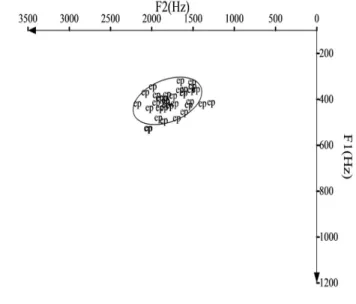
Figure 3.1 shows the mean F1 and F2 values for the average epenthetic vowel productions of 36 Korean L2 speakers. The overall results showed that epenthetic vowels were more often produced as high central vowels. Furthermore, most of the epenthetic vowels were inserted near the high-vowel position (See Appendix 1 for the mean value of first, second, third formant, duration and pitch). The range of F1 varied, but most F1 values were between 300 and 500 Hz, suggesting that epenthetic vowels were produced as high vowels. The mean F1 value was 400 Hz (median = 403 Hz, SD = 52.96 Hz). There was more variability in F2 values, ranging from less than 1,400 Hz to more than 2,200 Hz. The mean F2 value was 1,811 Hz (median = 1,864 Hz, SD = 213.67 Hz). The range of F3 values was from 2,400 Hz to more than 3,200 Hz. The mean F3 value was 2,878 Hz (median = 2,896, SD = 223.17 Hz). The variability of vowel duration was significant, ranging from 51 ms to more than 167 ms. The mean duration was 85 ms (median = 77 ms, SD = 26.95 ms). F0 values also showed large variability due to mixed gender. The mean F0 value was 186 Hz (median = 203 Hz, SD = 50.78 Hz).

Figure 3.1 Scatter-plot of epenthetic vowels produced by Korean L2 speakers.

Figure 3.2 displays the distribution of normalised English vowels (/i/, /u/ and /ɑ/) and the mean value of the epenthetic

vowel from Korean L2 speakers. Lobanov’s z-score transformation was adopted because the method is most suitable for eliminating anatomical and physiological variations (Adank et al., 2004). Each normalised formant value was calculated by subtracting the individual speaker’s mean formant frequency from a formant value and dividing by the standard deviation of the formant frequency.

The results produced three vowels: /i/, /u/ and epenthetic vowels. It seemed that epenthetic vowels were close to high vowels. The F2 value of the epenthetic vowels was between the high-front and back /i/ and /u/ vowels, but some vowels overlapped with the high-front vowel /i/.

Figure 3.2 Scatter-plot of English vowels (/i/, /u/ and /ɑ/) and epenthetic vowels produced by Korean speakers.

3.2 Phonetic environment of epenthesis

The count of epenthesis in terms of context from the 36 Korean learners of English was made by searching all instances of epenthesis shown during the production test in the training study. In terms of epenthesis context, the results showed that epenthesis production mostly occurred between words, rather than within words. Eleven hundred and forty three occurrences of epenthesis occurred between words, 154 occurrences of epenthesis showed within a word and 118 occurrences of epenthesis were utterance-final following a coda consonant.

Korean subjects produced epenthesis while reading both

consonant clusters and cross-morpheme boundaries. Among the

epenthesis found within word boundaries, some instances

occurred at the coda position (e.g., ‘bed /bedɨ/’). Interestingly,

most of the epenthesis occurred after stop consonants. For

(5)

example, except for five target words (e.g., scarf, crash, face, path and purse), the words with utterance-final epenthesis ended with a stop. Furthermore, epenthesis was affected by the voicing feature of the preceding consonants. The results showed that the epenthesis was more frequent when the final consonant was voiced stops (e.g., bed – 17 times, ground – 12 times, leg 10 times, road – 10 times, cold 8 times, food – 8 times, mug – 6 times and husband – 3 times) than voiceless stops (e.g., goalpost – 4 times, milk 2 times, cake – 2 times, gate – 1 time and raincoat – 1 time). The results were identical to the findings of previous studies in that Korean learners of English more frequently produced epenthesis after postvocalic word-final voiced stops than other consonants (Kang, 2003).

It seems that Korean L2 speakers produce more epenthesis under certain conditions. Korean subjects produced the most frequent epenthesis between the stops and fricatives, showing 701 occurrences of epenthesis. Epenthesis was most frequent between /d/ and /h/ (e.g., She made her bed), showing 349 epentheses.

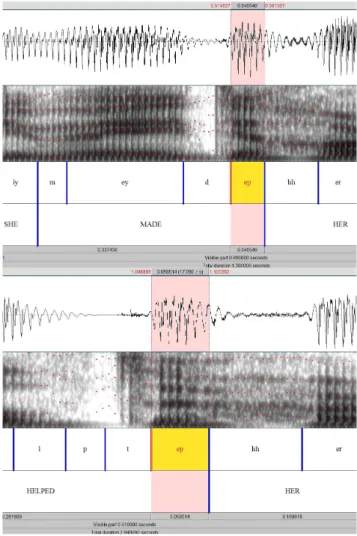
They produced 138 epentheses between /t/ and /h/ (e.g., She helped her husband), 77 epentheses between /d/ and /f/ (e.g., The lorry carried fruit), 76 epenthesis between /d/ and /s/ (e.g., They wanted some potatoes), 33 epentheses between /t/ and /ð/ (e.g., The police chased the car) and 28 epentheses between /d/ and /ð/ (e.g., They followed the path). Figure 3.3 shows the rate of epenthesis production in different conditions and Figure 3.4 shows the spectrogram of epenthetic vowels between /d/-/h/ and /t/-/h/.

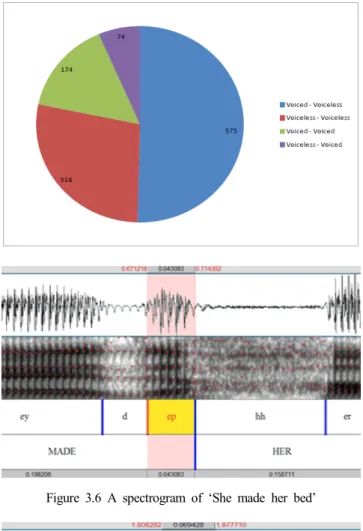
Figure 3.3 Pie chart of epenthesis production in terms of position (unit: the number of epenthetic vowels)

Figure 3.4 Spectrograms of ‘She made her bed’ and

‘The wife helped her husband’

Voicing of consonants seemed to be related to the occurrences

of epenthesis production. Figure 3.5 shows the rate of epenthesis

production in terms of voicing feature. The results show that

Korean learners of English produced the most frequent epenthesis

between voiced and voiceless consonants, showing 575

occurrences of epentheses (e.g., She made her bed - see Figure

3.6). They produced 318 epentheses between voiceless

consonants (e.g., The child drank some milk - see Figure 3.7),

174 epentheses between voiced consonants (e.g., The child grabs

the toy - see Figure 3.8) and 74 epentheses between voiceless

and voiced consonants.(e.g., A girl kicked the table see

Figure 3.9).

(6)

Figure 3.6 A spectrogram of ‘She made her bed’

Figure 3.7 A spectrogram of ‘The child drank some milk’

i

Figure 3.8 A spectrogram of 'The child grabs the toys'

Figure 3.9 A spectrogram of ‘A girl kicked the table’

3.3 Extra-phonological factors

Two extra-phonological factors were analysed. First, the effect of English experience was investigated. The length of time learning English and living in an English-speaking country were collected from all Korean subjects through a questionnaire. Then, the relationship between those English experience factors and the amount of epenthesis production were analysed. The results showed that the length of time learning English was not statistically correlated with epenthesis production (r = .265, p >

.05). For example, k031 reported that she had been learning English for 30 years. However, she produced 67 epenthetic vowels. However, k016 had been learning English for 15 years but only produced five epenthetic vowels. The results of length of time living in an English-speaking country were not much different; a lack of significant correlations with the number of epenthesis produced was found with this factor (r = -.022, p >

.05). For example, some participants produced many epenthetic vowels despite relatively long lengths of residence. Specifically, k007 reported that he had lived in an English-speaking country for 10 years. However, he produced 85 epenthetic vowels. Yet, k004 reported that she had lived for three months in an English-speaking country but produced only three epenthetic vowels. Therefore, it is plausible that epenthesis production is unrelated to the duration and amount of exposure.

As length of learning English and living in English-speaking

countries were not linked to epenthesis production, the results of

the speech-in-noise recognition test spoken by the SBEs were

used to see whether this measure is linked to epenthesis because

recognition in noise could reveal dialog comprehension. The

Pearson correlation test also showed no strong correlation

between the results of the noise recognition test spoken by the

SBEs and epenthesis production (r = -.2769, p = .1021),

supporting that English experience is not linked to epenthesis

(7)

Word Count Percentage Number of subjects

Brushed 64 48% 19

Dripped 28 21% 11

Dropped 14 11% 7

Looked 7 5% 2

Helped 7 5% 6

Chased 5 4% 2

Packed 3 2% 1

Kicked 2 2% 2

Used 2 2% 1

Total 132 100% 51

Table 3.1 The number of orthographic epentheses and percentage for each target word

production.

Some of the Korean learners of English may have been affected by orthography. When Korean L2 speakers read BKB sentences, they inserted epenthetic vowels when the word contained the past-tense suffix ‘-ed’ (e.g., dripped, brushed). The amount of epenthetic vowels produced with this suffix was counted, and the proportion of those vowels was calculated. The results showed that only 143 of 1,550 epenthetic vowels were linked to the past-tense suffix ‘-ed’, and 25 of 36 Korean learners of English may have been affected by this orthography.

The effect of orthography varied in that some subjects produced more than 50% of their total amount of epenthetic vowels, but other subjects did not seem to be affected by orthography, showing 0% of orthographic epenthesis production.

Pearson correlation tests expressed no significant correlation between length of time learning English and the total number of orthographic epentheses (r = .0065, p = .97). Length of time living in an English-speaking country was also not significantly correlated with the amount of orthographic epenthesis (r = -.0503, p = .7707). No significant correlation was found between length of time learning English and the proportion of orthographic epenthesis (r =-.2507, p = .1403). Likewise, no strong correlation was found between length of time living in an English-speaking country and orthographic epenthesis proportion (r = -.1597, p = .3522).

Ten English words were shown to create the most orthographic affect for Korean L2 speakers: brushed, dripped, dropped, looked, helped, chased, packed, kicked and used.

Interestingly, the count of orthographic epenthesis differed with each word. The count of orthographic epenthesis varied from 2 to 64. The target word brushed most frequently contained an

epenthetic vowel, accounting for 48% of the total orthographic epenthesis. Nineteen Korean subjects produced epenthetic vowels when reading brushed. Table 3.1 shows the count of orthographic epenthesis and percentage for each target word.

To summarise, English experience, in terms of length of time learning English or living in an English-speaking country, did not affect vowel epenthesis. Furthermore, the results of the speech-in-noise recognition test spoken by the SBEs were not related to epenthesis production, supporting that English experience is not linked to epenthesis. Orthographical effects do not seem to be related to epenthesis production among Korean learners of English because only 9% of epenthesis production was related to orthography. The results further demonstrated that epenthetic vowels in target words were easily affected by a preceding consonant (e.g., /ʃ/ or /s/), but some of them were independent, as well.

4. Discussion

The present study investigated the acoustic characteristics of epenthetic vowels produced by 36 Korean learners of English.

Two main findings were found. First, most epenthetic vowels have high F1 values and varied F2 values. Second, the count of epenthesis is affected by the environment.

Epenthetic vowels have high F1 and varied F2 values, which has also been found in previous studies. According to the results of previous studies that investigated Korean vowels (Kwak, 1988;

Igeta & Arai, 2011), epenthetic vowels were quite close to the Korean high-mid vowel /ɨ/. The present study confirmed that epenthetic vowels are close to high central or high-front vowels (Lee, 2009). This study also supported the conclusion that learners of English usually insert the shortest vowels (Dupoux et al., 2011). Korean learners of English may have inserted an epenthetic vowel that was close to /ɨ/ because this vowel is the shortest vowel among Korean vowels (Koo, 1998). Normalised mean values of the epenthetic vowels showed that they were distributed between English high-front and back vowels with some overlapping, suggesting that most epenthetic vowels were created near the high central vowels, but some were created more front because of environmental effects.

The results of investigating the contexts of epenthesis clearly

indicate that epenthesis seems to occur in certain contexts. First,

the results show that most epenthesis occurred in word junctions,

rather than consonant clusters, with more than 80% of epenthesis

produced between words. Second, epenthesis is affected by

(8)

consonant manner in word junctions. The results demonstrate that Korean subjects produced the most frequent epenthesis between obstruents, such as stops and fricatives. Some previous studies show vowel epenthesis occurring more frequently after voiced consonants than voiceless ones (Kang, 2003). However, no earlier studies seemed to identify obstruents as the most important category of consonants in the environment for epenthesis. Third, epenthesis was affected by the voicing feature of consonants at the word boundary. The results show that Korean subjects produced more epenthesis between voiced and voiceless consonants. Although Kabak and Idsardi (2007) revealed that Korean learners of English may have perceptual epenthesis for all consonantal sequences not allowed in Korean (consonantal contact hypothesis) and a syllable structure violation in terms of the coda consonants (coda condition hypothesis), the present study demonstrated that epenthesis production occurred between words rather than within consonant clusters.

The investigation of extra-phonological factors showed both English experience and orthography were unrelated to epenthesis production. The results showed that length of time learning English, living in an English-speaking country and the results of the noise recognition test spoken by the SBEs were not correlated with the amount of epenthesis. The results show that 9% of epenthesis seemed to be affected by orthography, thus orthography does not play a major role in epenthesis, except perhaps for some individual subjects.

Despite these interesting findings, this study has limitations that should be considered for future studies. In terms of English experience, this study only investigated the length of time learning English and living in an English-speaking country, but more measures may affect English experience. For example, the total amount of epenthesis could be different with respect to how often Korean L2 speakers use English in their daily lives.

Previous studies have shown that that the amount of native language usage affects the pronunciation of the second language (Flege et al., 1997). The amount of epenthesis could be different between subjects speaking English more than several hours per day and those speaking less than one hour per day. Additionally, the present study only investigated the relationship between the English experience of individuals and the amount of epenthetic vowels. The interesting results can be found if those individuals are grouped according to their English experiences, considering group effect.

Based on these limitations, future studies should investigate epenthetic vowels with various measures. First, further studies

could examine whether Korean L2 subjects with different levels of English-speaking abilities will produce different amounts of epenthesis. The relationship between English-speaking test scores and the amount of epenthesis should be examined. Furthermore, the duration of English-speaking time should be considered. In terms of phonetic approaches, future studies could investigate whether English typological factors interrupt proper English consonant pronunciation. Bayraktaroğlu (2008) showed that Turkish L2 speakers were affected by the English orthographic system, producing production errors including epenthesis.

Therefore, Korean learners of English might also be affected by the different orthographic system.

Despite some limitations, the findings of present study contributed to the understanding vowel epenthesis. First, the study showed that the epenthetic vowels produced by Korean learners of English were close to the high central vowel /ɨ/, confirming the findings of previous studies that epenthetic vowel is quite close to the shortest vowel. Second, the study investigated the various phonetic environments of epenthetic vowels. It helped us to understand that vowel epenthesis occurred more frequently in a certain phonetic circumstances.

References

Adank, P., Smits, R. & van Hout, R. (2004) A comparison of vowel normalization procedures for language variation research.

Journal of the Acoustical Society of America, 116, 5, 3099-3017.

Ahn. G.S. (2012) A Study of Korean Students’ Perception on English Vowel Epenthesis. Studies in English Education, 17, 1.

Bayraktaroğlu, S. (2008) Orthographic interference & the teaching of British pronunciation to Turkish learners. Journal of Language & Linguistic Studies, 4,2, 107-143.

Bench, J., Kowal, A. & Bamford, J. (1979) The BKB (Bamford- Kowal-Bench) sentence lists for partially-hearing children.

British Journal of Audiology, 13, 108-112.

Delatorre, F. & Koerich, R. D. (2006) Brazilian EFL learners’

epenthesis production on English words ending in ed.

Unpublished working paper.

Detey, S. & Nespoulous J. (2008) Can orthography influence second language syllabic segmentation? Japanese epenthetic vowels & French consonantal clusters. Lingua 118. 66-81.

Dupoux, E., Parlato, E., Frota, S., Hirose, Y. & Peperkamp, S.

(2011) Where do illusionary vowels come from? Journal of Memory and Language, 64, 199-210.

Flege, J.E., Frieda, E.M. & Nozawa, T. (1997) Amount of

(9)

native-language (L1) use affects the pronunciation of an L2.

Journal of Phonetics, 25, 169 -186.

Grainger, J., Van Kang, M., N. & Segui, J. (2001) Cross-modal repetition priming of heterographic homophones. Memory &

Cognition, 29, 1, 53-61.

Han, J.I. (1999) The effective teaching of English pronunciation based on the analysis of Korean EFL Learners’ pronunciation error patterns, Studies of curriculum education, 3, 2.

Igeta T. & Arai, T. (2011) A case study on comparison of male and female vowel formants by native speakers of Korean, A proceeding of 16 th International Congress of Phonetic Sciences, 934-947.

Kabak, B. & Idsardi, W. (2003) Syllabically conditioned perceptual epenthesis. Proceedings of the Berkeley Linguistics Society, 29, 233-245.

Kabak, B. & Idsardi, W. (2007) Perceptual distortions in the adaptation of English consonant clusters: Syllable structure or consonantal contact constraints? Language & Speech 50, 1, 23-52.

Kang, Y. (2003) Perceptual similarity in loanword adaptation:

English postvocalic word-final stops in Korean. Phonology 20.

219-273.

Kim, K.M. & Kochetov, A. (2011) Phonology & phonetic of epenthetic vowels in loanwords : Experimental evidence from Korea. Lingua 121, 511-532.

Koo, H.S. (1998) The influence of consonant environment upon the vowel duration. Phonetic Science 4, 1. 7-17. (in Korean) Kim, K.M. (2009) Coronals in epenthesis in loanwords with

comparison to velars. Toronto Working Papers in Linguistics 30, Special issues on Coronal, 53-68.

Kwak, D.G. (2003) A study on the Korean students’ recognition for the English intonation. Education research studies, 1-21 (in Korean)

Lee, S.S. (2009) Syllable Structure constraint & the perception of biconsonantal clusters by Korean EFL learners. English language & literature, 55, 6, 1193-1220.

Masuda, H. & Arai, T (2010) Processing of consonant clusters by Japanese native speakers: influence of English learning backgrounds, Acoustical Science and Technology, 31 (5), 320-327.

Monahan, P.J., Takahashi, E., Nakao, C., Idsardi, W. (2008) Not all epenthetic contexts are equal: differential effects in Japanese illusory vowel perception. Proceedings of Japanese / Korean Linguistics 17.

Pitt, M. A. (1998) Phonological processes & the perception of

phonotactically illegal consonant clusters. Perception &

Psychophysics. 60., 941-951.

Shaw, J. & Davidson, L. (2011) Perceptual similarity in input-output mappings: A computational/experimental study of non-native speech production. Lingua 121, 1344-1358.

Venderlin I. & Peperkamp, S. (2006) The influence of orthography on loanword adaptations. Lingua 116, 996-1007.

•Shin, Dong-Jin

Center for Spoken Language Research (CSLR) HanKuk University of Foreign Studies Imun-ro, Dongdaemun-gu, Seoul 107 Tel: 02-2173-2114

Email: [email protected]

Interesting field: Phonetics, Speech Science

•Iverson, Paul, corresponding author Speech, Hearing and Phonetic Sciences, University College London

Chandler House, United Kingdom Email: [email protected]

Interesting filed: Phonetics, Speech Science

(10)

Appendix

BKB sentences used in production test The house had nine rooms

Children like strawberries A cat sits on the bed The house had a nice garden The man tied his scarf The lorry carried fruit The lady's making a toy The girl caught the cold The postman shut the gate The football hit the goalpost She made her bed

A girl kicked the table He paid his bill

Father looked at the book She brushed her hair They are looking at the clock The wife helped her husband The dog drank from a bowl The cat caught a mouse The cow lies on the grass A boy ran down the path She drinks from her cup The car hit a wall They're watching the train They're crossing the street They wanted some potatoes He found his brother The police chased the car She used her spoon

The milk was by the front door Baby broke his mug

The cook cut some onions The girl lost her doll The child grabs the toy He broke his leg The train had a bad crash The sun melted the snow The paint dripped on the ground Lemons grow on trees

He frightened his sister The cook's making a cake He's washing his face

The child drank some milk

They took some food

Somebody took the money

The cleaner used a broom

They laughed at his story

The lorry drove up the road

He's bringing his raincoat

The children dropped the bag

The floor looked clean

Mother made some curtains

She found her purse

The book tells a story

The postman brings a letter

A letter fell on the mat

The shoes were very dirty

The lady packed her bag

They followed the path

They're climbing the tree

A boy fell from the window

수치

Figure  3.1  Scatter-plot  of  epenthetic  vowels  produced  by  Korean  L2  speakers.
Figure  3.3  Pie  chart  of  epenthesis  production  in  terms  of  position  (unit:  the  number  of  epenthetic  vowels)
Figure  3.7  A  spectrogram  of  ‘The  child  drank  some  milk’ i
Table  3.1  The  number  of  orthographic  epentheses  and  percentage  for  each  target  word

참조

관련 문서

The smallest Guitar produced by state- -of of- -the the- - art lithography technique. Thickness of the

The purpose of the present study was to investigate whether there are any differences in Korean high school students ’ reading comprehension of English texts according to

First, same words undergo the same phonological phenomena such as vowel shortening(diphthongs become simple vowels by glide deletion), tensing and

The research for the participants shows that the animated English fairy tales did not contribute to the elementary learners' interest in English learning,

Therefore, this paper is to recognize the common mistakes English learners make while using English articles and to provide helpful tips for those who teach

In the study of English lexical learning strategies by majors and non-majors, the strategies commonly used by the two groups was indicated the orderly

The aim of this study is to explain difficulties of Korean high school students' use of English relative pronouns by the error analysis and then provide English teachers

The purpose of the study was to investigate English reading strategies of Korean high school students in terms of their English proficiency level and