• 검색 결과가 없습니다.

Surfactant Therapy in Severe Meconium Aspiration Syndrome

N/A
N/A
Protected

Academic year: 2021

Share "Surfactant Therapy in Severe Meconium Aspiration Syndrome"

Copied!
5
0
0

로드 중.... (전체 텍스트 보기)

전체 글

(1)

ABSTRACT

Meconium is a strong inactivator of pulmonary surfactant. The deficiency of surfactant or surfactant dysfunction may contribute to respiratory failure in a wide group of disorders, including meconium aspiration syndrome (MAS). We reviewed the effect of pulmonary surfactant therapy for severe MAS in ours as well as other countries. In general, surfactant therapy improves pulmonary oxygenation (oxygenation index or arterial/alveolar oxygen tension) and reduces the require­

ment for ventilation, and oxygen supplementation or hospitalization time. How­

ever, its effects on mortality and pulmonary or extrapulmonary complications are variable. In Korean studies, outborn infants are five times more common than inborn infants; therefore, the initial hospital care at delivery including adequate tracheal suctioning is important to improve the outcome of patients with severe MAS. To confirm the effect of surfactant therapy in MAS, additional well­designed, multicenter, randomized, controlled trials are needed. In addition, determining the optimal type of surfactant therapy (bolus, lavage, or combined) and the appropriate dose and duration of therapy is important.

Key Words: Meconium aspiration syndrome, Pulmonary surfactant

서론

이래 활발히 하여

Received: 12 August 2013 Accepted: 13 August 2013 Correspondence to:

Sang Lak Lee, M.D.

Department of Pediatrics, Keimyung University School of Medicine, 194 Dongsan­dong, Jung­gu, Daegu 700­712, Korea

Tel: +82­53­250­7535, Fax: +82­53­250­7783, E­mail: [email protected]

Surfactant Therapy in Severe Meconium Aspiration Syndrome

Sang Lak Lee, M.D., Ph.D., and Chun Soo Kim, M.D., Ph.D.

Department of Pediatrics, Keimyung University School of Medicine, Daegu, Korea

중증 태변 흡인 증후군에서 폐표면 활성제 치료

계명대학교 의과대학 소아과학교실 이상락 · 김천수

pISSN 2287-9412 . eISSN 2287-9803

Copyright(c)

By Korean Society of Neonatology.

All right reserved.

(2)

용되어서

근래 활성화가급성 폐손상 대량 바이러스천식낭성 선천성등에서

특히 에서의 하였다 별다른

태변에 의한 폐표면 활성제 억제 작용

태변은 가시키는 질수록 표면

다고 하였다 단백질과 타낸다태변은 α 성화를또한 염증성 기하는

MAS에 대한 폐표면 활성제 치료: 국제 연구

동물의 내며 시간 다고 었다 요법 교하여 되었으며 소기 입원일수 있게 없어

의미있게

Fig. 1. The effects of various concentrations of surfactant-

meconium mixtures on dynamic minimum surface tension

(mN/m); *P<0.01 vs. 0 mg/mL meconium concentration. From

Bae CW, et al. Pediatr Res 1998;44:187-91[15].

(3)

정군에서 아를 빠른

중국에서는 명의 증가 에서는

교하여 기흉 일산화질소 거나 신뢰

요약하면 미있게 신뢰

신뢰 환아의

국내 연구

공환기기 명의 에게 였고 여하여 명을 그러나 없는 에서 도로

이후 인공환기

아는

명과

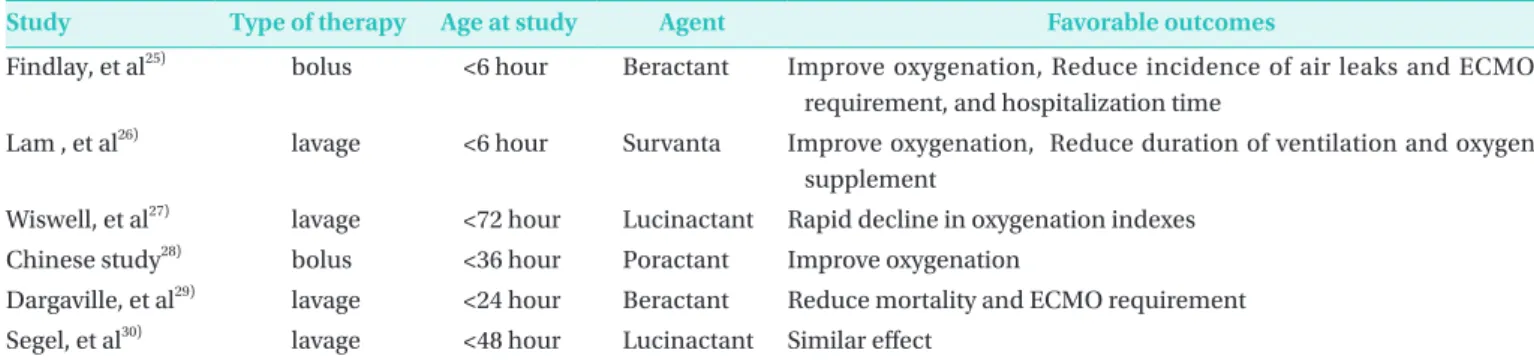
Table 1. Summary of Data in Foreign­controlled Studies

Study Type of therapy Age at study Agent Favorable outcomes

Findlay, et al

25)

bolus <6 hour Beractant Improve oxygenation, Reduce incidence of air leaks and ECMO requirement, and hospitalization time

Lam , et al

26)

lavage <6 hour Survanta Improve oxygenation, Reduce duration of ventilation and oxygen supplement

Wiswell, et al

27)

lavage <72 hour Lucinactant Rapid decline in oxygenation indexes Chinese study

28)

bolus <36 hour Poractant Improve oxygenation

Dargaville, et al

29)

lavage <24 hour Beractant Reduce mortality and ECMO requirement Segel, et al

30)

lavage <48 hour Lucinactant Similar effect

Abbreviation: ECMO, extracorporeal membrane oxygenation.

(4)

질환과 사항은에서 에서에서 중요할 부족과 향후 있었지만

결론

태변은 태변 중증 소화 산소 러나 서는 경과를 표본 용량

REFERENCES

1) Avery ME, Mead J. Surface properties in relation to atelectasis

and hyaline membrane disease. AMA J Dis Child 1959;97:517- 23.

2) Fujiwara T, Maeta H, Chida S, Morita T, Watabe Y, Abe T.

Artificial surfactant therapy in hyaline-membrane disease.

Lancet 1980;1:55-9.

3) Auten RL, Notter RH, Kendig JW, Davis JM, Shapiro DL.

Surfactant treatment of full-term newborns with respiratory failure. Pediatrics 1991;87:101-7.

4) Blanke JG, Jorch G. Surfactant therapy in severe neonatal respiratory failure-multicenter study-II. Surfactant therapy in 10 newborn infants with meconium aspiration syndrome.

Klin Padiatr 1993;205:75-8.

5) Lewis JF, Veldhuizen R. The role of exogenous surfactant in the treatment of acute lung injury. Annu Rev Physiol 2003;65:613- 42.

6) Raju TN, Langenberg P. Pulmonary hemorrhage and exo- genous surfactant therapy: a metaanalysis. J Pediatr 1993;123:

603-10.

7) Herting E, Gefeller O, Land M, van Sonderen L, Harms K, Robertson B. Surfactant treatment of neonates with respira- tory failure and group B streptococcal infection. Members of the Collaborative European Multicenter Study Group.

Pediatrics 2000;106:957-64.

8) Tibby SM, Hatherill M, Wright SM, Wilson P, Postle AD, Murdoch IA. Exogenous surfactant supplementation in infants with respiratory syncytial virus bronchiolitis. Am J Respir Crit Care Med 2000;162:1251-6.

9) Kurashima K, Ogawa H, Ohka T, Fujimura M, Matsuda T, Kobayashi T. A pilot study of surfactant inhalation in the treatment of asthmatic attack. Arerugi 1991;40:160-3.

10) Griese M, Bufler P, Teller J, Reinhardt D. Nebulization of a bovine surfactant in cystic fibrosis: a pilot study. Eur Respir J 1997;10:1989-94.

11) Bos AP, Tibboel D, Hazebroek FW, Molenaar JC, Lachmann B, Gommers D. Surfactant replacement therapy in high-risk congenital diaphragmatic hernia. Lancet 1991;338:1279.

12) Choi WJ, Kim JY, Lee JW, Park WS, Kim CS, Lee SL, et al. The effect of pulmonary surfactant lavage and replacement thera- Table 2. Summary of Data in Korean­controlled Studies

Study Type of therapy Disease Agent Favorable outcomes

Choi, et al

12)

lavage+bolus severe MAS Newfacten Improve oxygenation, Reduce duration of ventilation and oxygen supplement, and hospitalization day

Lee, et al

38)

lavage severe MAS Newfacten Improve oxygenation, Reduce duration of ventilation and hospitalization day

Choi, et al

39)

lavage massive pulmonary hemorrhage Curosurf Reduce duration of ventilation day, Fewer incidence of BPD or death

Abbreviation: BPD, bronchopulmonary dysplasia.

(5)

py in meconium aspiration pneumonia neonates. The 53th Annual Fall Meeting of the Korean Pediatric Society; 2003 Oct 24-25; Seoul. Seoul: The Korean Pediatric Society, 2003; 40.

13) Chen CT, Toung TJ, Rogers MC. Effect of intra-alveolar meconium on pulmonary surface tension properties. Crit Care Med 1985;13:233–6.

14) Moses D, Holm BA, Spitale P, Liu MY, Enhorning G. Inhibition of pulmonary surfactant function by meconium. Am J Obstet Gynecol 1991;164:477-81.

15) Bae CW, Takahashi A, Chida S, Sasaki M. Morphology and function of pulmonary surfactant inhibited by meconium.

Pediatr Res 1998;44:187-91.

16) Cleary GM, Antunes MJ, Ciesielka DA, Higgins ST, Spitzer AR, Chander A. Exudative lung injury is associated with decreas- ed levels of surfactant proteins in a rat model of meconium aspiration. Pediatrics 1997;100:998-1003.

17) Sun B, Curstedt T, Robertson B. Surfactant inhibition in ex- peri mental meconium aspiration syndrome. Acta Paediatr 1993;82:182-9.

18) Dargaville PA, South M, McDougall PN. Surfactant and surfactant inhibitors in meconium aspiration syndrome. J Pediatr 2001;138:113-5.

19) Vidyasagar D, Lukkarinen H, Kaapa P, Zagariya A. Inflam- matory response and apoptosis in newborn lungs after meco- nium aspiration. Biotechnol Prog 2005;21:192-7.

20) Okazaki K, Kondo M, Kato M, Kakinuma R, Nishida A, Noda M, et al. Serum cytokine and chemokine profiles in neonates with meconium aspiration syndrome. Pediatrics 2008;121:

e748-53.

21) de Beaufort AJ, Bakker AC, van Tol MJ, Poorthuis BJ, Schrama AJ, Berger HM. Meconium is a source of pro-inflammatory substances and can induce cytokine production in cultured A549 epithelial cells. Pediatr Res 2003;54:491-5.

22) De Luca D, Minucci A, Zecca E, Piastra M, Pietrini D, Carnielli VP, et al. Bile acids cause secretory phospholipase A2 activity enhancement, revertible by exogenous surfactant admini- stration. Intensive Care Med 2009;35:321-6.

23) Kääpä P, Soukha H. Phospholipase A2 in meconium-induced lung injury. J Perinatol 2008;28 Suppl 3:S120-2.

24) Khammash H, Perlman M, Wojtulewicz J, Dunn M. Surfactant therapy in full-term neonates with severe respiratory failure.

Pediatrics 1993;92:135-9.

25) Findlay RD, Taeusch HW, Walther FJ. Surfactant replacement therapy for meconium aspiration syndrome. Pediatrics 1996;

97:48-52.

26) Lam BC, Yeung CY. Surfactant lavage for meconium aspira- tion syndrome: a pilot study. Pediatrics 1999;103:1014-8.

27) Wiswell TE, Knight GR, Finer NN, Donn SM, Desai H, Walsh WF, et al. A multicenter, randomized, controlled trial com- paring Surfaxin (Lucinactant) lavage with standard care for treatment of meconium aspiration syndrome. Pediatrics 2002;

109:1081-7.

28) Chinese Collaborative Study Group for Neonatal Respiratory Diseases. Treatment of severe meconium aspiration syn- drome with porcine surfactant: a multicentre, randomized, controlled trial. Acta Paediatr 2005;94:896-902.

29) Dargaville PA, Copnell B, Mills JF, Haron I, Lee JK, Tingay DG, et al. Randomized controlled trial of lung lavage with dilute surfactant for meconium aspiration syndrome. J Pediatr 2011;

158:383–9.e2.

30) Segal R, Wiswell TE. Phase III randomized study of lucinactant in full term newborn infants with meconium aspiration syn- drome. ClinicalTrials.gov.2012 [accessed 2013 Aug 7]. Avail- able from: http://clinicaltrials.gov/show/NCT 00004500.

31) Luo FF, Yang DY, Chen P, Hua ZY. Effect of pulmonary sur- factant therapy in neonates with meconium aspiration syn- drome: a meta-analysis. Zhongguo Dang Dai Er Ke Za Zhi 2012;14:413-7.

32) Cho YJ, Lee HJ, Lee SL. A case of massive pulmonary he morr- hage treated with pulmonary surfactant replacement. J Korean Soc Neonatol 1999;6:258-62.

33) Shon SM, Lee BY, Kim CS, Lee SL, Kwon TC. The outcome of surfactant replacement therapy in above nearterm neonates with severe pulmonary disease. Korean J Pediatr 2007;50:

1200-5.

34) Choi BY, Kim KM, Yoon JS, Lee JS. A case of acute respiratory distress syndrome treated with surfactant and low dose methylprednisolone. Korean J Pediatr 2006;49:455-9.

35) Park JH, Kim CS, Lee SL. A case of acute respiratory distress syndrome due to maternal blood aspiration. Korean J Peri- natol 2009;20:74-7.

36) Park SW, Kim CS, Lee SL, Kwon TC. Clinical findings of severe amniotic fluid aspiration pneumonia and effects of surfactant replacement therapy. Korean J Pediatr 2009;52:429-34.

37) Choi CW, Kim BI, Lee HJ, Joung KE, Shim GH, Lim IS, et al.

Clinical characteristics of severe meconium aspiration syn- drome. Korean J Pediatr 2008;51:713-21.

38) Lee SM, Kim HM, Jeon JH, Park MS, Park KI, Namgung R, et al.

Eff ect of surfactant lavage in severe meconium aspiration syn- drome. Korean J Pediatr 2008;51:367-71.

39) Choi HJ, Sin YH, Kim SM. Exogenous surfactant therapy in

neonates with respiratory failure due to pulmonary hemor-

rhage. Korean J Perinatol 2011; 22:319-28.

수치

Table 1. Summary of Data in Foreign­controlled Studies

참조

관련 문서

치료에 잘 반응하지 않을 경우 cell therapy, hyperbaric oxygen therapy, growth factor treatment, negative pressure wound therapy (NPWT) 등을 시도해 볼 수 있다..

Respiratory acidosis and metabolic alkalosis : chronic lung disease and diuretics 5.. Mixed acute and chronic respiratory acidosis : chronic lung disease

Accessory gene regulator group II polymorphism in methicillin-resistant Staphylococcus aureus in predictive of failure of vancomycin therapy.. Relationship of MIC and

Therefore, the present study aimed to (i) investigate the effect of surfactant on the solubility of valsartan and (ii) improve the dissolution profiles of valsartan

Based the above study results, balance relaxation therapy is considered a therapy that can help the body recover its flexibility if there is an imbalance

First, after the Group Art Therapy, the scale of hopelessness depression in the test group decreased significantly in comparison with that before the group

Comparison of the acyclovir fluxes across hairless mouse skin and artificial membranes (polyether block amide (PBA) membrane, polyurethane (PU) membrane,

20≤n : high water solubility, limited surfactant quality n&lt;5 : little significant water solubility... Molecular Basis