세라마이드를 함유한 안정한 라멜라 구조체 제조 및 분산
김 도 훈†⋅오 성 근*
아모레퍼시픽기술연구원, *한양대학교 화학공학과
(2009년 8월 16일 접수, 2009년 8월 28일 수정, 2009년 9월 7일 채택)
Formation and Dispersion of Stable Lamellar Structure Containing Ceramide
Do-Hoon Kim† and Seong-Geun Oh*
Amore-Pacific Co. R&D Center, 314-1, Bora-dong, Giheung-gu, Yongin-si, Gyeonggi-do 449-729, Korea
*Department of Chemical Engineering, Hanyang University
(Received August 16, 2009; Revised August 28, 2009; Accepted September 7, 2009)
요 약: 본 총설에서는 세라마이드를 함유한 다양한 조성의 안정한 라멜라 구조체 제조 및 그들의 분산에 대한 기술을
소개하였다. DSC, x-ray diffraction 및 FT-IR spectra를 이용하여 라멜라 구조체의 성질을 평가했으며, 세라마이드와 함께 적절한 오일, 계면활성제, 또는 지질로 구성된 형태의 안정한 라멜라 구조체 형성을 자세히 설명하였다. 세라마이 드를 이용 하기 위한 다양한 접근 방법은 에멀전 및 리포좀 제조에 이용 될 것이며 나아가 화장품, 의약품 및 약물 전달 분야에 응용 할 수 있을 것이다.
Abstract: This study described formation and dispersion of stable lamellar structure containing ceramide. To charac- terize of the lamellar structure containing ceramide, we used differential scanning calorimetry, x-ray diffraction, and FT-IR spectra, which enabled us to demonstrate that ceramide with appropriate amounts of lipid, oil and surfactant can assemble to form a stable lamellar-phase. These approaches to use ceramide offers useful means to fabricate a variety of biocompatible emulsion and liposome, which enlarge their applicability in the fields of drug delivery, derma- tology and cosmetics.
Keywords: ceramide, lipid, drug delivery, cosmetic, lamellar
1. 서 론
1)
피부의 최 외각에 있는 각질층은(stratum corneum) 피부로부터의 수분 증발뿐만 아니라 외부 환경의 자극으 로부터 보호하는 표피막(epidermal barrier)을 제공한다.
각질층이 없을 경우 수분손실이 100배 이상 증가 될 정 도로 매우 중요한 역할을 한다[1-4]. 각질층의 장벽기능 은 각질층 세포 사이에 존재하는 지질 이중층들의 고차 원적이 배열구조에 기인한다[3,5,6]. 지질 이중층(lipid bilayer)의 자발적 회합체의 메커니즘과 그들의 물리화 학적 성질은 매우 중요하게 연구가 진행되어 왔다[7-9].
† 주 저자 (e-mail: [email protected])
각질 세포간 지질로 구성된 라멜라상은 세라마이드, 콜레스테롤, 자유 지방산 및 cholesteryl ester 등으로 구 성되어있으며, 그들 가운데 세라마이드는 라멜라 생성뿐 만 아니라 라멜라상의 구조적 안정성에 매우 중요한 역 할을 하고 있다[10]. 세라마이드는 사람의 각질세포간 지질성분 중 40 % 정도를 구성하고 있으며. 그들은 각질 층의 장벽 기능에 매우 중요한 역할을 하고 있다[11,12].
세라마이드는 장쇄 알콜과 장쇄의 지방산이 amide 결합 을 통해 연결 구성되며, 2 ∼ 3개의 hydroxyl 그룹을 가 지고 있어 상대적으로 약한 극성을 띤다. 이런 세라마이 드의 hydroxyl 그룹과 amide 그룹은 수소결합 작용에 중 요한 역할을 하며, 세라마이드와 주변 분자들과의 수소 결합 네트웍을 통한 상호작용을 한다[13]. 각질층 내에
존재를 하기 때문에 비용적인 측면 때문에 산업적으로 널리 사용할 수가 없었다. 그래서 좀더 싸고 쉽게 이용하 기 위해 많은 연구자들은 합성 유사 세라마이드를 개발 했으며, 화장품 및 의약품에 피부 수분 손실을 억제하는 데 이용되어 왔다[17,18]. 또한 그들은 건조하고 손상된 피부에 적용을 했을 때 매우 뛰어난 수분 유지력을 가지 며, 다른 각질세포간 지질성분이 콜레스테롤, 지방산과 배합했을 때 좀더 좋은 장벽 기 능력이 있다는 것도 발견 하였다. 이것은 유사 세라마이드를 포함한 각질 세포간 지질성분들이 라멜라 상을 형성 할 뿐만 아니라 피부와 의 친화력이 좋다는 것을 나타낸다.
세라마이드는 보습이라는 관점에서 화장품 및 의약품 분야에서 매우 중요한 소재로 평가 받고 있다. 하지만 실 제적으로 제품에 적용 시 제형 내에서 세라마이드는 γ- crystal 구조로 변하기 때문에 매우 소극적으로 사용되어 왔다. 이를 해결하기 위해서는 세라마이드로 구성된 매 우 안정한 라멜라구조체 개발이 필요하며, 이를 이용한 제형적 접근이 필요하다.
여기서 우리는 세라마이드를 함유한 다양한 형태의 라 멜라 상 제조에 관하여 기술 할 것이며, 또한 다양한 형 태의 라멜라 상을 이용하여 에멀전 및 리포좀 제조에 관 한 내용을 설명 할 것이다. 세라마이드로 구성된 안정한 라멜라 상의 제조는 효과적인 농도의 세라마이드를 제형 내 넣고자 함에 있다.
2. 세라마이드를 포함한 다양한 조성의 안정한 라멜라 구조 체 제조 및 분산
세라마이드가 함유한 다양한 조성의 라멜라 구조 체는 x-ray diffraction, FT-IR spectra, differential scanning calorimetry (DSC)를 통해 그 구조를 확인하게 된다.
noic acid의 carboxyl 그룹이 수소결합을 하기 때문이다.
Figure 2는 세라마이드와 octanoic acid의 수소결합을 나 타내며, octanoic acid 내에서 세라마이드 함량이 줄어들 때, C=O 피크가 1619.42 cm-1이 낮은 파장으로 이동하 는 것을 FT-IR 결과를 통해 얻을수 있다. 세라마이드가 증가할수록 수소결합이 증가함을 나타내는 것이다. oc- tanoic acid와 함께 만들어진 세라마이드는 실온에서 액 체 형태이며, 매우 많은 양의 세라마이드를 녹인다. 또한 안정한 라멜라 구조체를 형성한다.
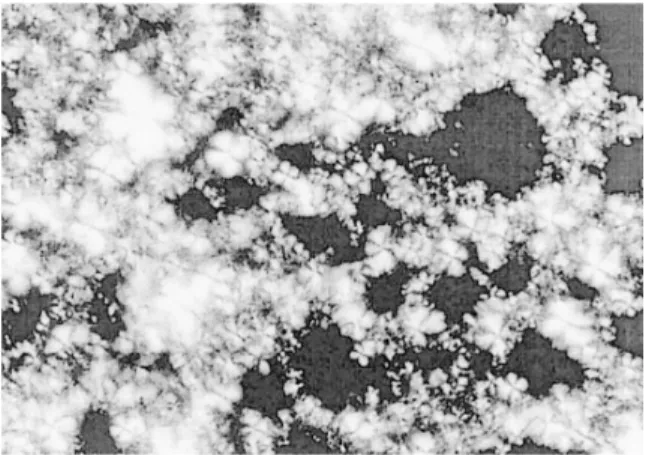
Figure 1(c)에 보여지는 라멜라 상에 물을 첨가하여 만든 에멀전(a2, a3)과 L2상에 물을 첨가하여 에멀전을 만들었다. L2상에 물을 첨가하여 만든 에멀전(a1)은 사 이즈가 매우 불균일하며 안정도가 매우 안 좋았다. 두 개 의 라멜라 영역에 물을 첨가하여 만든 에멀전은 라멜라 구조를 편광현미경을 통해 확인하였다(Figure 3). 에멀 전은 Maltese cross 패턴을 보여주며 이것은 에멀전이 다 층 라멜라구조(multilamellar structure)를 가지는 것으 로 보여진다. 라멜라 상을 지나면서 만들어진 에멀전은 세라마이드를 약 13 % 이상 포함하고 있으며, 매우 균일 한 입자 사이즈를 가지고 있다[19].
세라마이드를 오일에 용해시켜 라멜라 형태로 만드는 방법을 많이 사용되어왔지만, 우리는 세라마이드와 계면 활성제만을 이용하여 라멜라상을 만들고 이를 이용하여 안정한 에멀전을 제조하였다. Figure 4는 세라마이드/
ChoEO20 (polyoxyethylene cholesteryl ether)/물의 삼성 분계 상거동 관찰 결과를 나타내며, titration 방법을 이 용해 실험하였고, 마이셀(M)과 에멀전(E)영역만이 존 재함을 확인하였다. 세라마이드는 작은 극성의 친수성 그룹과 매우 강한 친유성 그룹을 가지고 있어 라멜라구 조체를 형성하려는 성질이 강하다. 마이셀과 에멀전 영 역 이외의 부분은 고체 또는 라멜라 상으로써 두상을 정
(a) (b)
(c) (d)
Figure 1. Ternary phases diagrams for octanoic acid/water/C8G1 system at 25 ℃. (a) Octanoic acid without ceramide PC104, (b) 10 wt%, (c) 25 wt%, (d) 50 wt% of ceramide PC104 in octanoic acid.
확히 구분 짓기는 어렵다. 세라마이드를 에멀전에 약 10
% 정도 포집 할 수 있었다. 세라마이드를 포함한 라멜라 구조 체 및 에멀전의 안정도는 수소결합에 많은 영향을 받 는다. 높은 물 함유능을 가지는 계면활성제(ChoEO20)를 첨가함으로써 라멜라 구조체 안쪽으로 많은 양의 물을 넣을 수 있다. 이들 분자들은 세라마이들의 결정화를 막 기 위해 수소결합을 한다. Figure 5는 polyoxyethylene (POE) 그룹과 세라마이드의 amido carbonyl 그룹 분자 간 수소결합을 보여주며, 물이 존재하는 환경에서 POE 와 세라마이드 사이의 강한 결합이 이루어지는 것 또한 보여준다. 이들 결과를 통해 계면활성제의 POE 그룹이 세라마이드로 이루어진 라멜라 구조체와 에멀전의 안정 화에 영향을 준다. 세라마이드/ChoEO20혼합물은 라멜
Figure 2. Maximum FT-IR peaks of amido carbonyl group of
PC104 in octanoic acid.
Figure 7. (A) Differential scanning calorimetry curves of ceramide PC104/stearic acid mixtures with changing the weight fraction of stearic acid: (a) 0, (b) 0.1, (c) 0.2, (d) 0.3, (e)0.4, (f) 0.5, (g) 0.6, (h) 0.9 and (i) 1.0. (B) A phase diagram of the system consisting of ceramide PC104 and stearic acid.
structures formed at different ceramide PC104 concentration.
Figure 4. Partial ternary phase diagrams of Ceramide PC104/CholEO20/water E: emulsion, M: micellar phase.
라 구조체를 형성하며(Figure 6) 물을 첨가함으로써 에 멀전으로 변화며 매우 균일하고 작은 입자사이즈를 얻는 다[20].
ofceramide PC-104 in lamellar structure with the variation of water contents. (●) Ceramide PC104/CholEO20 (1/1 : molar ratio) (○) Ceramide PC104/CholEO20/C16EO20 (1/0.75/0.25:
molar ratio).
Figure 6. The diffraction patterns of the lamellar structure.
Ceramide PC104/CholEO20/water (25.5 % / 59.5 % / 15 %: wt%).
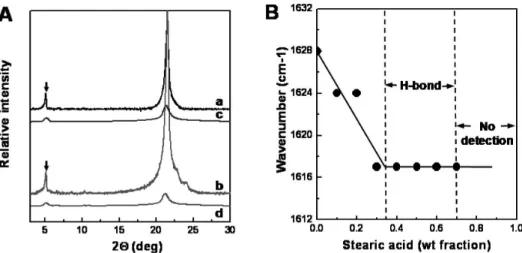
Figure 8. (A) An X-ray diffraction pattern of ceramide PC104/stearic acid mixtures at different weight fraction of stearic acid:
(a) 0.5 and (b) 0.6. We also observed the effect of aging these samples for 4 weeks at room temperature: (c) 0.5 and (d) 0.6.
(B) Maximum FT-IR peaks of amido carbonyl group of ceramide PC104 in the lamellar films containing different concentration of stearic acid.
Figure 9. (A) Differential scanning calorimetry curves of the lipid membranes, consisting of ceramide PC104, stearic acid and cholesterol, with changing the weight fraction of cholesterol: (a) 0, (b) 0.1, (c) 0.2, (d) 0.3, (e) 0.4, (f) 0.5 and (g) 1.0. (B) An X-ray diffraction pattern of the lipid membranes, consisting of ceramide PC104, stearic acid and cholesterol, with changing theweight fraction of cholesterol: (a) 0, (b) 0.1, (c) 0.2, (d) 0.3, (e) 0.4, (f) 0.5 and (g) 1.0. In these experiments, we fixed the mixing ratio of ceramide PC104 and stearic acid by 1 : 1 (w/w).
최근의 연구는 각질층과 가장 유사한 형태의 세라마이 드를 함유한 라멜라 구조체를 제조하고 사용하는데 있 다. 각질층과 유사한 형태의 라멜라 구조체를 얻기 위해 우선 세라마이드/스테아릭산 혼합물의 열적 상거동은 differential scanning calorimetry (DSC)를 이용하여 얻 었으며(Figure 7), 스테아릭산이 증가될수록 흡열 피크 가 새롭게 생성되는 것을 볼 수 있다. 이를 통하여 우리 는 두상의 상적혼합도를 정확히 예측할 수 있으며, 오랜 기간 동안 세라마이드/스테아릭산 혼합물이 구조적으로
변하지 않는 α 형태의 라멜라 구조를 가지고 있음을 확 인하였다(Figure 8). 또한 혼합된 스테아릭산과 세라마 이드는 수소결합을 통해 안정한 형태의 라멜라 상을 형 성하는 것을 보여준다. 각질 세포간 지질성분 중 하나인 콜레스테롤을 세라마이드/스테아릭산으로 구성된 라멜 라 구조 체에 첨가함으로써 지질 막의 경도를 조절 할 수 있었다. 약 30 % 함량까지 라멜라 상의 변화 없이 콜레 스테롤을 함유 할 수 있었다(Figure 9). 세라마이드/스 테아릭산/콜레스테롤의 혼합물로 만들어진 라멜라 구조
체는 각질층과 매우 유사하다. 안정한 라멜라 구조 체를 만드는 세라마이드/스테아릭산/콜레스테롤 조성은 de- hydration/rehydration 방법을 이용해 매우 균일한 리포 좀을 얻게 된다. 그들은 매우 안정하며, 단일 막 구조의 리포좀을 생성하게 된다(Figure 10)[21].
3. 맺음말
이상으로 세라마이드를 함유한 다양한 조성의 라멜라 제조 방법에 대하여 기술하였다. 또한 제조한 라멜라 구 조체를 이용하여 수분산 형태의 에멀전 및 리포좀제조 방법에 대하여 기술하였다. 세라마이드에 대한 효능적 가치는 매우 높지만 용해도가 좋지 않아 이를 활용 할 수 있는 방법은 극히 제한적이다. 이런 문제점을 극복하기 위 한 많은 연구가 필요하며, 본문에서 설명한 다양한 형태의 라멜라 제조 및 분산에 대한 기술은 해결에 많은 도움을 줄 거라 생각된다. 세라마이드로 구성된 라멜라 구조체는 향후 화장품 및 의약품 분야에 널리 적용 될 것이다.
참 고 문 헌
1. P. M. Elias, Lipids and the epidermal permeability barrier, Arch. Dermatol., 270, 95 (1981).
2. M. A. Lampe, A. L. Burlingame, J. Whitney, M. I.
Williams, B. E. Brow, E. Roitman, and P. M. Elias, Human stratum corneum lipids: characterization and regional variations, J. Lipid Res., 24, 120 (1983).
3. P. M. Elias, Epidermal lipids, barrier function and desquamation, J. Invest. Dermatol., 80, 44 (1983).
4. H. D. Onken and C. A. Moyer, The water barrier in human epidermis, Arch. Dermatol., 87, 584 (1963).
5. P. M. Wertz and D. T. Dowing, Glycolipids in mammalian epidermis: structure and function in the water barrier, Science, 217, 1261 (1982).
6. P. A. Bowser and R. J. White, Isolation, barrier properties and lipid analysis of stratum compactum, a discrete region of the stratum corneum, Br. J.
Dermatol., 112, 1 (1985).
7. P. W. Wertz, W. Abraham, L. Landman, and D. T.
Downing, Preparation of liposomes from stratum corneum lipids, J. Invest. Dermatol., 87, 582 (1986).
8. G. M. Golden, D. B. Guzek, A. H. Kennedy, J. E.
Mckie, and R. O. Potts, Stratum corneum lipid phase transitions and water barrier properties, Biochemistry, 26, 2382 (1987).
9. W. Abraham and D. T. Downing, Deuterium NMR investigation of polymorphism in stratum corneum lipids, Biochim. Biophys. Acta., 1068, 189 (1991).
10. P. M. Elias, Epidermal lipids, membranes and kera- tinization, Int. J. Dermatol., 20, 1 (1981).
11. P. W. Wertz, D. C. Swartzendruber, K. C. Madison, and D. T. Downing, The composition and morphol- ogy of epidermal cyst lipids, J. Invest. Dermatol., 89, 419 (1987).
12. D. T. Downing, M. E. Stewart, P. W. Wertz, S. W.
Colton VI, W. Abraham, and J. S. Strauss, Skin lip- ids: an update, J. Invest. Dermatol., 88, 29 (1987).
13. W. Abraham and D. T. Downing, Lamellar struc- tures formed by stratum corneum lipids in vitro: a
deuterium nuclear magnetic resonance (NMR) study, Pharm. Res., 9, 1415 (1992).
14. G. Grubauer, K. R. Freingold, R. M. Harris, and P.
M. Elias, Lipid content and lipid type as determi- nants of the epidermal permeability barrier, J. Lipid Res., 30, 89 (1989).
15. G. Imokawa, S. Akasaki, H. Hattori, and N.
Yoshizuka, Selective recovery of deranged water- holding properties by stratum corneum lipids, J.
Invest. Dermatol., 87, 758 (1986).
16. A. Sekiguchi, J. Manosroi, A. Manosroi, H. Yamauchi, and M. Abe, Molecular interactions between phos- pholipids and glycolipids in a lipid bilayer, Colloid Surf. B, 4, 287 (1995).
17. H. Iwai, J. Fukasawa, and T. Suzuki, Thermotropic behavior of stratum corneum lipids containing a pseudo-ceramide, Int. J. Cosmet. Sci., 20, 87 (1998).
18. S. L. Chamlin, J. Kao, I. J. Frieden, M. Y. Sheu, A.
J. Fowler, and J. W. Fluhr, Ceramide-dominant
barrier repair lipids alleviate childhood atopic der- matitis: changes in barrier function provide a sensi- tive indicator of disease activity, J. Am. Acad.
Dermatol., 47, 198 (2002).
19. M. W. Jeong, S. G. Oh, D. H. Kim, J. S. Ko, and S. W. Oh, Phase diagram and emulsion properties of n-octyl-D-glucoside/water/octanoic acid con- taining pseudo-ceramide mixtures, Colloid Surf. A, 193, 197 (2001).
20. D. H. Kim, S. G. Oh, Y. J. Lee, Y. J. Kim, H. K.
Kim, and H. H. Kang, Emulsion properties of pseu- do-ceramide PC104/water/polyoxyethylene choles- teryl ether and polyoxyethylene cetyl ether mix- tures, Colloid Surf. A, 207, 177 (2002).
21. D. H. Kim, E. J. An, J. W. Kim, S. H. Han, J. W.
Kim, S. G. Oh, K. D. Suh, and E. C. Cho, Fabrica- tion and characterization of pseudo-ceramide-based liposomal membranes, Colloid Surf. B, 73, 207 (2009).