283 Korean Chem. Eng. Res., 57(2), 283-288 (2019)
https://doi.org/10.9713/kcer.2019.57.2.283 PISSN 0304-128X, EISSN 2233-9558
Catalytic Oxidative and Adsorptive Desulfurization of Heavy Naphtha Fraction
Mohammad N. Abbas* and Hayder A. Alalwan**,†
*Mustansiriyah University, College of Engineering, Environmental Engineering Department, Baghdad, Iraq
**Mechanical Technical Department, Alkut Technical Institute, Middle Technical University, Baghdad, Iraq (Received 20 October 2018; Received in revised form 4 January 2019; accepted 9 January 2019)
Abstract − Catalytic removal of sulfur compounds from heavy naphtha (HN) was investigated using a combination of an oxidation process using hydrogen peroxide and an adsorption process using granulated activated carbon (GAC) and white eggshell (WES). This study investigated the impact of changing several operating parameters on the desulfuriza- tion efficiency. Specifically, the volume ratio of H2O2 to HN (0.01~0.05), agitation speed (Uspeed) of the water bath shaker (100-500 ± 1 rpm), pH of sulfur solution (1~5), amount of adsorbent (0.1~2.5 g), desulfurization temperature (25~85 ± 1 °C) and contact time (10~180 minutes) were examined. The results indicate that the desulfurization effi- ciency resulting from catalytic and adsorption processes of GAC is better than that of WES for oxidation and removing sulfur compounds from HN due to its high surface area. The desulfurization efficiency depends strongly on all investi- gated operating parameters. The maximum removal efficiency of GAC and WES achieved by this study was 86 and 65, respectively.
Key words: Naphtha, Eggshell, Desulfurization, Adsorption, Activated carbon
1. INTRODUCTION
Removing sulfur compounds from hydrocarbon fuels, such as crude oil, has become an important focus of environmental and catal- ysis investigations [1-5]. The existence of sulfur compounds in fuels has several negative impacts on fuel derivative quality as well as on the environment and health [1,6,7]. Specifically, sulfur compounds in fossil fuels shorten the life of machines, equipment, and pipes due to their corrosive impact [8]. They are also poisonous to the catalysts used in a refinery [1,9]. Furthermore, sulfur compounds cause several environmental issues [10,11], such as contaminating the atmosphere with sulfur oxides produced during fuel combustion. Particularly, sul- fur dioxide (SO2) has been reported as a serious cause of several respi- ratory diseases [12,13].
Catalytic hydrodesulfurization (HDS) is a well-known process for sulfur removal [14,15]. However, its main drawback is a decrease in the octane number of the fuel products [16] due to the saturation of olefins [17]. In addition, HDS requires intense reaction conditions, resulting in a high hydrogen consumption and a reduction of catalyst life that increases desulfurization penalty fees. Thus, several alterna- tive approaches have been investigated for sulfur removal [18]. These approaches are classified into three main categories: pretreating, post- treating, and enhancing sulfur conversion to hydrogen sulfide (H2S) during the fluid catalytic cracking (FCC) process of naphtha [19].
These methods use one or more processes such as a catalytic pro-
cess, selective HDS, adsorption using solid adsorbents (with or with- out using H2), membranes, and a biochemical process [20,21]. Oxidative desulfurization (ODS) has attracted much attention due to several advantages over traditional HDS. These advantages include mild reaction conditions (atmospheric pressure and low temperatures), no hydrogenation requirement, and the ability to remove sterically hin- dered sulfides [22]. Thus, investigations of different oxidizing agents such as NO2, tert-butyl hydroperoxide (C4H10O2), and hydrogen peroxide (H2O2) have been conducted on the ODS process. H2O2 is the most desirable oxidant agent because it is environmentally friendly [22].
On the other hand, adsorption has several advantages over other methods, such as minimal operational requirements and low penalty fees for sulfur removal [23,24]. One of the most important factors associated with the adsorption method is the choice of adsorbent, which eventually determines the economics, efficiency, and versatil- ity of the process. Activated carbon is the material most often used in adsorption processes due to its high surface area and adsorbing abil- ity. However, to enhance the cost-effectiveness of the adsorption pro- cess agriculture and food wastes have been investigated as adsorbent materials due to their high cost-effectiveness and adsorption ability [25]. Eggshell has been investigated as a potential adsorbent for cer- tain heavy metals and organic compounds due to its high porosity, which makes it an attractive sorbent [26,27]. In addition, it was cho- sen due to its promising efficiency as a catalyst as reported in the lit- erature [28]. Also, it is an abundant material, so there is no need to regenerate it after using. However, to the best of our knowledge, using eggshell as an adsorbent for desulfurization of heavy naphtha (one of the crude oil fractions) has not been evaluated yet.
In this work, catalytic desulfurization of heavy naphtha (HN) with
†To whom correspondence should be addressed.
E-mail: [email protected]
This is an Open-Access article distributed under the terms of the Creative Com- mons Attribution Non-Commercial License (http://creativecommons.org/licenses/by- nc/3.0) which permits unrestricted non-commercial use, distribution, and reproduc- tion in any medium, provided the original work is properly cited.
sulfur content equal to 25 ppm was investigated using adsorption by granular activated carbon (GAC) and white eggshells (WES). In addition to their roles as adsorbents, GAC and WES acted as cata- lysts for the oxidation reaction of sulfur compounds [29]. We investi- gated the impact of several operating conditions on desulfurization efficiency, specifically, the H2O2 to HN volume ratio, solution pH, agitation speed, temperature, contact time, and solid weight at atmo- spheric pressure in a batch shaking unit. This work provides new insights into the HN desulfurization process with an adsorption method that can remove up to 86 and 65% of the initial sulfur con- tent using GAS and WES, respectively.
2. MATERIALS AND METHODS
Commercial GAC (Unicarbon, an Italian firm) was used in the current work. The GAC was dried in an oven at 110 °C overnight to completely remove any moisture and stored in a desiccator prior to its use. White eggshell (WES) from chickens was used after wash- ing with distilled water to remove any dirt or fine impurities. The WES was dried at sunlight for 24 hours and crushed manually. The surface area, porosity, and pore volume were determined using the 13-points Brunauer–Emmett–Teller (BET) adsorption isotherm method with N2 (g) as the adsorbate, and in which solid catalysts were first degassed for two hours at 373 K. The physio-chemical properties and elemental composition of GAC and WES are presented in Tables 1 and 2, respectively. The HN was supplied from the Dura Refinery (Baghdad-Iraq). The properties of the HN fraction are listed in Table 3 below.
Desulfurization of HN (sulfur content 25 ppm) involved using solid adsorbent (GAC and WES) in an orbital water bath shaker
(Innova 4080, New Brunswick Scientific Company) at atmospheric pressure and different operating conditions. The experimental proce- dure was started by adding 100 ml of HN and H2O2 (27% w/w aque- ous solution, Alfa Aesar) solution at the required ratio in 250 ml Erlenmeyer flask. Formic acid ( CH2O2, 97% Alfa Aesar) and deion- ized water were added together to the flask. Formic acid was used to adjust the pH of the aqueous solution and its interaction with H2O2 forms performic acid ( CH2O3), which oxidizes the sulfur compounds.
The use of 50 ml deionized water was to increase the volume of the polar phase and thereby enhance the phase transfer of the correspond- ing sulfonic species formed by oxidation of sulfur compounds. These sulfonic components, which are produced from the oxidation of sul- fur components, are adsorbed by solid GAC or WES. The aqueous mixture was heated and shaken at the appropriate temperature and agitation speed for the desired period. Then the sample was with- drawn and filtered using Whatman paper No.3 twice. The desulfur- ized concentration was determined by Antek 9000N/S analyzer according to the American Society for Testing Materials (ASTM) D- 5453. The operating conditions for these desulfurization processes involved varying the volume ratio of H2O2 to HN (0.01~0.05), agita- tion speed (Uspeed) of the water bath shaker (100~500 ± 1 rpm), pH of sulfur solution (1~5), amount of adsorbent (0.1~2.5 g), desulfuriza- tion temperature (25~85 ± 1 °C) and contact time (10~180 minutes).
Here we only report the results of each parameter at the optimum values of other parameters. The procedure was triplicated, and good reproducibility was observed. The desulfurization efficiency was calculated by Equation (1).
(1)
where Cin: sulfur intial concentration in the petroleum fraction before desulfurization
Cout: sulfur residual concentration of the petroleum fraction after desulfurization
3. Results and Discussion
The impact of changing the operational parameters on the effi- ciency of catalytic and adsorption desulfurization processes via batch mode at various parameters was investigated and the results are pre- sented as follows.
The impact of increasing (H2O2/HN) volume ratio from 0.01 to 0.05 was investigated for all cases. The results showed that desulfur- ization efficiency increased when the ratio increased when all other
R% 100*Cin–Cout Cin ---
=
Table 2. Elemental composition (weight %) of GAS and WES
Element GAC WES
C 84.15 6.25
O 9.22 24.82
Ca 0.32 68.0
Fe 2.56 0.01
K 1.79 0.0
Mg 0.10 0.48
Mo 0.31 0.0
Na 0.86 0.1
P 0.50 0.15
Si 0.19 0.02
Table 1. Physio-chemical properties of GAS and WES
Property GAS WES
pH 7.65 6.38
Bulk Density, g/cm3 0.635 0.802
Relative Density g/cm3 1.728 1.075
Porosity 0.6827 0.254
Particle Size, mm 0.75~1.00 0.25~0.50
Pore Volume, cm3/g 0.6235 0.253
BET Surface Area, m2/g 780.528 25.50
Table 3. Properties of used heavy naphtha fractions
Property Value
Specific gravity @ 15.6 °C 0.692
API 72.978
Sulfur content (ppm) 25
20% distillate (°C) 51
variables were constant at the optimum values (Uspeed = 400, pH = 1, catalyst weight = 2 g, temperature = 80 oC, time = 150 min) to reach maximum values at ratio 0.035. Increasing the volume ratio above 0.035 led to a sharp decrease in the desulfurization efficiency of GAC. On the other hand, WES showed a steady increase in desulfur- ization efficiency by increasing the ratio from 0.035 to 0.05. Specifi- cally, increasing the volume ratio from 0.01 to 0.035 increased the removal percentage of GAC and WES from 40 and 33 to 86 and 65, respectively. A further increase in the ratio to 0.05 resulted in decreasing the efficiency of GAC to 39, while no change was observed with WES as shown in Figure 1.
This result demonstrates the significant role of the (H2O2/HN) ratio on the production of hydroxyl (OH-) ions and performic acid (CH2O3), which increases when the volume of H2O2 is increased.
This increase enhances the oxidation process of sulfur compounds in the HN fraction forming SO42- which is then absorbed by the solid adsorbent. This was verified by adding BaCl2 into the resulting aque- ous phase, resulting in a white precipitate with SO42- ions. We attributed the better performance of GAC in the volume ratio range between 0.01 to 0.035 to its better catalytic and adsorption activity, which enhanced the oxidation of the sulfur components as well as its adsorption on the GAC high surface area [22,30]. Specifically, H2O2 affected the oxygenated functional groups on the activated carbon surface, which in turn enhanced the catalytic oxidation of sulfur components in naphtha and adsorbing them [31]. More details about GAC and WES roles: they catalyze the decomposing of hydrogen peroxide into a hydroxyl group (HO-) and a highly reactive hydroxyl radical (HO●) according to Equation (1). The hydroxyl radical in turn attacks sulfur compounds forming sulfones as shown in Equa- tion (2) [32]. The consistency of the desulfurization efficiency with- out any change after the ratio of 3.5 using WES suggests that increasing the volume ratio beyond 0.035 inhibited the catalytic activity of GAC as well as its adsorption ability, while it had no effect on WES. Spe-
cifically, Haw et al. reported that the decomposing of hydrogen per- oxide to water and gaseous oxygen, Equation (3), competes with the previous decomposing pathway that forms hydroxyl radicals [32].
Inhibition of hydroxyl radical formation leads to inhibiting the desul- furization process, resulting in the poor performance of GAC beyond the ratio of 0.035. Unlike GAC, WES is rich in oxygen molecules which work as a stabilizer for H2O2 that prevents the decomposition of H2O2 to H2O and O [33]. Thus, after the ratio of 0.035% only GAC shows a decrease in the activity. However, we do not rule out com- pletely the role of diffusion in decreasing the desulfurization activity above the ratio of H2O2 to HN of 0.035.
H2O2 OH● + HO- (1)
(R)2S + OH● (R)2SO (R)2SO2 (2)
sulfoxide sulfone
H2O2 H2O+ ½ O2 (3)
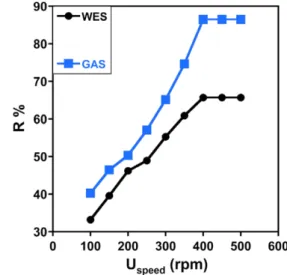
Figure 2 shows the impact of increasing the agitation speed (Uspeed) from 100 to 500 rpm on the desulfurization efficiency at optimum conditions (H2O2/HN = 0.035, pH = 1, catalyst weight = 2 g, tem- perature = 80oC, time = 150 min). As can be seen from Figure 2, the desulfurization efficiency was enhanced when the Uspeed was increased to 400 rpm, while no change was observed for a further increase to 500 rpm. Increasing the desulfurization efficiency by increasing the Uspeed is attributed to an increase in the turbulent flow, resulting in better interaction between the sulfur compounds and the solid adsor- bent, which enhances the adsorbent rate. In addition, increasing the Uspeed from 100 to 400 rpm resulted in a huge difference between the efficiencies of GAC and WES. Specifically, at Uspeed 100 rpm the efficiency of GAC and WAE were 40 and 33%, respectively, which are very close to each other, while at Uspeed equal to 400 rpm the effi- ciency was 86 and 65, respectively. This big difference implies that the increasing Uspeed enhanced both the catalytic and adsorption activities, which resulted in better removal of GAC. The consistency of the desulfurization efficiency by increasing the Uspeed above 400
catalyst
+ OH●
Fig. 1. The effect of volume percentage ratio of H2O2 to HN on the desulfurization efficiency.
Fig. 2. The effect of agitation speed, Uspeed, on the desulfurization efficiency.
rpm indicates that the Uspeed reached an ideal value that maximizes contact between the adsorbent and absorbent.
Figure 3 shows that increasing the pH value decreases the desul- furization efficiency at the optimum conditions (H2O2/HN = 0.035, Uspeed = 400, catalyst weight = 2 g, temperature = 80oC, time = 150 min). This decrease is expected because the low pH value resulting from formic acid is favorable for sulfur oxidation. In addition, the low pH value provides a suitable environment for the reaction between formic acid and H2O2 which produces performic acid and promotes the sulfur oxidation process [29]. The more efficient sulfur removal of GAC at lower pH is attributed to three characteristics [29]: First, adsorption of sulfur components on the GAC surface may increase the collision probability of these components and the active oxygen species, which would speed the oxidation reaction. Second, OH- rad- icals generated from H2O2 can be resonance-stabilized on the carbon surface, which could also promote oxidation of sulfur components.
Finally, GAC has a strong affinity with HN and can be dispersed eas- ily in it. Thus, GAC acts as a phase transfer agent for performic acid which is formed in situ and adsorbed on the GAC surface. WES has some similarity with GAC but less efficiency.
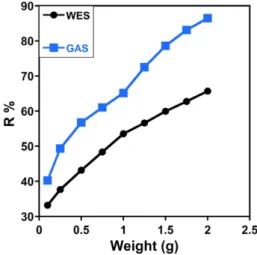
Figure 4 shows that increasing the catalyst amount enhanced the
desulfurization efficiency at the optimum conditions (H2O2/HN = 0.035, Uspeed = 400, pH = 1, temperature = 80oC, time = 150 min).
This enhancement was attributed to an increase in the available sur- face area for adsorption and catalytic activities. Increasing the solid catalyst surface area increases the number of active sites on the sur- face, which increases the availability of binding sites for oxidation and consequently increases the efficiency of the oxidation of sulfur compounds in both catalyst types. In addition, a large surface area increases the adsorption sites, which enhances the adsorption ability.
Increasing the temperature from 15 to 80oC at the optimum condi- tions (H2O2/HN = 0.035, Uspeed = 400, pH = 1, catalyst weight = 2 g, time = 150 min) enhanced desulfurization efficiency for both cata- lysts as shown in Figure 5. This was attributed to the production of a greater number of active oxygen species as well as the oxidation of sulfur compounds at higher temperatures. The formation of active oxygen species may accelerate the oxidation reaction of sulfur when the reaction temperature increases from 25 to 80 °C. Furthermore, increasing the temperature decreases viscosity [34], which might facilitate penetration by the heavy fluid into the solid pores, which enhances the catalytic and adsorption reactivities. However, a fur- ther increase of the temperature to 85oC did not produce any further increase in the desulfurization efficiency, which makes 80oC the best temperature for desulfurization.
Figure 6 shows the impact of process time on desulfurization effi- ciency at the optimum conditions (H2O2/HN = 0.035, Uspeed = 400, pH = 1, catalyst weight = 2 g, temperature = 80 oC). The results show that increasing the process time increased the percentage of desulfur- ization efficiency. This is probably due to more contact time between liquid reactants, which increases the oxygenation percentage of sul- fur compounds. Furthermore, increasing the process time increases the contact time between adsorbent, GAC or WES, and sulfur com- pounds, which increases the adsorption efficiency [25]. No change in the desulfurization efficiency was observed after 80 minutes. Thus, a steady state approximation was assumed and a quasi-equilibrium sit- uation was accepted. This is probably due to the availability of a high number of vacant surface sites for adsorption during the first 80 min- Fig. 3. The effect of pH on the desulfurization efficiency.
Fig. 4. The effect of catalyst amount on the desulfurization efficiency. Fig. 5. The effect of temperature on the desulfurization efficiency.
utes. After this period, no more adsorption occurred at those vacant surface sites due to saturation [35].
Regeneration of the used catalysts is an essential step to reuse them again after their saturation with sulfide compounds. As mentioned, those materials are not expensive, especially WES, and their regen- eration would not have an economic value for this process. Thus, the regeneration of those materials has not tested here. However, the recyclability of those materials in other applications, such as using them as additives to concrete as a replacement for cement or fine aggregate, is strongly suggested to enhance the economic advan- tages of this process [36,37].
5. Conclusions
Combining oxidation and adsorption processes to remove sulfur components from HN showed promising results. Catalytic oxidation of sulfur compounds using H2O2 combined with adsorption using GAC and WES successfully removed 86% and 65%, respectively, of the initial sulfur content at optimum operating conditions. Increas- ing the H2O2/HN ratio increased the removal efficiency to a maxi- mum value at a volume ratio of 0.035 due to the formation of more hydroxyl (OH-) ions and performic acid (CH2O3). This increase in OH- and CH2O3 enhanced the oxidation process of sulfur compounds in the HN fraction through the formation of the SO42- which was then absorbed by the solid adsorbent. Unlike GAS, WES showed stabil- ity in its activity after a ratio of 0.035 due to its enrichment of oxy- gen molecules, which prevents H2O2 decomposing to H2O and O. In addition, the low surface area of WES is probably the reason behind its lower performance compared with GAC. Similarly, increasing Uspeed enhanced the desulfurization efficiency by increasing the tur- bulent flow, which resulted in better interaction between the sulfur compounds and the solid adsorbent which enhanced the adsorbent rate. In contrast, increasing the pH value decreased the removal effi- ciency because the low pH value resulting from formic acid is favor- able for sulfur oxidation. In addition, a low pH value provides a
suitable environment for a reaction between formic acid and H2O2 which produces and promotes the sulfur oxidation process. Increas- ing the amount of the solid catalyst-adsorbent enhances the desulfur- ization process due to the increase in the surface area as well as the active sites for both catalytic and adsorption processes.
Temperature plays an important role in the desulfurization pro- cess. Increasing the temperature to 80oC enhanced the production rate of active oxygen species as well as the oxidation of sulfur com- pounds. The formation of active oxygen species may accelerate the oxidation reaction of sulfur. Furthermore, increasing the tempera- ture decreases viscosity, which may increase the penetration of the heavy fluid inside the solid pores and enhance the catalytic and adsorption reactivities. Finally, increasing the contact time between the liquid reactants enhances the desulfurization process by increas- ing the oxygenation percentage of sulfur compounds. Furthermore, increasing the process time increases the contact time between adsorbent, GAC or WES, and sulfur compounds, which increases the adsorption efficiency.
Acknowledgments
The authors would like to acknowledge support from Mustansiri- yah University, and AlKut Technical Institute - The Middle Techni- cal University (MTU).
References
1. Song, C., “An Overview of New Approaches to Deep Desulfur- ization for Ultra-clean Gasoline, Diesel Fuel and Jet Fuel,”
Catalysis Today, 86, 211-263(2003).
2. Xiong, J., Zhu, W., Li, H., Ding, W., Chao, Y., Wu, P., Xun, S., Zhang, M. and Li, H., “Few-layered Graphene-like Boron Nitride Induced a Remarkable Adsorption Capacity for Dibenzothiophene in Fuels,” Green Chemistry, 17, 1647-1656(2015).
3. Menzel, R., Iruretagoyena, D., Wang, Y., Bawaked, S. M., Mokhtar, M., Al-Thabaiti, S. A., Basahel, S. N. and Shaffer, M. S.,
“Graphene Oxide/mixed Metal Oxide Hybrid Materials for Enhanced Adsorption Desulfurization of Liquid Hydrocarbon Fuels,” Fuel, 181, 531-536(2016).
4. Oh, H., Kim, J. M., Huh, K.-S. and Woo, H. C., “Oxidative Desul- furization of Marine Diesel Using WOx/SBA-15 Catalyst and Hydrogen Peroxide,” Korean Chemical Engineering Research, 55, 567-573(2017).
5. Choi, C. Y. and Im, D. J., “Designing Desulfurization Reactor by Numerical Modeling Including Desulfurization, Regenera- tion Processes, and Adsorption Rate Estimation,” Korean Chem- ical Engineering Research, 55, 874-880(2017).
6. Winebrake, J. J., Corbett, J., Green, E., Lauer, A. and Eyring, V.,
“Mitigating the Health Impacts of Pollution from Oceangoing Shipping: An Assessment of Low-sulfur Fuel Mandates,” ACS Publications, 2009.
7. Barrett, S. R., Yim, S. H., Gilmore, C. K., Murray, L. T., Kuhn, S. R., Tai, A. P., Yantosca, R. M., Byun, D. W., Ngan, F. A. and Li, X., “Public Health, Climate, and Economic Impacts of Fig. 6. The effect of time on the desulfurization efficiency.
Desulfurizing Jet Fuel,” Environmental Science & Technology, 46, 4275-4282(2012).
8. Strogen, B., Bell, K., Breunig, H. and Zilberman, D., “Environmen- tal, Public Health, and Safety Assessment of Fuel Pipelines and Other Freight Transportation Modes,” Applied Energy, 171, 266- 276(2016).
9. Matsumoto, S. I., Ikeda, Y., Suzuki, H., Ogai, M. and Miyoshi, N., “NOx Storage-reduction Catalyst for Automotive Exhaust with Improved Tolerance Against Sulfur Poisoning,” Applied Catalysis B: Environmental, 25 (2000) 115-124.
10. Nabgan, W., Rashidzadeh, M. and Nabgan, B., “The Catalytic Naph- tha Reforming Process: Hydrodesulfurization, Catalysts and Zeo- forming,” Environmental Chemistry Letters, 1-16(2018).
11. Korhonen, J., Pätäri, S., Toppinen, A. and Tuppura, A., “The Role of Environmental Regulation in the Future Competitiveness of the Pulp and Paper Industry: the Case of the Sulfur Emissions Directive in Northern Europe,” J. Cleaner Production, 108, 864-872(2015).
12. Goudarzi, G., Geravandi, S., Idani, E., Hosseini, S. A., Baneshi, M. M., Yari, A. R., Vosoughi, M., Dobaradaran, S., Shirali, S.
and Marzooni, M. B., “An Evaluation of Hospital Admission Respiratory Disease Attributed to Sulfur Dioxide Ambient Con- centration in Ahvaz from 2011 Through 2013,” Environmental Science and Pollution Research, 23, 22001-22007(2016).
13. Xu, W., Teoh, C. L., Peng, J., Su, D., Yuan, L. and Chang, Y.-T.,
“A Mitochondria-targeted Ratiometric Fluorescent Probe to Monitor Endogenously Generated Sulfur Dioxide Derivatives in Living Cells,” Biomaterials, 56, 1-9(2015).
14. Pelardy, F., Dos Santos, A. S., Daudin, A., Devers, E., Belin, T.
and Brunet, S., “Sensitivity of Supported MoS2-based Catalysts to Carbon Monoxide for Selective HDS of FCC Gasoline: Effect of Nickel or Cobalt as Promoter,” Applied Catalysis B: Environ- mental, 206, 24-34(2017).
15. Gonzalez, G. A., Alvarado, M., Ramos, M. A., Berhault, G., Chianelli, R. R., “Transition States Energies for Catalytic Hydrodesulfur- ization Reaction in Co9S8/MoS2 Theoretical Interface Using Computer-assisted Simulations,” Computational Materials Sci- ence, 121, 240-247(2016).
16. Wang, L., Liu, Q., Jing, C., Yin, J., Mominou, N. and Li, S.,
“Simultaneous Removal of Sulfides and Benzene in FCC Gaso- line by in situ Hydrogenation over NiLaIn/ZrO2-r-Al2O3,” J.
Hazardous Materials, 342, 758-769(2018).
17. Meman, N. M., Zarenezhad, B., Rashidi, A., Hajjar, Z. and Esmaeili, E., “Application of Palladium Supported on Functionalized MWNTs for Oxidative Desulfurization of Naphtha,” J. Industrial and Engineering Chemistry, 22, 179-184(2015).
18. Lin, L. G., Zhang, Y. Z. and Kong, Y., “Recent Advances in Sul- fur Removal From Gasoline by Pervaporation,” Fuel, 88, 1799- 1809(2009).
19. Song, C., “New Approaches to Deep Desulfurization for Ultra-clean Gasoline and Diesel Fuels: An Overview,” Prepr Paper Am Chem Soc Div Fuel Chem, 47, 438-444(2002).
20. Aydın, H. and İlkılıç, C., “Optimization of Fuel Production from Waste Vehicle Tires by Pyrolysis and Resembling to Diesel Fuel by Various Desulfurization Methods,” Fuel, 102, 605-612(2012).
21. Srivastava, V. C., “An Evaluation of Desulfurization Technolo- gies for Sulfur Removal From Liquid Fuels,” Rsc Advances, 2, 759-783(2012).
22. Zhou, X., Tan, Q., Yu, G., Chen, L., Wang, J. and Novaro, O.,
“Removal of Dibenzothiophene in Diesel Oil by Oxidation over a Promoted Activated Carbon Catalyst,” Kinetics and Catalysis, 50, 543-549(2009).
23. Etemadi, O. and Yen, T. F., “Selective Adsorption in Ultrasound- assisted Oxidative Desulfurization Process for Fuel Cell Reformer Applications,” Energy & Fuels, 21, 2250-2257(2007).
24. Ghoshal, A. and Manjare, S., “Selection of Appropriate Adsorption Technique for Recovery of VOCs: An Analysis,” J. Loss Preven- tion Process Industries, 15, 413-421(2002).
25. Alalwan, H. A., Abbas, M. N., Abudi, Z. N. and Alminshid, A.
H., “Adsorption of Thallium ion (Tl+3) From Aqueous Solutions by Rice Husk in a Fixed-bed Column: Experiment and Prediction of Breakthrough Curves,” Environmental Technology & Innova- tion, 12, 1-13(2018).
26. Elkady, M. F., Ibrahim, A. M. and Abd El-Latif, M. M., “Assess- ment of the Adsorption Kinetics, Equilibrium and Thermody- namic for the Potential Removal of Reactive Red Dye Using Eggshell Biocomposite Beads,” Desalination, 278, 412-423(2011).
27. Mittal, A., Teotia, M., Soni, R. and Mittal, J., “Applications of Egg Shell and Egg Shell Membrane as Adsorbents: A Review,” J.
Molecular Liquids, 223, 376-387(2016).
28. Laca, A., Laca, A., Diaz, M., “Eggshell Waste as Catalyst: A Review,” J. Environmental M,anagement, 197, 351-359(2017).
29. Yu, G. X., Lu, S. X., Chen, H. and Zhu, Z. N., “Diesel Fuel Desulfurization with Hydrogen Peroxide Promoted by Formic Acid and Catalyzed by Activated Carbon,” Carbon, 43, 2285- 2294(2005).
30. Hosseini, H., “Novel Methods for Desulfurization of Petroleum Fractions,” Recent Advances in Environmental Science, 266-269 (2010).
31. Bunthid, D., Prasassarakich, P. and Hinchiranan, N., “Oxidative Desulfurization of Tire Pyrolysis Naphtha in Formic Acid/H2O2/ Pyrolysis Char System,” Fuel, 89, 2617-2622(2010).
32. Haw, K.-G., Bakar, W. A. W. A., Ali, R., Chong, J.-F. and Kadir, A.A.A., “Catalytic Oxidative Desulfurization of Diesel Utiliz- ing Hydrogen Peroxide and Functionalized-activated Carbon in a Biphasic Diesel–acetonitrile System,” Fuel Processing Tech- nology, 91, 1105-1112(2010).
33. Melada, S., Pinna, F., Strukul, G., Perathoner, S., Centi, G., “Direct Synthesis of H2O2 on Monometallic and Bimetallic Catalytic Membranes Using Methanol as Reaction Medium,” J. Catalysis, 237, 213-219(2006).
34. Zadymova, N. M., Skvortsova, Z. N., Traskine, V. Y., Kulikov- Kostyushko, F. A., Kulichikhin, V. G. and Malkin, A. Y., “Rheologi- cal Properties of Heavy Oil Emulsions with Different Morphol- ogies,” J. Petroleum Science and Engineering 149, 522-530(2017).
35. Srivastav, A. and Srivastava, V. C., “Adsorptive Desulfurization by Activated Alumina,” J. Hazardous Materials, 170, 1133-1140 (2009).
36. Tan, Y. Y., Doh, S. I. and Chin, S. C., “Eggshell as a Partial Cement Replacement in Concrete Development,” Magazine of Concrete Research, 70, 662-670(2017).
37. Justo-Reinoso, I., Srubar, W. V., Caicedo-Ramirez, A., Hernan- dez, M. T., “Fine Aggregate Substitution by Granular Activated Carbon can Improve Physical and Mechanical Properties of Cement Mortars,” Construction and Building Materials, 164, 750-759(2018).