Printed in the Republic of Korea
요약. 일정한 이온 세기의 알칼리 용액에서 과망간산에 의한 프포독심 프록세틸(Cefpodoxime Proxetil) 의 산화의 속도론적 경로가 분광광도법적으로 연구되었다. 그 반응은 과망간산 이온 농도에서 일차 속 도론적으로 나타났으며, 프포독심 산과 알칼리 농도에서 단일 이하의 차수를 나타내었다. 용매의 이온 세기가 증가함에 따라 속도도 증가하였다. 산화 반응은 프포독심 산과 함께 복합체를 형성하는 알칼리 -과망간산 종들을 통하여 진행된다. 반응물을 만들기 위해서 프포독심 산의 자유 라디칼과 과망간산의 다른 분자 사이의 빠른 반응에 이어서 다음 분해가 천천히 진행된다. 다양한 온도에서 반응의 조사는 제안하는 메커니즘의 느린 단계를 고려한 활성화 변수들의 결정할 수 있게 하고 일차 속도론을 따른다.
제안하는 메커니즘과 유도된 속도 법칙들은 관찰된 속도들과 일치하였다.
주제어: 프포독심 프록세틸, 과망간산, 속도론, 열역학
ABSTRACT. A Kinetics pathway of oxidation of Cefpodoxime Proxetil by permanganate in alkaline medium at a constant ionic strength has been studied spectrophotometrically. The reaction showed first order kinetics in permanganate ion concentration and an order less than unity in cefpodoxime acid and alkali concentrations.
Increasing ionic strength of the medium increase the rate. The oxidation reaction proceeds via an alkali-permanganate species which forms a complex with cefpodoxime acid. The latter decomposes slowly, followed by a fast reaction between a free radical of cefpodoxime acid and another molecule of permanganate to give the products. Investigations of the reaction at different temperatures allowed the determination of activation parameters with respect to the slow step of proposed mechanism and fallows first order kinetics. The proposed mechanism and the derived rate laws are consistent with the observed kinetics.
Keywords: Cepfodoxime proxetil, Permanganate, Kinetics, Themodynamics
알칼리성 용매에서 과망간에 의한 세프포독심 프록세틸의 산화의 분광광도법적 조사: 속도론적 연구
Aftab Aslam Parwaz Khan, Ayaz Mohd, Shaista Bano, and K. S. Siddiqi*
Department of Chemistry, Aligarh Muslim University, Aligarh, 202002, (U. P.) India (접수 2009. 5. 13; 수정 2009. 11. 9; 게재확정 2009. 11. 16)
Spectrophotometric Investigation of Oxidation of Cefpodoxime Proxetil by Permanganate in Alkaline Medium: A Kinetic Study
Aftab Aslam Parwaz Khan, Ayaz Mohd, Shaista Bano, and K. S. Siddiqi*
Department of Chemistry, Aligarh Muslim University, Aligarh, 202002, (U. P.) India (Received May 13, 2009; Revised November 9, 2009; Accepted November 16, 2009)
INTRODUCTION
Cefpodoxime proxetil (CFP) is one of the several new cephems administered orally as inactive esters of the antibiotic Cefpodoxime. It is (1-[isopropoxy- carbonyl) oxy] ethyl ester of (z)-7-[2-(2-amino-1,3-
thiazol-4-yl)-2-methoxyiminoacetamido]-3-meth oxymethyl-3-cephem-4-carboxylic acid) (Fig. 1).
CFP is an ester prodrug of Cefpodoxime acid (CFA), where a proxetil radical is attached to CFA. It is an orally absorbed, broad spectrum, third generation cephalosporin ester implicated in the treatment of
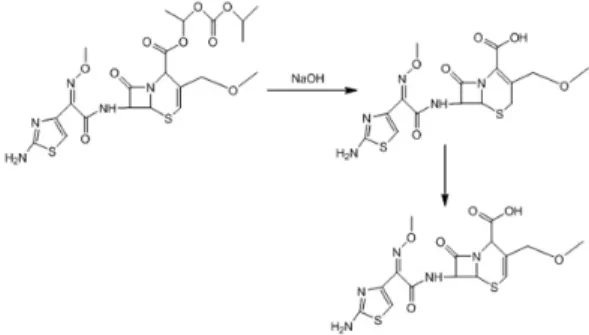
Fig. 1. Structure of Cefpodoxime Proxetil (CFP).
Fig. 2. Degradation Pathway of Cefpodoxime Proxetil to Cefpodoxime acid.
upper respiratory tract and urinary tract infections.
In the biological system, CFP undergoes ester hy- drolysis and is converted into CFA to exhibit its antibiotic activity.1-2 CFP has an asymmetric carbon at position 4 and is supplied as racemic mixture of R- and S-enantiomers. Few methods are reported to quantify CFA.3-4 The β-lactum antibiotic is known to degrade by hydrolysis in alkaline solution (Fig.
2).5 Hydrogen peroxide is used for degradation study in the development of pharmaceuticals. The HCl, NaOH, NH2OH and H2O2 at appropriate con- centration were evaluated as degradation agents for cleaning or decontamination.6 Permanganate ion oxidizes a larger variety of substrate and finds ex- tensive application in organic synthesis.7-12 During oxidation permanganate is reduced to various oxi- dation states in acidic, alkaline and neutral media.
The mechanism of oxidation depends on the sub- strate and medium.13 The process Mn(VII) to Mn(IV) can be divided into a number of partial steps and examined discretely. The MnO2 appears only a after the complete consumption of MnO4-. No mechanistic information is available to distinguish between a direct one-electron reduction of Mn(VII) to Mn(VI) or a hypopermanganate ion is formed in a two-elec-
tron reduction followed by a quick reaction.14-15 In this paper a simple and sensitive kinetic spectropho- tometric method has been developed to establish the thermodynamic parameters of Cepfodoxime acid. The method is based on the oxidation of the drug by permanganate in alkaline medium. The present studies is aimed at checking the reactivity of CFA toward permanganate, at determining the redox chemistry of the Mn(VII) in such media, and at arriving at a plausible mechanism.
EXPERIMENTAL Apparatus
A Shimadzu UV-visible 1601 spectrophotometer was used for all spectral measurements, pH-metric measurements were done with Elico-LI 120 pH meter and a water bath shaker NSW 133, India was used to control the temperature.
Materials
The Cepfodoxime Proxetil was obtained from (Lupin pharmaceutical Ltd, India). Pharmaceutical preparations containing the studied compounds were purchased from commercial sources in the local market. The permanganate solution was prepared and standardized against oxalic acid.16 Potassium permanganate solution was prepared as described by Carrington and Symons.17 NaOH (Merck Ltd, Mumbai, India) and NaClO4 (Ranbaxy fine chem.
Ltd, India) were employed to maintain the required alkalinity and ionic strength, respectively.
Reagents
Double distilled, de-ionized water was used th- roughout. The chemicals used were of analytical grade. Stock solutions of the compounds were wrapped with carbon paper to protect them from photodecomposition.
Kinetic procedure
The oxidation of (CFA) by permanganate ion was followed under pseudo- first order conditions where CFA concentration was greater than manganese (VII) at 25 oC. The reaction was initiated by mixing
H2N N
S NO
O NH
O N S
OH O
O + OH
MnO42-
H2N N
S NO
O NH
O N S
OH O
O 2MnO4- + 2 OH-
+ + H2O (1)
250 270 290 310 330 350 370 Wavelength
1.6 1.4 1.2 1 0.8 0.6 0.4 0.2 0
Absorbance
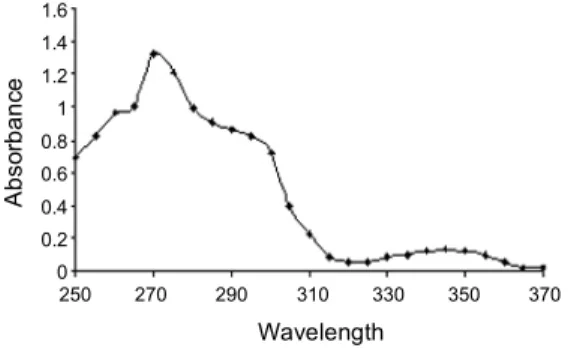
Fig. 3. Absorption spectrum of CFP.
previously thermostated solutions of MnO4- and (CFA), which also contained required quantities of NaOH and NaClO4 to maintain alkaline medium and ionic strength, respectively. The temperature was maintained at 25 oC: The reaction was moni- tored by a the decrease in absorbance of MnO4-, at its absorption maximum of 525 nm. Earlier it was verified that there is no interference from other reagents at this wavelength. Application of Beer’s Law for permanganate at 525 nm had earlier been verified, giving ε, was found to be 2083 ± 50 dm3 mol-1 cm-1. The reaction was followed more than three half lives The first order rate constants kobs
were evaluated by plots of log [MnO4] vs. time.
The first order plots in almost all cases were linear up to 85% of the reaction and kobs were reproducible at 525 nm and an increasing absorbance of Mn(VI) at 610 nm during the course of the reaction (Fig. 5).
The effect of dissolved oxygen on the rate of reac- tion was checked by preparing the reaction mixture and following the reaction in nitrogen atmosphere.
No significant difference between the results obtain- ed under nitrogen and in the presence of air was observed. Added carbonate had also no effect on the reaction rate. Regression analysis of experi- mental data to obtain the regression coefficient r and the standard deviation S of points from the regression line was performed using a Microsoft excel-2007 program.
RESULTS
The absorption spectrum of CFP was exhibited two peaks at 270 and 345 nm (Fig. 3).18 After addi- tion of potassium permanganate in the same medium is oxidized the (CFA) and exhibits a green colour of manganate ion, appears which absorbs at 610 nm. It was empirically found that the blue colour originated from a mixture of violet MnO4- and green
colour MnO42- rather than form the formation of hypopermanganate. The formation of Mn (VII) was also evidence by the decrease of the absorbance of Mn(VII) at 525 nm and the increase of that of Mn(VI) at 610 nm during the course of reaction (Fig. 5).The intensity of the colour increases with time and hence a kinetic method based on the spectrophotometric measurement was developed.
Stoichiometry of the reaction
The reaction mixture containing an excess of permanganate over (CFA) were mixed in the pre- sence of 5.0 × 10⁻² mol dm-3 NaOH and at constant ionic strength I = 0.10 mol dm-3 were kept in a closed container under a nitrogen atmosphere at 25
oC. After 1 h the manganese (VII) concentration was assayed by measuring the absorbance at 610 nm. The results indicated that 2 mols of manganese (VII) consumed 1 mol of (CFA). Therefore, the reaction mechanism is proposed on the basis of the literature background19 and our experimental study as shown in eq 1.
Reaction order
The reaction order were evaluated from the slope of log kobs versus log concentration plots by the varying concentration of (CFA) and alkali keeping other factors constant.
0 1 2 3 4 5 Time (min)
2.5 2 1.5 1 0.5 0
2+ log (Abs)
1 2 3 4 5
Fig. 4. First order plots for the oxidation of CFA by alka- line MnO4- at 25 oC; [CFA ] = 1.0 × 10⁻³; [OH-] = 2 × 10⁻³; I = 0.10/mol dm-3. [Mn(VII)] × 104 mol dm-3: (1) 0.6, (2) 0.8, (3) 1.0, (4) 2.0, and (5) 3.0.
400 450 500 550 600 650 700 Wavelength
0.7 0.6 0.5 0.4 0.3 0.2 0.1 0
Absorbance
5 5
1 1
Fig. 5. Spectral changes during the oxidation of [CFA ] by alkalineMnO4- at 25 oC; [Mn(VII)] = 1.0 × 10⁻⁴, [CFA] = 1.0 × 10⁻³ [OH-] = 2 × 10⁻², I = 0.10/mol dm-3.
Table 1. Effect of variation of [KMnO4] ,[CFA] and [OH-] on the oxidation of cefpodoxime acid by alkaline [KMnO4] at 25°C and ionic strength I = 0.10/mol dm-3
104× [KMnO4] mol dm‐3
103× [CFA]
mol dm‐3
102× [OH-] mol dm‐3 103 kobs
(S-1) 103 kcal (S-1)
0.6 3.0 2.0 1.08 1.09
0.8 3.0 2.0 1.09 1.09
1.0 3.0 2.0 1.08 1.09
2.0 3.0 2.0 1.07 1.09
3.0 3.0 2.0 1.10 1.09
4.0 3.0 2.0 1.08 1.09
6.0 3.0 2.0 1.09 1.09
3.0 0.6 2.0 0.984 0.983
3.0 0.8 2.0 1.05 1.06
3.0 1.0 2.0 1.06 1.07
3.0 1.2 2.0 1.37 1.36
3.0 1.4 2.0 1.60 1.58
3.0 1.6 2.0 1.72 1.73
3.0 1.8 2.0 1.99 1.98
3.0 3.0 0.6 0.984 0.985
3.0 3.0 0.8 1.03 1.04
3.0 3.0 1.0 1.07 1.06
3.0 3.0 1.2 1.06 1.07
3.0 3.0 1.4 1.60 1.59
3.0 3.0 1.6 1.75 1.76
3.0 3.0 1.8 2.02 2.01
Effect of Concentration of Manganese (VII) At constant concentration of (CFA), 1.0 × 10⁻³ mol dm-3, and alkali, 5.0 × 10⁻² mol dm-3, and at constant ionic strength, 0.10 mol dm-3, The oxidant KMnO4
concentration was varied in the range of 6 × 10⁻⁵ ‒ 6 × 10⁻⁴ mol dm-3. All kinetic runs exhibited identical characteristics. The linearity of plots of log (absor- bance) vs time, for different concentrations of per- manganate, indicates order in manganese(VII) con- centration as unity (Fig. 4). This was also confirmed by the constant values of pseudo first order rate constants, kobs, for different manganese(VII) con- centrations (Table 1).
Effect of NaOH Concentration
The effect of increasing conc of alkali on the
reaction was examined at constant concentration of drug and permanaganate ion at 25 oC. The alkali concentration was varied in the range of 0.6 × 10⁻² to 1.0 × 10⁻¹ mol dm-3. The kobs values increased with increase in concentration of alkali.
Effect of [CFA]
The effect of (CFA) concentration on the reaction was studied at constant concentrations of alkali and permanganate and at a constant ionic strength of 0.10 mol dm-3 at 25 oC. The substrate, (CFA) was varied in the range of 5.0 × 10⁻⁴ ‒ 5.0 × 10⁻³ mol dm-3. The kobs values increased with increase in concentration of (CFA) (Table 1).
Effect of Ionic Strength
The effect of ionic strength was studied by vary- ing the NaClO4 concentration from 0.01 to 0.10 mol dm-3 at constant concentrations of permanganate,
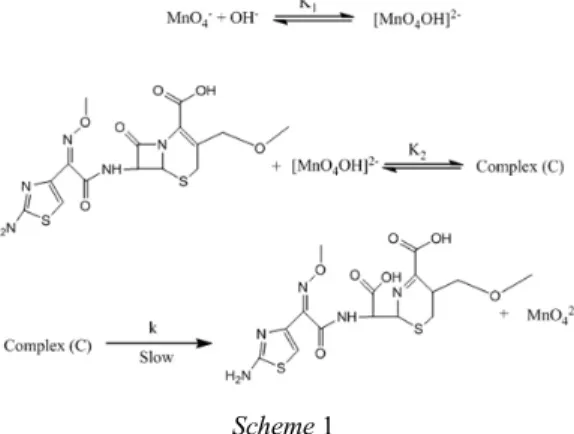
Scheme 1
Table 2. Activation and Thermodynamic parameters for the oxidation of cefpodoxime acid by KMnO4 in alka- line medium and I = 0.10/mol dm-3 with respect to slow step of Scheme 1
Temperature (K) 102 k (S‐1) (a) Effect of Temperature
293 2.7
298 2.9
303 4.8
308 5.1
(b) Activation Prameter values
Ea (kj mole‐1) 65.4
∆H (kj mole‐1) 61.7
∆S±(jk‐1mole‐1) -120.4
∆G± (kj mole‐1) 19.11
Temperature (K) K1 ( dm3 mol‐1) 10‐2 K2 (dm3 mol‐1) (c) Effect of Temperature
293 15.41 30.14
298 17.74 26.69
303 19.55 20.54
308 21.71 18.76
Thermodynamic
Parameters using K1 values using K2 values
∆H (kj mole‐1) 76.5 -61.7
∆S± (jk‐1mole‐1) 128 -63.2
∆G±(kj mole‐1) -5.6 -6.71 (CFA), and alkali. It was found that increasing ionic
strength had no effect on the rate of reaction.
Effect of temperature
The kinetics was studied at four different tem- peratures under varying concentrations of (CFA), and alkali, keeping other conditions constant. The rate constants were found to increase with increase in temperature. The rate constant (k) of the slow step of Scheme 1 were obtained from the slopes and intercepts of 1/kobs versus 1/[CFA] and 1/kobs
versus 1/[OH-] plots at four different temperatures.
The energy of activation corresponding to these rate constants was evaluated from the Arrhenius plot of log k versus 1/T and from which other activation parameters were obtained (Table 2).
Polymerization Study
The possibility of free radicals was examined as follows: the reaction mixture, to which a the reaction mixture with methanol, precipitate resulted, sugge- sting that the there was participation of free radicals in the reaction.
DISCUSSION
At the observe experimental condition at pH >
12 the reductant product of Mn(VII) might be stopp- ed.20-21 Although During our study the colour of the solution undergoes a series of change from blue to green. It is probable that green color originated from the permanganate ion. The spectrum of green solu-
tion was identical to that of MnO42-. It is probable that the blue color originated from the violet of permanganate and the green from manganate, ex- cluding the accumulation of hypomanganate. It is evident from the (Fig. 5) that the concentration of MnO4- decreases at 525 nm due to Mn(VII) and increases at 610 nm due to Mn(VI). As the reaction proceeds, slowly yellow turbidity develops, and after keeping for a long time the solution decolorizes and forms a brown precipitate. This suggests that the products formed might have undergone further oxidation resulting in a lower oxidation state of manganese. The results imply that first the alkali combines with permanganate to give an alkali- permanganate species [MnO4 · OH]2- in a prior equilibrium step, which is in accordance with lite- rature22-23 and also experimentally observed order
in OH- ion concentration. In the second step [MnO4·
OH]2- combines with CFA to form an intermediate complex. The fractional order with respect to CFA presumably results from the complex formation between oxidant and substrate prior to the slow step.
The reaction between permanganate and CFA is supported by Michaelis-Menten plot which is linear with positive intercept which is in agreement with complex formation. Within the complex one-elect- ron is transferred from CFA to Mn(VII). Then this complex (C) decomposes in a slow step to form a species derived from CFA. All the results indicate a mechanism as given in Scheme 1.
Rate = -d[MnO4-]
dt = kK1K2[MnO4-]f[CFA]f [OH-]f (2) The total [MnO4-] can be written as
[MnO4-]t = [MnO4-]f + [MnO4.OH]2-+ [Complex]
= [MnO4-]f + [MnO4-][OH-] +K1K2[MnO4-][CFA][OH-]
= [MnO4-]f (1+ K1[OH-] + K1K2[CFA][OH-])
[MnO4-]f =
1+ K1[OH-] + K1K2[CFA][OH-] [MnO4-]t
(3)
where “t” and “f” stand for total and free. Si- milarly, total [OH-] can be calculated as
[OH-]t = [OH-]f + [MnO4.OH]2-+ [Complex]
[OH-]f = [OH-]t
1+ K1[MnO4-] + K1K2[CFA][MnO4-]
(4)
In view of the low concentrations of MnO4- and CFA used in the experiment, in eq 4 the terms K1[MnO4-] and K1K2[MnO4-][CFA] can be neglect- ed in comparison with unity.
Thus,
[OH-]f = [OH-]t (5)
Similarly,
[CFA]f = [LFA]t (6)
Substituting equation 3, 5, and 6 in equation 2 and omitting the subscripts, we get
Rate =
1+ K1[OH-] + K1K2[CFA][OH-] kK1K2[MnO4-][CFA][OH-]
(7)
Equation 7 confirms all the observed orders with respect to different species, which can be verified by rearranging to eq 8.
1 kobs =
kK1K2[CFA][OH-]
1 k 1 1
kK2[CFA]+
+ (8)
According to eq 8, other conditions being con- stant, plots of 1/kobs versus 1/[CFA] and 1/kobs versus 1/[OH-] should be linear and are found to be so (Figs 6a and 6b). The slopes and intercepts of such plots lead to the values of K1, K2, and k (Table 2). The value of K1 is in good agreement with the literature24 Using these constants, the rate constants were calculated over different experimental condi- tions, and there is a reasonable agreement between the calculated and the experimental values, which for the proposed mechanism (Table 1). The thermo- dynamic quantities for the first and second equili- brium step of Scheme 1 can be evaluated as follows:
The [CFA] and [OH-] as in Table 1 were varied at four different temperature. The spectral evidence of the complex formation was obtained from UV-Vis spectral study.25 It is also proved kinetically by the non zero intercept of the plots of 1/kobs versus 1/
[CFA] ( r > 0.9997, S < 0.0148) (Fig. 6b). Accord- ing to the rate law the plots of 1/kobs versus 1/[OH -] (r > 0.9987, S < 0.0124) and 1/kobs versus 1/[CFA]
(r > 0.9998, S < 0.0151) should be linear (Figs 6a and b) from the slope and intercept, the value of k, K1 and K2 could be derived as 2.87 × 10⁻⁴, 13.8 dm3 mole-1, and 22.36 dm3 mole-1 respectively. The rate constant were calculated from these values (Table 1) which supports the proposed mechanism. The re- action rate of CFA increased with increasing inten- sity of the complex. The kinetics was studied at four different temperature and concentration of CFA and NaOH keeping all other conditions constant. The rate constant was found to increase with increasing
0.1 0.2 0.3 0.4 0.5 0.6 0.7 1/OH 10-2 dm3 mol-1
0.1 0.2 0.3 0.4 0.5 0.6 0.7 1/[CFA] 10-2 dm3 mol-1
3 2.5 2 1.5 1 0.5 0
1/kobs10 -2S
35 oC 30 oC 25 oC 20 oC (a)
2.5 2 1.5 1 0.5 0
1/kobs10 -2S
35 oC 30 oC 25 oC 20 oC (b)
Fig. 6. (a) Rate law plots 1/kobs versus 1/ [OH-] of oxi- dation of cefpodoxime acid by KMnO4 in alkaline me- dium at different temperatures (circumstance as in Table 1). (b) Rate law plots 1/kobs versus 1/ [CPP] of oxidation of cefpodoxime acid by KMnO4 in alkaline medium at different temperatures (circumstance as in Table 1).
temperature. The rate constant k of the slow step of Scheme 1 were obtained from the slope and inter- cept of 1/kobs versus 1/[CFA] and 1/kobs versus 1/
[OH-] plots at four different temperatures. The activation parameters corresponding to these con- stant were evaluated from the Arrhenius plot of log k versus 1/T and are listed in Table 2. The experi- mental value of ∆H± and ∆S± were both favorable for electron transfer process. The high negative value of ∆S± indicate that interaction of the reaction ions of similar charges form an activated complex and is more ordered than the reactants due to loss of degree of freedom.26 The hydroxyl ion concentration i.e. Table 1 was verified at four different temperature and the K1 value were determined from a (Fig. 6a) as shown in Table 2. Similarly CFA concentration as in Table 1 was varied at four different temp and
K2 values were determined at each temp (Fig. 6b) as listed in Table 2. The effect of temp on reaction rate is well known and important in the various activation parameters of the reaction product. A Arrehenius plot was made for the variation of K1
with temperature (i.e. log K1 versus 1/T). The values of the enthalpy change of the first equilibrium step K1 of the reaction (∆H), enthalpy of the reaction (∆S) and free energy of raction (∆G) were calculated as listed in Table 2. Similarly thermodynamic para- meters for second step K2 are calculated such as enthalpy; entropy and free energy of activation of the reaction product were calculated using Eyring equation.
Log K/T = [log kb/h + S/2.302R] - ∆H/ 2.303R1/T The plot of log K2/T versus 1/T was linear with correlation coefficient of -0.9996 ∆H≠ was evaluated from the slope (- ∆H/ 2.303R1/T) and ∆S≠ from the intercept [log kb/h + S/2.302R] of the compiled Eyring plot. The Gibbs free energy of activation was determined by ∆G≠ = -2.303 RT log K at room temperature. These values are given in Table 2.The proposed mechanism supported by the above ther- modynamic parameter. A comparison of the later values (from K2) with those obtained for the slow step of the reaction shows that these values mainly refer to the rate-limiting step, supporting the fact that the reaction before rate determining step is fairly fast and involves low activation energy.27 The negative value of indicate that the complex (C) is more ordered than the reactant.28 A detailed mechanistic explanation is given in Scheme 2.
CONCLUSION
It is interesting to note that the oxidant species [MnO4-] required a pH > 12 below which the system becomes anxious and the reaction proceeds to Mn(IV) which slowly develops yellow turbidity. The oxidant, manganese(VII), exists in alkali media as alkali-permanganate species [MnO4·OH]2-, which takes part in the chemical reaction. The role of hydroxyl ions is essential to the chemical reaction.
Scheme 2. Mechanistic Interpretation for the Oxidation of CFA by Alkaline Permanganate
The given mechanism is consistent with all the experimental evidence. The rate constant of slowest step involved in the mechanism are evaluated and activation parameters with respect to slowest step of reaction were computed. The overall mechanistic sequence described here is consistent with the final product, mechanistic and kinetic studies.
REFERENCES
1. Borin, M. T. Drugs 1991, 42, 13.
2. Rodrıguez, J. C.; Hernandez, R.; Gonzalez, M.; Rodrı- guez, Z.; Tolon, B; Velez, H.; Valdes, B.; Lopez, M.
A.; Fini, A. II Farmaco. 2003, 58, 363.
3. Camus, F.; Deslandes, A.; Harcouet, L.; Farinotti, R.
J. Chromatogr B. 1994, 656, 383.
4. Lovdahl, M. J. ; Recher, K. E. ; Russlie, H. Q. ; Cana- fax, D. M. J. Chromatogr B. 1994, 653, 227.
5. Yamana, T.; Tsuji, A. J. Pharm. Sci. 1976, 65, 1563.
6. Hovorka, S. W. ; Schoneich, C. J. Pharm. Sci. 2001, 90, 254.
7. Shaabani, A.; Tavasoli-Rad, F.; Lee, D. G. Synth.
Commun. 2005, 35, 571.
8. Caron, S.; Dugger, R. W.; Ruggeri, S. G.; Ragan, J.
A.; Brown, D. H.; Ripin, Chem.Rev. 2006, 106, 2943.
9. Lee, D. G.; Trahanovsky, W. S., “Oxidation in Organic
Chemistry Part D”, Ed.; Academic Press: New York, U. S. A., 1982, 147.
10. Simandi, L. I.; Patai, S.; Rappoport, Z., “The Che- mistry of Functional Groups”, Ed.; Wiley: Chichester, 1983, Suppl. C.
11. Lee, D. G.; Lee, E. J.; Brown, K. C., “Phase Transfer Catalysis, New Chemistry, Catalysis and Applica- tions” ACS Symposium Series, American Chemical Society: Washington, DC, 1987, vol. 326.
12. Fatiadi, A. J. Synthesis 1987, 106, 85.
13. Stewart, R.; Gardner, K. A.; Kuehnert, L. L.; Mayer, J. M. Inorg. Chem. 1997, 36, 2069.
14. Panari, R. G.; Chougale, R. B.; Nandibewoor, S. T.
Pol. J. Chem. 1998, 72, 99, 107.
15. Bohn, A.; Adam, M.; Mauermann, H.; Stein, S.;
Mullen, K. Tetrahedron Lett 1992, 33, 2795.
16. Jeffery, G. H.; Bassett, J.; Mendham, J.; Denny, R. C.
“Vogel’s Text Book of Quantitative Chemical Analysis”
5th ed.; ELBS Longman: Essex, U. K, 1996, 370.
17. Carrington, A.; Symons, M. C. R. “Structure and Re- activity of Oxyanions of Transition Metals. Part I. The Manganese Oxy-anions.” J. Chem. Soc. 1956, 337, 3.
18. Siddiqi, K. S.; Mohd, A.; Parwaz Khan, A. A.; Bano, S. J. Korean. Chem. Soc. 2009, 53, 152.
19. Darwish, I. A. Analytica Chimica Acta, 2005, 551, 222.
20. Timmanagoudar, P. L.; Hiremath, G. A.; Nandibe- woor, S. T. Transition. Met. Chem. 1997, 22, 193.
21. Nadimpalli, S.; Rallabandi, R. A.; Dikshitulu, L. S. A.
Transition Met. Chem. 1993, 18, 510.
22. Thabaj, K. A.; Kulkarni, S. D.; Chimatadar, S. A.;
Nandibewoor, S. T. Polyhedron 2007, 26, 4877.
23. Panari, R. G.; Chougale, R. B.; Nandibewoor, S. T. J.
Phys. Org. Chem. 1998, 11, 448.
24. Kini, A. K.; Farokhi, S. A.; Nandibewoor, S. T. Transi- tion. Met. Chem. 2002, 27, 532.
25. Devi, J.; Kothari, S.; Banerjee, K .K. Indian J. Chem.
1995, 34A, 116.
26. Weissberger, A.; Lewis, E. S. Ed, “Investigation of rate and Mechanism of reaction In Techniques of Chemistry”, Ed.; Willey: Interscience Publication, New York 1974, 421.
27. Rangappa, K. S.; Raghavendra, M. P.; Mahadevappa, D. S.; Channegouda, D. J.Org. Chem. 1998, 63, 531.
28. Bugarcic, Z. D.; Nandibewoor, S. T.; Hamza, M. S.
A.; Heimemann, F.; Rudi, Van, Eldik, Dalton Trans.
2006, 2984.
![Table 1. Effect of variation of [KMnO 4 ] ,[CFA] and [OH - ] on the oxidation of cefpodoxime acid by alkaline [KMnO 4 ] at 25°C and ionic strength I = 0.10/mol dm -3](https://thumb-ap.123doks.com/thumbv2/123dokinfo/5299717.154772/4.799.95.378.373.583/table-effect-variation-kmno-oxidation-cefpodoxime-alkaline-strength.webp)