ISSN 1225-6552, eISSN 2287-7630 https://doi.org/10.7853/kjvs.2018.41.2.79
< Original Article >
Veterinary Service
Available online at http://kjves.org
*Corresponding author: Kun-Ho Song, Tel. +82-42-821-6789, Fax. +82-42-821-6703, E-mail. [email protected]
Evaluation of ST2 and NT-proBNP as cardiac biomarkers in dogs with heartworm disease
Kiho Lee, Jun-Seok Park, Kyoung-Won Seo, Kun-Ho Song*
College of Veterinary Medicine, Chungnam National University, Daejeon 34134, Korea (Received 23 January 2018; revised 6 April 2018; accepted 10 April 2017)
Abstract
This study compared serum concentrations of suppression of tumorigenicity 2 (ST2) and N-terminal pro-B-type natriuretic peptide (NT-proBNP) between healthy and heartworm- infected dogs. Eighteen heartworm-infected dogs and five healthy dogs were included in the study. Dogs were diagnosed and categorized by history, clinical signs, and blood assay, thoracic radiography, echocardiography, and com- mercial ELISA kit results. Serum samples were sent to the IDEXX reference laboratory for NT-proBNP measurement. ST2 was examined by using a canine interleukin 33 receptor ELISA kit with the quantita- tive sandwich ELISA method. The severely infected group showed significant elevation of NT-proBNP concentration over those of the control (P=0.03) and mildly infected (P=0.04) group. There were no significant difference in ST2 concentrations among the three groups. The usefulness of NT-proBNP as a cardiac biomarker in dogs with severe heartworm disease was confirmed by the results of this study.
Further investigations to assess ST2 as a cardiac biomarker are warranted.
Key words : ST2, NT-proBNP, Heartworm disease, Biomarker, Dog
INTRODUCTION
Dirofilariasis, commonly called heartworm disease, is widely distributed in the tropics and subtropics, includ- ing South Korea (Song et al, 2010). Domestic dogs are definitive hosts for Dirofilaria, while cats and ferrets may also be infected. For infection, a susceptible mos- quito ingests the Dirofilaria larvae by taking a blood meal from an infected host and, after further larval de- velopment, transmits the larvae to another host. Mildly infected dogs may be asymptomatic or show cough, while severe cases may exhibit life-threatening clinical signs such as dyspnea, ascites and syncope. Diagnosis is mainly based on history, clinical signs, antigen and/or microfilaria tests, radiography, and echocardiography.
Heartworm disease can be classified into class 1 through class 4 (caval syndrome), and both treatment and prog-
nosis varies with severity (American Heartworm Society, 2014).
In addition to the screening tests mentioned above, several biomarkers are being used for diagnostic and prognostic purposes (Boswood, 2009). A biomarker is defined as an indicator of normal biological processes, pathogenic processes, or pharmacologic responses to a therapeutic intervention (Atkinson et al, 2001). On that basis, new cardiac biomarkers are being investigated in both human and veterinary medicine.
The level of N-terminal pro-B-type natriuretic peptide (NT-proBNP) in blood is one of the most commonly used cardiac biomarkers in veterinary medicine. A num- ber of researchers have shown its usefulness in evaluat- ing dogs with heart disease (Ebisawa et al, 2012; Ettinger et al, 2012). Furthermore, severity of heartworm disease in patients has been assessed by using NT-proBNP and other biomarkers such as c-reactive protein (CRP), tro- ponin I (cTnI), myoglobin, and D-dimer levels (Carretón
et al, 2011; Carretón et al, 2014). However, due to limi- tations of those biomarkers, more accurate and compre- hensive biomarkers are being researched. The sup- pression of tumorigenicity 2 (ST2) protein, which is thought to be a biomarker of remodeling and myocardial stress, has been discussed as a risk predictor in heart failure patients in human medicine (Braunwald, 2008).
Other human study has shown that simultaneous meas- urement of ST2 and NT-proBNP levels improves deter- mination of the risk for death in heart failure patients (Bayes-Genis et al, 2012).
As dogs with severe heartworm disease show right heart remodeling and myocardial stress, the authors hy- pothesized that the ST2 may be useful as prognostic bi- omarker as well as diagnostic biomarker in dogs with severe heartworm disease. The aim of this study is to apply and assess ST2 as a cardiac biomarker candidate in veterinary medicine. This study includes the measure- ment of ST2 and NT-proBNP levels in dogs with dir- ofilariasis of different severity levels.
MATERIALS AND METHODS
Animals
Eighteen heartworm-infected dogs and five control healthy dogs were used in this study. Dog breed, sex, and age were randomized. The dirofilariasis diagnosis was made by examining subject history, clinical signs, and blood assay, thoracic radiography, echocardiography, and enzyme-linked immunosorbent assay (ELISA) kit results. A commercial ELISA kit (SNAP test, IDEXX Laboratories, Maine, USA) was used, and the manu- facturer’s instructions were followed. As renal disease can elevate NT-proBNP level in dogs without heart dis- ease, blood urea nitrogen (BUN) and creatinine assess- ments were included in the blood assay (Schmidt et al, 2009). Dogs showing azotemia were excluded from the study.
After the diagnosis, heartworm-infected dogs were divided into two groups; mild (n=9) and severe (n=9).
Following the classification system described by Di Sacco and Vezzoni (1992), dogs of classes 1 and 2 were
included in the mild group, while dogs of classes 3 and 4 were included in the severe group. Dogs in the mild group showed either no clinical signs or a mild cough while those in the severe group showed critical clinical signs including ascites, syncope, hemoglobinemia, and hemoglobinuria. Cardiac remodeling was observed on thoracic radiography and echocardiography in the severe group. All heartworm-infected dogs were diagnosed based on the results of the commercial ELISA kit.
Laboratory evaluations
Jugular and cephalic veins were used for the collec- tion of blood in all 23 cases. Whole blood (3 mL) was collected in a serum tube, which then underwent cen- trifugation at 3000 r/min for 20 min. Immediately after centrifugation, a portion of the serum was used in the commercial ELISA kit and for blood assays such as BUN and creatinine. The remaining portion of the se- rum samples was divided into two conical tubes and stored at −80°C within 30 min of centrifugation to maintain sample stability until other tests. As repetitive freezing and thawing may lead to false results, serum samples for NT-proBNP assessment were sent on the same day as that for the ST2 measurement. One of the serum tubes containing 1 mL of serum was packed with ice and sent to the IDEXX reference laboratory for NT-proBNP measurement. A reference range of <900 pmol/L for a normal healthy dog was set by the IDEXX laboratory. The other serum tube was used in the meas- urement of ST2, which was performed by using a ELISA kit (Canine interleukin 33 receptor, MyBioSource, San Diego, USA). A quantitative sandwich ELISA meth- od was used to examine 6 standards and 23 serum sam- ples, which were assessed in duplicate. The optical den- sity of each ELISA kit well was determined by using an ELISA reader (Apollo LB913, BERTHOLD Technologies) set to 450 nm. As the reference range for ST2 in dogs is not yet established, the results of 5 healthy control dogs were compared with those of the infected dogs.
Statistical analysis
GraphPad Prism software version 6 was used to per-
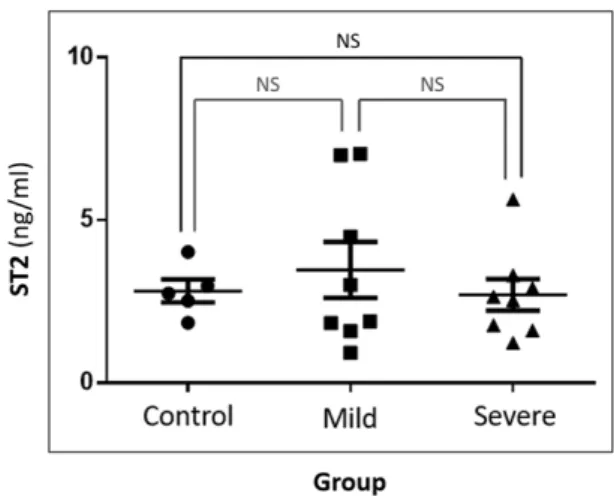
Fig. 2.ST2 concentrations in control, mild, and severe group.
Horizontal line represents mean value and upper/lower lines represent SE. There were no differences between any groups. One dog in the mild group and one dog in the severe group were excluded as an out- lier in accordance with the Grubb’s test. NS = Not significant.
Fig. 1. NT-proBNP concentrations in control, mild, and severe group. Horizontal line represents mean value and upper/lower lines represent SE. NT-proBNP concentrations of the severe group were significantly higher than those of the control and mild group.
*Significantly (P<0.05) different from value for control dogs. NS = Not significant.
form the statistical analysis of all cases. Data are sum- marized as mean ± SE values. For significance determi- nation, the Mann-Whitney method (a non-parametric test) was selected in accordance with the results of the D’Agostino-Pearson omnibus normality test. Identification of outliers was performed by using Grubb’s test, also called the extreme studentized deviate method. Values of P<0.05 were considered significant.
RESULTS
The mean NT-proBNP concentration of dogs in the severe group (2681 pmol/L [95% CI, 1610 to 3752 pmol/L; n=9]) was significantly (P<0.05) higher than those of the control (347.8 pmol/L [95% CI, 303.34 to 392.26; n=5]) and mild (564.2 pmol/L [95% CI, 390.8 to 737.6; n=9]) group (Fig. 1). However, mean ST2 concentration among the control (2.831 ng/mL [95% CI, 2.4768 to 3.1852; n=5]), mild (3.479 ng/mL [95% CI, 2.6170 to 4.3410; n=8]), and severe (2.713 ng/mL [95%
CI, 2.2263 to 3.1997; n=8]) group did not show sig- nificant differences (Fig. 2). In accordance with Grubb’s test of outliers, one dog in the mild group and one in the severe group were excluded.
DISCUSSION
NT-proBNP is a neuroendocrine hormone that is pro- duced by ventricles in accord with chronic pressure and volume overload levels (Carretón et al, 2014). Previous studies have demonstrated that serum NT-proBNP con- centration is a useful cardiac biomarker for assessing the severity of various heart diseases including mitral valve disease, dilated cardiomyopathy, and heartworm disease (Oyama et al, 2008; Carretón et al, 2014). The results of the present study confirmed that elevation of NT- proBNP level depends on the severity of the heart disease. The NT-proBNP concentrations of the control and mild group were within the normal reference range and were not significantly different from each other. On the contrary, the NT-proBNP level of the severe group dogs were significantly higher than those of the other groups. These results indicate that NT-proBNP can be used for the evaluation of canine patients with heart- worm disease. However, as the NT-proBNP has a high degree of variability and can be falsely elevated in renal patients, a combination of NT-proBNP with other cardiac biomarkers is recommended (Kelihan et al, 2009; Schmidt et al, 2009).
On the basis, this study evaluated a new candidate bi- omarker, ST2, a member of the interleukin 1 receptor family. ST2 has two isoforms, a transmembrane form of
ST2 ligand (ST2L) and a circulating form of soluble ST2 (sST2) (Shah and Januzzi, 2010). ST2L has car- dioprotective effects through its interaction with inter- leukin-33 (IL-33), whereas sST2 is thought to be a
‘decoy receptor’ competing with ST2L and inhibiting its positive effects (Villacorta and Maisel, 2016). Therefore, sST2 has been used as a predictor of mortality, as well as a marker of cardiac structure and function, in human medicine (Shah, 2010).
However, in this study, there were no significant dif- ference in ST2 levels among the three study groups.
Thus, the results show that ST2 does not elevate in ac- cordance with the severity of canine heartworm disease.
It is not known whether ST2-related physiological mechanisms differ between human and other animals.
Regardless, there are some weaknesses in the evaluation of ST2 in this study. First, some of the samples were stored at −80°C for approximately 1 year prior to being assessed. Based on research in humans, ST2 results did not show significant variation until 6 months of −30°C storage; however, further assessment over a longer peri- od was not described (Piper et al, 2016). Unfortunately, in veterinary medicine, only variation in NT-proBNP and troponin-I levels in dogs have been evaluated, thus making the ST2 results difficult to assess (Ruaux et al, 2015). Another weakness of the study is that only a small number of dogs were included in the study. Further study that includes more dogs should be undertaken.
Additionally, as linear variability of ST2 levels was not assessed, serial testing is recommended.
CONCLUSION
The usefulness of NT-proBNP as a cardiac biomarker in dogs with severe heartworm disease was reconfirmed by this study. Mild heartworm infection does not elevate serum NT-proBNP level. In contrast, ST2 did not show significant differences among the study groups. Further investigations assessing ST2 as a cardiac biomarker in dogs are warranted.
ACKNOWLEDGMENTS
This work was supported by research fund of Chungnam National University (2017-1720-01).
REFERENCES
American heartworm society, 2014. Guidelines for the diagnosis, prevention and management of heartworm (Dirofilaria immitis) infection in dogs. http://www.heartwormsociet- y.org/images/pdf/2014-AHS-Canine-Guidelines.pdf.
Atkinson AJ, Colburn WA, Degruttola VG, Demets DL, Downing GJ, Hoth DF, Oates JA, Peck CC, Schooley RT, Spilker BA, Woodcock J, Zeger SL. 2001. Biomarkers and sur- rogate endpoints: Preferred definitions and conceptual framework. Clin Pharmacol Ther 69: 89-95.
Bayes-Genis A, Antonio M, Galán A, Sanz H, Urrutia A, Cabanes R, Cano L, González B, Díez C, Pascual T, Elosúa R, Lupón J. 2012. Combined use of high‐sensitivity ST2 and NTproBNP to improve the prediction of death in heart failure. Eur J Heart Fail 14: 32-38.
Boswood A. 2009. Biomarkers in cardiovascular disease: Beyond natriuretic peptides. J Vet Cardiol 11: S23-S32.
Braunwald E. 2008. Biomarkers in heart failure. N Engl J Med 358;
2148-2159.
Carretón E, Cobera JA, Juste MC, Morchón R, Simón F, Montoya-Alonso JA. 2011. Dirofilaria immitis infection in dogs: Cardiopulmonary biomarker levels. Vet Parasitol 176: 313-316.
Carretón E, Morchón R, Simón F, Juste MC, Méndez JC, Montoya-Alonso JA. 2014. Cardiopulmonary and in- flammatory biomarkers in the assessment of the severity of canine dirofilariasis. Vet Parasitol 206: 43-47.
Di Sacco B, Vezzoni A. Clinical classification of heartworm dis- ease for the purpose of adding objectivity to the assess- ment of therapeutic efficacy of adulticidal drugs in the field. 1992. In: Soll, M.D. (Ed.), Proceedings of the Heartworm Symposium’92. American Heartworm Society, Batavia, IL: 209-214.
Ebisawa T, Ohta Y, Funayama M, Morita K, Uechi M. 2012.
Clinical use of n-terminal pro-brain natriuretic peptide concentrations for assessing the severity and prognosis of myxomatous mitral valve disease in dogs. Intern J Appl Res Vet Med 10: 234-242.
Ettinger SJ, Farace G, Forney SD, Frye M, Beardow A. 2012.
Evaluation of plasma N-terminal pro-B-type natriuretic peptide concentrations in dogs with and without cardiac disease. J Am Vet Med Assoc 240: 171-180.
Kelihan HB, Oyama MA, Reynolds CA, Stepien RL. 2009.
Weekly variability of plasma and serum NT-proBNP measurements in normal dogs. J Vet Cardiol 11: S93-S97.
Oyama MA, Fox PR, Rush JE, Rozanski EA, Lesser M. 2008.
Clinical utility of serum N-terminal pro-B-type natriu- retic peptide concentration for identifying cardiac disease in dogs and assessing disease severity. J Am Vet Med Assoc 232: 1496-1503.
Piper S, Sherwood R, Amin-Youssef G, McDonagh T. 2016.
Biologic variability of soluble ST2 in patients with sta- ble chronic heart failure and implications for monitoring.
Am J Cardiol 118: 95-98.
Ruaux C, Scollan K, Suchodolski JS, Steiner JM, Sisson DD.
2015. Biologic variability in NT-proBNP and cardiac troponin-I in healthy dogs and dogs with mitral valve degeneration. Vet Clin Pathol 44: 420-430.
Schmidt MK, Reynolds CA, Estrada AH, Prošek R, Maisenbacher
HW, Sleeper MM, Oyama MA. 2009. Effect of azotemia on serum N-terminal proBNP concentration in dogs with normal cardiac function: a pilot study. J Vet Cardiol 11:
S81-S86.
Shah RV, Januzzi JL. 2010. ST2: a novel remodeling biomarker in acute and chronic heart failure. Curr Heart Fail Rep 7: 9-14.
Song KH, Park JE, Lee DH, Lee SH, Shin HJ. 2010. Serological update and molecular characterization of Dirofilaria im- mitis in dogs, South Korea. Res Vet Sci 88: 467-469.
Villacorta H, Maisel AS. 2016. Soluble ST2 testing: a promising biomarker in the management of heart failure. Arq Bras Cardiol 106: 145-152.