Archangium gephyra ᮹ tubulysin ᔾ⧊ᖒ ᮁᱥᯱ ᇥᕾ
↽ᵝ᪅1,2, ၶ┽ᵡ1, v݅ᬕ2, ᯕᱶᵝ2, ʡᩢ⦥2, ᯕ⦥Ǎ2, ᱶᰍᬊ2, ᳑Ğᩑ1*
1⪙ᕽݡ⦺ƱᔾŖ⦺ŝ
2ີ⎶ᜅ⒱ᨕີऽ(ᵝ)
Received: April 26, 2021 / Revised: May 13, 2021 / Accepted: May 14, 2021
ᕽ ು
⡍ᮁඹᖙ⡍ᨱᕽၙᖙᗭš(microtubule)ᮡᖙ⡍᮹ᇥᩕ,
ᖒᰆ, ᯕ࠺ᨱđᱶᱢᯙᩎ⧁ᮥ⦽݅[1]. ၙᖙᗭšᮡ⛽ᇩฑ
(tubulin)ᮝಽǍᖒࡹᨕᯩᮝ໑, ⛽ᇩฑ᮹ᵲ⧊ŝ⧕ℕෝ☖
⧕ʑ܆ᮥᙹ⧪⦽݅. ᯕ్⦽ᵲ⦽ʑ܆ᮝಽᯙ⧕ၙᖙᗭš
ᮡ⧎ᦵᱽ}ၽ᮹ᵝ┡Āᯕࡹᨕ᪵݅. ၙᖙᗭš᮹ʑ܆ᮥ
ᱡ⧕⦹۵ ݡ⢽ᱢᯙ ⧎ᦵྜྷḩಽ۵ paclitaxel, vinblastine, epothilone ॒ᯕᯩ݅[2].
TubulysinᮡᱱᧂᖙɁᨱ᮹⧕ᔾᔑࡹ۵ᯕ₉ݡᔍᔾญ⪽
ᖒྜྷḩಽ⛽ᇩฑ᮹ᵲ⧊ᮥᱡ⧕⦹ᩍၙᖙᗭš᮹⧕ℕෝⅩ
௹⧉ᮝಽ៉ᖙ⡍ࠦᖒᮥᅕᯕ۵ߑ(Fig. 1) [3−5], paclitaxel, vinblastine, epothilone ᅕ݅ࠥ⭉ᦍvಆ⦽⪽ᖒᮥӹ┡
ԕ۵äᮝಽᅕŁࡹᨩ݅[6]. Tubulysinᮡ݅᧲⦽ᦵᖙ⡍ᵝᨱ ݡ⧕⧎ᦵ⪽ᖒᮥᅕᯕḡอ[7, 8] v⦽ᖙ⡍ࠦᖒᮝಽᯙ⧕↽ ɝᨱ۵⧎ℕ᧞ྜྷᱲ⧊ℕ(antibody-drug conjugate)᮹┲ᰍ᧞
ྜྷಽšᝍᮥၼŁᯩ݅[9−12].
Tubulysinᮡ ݅ᖐ }᮹ ᦥၙיᔑ(L-pipecolic acid, L- isoleucine, L-valine, L-cysteine, L-phenylalanine ੱ۵ L- Analysis of Tubulysin Biosynthetic Genes in Archangium gephyra
Juo Choi1,2, Taejoon Park1, Daun Kang2, Jeongju Lee2, Yungpil Kim2, Pilgoo Lee2, Gregory J. Y. Chung2, and Kyungyun Cho1*
1Department of Biotechnology, Hoseo University, Asan 31499, Republic of Korea
2MECOX CureMed Co., Seoul 06744, Republic of Korea
Tubulysins are a group of bioactive secondary metabolites from myxobacteria exhibiting strong anticancer activity against various cancer cell lines. In this study, we describe the identification of putative tubulysin biosynthetic gene clusters (tubA~tubF) in the genome sequences of two tubulysin-producing myxobacterial strains, Archangium gephyra MEHO_002 and MEHO_004. The inactivation of the putative tubulysin biosyn- thetic genes resulted in a tubulysin-production defect. The DNA sequences of the A. gephyra MEHO_002 and MEHO_004 tubulysin biosynthetic genes were 97% identical, and the amino acid sequences of the encoded proteins shared a similarity of 97−100%. The nucleotide sequences of the tubulysin biosynthetic gene clusters in MEHO_002 and MEHO_004 were 86% identical to that in Cystobacter sp. SBCb004 known as a tubulysin-producing myxobacterium, and the organization of the clusters was identical except for the lack of a tubZ gene in the clusters in MEHO_002 and MEHO_004. The amino acid sequences of the proteins encoded by each gene were 88-97% similar to those encoded by SBCb004, and the domain compositions of the proteins were also identical.
Keywords: Archangium gephyra, tubulysin, myxobacteria, secondary metabolite
*Corresponding author
Tel.: +82-41-540-5627, Fax: +82-41-540-9538
E-mail: [email protected] Fig. 1. The structure of tubulysin A and B.
tyrosine)ŝࢱ݉᭥᮹ acetateಽ⧖ᝍǍ᳑aᯕᨕᲙᯩ۵ ߑ, ᯕ۵ 5}᮹እญᅕᗽ⠊┡ᯕऽ⧊ᖒ⬉ᗭ(non-ribosomal peptide synthetase, NRPS) ༉ऩŝ 2}᮹⡕ญ⍡┡ᯕऽ
⧊ᖒ⬉ᗭ(polyketide synthase, PKS) ༉ऩᨱ ᮹⧕ᔾ⧊ᖒ
ࡽ݅[13]. Tubulysinᮡ ᱱᧂᖙɁ Angiococcus disciformis, Archangium gephyra, Cystobacter sp.ᨱᕽ ᇥญࡹᨩᮝ໑,
⩥ᰍʭḡ 23}᮹ᯱᩑᮁࠥℕॅᯕಅᲙᯩ݅[5]. Tubulysin ᔾ⧊ᖒ ᮁᱥᯱǑᮡ A. disciformis An d48ŝ Cystobacter sp. SBCb004ಽᇡ░ၾ⩡ᲙᅕŁࡹᨩ݅(Fig. 2) [5, 13]. ⦹ḡ อ A. gephyra᮹ tubulysin ᔾ⧊ᖒᮁᱥᯱǑᮡᦥḢʭḡᅕ Łࡹḡᦫᦹ݅. ᅙᩑǍᨱᕽ۵ᮁᱥℕᇥᕾᮥ☖⧕ǎԕ☁
᧲ᨱᕽᇥญࡽ A. gephyra Ɂᵝॅ᮹ tubulysin ᔾ⧊ᖒᮁᱥ
ᯱǑᮥ┱ᔪ⦹ᩍᇥᕾ⦹ᩡ݅.
ᰍഭ ၰ ႊჶ
Ɂᵝ ၰ ႑᧲ ᳑Õ
A. gephyra MEHO_001 (=KYC2615)ŝ MEHO_003
(=KYC4066)ᮡᅙᩑǍ❡ᯕǎԕ☁᧲ᨱᕽᇥญ⦽Ɂᵝᯕ݅
[14]. A. gephyra MEHO_002۵ A. gephyra MEHO_001᮹ ᇥᔑᄡᯕᵝᯕ݅. A. gephyra MEHO_004, MEHO_005,
MEHO_007ᮡᅙᩑǍᨱᕽᱽ᳑⦹ᩡ݅. ᱱᧂᖙɁ᮹ᯝၹᱢ
ᯙ႑᧲ᮥ᭥⧕ᕽ۵ VY/3 ႑ḡ[15]ෝᔍᬊ⦹ᩡᮝ໑, ႑᧲⇵
⇽ྜྷᱽ᳑ෝ᭥⧕ᕽ۵ CYS ႑ḡ[15]ෝᔍᬊ⦹ᩡ݅. ༉ुɁ ᵝ۵ 32Ⳅᨱᕽ႑᧲⦹ᩡ݅.
⥭ᜅၙऽ ၰ Ɂᵝ᮹ ᱽ᳑
A. gephyra MEHO_004۵ A. gephyra MEHO_003 Ɂᵝ ᮹ᇥᔑᄡᯕᵝಽ, ʑ᳕ᨱಅḥႊჶ[16]ᨱᖁၽ⦹ᩡ
݅. ຝᱡᔾ⩶Ɂᵝᯙ A. gephyra MEHO_003ᮥ CYS ᧂ ℕ႑ḡᨱᕽĥݡ႑᧲⦽⬥, CYS ⠪❱႑ḡᨱࠥั⦹ᩍ S-ᬕ
࠺ᖒᯕᔢᝅࡽɁᵝෝᖁၽ⦽݅ᮭ, ݅ᧂℕ႑ḡᨱ႑᧲⦹
ᩍᇥᔑᖒᰆ⦹۵äᮝಽ⪶ᯙࡽɁᵝෝ↽᳦ MEHO_004
ಽ⦹ᩡ݅.
A. gephyra MEHO_005۵ MEHO_002 Ɂᵝ᮹ tubB ᮁᱥ
ᯱᨱ pJO115 ⥭ᜅၙऽෝᔞ᯦⦹ᩍᱽ᳑⦹ᩡ݅. pJO115
⥭ᜅၙऽ۵ ญŁەⓕ౩᪅❑ऽ 5′-CTCAACAACGGA TGCTGTTC-3′᪡ 5′-TCACGTAATCGCCATACTGC-3′ෝ
⥥ᯕນಽᔍᬊ⦹Ł A. gephyra MEHO_002 Ɂᵝ᮹ᮁᱥ ℕ DNAෝᵝ⩶ᮝಽᵲ⧊⬉ᗭᩑᘥၹ᮲(polymerase chain reaction, PCR)ᮥᝅ⦹ᩍᮡ tubB ᮁᱥᯱ᮹ԕᇡ DNA
᳑b(507 bp)ᮥ pCR2.1 ᄂ░(Promega, USA)ᨱᔞ᯦⦹ᩍ ᱽ᳑⦹ᩡ݅. ᯕভ DNA ᳑bᯕaḥ tubB ᮁᱥᯱ᮹ᱥᔍႊ
⨆ᯕᄂ░᮹ lacZ ᮁᱥᯱᱥᔍႊ⨆ŝၹݡႊ⨆ᮝಽᔞ᯦ࡽ
äᮥᖁၽ⦹ᩡ݅.
A. gephyra MEHO_007ᮡ MEHO_004 Ɂᵝ᮹ tubB ᮁᱥ
ᯱᨱ pJO118 ⥭ᜅၙऽෝᔞ᯦⦹ᩍᱽ᳑⦹ᩡ݅. pJO118
⥭ᜅၙऽ۵ ญŁەⓕ౩᪅❑ऽ 5′-CTCAACAACGGA TGCTGTTC-3′᪡ 5′-TCACGTAATCGCCATACTGC-3′ෝ
⥥ᯕນಽᔍᬊ⦹Ł A. gephyra MEHO_004 Ɂᵝ᮹ᮁᱥ ℕ DNAෝᵝ⩶ᮝಽ PCRᮥᝅ⦹ᩍᮡ tubB ᮁᱥᯱ᮹ ԕᇡ DNA ᳑b(507 bp)ᮥ pCR2.1 ᄂ░ᨱᔞ᯦⦹ᩍᱽ᳑⦹
ᩡ݅. ᯕভ DNA ᳑bᯕaḥ tubB ᮁᱥᯱ᮹ᱥᔍႊ⨆ᯕᄂ
░᮹ lacZ ᮁᱥᯱᱥᔍႊ⨆ŝၹݡႊ⨆ᮝಽᔞ᯦ࡽäᮥᖁ
ၽ⦹ᩡ݅.
ᱽ᳑⦽⥭ᜅၙऽ۵ᱥʑŖᮥ☖⧕ᱱᧂᖙɁɁᵝᨱࠥ
᯦⦹ᩡᮝ໑, 50 μg/ml aӹษᯕᝁᯕॅᨕᯩ۵႑ḡᨱᕽ႑
᧲⧉ᮝಽ៉ᔢ࠺ᰍ᳑⧊ᨱ᮹⧕⥭ᜅၙऽa tubB ᮁᱥᯱ
ᨱᔞ᯦ࡽɁᵝෝᖁᄥ⦹ᩡ݅. ⥭ᜅၙऽaᱶ⪶⯩ tubB ᮁ ᱥᯱᨱᔞ᯦ࡹᨩ۵ḡ۵ᄂ░ DNA ᇡ᭥ᨱᔢᅕᱢᯙญŁ ەⓕ౩᪅❑ऽ 5′-ACTGGCCGTCGTTTTACA-3′᪡ᩝᔪℕᔢ ᮹ ᔞ᯦ᇡ᭥ ᇡɝᨱ ᔢᅕᱢᯙ ญŁەⓕ౩᪅❑ऽ 5′- GCAGCAGATCGAACATGAC-3′ෝ⥥ᯕນಽᔍᬊ⦹Ł, ⩶ ḩᱥ⪹ࡽɁᵝ᮹ᮁᱥℕ DNAෝᵝ⩶ᮝಽᔍᬊ⦽ PCRᮥ☖
⧕⪶ᯙ⦹ᩡ݅. ႑᧲⇵⇽ྜྷ᮹ ᱽ᳑
Ɂᵝॅᮥ 1% Amberlite XAD-16 ౩ḥ(Sigma, USA)ᮥք
ᮡ CYS ႑ḡᨱᕽ 7ᯝ࠺ᦩḥ┶႑᧲⦽अ౩ḥᮥ⫭ᙹ⦹ᩡ
݅. ౩ḥᮥ᷾ඹᙹಽ 3⫭ᖙ⦽अ, ౩ḥྕí᮹ 5႑(v/w)ᨱ
⧕ݚ⦹۵ 100% ີ┥ಽ 3⫭⇵⇽⦹Ł, ⫭ᱥ᷾ၽʑෝᔍᬊ
⦹ᩍÕ᳑⦹ᩡ݅. ᷾ඹᙹ᪡ᨱ❙ᦥᖙ▭ᯕ✙ෝ 1:1 እᮉ(v/v) ಽᕿᨕքᮡ⬥, ⮵ॅᨕᵡ݅ᮭ, ᨱ❙ᦥᖙ▭ᯕ✙⊖ᮥ⫭ ᙹ⦹ᩍ⫭ᱥ᷾ၽʑಽÕ᳑⦹Ł 100% ີ┥ᨱᬊ⧕⦹ᩡ݅.
High Performance Liquid Chromatography (HPLC) Tubulysin᮹ ᇥᕾᮥ ᭥⧕ᕽ۵ Zorbax SB-C18 ⋝ౝ
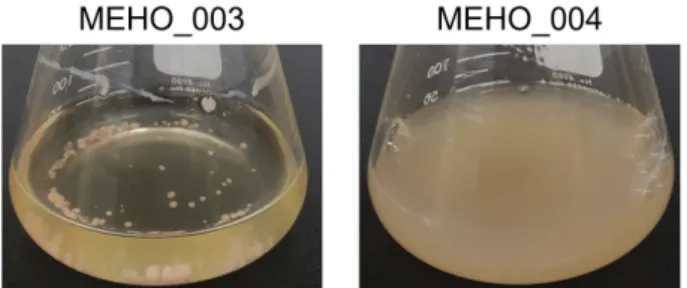
Fig. 2. The growth of Archangium gephyra MEHO_003 and MEHO_004 in liquid medium. The wild type strain MEHO_003 and the dispersion mutant MEHO_004 were cultured in the CYS medium for 5 days.
(4.6 × 150 mm, 5 μm)ᮥᰆ₊⦽ Agilent 1260 VL Infinity Series HPLC ᜅ▽ᮥᔍᬊ⦹ᩡ݅(Agilent Technologies, USA). ᯕ࠺ᔢ A ᬊๅಽ 0.1% trifluoroacetic acid (FTA)ෝ
⧉ᮁ⦽᷾ඹᙹ, ᯕ࠺ᔢ B ᬊๅಽ۵ 0.1% FTAෝ⧉ᮁ⦽ᦥ ᖙ☁ܩ✙ตᮥᔍᬊ⦹ᩡ݅. ᬊๅ᮹ᮁᗮᮡ 0.5 ml/minᮝಽ 0− 5ᇥe 40% B ᬊๅ, 5−25ᇥe 40ᨱᕽ 45% B ᬊๅʑᬙʑ, 25−30ᇥe 45ᨱᕽ 100% B ᬊๅʑᬙʑ, 30−35ᇥe 100%
B ᬊๅ, 35−40ᇥe 40% B ᬊๅಽᬊญ⦹ᩡ݅. ᬊญᧂᮡ
photo diode array (PDA) á⇽ʑෝᔍᬊ⦹ᩍ 254 nmᨱᕽ á⇽⦹ᩡ݅.
Tubulysin᮹ ᇥญෝ ᭥⧕ᕽ۵ Agilent Zorbax SB-C18 PrepHT ⋝ౝ(21.2 × 250 mm, 7 μm)ᮥᔍᬊ⦹ᩡ݅. ᯕ࠺ᔢ A۵ 0.1% TFAෝ⧉ᮁ⦽᷾ඹᙹ, ᯕ࠺ᔢ B۵ 0.1% TFAෝ
⧉ᮁ⦽ᦥᖙ☁ܩ✙ตᮥᔍᬊ⦹ᩡ݅. ᮁᗮᮡ 6 ml/minᮝಽ 0−60ᇥe 40−50% B ᬊๅʑᬙʑ, 60−70ᇥe 100% B ᬊ ๅ, 70−71ᇥe 100−40% B ᬊๅʑᬙʑ, 71−80ᇥe 40%
B ᬊๅႊჶᮝಽᇥญෝ⦹ᩡ݅.
High-resolution Tandem MS ᇥᕾ
Tubulysin᮹ tandem MS ᇥᕾᮡ⦽ǎʑⅩŝ⦺ḡᬱᩑǍ ᬱ(KBSI)ᨱ ᮹⦹ᩍ 15T FT-ICR ḩపᇥᕾʑ(solariX XRTM system, Bruker Daltonics, USA)ෝᔍᬊ⦹ᩍᯕᨕ Ჭ݅.
DNA ᕽᩕ ᇥᕾ
ᮁᱥℕ DNA᮹ᇥญ۵ᯝၹᱢᮝಽಅḥႊჶᮥᔍᬊ⦹
ᩡ݅[17]. ᮁᱥℕ DNA᮹ᩝʑᕽᩕđᱶᮡษⓍಽᲁᨱ Whole Genome De novo Sequencingᮥ᮹⦹ᩍᝅ⦹ᩡ݅. ᯕ₉ ݡᔍᔑྜྷᔾ⧊ᖒᮁᱥᯱ᮹ᇥᕾᮡ antiSMASH (antibiotics
& Secondary Metabolite Analysis SHell) ⥥ಽəఉ[18]ᮥ ᯕᬊ⦹ᩡ݅. ᕽᩕ ᔢ࠺ᖒ ᇥᕾᮡ ၙǎ ǎพᔾྜྷᱶᅕᖝ░
(NCBI)᮹ BLAST ⥥ಽəఉ[19]ᮥᔍᬊ⦹ᩡŁ, ݉႒ḩࠥີ
ᯙᇥᕾᮡ NCBI᮹ CD-Search ⥥ಽəఉ[20]ᮥᔍᬊ⦹ᩡ݅. A. gephyra MEHO_002᪡ MEHO_004 Ɂᵝ᮹ tubulysin ᔾ⧊ᖒᮁᱥᯱǑ᮹ DNA ᕽᩕᮡ NCBI᮹ GenBank DNA ᕽ
ᩕ ߑᯕ░ᄁᯕᜅᨱ ᱽ⇽ࡹᨩ݅(Accession numbers, MW489865 and MW489866).
đŝ ၰ Łₑ
A. gephyra᮹ tubulysin ᔾ⧊ᖒ ᮁᱥᯱ ┱ᔪ
A. gephyra MEHO_001ŝ A. gephyra MEHO_003ᮡ PCR á⇽ᨱ᮹⧕ tubulysin ᔾ⧊ᖒᮁᱥᯱෝaḥäᮝಽ ᖁᄥࡹᨩᮝ໑, LC-MS ᇥᕾᨱ᮹⧕ tubulysin A᪡ Bෝᔾᔑ
⦹۵ äᮝಽ ⪶ᯙࡽ Ɂᵝॅᯕ݅[14]. A. gephyra MEHO_
001ŝ MEHO_003 Ɂᵝ۵݅ෙݡᇡᇥ᮹ᔾᱱᧂᖙɁॅ
ŝษ₍aḡಽᧂℕ႑᧲ᖙ⡍ॅᯕ᮲Ḳࡹ۵✚ᖒᮥᅕᯙ
݅. ᯕ్⦽✚ᖒᮡၽ⬉᳑ෝᯕᬊ⦽ݡప႑᧲ᨱᰆᧁaࡹ໑, Ɂᵝ}ᖁᮥ᭥⦽ᮁᱥᯱ᯲᳑ࠥᇩa܆⦹í⦽݅. ᱱᧂᖙ Ɂᮡ S-ᬕ࠺ᖒᨱšᩍ⦹۵ᮁᱥᯱaᇩ⪽ᖒ⪵ࢁĞᬑᇥᔑ
⦹ᩍᖒᰆ⦽݅[21]. ᅙᩑǍ❡ᮡᧂℕ႑᧲ŝᱶᨱᕽᯱᩑᱢ
ᮝಽ S-ᬕ࠺ᖒᯕ ᔢᝅࡽ Ɂᵝෝ ᖁၽ⦹۵ ႊᮝಽ
MEHO_001 Ɂᵝ᮹ᇥᔑᄡᯕᵝෝᇥญ⦹ᩍ MEHO_002ಽ
⦹ᩡŁ, MEHO_003 Ɂᵝ᮹ ᇥᔑᄡᯕᵝෝ ᇥญ⦹ᩍ MEHO_004ಽ⦹ᩡ݅. MEHO_002᪡ MEHO_004 Ɂᵝ
۵ CYS ᧂℕ႑ḡᨱᕽ႑᧲⧁Ğᬑᔾ⩶Ɂᵝ᪡ݍญ᪥
ᱥ⯩ᇥᔑ⦹ᩍᖒᰆ⦹ᩡ݅(Fig. 2).
Tubulysin ᔾ⧊ᖒ ᮁᱥᯱǑᮥ ┱ᔪ⦹ʑ ᭥⦹ᩍ A.
gephyra MEHO_002᪡ MEHO_004 Ɂᵝᨱݡ⧕ᮁᱥℕᕽ
ᩕᇥᕾᮥᝅ⦹ᩡ݅. ᔾ⩶Ɂᵝݡᝁᇥᔑᄡᯕᵝ᮹ᮁᱥ ℕෝᇥᕾ⦽ᯕᮁ۵ᇥᔑᄡᯕᵝॅᯕᔢݡᱢᮝಽ݅ʑᛍ ᬑ໑⨆⬥ᮁᱥᯱ᯲᳑ၰྜྷḩᔾᔑᯕᯕॅɁᵝॅᮥݡᔢ ᮝಽᯕᨕḩäᮝಽᔾb⧩ʑভྙᯕᨩ݅. MEHO_002᪡ MEHO_004 Ɂᵝಽᇡ░ᮁᱥℕ DNAෝᇥญ⦽⬥, Whole Genome De novo Sequencingᮥᝅ⦽đŝ, MEHO_002 Ɂᵝ᮹Ğᬑᨱ۵ 15} contigಽǍᖒࡽⅾ 13,208,011 bp᮹
ᮁᱥℕᩝʑᕽᩕᮥᮥᙹᯩᨩᮝ໑, MEHO_004 Ɂᵝ᮹Ğ ᬑᨱ۵ 8} contigಽǍᖒࡽⅾ 13,119,373 bp᮹ᮁᱥℕᩝ ʑᕽᩕᮥᮥᙹᯩᨩ݅.
antiSMASH ⥥ಽəఉᮡᔾྜྷ᮹ᮁᱥℕᱶᅕಽᇡ░݅᧲
⦽᳦ඹ᮹ᯕ₉ݡᔍᔑྜྷᔾ⧊ᖒᮁᱥᯱǑᮥၾ⩡ԕ໑, ᮁᱥ
ᯱ bbᨱ ݡ⦽ ᔢᖙ ᇥᕾࠥ ᱽŖ⦹۵⥥ಽəఉᯕ݅[18].
antiSMASH ⥥ಽəఉᮥᯕᬊ⦹ᩍ MEHO_002 Ɂᵝᮁᱥℕ ᨱ᳕ᰍ⦹۵ᯕ₉ݡᔍᔑྜྷᔾ⧊ᖒᮁᱥᯱǑᮥᇥᕾ⦽đŝ,
tubulysin ᔾ⧊ᖒᮁᱥᯱǑᮝಽ⇵ᱶࡹ۵ᮁᱥᯱǑᯕʙᯕ
a aᰆ ʕ contigᨱ ᳕ᰍ⦹۵äᮝಽ ӹ┡ԍ݅(Fig. 3A).
MEHO_004 Ɂᵝ᮹ Ğᬑᨱࠥษ₍aḡಽ ʙᯕaaᰆʕ
contigᨱ tubulysin ᔾ⧊ᖒᮁᱥᯱǑᮝಽ⇵ᱶࡹ۵ᮁᱥᯱǑ ᯕ᳕ᰍ⦹۵äᮝಽᇥᕾࡹᨩ݅(Fig. 3B). Tubulysin ᔾ⧊ᖒ
ᮁᱥᯱǑᮝಽ⇵ᱶࡹ۵ᮁᱥᯱǑᮡ᧞ 38 kb Ⓧʑಽ 8}ᮁ ᱥᯱಽǍᖒࡹᨕᯩ۵ߑ(Fig. 3), bᮁᱥᯱaᦵ⪙⪵⦹۵݉ ႒ḩ᮹ᦥၙיᔑᕽᩕᯕ Cystobacter sp. SBCb004᮹⛽ᇩ
ᯕᝁᔾ⧊ᖒᮁᱥᯱaᦵ⪙⪵⦹۵݉႒ḩॅ᮹ᦥၙיᔑᕽ
ᩕŝ 88% ᯕᔢᮁᔍ⦹໑, ࠥີᯙǍᖒࠥ࠺ᯝ⦹ᩡᮝအಽᯕ
ॅᮥbb tubA, orf2, orf1, tubB~Fಽ⦹ᩡ݅.
Tubulysin ᔾ⧊ᖒ ᮁᱥᯱ᮹ ⪶ᯙ
A. gephyra MEHO_002᪡ MEHO_004 Ɂᵝ᮹ᩝᔪℕᨱ
᳕ᰍ⦹۵ᮁᱥᯱॅᯕᝅᱽ tubulysin ᔾ⧊ᖒᨱšᩍ⦹۵ḡ ᝅ⨹ᱢᮝಽ᷾⦹ʑ᭥⦹ᩍ tubB ᮁᱥᯱԕᇡ DNA ᳑b
ᮥ aḥ pJO115᪡ pJO118 ⥭ᜅၙऽෝ ᱽ᳑⦹ᩍ MEHO_002᪡ MEHO_004 Ɂᵝ᮹ᩝᔪℕᨱbbᔞ᯦⧉ᮝ ಽ៉ tubB ᮁᱥᯱaᇩ⪽ᖒ⪵ࡽ MEHO_005᪡ MEHO_007 Ɂᵝෝᱽ᳑⦹ᩡ݅. ᱽ᳑⦽Ɂᵝॅᮥ CYS ႑ḡᨱᕽ႑᧲⦹
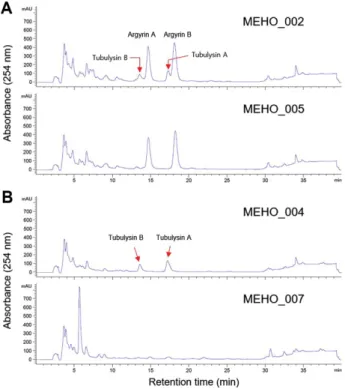
ᩍ႑᧲⇵⇽ྜྷᮥᱽ᳑⦹Ł HPLCಽᇥᕾ⦽đŝ, ࢱɁᵝ᮹ ႑᧲⇵⇽ྜྷ༉ࢱᨱᕽ tubulysin A᪡ Bᨱ⧕ݚ⦹۵⦝Ⓧa ᔍḥäᮥ⪶ᯙ⧁ᙹᯩᨩ݅(Fig. 4).
ᔍḥ⦝Ⓧa tubulysinᯙḡ⪶ᯙ⦹ʑ᭥⦹ᩍ MEHO_
004 Ɂᵝ᮹႑᧲⇵⇽ྜྷᨱᕽ tubulysin Aᨱ⧕ݚ⦹۵ peak
ྜྷḩᮥᇥญ⦹ᩍ 15T FT-ICR ḩపᇥᕾʑෝᔍᬊ⦹ᩍḩప
ᮥᇥᕾ⦹ᩡ݅. 1₉ ᯕ᪉⪵⦽ྜྷḩᮡ [M+H]+᮹ m/z sᯕ 844.452655ಽ 0.19 ppmᨱᕽᇥᯱᯕ C43H66N5O10Sಽ⇵ ᱶࡹᨩᮝ໑, ᯕ۵⦝Ⓧᨱݡ⦽࠺᭥ᬱᗭၙᖙǍ᳑ᇥᕾᮥ
☖⧕ᕽ ⪶ᯙࡹᨩ݅. ᕽ ⧕ݚ ྜྷḩ᮹ ᇥᯱᮡ
C43H65N5O10Sಽ tubulysin Aᯝäᮝಽᩩᔢࡹᨩ݅. ᯕ⦝Ⓧ
ྜྷḩᮥ 2₉ᯕ᪉⪵⦹ᩍᇥᕾ⦹ᩡᮥভ m/z sᯕ 742.384353, 504.216237, 239.175383, 211.180471ᯙ᳑b⦝Ⓧॅᯕá
⇽ࡹᨩ۵ߑ, ᯕ్⦽᳑b᧲ᔢᮡʑ᳕ᨱಅḥ tubulysin A ᮹᳑b᧲ᔢ(MoNA ID, CCMSLIB00000478582)ŝ⯂ᔍ⦹
ᩡ݅. ᯕᨱ⧕, ᳑b⦝Ⓧ᮹ᇥᯱపᮥʑⅩಽᰍǍᖒ⦽ྜྷ ḩ᮹Ǎ᳑ࠥ tubulysin Aᯙäᮝಽᇥᕾࡹᨩ݅(Fig. 5).
ᕽᯕ్⦽đŝ۵⥭ᜅၙऽᔞ᯦ᨱ᮹⧕ᔍḥ⦝Ⓧྜྷḩ
Fig. 3. Tubulysin biosynthetic gene clusters. Tubulysin biosynthetic gene clusters from A. gephyra MEHO_002 (Accession number, MW489865), A. gephyra MEHO_004 (MW489866), Angiococcus disciformis An d48 (AJ620477) [13], and Cystobacter sp. SBCb004 (GU002154) [5] are shown. The inverted triangles indicate where plasmids were inserted in the MEHO_005 and MEHO_007 strains.
Fig. 4. HPLC chromatograms of the culture extracts. (A) A.
gephyra MEHO_002 and MEHO_005 strains. (B) A. gephyra MEHO_004 and MEHO_007 strains.
ᮡ tubulysinᯕ໑, ᅙᩑǍᨱᕽၽčࡽ tubB~F ᮁᱥᯱǑᯕ tubulysin ᔾ⧊ᖒᮁᱥᯱǑᯥᮥḢᱲᱢᮝಽᅕᩍᵝᨩ݅.
Tubulysin ᔾ⧊ᖒ ᮁᱥᯱǑ ᇥᕾ
A. gephyra MEHO_002᪡ MEHO_004 Ɂᵝ᮹ tubulysin ᔾ⧊ᖒᮁᱥᯱǑ(tubA~tubF)ᮡ DNA ᩝʑᕽᩕᯕᕽಽ 97%
࠺ᯝ⦹ᩡ݅. ᯕॅ ᩝʑᕽᩕᮡ Cystobacter sp. SBCb004᮹ tubulysin ᔾ⧊ᖒᮁᱥᯱǑᩝʑᕽᩕŝ۵ 86% ࠺ᯝ⦹ᩡᮝ ໑, A. disciformis An d48᮹ tubulysin ᔾ⧊ᖒᮁᱥᯱǑŝ ۵ 75% ࠺ᯝ⦹ᩡ݅. ᕽ A. gephyra MEHO_002᪡ MEHO_004 Ɂᵝ᮹ tubulysin ᔾ⧊ᖒᮁᱥᯱǑᮡ DNA ᩝ ʑᕽᩕᨱᕽᕽಽๅᬑᮁᔍ⦹ḡอ Cystobacter sp. SBCb004
᮹ tubulysin ᔾ⧊ᖒ ᮁᱥᯱǑŝ۵ 14% ݅໑ A.
disciformis An d48᮹ tubulysin ᔾ⧊ᖒᮁᱥᯱǑŝ۵ 25%
݅ෙäᮝಽӹ┡ԍ݅. ⦹ḡอᮁᱥᯱǍᖒᮡๅᬑᮁᔍ⦹ᩍ tubZ ᮁᱥᯱෝᱽ⦹Ł۵ tubAಽᇡ░ tubFʭḡ᮹ᮁᱥᯱ
Ǎᖒᯕ࠺ᯝ⦹ᩡ݅(Fig. 3).
A. gephyra MEHO_002᪡ MEHO_004 Ɂᵝ᮹ tubulysin ᔾ⧊ᖒᮁᱥᯱॅᯕᦵ⪙⪵⦹۵݉႒ḩॅ᮹ᦥၙיᔑᕽᩕᮡ
ᕽಽ 97−100% ᮁᔍ⦹ᩡ݅(Table 1). ᯕॅ᮹ᦥၙיᔑᕽᩕ
ᮡ Cystobacter sp. SBCb004᮹ tubulysin ᔾ⧊ᖒᮁᱥᯱǑ
ᩝʑᕽᩕŝ 88−97% ᮁᔍ⦹ᩡᮝ໑(Table 2᪡ 3), A.
disciformis An d48᮹ tubulysin ᔾ⧊ᖒᮁᱥᯱǑŝ۵ 70− 89% ᮁᔍ⦹ᩡ݅(Table 1S). ⦹ḡอb݉႒ḩᮥǍᖒ⦹۵ࠥ Fig. 5. The tandem MS data of tubulysin A from A. gephyra MEHO_004.
Table 1. Comparison between the tubulysin biosynthetic genes of Archangium gephyra MEHO_002 and MEHO_004.
A. gephyra MEHO_002
Identity/Similarity (%) A. gephyra MEHO_004
Gene Product size (aa) Gene Product size (aa)
tubA 431 96/99 tubA 430
orf2 219 99/100 orf2 219
orf1 394 99/100 orf1 394
tubB 1,498 98/98 tubB 1,498
tubC 2,622 98/98 tubC 2,622
tubD 3,509 98/98 tubD 3,509
tubE 1,159 98/98 tubE 1,159
tubF 2,831 97/97 tubF 2,827
orf18 367 96/98 orf18 367
orfD 120 95/95 orfD 120
Identity/Similarity: Identity and similarity of the amino acid sequences between the proteins encoded by A. gephyra MEHO_002 and MEHO_004.
ີᯙ Ǎᖒᮡ ࠺ᯝ⦽ äᮝಽ ᇥᕾࡹᨩ݅. A. gephyra MEHO_002᪡ MEHO_004 Ɂᵝ᮹ tubB~F ᮁᱥᯱॅᮡ
Cystobacter sp. SBCb004᪡࠺ᯝ⦽ࠥີᯙǍᖒᮥaḥእ
ญᅕᗽ⠊┡ᯕऽ⧊ᖒ⬉ᗭ(NRPS), ⡕ญ⍡┡ᯕऽ⧊ᖒ⬉ᗭ
(PKS) ੱ۵ NRPS᪡ PKS᮹⪝ᖒℕෝᦵ⪙⪵⦹۵äᮝಽᇥ ᕾࡹᨩ݅(Table 2᪡ 3). əญŁ tubA, orf1, orf2 ᮁᱥᯱॅࠥ
࠺ᯝ⦽݉႒ḩᮥᦵ⪙⪵⦹۵äᮝಽᇥᕾࡹᨩ݅.
A. gephyra MEHO_002᪡ MEHO_004 Ɂᵝ᮹ tubulysin ᔾ⧊ᖒ ᮁᱥᯱǑŝ Cystobacter sp. SBCb004 ၰ A.
disciformis An d48᮹ tubulysin ᔾ⧊ᖒᮁᱥᯱǑ᮹aᰆⓑ
₉ᯕ۵ tubZ ᮁᱥᯱ᮹᳕ᰍᯕ݅. Cystobacter sp. SBCb004
᪡ A. disciformis An d48ᨱ۵ tubZ ᮁᱥᯱa ᯩḡอ A.
gephyra MEHO_002᪡ MEHO_004 Ɂᵝᨱ۵ᨧ݅(Fig. 3, Table 2᪡ 3). tubZ ᮁᱥᯱ۵ lysine cyclodeaminase ᮁᔍ
݉႒ḩᮥᦵ⪙⪵⦹۵ᮁᱥᯱಽ lysineᮝಽᇡ░ tubulysin ᔾ
⧊ᖒ᮹᯲ྜྷḩᯙ pipecolic acidෝอऽ۵äᮝಽ⇵ᱶࡹ
Łᯩ݅[13, 22]. Cystobacter sp. SBCb004᪡ A. disciformis An d48᮹ tubZ ᮁᱥᯱෝᇩ⪽ᖒ⪵┅۵Ğᬑᔾᔑࡹ۵ᮁ
ࠥℕ᮹᳦ඹ᪡ᔾᔑపᯕݍḡʑ۵⧕ࠥᩍᱥ⯩ tubulysin
ᯕᔾᔑࡽ݅[5, 23]. ᕽ݅ෙᮁᱥᯱᨱ᮹⧕ᦵ⪙⪵ࡹ۵
lysine cyclodeaminase᮹ʑ܆ᨱ᮹⧕ pipecolic acidaŖɪ
ࡹʑࠥ⦹۵äᮝಽᱽᦩࡹᨩ݅. ᮁᱥℕᕽᩕᇥᕾᨱ᮹⦹໕
A. gephyra MEHO_002᪡ MEHO_004 Ɂᵝ۵ᩝᔪℕ᮹݅
ෙ᭥⊹ᨱ Cystobacter sp. SBCb004᮹ TubZ ݉႒ḩŝᦥၙ
יᔑᕽᩕᯕ 44−50% ᮁᔍ⦽ࢱ}᮹ lysine cyclodeaminase
ᮁᔍ݉႒ḩᮥᦵ⪙⪵⦹۵ᮁᱥᯱෝaḡŁᯩ۵äᮝಽӹ
┡ԍ݅. ᕽ tubulysin ᔾ⧊ᖒᮁᱥᯱǑᨱ tubZ ᮁᱥᯱ
aᨧᨕࠥ tubulysin ᔾᔑᨱྙᱽaᨧᮥäᮝಽ⇵ᱶࡽ݅
A. gephyra᮹⢽ᵡɁᵝᯙ DSM 2261TɁᵝ᮹ᮁᱥℕᨱ۵ tubulysin ᔾ⧊ᖒᮁᱥᯱǑᯕᨧ݅. MEHO_002᪡ MEHO_
004᮹ᮁᱥℕᨱᕽ۵ tubulysin ᔾ⧊ᖒᮁᱥᯱǑ(tubA~tubF) ŝ orf18, orfDᯕ DSM 2261T ᮁᱥℕ᮹ AA314_01909᪡
AA314_01912 ᮁᱥᯱᨱ⧕ݚ⦹۵ᮁᱥᯱॅᔍᯕᨱᔞ᯦ࡹ
ᨕᯩ݅. orf18ᮡ patatin-like proteinᮥᦵ⪙⪵⦹໑ orfD۵ hypothetical proteinᮥ ᦵ⪙⪵⦹۵ äᮝಽ ᇥᕾࡹᨩ݅. tubulysin ᔾ⧊ᖒᨱšಉ⦹ᩍ orf18ŝ orfD᮹ʑ܆ᮡಅᲙ
ᯩḡᦫ݅. ⦽⠙, MEHO_002᪡ MEHO_004᮹ᮁᱥℕᨱᕽ ۵ DSM 2261T ᮁᱥℕ᮹ AA314_01910ŝ AA314_01911
ᮁᱥᯱᨱ ⧕ݚ⦹۵ ᮁᱥᯱa ᳕ᰍ⦹ḡ ᦫ۵݅. ᕽ MEHO_002᪡ MEHO_004 Ɂᵝᨱᕽ۵ᯕࢱᮁᱥᯱෝ⡍⧉
⦹۵ 1,867 bp DNA ᇡ᭥a tubulysin ᔾ⧊ᖒᮁᱥᯱǑᮥa
ḥ ᧞ 40 kb Ⓧʑ᮹ DNAಽ Ʊℕࡽ äᮝಽ ⇵ᱶࡽ݅.
AA314_01910ŝ AA314_01911 ᮁᱥᯱ۵ hypothetical proteinᮥᦵ⪙⪵⦽݅.
Table 2. Comparison between the tubulysin biosynthetic genes of A. gephyra MEHO_002 and Cystobacter sp. SBCb004.
A. gephyra MEHO_002 Cystobacter sp. SBCb004
Gene Product size
(aa) Predicted function PKS/NRPS motif predicted by antiSMASH
Identity/
Similarity (%)
Gene Product size (aa)
tubA 431 NRPS C 81/88 tubA 432
orf2 219 hypothetical protein 76/87 orf2 219
- - - tubZ 386
orf1 394 hypothetical protein 91/97 orf1 394
tubB 1,498 NRPS C-A(pip)-nMT-PCP 84/89 tubB 1,520
tubC 2,622 NRPS C-A(ile)-PCP-C-A(val)-nMT-PCP 85/90 tubC 2,626
tubD 3,509 PKS/NRPS KS-AT(mal)-KR-DH-ER-ACP-C-A(cys)-PCP 85/90 tubD 3,511
tubE 1,159 NRPS C-CAL-PCP 86/90 tubE 1,161
tubF 2,831 PKS KS-AT(mal)-KR-cMT-KR-DH-ER-ACP-TE 82/88 tubF 2,843
- - - orf17 337
orf18 367 patatin-like protein 80/89 orf18 368
orfD 120 hypothetical protein 60/72 orfD 124
A, adenylation domain; aa, amino acid; ACP, acyl-carrier protein domain; AT, acyltransferase; C, condensation domain; CAL, co- enzyme A ligase domain; cMT, carbon methyltransferase; cys, cysteine; DH, dehydrase; ER, enoylreductase domain; ile, isoleucine;
KR, ketoreductase domain; KS, ketosynthase domain; mal, malonate; nMT, nitrogen methyltransferase; NRPS, non-ribosomal peptide synthetase; PCP, peptidyl-carrier protein domain; pip, pipecolic acid; PKS, polyketide synthase; TE, thioesterase domain; val, valine.
Identity/Similarity: Identity and similarity to the corresponding proteins encoded by Cystobacter sp. SBCb004.
MEHO_002᪡ MEHO_004 Ɂᵝ۵ tubulysin ᔾ⧊ᖒᮁᱥ
ᯱǑ᮹ DNA ᩝʑᕽᩕᯕᕽಽ 97% ࠺ᯝ⦹໑ᮁᱥℕᕽᩕࠥ
ᱥၹᱢᮝಽ ๅᬑ ᮁᔍ⦹݅. ⦹ḡอ MEHO_002 Ɂᵝ۵ argyrin ᔾ⧊ᖒᮁᱥᯱǑᮥaᲙ argyrinᮥᔾᔑ⦹۵ၹ໕, MEHO_004 Ɂᵝ۵ argyrin ᔾ⧊ᖒᮁᱥᯱෝaḡḡᦫᦥ argyrinᮥᔾᔑ⦹ḡᦫ۵݅۵ᱱᯕ݅݅(Fig. 4). Argyrin
ᮡᱱᧂᖙɁŝႊᖁɁᨱᕽᇥญࡽ cyclic octapeptide ĥᩕ᮹
ྜྷḩಽ⧎ᦵŝ⧎ᖙɁ⪽ᖒᮥᅕᯙ݅[24, 25]. MEHO_002
᪡ MEHO_004 Ɂᵝ᮹ tubulysin ᔾᔑᙹᮉᮡ ᮁᔍ⦽ߑ, HPLC ᇥᕾᔢݡᱢᮝಽ ฯᮡ᧲ᯕᔾᔑࡹ۵ argyrinᯕ tubulysinŝᮁᔍ⦽᭥⊹ᨱᕽᇥญࡹʑভྙᨱ argyrinᮥᔾ ᔑ⦹ḡᦫ۵ MEHO_004 Ɂᵝa tubulysinᮥᔾᔑ⦹ᩍᇥญ
⦹Łᯱ⧁ভᮁญ⧁äᮝಽᅕᯙ݅.
đುᱢᮝಽ, ᅙᩑǍᨱᕽ۵ᮁᱥℕᇥᕾᮥ☖⧕ A. gephyra MEHO_002᪡ MEHO_004 Ɂᵝ᮹ tubulysin ᔾ⧊ᖒᮁᱥᯱ
Ǒᮥ ┱ᔪ⦹ᩡᮝ໑, ᮁᱥᯱ ᇩ⪽ᖒ⪵ෝ ☖⧕ ᯕॅᯕ tubulysin ᔾ⧊ᖒᮁᱥᯱᯥᮥ⪶ᯙ⦹ᩡ݅. Tubulysinᮡv ಆ⦽⧎ᦵ⪽ᖒᮝಽᯙ⧕᮲ᬊᮥ᭥⦽݅᧲⦽ᩑǍaᯕᨕ ḡŁ ᯩ۵ ྜྷḩᯕ݅. MEHO_002᪡ MEHO_004 Ɂᵝ᮹ tubulysin ᔾᔑᙹᮉᮡ ⥭ᜅⓍᨱ ႑᧲⦹۵Ğᬑ 0.2−1.0 mg/l ᙹᵡᮝಽʑ᳕ᨱಅḥɁᵝॅ᮹ᔾᔑᙹᮉ[22]ŝᮁᔍ
⦹íๅᬑԏ݅. ┱ᔪࡽᮁᱥᯱ۵⨆⬥ᮁᱥᯱ᯲᳑ᨱ᮹⦽
tubulysin ᔾᔑᙹᮉ᮹᷾ݡၰᮁࠥℕᔾᔑᮥ᭥⦽ᵲ⦽
ᰍഭಽᔍᬊࢁäᮝಽʑݡ⦽݅.
᧞
Tubulysinᮡ݅᧲⦽ᦵᖙ⡍ᵝᨱݡ⧕v⦽⧎ᦵ⪽ᖒᮥᅕ
ᯕ۵ᱱᧂᖙɁᮁ௹ᯕ₉ݡᔍᔾญ⪽ᖒྜྷḩᯕ݅. ᅙᩑǍᨱ ᕽ۵ tubulysinᮥᔾᔑ⦹۵ࢱɁᵝ᮹ᱱᧂᖙɁ Archangium gephyra MEHO_002᪡ MEHO_004᮹ᮁᱥℕᇥᕾᮥ☖⧕
tubulysin ᔾ⧊ᖒᮁᱥᯱॅಽ⇵ᱶࡹ۵ᮁᱥᯱǑᮥၽč⦹
ᩡᮝ໑, ⥭ᜅၙऽᔞ᯦ᨱ᮹⦽ᮁᱥᯱᇩ⪽ᖒ⪵ෝ☖⧕ᯕ
ॅᮁᱥᯱॅᯕ tubulysin ᔾᔑŝḢᱲᩑšࡹᨕᯩᮭᮥ⪶ ᯙ⦹ᩡ݅. A. gephyra MEHO_002᪡ MEHO_004 Ɂᵝ᮹ tubulysin ᔾ⧊ᖒᮁᱥᯱǑ(tubA~tubF)ᮡ DNA ᩝʑᕽᩕᯕ
ᕽಽ 97% ࠺ᯝ⦹ᩡᮝ໑, ᦵ⪙⪵⦹۵݉႒ḩॅ᮹ᦥၙיᔑ
ᕽᩕࠥᕽಽ 97−100% ᮁᔍ⦹ᩡ݅. MEHO_002᪡ MEHO_
004 Ɂᵝ᮹ tubulysin ᔾ⧊ᖒᮁᱥᯱǑᮡ tubulysin ᔾᔑᱱ ᧂᖙɁᮝಽ ಅḥ Cystobacter sp. SBCb004᮹ tubulysin ᔾ⧊ᖒᮁᱥᯱǑŝ DNA ᩝʑᕽᩕᯕ 86% ࠺ᯝ⦹ᩡ݅. ᮁᱥ
ᯱǑ᮹Ǎᖒᮡ tubZ ᮁᱥᯱa᳕ᰍ⦹ḡᦫ۵݅۵ᱱᮥᱽ
⦹Ł۵ SBCb004᮹ tubulysin ᔾ⧊ᖒᮁᱥᯱǑǍᖒŝ࠺ᯝ
⦹ᩡ݅. bᮁᱥᯱaᦵ⪙⪵⦹۵݉႒ḩ᮹ᦥၙיᔑᕽᩕᮡ
Cystobacter sp. SBCb004᮹ tubulysin ᔾ⧊ᖒᮁᱥᯱaᦵ
⪙⪵⦹۵݉႒ḩॅŝ 88−97% ᮁᔍ⦹ᩡᮝ໑, b݉႒ḩॅ᮹ Table 3. Comparison between the tubulysin biosynthetic genes of A. gephyra MEHO_004 and Cystobacter sp. SBCb004.
A. gephyra MEHO_004 Cystobacter sp. SBCb004
Gene Product size
(aa) Predicted function PKS/NRPS motif predicted by antiSMASH
Identity/
Similarity (%)
Gene Product size (aa)
tubA 430 NRPS C 81/89 tubA 432
orf2 219 hypothetical protein 77/87 orf2 219
- - - tubZ 386
orf1 394 hypothetical protein 91/97 orf1 394
tubB 1,498 NRPS C-A(pip)-nMT-PCP 84/89 tubB 1,520
tubC 2,622 NRPS C-A(ile)-PCP-C-A(val)-nMT-PCP 85/90 tubC 2,626
tubD 3,509 PKS/NRPS KS-AT(mal)-KR-DH-ER-ACP-C-A(cys)-PCP 85/90 tubD 3,511
tubE 1,159 NRPS C-CAL-PCP 86/90 tubE 1,161
tubF 2,827 PKS KS-AT(mal)-KR-cMT-KR-DH-ER-ACP-TE 82/88 tubF 2,843
- - - orf17 337
orf18 367 patatin-like protein 81/89 orf18 368
orfD 120 hypothetical protein 62/72 orfD 124
A, adenylation domain; aa, amino acid; ACP, acyl-carrier protein domain; AT, acyltransferase; C, condensation domain; CAL, co- enzyme A ligase domain; cMT, carbon methyltransferase; cys, cysteine; DH, dehydrase; ER, enoylreductase domain; ile, isoleucine;
KR, ketoreductase domain; KS, ketosynthase domain; mal, malonate; nMT, nitrogen methyltransferase; NRPS, non-ribosomal peptide synthetase; PCP, peptidyl-carrier protein domain; pip, pipecolic acid; PKS, polyketide synthase; TE, thioesterase domain; val, valine.
Identity/Similarity: Identity and similarity to the corresponding proteins encoded by Cystobacter sp. SBCb004.
ࠥີᯙǍᖒࠥ࠺ᯝ⦹ᩡ݅.
Conflict of Interest
The authors have no financial conflicts of interest to declare.
References
1. Etienne-Manneville S. 2010. From signaling pathways to microtubule dynamics: the key players. Curr. Opin. Cell Biol. 22:
104-111.
2. Risinger AL, Giles FJ, Mooberry SL. 2009. Microtubule dynamics as a target in oncology. Cancer Treat. Rev. 35: 255-261.
3. Sasse F, Steinmetz H, Heil J, Hőfle G, Reichenbach H. 2000.
Tubulysins, new cytostatic peptides from myxobacteria acting on microtubuli. Production, isolation, physico-chemical and biological properties. J. Antibiot. 53: 879-885.
4. Khalil MW, Sasse F, Lünsdorf H, Elnakady YA, Reichenbach H.
2006. Mechanism of action of tubulysin, an antimitotic peptide from myxobacteria. ChemBioChem 7: 678-683.
5. Chai Y, Pistorius D, Ullrich A, Weissman KJ, Kazmaier U, Műller R.
2010. Discovery of 23 natural tubulysins from Angiococcus disciformis An d48 and Cystobacter SBCb004. Chem. Biol. 17:
296-309.
6. Steinmetz H, Glaser N, Herdtweck E, Sasse F, Reichenbach H, Hőfle G. 2004. Isolation, crystal and solution structure determi- nation, and biosynthesis of tubulysins - powerful inhibitors of tubulin polymerization from myxobacteria. Angew. Chem. Int.
Ed. 43: 4888-4892.
7. Dömling A, Richter W. 2005. Myxobacterial epothilones and tubulysins as promising anticancer agents. Mol. Divers. 9: 141- 147.
8. Kaur G, Hollingshead M, Holbeck S, Schauer-Vukasinovic V, Camalier RF, Domling A, et al. 2006. Biological evaluation of tubulysin A: a potential anticancer and antiangiogenic natural product. Biochem. J. 396: 235-242.
9. Murray BC, Peterson MT, Fecik RA. 2015. Chemistry and biology of tubulysins: antimitotic tetrapeptides with activity against drug resistant cancers. Nat. Prod. Rep. 32: 654-662.
10. Reddy JA, Dorton R, Bloomfield A, Nelson M, Dircksen C, Vetzel M, et al. 2018. Pre-clinical evaluation of EC1456, a folate- tubulysin anti-cancer therapeutic. Sci. Rep. 8: 8943.
11. Szigetvari NM, Dhawan D, Ramos-Vara JA, Leamon CP, Klein PJ, Ruple AA, et al. 2018. Phase I/II clinical trial of the targeted che- motherapeutic drug, folate-tubulysin, in dogs with naturally- occurring invasive urothelial carcinoma. Oncotarget 9: 37042-
37053.
12. Courter JR, Joseph Z, Hamilton JZ, Hendrick NR, Zaval M, Waight AB, et al. 2020. Structure-activity relationships of tubulysin analogues. Bioorg. Med. Chem. Lett. 30: 127241.
13. Sandmann A, Sasse F, Müller R. 2004. Identification and analy- sis of the core biosynthetic machinery of tubulysin, a potent cytotoxin with potential anticancer activity. Chem. Biol. 11:
1071-1079.
14. Hyun H, Choi J, Kang D, Kim Y, Lee P, Chung GJY, et al. 2021.
Screening of myxobacteria carrying tubulysin biosynthetic genes. Microbiol. Biotechnol. Lett. 49: 32-38.
15. Shin H, Youn J, An D, Cho K. 2013. Production of antimicrobial substances by strains of myxobacteria Corallococcus and Myxo- coccus. Kor. J. Microbiol. Biotechnol. 41: 44-51.
16. Lee B, Lee C, Cho K. 2003. Isolation of dispersed mutants from wild myxobacteria. Kor. J. Microbiol. Biotechnol. 31: 342-347.
17. Sambrook J, Fritsch EF, Maniatis T. 1989. Molecular Cloning: a Laboratory Manual, 2nd ed. Cold Spring Harbor Laboratory Press, Cold Spring Harbor, New York, N.Y., USA.
18. Blin K, Shaw S, Steinke K, Villebro R, Ziemert N, Lee SY, et al.
2019. antiSMASH 5.0: updates to the secondary metabolite genome mining pipeline. Nucleic Acids Res. 47: W81-W87.
19. Johnson M, Zaretskaya I, Raytselis Y, Mereshuk Y, McGinnis S, Madden TL. 2008. NCBI BLAST: a better web interface. Nucleic Acids Res. 36: W5-W9.
20. Marchler-Bauer A, Derbyshire MK, Gonzales NR, Lu S, Chitsaz F, Geer LY, et al. 2015. CDD: NCBI's conserved domain database.
Nucleic Acids Res. 43: D222-D226.
21. Shimkets LJ. 1986. Correlation of energy-dependent cell cohe- sion with social motility in Myxococcus xanthus. J. Bacteriol.
166: 837-841.
22. Chai Y, Shan S, Weissman KJ, Hu S, Zhang Y, Műller R. 2012. Het- erologous expression and genetic engineering of the tubulysin biosynthetic gene cluster using Red/ET recombi- neering and inactivation mutagenesis. Chem. Biol. 19: 361-371.
23. Ullrich A, Chai Y, Pistorius D, Elnakady YA, Herrmann JE, Weissman KJ, et al. 2009. Pretubulysin, a potent and chemically accessible tubulysin precursor from Angiococcus disciformis.
Angew. Chem. Int. Ed. Engl. 48: 4422-4425.
24. Selva E, Gastaldo L, Saddler GS, Toppo G, Ferrari P, Carniti G, et al. 1996. Antibiotics A21459 A and B, new inhibitors of bacte- rial protein synthesis. I. Taxonomy, isolation and characteriza- tion. J. Antibiot. 49: 145-149.
25. Sasse F, Steinmetz H, Schupp T, Petersen F, Memmert K, Hofmann H, et al. 2002. Argyrins, immunosuppressive cyclic peptides from myxobacteria. I. Production, isolation, physico- chemical and biological properties. J. Antibiot. 55: 543-551.