* Corresponding author : Man-Kang Song, Department of Animal Science, Chungbuk National University, Tel: +82-43-261-2545, Fax:
+82-43-273-2240, E-mail: [email protected]
Effects of Defaunation on Fermentation Characteristics, Degradation of Ryegrass Hay and Methane Production by Rumen Microbes In Vitro When
Incubated with Plant Oils
Wei-Ze Qin1, Cheng-Yun Li2, Seong-Ho Choi3, Shinekhuu Jugder4, Hyun-Ju, Kim3, Sang-Suk Lee5 and Man-Kang Song3*
1Institute of Animal Science, Yanbian academy of agricultural sciences, Longjing, Jilin, China,
2Department of Animal Science, Yanbian University, Jilin, China,
3Department of Animal Science, Chungbuk National University, Cheongju, Chungbuk, 361-763 Korea,
4The School of Biological Resource and Management, Mongolian State University of Agriculture, Ulaanbaatar, Mongolia,
5Department of Animal Science, Suncheon National University, Suncheon, Cheonnam, Korea
ABSTRACT
This study was conducted to examine the effects of defaunation (removal of live protozoa) on fermentation characteristics, degradation of ryegrass hay and CH4(methane) production by rumen microbes when incubated with plant oils (SO, sunflower oil and LO, linseed oil) in vitro. Sodium lauryl sulfate (0.000375 g/ml) as a defaunation reagent was added into the culture solution and incubated anaerobically up to 24 h at 39℃. pH from defaunation was increased for all treatments from 6 h incubation times (p<0.01-0.001) compared with those from fauantion. Concentration of ammonia-N from defaunation is higher than that from faunation at 3 h (p<0.001), 12 h (p<0.05) and 24 h (p<0.001) incubation times. Defaunation decreased (p<0.01-0.001) total volatile fatty acid concentration at all incubation times. Molar proportions of C2(acetate, p<0.05-0.001) and butyrate (p<0.01-0.001) were also decreased by defaunation at all incubation times. Molar proportion of C3(propionate), however, was increased by defaunation at all incubation times (p<0.001). Thus the rate of C2 to C3 was decreased by defaunation at all incubation times (p<0.001).
Defaunation decreased ED (effective degradability) of dry matter (p<0.001) and ED of neutral detergent fiber (p<0.001) of ryegrass hay. Defaunation decreased total gas, CH4 production, CH4 % in total gas and CH4/CO2 at all incubation times (p<0.001). Oil supplementation decreased total gas (p<0.05-0.001), CH4 production (p<0.001) and CH4 % in total gas (p<0.001) compared with control at all incubation times. The result of this study showed that defaunation combined with oil supplementation may cause an alteration of microbial communities and further medicate the fermentation pattern, resulting in both reduction of degradation of ryegrass hay and CH4 production. No difference, however, was observed in all the examinations between SO and LO.
(Key words : Defaunation, Ryegrass hay, Soybean oil, Linseed oil, Methane)
Ⅰ. INTRODUCTION
Rumen protozoa are believed to actively participate in the fermentation processes of the diet in the rumen (Hungate, 1966), and they contribute to 20% of fiber degradation (Dijkstra and Tamminga, 1995). The ruminal protozoa are also strongly related to CH4(methane) production during the ruminal fermentation. Removal of protozoa (defaunation) clearly reduced CH4 production when incubated with starchy feeds (Qin et al., 2012) and with forages (Qin et al., 2013).
A symbiotic relationship between ruminal ciliate protozoa
and methanogens was uncovered by Finlay et al. (1994), and they indicated that the symbiotic methanogens associated with the protozoa may account for 37 % of the total CH4
production.
Meanwhile, lipid supplementation to the diet has negatively affected digestibility both in the rumen and hind gut of cattle (Song et al., 1994), and even feed intake (Song et al., 1992). The ruminal fiber degradation was decreased when more than 4% of lipid was supplemented (Jenkins et al., 1989). Supplementation of crushed flaxseed (Song et al., 1994) and oil infusion to the rumen of sheep (Song et al.,
Table 1. Chemical composition of ryegrass hay added into the culture solution (%, DM basis)
Substrate Chemical composition (%, DM basis)
CP EE NDF Ash
Ryegrass hay 4.14 2.05 69.48 5.16
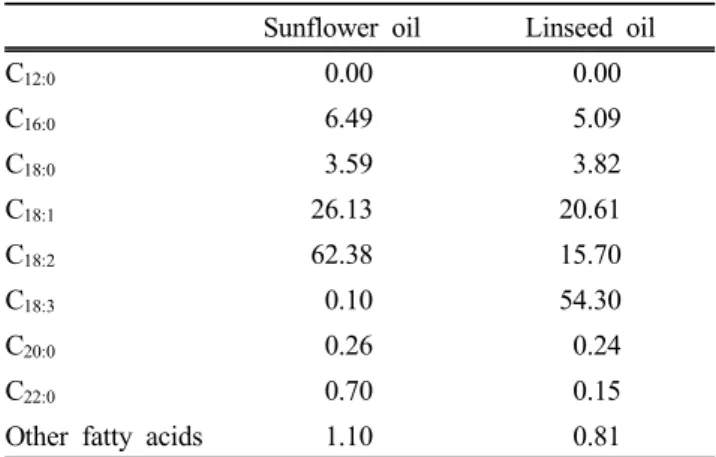
Table 2. Fatty acid composition of plant oils added into the culture solution (%, total fatty acid)
Sunflower oil Linseed oil
C12:0 0.00 0.00
C16:0 6.49 5.09
C18:0 3.59 3.82
C18:1 26.13 20.61
C18:2 62.38 15.70
C18:3 0.10 54.30
C20:0 0.26 0.24
C22:0 0.70 0.15
Other fatty acids 1.10 0.81
1999) clearly decreased ruminal NDF (neutral detergent fiber) degradation. Ruminal degradation rate of the diet was decreased with increased degree of unsaturation (Huang et al., 1999). Unlikely to the bacteria, ruminal protozoa may have a minor contribution in bio-hydrogenation of poly unsaturated fatty acid as well as in lipid degradation (Dawson and Kemp, 1969).
This study was conducted to examine the effect of defaunation on fermentation characteristics, degradation of ryegrass (Lolium multiflorum) hay and CH4 production by rumen microbes when incubated with plant oils which are different in fatty acid composition.
Ⅱ. MATERIALS AND METHODS 1. In vitro incubation
Rumen contents were obtained 2 h after the morning feeding (09:00) from three cannulated Holstein cows fed 9 kg/d total diets daily (7 kg concentrate and 2 kg ryegrass, as fed basis), twice (09:00 and 18:00 h) per day, in an equal volume. The rumen fluid was strained through 12 layers of cheesecloth to remove the feed particles. Carbon dioxide (CO2) was flushed into the strained rumen fluid for 30 seconds. Culture solution was prepared by mixing 40 ml strained rumen fluid with 40 ml McDougall’s buffer (McDougall, 1948). Sodium lauryl sulfate (0.000375 g/ml, Sigma, L5750) as a defaunation reagent was added into the mixed culture solution to remove ruminal protozoa (Dohme et al., 1999). One gram of (C18:2) linoleic acid -rich SO (sunflower oil) or (C18:3) (linolenic acid) -rich LO (linseed oil) with 0.4 g albumin emulsifier each dissolved in 1 ml buffer solution was added to 80 ml culture solution in 160 ml bottle. Culture solution without any supplements was also prepared for incubation (control). One gram of ground ryegrass (Lolium multiflorum) hay through 1 mm screen on a DM (dry matter) basis as substrate was prepared in a nylon bag (5 × 5 cm, a pore size 50 μm) and was added to the mixed culture solution of presence of protozoa (faunation) or absence of protozoa (defaunation) in the bottle. The bottles were sealed with rubber stoppers, and then were incubated anaerobically in a shaking incubator (VS-8480SR, VISON Science, Bucheon, Korea) at a speed of 135 rpm/min up to
24 h at 39℃. The in vitro incubation was made 3 times in duplicate under similar conditions. Chemical composition of ryegrass hay is shown in Table 1 and composition of major fatty acids of plant oils was shown in Table 2.
2. Measurement and analysis
Incubation was stopped by removing the bottles from the shaking incubator at 3, 6, 12 and 24 h, and pH of culture solution was immediately measured. At the same time an aliquot of culture solution (0.8 ml) was collected from each bottle for ammonia and VFA (volatile fatty acid) analyses.
Ammonia concentration was determined by the method of Fawcett and Scott (1960) using a spectrophotometer (Optizen 3220UV, Mecasys Co. Ltd., Daejeon, Korea). The 0.8 ml culture solution was mixed with 0.2 ml 25% phosphoric acid and 0.2 ml pivalic acid solution as the internal standard for the VFA analysis. The VFA concentration was determined by a gas chromatograph (GC, HP5890 series II, Hewlett Packard Co. USA) equipped with a FID (flame ionization detector). The oven temperature for VFA analysis was 120°C, and the temperatures of the injector and detector were maintained at 170°C and 200°C, respectively.
A 30-m fused silica capillary column (HP-FFAP, 19091F-
112, 0.32 mm i.d. USA) was used. Ultra high purity He was used at a flow rate of 50 ml/min. Identification and quantification were carried out by the external standard method following injection of a VFA standard (Supelco 47058, WSFA-4, USA) of known concentration. Total gas production was measured at each incubation time through the 3-way stopcock connected to culture bottles. A gas sample was transferred to a 5 ml vacuum tube and analyzed for CH4 and CO2 by gas chromatography (YL 6100 GC, Young Lin Instrument Co., Korea) equipped with FID and TCD (thermal conductivity detector). A 30 m silica capillary column (Agilent HP-PLQT Q, 19095P-Q04, 0.54 mm i.d., USA) was used to identify CH4 and CO2 peak analysis.
The oven and injector temperatures for gas analysis were 100℃ and 150℃, respectively, and temperatures for FID and TCD detector were kept at 230℃ and 150℃, respectively. The N2(nitrogen) gas was used as carrier gas at a flow rate of 30 ml/min. The nylon bag containing feed residue after incubation was washed with tap water and dried at 60℃ for 48 h in the drying oven to measure DM degradation. The CP (crude protein), EE (ether extract), and ash of feeds (ryegrass hay) prior to incubation and feed residue after incubation were analyzed according to AOAC methods (1995). The NDF (neutral detergent fiber) was analyzed by the methods of Van Soest et al. (1991).
3. Estimation of effective degradability in vitro
Percent disappearance of DM and NDF at each incubation time was calculated from the remained portion after incubation in the rumen. Disappearance rate was fitted to the equation of Ørskov and McDonald (1979): Y(t) = a + b(1-e-ct)
Where Y(t) is the proportion of the incubated material degraded at time t; ‘a’ is the water soluble and instantly degradable fraction; ‘b’ is the potentially degradable fraction; ‘c’ is the fractional rate of degradation of fraction b. Non-linear parameters a, b and c were estimated by an iterative least square procedure to calculate effective degradability of DM (EDDM) and NDF (EDNDF) according to the following equation (Ørskov and McDonald, 1979):
Effective degradability = a + (b×c)/(c+r)
Where ‘r’ is the fractional outflow rate and a
hypothetical fractional outflow rate of 0.05 h was used for estimation of effective degradability.
4. Statistical analyses
The present study was shown as 2×3 factorial design that represent two fractions (faunation and defaunation) and three treatments (control, SO or LO supplementation).
Data were analyzed using the GLM (general linear models) procedure of SAS (V 9.1, 2002). Six treatments were replicated twice per time and repeated 3 times. For each variable measured at each time, replicates were averaged, and the total number of observations was 6 (treatments) × 3 (times) = 18 observations. The 18 observations obtained were subjected to least squares analysis of variance according to the following models:
Yijk = μ + τi + Sj + Ok + (τi × Sj) + εijk
Where Yijk is observation, μ is the overall mean, τi is the effect of oil treatment (i=1-3), Sj is microbial effect (j=1-2), Ok is the jth incubation time, (τi × Sj) = interaction effect between oil and microbe and εijk is the error term. Data between treatments were compared by S-N-K (Steel and Torrie, 1980) and significant differences were declared at p<0.05.
Ⅲ. RESULTS
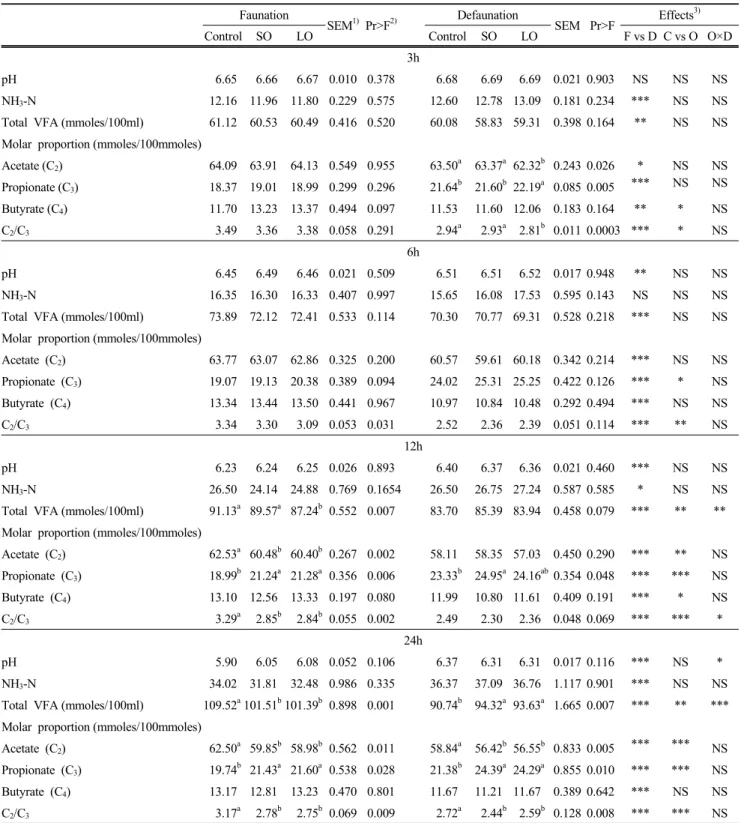
Prior to each incubation, it was found that live protozoa were virtually absent when the culture solution was examined under the microscope, thus it was confirmed that sodium lauryl sulfate could be an effective agent against protozoa. The effect of oils or defaunation on pH, NH3-N and VFA are presented in Table 3.
pH from defaunation was increased for all treatments from 6 h incubation times (p<0.01-0.001) compared with those from fauantion. Concentration of ammonia-N from defaunation is higher than that from faunation at 3 h (p<0.001), 12 h (p<0.05) and 24 h (p<0.001) incubation times. Defaunation decreased (p<0.01-0.001) total VFA concentration at all incubation times. Molar proportions of C2(acetate, p<0.05-0.001) and butyrate (p<0.01-0.001) were also decreased by defaunation at all incubation times. Molar proportion of C3(propionate), however, was increased by
Table 3. pH, ammonia-N concentration, and concentration and proportions of major VFAs in the culture solution as influenced by presence (faunation) or absence (defaunation) of protozoa as associated with plant oils
Faunation
SEM1) Pr>F2) Defaunation
SEM Pr>F Effects3)
Control SO LO Control SO LO F vs D C vs O O×D
3h
pH 6.65 6.66 6.67 0.010 0.378 6.68 6.69 6.69 0.021 0.903 NS NS NS
NH3-N 12.16 11.96 11.80 0.229 0.575 12.60 12.78 13.09 0.181 0.234 *** NS NS
Total VFA (mmoles/100ml) 61.12 60.53 60.49 0.416 0.520 60.08 58.83 59.31 0.398 0.164 ** NS NS Molar proportion (mmoles/100mmoles)
Acetate (C2) 64.09 63.91 64.13 0.549 0.955 63.50a 63.37a 62.32b 0.243 0.026 * NS NS Propionate (C3) 18.37 19.01 18.99 0.299 0.296 21.64b 21.60b 22.19a 0.085 0.005 *** NS NS Butyrate (C4) 11.70 13.23 13.37 0.494 0.097 11.53 11.60 12.06 0.183 0.164 ** * NS C2/C3 3.49 3.36 3.38 0.058 0.291 2.94a 2.93a 2.81b 0.011 0.0003 *** * NS
6h
pH 6.45 6.49 6.46 0.021 0.509 6.51 6.51 6.52 0.017 0.948 ** NS NS
NH3-N 16.35 16.30 16.33 0.407 0.997 15.65 16.08 17.53 0.595 0.143 NS NS NS
Total VFA (mmoles/100ml) 73.89 72.12 72.41 0.533 0.114 70.30 70.77 69.31 0.528 0.218 *** NS NS Molar proportion (mmoles/100mmoles)
Acetate (C2) 63.77 63.07 62.86 0.325 0.200 60.57 59.61 60.18 0.342 0.214 *** NS NS Propionate (C3) 19.07 19.13 20.38 0.389 0.094 24.02 25.31 25.25 0.422 0.126 *** * NS Butyrate (C4) 13.34 13.44 13.50 0.441 0.967 10.97 10.84 10.48 0.292 0.494 *** NS NS
C2/C3 3.34 3.30 3.09 0.053 0.031 2.52 2.36 2.39 0.051 0.114 *** ** NS
12h
pH 6.23 6.24 6.25 0.026 0.893 6.40 6.37 6.36 0.021 0.460 *** NS NS
NH3-N 26.50 24.14 24.88 0.769 0.1654 26.50 26.75 27.24 0.587 0.585 * NS NS
Total VFA (mmoles/100ml) 91.13a 89.57a 87.24b 0.552 0.007 83.70 85.39 83.94 0.458 0.079 *** ** **
Molar proportion (mmoles/100mmoles)
Acetate (C2) 62.53a 60.48b 60.40b 0.267 0.002 58.11 58.35 57.03 0.450 0.290 *** ** NS Propionate (C3) 18.99b 21.24a 21.28a 0.356 0.006 23.33b 24.95a 24.16ab0.354 0.048 *** *** NS Butyrate (C4) 13.10 12.56 13.33 0.197 0.080 11.99 10.80 11.61 0.409 0.191 *** * NS C2/C3 3.29a 2.85b 2.84b 0.055 0.002 2.49 2.30 2.36 0.048 0.069 *** *** *
24h
pH 5.90 6.05 6.08 0.052 0.106 6.37 6.31 6.31 0.017 0.116 *** NS *
NH3-N 34.02 31.81 32.48 0.986 0.335 36.37 37.09 36.76 1.117 0.901 *** NS NS
Total VFA (mmoles/100ml) 109.52a101.51b101.39b 0.898 0.001 90.74b 94.32a 93.63a 1.665 0.007 *** ** ***
Molar proportion (mmoles/100mmoles)
Acetate (C2) 62.50a 59.85b 58.98b 0.562 0.011 58.84a 56.42b 56.55b 0.833 0.005 *** *** NS Propionate (C3) 19.74b 21.43a 21.60a 0.538 0.028 21.38b 24.39a 24.29a 0.855 0.010 *** *** NS Butyrate (C4) 13.17 12.81 13.23 0.470 0.801 11.67 11.21 11.67 0.389 0.642 *** NS NS C2/C3 3.17a 2.78b 2.75b 0.069 0.009 2.72a 2.44b 2.59b 0.128 0.008 *** *** NS
1)SEM, standard error of means.
2)Pr>F, probability level; a,b,cMeans in the same row with different superscripts differ.
3)F vs D, faunation vs defaunation; C vs O, control vs oil regardless of defaunation; O × D, interaction between oil supplementation and defaunation.
* p<0.05; ** p<0.01; *** p<0.0001; NS = Non significant.
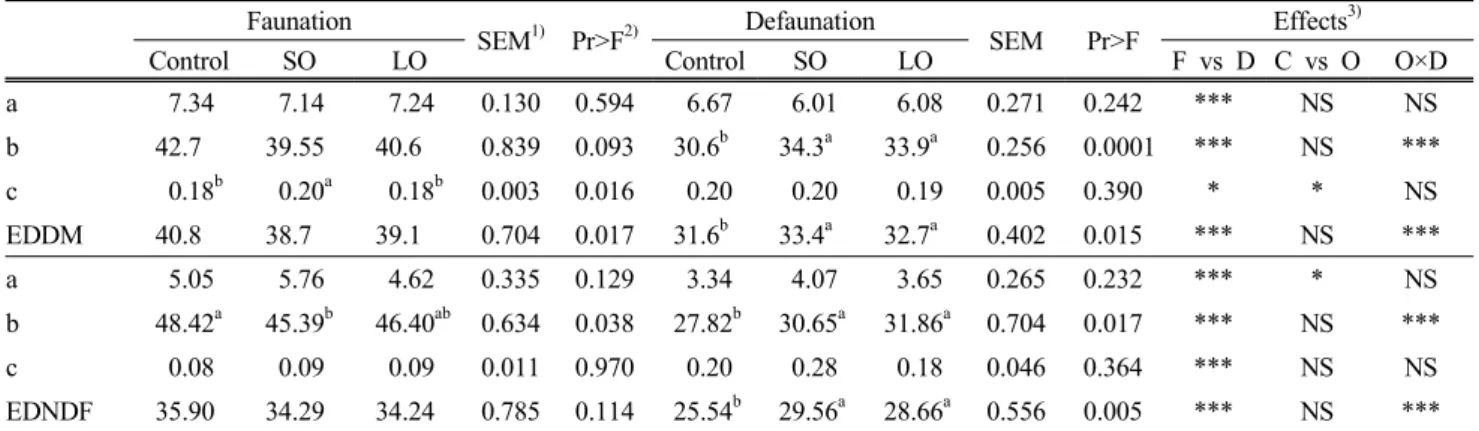
Table 4. Degradation parameters (a, b, and c) and effective degradability (ED) of ryegrass hay in the culture solution as influenced by presence (faunation) or absence (defaunation) of protozoa as associated with plant oils
Faunation
SEM1) Pr>F2) Defaunation
SEM Pr>F Effects3)
Control SO LO Control SO LO F vs D C vs O O×D
a 7.34 7.14 7.24 0.130 0.594 6.67 6.01 6.08 0.271 0.242 *** NS NS
b 42.7 39.55 40.6 0.839 0.093 30.6b 34.3a 33.9a 0.256 0.0001 *** NS ***
c 0.18b 0.20a 0.18b 0.003 0.016 0.20 0.20 0.19 0.005 0.390 * * NS
EDDM 40.8 38.7 39.1 0.704 0.017 31.6b 33.4a 32.7a 0.402 0.015 *** NS ***
a 5.05 5.76 4.62 0.335 0.129 3.34 4.07 3.65 0.265 0.232 *** * NS
b 48.42a 45.39b 46.40ab 0.634 0.038 27.82b 30.65a 31.86a 0.704 0.017 *** NS ***
c 0.08 0.09 0.09 0.011 0.970 0.20 0.28 0.18 0.046 0.364 *** NS NS
EDNDF 35.90 34.29 34.24 0.785 0.114 25.54b 29.56a 28.66a 0.556 0.005 *** NS ***
1)SEM, standard error of means.
2)Pr>F, probability level; a,b,cMeans in the same row with different superscripts differ.
3)F vs D, faunation vs defaunation; C vs O, control vs oil regardless of defaunation; O × D, interaction between oil supplementation and defaunation.
* p<0.05; *** p<0.0001; NS = Non significant.
defaunation at all incubation times (p<0.001). Thus the rate of C2 to C3 was decreased by defaunation at all incubation times (p<0.001). Frequency of oil effect in difference of VFA composition was not consistent by incubation times while interaction between oil supplementation and defaunation was seldom appeared in most observation items at most incubation times.
Defaunation decreased values of degradation parameters a and b (p<0.001), and in vitro EDDM (p<0.001) of ryegrass hay compared with relevant values of faunation (Table 4).
Similar trends to EDDM were observed in ED of NDF degradation. Oil supplementation only increased degradation parameter c of DM and degradation parameter a of NDF.
Interaction between oil supplementation and defaunation was found from degradation parameter b (p<0.001), and EDs of DM and NDF (p<0.001).
Defaunation decreased total gas, CH4 production, CH4 % in total gas and CH4/CO2 at all incubation times (p<0.001), and CO2 production from 12 h incubation times (p<0.001) while clearly increased CO2 % in total gas at all incubation times (p<0.001, Table 5). Oil supplementation decreased total gas (p<0.05-0.001), CH4 production (p<0.001) and CH4
% in total gas (p<0.001) at all incubation times, and CH4/CO2(p<0.001) from 6 h incubation times while increased CO2 production (p<0.05-0.001) and CO2 % in total gas (p<0.001) at all incubation times compared with corresponding
values of control. Interactions between oil supplementation and defaunation were observed mainly from production of total gas (p<0.001), CO2(p<0.001) and CH4 (p<0.01-0.001) at 12 h and 24 h incubation times.
Ⅳ. DISCUSSION
Kiran and Mutsvangwa (2010) showed that elimination of protozoa from the rumen lowered dietary CP degradation and resulted in a decreased concentration of NH3-N. This indicates the active proteolytic activity of protozoa in the rumen. But in the present study, increased NH3-N concentration by defaunation may be due to the fact that defaunating agent (sodium lauryl sulfate) killed protozoa cells, and the dead protozoa might be lysed by bacteria, thus led to a higher NH3-N concentration rather than bacterial CP analyses of ryegrass hay. The present result in concentration of NH3-N is in agreement with Qin et al. (2012).
The concentration of total VFA is, generally, positively correlated with feed digestibility. In the present study, decreased EDDM of ryegrass hay by defaunation could be closely related with the reduced concentration of total VFA, confirming that rumen protozoa actively participate in the fermentation processes of the diet in the rumen (Hungate, 1966). Oil supplementation in association with faunation in the current study further decreased total VFA concentration.
Table 5. Gas production from culture solution incubated for 24 h and it’s major gas composition as influenced as influenced by presence (faunation) or absence (defaunation) of protozoa when associated with plant oils based on ryegrass hay
Faunation
SEM1) Pr>F2) Defaunation
SEM Pr>F Effects3)
Control SO LO Control SO LO F vs D C vs O O×D
3h
Total gas (ml) 36.33 36.00 36.33 0.272 0.630 32.33b 32.00b 34.00a 0.192 0.0007 *** *** **
CO2 (ml) 23.09 23.86 23.71 0.316 0.264 23.65b 23.70b 25.14a 0.319 0.027 * * NS CH4 (ml) 10.98 10.12 10.24 0.400 0.325 6.41a 5.46b 5.92ab0.215 0.054 *** * NS CO2% in total gas 63.45 66.16 65.25 0.652 0.064 73.19 74.05 73.93 0.574 0.554 *** * NS CH4% in total gas 30.09 28.15 28.18 0.503 0.056 19.83a 17.06b 17.41b 0.502 0.016 *** *** NS CH4/CO2 0.47 0.43 0.43 0.027 0.445 0.27 0.23 0.24 0.010 0.053 *** NS NS
6h
Total gas (ml) 65.00 64.67 65.00 0.509 0.870 60.67b 60.00b 62.33a 0.430 0.021 *** * NS CO2 (ml) 40.19b 43.86a 43.94a 0.507 0.003 43.32 42.92 45.37 0.741 0.116 * ** * CH4 (ml) 20.60 18.63 18.48 0.677 0.122 12.30 10.83 10.22 0.583 0.106 *** * NS CO2% in total gas 61.90b 67.84a 67.58a 0.456 0.0001 71.51 71.49 72.77 0.547 0.245 *** *** ***
CH4% in total gas 31.68a 28.83b 28.41b 0.351 0.001 20.31a 18.04b 16.94c 0.351 0.0007 *** *** NS CH4/CO2 0.52 0.43 0.42 0.025 0.063 0.28a 0.25b 0.23c 0.007 0.004 *** ** NS
12h
Total gas (ml) 114.15a 104.08b 105.31b 0.577 <.0001 85.34c 88.71b 90.07a 0.544 0.0009 *** *** ***
CO2 (ml) 75.53a 72.38b 72.95b 0.464 0.007 63.02b 68.56a 68.89a 0.499 0.0003 *** * ***
CH4 (ml) 35.36a 29.35b 28.39b 0.539 0.0002 21.01a 18.07b 16.71c 0.318 0.0002 *** *** **
CO2% in total gas 66.40b 69.58a 69.51a 0.511 0.006 74.20b 77.36a 76.05ab0.604 0.028 *** *** NS CH4% in total gas 31.04a 28.21b 27.00b 0.431 0.002 24.75a 20.40b 18.48b 0.580 0.0007 *** *** NS CH4/CO2 0.47a 0.41b 0.39b 0.016 0.029 0.34a 0.26b 0.24b 0.018 0.027 *** *** NS
24h
Total gas (ml) 170.67a 163.33b 159.42c 0.544 <.0001 105.33b 116.83a 117.56a 0.509 <.0001 *** * ***
CO2 (ml) 114.56 114.54 110.98 1.276 0.152 77.33b 86.97a 87.16a 0.593 <.0001 *** *** ***
CH4 (ml) 51.73a 45.48b 42.60c 0.527 <.0001 25.33a 22.83b 22.78b 0.379 0.005 *** *** ***
CO2% in total gas 67.13b 70.14a 69.82a 0.627 0.028 73.41 74.96 74.48 0.603 0.255 *** ** NS CH4% in total gas 30.30a 27.84b 26.79b 0.381 0.002 24.05a 19.69b 19.48b 0.453 0.0006 *** *** NS CH4/CO2 0.45a 0.40b 0.38b 0.010 0.007 0.33a 0.26b 0.26b 0.012 0.013 *** *** NS
1)SEM, ptandard error of means.
2)Pr>F, probability level; a,b.cMeans in the same row with different superscripts differ.
3)F vs D, faunation vs defaunation; C vs O, control vs oil regardless of defaunation; O × D, interaction between oil supplementation and defaunation.
* p<0.05; ** p<0.01; *** p<0.001; NS = Non significant.
The decreased total VFA concentration as one possible reason may be attributed to the toxicity of plant oils to the protozoa (Ivan et al., 2001), resulting in reduced EDDM and EDNDF. Qin et al. (2012) observed that oil supplementation or defaunation influenced the VFA profiles by shifting in a decreased molar proportion of C2 and C4 but an increased
molar proportion of C3, thus resulted in a decreased ratio of C2 to C3. It may indicate that these treatments led to alteration of microbial communities and further medication of fermentation pattern. It could also be explained that defaunation and oil supplementation cause a higher partial pressure of hydrogen due to inhibition of CH4 production
and thus stimulated another hydrogen consuming pathway (such as C3 production) to maintain optimal hydrogen levels.
Defaunation is known to decrease fiber digestion (Ushida and Jouany, 1990) and protozoa were generally responsible for 20% of fiber digestion (Dijkstra and Tamminga, 1995).
The results of the present study are consistent with the finding of above reports. This could be simply attributed to the contribution of fibrolytic enzymes by the rumen protozoa (Takenaka et al., 2004). Meanwhile, EDDM and EDNDF of ryegrass hay in the present study were not affected by oil supplementation in the faunated culture solution. Result of another research (Pavan et al., 2007), however, has shown that oil supplementation reduced NDF digestion as PUFA (polyunsaturated fatty acid) have the direct toxicity to fibrolytic bacteria (Maczulak et al., 1981) through coating feed particle and inhibition of attachment of fibrolytic bacteria on feed particle (Dong et al., 1997).
Supplementation of oil in the present study seemed to be less adverse effect on those bacteria. This could be due to the fact that plant oil was added into the culture solution in form of emulsion, which failed to result in prevention of bacterial colonization on the surface of fiber. In addition, oil in combination with defaunation resulted in an increased EDNDF compared with control. This could be closely related to the fact that elimination of protozoa and their associated methanogens led to an inefficient inter-species hydrogen transfer between fibrolytic bacteria and methanogens. Cheng et al. (2009) has proved that the presence of methanogens could maintain a lower hydrogen level and be beneficial for the fiber degradation. Thus, addition of oils rich in PUFA to defaunation culture solution may supply an alternative pathway for hydrogen sink via microbial bio-hydrogenation which indirectly promoted fiber digestion. Ruminal degradation rate of the diet was decreased with increased degree of unsaturation (Huang et al., 1999) but in the current study, no difference was found in degradation of DM and NDF of ryegrass hay between C18:2 rich sunflower oil and C18:3 rich linseed oil.
Measurement of gas production is considered as indirect indicator for fermentation kinetics. Jin et al. (2012) demonstrated that gas production was closely correlated with the disappearance rate of dietary DM in the rumen. In the present study, defaunation significantly reduced total gas
production. This could be attributed to the relative lower EDDM caused by defaunation. It has been recognized for many years that elimination of rumen protozoa can effectually reduce CH4 production by interruption of interspecies hydrogen transfer between protozoa and their ecto- and endo-symbiotically associated with methanogens (Finlay et al. 1994; Hegarty, 1999; Qin et al., 2012).
Meanwhile, oil supplementation was considered to be a promising dietary strategy for reduction in CH4 production and has been widely reported by in vitro (Li et al., 2011) and in vivo (Jordan et al., 2006; Li et al., 2009) studies. In the present study, SO or LO supplementation to faunated- or defaunated culture solution reduced CH4 production.
Previous studies have also observed the suppression of CH4
production by SO (McGinn et al., 2004) and LO (Martin et al., 2008) added to the diet. The toxicity of oil to protozoa could partly be responsible for the reduction of CH4
production as Nagaraja et al. (1997) observed decrease in protozoal numbers with addition of oil lipid. However, decreased CH4 production was also found from oil supplementation in combination with defaunation. It may be due to a direct toxic effect of PUFA rich in plant oil on methanogens via consumption of metabolic hydrogen for bio-hydrogenation (Machmüller et al., 2003). Thus, it implied that shift in metabolic hydrogen toward bio-hydrogenation of PUFA may inhibit the normal metabolic activities of all the species of methanogens since the protozoa associated and free-living methanogens showed the different physiological characteristics (Tokura et al., 1997). It also indicated that the effects of oil supplementation are mediated by the simultaneous elimination of protozoa. One of possible reasons might be that defaunation increased the number of B. fibrisolvens and thus enhanced the utilization of metabolic hydrogen for bio-hydrogenation, especially on forage-based diet which resulted in fibrolytic bacteria as the predominant rumen microbes.
The result of this study showed that defaunation combined with oil supplementation might cause an alteration of microbial communities and further medicate the fermentation pattern, resulting in both reduction of degradation of ryegrass hay and CH4 production. No difference, however, was observed in all the examinations between SO and LO.
Ⅴ. ACKNOWLEDGEMENT
This work was supported by the research grant of Chungbuk National University in 2013.
Ⅵ. REFERENCES
AOAC. 1995. Official methods of analsis. 13th edn. Association of official analytical chemists, Washington, DC.
Cheng, Y.F., Edwards, J.E., Allison, G.G., Zhu, W.Y. and Theodorou, M.K.. 2009. Diversity and activity of enriched ruminal cultures of anaerobic fungi and methanogens grown together on lignocellulose in consecutive batch culture. Bioresource Technology. 100:4821-4828.
Dawson, R.M.C. and Kemp, P. 1969. The effect of defaunation on the phospholipids and on the hydrogenation of unsaturated fatty acids in the rumen. Biochemistry Journal. 115:351-352.
Dijkstra, J. and Tamminga, S. 1995. Simulation of the effects of diet on the contribution of rumen protozoa to degradation of fiber in the rumen. British Journal of Nutrition. 74:617-634.
Dong, Y., Bae, H.D., McAllister, T.A., Mathison, G.W. and Cheng, K.J. 1997. Lipid-induced depression of methane production and digestibility in the artificial rumen system (RUSITEC). Canadian Journal of Animal Science. 77:269-278.
Fawcett, J.K. and Scott, J.E. 1960. A rapid and precise method for the determination of urea. Journal of Clinical Pathology. 13:
156-163.
Finlay, B.J., Esteban, G., Clarke, K.J., Williams, A.G., Embley, T.M.
and Hirt, R.R. 1994. Some rumen ciliates have endosymbiotic methanogens. Fems Microbiology Letters. 117:157-162.
Hegarty, R.S. 1999. Reducing rumen methane emissions through elimination of rumen protozoa. Australian Journal of Agricultural Research. 50:1321-1327.
Huang, Z.S., Choi, S.H. and Song, M.K. 1999. Metabolic response of ruminal microbes to C18-fatty acids. Korean Journal of Animal Nutrition and Feedstuffs. 23:49-58.
Hungate, R.E. 1966. The Rumen and its Microbes. Academic press, New York.
Ivan, M., Mir, P.S., Koenig, K.M., Rode, L.M., Neill, L., Entz, T.
and Mir, Z. 2001. Effects of dietary sunflower seed oil on rumen protozoa population and tissue concentration of conjugated linoleic acid in sheep. Small Ruminant Research. 41: 215-227.
Jenkins, T.C., Gimenes, T. and Cross, D.L. 1989. Influences of phospholipids on ruminal fermentation in vitro and on nutreient digestion and serum lipids in sheep. Journal of Animal Science.
67:529-537.
Jin, G.L., Shinekhuu, J., Qin, W.Z., Kim, J.K., Ju, J.K., Suh, S.W.
and Song, M.K. 2012. Effect of protein fractionation and buffer solubility of forage sources on in vitro fermentation characteristics, degradability and gas production. Journal of the Korean Society of Grassland and Forage Science. 32:59-74.
Jordan, E., Kenny, D., Hawkins, M., Malone, R., Lovett, D.K. and Mara, O. 2006. Effect of refined soy oil or whole soybeans on intake, methane output, and performance of young bulls. Journal of Animal Science. 84:2418-2425.
Kiran, D. and Mutsvangwa, T. 2010. Effects of partial ruminal defaunation on urea-nitrogen recycling, nitrogen metabolism, and microbial nitrogen supply in growing lambs fed low or high dietary crude protein concentrations. Journal of Animal Science.
88:1034-1047.
Li, X.Z., Yan, C.G., Choi, S.H., Long, R.J., Jin, G.L. and Song, M.K. 2009. Effects of addition level and chemical type of propionate precursors in dicarboxylic acid pathway on fermentation characteristics and methane production by rumen microbes in vitro. Asian-Australasian Journal of Animal Science. 22:82-89.
Li, X.Z., Long, R.J., Yan, C.G., Lee, H.G., Kim, Y.J. and Song, M.
K. 2011. Rumen microbial response in production of CLA and methane to safflower oil in association with fish oil or/and fumarate. Animal Science Journal. 82:441-450.
Machmüller, A., Soliva, C.R. and Kreuzer, M. 2003. Effect of coconut oil and defaunation treatment on methanogenesis in sheep. Reproducible Nutrition Development. 43:41-55.
Maczulak, A.E., Dehority, B. and Palmquist, D.L. 1981. Effects of long-chain fatty acids on growth of rumen bacteria. Applied and Environmental Microbiology. 42:856-862.
Martin, C., Rouel, J., Jouany, J.P., Doreau, M. and Chilliard, Y.
2008. Methane output and diet digestibility in response to feeding dairy cows crude linseed, extruded linseed, or linseed oil.
Journal of Animal Science. 86:2642-2650.
McDougall, E.I. 1948. Studies on ruminant saliva. I. The composition and output of sheep’s saliva. Biochemical Journal. 43:99-109.
McGinn, S.M., Beauchemin, K.A., Coates, T. and Colombatto, D.
2004. Methane emissions from beef cattle: effects of monensin, sunflower oil, enzymes, yeast, and fumaric acid. Journal of Animal Science. 82:3346-3356.
Nagaraja, T.G., Newbold, C.J., Van Nevel, C.J. and Demeyer, D.I.
1997. Manipulation of ruminal fermentation In: Hobson, P.N., Stewart, C.S. (Eds.), The Rumen Microbial Ecosystem. Blackie Academic & Professional London, pp. 523-632.
Ørskov, E.R. and McDonald, I. 1979. The estimation of protein degradability in the rumen from incubation measurements weighted according to rate of passage. Journal of Agricultural
Science. 92:499-506.
Pavan, E., Duckett, S.K. and Andrae, J.G. 2007. Corn oil supplementation to steers grazing endophyte-free tall fescue. I.
Effects on in vivo digestibility, performance, and carcass traits.
Journal of Animal Science. 85:1330-1339.
Qin, W.Z., Lee, C.Y., Kim, J.K., Ju, J.G. and Song, M.K. 2012.
Effects of defaunation on fermentation characteristics and methane production by rumen microbes in vitro when incubated with starchy feed sources. Asian-Australasian Journal of Animal Science. 25:1381-1388.
Qin, W.Z., Choi, S.H., Lee, S.U., Lee, S.S. and Song, M.K. 2013.
Effects of defaunation on in vitro fermentation characteristics and methane emission when incubated with forages. Journal of the Korean Society of Grassland and Forage Science. 33:197-205.
SAS. 2002. SAS User’s guide: Statistical analysis system institute, SAS Inc., Cary, NC, USA.
Song, M.K., Choi, Y.I. and Chung, Y.H. 1992. Effects of feeding method and yellow grease supplementation to the diet on feed intake, growth and feed efficiency of Korean native bulls.
Korean Journal of Animal Nutrition and Feedstuffs. 16:345-352.
Song, M.K., Chung, T.Y. and Sim, J.S. 1994. Effect of crushing and formaldehyde treatment of flaxseeds on fermentation charac- teristics, degradability in the rumen and whole tract digestibility
of the diets, and plasma fatty acid composition. Korean Journal of Animal. Science. 36:494-506.
Song, M.K., Whang, J.S. and Choi, S.H. 1999. Metabolic responses of sheep to the ruminal infusion of oils. Korean Journal of Animal Nutrition and Feedstuffs. 23:249-260.
Steel, R.G.D. and Torrie, J.H. 1980. Principles and procedures of statistics. Mcgraw Hill Book Co., NY.
Takenaka, A., Tajima, K., Mitsumor, M. and Kajikawa, H. 2004.
Fiber digestion by rumen ciliate. Microbes and Environment. 19:
203-210.
Tokura, M., Ushida, K., Miyazaki, K. and Kojima, Y. 1997.
Methanogens associated with rumen ciliates. Fems Micro- biological Ecology. 22:137-143.
Ushida, K. and Jouany, P. 1996. Methane production associated with rumen-ciliated protozoa and its effect on protozoan activity.
Letters of Applied Microbiology. 23:129-132.
Van Soest, P.J., Robertson, J.B. and Lewis, B.A. 1991. Methods for dietary fiber, neutral detergent fiber, and nonstarch poly- saccharides in relation to animal nutrition. Journal of Dairy Science. 74:3583-3597.
(Received May 26, 2014 / Revised August 22, 2014 / Accepted August 28, 2014)