Y.-L. Sun ・ S.-K. Hong
(Department of Bio-Health Technology, College of Biomedical Science, Kangwon National University, Chuncheon,
Kangwon-Do, 200-701, Korea) S.-K. Hong ( )
(Institute of Bioscience and Biotechnology, Kangwon National University, Chuncheon, Kangwon-Do, 200-701, Korea) e-mail: [email protected]
Establishment of a novel plant regeneration system from suspension- derived callus in the halophytic Leymus chinensis (Trin.)
Sun Yan-Lin ・ Hong Soon-Kwan
Received: 13 April 2010 / Accepted: 27 April 2010
ⓒKorean Society for Plant Biotechnology
Abstract The establishment of cell suspension culture and
plant regeneration of the halophytic Leymus chinensis (Trin.) are described in this study for the first time. Callus induction solid medium containing Murashige and Shoog (MS) basic salt, 2.0 mg l
-12,4-dichlorophenoxyacetic acid (2,4-D), and 5.0 mg l
-1L-glutamic acid with 30.0 g l
-1sucrose and 4.0 g l
-1gelrite for solidification induced the highest rate of cell division in Type 1 callus among calli of various types.
Liquid medium with the same hormone distribution was therefore, used for cell suspension culture from Type 1 callus. Over a 30 d suspension culture at 100 rpm, great amounts of biomass were accumulated, with 71.07%
average daily increment and 22.32-fold total fresh weight increment. Comparison of before and after suspension culture, the distribution of different size callus pieces and the maintenance of callus type were basically unaltered, but a slight increase in relative water contents was observed. To induce the potential of plant regeneration, the directly transferring on plant regeneration solid medium containing MS basic salt, 0.2 mg l
-1α-naphthalene acetic acid (NAA), 2.0 mg l
-1kinetin (Kn), and 2.0 g l
-1casamino acid and indirectly transferring were simultaneously performed. Even now growth rates of suspension-derived callus on solid medium were approximately half of those of Type 1 callus, but faster somatic embryogenesis was observed. Rooting of all regenerated shoots was successfully performed on half- strength MS medium. All plants appeared phenotypically normal.
Keywords Leymus chinensis, Cell suspension culture, Plant
regeneration, Somatic embryogenesis, Halophytic plant
Abbreviations
MS Murashige and Shoog
2,4-D 2,4-Dichlorophenoxyacetic acid NAA α-Naphthalene acetic acid Kn Kinetin
SD Standard deviation
Introduction
The halophyte Leymus chinensis (Trin.), a perennial rhizome grass placed in tribe Gramineae, is an important forage crop widely grown throughout northern China, Mongolia and Siberia (Huang et al. 2004). Because of its intrinsic tolerance of highly alkaline-sodic soil conditions (Jin et al. 2006), L.
chinensis is used as a soil-binding plant to protect soil from
desertification. Its high vegetative productivity, good palatability and protein content, make the species a major forage product to meet the needs of grazing (Shu et al. 2005). However, climate changes, overgrazing and reclamation of grassland result in severe deterioration of the grassland ecosystem, including L. chinensis grassland. Under the pressure of low sexual reproductivity (Huang et al. 2004) and relatively chilling-sensitivity, the great demands for genetic improve- ment of physiological traits become urgent need in this grass.
Plant cell culture technologies are introduced at the end of 1960s as a possible tool for both studying and producing plant secondary metabolites (Mulabagal and Tsay 2004).
Until now, plant cell culture technology has been widely used for the commercial processing, especially in the generation of recombinant proteins and the industrial pro- duction of secondary metabolites (Dicosmo and Misawa 1995). These secondary metabolites include taxol, morphine
DOI:10.5010/JPB.2010.37.2.228Research Article
and codeine, ginsenosides, berberine, diosgenin, capsaicin and so on (Hunter and Kilby 1990). Like animal cells, plant cells are more and more commonly used in studying the morphological, physiological and molecular responses to stress toxicity, the mechanisms of ion transport and related ion signaling pathways (Keppler et al. 1989; Murata et al.
2000; Janisch and Schempp 2004; Kim et al. 2007). Protoplasts isolated from the cells provide a novel system as single cells instead of complex tissues (Briskin and Leonard 1979). In addition, understanding of physiological characteristics and gene expression patterns of halophytic plants under stress has been believed as a good way of understanding of stress-specific signaling cascades and activate adaptive transcriptional and translational responses. In comparison to routine callus culture, plant cell culture facilitates the rapid cell division and cell generations of various cell lines and stable and direct somatic embryogenesis. Moreover, due to a large surface for exposure to transforming agent and ef- fective selection of transformants, embryogenic cells from suspension culture have been used for gene transformation and gene manipulation (Hall 1991). It has also been thought that the unicellular origin of somatic embryos could reduce the likelihood of chimerism (Deo et al. 2010). Many studies have been reported for several graminaceous species. In rice, reliable and efficient protocols for the establishment of cell suspension cultures have been developed, and transgenic, somatic hybrid, and cybrid plants have been obtained by using protoplasts isolated from suspension cells (Shimamoto et al. 1989; Yang et al. 1989). In barley, successful plant regeneration from suspension cell-derived protoplasts was reported (Jähne et al. 1991), and transgenic barley plants have been successfully produced by direct gene transfer to suspension cell-derived protoplasts (Funatsuki et al. 1995).
For the halophytic L. chinensis, little studies about cell suspension cultures and suspension-derived plant regeneration has been reported. To the authors’ knowledge, even tissue culture information about this grass is not much (Liu et al.
2004; Kim et al. 2005). Based on the previous studies in our lab, we optimize the conditions of tissue culture in this grass, and investigate callus induction from various explants including mature seeds, leaf tissue and root tissue (Sun and Hong 2009; Sun and Hong 2010). Here, we describe the establishment of cell suspension cultures from Type 1 callus, which was previously obtained from callus tissue culture using mature seeds and leaf base segments of L. chinensis LcWT07 plants as explants (Sun and Hong 2010). Using liquid medium with the same hormone distribution as callus induction solid medium used in our previous study, the growth patterns of the cultures, such as relative growth rates, relative water contents, and the distribution of different size
cell aggregates, were examined during a range of culture durations. The culture conditions are also being used by this author for gene transformation in this grass by Agrobacterium -mediated transformation.
Materials and methods Plant materials
Mature seeds of salt-tolerant Leymus chinensis (Trin.) were obtained from the natural grassland in Siping, Jilin, China;
these seeds have been optimized for environment by many years of natural evolution. Mature seeds were de-husked and surface-sterilized with 70% ethanol for 1 min, and then 5%
sodium hypochlorite for 20 min using a method modified from Sun and Hong (2010). The sterilized seeds were rinsed five times with sterile water and prepared for primary callus initiation as explants.
Callus initiation on solid medium
The mature seed explants were inoculated on callus induc- tion solid medium supplemented with MS basic salt, 2.0 mg l
-12,4-D and 5.0 mg l
-1L-glutamic acid, and 30.0 g l
-1sucrose and 4.0 g l
-1gelrite for solidification. Callus induction me- dium was adjusted pH value to 5.8 prior to the addition of gelrite, and sterilized by autoclaving at 120℃ and 1.4 kg cm
-2for 20 min. Callus initiation from mature seeds of LcWT07 plants was induced on the solid medium described above at 25℃ in darkness with 60% humidity with 20 d-subculture. According to the callus growth status, Type 1 callus were selected and used for suspension cultures after a 2-month culture based on the criterion described by Sun and Hong (2010).
Proliferation and callus type maintenance on suspension cultures
Approximately 0.5 g of Type 1 callus was placed in 100 ml of callus induction liquid medium in a 250 ml Erlenmeyer flask (Iwaki Glass, Japan) capped with foil and agitated on an orbital shaker at 100 rpm. The liquid medium was the same as solid medium except agar was omitted. The pH value of liquid medium was also adjusted to 5.8 and sterilized by autoclaving at 120℃ and 1.4 kg cm
-2for 20 min.
After 15 d of suspension culture, the cells were allowed to
settle to the bottom of the flask and 50 ml of the supernatant
was removed and replaced with an equal volume of fresh
medium. At the additional 15 d of suspension culture, the
Fig. 1 Callus proliferation and plant regeneration from suspension -derived callus in halophytic LcWT07 L. chinensis plants. A.
Callus induction from mature seeds within 2 weeks cultured on callus induction solid medium containing 2.0 mg l-1 2,4-D and 5.0 mg l-1 L-glutamic acid. B. Callus proliferation of Type 1 callus cultured on callus induction solid medium containing 2.0 mg l-1 2,4-D and 5.0 mg l-1 L-glutamic acid. C. Cell division from Type 1 callus after transferred into callus induction liquid medium containing 2.0 mg l-1 2,4-D and 5.0 mg l-1 L-glutamic acid. D.
Suspension cell aggregates after 30 d suspension culture in callus induction liquid medium containing 2.0 mg l-1 2,4-D and 5.0 mg l-1 L-glutamic acid. E. The necrosis of cell aggregates when transferred onto plant regeneration solid medium containing 0.2 mg l-1 NAA, 2.0 mg l-1 Kn, and 2.0 g l-1 casamino acid. F. Suspension-derived callus with some green spots on plant regeneration solid medium containing 0.2 mg l-1 NAA, 2.0 mg l-1 Kn, and 2.0 g l-1 casamino acid. G. Shoot regeneration from suspension-derived callus on plant regeneration solid medium containing 0.2 mg l-1 NAA, 2.0 mg l-1 Kn, and 2.0 g l-1 casamino acid. H. Rooting of regenerated shoots on rooting solid medium containing half-strength MS basic salts. I. Plants from plant regeneration after 2 month culture under greenhouse conditions. Scale bar: 2 mm (A, C, D, F, G, H); 20 mm (B, E); 60 mm (I)
suspension cells were passed through a 500 μm stainless steel mesh filter and the filtrate was collected. The cells within the filtrate were washed three times with sterile water to remove residual sugar on the cell furface and dried on sterile 100 mm Whatman filter paper in a clean bench for 20 min. Then, the cells were prepared for growth status eval- uation, proliferation on callus induction solid medium and plant regeneration on plant regeneration solid medium.
For fresh cell weight measurement, the suspension cells were filtered through Whatman filter paper under vacuum and washed three times with distilled water to remove residual sugar on the cell surface. Then, the cells were transferred to a pre-weighted Petri dish and weighted. For dry cell weight measurement, the cells in Petri dish were transferred into a dry machine for drying at 60℃ for 2 days and the dry cell weight was then measured. Each experiment was repeated three times.
Plant regeneration from suspension-derived callus and rooting
The suspension cells were transferred on plant regeneration solid medium in 90 mm × 15 mm Petri dishes for plant re- generation. Solid medium containing MS basic salt, 0.2 mg l
-1α-naphthalene acetic acid (NAA), 2.0 mg l
-1kinetin (Kn), and 2.0 g l
-1casamino acid, were used for plant regeneration.
Plant regeneration medium was adjusted pH value to 5.8 prior to the addition of gelrite, and sterilized by autoclaving at 120℃ and 1.4 kg cm
-2for 20 min. The cultures were maintained at 25℃ in darkness for the first 1 week then incubated at 25℃ under low light intensity (25 μE m
-2s
-1) and a 16/8 h (light/darkness) photoperiod for another 2 weeks.
During plant regeneration stage, a 20 d-subculture was col- lected. After the first subculture of plant regeneration solid medium, suspension cell-derived embryos were transferred to high light intensity (70 μE m
-2s
-1) and a 16/8 h (light/darkness) photoperiod at 25℃.
Regenerated shoots were transferred onto rooting solid medium containing half-strenght MS basic salt. The cultures were maintained at 25℃ under high light intensity (70 μE m
-2s
-1) and a 16/8 h (light/darkness) photoperiod. Well-rooted plantlets were removed from rooting solid medium, re- moved from culture medium and then transplanted to pots containing a mixture of sterilized soil and vermiculite (3:1) in a greenhouse conditions.
Statistical analysis
Statistically significant differences between means were determined by two-way analysis of variance (ANOVA) using Duncan’s multiple-range test (Duncan 1955). A P value
of less than 0.05 was considered significant.
Results
Callus initiation and proliferation on solid medium
Mature seeds of LcWT07 plants were inoculated on callus
induction solid medium containing 2.0 mg l
-12,4-D and
5.0 mg l
-1L-glutamic acid, and callus initiation occurred
within 2 weeks after transferring onto callus induction
medium (Fig. 1A). Based on the difference of callus types,
Table 1 Growth rates of different callus types during callus initiation and proliferation stage
Callus typea Experimental callus number Growth rateb
Type 1 90 3.34 ± 0.46 a
Type 2 90 2.23 ± 0.80 ab
Type 3 50 1.34 ± 0.38 b
Type 4 40 0.75 ± 0.29 b
aCallus type was distinguished based on the criterion described by Sun and Hong (2010)
bGrowth rate evaluated by the fold value was calculated as the ratio of callus fresh weight after a 20 d culture on callus in- duction solid medium to the primary callus fresh weight. The growth rates are the mean of three repeated experiments. Means followed by the same letter in the same column are not sig- nificantly different at P < 0.05 according to two-way ANOVA using Duncan’s multiple-range test
Table 2 Comparison of relative water contents between Type 1 callus and suspension cell
Experimental
repeats Callus line Fresh callus weight (mg)
Dry callus weight
(mg)
Relative water contenta 1
Type 1 callus
2.64 0.27 89.77%
2 3.06 0.31 89.86%
3 12.17 1.24 89.81%
1 Suspension cell
1.14 0.08 92.60%
2 4.09 0.36 91.20%
3 2.24 0.22 90.18%
aRelative water content was calculated as the ratio of the dif- ference of fresh callus weight and dry callus weight to fresh callus weight
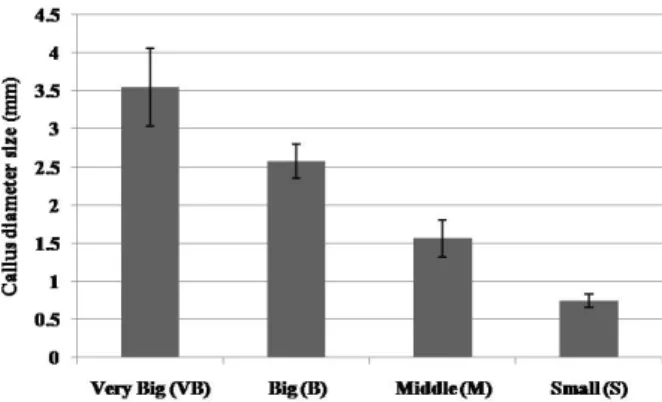
Fig. 2 Callus diameter size of various calli or cell aggregates.
Very big (VB, diameter size > 3 mm), big (B, diameter size 3 mm > 2 mm), middle (M, diameter size 2 mm > 1 mm) and small (S, diameter size < 1 mm) callus, four types of calli or cell aggregates were classified. The values are the mean of three repeated experiments, and each experiment includes 6 synchronous repeats. Vertical bars represent standard deviation (SD) of the means
Fig. 3 Callus fresh weight of various calli or cell aggregates. The values are the mean of three repeated experiments, and each experiment includes 6 synchronous repeats. Vertical bars represent standard deviation (SD) of the means
the growth rates were remarkably different: Type 1 callus, yellow, nodule-like and compact callus, showed the highest growth rate among these four types of calli, which was selected for further experiment (Table 1). After 2-month culture on solid medium, large amounts of Type 1 callus were accumulated (Fig. 1B), with the relative water contents less than 90% (Table 2) and a certain percentage of different size callus pieces (Fig. 2-4).
Characterization of suspension cultures
Suspension cultures were initiated by transferring approxi- mately 0.5 g proliferated embryogenic callus into callus induction liquid medium containing 2.0 mg l
-12,4-D and 5.0 mg l
-1L-glutamic acid with continuous agitation at 100 rpm.
After transferred callus into liquid medium, nearly all inoculated calli formed suspensions and began to cell divisions after the next following 1 week (Fig. 1C). These
callus pieces were different from size, and according to
different diameter sizes of callus pieces, very big (VB,
diameter size > 3 mm), big (B, diameter size 3 mm > 2 mm),
middle (M, diameter size 2 mm > 1 mm) and small (S,
diameter size < 1 mm) callus, four types of calli were
classified (Fig. 2). Unexpectedly, the fresh weights of dif-
ferent size callus pieces were also proportionately different
(Fig. 3). After inoculation in liquid medium, these callus
pieces began to produce single cells, and then these single
cells began to aggregate and turned larger and larger. After
30 d suspension culture with continuous agitation at 100
rpm, the suspension cell amounts had as high as 22.3-fold
increment (Fig. 5), with the average daily increment
percentages of 65.1%-85.2% (Table 3) and relative water
contents more than 90% (Table 2). The percentages of
different size callus pieces were also evaluated after 30 d
suspension culture (Fig. 4), but there was no remarkable
Fig. 4 Percentages of various calli or cell aggregates before sus- pension culture and after 30 d suspension culture. The values are the mean of three repeated experiments, and each experiment includes 6 synchronous repeats. Vertical bars represent standard deviation (SD) of the means
Fig. 5 Cell division and proliferation before and after 30 d sus- pension culture. Scale bar: 20 mm
Table 3 Daily growth rates, total growth rates, and daily increment percentages of suspension cells in callus induction liquid medium during cell division and proliferation stage
Experimental repeats
Fresh weight 1 (mg)a
Fresh weight 2 (mg)b
Daily growth rate
(mg d-1)c Total growth rated Daily increment percentagee
1 479.7 12743.5 408.8 26.6 85.2%
2 480.4 12648.2 405.6 26.3 84.4%
3 601.9 12375.4 392.5 20.6 65.2%
4 602.4 12475.5 395.8 20.7 65.7%
5 568.3 11771.5 373.4 20.7 65.7%
6 568.4 11666.6 369.9 20.5 65.1%
Means 550.2 12280.1 391.0 22.3 71.1%
aFresh weight 1 means the fresh weight of plant cells to be cultured in callus induction liquid medium
bFresh weight 2 means the fresh weight of plant cells cultured for 30 d in callus induction liquid medium
cDaily growth rate was calculated as the ratio of the difference of fresh weight 2 and fresh weight 1 to the culture period, 30 d
dTotal growth rate evaluated by the fold value was calculated as the ratio of fresh weight 2 to fresh weight 1
eDaily increment percentage (%) described how many percentage of fresh weight 1, the daily increment of fresh weight of plant cells occupied
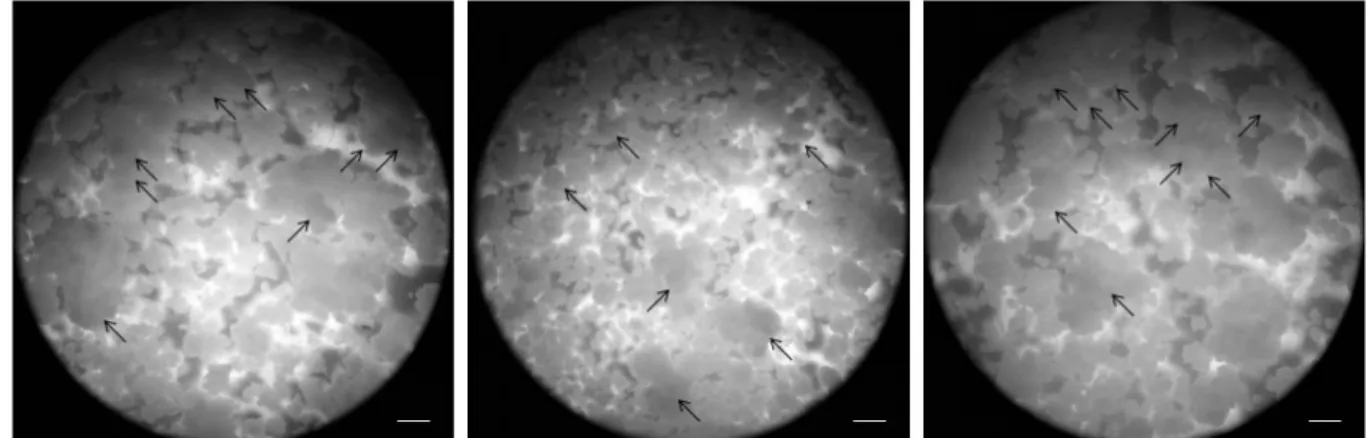
change between before and after suspension culture. In addition, with suspension cultures, it made cell aggregates with higher rigidity and more somatic embryogenesis, that would enhance the potential of shoot formation (Fig. 6).
Except Type 1 callus, Type 2-4 calli were also performed
suspension culture (data not shown). Rapid cell division and proliferation were though obtained from suspension cultures compared to that from routine tissue culture of Type 2-4 calli, the optimization of callus types was not obvious: the newly regenerated cell aggregates were pale-yellow or white, loose, soft and watery, which were not used for following shoot regeneration. After 30 d suspension culture, cell aggregates were suitable for further cell proliferation or shoot regeneration (Fig. 1D).
Regeneration and rooting
Suspension cell aggregates were plated on plant regener- ation solid medium containing 0.2 mg l
-1NAA, 2.0 mg l
-1Kn, and 2.0 g l
-1casamino acid for inducing shoots. Due to the sudden relatively dry conditions from liquid to solid me- dium, the necrosis often occurred (Fig. 1E). To improve the necrosis occurrence and quicken the adaption speed, sus- pension cell aggregates were firstly inoculated on plant regeneration solid medium under darkness for the 1st week, and then slow light intensity for the following 2 weeks and high light intensity for the following culture periods (Fig. 7).
We also investigated the assuasive transition: suspension
cell aggregates were firstly subcultured and proliferated for
a subculture period on callus induction solid medium, to
increase the capacity of adaption under the sudden relatively
dry conditions, and then transferred onto plant regeneration
solid medium directly under slow light intensity for 1 weeks
and high light intensity for the following culture periods
(Fig. 7). Even now, the suspension cell aggregates had lower
potential of cell division on solid medium than Type 1 callus,
with 50% decline compared to that of routine tissue culture
Fig. 6 Different size cell aggregates and somatic embryogenesis on the surface of cell aggregates. Arrows mean the obvious embryogenic calli which could produce shoots. These three pictures are from three synchronous repeats. Scale bar: 1 mm
Fig. 7 The two pathways of plant regeneration from suspension cell aggregates
Fig. 8 Comparison of growth rates between Type 1 callus on routine tissue culture and suspension-derived callus on solid medium. The values are the mean of three repeated experiments, and each experiment includes 6 synchronous repeats. Vertical bars represent standard deviation (SD) of the means
(Fig. 8).
During 2-month culture with a 20 d subculture, cell aggregates began to form a few green spots and approximately 50% of the suspension-derived callus produced shoots (Fig. 1F, G).
When shoots reached 3 cm in length, all of them were transferred to rooting solid medium containing half-strength MS basic salts. Nearly 100% regenerated shoots rooted within the next following week (Fig. 1H). The well-rooted plantlets were cultured in pots containing a mixture of sterilized soil and vermiculite (3:1) in greenhouse conditions.
After 1 month in culture, all the plants appeared phenotypically
normal (Fig. 1I).
Discussion
Somatic embryogenesis from callus was first reported in L.
chinensis using immature inflorescences as explants (Liu et
al. 2004). The callus induction frequencies of 72.11-82.19%
are obtained on media with different hormones, however, immature inflorescence of this grass is seasonal, difficult to handle, and not available year round in bulk quantities. Later, we attempted mature seeds, leaf tissues, and root tissues which are easy to handle and obtain, as explants, and induced callus and obtained regenerated shoots and plantlets suc- cessfully (Sun and Hong 2009). Through regulating some growth factors affecting embryogenic callus induction and plant regeneration, Medium 6 is believed as the preferred callus induction medium, mature seeds were selected for a preferred explants, and plant regeneration frequency is enhanced to 70.8% in LcWT07. Recently, our lab improved the conditions of callus initiation further, by the addition of L-glutamic acid and casamino acid on callus induction and plant regeneration stage, respectively (Sun and Hong 2010).
Until now, a highly efficient callus induction and plant
regeneration of L. chinensis has been established. As the
addition of 2.0 mg l
-12,4-D and 5.0 mg l
-1L-glutamic acid
was believed to enhance significantly callus induction and
maintenance, and the formation of embryogenic callus in callus tissue culture (Sun and Hong 2010), liquid medium with the same agents was used in suspension culture in the present study.
Callus type used for suspension culture is very important for rapidly growing and providing a continuous supply of regeneration tissue. It has been reported that Type 1 callus, yellow, nodule-like, compact callus, rapidly and efficiently converts to embryogenic callus and has relatively high growth rate. Type 1 callus was selected as suspension explants in this study. In general, long period cultures increase the probability of gene mutation and lose the potential of regeneration. So it is proposed to use newly initiated callus as explants for suspension cultures and genetic transformation. In this study, continuous agitation at 100 rpm made the maintenance of a certain cell aggregate size and rigidity, and rapidly growing of cell aggregates made suspension cultures highly saving on time, implying that the probability of gene mutation could be cut down largely.
To obtain a fine suspension culture, it is of prime importance to resolve the problem of necrosis. One side is the dry condition, the other side is suddenly removal of the sur- rounding medium with abundant hormones. Similar evidence has suggested that removal of either hormone from the medium would normally result in culture death (Stafford 1996). Our assuasive transition, though, played determinate roles, the necrosis is still a problem to be resolved. Genotypic variation frequently is observed in tissue cultures (Doctrinal et al. 1989) and suspension cultures (Gürel et al. 2002), various suspension cultures of different lines of L. chinensis are also required to establish.
In conclusion, an efficient suspension cell culture using Type 1 callus as explants and plant regeneration from suspension-derived callus was firstly developed in halophytic
L. chinensis, LcWT07 line. It provides a new and ideal wayof the plant regeneration and genetic transformation to improve the traits in this grass.
Acknowledgments: This work was supported by Nutra-
ceutical Bio Brain Korea 21 Project Group.
References
Briskin DP, Leonard RT (1979) Ion transport in isolated protoplasts from tobacco suspension cells. III. Membrane potential. Plant Physiol 64:959-962
Deo PC, Harding RM, Taylor M, Tyagi AP, Becker DK (2009) Somatic embryogenesis, organogenesis and plant regeneration
in taro (Colocasia esculenta var. esculenta). Plant Cell Tiss Organ Cult 99:61-71
Deo Pradeep C, Tylor Mary, Harding Robert M, Tyagi Anand P, Becker Douglas K (2010) Initiation of embryogenic cell suspensions of taro (Colocasia esculenta var. esculenta) and plant regeneration. Plant Cell Tiss Organ Cult 100:283-291 Dicosmo F, Misawa M (1995) Plant cell and tissue culture:
Alternatives for metabolite production. Biotechnol Adv 13:
425-453
Doctrinal M, Sangwan, RS, Sangwan Norreel BS (1989) In vitro gynogenesis in Beta vulgaris L.: Effect of plant growth regulators, temperature, lines and season. Plant Cell Tiss Organ Cult 17:1-12
Duncan DB (1955) Multiple range and multiple F tests. Biometrics 11:1-42
Funatsuki H, Kuroda H, Kihara M, Lazzeri PA, Muller E, Lórz H (1995) Fertile transgenic barley generated by direct gene transfer to protoplasts. Theor Appl Genet 91:707-712 Gürel S, Gürel E, Kaya Z (2002) Establishment of cell suspension
cultures and plant regeneration in sugar beet (Beta Vulgaris L.). Truk J Bot 26:197-205
Hall RD (1991) The initiation and maintenance of plant cell suspension cultures. Plant Tiss Cult Manual A3:1-21 Hoagland DR, Arnon DI (1950) The water-culture method for
growing plants without soil. Calif Agric Exp Stn Circ 347:1-32 Huang Z, Zhu J, Mu X, Lin J (2004) Pollen dispersion, pollen
viability and pistil receptivity in Leymus chinensis. Ann Bot 93:295-301
Hunter CS, Kilby NJ (1990) Betanin production and release in vitro from suspension cultures of Beta vulgaris. In: Pollard JW, Walker JM (eds), Methods in Molecular Biology, Volume 6, Plant Cell and Tissue Culture, Humana Press, New Jersey, pp. 545-554
Jähne A, Lazzeri PA, Lórz H (1991) Regeneration of fertile plants from protoplasts derived from embryogenic cell suspensions of barley (Hordeum vulgare L.). Plant Cell Rep 10:1-6 Janisch K, Schempp H (2004) Evaluation of the oxidative burst in
suspension cell culture of Phaseolus vulgaris. Z Naturforsch 59:849-855
Jin H, Plaha P, Park JY, Hong CP, Lee IS, Yang ZH, Jiang GB, Kwak SS, Liu SK, Lee JS, Kim YA, Lim YP (2006) Com- parative EST profiles of leaf and root of Leymus chinensis, a xerophilous grass adapted to high pH sodic soil. Plant Sci 170:1081-1086
Keppler LD. Baker CJ, Atkinson MM (1989) Active oxygen production during a bacteria-induced hypersensitive reaction in tobacco suspension cells. Phytopathol 79:974-978.
Kim MD, Jin H, Park EJ, Kwon SY, Lee HS, Kwak SS (2005) Plant regeneration through somatic embryogenesis of Leymus chinensis Trin. Korean J Plant Biotechnol 32:51-55
Kim TG, Kim HM, Lee HJ, Shin YJ, Kwon TH, Lee NJ, Jang YS, Yang MS (2007) Reduced protease activity in transformed rice cell suspension cultures expressing a proteinase inhibitor.
Prot Exp Pur 53:270-274
Liu GS, Liu JS, Qi DM, Chu CC, Li HJ (2004) Factors affecting
plant regeneration from tissue cultures of Chinese leymus (Leymus chinensis). Plant Cell Tiss Organ Cult 76:175-178 Mulabagal V, Tsay HS (2004) Plant cell cultures-an alternative and
efficient source for the production of biologically important secondary metabolites. Int J App Sci Eng 2:29-48
Murashige T, Skoog F (1962) A revised medium for rapid growth and bio assays with tobacco tissue cultures. Physiol Palnt 15:473-497
Murata Y, Katsura S, Obi I, Kakutani T (2000) Alterations in Ca2+-binding on plasma membrane after adaptation to salt stress of tobacco cells in suspension. Plant Cell Physiol 41:
1286-1292
Shimamoto K, Terada R, Izawa T, Fujimoto H (1989) Fertile transgenic rice plants regenerated from transformed proto-
plasts. Nature 338:274-276
Shu QY, Liu GS, Xu SX, Li XF, Li HJ (2005) Genetic transformation of Leymus chinensis with the PAT gene through microprojectile bombardment to improve resistance to the herbicide Basta. Plant Cell Rep 24:36-44
Sun YL, Hong SK (2009) Somatic embryogenesis and in vitro plant regeneration from various explants of the halophyte Leymus chinensis (Trin.). J Plant Biotechnol 36:236-243 Sun YL, Hong SK (2010) Effects of plant growth regulators and
L-glutamic acid on shoot organogenesis in the halophyte Leymus chinensis (Trin.). Plant Cell Tiss Organ Cult 100:317-328 Yang ZQ, Shikanai T, Mori K, Yamada Y (1989) Plant regener- ation from cytoplasmic hybrids of rice (Oryza sativa L.).
Theor Appl Genet 77:305-310