• 검색 결과가 없습니다.

The effects of green tea (Camellia sinensis) flower extract on melanin synthesis in B16-F10 melanoma cells

N/A
N/A
Protected

Academic year: 2021

Share "The effects of green tea (Camellia sinensis) flower extract on melanin synthesis in B16-F10 melanoma cells"

Copied!
8
0
0

로드 중.... (전체 텍스트 보기)

전체 글

(1)

Korean J Vet Res(2018) 58(2) : 65~72 https://doi.org/10.14405/kjvr.2018.58.2.65

65

<Original Article>

The effects of green tea (Camellia sinensis) flower extract on melanin synthesis in B16-F10 melanoma cells

Chanuri-Yashara Dissanayake

1

, Hae-Hee Moon

1

, Kyeong-Mi Yang

2

, Younjae Lee

1

, Chang-Hoon Han

1,

*

1

College of Veterinary Medicine, Jeju National University, Jeju 63243, Korea

2

Dahrum International Co., Ltd., Jeju National University Medium & Small Business Center, Jeju 63243, Korea (Received: February 17, 2018; Revised: May 1, 2018; Accepted: May 10, 2018)

Abstract: The present study observed the effects of a green tea ( Camellia sinensis) flower extract (GTFE) on melanin synthesis in B16-F10 melanoma cells. GTFE exhibited antioxidant activity on 2,2-diphenyl-1-picrylhydrazyl and inhibited mushroom tyrosinase activity in a dose-dependent manner. Furthermore, GTFE significantly diminished α- melanocyte stimulating hormone ( α-MSH) stimulated cellular melanin content and tyrosinase activity throughout the concentration range evaluated. Based on RNA sequencing analysis, differential gene expression patterns observed in α-MSH stimulated B16-F10 melanoma cells were normalized by the addition of GTFE. In particular, the expression levels of melanoregulin and tyrosinase genes which are key regulating genes in melanin synthesis were up-regulated by 3.5 and 3 fold respectively by α-MSH, and were normalized to control levels by the addition of GTFE. The results suggest that GTFE inhibits melanin synthesis in α-MSH stimulated B16-F10 melanoma cells by normalizing expression of genes that are essential for melanin synthesis. Overall, the results suggest that GTFE could be applied in the development of a whitening agent for the treatment of dermal hyperpigmentation.

Keywords: B16-F10 melanoma cells, RNA sequencing analysis, antioxidant effect, green tea flower, melanin synthesis inhibition, tyrosinase activity inhibition

Introduction

Melanin is a well-known pigment which is commonly dis- tributed and found in animals, plants, fungi and bacteria [17].

Melanocytes produce and pack melanin within melanosomes and transfer it to neighbouring keratinocytes in the epidermis, resulting in visible skin pigmentation which provide photo- protection and thermoregulation [15, 20]. Melanogenesis is initiated with the oxidation of tyrosine to L-3,4-dihydrox- yphenylalanine (L-DOPA) which is further oxidized into dopaquinone which is catalyzed by tyrosinase [5]. Therefore tyrosinase inhibitors can be clinically useful for the treat- ment of some dermatological disorders associated with mela- nin hyper pigmentation [2, 23].

Ultraviolet (UV) is a major melanogenesis factor that causes skin aging such as melasma, blackness lentigine, and age spots in the epidermis [14]. Since regulation of melanin syn- thesis is highly influenced by reactive oxygen species (ROS), UV-induced melanogenesis could be mitigated by ROS scav- engers and ROS generator inhibitors [11]. Stimulation of antioxidant levels suppresses melanogenesis and therefore antioxidants are important in protecting human skin from UV

radiation [28].

Undesired increase of melanin might be an aesthetic prob- lem and recently there has been a continued interest in pro- tecting healthy skin from persistent environmental pollution [22, 31]. Hyperpigmentation has prompted the requirement of screening of a melonogenesis inhibitory agent. Skin light- ening cosmetics made of plant-derived extracts has become a concern as commercially available skin whitening chemicals had adverse effects [3, 27].

The green tea is produced from the leaves of Camellia sin- ensis which contains high levels of flavonols, polyphenols and catechins [6, 21, 37]. Green tea is known to be one of the most active tyrosinase inhibitors with a major active constitu- ents of epicatechin gallate (ECG), gallocatechin gallate (GCG), and epigallocatechin gallate (EGCG) which is a potential nat- ural candidate for the hypopigmentation reagent [25]. Previ- ous studies reported that EGCG in green tea ( Camellia sinensis) flower extract (GTFE) attenuates microphthalmia- associated transcription factor (MITF) and tyrosinase produc- tion in melanocytes meanwhile significantly suppressing melanin synthesis [16, 37].

In the present study, the inhibitory effects of GTFE on rad-

*Corresponding author

Tel: +82-64-754-3378, Fax: +82-64-756-3354

E-mail: [email protected]

(2)

ical production, tyrosinase activity, and melanin synthesis were observed. Particularly, the relationship between the mel- anogenesis and the differential expression of genes related to melanogenesis was explored to explain the hypopigmenta- tion effect of GTFE.

Materials and Methods

Materials

α-Melanocyte stimulating hormone (α-MSH), 2,2-diphe- nyl-1-picrylhydrazyl (DPPH), L-ascorbic acid (AA), L-DOPA, mushroom tyrosinase, and phenylmethylsulfonyl fluoride (PMSF), were purchased from Sigma Aldrich (USA). B16- F10 mouse melanoma cell line was purchased from ATCC (USA), Triton X-100 from Bio-Rad Laboratories (USA), Dulbecco’s modified Eagle’s medium (DMEM) from Life Technologies (USA) and EZ-Cytox from DogenBio (Korea).

All other reagents were purchased from commercial sources and were of the analytical grade.

Preparation of GTFE

Dried green tea flowers were purchased from Research Institute of Plant Resource (Korea) and was ground to a pow- der. GTF 100 g powder was soaked in 1 L of 80% ethanol (ethanol/water = 80/20, v/v) and was incubated in 60

o

C water bath for 1 h to facilitate extraction. The solvent was removed under reduced pressure in a rotary evaporator (HS-2005V, HanShin, Korea). The extract was filtered using Whatman No.1 filter paper, and the filtrate was diluted to final concen- tration of 50 mg/mL (w/v).

Cell culture and treatment

B16-F10 cells were grown in monolayers, adherent to the bottom of culture flasks filled with DMEM supplemented with 10% fetal bovine serum and 1% penicillin-streptomycin at 37

o

C in a 5% CO

2

atmosphere. Cells were harvested in the exponential growth phase at 80% confluence. Cells were washed twice with PBS, exposed to trypsin EDTA solution for 30 sec at 37

o

C, centrifuged at 800 × g for 5 min, and cells (5 × 10

4

cells/well) were seeded in 96-well plates.

DPPH assay

The antioxidant activity of GTFE was determined by mea- suring the DPPH free radical scavenging activity as described previously [14]. GTFE was dissolved in DMSO to make a series of concentrations (final concentration 0, 25, 50, 100, 200, and 400 µg/mL). Fifty microliters of each sample was mixed with 950 µL of ethanolic 0.2 mM DPPH solution. The mixture was incubated at room temperature in dark condi- tion for 30 min, and the absorbance was measured at 525 nm using spectrophotometer (Mecasys, Korea). The radical scav- enging ability (%) of the samples was calculated as [1 – (absorbance of a group added to sample/absorbance of a group non-added to sample)] × 100 and calculated as an effective concentration (EC

50

), the concentration of sample

needed to scavenge DPPH free radicals by 50%. EC

50

of GTFE was expressed as ascorbic acid equivalent antioxidant capacity (AEAC). AEAC (mg AA/100 g sample) = EC

50

(AA)/

EC

50

(sample) × 10

5

[26]. The EC

50

of AA used for the calcu- lation of AEAC was 0.0062 mg/mL.

Cell viability assay (MTT assay)

Cell viability assay in the presence of GTFE was analyzed using B16-F10 melanoma cells as described previously [30].

B16-F10 melanoma cells (1 × 10

4

cells/well) were cultured in 96-well plates. Following 24 h of cell incubation, DMEM medium was removed and cells were treated with 0, 25, 50, 100, 200, 400 and 1,000 µg/mL of GTFE for 24 h. Then 20 µL of EZ-Cytox solution was treated for 2 h and absor- bance values were measured at a 540 nm using ELISA micro- plate reader (Tecan, Switzerland).

Mushroom tyrosinase assay

The inhibitory effect of GTFE on, mushroom tyrosinase activity was measured as described previously [29]. One hun- dred thirty microliters of varying concentrations of GTFE samples 0, 25, 50, 100, 200, 400 and 1,000 µg/mL were mixed with 20 µL of mushroom tyrosinase (1250 U/mL) in 96-well micro plate. Mixtures were incubated with 120 µL of 1.5 mM L-DOPA at 37

o

C for 5 min and absorbance was mea- sured at 490 nm using ELISA micro plate reader.

Cellular melanin synthesis inhibition assay

Melanin contents were measured as previously described [33]. B16-F10 cells were seeded with 1 × 10

5

cells/well in 3 mL of medium in 6 well plates, and incubated overnight to allow cells to adhere. The cells were incubated with various concentrations (0, 5, 10, 20, and 40 µg/mL) of GTFE in the presence or absence of 20 nM α-MSH for 2 days. Micro- scopic images of α-MSH-stimulated B16-F10 melanoma cells incubated with various concentration of GTFE were captured using an inversed biological microscope connected HD LCD Tablet camera (Neoscience, Korea). Then cells were washed twice with PBS and were harvested through trypsinization with 1 mL of 1× EDTA and 1 mL of media. Cells were har- vested by centrifugation (800 × g for 5 min) and pellets were dried at 60

o

C oven. Cells were lysed with 500 µL of 1 M NaOH containing 10% DMSO for 30 min at 80

o

C in a heat- ing block and was briefly centrifuged (800 × g for 1 min).

Supernatant (300 µL) was added into wells of 96-well plates, and the absorbance at 490 nm was measured using an ELISA plate reader.

Cellular tyrosinase inhibition assay

Cellular tyrosinase activity was measured as described pre-

viously [9]. Six well plates were seeded with B16-F10 mela-

noma cells (1 × 10

5

cells/well) in 3 ml of media. Plates were

incubated for 24 h at 37

o

C in a CO

2

incubator, and were

exposed to increasing doses of test extracts (0, 5, 10, 20, and

40 µg/mL) for 48 h in the presence or absence of 20 nM α-

(3)

MSH. Cells were washed twice with PBS and were lysed in 500 µL of PBS containing 1% Triton X-100 and 2 mM PMSF, and stored at −80

o

C for 30 min to facilitate cell rupturing.

After thawing at room temperature, cell extracts were sepa- rated by centrifugation at 15,000 × g for 30 min at 4

o

C. The supernatant (150 µL) was mixed with 2 mM L-DOPA 150 µL in a 96-well plate, incubated 37

o

C for 10 min, and the absor- bance at 490 nm was measured using an ELISA plate reader.

Total RNA isolation, library preparation, sequencing and data analysis

B16-F10 cells were cultured in 6 well plates (1 × 10

5

cells/

well) and incubated at 37

o

C, for 24 h. Cells were washed with 1× PBS, and treated with α-MSH and different concen- trations of GTFE. Total RNA was separated from melanoma cells after 48 h cultivation and cells were dissolved in 500 µL of Trizol reagent (Invitrogen, USA) according to manufac- turer’s instructions, and stored at −80

o

C until use. RNA qual- ity was assessed by Agilent 2100 Bioanalyzer using the RNA 6000 Nano Chip (Agilent Technologies, The Netherlands), and RNA quantification was carried out using ND-2000 Spectro- photometer (Thermo Fisher Scientific, USA). SENSE 3' mRNA-Seq Library Prep Kit (Lexogen, Austria) was used to perform the construction of a library for control and test RNAs according to the manufacturer’s instructions. Total RNA 500 ng was prepared and an oligo-dT primer contain- ing an Illumina-compatible sequence at its 5' end was hybrid- ized to the RNA and reverse transcription was performed.

Following RNA degradation complimentary strand synthesis was started by random primer containing an Illumina-com- patible linker sequence at its 5' end. Magnetic beads were used to remove all reaction components. The library was amplified to add the complete adapter sequences required for cluster generation. The completed library was purified from PCR components. High-throughput sequencing was performed as single-end 75 sequencing using NextSeq 500 (Illumina, USA). SENSE 3' mRNA-Seq reads were aligned using Bowtie2 ver. 2.1.0 [18]. Bowtie2 indices were either generated from genome assembly sequence or the representative transcript sequences for aligning to the genome and transcriptome. The alignment file was used for assembling transcripts, estimat- ing their abundances and detecting differential expression of genes. Differentially expressed genes were determined based on counts from unique and multiple alignments using EdgeR within R ver. 3.2.2 (R development Core Team, 2011) using Bioconductor ver. 3.0 [12]. The read count data were pro- cessed based on Quantile normalization method using the Genowiz ver. 4.0.5.6 (Ocimum Biosolutions, India). Cytoscape (ver. 2.7), an open source bioinformatics platform developed by the Institute of Systems Biology, USA, was used to con- struct network diagrams and to illustrate clustering of the genes in our dataset within specific pathways. Gene classifi- cation was based on searches done by MEDLINE databases (National Centre for Biotechnology Information, USA).

Data analysis

All experiments were done in triplicates or more, and the results were expressed as mean ± standard error for each sample concentration. Data were statistically analyzed with SPSS Statistics (Ver. 17.0; IBM, USA). The statistical differ- ences among groups were analyzed with one way analysis (ANOVA) followed by Turkey’s test.

Results

Radical scavenging activity

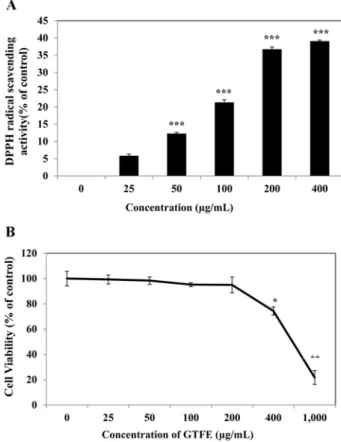
DPPH assay was performed to evaluate the antioxidant activity of GTFE. GTFE displayed DPPH free radical scav- enging activity in a dose dependent manner. DPPH radical scavenging activities of 25, 50, 100, 200 and 400 µg/mL of GTFE were estimated to be 5.8%, 11.7%, 20.6%, 34.8% and 40.5% respectively (Fig. 1A). The EC

50

of GTFE was esti- mated to be 0.266 mg/mL, which is corresponding to 2328.58 mg of AA/g based on the ascorbic AEAC calcula- tion as described in Materials and Methods.

Fig. 1. Effects of green tea ( Camellia sinensis) flower extract

(GTFE) on 2,2-diphenyl-1-picrylhydrazyl (DPPH) radical scav-

enging activity and B16-F10 melanoma cells viability. (A)

DPPH radical scavenging activity by different concentrations of

GTFE. (B) B16-F10 melanoma cell viability by different con-

centrations of GTFE. Data are the means of ± SE for three inde-

pendent experiments.

(

* p < 0.01, **p < 0.001 ***p < 0.0001 com-

pared with the control).

(4)

Cellular toxicity

Cellular toxicity of GTFE on B16-F10 melanoma cells was measured using MTT assay. GTFE showed no cellular toxic- ity on B16-F10 melanoma cell at the concentration up to 200 µg/mL (Fig. 1B). However, cellular toxicity was increased significantly (25.6%) from the GTFE concentration of 400 µg/mL.

Inhibition of mushroom tyrosinase activity

Inhibitory effect of GTFE on mushroom tyrosinase activ- ity was observed as described in Materials and Methods. As shown in Figure 2A, GTFE inhibited mushroom tyrosinase activity in a dose-dependent manner. Mushroom tyrosinase inhibition of 25, 50, 100, 200, 400 and 1,000 µg/mL of GTFE was estimated to be 5.3%, 6.6%, 19.6%, 31.1%, 44.4% and 58.4% respectively (Fig. 2A).

Inhibition of cellular tyrosinase activity

Inhibitory effect of GTFE on cellular tyrosinase activity was evaluated in B16-F10 melanoma cells after stimulating melanin synthesis in cells using α-MSH. Cellular tyrosinase activity was significantly increased in the presence of α- MSH, whereas the activities were decreased in a concentra-

tion dependent manner of GTFE. GTFE 5, 10, 20 and 40 µg/

mL inhibited cellular tyrosinase activity by 23.2%, 44.4%, 49.3% and 89.0% respectively (Fig. 2B).

Inhibition of melanin synthesis

Inhibitory effect of GTFE on melanin synthesis was observed in B16-F10 melanoma cells after stimulating mela- nin synthesis in cells using α-MSH. Melanin synthesis was significantly increased in the presence of α-MSH, whereas declining trend of melanin was observed throughout the con- centration range evaluated (Fig. 3A and B). GTFE 5, 10, 20 and 40 µg/mL suppressed melanin synthesis by 15.5%, 18.4%, 22.9% and 41.3% respectively (Fig. 3B).

Differential gene expression

The differential gene expression of B16-F10 cells treated with α-MSH and GTFE were observed using RNA sequenc- ing analysis. Based on RNA sequencing results, among 23,282 of total genes in B16-F10 cells, 2,420 genes were up- regulated (higher than 2.0) and 3,236 genes were down-regu- Fig. 2. Inhibitory effects of GTFE on mushroom tyrosinase

activity and cellular tyrosinase activity. (A) Mushroom tyrosi- nase activity was examined at varying concentrations of GTFE.

(B) Cellular tyrosinase activity in B16-F10 melanoma cell was observed after treatment of α-melanocyte stimulating hormone ( α-MSH) (20 nM) and varying concentrations of GTFE. Values represent the mean ± SE for three independent experiments (*p < 0.01, ***p < 0.0001 compared with the control).

Fig. 3. Inhibitory effect of GTFE on α-MSH-stimulated mel-

anogenesis in B16-F10 melanoma cells. (A) Microscopic images

of α-MSH-stimulated B16-F10 melanoma cells incubated with

varying concentration of GTFE. (B) Melanin content in α-

MSH-stimulated B16-F10 melanoma cells incubated with vary-

ing concentration of GTFE. Data are the means of ± SE for four

independent experiments. (** p < 0.001, ***p < 0.0001 compared

with the control). 100 × (A).

(5)

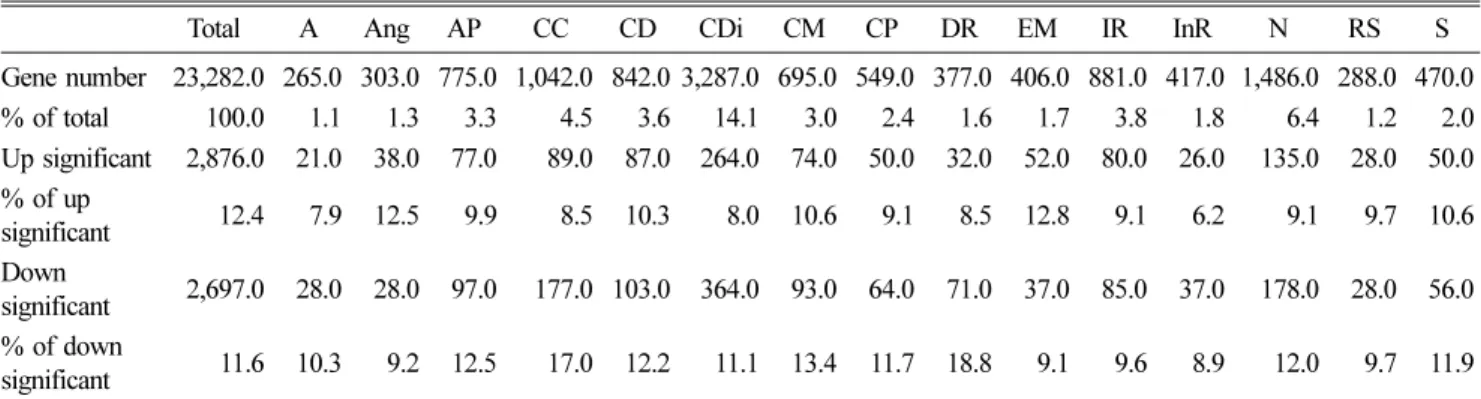
lated (lower than 0.5) in α-MSH treated group compared to control group (Table 1). In contrast, 2,876 genes were up- regulated and 2,697 genes were down-regulated in both α- MSH and 20 µg/mL GTFE treated group compared to con- trol group (Table 2). In addition, 2,454 genes were up-regu- lated and 2,624 genes were down-regulated in both α-MSH and 40 µg/mL GTFE treated group compared to control group (Table 3).

Analysis of RNA sequencing data showed that 8 genes related to melanogenesis including Atp6v1g2, Try, Slc1a4, Mreg, Cited1, Hspa5, Slc3a2 and Pdia4 genes were up-regu- lated by 44.9, 3.5, 3.0, 3, 2.8, 2.6, 2.2 and 2.0 folds com-

pared to the control group by addition of α-MSH. However the levels were normalized to control level by the addition of GTFE (Fig. 4A). In particular, the expression levels of Mreg and Tyr genes which are key regulating genes in melanin synthesis were up-regulated by 3.5 and 3 fold compared to control group by α-MSH and were normalized to control level by the addition of GTFE (Fig. 4A).

Seven genes related to melanin synthesis including Stom, Rab2a and Rab29 genes were down-regulated by 0.5, 0.4 and 0.4 fold compared to control group by α-MSH and were nor- malized to control level by the addition of GTFE (Fig. 4B).

Table 1. Differential expression of functional genes in B16-F10 melanoma cell treated with α-MSH only

Total A Ang AP CC CD CDi CM CP DR EM IR InR N RS S

Gene number 23282.0 265.0 303.0 775.0 1042.0 842.0 3287.0 695.0 549.0 377.0 406.0 881.0 417.0 1486.0 288.0 470.0

% of total 100.0 1.1 1.3 3.3 4.5 3.6 14.1 3.0 2.4 1.6 1.7 3.8 1.8 6.4 1.2 2.0

Up significant 2420.0 22.0 31.0 89.0 87.0 96.0 260.0 67.0 51.0 40.0 26.0 71.0 28.0 120.0 20.0 46.0

% of up

significant 10.4 8.3 10.2 11.5 8.3 11.4 7.9 9.6 9.3 10.6 6.4 8.1 6.7 8.1 6.9 9.8

Down

significant 3236.0 38.0 41.0 115.0 225.0 122.0 436.0 93.0 77.0 92.0 51.0 95.0 52.0 210.0 48.0 57.0

% of down

significant 13.9 14.3 13.5 14.8 21.6 14.5 13.3 13.4 14.0 24.4 12.6 10.8 12.5 14.1 16.7 12.1 A, aging; Ang, angiogenesis; AP, apoptosis process; CC, cell cycle; CD, cell death; CDi, cell difference; CM, cell migration; CP, cell pro- liferation; DR, DNA repair; EM, extracellular matrix; IR, immune response; InR, inflamation response; N, neurogenesis; RS, RNA splicing;

S, secretion.

Table 2. Differential expression of functional genes in B16-F10 melanoma cell treated with α-MSH and GTFE (20 µg/mL)

Total A Ang AP CC CD CDi CM CP DR EM IR InR N RS S

Gene number 23,282.0 265.0 303.0 775.0 1,042.0 842.0 3,287.0 695.0 549.0 377.0 406.0 881.0 417.0 1,486.0 288.0 470.0

% of total 100.0 1.1 1.3 3.3 4.5 3.6 14.1 3.0 2.4 1.6 1.7 3.8 1.8 6.4 1.2 2.0

Up significant 2,876.0 21.0 38.0 77.0 89.0 87.0 264.0 74.0 50.0 32.0 52.0 80.0 26.0 135.0 28.0 50.0

% of up

significant 12.4 7.9 12.5 9.9 8.5 10.3 8.0 10.6 9.1 8.5 12.8 9.1 6.2 9.1 9.7 10.6 Down

significant 2,697.0 28.0 28.0 97.0 177.0 103.0 364.0 93.0 64.0 71.0 37.0 85.0 37.0 178.0 28.0 56.0

% of down

significant 11.6 10.3 9.2 12.5 17.0 12.2 11.1 13.4 11.7 18.8 9.1 9.6 8.9 12.0 9.7 11.9

Table 3. Differential expression of functional genes in B16-F10 melanoma cell treated with α-MSH and GTFE (40 µg/mL)

Total A Ang AP CC CD CDi CM CP DR EM IR InR N RS S

Gene number 23282.0 265.0 303.0 775.0 1042.0 842.0 3287.0 695.0 549.0 377.0 406.0 881.0 417.0 1486.0 288.0 470.0

% of total 100.0 1.1 1.3 3.3 4.5 3.6 14.1 3.0 2.4 1.6 1.7 3.8 1.8 6.4 1.2 2.0

Up significant 2454.0 20.0 26.0 76.0 73.0 82.0 265.0 70.0 47.0 36.0 72.0 72.0 22.0 129.0 20.0 48.0

% of up significant 10.5 7.5 8.6 9.8 7.0 9.7 8.1 10.1 8.6 9.5 8.2 8.2 5.3 8.7 6.9 10.2 Down significant 2624.0 31.0 40.0 93.0 227.0 103.0 359.0 91.0 73.0 85.0 86.0 86.0 51.0 174.0 39.0 41.0

% of down

significant 11.3 11.7 13.2 12.0 21.8 12.2 10.9 13.1 13.3 22.5 9.8 9.8 12.2 11.7 13.5 8.7

(6)

Discussion

Green tea is one of the most popular beverages in the world, and considered to have many scientifically proven beneficial effects on human health [6]. It has been reported that Camellia sinensis flowers have similar chemical compo- sitions with Camellia sinensis leaves and GTFE contains a high amount of flavonoids, polyphenols, catechins, ECG and EGCG which directly scavenge free radicals and ROS [37].

However, despite many published results, the ameliorative effect of GTFE on melanogenesis has not been reported. In the present study, we investigated the effects of GTFE on melanin synthesis, and on the expression levels of genes related to melanin synthesis in B16-F10 melanoma cells.

Whitening efficacy of Camellia sinensis flower extract in B16-F10 melanoma cells was verified in the current study by radical scavenging assay, tyrosinase inhibition assay, and

melanogenesis inhibition assay followed by the differential gene expression patterns. Significant radical scavenging abil- ity, mushroom tyrosinase inhibition activity, α-MSH stimu- lated B16-F10 melanoma cellular melanin content, and cellular tyrosinase activity inhibition were expressed by GTFE con- centration dependently.

The present study observed that GTFE scavenged DPPH radicals in a dose dependent manner. As observed previ- ously, the skin exposure to UV radiation generates both mel- anin and harmful amount of ROS [4]. As ROS are essential in melanocyte proliferation and melanogenesis, ROS scaven- gers will reduce hyperpigmentation and UV-induced melano- genesis [36]. Overall results suggest that the radical scavenging effect of GTFE might contribute to the inhibition of melano- genesis in cells.

Previous studies revealed that ECG, GCG, and EGCG, the major components of green tea, are the most effective tyrosi- nase inhibitors [17, 25]. In the present study GTFE showed inhibitory effect on both mushroom tyrosinase activity and cellular tyrosinase activity. GTFE inhibited mushroom tyrosi- nase activity in a cell-free system revealing the direct inhibi- tory effects of GTFE on tyrosinase activity. The results suggest that the components of GTFE directly inhibit cellular tyrosi- nase activity, and mainly contribute to the reduction of pig- ments in melanoma cells.

In α-MSH stimulated B16-F10 melanoma cells, the expres- sion levels of Mreg and Tyr genes which are key regulating genes in melanin synthesis were up-regulated by 3.5 and 3 fold respectively by α-MSH, and were normalized to control level by addition of GTFE, which normalized the melanin synthesis and its transport.

Tyr gene is a key regulating gene in the initial steps of melanin synthesis by catalyzing the oxidation of tyrosine to DOPA quinone [32]. Mreg gene is known to be essential for the lysosome maturation, intracellular trafficking and vesicu- lar transporting of pigments in epithelial cells [10]. In addi- tion, the gene expression levels of other genes related to melanogenesis including Slc1a4, Hspa5 and Cited1 were upregulated by α-MSH and were restored to control level by GTFE.

Slc1a4 is a target gene of MITF which is involved in amino acid and lipid metabolism in melanocytes [13]. Hspa5 is known to protect tyrosinase as a molecular chaperone [32].

Cited1 plays a vital role in melanogenesis by regulating tyro- sinase, dopachrome tautomerase and more enzymes in pig- mentary system [24]. In the present study, GTFE was found to restore α-MSH induced up-regulated gene expression lev- els of the genes related to melanogenesis including Atp6v1g2, Tyr, Slc1a4, Mreg, Cited1, Hspa5, Slc3a2 and Pdia4 in B16- F10 melanoma cells to the control level upholding the anti- melanogenesis effect of GTFE.

Microarray studies further showed that the expression levels of 3 genes including Stom, Rab2a and Rab29 which are related to melenogenesis were down-regulated by α-MSH and were normalized by GTFE. A lipid raft-associated protein Fig. 4. Differential gene expressions in α-MSH-stimulated B16-

F10 melanoma cells incubated with varying concentration of

GTFE. Up-regulated (A) and down regulated (B) genes by α-

MSH which were normalized by GTFE treatment.

(7)

Stom gene which involves in melanosome degradation [7, 8, 19] and golgi complex regulating genes Rab29 and Rab2a which contribute to the proteolysis of tyrosinase were down- regulated by α-MSH and were restored by GTFE hindering skin pigmentation [1, 2, 34, 35]. Therefore, the results indicate that components of GTFE normalized the expression of genes related to melanogenesis which were disturbed by α-MSH.

In conclusion, this study explored that GTFE inhibits the cellular tyrosinase activity and melanin synthesis in α-MSH stimulated B16-F10 cells by regulating genes related to mel- anogenesis. The overall results suggest that GTFE can be applied for the development of whitening agent for the treat- ment of dermal hyperpigmentation.

Acknowledgments

This study was supported by the 2017 scientific promotion program funded by Jeju National University, Korea.

References

1. Aizawa M, Fukuda M. Small GTPase Rab2B and its specific binding protein Golgi-associated Rab2B interactor- like 4 (GARI-L4) regulate Golgi morphology. J Biol Chem 2015, 290, 22250-22261.

2. Ando H, Kondoh H, Ichihashi M, Hearing VJ.

Approaches to identify inhibitors of melanin biosynthesis via the quality control of tyrosinase. J Invest Dermatol 2007, 127, 751-761.

3. Briganti S, Camera E, Picardo M. Chemical and instrumental approaches to treat hyperpigmentation. Pigment Cell Res 2003, 16, 101-110.

4. Campos PM, da Silva Horinouchi CD, da Silveira Prudente A, Cechinel-Filho V, de Almeida Cabrini D, Otuki MF.

Effect of a Garcinia gardneriana (Planchon and Triana) Zappi hydroalcoholic extract on melanogenesis in B16F10 melanoma cells. J Ethnopharmacol 2013, 148, 199-204.

5. Chang TS. An updated review of tyrosinase inhibitors. Int J Mol Sci 2009, 10, 2440-2475.

6. Chatterjee A, Saluja M, Agarwal G, Alam M. Green tea:

a boon for periodontal and general health. J Indian Soc Periodontol 2012, 16, 161-167.

7. Chi A, Valencia JC, Hu ZZ, Watabe H, Yamaguchi H, Mangini NJ, Huang H, Canfield VA, Cheng KC, Yang F, Abe R, Yamagishi S, Shabanowitz J, Hearing VJ, Wu C, Appella E, Hunt DF. Proteomic and bioinformatic characteri- zation of the biogenesis and function of melanosomes. J Proteome Res 2006, 5, 3135-3144.

8. Choi B, Heo JH, Kwon HJ, Lee ES, Sohn S. Tocotrienols enhance melanosome degradation through endosome docking/

fusion proteins in B16F10 melanoma cells. Food Funct 2013, 4, 1481-1488.

9. Chung KW, Park YJ, Choi YJ, Park MH, Ha YM, Uehara Y, Yoon JH, Chun P, Moon HR, Chung HY.

Evaluation of in vitro and in vivo anti-melanogenic activity of a newly synthesized strong tyrosinase inhibitor (E)-3-(2,4 dihydroxybenzylidene)pyrrolidine-2,5-dione (3-DBP). Biochim Biophys Acta 2012, 1820, 962-969.

10. Damek-Poprawa M, Diemer T, Lopes VS, Lillo C, Harper DC, Marks MS, Wu Y, Sparrow JR, Rachel RA, Williams DS, Boesze-Battaglia K. Melanoregulin (MREG) modulates lysosome function in pigment epithelial cells. J Biol Chem 2009, 284, 10877-10889.

11. Funasaka Y, Chakraborty AK, Komoto M, Ohashi A, Ichihashi M. The depigmenting effect of a-tocopheryl ferulate on human melanoma cells. Br J Dermatol 1999, 141, 20-29.

12. Gentleman RC, Carey VJ, Bates DM, Bolstad B, Dettling M, Dudoit S, Ellis B, Gautier L, Ge Y, Gentry J, Hornik K, Hothorn T, Huber W, Iacus S, Irizarry R, Leisch F, Li C, Maechler M, Rossini AJ, Sawitzki G, Smith C, Smyth G, Tierney L, Yang JY, Zhang J. Bioconductor:

open software development for computational biology and bioinformatics. Genome Biol 2004, 5, R80.

13. Guyonneau L, Murisier F, Rossier A, Moulin A, Beermann F. Melanocytes and pigmentation are affected in dopachrome tautomerase knockout mice. Mol Cell Biol 2004, 24, 3396- 3403.

14. Huang HC, Lien HM, Ke HJ, Chang LL, Chen CC, Chang TM. Antioxidative characteristics of Anisomeles indica extract and inhibitory effect of ovatodiolide on melanogenesis.

Int J Mol Sci 2012, 13, 6220-6235.

15. Joshi PG, Nair N, Begum G, Joshi NB, Sinkar VP, Vora S. Melanocyte-keratinocyte interaction induces calcium signalling and melanin transfer to keratinocytes. Pigment Cell Res 2007, 20, 380-384.

16. Kim DS, Park SH, Kwon SB, Li K, Youn SW, Park KC.

(−)-Epigallocatechin-3-gallate and hinokitiol reduce melanin synthesisvia decreased MITF production. Arch Pharm Res 2004, 27, 334-339.

17. Kim YC, Choi SY, Park EY. Anti-melanogenic effects of black, green, and white tea extracts on immortalized mela- nocytes. J Vet Sci 2015, 16, 135-143.

18. Langmead B, Salzberg SL. Fast gapped-read alignment with Bowtie 2. Nat Methods 2012, 9, 357-359.

19. Lee JH, Hsieh CF, Liu HW, Chen CY, Wu SC, Chen TW, Hsu CS, Liao YH, Yang CY, Shyu JF, Fischer WB, Lin CH. Lipid raft-associated stomatin enhances cell fusion.

FASEB J 2017, 31, 47-59.

20. Lin JY, Fisher DE. Melanocyte biology and skin pigmen- tation. Nature 2007, 445, 843-850.

21. Lin YS, Wu SS, Lin JK. Determination of tea polyphenols and caffeine in tea flowers (Camellia sinensis) and their hydroxyl radical scavenging and nitric oxide suppressing effects. J Agric Food Chem 2003, 51, 975-980.

22. Lobo V, Patil A, Phatak A, Chandra N. Free radicals, antioxidants and functional foods: Impact on human health.

Pharmacogn Rev 2010, 4, 118-126.

23. Mustapha N, Bzéouich IM, Ghedira K, Hennebelle T, Chekir-Ghedira L. Compounds isolated from the aerial part of Crataegus azarolus inhibit growth of B16F10 melanoma cells and exert a potent inhibition of the melanin synthesis.

Biomed Pharmacother 2015, 69, 139-144.

24. Nair SS, Chaubal VA, Shioda T, Coser KR, Mojamdar M. Over-expression of MSG1 transcriptional co-activator increases melanin in B16 melanoma cells: a possible role for MSG1 in melanogenesis. Pigment Cell Res 2001, 14, 206-209.

25. No JK, Soung DY, Kim YJ, Shim KH, Jun YS, Rhee SH,

Yokozawa T, Chung HY. Inhibition of tyrosinase by green

(8)

tea components. Life Sci 1999, 65, PL241-246.

26. Rabeta M, Vithyia M. Effect of different drying methods on the antioxidant properties of Vitex negundo Linn. tea. Int Food Res J 2013, 20, 3171-3176.

27. Roh JS, Han JY, Kim JH, Hwang JK. Inhibitory effects of active compounds isolated from safflower (Carthamus tinctorius L.) seeds for melanogenesis. Biol Pharm Bull 2004, 27, 1976-1978.

28. Sasaki M, Kizawa K, Igarashi S, Horikoshi T, Uchiwa H, Miyachi Y. Suppression of melanogenesis by induction of endogenous intracellular metallothionein in human melanocytes.

Exp Dermatol 2004, 13, 465-471.

29. Serafini M, Ghiselli A, Ferro-Luzzi A. In vivo antioxidant effect of green and black tea in man. Eur J Clin Nutr 1996, 50, 28-32.

30. Shon MS, Kim RH, Kwon OJ, Roh SS, Kim GN.

Beneficial role and function of fisetin in skin health via regulation of the CCN

2

/TGF- β signaling pathway. Food Sci Biotechnol 2016, 25 (Suppl 1), 133-141.

31. Solano F, Briganti S, Picardo M, Ghanem G. Hypopig- menting agents: an updated review on biological, chemical and clinical aspects. Pigment Cell Res 2006, 19, 550-571.

32. Tang H, Zhou P. Heat shock protein Hspa5 interacts with

and protects tyrosinase activity. Braz Arch Biol Technol2015, 58, 547-552.

33. Tsuboi T, Kondoh H, Hiratsuka J, Mishima Y. Enhanced melanogenesis induced by tyrosinase gene-transfer increases boron-uptake and killing effect of boron neutron capture therapy for amelanotic melanoma. Pigment Cell Res 1998, 11, 275-282.

34. Wang S, Ma Z, Xu X, Wang Z, Sun L, Zhou Y, Lin X, Hong W, Wang T. A role of Rab29 in the integrity of the trans-Golgi network and retrograde trafficking of mannose-6- phosphate receptor. PLoS One 2014, 9, e96242.

35. Wellings SR, Siegel BV. Role of Golgi apparatus in the formation of melanin granules in human malignant melanoma.

J Ultrastruct Res 1959, 3, 147-154.

36. Yamakoshi J, Otsuka F, Sano A, Tokutake S, Saito M, Kikuchi M, Kubota Y. Lightening effect on ultraviolet- induced pigmentation of guinea pig skin by oral administra- tion of a proanthocyanidin-rich extract from grape seeds.

Pigment Cell Res 2003, 16, 629-638.

37. Yang Z, Xu Y, Jie G, He P, Tu Y. Study on the antioxidant

activity of tea flowers (Camellia sinensis). Asia Pac J Clin

Nutr 2007, 16 (Suppl 1), 148-152.

수치

Fig. 1. Effects of green tea ( Camellia sinensis) flower extract (GTFE) on 2,2-diphenyl-1-picrylhydrazyl (DPPH) radical  scav-enging activity and B16-F10 melanoma cells viability
Fig. 3. Inhibitory effect of GTFE on  α-MSH-stimulated mel- mel-anogenesis in B16-F10 melanoma cells
Table 2. Differential expression of functional genes in B16-F10 melanoma cell treated with  α-MSH and GTFE (20 µg/mL)

참조

관련 문서

The melanoma cell line WM793 was employed for the Fascin and MST2 knock-down and then analyzed by the Western blot assay, and the melanoma xenograft followed by Fascin

co-treatment with hispidulin and TGF-β up-regulated the protein of expression E-cadherin and occludin against TGF-β-induced in MCF-7 and HCC38 cells.. The

protein levels in control or PIG3 depleted HCT116 and HeLa cells were tested. by

4 &gt; Effects of Taro on COX-2 expression and iNOS expression(hot water) in human thyroid cancer cells. The cells were pretreated for 48hours with either

Design and synthesis of novel threosyl-5_-deoxyphosphonic acid purine analogues as potent anti-HIV agents. Synthesis of novel 3'-hydroxymethyl

tricuspidata on the production of proinflammatory cytokines in TNFα+IFNγ-stimulated HaCaT cells ...15 Fig.5: The cell viability of sub-fractions from 70% EtOH

synthesis and application of silicon nano particles for improved efficiency in perovksite solar cells.. synthesis and application of silicon nano particles for improved

 The biological effect of ionizing radiation is a consequence of the energy transfer, by ionization and excitation, to cells in the body.  Factors of radiation effects