Received:March 30, 2018, Revised:July 28, 2018, Accepted:August 1, 2018 Corresponding to:Dae Hyun Yoo http://orcid.org/0000-0002-0643-4008
Department of Rheumatology, Hanyang University Hospital for Rheumatic Diseases, 222 Wangsimni-ro, Seongdong-gu, Seoul 04763, Korea. E-mail:[email protected]
Copyright ⓒ 2019 by The Korean College of Rheumatology. All rights reserved.
This is a Open Access article, which permits unrestricted non-commerical use, distribution, and reproduction in any medium, provided the original work is properly cited.
Effectiveness and Safety of Tacrolimus in Patients with Active Rheumatoid Arthritis with Inadequate Response to
Disease-modifying Anti-rheumatic Drugs: The TREASURE Study
Dong Hyuk Sheen1, Seung Jae Hong2, Sang Heon Lee3, Hye Soon Lee4, Won Tae Chung5, Hongsi Jiang6, Sungmin Lee7, Dae Hyun Yoo8
1Division of Rheumatology, Eulji University Hospital, Daejeon, 2Division of Rheumatology, Kyung Hee University Medical Center, Seoul,
3Division of Rheumatology, Konkuk University Medical Center, Seoul, 4Division of Rheumatology, Hanyang University Guri Hospital, Guri,
5Division of Rheumatology, Dong-A University Hospital, Busan, Korea, 6Medical Affairs Asia Oceania, Astellas Pharma, Inc., Singapore, 7Medical Affairs, Astellas Pharma Korea, Inc., 8Department of Rheumatology, Hanyang University Hospital for Rheumatic Diseases, Seoul, Korea
Objective. Evaluate effectiveness/safety of tacrolimus in patients in Korea with active rheumatoid arthritis (RA) and unsuccessful response to disease-modifying anti-rheumatic drugs (DMARDs). Methods. Open-label, single-arm, non-comparative, 24-week, Phase-IV study in patients with active RA who had taken DMARDs for >6 months. Following a washout period, tacrolimus was initiated (baseline–12 weeks; dose 2 mg/day and 1.5 mg/day in patients aged ≤65 and >65 years, respectively). After 12 weeks, dose could be adjusted (remaining between 1~3 mg); treatment continued to 24 weeks. Primary endpoint was American College of Rheumatology 20% improvement (ACR20) (baseline–Week 24). Secondary endpoints included ACR50/ACR70 response, disease-activity score in 28 joints (DAS28) erythrocyte sedimentation rate (ESR), number of ten- der/swollen joints, and bone mineral density (BMD) loss. Adverse events (AEs) were recorded. Results. Overall, 121 patients were analysed. Mean ±standard deviation tacrolimus dose baseline–Week 24 was 1.81±0.47 mg/day. After 24 weeks, 64.5%, 39.7%, and 19.0% of patients were ACR20, ACR50, and ACR70 responders, respectively. DAS28-ESR score decreased from 5.5±0.8 (baseline) to 3.7±1.5 (Week 24; p<0.0001); number of tender/swollen joints decreased. Between screening and Week 24, change in BMD-T score in lumbar and femur regions was −0.06±0.38 (p=0.1550) and −0.04±0.28 (p=0.0936), respectively, with no significant change in International Society for Clinical Densitometry classification. Fifty-six (46.3%) pa- tients experienced 93 AEs; 75.3% were mild. No unexpected safety signals identified. Conclusion. Tacrolimus therapy was as- sociated with a high proportion of ACR responders, and improved DAS28-ESR score and physical joint function during the study. Tacrolimus may be a suitable therapy for DMARD-resistant patients with RA. (J Rheum Dis 2019;26:20-30)
Key Words. Anti-rheumatic, Bone density, Osteoporosis, Rheumatoid arthritis, Tacrolimus
INTRODUCTION
Rheumatoid arthritis (RA) is a chronic systemic in- flammatory autoimmune disease that is characterised by synovial inflammation and hyperplasia, autoantibody production, and cartilage and bone destruction [1]. RA is also associated with systemic features, including skeletal,
cardiovascular, pulmonary, and psychological disorders [1], and patients with the disease have a 2.6 fold higher mortality rate than the general population [2]. In the treatment of RA, it is important to decrease in- flammation, protect joint structure, and preserve the pa- tient's performance in daily activities.
Drug therapy is an essential component for the manage-
ment of RA. Indeed, it is recommended to initiate treat- ment with disease-modifying anti-rheumatic drugs (DMARDs) as soon as a diagnosis of RA is made, and me- thotrexate is typically the first choice [3]. However, pa- tients may experience methotrexate-related toxicity, such as gastrointestinal disorders and hair loss, which may be exacerbated by add-on therapy [4,5]. In patients for whom DMARDs are inappropriate or have failed, bio- logical agents, such as tumour necrosis factor (TNF) in- hibitors, are recommended [3]. Nevertheless, approx- imately 30% of patients receiving an anti-TNF agent fail to achieve at least a 20% improvement in the American College of Rheumatology (ACR) criteria for RA, and ef- fectiveness of therapy can decrease with time [6,7]. In such patients, another immune modulator may be in- dicated [3]. For example, tacrolimus could be useful for patients with an inadequate response to DMARDs, and who do not have poor prognostic factors according to the European League Against Rheumatism (EULAR) 2016 recommendations for the management of RA [3].
It is well known that T lymphocytes are critical to the pathogenesis of systemic rheumatic disease, and im- balances in the numbers and functions of specific T-cell subsets may play a role [8]. Tacrolimus is an im- munosuppressive macrolide that blocks T-cell activation by specifically inhibiting calcineurin [9]. While a poten- tial toxic effect of this macrolide on osteoblasts has been reported in vitro [10], tacrolimus is thought to have a pro- tective effect on bone via anti-inflammatory mechanisms [11], thus indicating its potential as a therapy for RA.
Tacrolimus was approved in Canada in 2004 for the treat- ment of patients with RA and an inadequate response to conventional therapies, and was subsequently approved for RA in Japan, Korea, and other regions, including Hong Kong. While the safety and efficacy of tacrolimus in RA has been demonstrated in several clinical trials [12-14], there remain limited data on the use of tacrolimus as the main treatment in patients with RA. Furthermore, there are few studies for the use of tacrolimus in patients with RA in Korea. This study evaluated the effectiveness and safety of tacrolimus in patients with active RA in Korea, who had an unsuccessful response to DMARDs.
MATERIALS AND METHODS
Study design and patients
This was an open-label, single-arm, non-comparative, 24-week, Phase IV study conducted at six medical centres
in Korea (ClinicalTrials.gov NCT01511003). The study was carried out in accordance with the Declaration of Helsinki, and the trial protocol was reviewed and ap- proved by the relevant Institutional Review Boards. All patients provided written informed consent before start- ing the study.
Patients aged >20 and <75 years at screening, with ac- tive RA for >6 months, based on the ACR 1987 classi- fication, and normal electrocardiogram evaluations were included if they had taken one or more DMARDs (including methotrexate) for >6 months. At screening, patients were required to have an erythrocyte sed- imentation rate (ESR) ≥28 mm/h, or C reactive protein (CRP) ≥1.0 mg/dL, six or more tender joints in the 68 in- terest joints, and three or more swollen joints in the 66 in- terest joints.
Patients were excluded if they had previously received tacrolimus (except as topical application), had a renal dis- order, or serum creatinine >1.4 mg/dL, had viral hep- atitis, hepatic cirrhosis, or serum glutamate oxaloacetate transaminase/serum glutamate pyruvate transaminase
>2x upper limit of normal at screening, or had pan- creatitis, a history of impaired glucose tolerance, or gly- cated haemoglobin >6.4%. A full list of exclusion criteria can be found at ClinicalTrials.gov (https://clinicaltrials.
gov/ct2/show/NCT01511003?term=PRGRA-10-04-KO R&rank=1).
Patients were permitted to continue a maximum of two of the following DMARDs: methotrexate, hydroxy- chloroquine, or sulfasalazine. Prior to the study treat- ment phase, a washout period of 4 weeks was required for each DMARD that was stopped. A washout period was al- so mandatory for patients who had received biological agents (etanercept and adalimumab, 4 weeks; infliximab, 8 weeks; rituximab, 6 months). Patients receiving le- flunomide could be enrolled 48 hours after taking 8 g of three-times-daily cholestyramine for 11 days (a 12-week washout period was needed if there were difficulties tak- ing cholestyramine). Patients attended five clinic visits:
screening (Day −180 to −1, according to required wash- out period; Visit 1), baseline (Day 0; Visit 2), and at Weeks 4 (Visit 3; ±7 days), 12 (Visit 4; ±7 days), and 24 (Visit 5; ±7 days). The investigator checked for com- pliance with the washout period before administration of study drug at Visit 2.
Treatment
Tacrolimus (Prograf; Astellas Pharma Ltd, Chertsey,
UK) therapy was initiated at baseline (Day 0) with an ini- tial dose of 2 mg/day in patients aged ≤65 years, or 1.5 mg/day in patients aged >65 years. Tacrolimus was taken once daily after dinner, with sufficient water. After 12 weeks of administration, the dose could be adjusted (remaining within 1~3 mg/day), at the investigator’s dis- cretion, and treatment was continued up to 24 weeks.
During the study, patients were not permitted to receive DMARDs (with the exception of methotrexate, hydroxy- chloroquine, and sulfasalazine, as detailed above). Other prohibited concomitant medications included anti-TNF, other immunosuppressants (except azathioprine and mizoribine, which could be taken), steroid injection, and oral steroids ≥10 mg/day (continuation of oral steroids
<10 mg/day was permitted with dose adjustments, ac- cording to the judgement of the investigator). New ad- ministration of oral steroids, and chondroprotectants was also prohibited. Acetaminophen (including trama- dol/acetaminophen compounds) was permitted only for an adverse event (AE) or aggravated pain, at a dose
<2,600 mg/day or 13,000 mg/week. Patients were in- structed not to take acetaminophen within 24 hours be- fore each visit. Permitted treatments without dose limi- tations included drugs for treatment of diseases other than RA, steroids for topical use, non-steroidal anti-in- flammatory drugs (NSAIDs), other anti-inflammatory analgesic drugs/narcotics, physical therapy, and osteopo- rosis agents.
Measurements
At screening, the ACR functional class was determined by the investigator according to ACR functional classi- fication criteria [15]. Across all visits, joint tests were used to evaluate the severity of RA, and included tender joint counts (68 joints), and swollen joint counts (66 joints). A visual analogue scale (VAS) was used by pa- tients to evaluate their pain (0=no pain, to 100=extreme pain), fatigue (0=very well, to 100=very poor), and activ- ity (0=very well, to 100=very poor); activity was also as- sessed by investigators.
Disease activity score in 28 joints (DAS28) was calcu- lated across visits [16], using patient global health (patient self-assessment), tender and swollen joint counts, and ESR. The acute phase reactant CRP was also measured.
Bone mineral density (BMD) was measured using dual energy X-ray absorptiometry at screening and at Week 24, with the Hologic Discovery W (two sites), Lunar I-DXA
(two sites), Hologic DELPHI W (one site), and Hologic QDR (one site). Bone turnover marker tests (bone-specif- ic alkaline phosphatase, osteocalcin, c-telopeptide, re- ceptor activator of nuclear factor-B ligand, and osteopro- tegerin) were carried out at baseline and Week 24. In ad- dition, compliance with tacrolimus medication was as- sessed using the following equation:
Drug compliance (%)=
×
AEs were recorded across visits. Serious AEs were those that resulted in death or were life threatening; required inpatient hospitalisation or prolongation of existing hos- pitalisation; were persistent or resulted in significant dis- ability/incapacity; and/or resulted in a congenital abnor- mality/birth defect. An AE was also considered serious if it jeopardised the patient, or if an internal or surgical in- tervention was required to prevent one of the other out- comes previously listed from occurring. Patients could be discontinued from the study due to a serious AE at the in- vestigator’s discretion.
Endpoints
The primary endpoint was ACR20 response. Secondary efficacy endpoints included ACR50 and ACR70 response.
The DAS28-ESR response was also recorded, defined as good (improvement of >1.2 points from baseline to Week 24, and a score ≤3.2 at Week 24), moderate (improvement of >0.6 to ≤1.2 points, and a score of ≤ 5.1, or an improvement of >1.2 points and a score of > 3.2), or non response (improvement of ≤0.6 points, or improvement >0.6 to ≤1.2 points and a score of >5.1).
The rate of BMD loss was compared between screening and Week 24, where T score (lumbar, femur) was classi- fied as normal (score ≥−1.0), osteopenia (score ≥−2.5 to <−1.0), or osteoporosis (<−2.5). Other efficacy endpoints included the change in bone turnover marker levels between baseline and Week 24, as well as changes in the number of tender and swollen joints, VAS scores, and acute phase reactant levels.
Safety endpoints were AEs, including those considered to be related to study drug.
Sample size and statistics
Based on an ACR20 response of 48.5%, as reported by
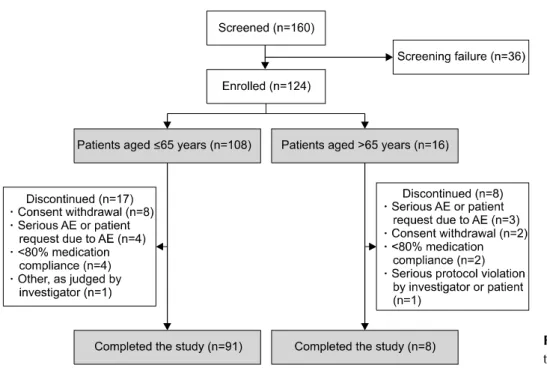
Figure 1. Patient flow through the study. AE: adverse event.
Kawai et al. [17], 96 patients were required to estimate the response rate in this study within 10% of the true val- ue, with 95% confidence. Assuming a 25% drop-out rate, the aim was to recruit 128 patients. The intention-to- treat (ITT) population and safety-analysis set (SAF) con- sisted of all patients who received at least one dose of study drug, and the per protocol (PP) population com- prised all patients in the ITT population who completed the study, without major protocol violation. Efficacy eval- uations were primarily conducted in the ITT population, with supporting analyses in the PP population. Patient demographics, baseline characteristics, and dosing data were split by patient age ≤65 years versus >65 years, due to the different initial daily dose of tacrolimus be- tween these age groups according to the indication in Korea (1.5 vs. 2.0 mg, respectively).
ACR20, ACR50, and ACR70 were evaluated as the pro- portion of responders, with 95% confidence interval (CI).
The change in DAS28-ESR and BMD between baseline and Week 24 was assessed with a Wilcoxon signed rank test. In order to compare the difference in BMD-T score classifications between screening and Week 24, McNemar's test was used. Statistical tests were two-tailed, with a significance level of 0.05. For missing efficacy values, the last observation carried forward meth- od was applied. Statistical analyses were performed using SAS version 9.2 or higher (SAS Institute, Cary, NC, USA).
RESULTS
Patient characteristics
Overall, 160 patients were screened at six medical cen- tres, of whom 36 patients were not enrolled due to screening failures (Figure 1). Of the 124 patients enrolled (aged ≤65 years, n=108; >65 years, n=16), 99 com- pleted the study. The date of first enrolment was 5 December 2011, and the date of last evaluation was 11 May 2015.
Regarding the analysis populations, of the 124 patients enrolled, three did not receive tacrolimus therapy; there- fore, 121 patients formed the ITT population/SAF (aged
≤65 years, n=106; >65 years, n=15). Among the 121 patients in the ITT population, 99 completed the study;
however, as two patients did not strictly meet the defi- nition for the PP population, and were excluded, 97 pa- tients formed the PP set (aged ≤65 years, n=89; >65 years, n=8).
Patient baseline demographics and characteristics are presented in Table 1 (ITT population). The mean±stand- ard deviation (SD) age of patients was 54.7±9.7 years, and 88.4% were female. Patients had RA for a mean±SD duration of 93.2±81.0 months (range 7~416 months).
As expected, patients aged >65 years had RA for longer than those aged ≤65 years (136.1±108.5 vs. 87.0±73.8 months, respectively), and a greater proportion had ACR functional class III. All patients had electrocardiograms, glycated haemoglobin levels, antigen levels of the hep-
Table 1. Patient demographics and baseline characteristics, overall and stratified by patient age (≤65 years vs. >65 years) (ITT population)
Characteristics Patients aged ≤65
years (n=106)
Patients aged >65
years (n=15) All patients (n=121)
Female sex 93 (87.7) 14 (93.3) 107 (88.4)
Age (yr) 52.7±8.5 69.3±2.6 54.7±9.7
Height (cm) 157.3±6.6 152.7±6.4 156.7±6.7
Weight (kg) 57.4±9.4 54.3±7.9 57.0±9.3
BMI (kg/m2) 23.2±3.6 23.3±3.0 23.2±3.5
Duration of RA (mo) 87.0±73.8 136.1±108.5 93.1±80.0
ACR functional class
Class I 4 (3.8) 0 (0) 4 (3.3)
Class II 94 (88.7) 10 (66.7) 104 (86.0)
Class III 6 (5.7) 5 (33.3) 11 (9.1)
Class IV 2 (1.9) 0 (0.0) 2 (1.7)
DAS28-ESR score – – 5.5±0.8
BMD-T score*
Lumbar region – – −1.43±1.34
Femur region – – −1.20±1.11†
ESR (mm/h) – – 42.4±22.5
CRP (mg/dL) – – 1.30±1.28
Bone turnover markers
Bone-specific alkaline phosphatase
Normal – – 81 (68.1)
Abnormal (non-significant) – – 35 (29.4)
Abnormal (clinically significant) – – 3 (2.5)
N (missing) – – 119 (2)
Osteocalcin
Normal – – 94 (79.0)
Abnormal (non-significant) – – 25 (21.0)
Abnormal (clinically significant) – – 0 (0.0)
N (missing) – – 119 (2)
C-telopeptide
Normal – – 117 (98.3)
Abnormal (non-significant) – – 2 (1.7)
Abnormal (clinically significant) – – 0 (0.0)
N (missing) – – 119 (2)
Receptor activator of NF-B
Normal – – 4 (100.0)
Abnormal (non-significant) – – 0 (0.0)
Abnormal (clinically significant) – – 0 (0.0)
N (missing) – – 4 (117)
Osteoprotegerin
Normal – – 4 (100.0)
Abnormal (non-significant) – – 0 (0.0)
Abnormal (clinically significant) – – 0 (0.0)
N (missing) – – 4 (117)
Prior DMARDs/biological agents
DMARDs 106 (100.0) 15 (100.0) 121 (100.0)
Methotrexate 97 (91.5) 14 (93.3) 111 (91.7)
Hydroxychloroquine 46 (43.3) 5 (33.3) 51 (42.1)
Sulfasalazine 41 (38.7) 5 (33.3) 46 (38.0)
Leflunomide 6 (5.7) 1 (6.7) 7 (5.8)
Others 12 (11.3) 3 (20.0) 15 (12.4)
Table 1. Continued
Characteristics Patients aged ≤65
years (n=106)
Patients aged >65
years (n=15) All patients (n=121)
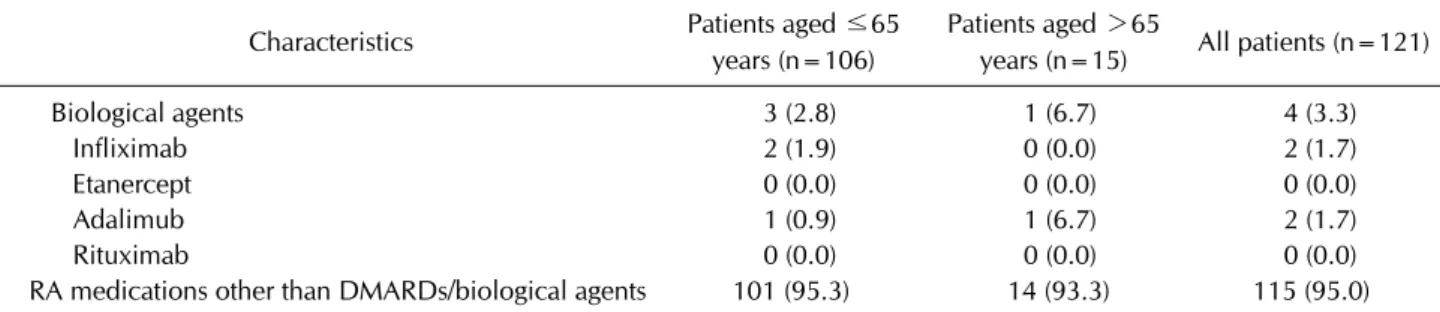
Biological agents 3 (2.8) 1 (6.7) 4 (3.3)
Infliximab 2 (1.9) 0 (0.0) 2 (1.7)
Etanercept 0 (0.0) 0 (0.0) 0 (0.0)
Adalimub 1 (0.9) 1 (6.7) 2 (1.7)
Rituximab 0 (0.0) 0 (0.0) 0 (0.0)
RA medications other than DMARDs/biological agents 101 (95.3) 14 (93.3) 115 (95.0) Values are presented as number (%) or mean±standard deviation unless otherwise stated. ITT: intention-to-treat, BMI: body mass index, RA: rheumatoid arthritis, ACR: American College of Rheumatology, DAS28: disease activity score in 28 joints, ESR:
erythrocyte sedimentation rate, BMD: bone mineral density, CRP: C-reactive protein, NF-B: nuclear factor B, DMARD:
disease-modifying anti-rheumatic drugs. *From screening visit. †n=120.
Figure 2. Proportion of ACR responders at Week 24 in the ITT and PP populations after 24 weeks of treatment with tacrolimus. ACR20, ≥20% improvement in the seven ACR re- sponse criteria. ACR50, ≥50% improvement in the seven ACR response criteria. ACR70, ≥70% improvement in the 7 ACR response criteria. ACR: American College of Rheumatology, ITT: intention-to-treat, PP: per-protocol, CI:
confidence interval.
atitis B virus, and hepatitis C antibody levels that were ei- ther normal or not clinically significant. All patients had previously received DMARDs, other than tacrolimus.
Overall, 3.3% of patients had received prior treatment with biological agents, and 95.0% were taking medication for RA other than DMARDs or biological agents (Table 1).
Twenty-five of the 124 enrolled patients were pre- maturely discontinued from the study. The most common reasons for discontinuation were withdrawal of consent (10/25 patients, 40.0%), AEs (7/25, 28.0%), low drug compliance (6/25, 24.0%), protocol violation (1/25, 4.0%), and other reasons judged by the investigator (1/25, 4.0%) (Figure 1).
Treatment
In the ITT population, patients received tacrolimus for a mean±SD of 154.5±42.5 and 134.3±57.2 days in the ≤ 65 and >65 years age groups, respectively, at an overall mean dose of 1.81±0.47 mg/day during the study.
At Week 12, a total of 12 patients (11.5%) aged ≤65 years were prescribed a 1 mg increase in tacrolimus daily dose, and two patients (1.9%) aged >65 years were pre- scribed a 0.5 mg increase in tacrolimus daily dose; no pa- tient was prescribed a dose decrease. Most patients (90/104, 86.5%) were prescribed a consistent dosage of tacrolimus over the 24 weeks of treatment.
Throughout the study, the mean±SD compliance with tacrolimus therapy for the overall ITT population, and for patients aged ≤65 and >65 years was 90.7±18.9%, 91.7±18.3%, and 83.1±21.9%, respectively; 15 (12.4%), 11 (10.4%), and 4 (26.7%) patients had compliance
<80%.
In the ≤65 and >65 years age groups, 4.7% and 6.7% of patients in the ITT population were receiving con- comitant medication in addition to those they were re- ceiving at screening (data not shown).
ACR response and DAS28-ESR
After 24 weeks of tacrolimus treatment, 78 patients (64.5%; 95% CI: 55.3%, 73.0%) in the ITT population were ACR20 responders, 48 patients (39.7%; 95% CI:
30.9%, 49.0%) were ACR50 responders, and 23 patients (19.0%; 95% CI: 12.5%, 27.1%) were ACR70 responders (Figure 2). A numerically higher proportion of patients were ACR20, ACR50, and ACR70 responders in the PP population compared with the ITT population (Figure 2).
In the ITT population, the mean±SD DAS28-ESR score decreased from 5.5±0.8 at baseline, to 3.7±1.5 after 24
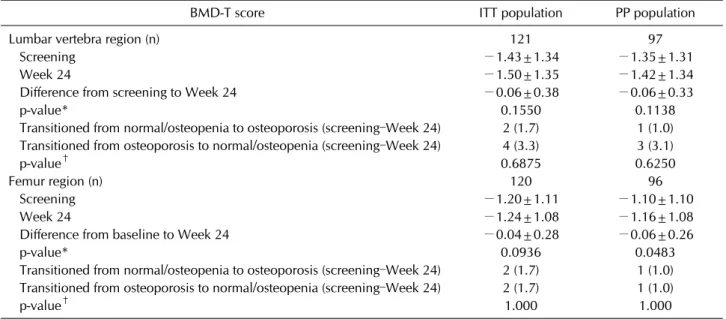
Table 3. Summary of BMD-T score at screening versus Week 24, and BMD-T score classification by ISCD guideline, for the ITT and PP populations
BMD-T score ITT population PP population
Lumbar vertebra region (n) 121 97
Screening −1.43±1.34 −1.35±1.31
Week 24 −1.50±1.35 −1.42±1.34
Difference from screening to Week 24 −0.06±0.38 −0.06±0.33
p-value* 0.1550 0.1138
Transitioned from normal/osteopenia to osteoporosis (screening–Week 24) 2 (1.7) 1 (1.0) Transitioned from osteoporosis to normal/osteopenia (screening–Week 24) 4 (3.3) 3 (3.1)
p-value† 0.6875 0.6250
Femur region (n) 120 96
Screening −1.20±1.11 −1.10±1.10
Week 24 −1.24±1.08 −1.16±1.08
Difference from baseline to Week 24 −0.04±0.28 −0.06±0.26
p-value* 0.0936 0.0483
Transitioned from normal/osteopenia to osteoporosis (screening–Week 24) 2 (1.7) 1 (1.0) Transitioned from osteoporosis to normal/osteopenia (screening–Week 24) 2 (1.7) 1 (1.0)
p-value† 1.000 1.000
Values are presented as mean±standard deviation or number (%) unless otherwise stated. BMD: bone mineral density, ISCD:
International Society for Clinical Densitometry, ITT: intention-to-treat, PP: per-protocol. *Wilcoxon signed rank test. †McNemar's test.
Table 2. DAS28-ESR response by EULAR classifications at Week 24, in the ITT and PP populations
EULAR classification (based on changes from
baseline to Week 24)
ITT population (n=121)
PP population (n=97)
Good 42 (34.7)
[26.3, 43.9]
38 (39.2) [29.4, 49.6]
Moderate 52 (43.0)
[34.0, 52.3]
43 (44.3) [34.2, 54.8]
Non-response 27 (22.3) [15.3, 30.8]
16 (16.5) [9.7, 25.4]
Values are presented as number (%) [95% confidence interval]. DAS28: disease activity score in 28 joints, ESR:
erythrocyte sedimentation rate, EULAR: European League Against Rheumatism, ITT: intention-to-treat, PP: per-protocol.
weeks of tacrolimus administration (p<0.0001). A sim- ilar pattern was observed in the PP population (5.4±0.8 vs. 3.6±1.4 at baseline and Week 24, respectively; p<
0.0001). The mean±SD change in DAS28-ESR score from baseline to Week 24 was −1.7±1.3 and −1.9±1.2 in the ITT and PP populations, respectively. At Week 24, the DAS28-ESR response EULAR classification was good or moderate for 78% of patients in the ITT population and for more than 80% of patients in the PP population (Table 2).
BMD-T score and bone turnover markers
Between screening and Week 24 in the ITT population, there was no significant change in BMD-T score in the lumbar region (mean±SD change, −0.06±0.38; p=0.1550), or BMD-T score in the femur region (−0.04±0.28;
p=0.0936), albeit that scores at screening and Week 24 both indicated osteopenia (Table 3). The pattern was sim- ilar in the PP population, although the decrease in BMD-T score in the femur region reached statistical significance (p=0.0483; Table 3). When the BMD-T score in the lum- bar vertebra or femur region was classified according to the International Society for Clinical Densitometry, there was no significant change in classification between screening and Week 24, for the ITT or PP population (Table 3). There was also no significant difference be- tween baseline and Week 24 in bone turnover marker lev- els in the ITT or PP population (data not shown).
Joint counts
In the ITT population, the mean±SD number of tender joints decreased by 7.7±9.1 between baseline and Week 24 (12.7±10.9 vs. 5.0±7.7, respectively), and the mean±
SD number of swollen joints decreased by 4.1±4.2 (6.5±4.7 vs. 2.4±2.9, respectively). Results were similar in the PP population.
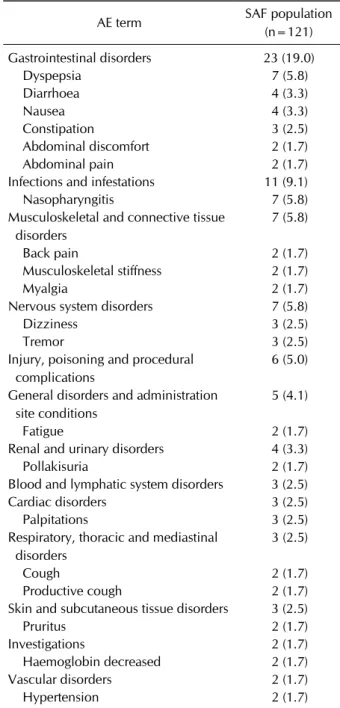
Table 4. Incidence of AEs experienced by ≥1% of patients in the SAF, by system organ class and preferred term
AE term SAF population
(n=121) Gastrointestinal disorders 23 (19.0)
Dyspepsia 7 (5.8)
Diarrhoea 4 (3.3)
Nausea 4 (3.3)
Constipation 3 (2.5)
Abdominal discomfort 2 (1.7)
Abdominal pain 2 (1.7)
Infections and infestations 11 (9.1)
Nasopharyngitis 7 (5.8)
Musculoskeletal and connective tissue disorders
7 (5.8)
Back pain 2 (1.7)
Musculoskeletal stiffness 2 (1.7)
Myalgia 2 (1.7)
Nervous system disorders 7 (5.8)
Dizziness 3 (2.5)
Tremor 3 (2.5)
Injury, poisoning and procedural complications
6 (5.0)
General disorders and administration site conditions
5 (4.1)
Fatigue 2 (1.7)
Renal and urinary disorders 4 (3.3)
Pollakisuria 2 (1.7)
Blood and lymphatic system disorders 3 (2.5)
Cardiac disorders 3 (2.5)
Palpitations 3 (2.5)
Respiratory, thoracic and mediastinal disorders
3 (2.5)
Cough 2 (1.7)
Productive cough 2 (1.7)
Skin and subcutaneous tissue disorders 3 (2.5)
Pruritus 2 (1.7)
Investigations 2 (1.7)
Haemoglobin decreased 2 (1.7)
Vascular disorders 2 (1.7)
Hypertension 2 (1.7)
Values are presented as number (%). AE: adverse event, SAF:
safety-analysis set.
VAS
All components of the VAS improved after 24 weeks of tacrolimus treatment. The mean±SD change in VAS score from baseline to Week 24 in the ITT population was
−24.6±27.2 for pain, −19.1±27.1 for fatigue, −23.6±
29.9 for patient-judged activity, and −24.8±23.4 for in- vestigator-judged activity. Similar patterns were observed for the PP population.
Acute phase reactants
The mean±SD improvement in ESR was −12.5±19.7 mm/h between baseline and Week 24 (42.4±22.5 vs.
29.8±23.0 mm/h, respectively) for the ITT population.
Overall, 32.2% of the ITT population transitioned from an abnormal ESR level at baseline to normal levels by Week 24, while 0.8% of patients transitioned from nor- mal levels at baseline, to abnormal levels at Week 24.
The mean±SD improvement in CRP level was −0.54±
1.39 mg/dL between baseline and Week 24 (1.30±1.28 vs. 0.77±1.11 mg/dL, respectively) for the ITT population.
Overall, 41.3% of the ITT population transitioned from an abnormal CRP level at baseline to normal levels by Week 24, while 5.8% of patients transitioned from nor- mal levels at baseline, to abnormal levels at Week 24. The changes in CRP levels and ESR between baseline and Week 24 were comparable in the ITT and PP population.
Safety
During 24 weeks of tacrolimus treatment, 56 patients (46.3%) experienced 93 AEs, most (75.3%) of which were mild in severity. Common AEs, reported in ≥1% of patients, are presented in Table 4; by system organ class, these were: gastrointestinal disorders (19.0% of patients, 23 events), infections and infestations (9.1%, 11 events), musculoskeletal and connective tissue disorders (5.8%, 7 events), and nervous system disorders (5.8%, 7 events).
Five patients (4.1%) experienced serious AEs, one each of femur fracture, foot fracture, waist and wrist fracture, hu- merus fracture, and pneumonia. Three of the four frac- tures were caused by falling accidents. Only the foot frac- ture was identified as a treatment-related serious AE, without documentation for the specific cause of the fracture. The foot fracture and waist and wrist fracture led to study discontinuation.
Of the 93 reported AEs, 38 AEs (40.9%) were treat- ment-related, occurring in 25 patients (20.7%). The most commonly reported treatment-related AEs, by system or- gan class, were: gastrointestinal disorders (9.9% of pa-
tients, 12 events), infections and infestations (4.1%, 5 events), nervous system disorders (3.3%, 4 events), and renal and urinary disorders (2.5%, 3 events). Among the 25 patients with treatment-related AEs, 2 patients (1.7%) exhibited severe AEs, 11 (9.1%) discontinued the study due to the treatment-related AEs, and 1 (0.8%) experi- enced a treatment-related serious AE (fracture, described above). There were no patient deaths during the study.
DISCUSSION
In this study, 24 weeks of per-protocol tacrolimus treat- ment in DMARD-resistant patients with RA resulted in a high proportion of ACR responders (64.5%, 39.7%, and 19.0% achieving an ACR20, ACR50, or ACR70 response, respectively). The mean DAS28-ESR score significantly improved from baseline to Week 24, and there were fewer tender or swollen joints. Furthermore, RA disease activ- ity was reduced, and physical function was improved by Week 24. Tacrolimus therapy was generally well tolerated in this study, and the reported incidence of treat- ment-related AEs was low.
In this study, it is encouraging that the ACR20 response rate was 64.5%. This is higher than the ACR20 response rates reported in other tacrolimus studies, including those of patients receiving tacrolimus without con- comitant DMARDs, in which the highest rates cited range between 48.3% and 52.5% [12,14,17-20]. ACR50 and ACR70 response rates in this study were also higher than those previously reported with tacrolimus therapy, with or without concomitant DMARDs [12,14,17-19,21].
This disparity between the high ACR response rates in our study and the lower rates previously described may be due to different patient characteristics, disease duration, or study design. For example, in a Phase II study with ta- crolimus and without concomitant DMARDs that re- ported ACR20 and ACR50 response rates of 32.0% and 11.8%, respectively, patients had a longer duration of RA prior to study entry, and a greater proportion of patients with ACR functional class III disease, compared with our study population [21].
In this study, the mean DAS28-ESR score significantly decreased from baseline after 24 weeks of tacrolimus treatment, irrespective of study population. Furthermore, the DAS28-ESR response according to EULAR classi- fication was good or moderate in 78% of patients at Week 24. Improvements in DAS28-ESR score have been re- ported in studies where tacrolimus has been used as an add-on therapy [12,22]. For example, a mean improve- ment from baseline to Week 16 in DAS28-ESR of −1.42 points was reported with lower-dose tacrolimus (1.5 mg) as add-on to methotrexate, in a Korean study of patients with active RA and an inadequate response to methotrex- ate [12]. Collectively, these data suggest that RA disease activity is effectively reduced following treatment with ta- crolimus therapy.
RA is associated with osteoporosis [1], and tacrolimus
has been shown to prevent differentiation of cells into mature osteoclasts [23], potentially reducing bone resorption. Consistent with this, in our study the mean BMD-T score in the lumbar region was similar at screen- ing and Week 24, and there was no significant change from baseline to Week 24 in bone turnover marker levels.
Worsening of the mean BMD-T score in the femur region between screening and Week 24 also failed to reach stat- istical significance in the ITT population. Furthermore, only two patients in the ITT population transitioned from BMD-T scores associated with normal bone density or os- teopenia, to osteoporosis. However, due to lack of a con- trol group that did not receive tacrolimus, the possibility of a spontaneous decrease in BMD over time in our pop- ulation cannot be ruled out.
In both the ITT and PP populations, the mean number of tender and swollen joints decreased between baseline and Week 24 (by 7.7 and 4.1 in the ITT population, re- spectively). This is consistent with results from Furst et al.
[18], who reported a mean reduction in tender and swollen joint count of −6.3 and −3.8, respectively, between base- line and Week 24, in patients who had received 3 mg tacro- limus after being treated unsuccessfully with methotrexate. Mean reductions in tender and swollen joint count were also comparable with those reported in other publications after 16 weeks of 1.5 mg tacrolimus therapy (−3.3 and −3.6, respectively) [19], 24 weeks of 2 mg ta- crolimus therapy (−3.1 and −4.0) [21], and 28 weeks of 1.5 mg or 3 mg tacrolimus therapy (−7.1 and −4.1) [14].
Improvements in mean DAS28-ESR score, and reduc- tions in the mean number of tender and swollen joints af- ter initiating tacrolimus therapy, are likely associated with the largely positive patient perceived outcomes measured at Week 24. In both the ITT and PP pop- ulations, 24 weeks of tacrolimus therapy was associated with a reduction in pain and fatigue, and an increase in physical activity, as measured by VAS. A reduction in pain score on the VAS has also been reported in previous stud- ies of tacrolimus in patients with RA [18,19], as have im- provements in disease activity and patient health [21].
These data suggest that tacrolimus has the potential to improve quality of life for patients with RA, and their abil- ity to perform daily activities, when treatment with DMARDs has been unsuccessful.
Importantly, there were no new safety concerns with ta- crolimus therapy in this study. Consistent with Kawai and Yamamoto [14] and Kondo et al. [19], approximately half of patients in this study experienced AEs; however, most
AEs were mild in severity, and only 20.7% of patients ex- perienced treatment-related AEs. The most common sys- tem organ class of AEs was gastrointestinal disorders, which is aligned with previous reports [18,21]. Overall, tacrolimus was well tolerated in patients with active RA and an unsuccessful response to DMARDs.
This study had several limitations, such as the lack of a comparator arm. It was also not possible to determine whether the efficacy of tacrolimus might decrease beyond 24 weeks of treatment. There was an insufficient number of patients to enable stratification of outcomes by the type of combination therapy used (eg., NSAIDs) and the plan- ned study design did not include baseline assessment of laboratory values or NSAID/corticosteroid doses. Each centre’s local laboratory measured the T-score, but not the absolute value of BMD. It should be noted, when mak- ing cross-study comparisons, that methods for BMD as- sessment may vary, and there was no calibration between the machines in each centre. Functional disability data were planned for inclusion, and determined using the Korean Health Assessment Questionnaire (KHAQ [24]) disability index; however, these data could not be in- cluded due to an error in the formula used throughout the study. Despite these limitations, the data generated by this study positively add to the growing pool of evidence for the use of tacrolimus to treat patients with active RA.
CONCLUSION
This study showed that 6 months of tacrolimus therapy (1.0 to 3.0 mg/day) diminished the RA activity, and im- proved the physical functions of joints in patients with ac- tive RA who were resistant to DMARDs in Korea, without clinically-meaningful deterioration in BMD. Overall, the incidence of treatment-related serious AEs and mild to moderate infections was low, and no unexpected safety signals were identified during the study period.
Tacrolimus may, therefore, be a suitable therapy for pa- tients with active RA who are resistant to DMARDs.
ACKNOWLEDGMENTS
This study was sponsored by Astellas Pharma Korea, Inc. Daniella T Draper, PhD, CMPP, from Cello Health MedErgy assisted in drafting the manuscript under the di- rection of the authors, and provided editorial support throughout its development. Editorial support was fund- ed by Astellas Pharma, Inc. All authors participated in de-
signing the study, collected data, revised the manuscript critically for important intellectual content, and approved the final version for submission.
CONFLICT OF INTEREST
DH Sheen, SJ Hong, SH Lee, HS Lee, and WT Chung re- port non-financial support from Astellas during the de- velopment of this manuscript. DH Yoo reports non-finan- cial support and other from Astellas during the conduct of the study, and grants and personal fees from Celltrion outside the submitted work. H Jiang and S Lee are em- ployees of Astellas.
REFERENCES
1. McInnes IB, Schett G. The pathogenesis of rheumatoid arthritis. N Engl J Med 2011;365:2205-19.
2. Pincus T, Gibson KA, Block JA. Premature mortality: a ne- glected outcome in rheumatic diseases? Arthritis Care Res (Hoboken) 2015;67:1043-6.
3. Smolen JS, Landewé R, Bijlsma J, Burmester G, Chatzidionysiou K, Dougados M, et al. EULAR recommendations for the management of rheumatoid arthritis with synthetic and bi- ological disease-modifying antirheumatic drugs: 2016 update. Ann Rheum Dis 2017;76:960-77.
4. Katchamart W, Trudeau J, Phumethum V, Bombardier C.
Efficacy and toxicity of methotrexate (MTX) monotherapy versus MTX combination therapy with non-biological dis- ease-modifying antirheumatic drugs in rheumatoid arthri- tis: a systematic review and meta-analysis. Ann Rheum Dis 2009;68:1105-12.
5. Salliot C, van der Heijde D. Long-term safety of methotrex- ate monotherapy in patients with rheumatoid arthritis: a systematic literature research. Ann Rheum Dis 2009;68:
1100-4.
6. Kvalvik AG, Lefsaker L, Dyvik S, Brun JG. Anti-tumor ne- crosis factor-alpha therapy in the ordinary clinical setting:
three-year effectiveness in patients with rheumatoid arthritis. Joint Bone Spine 2007;74:606-11.
7. Weinblatt ME, Keystone EC, Furst DE, Moreland LW, Weisman MH, Birbara CA, et al. Adalimumab, a fully hu- man anti-tumor necrosis factor alpha monoclonal antibody, for the treatment of rheumatoid arthritis in patients taking concomitant methotrexate: the ARMADA trial. Arthritis Rheum 2003;48:35-45.
8. Gizinski AM, Fox DA. T cell subsets and their role in the pathogenesis of rheumatic disease. Curr Opin Rheumatol 2014;26:204-10.
9. Scott LJ, McKeage K, Keam SJ, Plosker GL. Tacrolimus: a further update of its use in the management of organ transplantation. Drugs 2003;63:1247-97.
10. Ogawa T, Tokuda M, Tomizawa K, Matsui H, Itano T, Konishi R, et al. Osteoblastic differentiation is enhanced by rapamycin in rat osteoblast-like osteosarcoma (ROS 17/2.8) cells. Biochem Biophys Res Commun 1998;249:
226-30.
11. Spolidorio LC, Nassar PO, Nassar CA, Spolidorio DM, Muscará MN. Conversion of immunosuppressive mono- therapy from cyclosporin A to tacrolimus reverses bone loss in rats. Calcif Tissue Int 2007;81:114-23.
12. Lee WS, Lee SI, Lee MS, Kim SI, Lee SS, Yoo WH. Efficacy and safety of low-dose tacrolimus for active rheumatoid ar- thritis with an inadequate response to methotrexate.
Korean J Intern Med 2016;31:779-87.
13. Kawai S, Takeuchi T, Yamamoto K, Tanaka Y, Miyasaka N.
Efficacy and safety of additional use of tacrolimus in pa- tients with early rheumatoid arthritis with inadequate re- sponse to DMARDs − a multicenter, double-blind, paral- lel-group trial. Mod Rheumatol 2011;21:458-68.
14. Kawai S, Yamamoto K. Safety of tacrolimus, an im- munosuppressive agent, in the treatment of rheumatoid ar- thritis in elderly patients. Rheumatology (Oxford) 2006;45:
441-4.
15. Hochberg MC, Chang RW, Dwosh I, Lindsey S, Pincus T, Wolfe F. The American College of Rheumatology 1991 re- vised criteria for the classification of global functional status in rheumatoid arthritis. Arthritis Rheum 1992;35:498-502.
16. van der Heijde DM, van 't Hof MA, van Riel PL, Theunisse LA, Lubberts EW, van Leeuwen MA, et al. Judging disease activity in clinical practice in rheumatoid arthritis: first step in the development of a disease activity score. Ann Rheum Dis 1990;49:916-20.
17. Kawai S, Hashimoto H, Kondo H, Murayama T, Kiuchi T, Abe T. Comparison of tacrolimus and mizoribine in a randomized, double-blind controlled study in patients with rheumatoid arthritis. J Rheumatol 2006;33:2153-61.
18. Furst DE, Saag K, Fleischmann MR, Sherrer Y, Block JA,
Schnitzer T, et al. Efficacy of tacrolimus in rheumatoid ar- thritis patients who have been treated unsuccessfully with methotrexate: a six-month, double-blind, randomized, dose-ranging study. Arthritis Rheum 2002;46:2020-8.
19. Kondo H, Abe T, Hashimoto H, Uchida S, Irimajiri S, Hara M, et al. Efficacy and safety of tacrolimus (FK506) in treat- ment of rheumatoid arthritis: a randomized, double blind, placebo controlled dose-finding study. J Rheumatol 2004;31:243-51.
20. Kremer JM, Habros JS, Kolba KS, Kaine JL, Borton MA, Mengle-Gaw LJ, et al. Tacrolimus in rheumatoid arthritis patients receiving concomitant methotrexate: a six-month, open-label study. Arthritis Rheum 2003;48:2763-8.
21. Yocum DE, Furst DE, Kaine JL, Baldassare AR, Stevenson JT, Borton MA, et al. Efficacy and safety of tacrolimus in pa- tients with rheumatoid arthritis: a double-blind trial.
Arthritis Rheum 2003;48:3328-37.
22. Takeuchi T, Ishida K, Shiraki K, Yoshiyasu T. Safety and ef- fectiveness of tacrolimus add-on therapy for rheumatoid ar- thritis patients without an adequate response to biological disease-modifying anti-rheumatic drugs (DMARDs):
post-marketing surveillance in Japan. Mod Rheumatol 2018;28:48-57.
23. Miyazaki M, Fujikawa Y, Takita C, Tsumura H. Tacrolimus and cyclosporine A inhibit human osteoclast formation via targeting the calcineurin-dependent NFAT pathway and an activation pathway for c-Jun or MITF in rheumatoid arthritis. Clin Rheumatol 2007;26:231-9.
24. Bae SC, Cook EF, Kim SY. Psychometric evaluation of a Korean Health Assessment Questionnaire for clinical research. J Rheumatol 1998;25:1975-9.