https://doi.org/10.4174/astr.2017.92.5.370 Annals of Surgical Treatment and Research
Trauma surgery without proper compensation under the current Korean National Health Insurance System
Kyoungwon Jung, Yunjung Heo1, John Cook-Jong Lee, Mijin Lee1, Suni Son2, Hee Suk Park2, Joo-Ok Kim2, Jeong Hee Lee3
Department of Surgery, Ajou University School of Medicine, Suwon, 1Department of Medical Humanities and Social Medicine, Ajou University School of Medicine, Suwon, 2Department of Health Insurance, Ajou University Hospital, Suwon, 3Gyeonggi South Regional Trauma Center, Ajou University Hospital, Suwon, Korea
INTRODUCTION
The latest preventable trauma death rate in Korea is 35.2%, a relatively high rate compared to the reported rate of 10%–20%
in the advanced country such as United States and Japan [1- 4]. A study reported reduced preventable mortality rates among trauma patients associated with establishment of a major trauma center [5]. Since 2012, the Ministry of Health and Welfare has pursued a plan for balanced deployment of
major trauma centers to enable proper treatment of patients with severe trauma anywhere in the country within one hour.
However, various problems have plagued the early stages of operation of these major trauma centers, despite government support including installation and operation costs. Particularly, a deficiency of trauma specialists and establishment of the newly implemented trauma system remain significant chal- lenges for both medical facilities and medical professionals.
The most common cause of death among trauma patients is Purpose: This study aimed to evaluate the situations and problems of the current health insurance fees for trauma surgeries.
Methods: We reviewed the medical records and billing data from trauma surgeries performed in the hospital from August 2012 to July 2014. The name and number of surgeries were investigated and the code and number of operations prescribed by surgeons were compared with the number of cases actually billed to insurance. In addition, the results returned by the Health Insurance Review & Assessment Services (HIRA) after deduction were investigated and compared to verify the insurance review findings.
Results: During the study period, total 1,534 trauma surgical procedures were performed for a total of 253 trauma patients. Based on names, 1,092 procedures were performed; however, 442 cases (28.8%) could not be prescribed because of lack of proper insurance codes for the procedures. A total of 1,046.5 surgical procedures were prescribed by surgeons, adjusted by the insurance team, and finally billed to the HIRA; 162 bills were returned from the HIRA after rate reductions, corresponding to a reduction rate of 15.5%. The major reason for reduction was “fee criteria and limited number”. The compensation rate for billed surgical procedures was 84.5%.
Conclusion: The high reduction and low compensation rate for trauma surgery under the current Korean National Health Insurance System need to be reviewed and improved. Furthermore, it is necessary to establish new criteria for surgical procedures fees for latest ones such as damage control surgery performed on severe trauma patients.
[Ann Surg Treat Res 2017;92(5):370-375]
Key Words: Wounds and injuries, Health insurance, Operative surgical procedures, Korea
Reviewed January February March April May June JulyAugust September October November December
Received July 26, 2016, Revised December 23, 2016, Accepted January 16, 2017
Corresponding Author: Kyoungwon Jung
Department of Surgery, Ajou University School of Medicine, 164 World cup-ro, Yeoungtong-gu, Suwon 16499, Korea
Tel: +82-31-219-7491, Fax: +82-31-219-7781 E-mail: [email protected]
Copyright ⓒ 2017, the Korean Surgical Society
cc Annals of Surgical Treatment and Research is an Open Access Journal. All articles are distributed under the terms of the Creative Commons Attribution Non- Commercial License (http://creativecommons.org/licenses/by-nc/4.0/) which permits unrestricted non-commercial use, distribution, and reproduction in any medium, provided the original work is properly cited.
hemorrhage [6]. Based on the concept of trimodal distribution of trauma death [7], this kind of hemorrhage is mostly derived from the truncal area (torso). Effectively stopping hemorrhage is a vital step in reducing preventable mortality in trauma patients, and more rapid surgical approaches are necessary [8,9]. To address this need, the American trauma system as- signs a general surgeon capable of responding to this kind of injury as the leader of a trauma team [10]. In addition, a recent study reported that ‘damage control surgery’ (DCS) in trauma patients with severe hemorrhage contributed to improved patient mortality [11], and the authors considered the surgical approach a basic concept of ‘traumatology’ [12,13].
However, the lack of consideration for the independency and professionalism of trauma surgeons in Korea, the specialization required for each organ system, and the base fee schedule are restrictive conditions for surgeons in trauma system; combined, these factors prevent these professionals from receiving legitimate compensation as well as proper treatment. If this situation is not improved, training of trauma specialists and the establishment of trauma centers will become a further challenge, thus preventing realization of the government policy to enable proper treatment and reduced preventable mortality in trauma patients. The hospital in which these authors were working have received a concept of ‘the trauma surgeon’ which was defined in a previous study [14] and is currently performing
‘the department of trauma surgery’ as a single department in a relatively early stage. The current study reviewed surgical cases performed in the department of trauma surgery in this hospital for the past 2 years in order to evaluate the situations and problems of the current health insurance fees for trauma surgeries and assess their effects.
METHODS
The current study analyzed medical records, and billing data from trauma surgeries performed in this hospital from August 2012 to July 2014. First, the nurse in charge of trauma operation rooms investigated and statistically analyzed surgical records, surgical procedure prescription as prescribed by trauma surgeons, and prescription code. Second, a surgeon reviewed surgical records written by other surgeons. Finally, 3 nurses from an insurance team and a surgeon investigated surgical procedures by name, as billed by the insurance team, as well as the number of bills, billing codes, prescription codes, and treatment fees.
Based on the surgical and medical records, the name and number of surgical procedures performed by surgeons were investigated. In addition, based on surgical statistics and insurance team data, the code and number of surgeries pre- scribed by surgeons were compared with the number of cases actually billed to insurance, and the results returned by the
Health Insurance Review & Assessment Services (HIRA) after deduction through February 2015 were investigated and com- pared to verify the insurance review findings, which usually takes up to 6 months.
The names of the surgical procedures performed were exclu- sively dependent on the surgeon records, which were reviewed and classified by a single surgeon for consistency. Even if they were classified as close to the codes and classifications of the current health insurance treatment fees, the conventional names of the procedures were used in case there was a more ap- pro priate match. In addition, the names of surgical pro ce dures broadly established in the field of traumatology, such as DCS, were separately classified and investigated, as these names are not typically found in the current classification sys tem. A sur gical procedure performed in a different body re gion was counted separately even if it was performed in the same opera- tion. In other words, if a patient had 2 small bowel per forations and 1 mesenteric rupture in 2 different anatomical locations, and a surgical procedure was performed for each lesion, these surgical procedures were counted as 3 cases.
Decimal points (such as 0.5 surgical procedures) were often used for counting of the surgical procedures in the investi- gation. In general, there has been a rule that only admit 50%, or less value for additional surgical procedures except for main one under the current Korean health insurance system. When
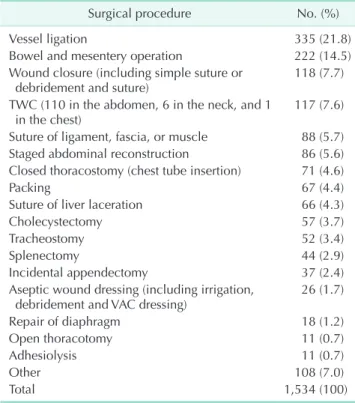
Table 1. Number of surgical procedures based on surgeon operation records
Surgical procedure No. (%)
Vessel ligation 335 (21.8)
Bowel and mesentery operation 222 (14.5) Wound closure (including simple suture or
debridement and suture) 118 (7.7)
TWC (110 in the abdomen, 6 in the neck, and 1
in the chest) 117 (7.6)
Suture of ligament, fascia, or muscle 88 (5.7) Staged abdominal reconstruction 86 (5.6) Closed thoracostomy (chest tube insertion) 71 (4.6)
Packing 67 (4.4)
Suture of liver laceration 66 (4.3)
Cholecystectomy 57 (3.7)
Tracheostomy 52 (3.4)
Splenectomy 44 (2.9)
Incidental appendectomy 37 (2.4)
Aseptic wound dressing (including irrigation,
debridement and VAC dressing) 26 (1.7)
Repair of diaphragm 18 (1.2)
Open thoracotomy 11 (0.7)
Adhesiolysis 11 (0.7)
Other 108 (7.0)
Total 1,534 (100)
TWC, temporary wound closure; VAC, vacuum assisted closure.
Table 2. Summary of surgical procedures billing Surgical procedureNo. (%)PrescriptionNonprescriptionPrescription code Number of prescription
codeNumber of billings
Number of bill reductions
Amount of bill reduction Bleeder ligation335 (21.8)23996O2071 O2072 O207332377863.2 Bowel and mesentery operation222 (14.5)15270
Q2341 Q2510 Q2540 Q2573 Q2640 Q2650 Q2671 Q2673 Q2679 Q2680 Q2771 Q27
73 Q2774 Q2775 Q2791 Q2792 Q2793 Q2795
181515643.1 Wound closure118 (7.7)8434
S0023 SA022 SA023 SA026 SB021 SB023 SB026 SC021 SC022 SC023 SC025 SC026 SC027
137900.0 Temporary wound closure117 (7.6)0117None0000.0
Suture of ligament, fascia, or muscle
88 (5.7)5335N0912 N093125032.2
Staged abdominal reconstruction
86 (5.6)7610Q2440 JJJJJJ2331611.5 Closed thoracotomy71 (4.6)5714O151015810.5 Packing67 (4.4)067None0000.0 Suture of liver laceration66 (4.3)3927Q724013888.5 Cholecystectomy57 (3.7)552Q73801552112.2 Tracheostomy52 (3.4)511O130015110.5 Splenectomy44 (2.9)422P209114253.3 Incidental appendectomy37 (2.4)325Q2861-3 Q2861001-291332.0 Aseptic wound dressing26 (1.7)1610M0121 M0134 R4050 SA012 SA013 SA01661400.0 Diaphragm repair18 (1.2)162O1600 O161021621.0 Open thoracotomy11 (0.7)101O1360 O1520 O1586 O18954921.7 Adhesiolysis11 (0.7)74Q2693 Q28102733.0 Other108 (7.0)163–55
C8534 HZ161 M0031 M0032 N0234 O1321 O1401 O1450 O1491 O1659 O1660 O2074 P2094 P4553 Q2450 Q2481 Q2732 Q2755 Q28
81 Q2991 Q7221
Q7222 Q7352 Q7563 Q7565 Q7571 R3271 R3550 R3571
29203.5179.3 Total1,534 (100)1,092442871046.5216162.0
liver suture and cholecystectomy are performed for the patient with hepatic laceration and gall bladder rupture, for instance, the cost of procedures covered by Korean insurance paying is 100% coverage for liver suture and 50% for cholecystectomy.
Therefore, we counted 1.5 surgical procedures for such a case unavoidably.
This study was approved by the Institutional Review Board of Ajou University Hospital (AJIRB-MED-MDB-16-200). Informed consent was waived by the board due to the observational nature of the study.
RESULTS
During the study period, 404 operation room entries (based on general anesthesia) were verified, corresponding to a total of 253 trauma patients. Investigation of the surgeries performed in the department of trauma surgery in this hospital for the past two years based on the surgical records written by the surgeons who participated in the operations revealed 1,534 surgical procedures, as shown in Table 1. For example, a single trauma patient who required surgery entered the operating
room and underwent surgery under general anesthesia an average of 1.6 times (404 of 253), while an average of 3.8 (1,534 of 404) trauma surgical procedures were performed under a single instance of general anesthesia. Based on names, 1,092 procedures were performed; however, 442 cases (28.8%) could not be prescribed because of lack of proper insurance codes for the surgical procedures (Tables 2, 3). The top 10 surgery types that could not be billed are listed in Table 4. A total of 1,046.5 surgical procedures were prescribed by surgeons, ad- justed by the insurance team, and finally billed to the HIRA;
162 bills were returned from the HIRA after rate reductions, cor responding to a reduction rate of 15.5% (162 of 1,046.5), based on review 6 months after ordering the billed operation fees. The breakdowns of the reductions are presented in Table 5. The major reason for reduction was “fee criteria and limited num ber.” Except for these cases of reduction, operation codes were postoperatively prescribed by surgeons and adjusted by the insurance team in 4.2% of cases (45.5 cases). Thus, the com- pensation rate for billed surgeries was 84.5% ([1,046.5 – 162]/
1046.5 × 100) (Table 3).
Table 3. Summary of surgical procedures bills
Class Class item August, 2012–
July, 2014 Per year
A Number of surgical procedures included in the operation records 1,534 767.0
B Number of surgical procedures prescribed by surgeons in the operating room 1,092 546.0
C Self-adjustment by insurance team (net) –45.5 –22.8
D Number of surgical procedures billed by insurance team (B–C) 1,046.5 523.3
E Number of surgical procedures converted into by amount of curtailed refund 162 81.0
F Reduction rate (E/D × 100, %) 15.5 15.5
G Self-adjustment rate (C/B × 100, %) 4.2 4.2
H Number of surgical procedures compensated after billing (D–E) 84.5 442.3
I Number of patients undergoing operations 253 126.5
J Number of operating room entries 404 202.0
Table 4. Top 10 types of unclaimed surgical procedures in trauma patients Surgical procedure Number of reported
surgical procedures (A)
Number of prescriptions based on current insurance code (B)
Number of nonprescription instances (A–B)
Temporary wound closure 117 0 117
Bleeder ligation 335 239 96
Bowel and mesentery operation 222 152 70
Packing 67 0 67
Suture of ligament, fascia, or muscle 88 53 35
Wound closure 118 84 34
Suture of liver laceration 66 39 27
Closed thoracostomy 71 57 14
Staged abdominal reconstruction 86 76 10
Aseptic wound dressing 26 16 10
Total 1,196 716 480
DISCUSSION
The majority of surgical procedures performed in the depart- ment of trauma surgery in patients with severe trauma follow the principles of DCS related to hemorrhage and infection, primarily of the trunk (neck, chest, abdomen, and pelvis) [15]. Based on DCS, temporary closure is performed after applying damage control to address the most acute problems in hemodynamically unstable and severe trauma patients, in- cluding hemorrhage and contamination. Additional surgical procedures are performed after these patients have recovered in the intensive care unit [12,13,15,16]. As these processes are billed using the previous operation insurance code system, which is based on a single disease, many cases cannot be billed. The cur- rent study’s review of data from this hospital revealed that only 72.2% (1,092/1,534 × 100) of surgical procedures performed in the department of trauma surgery could be billed using current insurance codes. Of 442 surgical procedures performed in the 2-year study period, more than 200 surgical procedures annually could not be billed. Analysis of the number of cases among billed surgical procedures revealed that 19.8% (216/1092 × 100) of cases were returned after reduction, and it was converted 162 cases into amount of money considering partial reduction.
In other words, about 80 prescriptions per year were curtailed and thus could not be compensated. In order to prevent these events, the insurance team at this hospital adjusted and billed the surgical procedure prescriptions (45.5 cases) at risk of reduction, with a reduction rate of 15.5%.
For example, there currently is no operation code to describe
ge neral hemostatic procedures such as ligation of major ves- sels during the initial surgery, or the process of bleeding con- trol using electronic cautery, gauze packing, or hemostatic ma terials apply. Although ‘vessel ligation’ (O2071 O2072 O2073) is currently used for billing, this use is inappropriate and a portion of the cases (63.2 among 239 prescriptions) was cut. Simple hemostasis procedures were excluded from this study; the results were based only on hemostatic cases using surgical ligation, even if it was not a named vessel. Thus, operation codes need to be developed to bill individual surgical procedures ranging from simple hemostasis to ligation or repair of named vessels. In addition, compensation is also necessary for each effort value.
In addition, if only hemostasis is performed and the wound remains open, nothing can be billed under the current coding system. Prior to the study period, these surgical procedures were billed as “neck exploration” or “exploratory laparotomy.”
However, this billing code is typically used for exploratory surgery except in patients with cancer or other diseases, and is thus inappropriate. In addition, use of this billing code precludes use of any other operation codes. In hemostatic proce- dures, gauze packing and temporary abdominal closure are basic surgical procedures within DCS [11,15,16] and are widely used in trauma patients. However, in cases where only these procedures were performed and the surgery was over, there would be no compensation as there is no billing code in Korea.
A total of 67 packing procedures and 118 temporary wound closures (110 in the abdomen, 6 in the neck, and 1 in the chest) were performed during the study period, but none of these cases could be billed; thus, these procedures were performed without compensation. Even though these operation fees are not high, it is necessary to establish a fee system.
Follow-up surgery is typically performed within 1–3 days after successful hemostasis in the initial surgery in severe trauma patients with severe hemorrhage. The follow-up surgery may end after only performing irrigation, identifying injuries, characterizing lesions, or replacing gauze or drainage tubes.
Once a patient has recovered, staged abdominal wall closure is typically performed in order to minimize complications such as compartment syndrome in the patient’s abdomen to reduce the risk of mortality. This is a surgery broadly considered to account for a chapter in surgery textbooks [17]. However, there is no appropriate fee for this procedure in Korea. Currently, it is billed as ‘secondary suture of abdominal wall (Q2440),’ but this coding is inappropriate. Moreover, even this is curtailed (11.5 cases of reduction), it is often not accepted if it is billed with other surgical procedures. After consultation with HIRA, 50% of Q2440-coded billing operation fees were accepted as of November 2013; it is billed as ‘JJJJJJ’, a kind of optional billing code made in the study hospital, but compensation is not smooth as there is no consistent criterion for billing this code.
Table 5. Breakdown of reductions Surgical procedure Number
of bills
Number of reductions
Amount of reduction
Bleeder ligation 237 78 63.2
Bowel and mesentery
operation 151 56 43.1
Cholecystectomy 55 21 12.2
Staged abdominal
reconstruction 33 16 11.5
Suture of liver laceration 38 8 8.5
Splenectomy 42 5 3.3
Suture of ligament, fascia or
muscle 50 3 2.2
Incidental appendectomy 3 3 2.0
Adhesiolysis 7 3 3.0
Diaphragm repair 16 2 1.0
Open thoracotomy 9 2 1.7
Closed thoracotomy 58 1 0.5
Tracheostomy 51 1 0.5
Other 203.5 17 9.3
Total 1,046.5 216 162.0
In addition to the examples described above, the current insurance code established per single disease or cancer per organ is not a feasible model to bill for surgery in trauma patients, in which various surgical procedures are inevitable due to various injuries. As a result, proper compensation is often not provided, despite experienced surgeons providing these services. Thus, this situation may lead to surgeons avoiding performing surgery. Surgical procedures such packing or temporary wound closure that was mentioned previously were not necessarily needed to be adopted to the insurance fee respectively. Fee Items for such procedures should be newly estabilished, nevertheless, for recording or counting those. Although no fee is not appropriated for “incidental ap- pen dectomy,” for example, the item has been used for a pre- scription code under the current health insurance system.
In conclusion, the high reduction and low compensation rate for trauma surgery in the current Korean National Health Insurance System need to be reviewed and improved. Further- more, it is necessary to establish new criteria for surgical proce- dures fees for latest ones such as DCS performed on severe trauma patients. This effort will encourage surgeons to perform surgery in trauma patients despite unfavorable conditions, and may also become a foundation for improved treatment out- comes.
CONFLICTS OF INTEREST
No potential conflict of interest relevant to this article was reported.
1. Jung KY, Kim JS, Kim Y. Problems in trauma care and preventable deaths. J Korean Soc Emerg Med 2001;12:45-56.
2. Kang JH, Park KH, Kim WJ, Kang YJ, Park JO, Cha WC, et al. Problems of trauma care and rate of preventable trauma death in Jeju, South Korea. J Korean Soc Emerg Med 2011;22:438-45.
3. Kim H, Jung KY, Kim SP, Kim SH, Noh H, Jang HY, et al. Changes in preventable death rates and traumatic care systems in Korea. J Korean Soc Emerg Med 2012;23:
189-97.
4. Kim Y, Jung KY, Cho KH, Kim H, Ahn HC, Oh SH, et al. Preventable trauma deaths rates and management errors in emer- gency medical system in Korea. J Korean Soc Emerg Med 2006;17:385-94.
5. Kim Y. A study on validity of establish- ment and management model of regional trauma centers in Korea. Seoul: Ministry of Health and Welfare; 2010.
6. American College of Surgeons Committee on Trauma. Advanced trauma life support students course manual. 9th ed. Chicago
(IL): American College of Surgeons; 2012.
7. Trunkey DD. Trimodal distribution of trauma death. Trauma Sci Am 1983;249:
20-7.
8. Copes WS, Staz CF, Konvolinka CW, Sacco WJ. American College of Surgeons audit filters: associations with patient outcome and resource utilization. J Trauma 1995;
38:432-8.
9. Yoo Y, Mun S. The advantages of early trauma team activation in the manage- ment of major trauma patients who underwent exploratory laparotomy. Ann Surg Treat Res 2014;87:319-24.
10. American College of Surgeons Committee on Trauma. Resources for optimal care of the injured patient. Chicago (IL): Ame- rican College of Surgeons; 2014.
11. Duchesne JC, Kimonis K, Marr AB, Rennie KV, Wahl G, Wells JE, et al. Damage con- trol resuscitation in combination with dam age control laparotomy: a survival ad- vantage. J Trauma 2010;69:46-52.
12. Ball CG. Damage control surgery. Curr Opin Crit Care 2015;21:538-43.
13. Roberts DJ, Ball CG, Feliciano DV, Moore EE, Ivatury RR, Lucas CE, et al. History of the Innovation of Damage Control for Management of Trauma Patients: 1902- 2016. Ann Surg 2017;265:1034-44.
14. Lee KJ. The necessity for a trauma sur- geon and the trauma surgeon’s role in the trauma care system. J Korean Soc Traumatol 2008;21:1-7.
15. Wyrzykowski AD, Feliciano DV. Trauma damage control. In: Mattox KL, Moore EE, Feliciano DV, editors. Trauma. 7th ed.
New York: McGraw Hill; 2013. p. 725-46.
16. Hirshberg A. Trauma laparotomy: princi- ples and techniques. In: Mattox KL, Moore EE, Feliciano DV, editors. Trauma.
7th ed. New York: McGraw Hill; 2013. p.
512-28.
17. Diaz JJ, Dutton WD, Miller RS. The diffi- cult abdominal wall. In: Townsend CM Jr, Beauchamp RD, Evers BM, Mattox KL, edi tors. Sabiston textbook of surgery:
the biological basis of modern surgical prac tice. 19th ed. Philadelphia: Elsevier Saunders; 2012. p. 471-9.