식용 고구마 신품종 ‘건황미’
이형운
1*
⋅정미남2
⋅이준설1
⋅안승현3
⋅김재명4
⋅한선경2
⋅양정욱1
⋅최규환5
⋅최인후6
⋅남상식1
1농촌진흥청 국립식량과학원 바이오에너지작물연구소, 2농촌진흥청, 3농촌진흥청 국립식량과학원 작물재배생리과,
4농촌진흥청 국립원예특작과학원 배연구소, 5전라북도농업기술원, 6농촌진흥청 국립식량과학원
A New Sweetpotato Variety ‘Geonhwangmi’ for Table Use
Hyeong-Un Lee
1*
, Mi-Nam Chung2
, Joon-Seol Lee1
, Seung-Hyun Ahn3
, Jae-Myung Kim4
, Seon-Kyeong Han2
, Jung-Wook Yang1
, Kyu-Hwan Choi5
, In-Hu Choi6
and Sang-Sik Nam1
1Bioenergy Crop Research Institute, NICS, RDA, Muan 58545, Korea
2Rural Development Administration, Jeonju 54875, Korea
3Crop Production & Physiology Division, NICS, RDA, Wanju 55365, Korea 4Pear Research Institute, NIHHS, RDA, Naju 58216, Korea
5Jeollabuk-do Agricultural Research & Extension Services, Iksan 54591, Korea
6National Institute of Crop Science, RDA, Wanju 55365, Korea
Abstract : ‘Geonhwangmi’, a new sweetpotato variety, was developed for table use by Bioenergy Crop Research Institute, National Institute of Crop Science (NICS), and RDA in 2013. This variety was derived from the cross between ‘Singeonmi’ and
‘Mokpo34’ in 2005. The seedling and line selections were performed from 2006 to 2008, preliminary and advanced yield trials were carried out from 2009 to 2010. The regional yield trials were conducted at five locations from 2011 to 2013, and it was named as ‘Geonhwangmi’. This variety has five-lobed leaf, and its leaves, stems, and petioles are green. Storage root of
‘Geonhwangmi’ has an elliptical shape, red skin, and light orange flesh. ‘Geonhwangmi’ was moderately resistant to fusarium wilt, and resistant to root-knot nematode. Dry matter content was 29.4%, and texture of steamed storage root was intermediate.
Sucrose content of steamed storage root of ‘Geonhwangmi’ was higher than that of ‘Yulmi’, and steamed storage root palatability of ‘Geonhwangmi’ was better than that of ‘Yulmi’. β-carotene content of ‘Geonhwangmi’ was 3.4 mg/100g DW, which was 7.8%
of ‘Juhwangmi’. Yield of marketable storage root over 50 g of ‘Geonhwangmi’ was 23.0 MT/ha under the early seasonal cultivation, which was 39% higher than that of ‘Yulmi’. The number of marketable storage roots per plant was 2.6 and the average weight of marketable storage root was 151 g under the optimal and late seasonal cultivation. Marketable storage root yield of ‘Geonhwangmi’ was 24.2 MT/ha under the optimum and late seasonal cultivation, which was 45% higher than that of
‘Yulmi’. (Registration No. 5853).
Keywords : Sweetpotato, Breeding, Variety, Geonhwangmi, Table use
*Corresponding author (E-mail: [email protected], Tel :+82-61- 450-0141, Fax: +82-61-453-0085)
(Received on July 15, 2016. Accepted on July 15 2016.)
Copyright ⓒ 2016 by the Korean Society of Breeding Science
This is an Open-Access article distributed under the terms of the Creative Commons Attribution Non-Commercial License (http://creativecommons.org/licenses/by-nc/3.0) which permits unrestricted non-commercial use, distribution, and reproduction in any medium, provided the original work is properly cited.
서 언
고구마는 식이섬유와 미네랄, 비타민뿐만 아니라 안토시아닌, 베타카로틴, 폴리페놀, 토코페롤 등과 같은 항산화 성분들을 다량 함유하고 있으며(Woolfe 1992), 항암작용이 뛰어나고 (Kurata et al. 2007) 고혈압을 낮춰주는 등 심혈관계 질환 예방에
효과가 있다(Oki et al. 2016). 고구마에 함유된 카로티노이드와 페놀 화합물에 의해 고구마의 육색은 황색, 주황색, 자색 등 독특한 색을 띠며(Teow et al. 2007) 육색이 백색이거나 담황색 인 고구마에는 베타카로틴 성분이 거의 함유되어 있지 않다 (Loebenstein & Thottappilly 2009). 주황색 고구마의 all-trans 형 베타카로틴은 찌거나 굽는 등 조리를 하여도 함량 감소가 거의 없거나, 20% 내외 수준이며(Kim et al. 2014, Bengtsson et al. 2008, Van Jaarsveld et al. 2006), 식용 고구마는 주로 찌거나 구운 형태로 소비되기 때문에 조리에 따른 식미는 기능성
Mokpo22
Singeonmi
Sinyulmi
Geonhwangmi
Hwangmi
Mokpo34
Sinyulmi
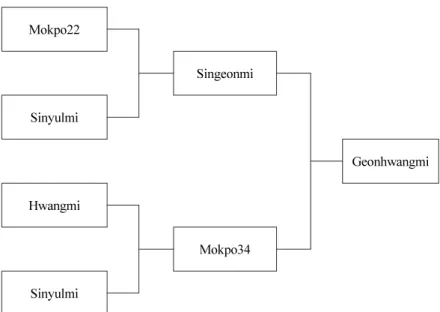
Fig. 1. Genealogical diagram of ‘Geonhwangmi’.
고구마 품종 개발에 있어서 중요한 고려사항이다. 이에 국립식량 과학원 바이오에너지작물연구소에서는 찐고구마 식미가 양호 하며 베타카로틴이 함유된 다수성 식용 고구마 ‘건황미’ 품종을 개발한 바 육성 경위와 주요 특성을 보고하고자 한다. 최근 소비 자는 육질이 점질이면서 단맛이 강한 고구마 품종을 선호하는 경향이므로 고구마 소비 확대를 위해서는 베타카로틴, 안토시아 닌 등 기능성 성분을 다량 함유하고 있으면서 식미도 우수한 품종 개발이 중요할 것으로 고려된다.
재료 및 방법
‘건황미’는 ‘신건미(Ahn et al. 2002)’ 품종을 모본, ‘목포34 호’를 부본으로 하여 2005년에 인공교배 하였다. 2006년부터 2008년까지 실생개체선발시험과 계통선발시험, 2009년부터 2010년까지 생산력검정시험을 수행하여 괴근 육색이 담주황색 이고 괴근 모양, 수량성, 식미가 양호한 ‘MI2005-15-01’ 계통을
‘목포81호’로 계통명을 부여하여 지역적응시험에 공시하였다.
지역적응시험은 2011년부터 2013년까지 3년간 수행하였으며 조기재배는 무안에서, 보통기재배는 춘천, 청주, 익산, 무안, 진주 등 5개 지역에서 수행되었다. 본밭 삽식은 조기재배는 4월 중순 에, 적기 및 만기재배는 5월 중순에서 6월 중순 사이에 이루어졌 으며 120일간 재배한 후 수확하였다. 진주를 제외한 지역에서 비닐멀칭을 실시하였으며, 재식밀도는 75×20cm, 시비량은 10a 당 N-P2O5-K2O=5.5-6.3-15.6kg을 전량 기비로 시비하였고 퇴 비는 1,000kg을 시용하였으며 기타 재배관리는 농촌진흥청 표
준재배법에 준하였다(RDA 2009). 고유특성과 주요 농업적 특 성, 생육, 수량구성요소 및 수량성, 품질특성, 주요 병해충 저항성 조사는 농업과학기술 연구조사분석기준(RDA 2012c) 및 농촌 진흥청 신품종개발공동연구사업 과제수행계획서 조사기준에 준하여 실시하였다(RDA 2011, 2012b, 2013b). 통계분석은 R(version 3.3.1)을 이용하였으며, t-test 방법으로 품종간 유의 성을 검정하였다.
결과 및 고찰
육성경위
‘건황미’는 식미가 우수한 덩굴쪼김병 저항성 고구마 품종을 육성하기 위하여 2005년에 덩굴쪼김병 저항성인 ‘신건미(Ahn et al. 2002)’ 품종을 모본, ‘목포34호’를 부본으로 하여 인공교배 하였다. 2006년부터 2008년까지 실생개체선발시험과 계통선발 시험, 2009년부터 2010년까지 생산력검정시험을 수행하여 괴 근 육색이 담주황색이고 괴근 모양, 수량성, 식미가 양호한
‘MI2005-15-01’ 계통을 ‘목포81호’로 계통명을 부여하여 지역 적응시험에 공시하였다. 2011년부터 2013년까지 3년간 지역적 응시험을 수행한 결과, 수량성, 품질특성, 병해충저항성 등이 대비품종인 ‘율미’보다 우수하여(RDA 2012a, 2013a, 2014) 2013년 12월 농촌진흥청 농작물직무육성신품종선정심의회에 서 신품종으로 선정되었으며 ‘건황미’라 명명하였다. ‘건황미’의 육성과정과 계통도는 Fig. 1, Fig. 2와 같다.
Variety Stem color
Stem tip color
Anthocyanin coloration
of node
No. of leaf blade lobes
Depth of leaf blade
lobe
Leaf color
Anthocyanin coloration on abaxial veins
Petiole
color Flowering
Geonhwangmi Green Green Medium 5 Moderate Green Large Green Medium
Yulmi Green Green Absent Absent
(Cordate) - Green Small Green Sparse or
absent Table 1. Mature vine characteristics of ‘Geonhwangmi’ on field at harvesting stage.
Year 2005 2006 2007 2008 2009 2010 2011 2012 2013
Generation Crossing Seedling 1st year
Seedling 2nd year
Seedling 3rd year
Seedling 4th year
Seedling 5th year
Seedling 6th year
Seedling 7th year
Seedling 8th year
IT258213
× IT232329
1
∙
∙ ∙ 805
MI2005-15-
01 → → → Geonhwangmi (Mokpo81)
Selection and trial steps Seedling
selection Line selection Preliminary yield trial
Advanced
yield trial Regional yield trial
Fig. 2. Pedigree diagram of ‘Geonhwangmi’.
Variety General shape Skin color Flesh color Depth of eyes
Geonhwangmi Elliptic Red Light orange Shallow
Yulmi Elliptic Light red Light yellow Medium
Table 2. Storage root characteristics of ‘Geonhwangmi’.
주요특성
고유특성
‘건황미’의 줄기색과 끝순색은 녹색으로 안토시아닌 발현 정 도가 없거나 약하고, 마디의 안토시아닌 발현정도는 중간이다 (Table 1). 잎의 열편은 5편열이고, 결각의 깊이는 중간이며 엽색은 녹색, 엽맥의 안토시아닌 분포 정도는 엽맥의 대부분이 착색되어 넓다. ‘건황미’의 잎자루색은 녹색으로 안토시아닌 발현 정도가 없거나 약하며 ‘율미’보다 개화성이 강하다. ‘건황 미’의 괴근 모양은 방추형이고 괴근의 껍질색은 홍색, 육색은 담주황색이며 ‘율미’에 비해 괴근의 눈 깊이가 얕아 상품성이 우수하다(Table 2, Fig. 3).
농업적 특성
2월 중순경 전열온상에 씨고구마를 파종한 후 맹아시까지 소요된 기간은 ‘건황미’와 ‘율미’ 모두 17일로 차이가 없으며
‘건황미’의 맹아수는 ‘중’ 정도이다(Table 3). 조기재배시 ‘건황
미’의 주경의 길이와 덩굴무게는 각각 85 cm, 17.2 MT/ha로
‘율미’와 비슷하였으며, 주당상품괴근수는 3.0 개/주로 ‘율미’보 다 많았고 상품괴근평균중은 117 g/개로 ‘율미’보다 적었으나 상품괴근수량은 ‘율미’보다 39% 많았다. 적기 및 만기재배시
‘건황미’의 주경의 길이와 덩굴무게는 각각 206 cm, 27.2 MT/ha 으로 ‘율미’와 차이가 없었고, 주당상품괴근수는 2.6 개/주로
‘율미’보다 많았으며, 상품괴근평균중은 151 g/개로 ‘율미’와 비슷하였다(Table 4).
병해충 저항성 및 저장성
‘건황미’는 덩굴쪼김병에 중도저항성으로 ‘율미’보다 덩굴쪼 김병에 강하고 고구마뿌리혹선충에 저항성이다. ‘건황미’는 수 확후 5개월 이상 저장기간 동안 검은무늬병과 연부병의 발생이 거의 없어 저장성이 우수하였다(Table 5).
품질특성
‘건황미’는 건물률이 29.4%로 ‘율미’보다 낮고 찐고구마 육질
Fig. 3. Raw (left) and steamed (right) storage roots of ‘Geonhwangmi’.
Variety
Sprout appearance
(DAP)
zNo. of sprout
Vine length (cm)
Vine Weight (MT/ha)
No. of marketable storage root per
plant
Ave. weight of marketable storage
root (g)
Marketable storage root yield
(MT/ha)
Geonhwangmi 17 Medium 85
ns17.2
ns3.0
*117
*23.0
nsYulmi 17 Medium 81 17.9 1.9 135 16.5
Not significant (ns) in the
t-test, while
*significant at
P< 0.05.
Table 3. Agronomic characteristics, yield components and yield of ‘Geonhwangmi’ on regional yield trial under early season cultivation.
Variety Fusarium wilt
(0 ~9)
zRoot-knot nematode
(0 ~9) Storability
Geonhwangmi 5 3 Excelent
Yulmi 7 9 Medium
z
0: resistant, 9: susceptible.
Table 5. Reaction to fusarium wilt, root-knot nematode (Meloidogyne incognita
)and storability of storage root of ‘Geonhwangmi’.
Variety Vine length
(cm) Vine Weight (MT/ha) No. of marketable storage root per plant
Ave. weight of marketable storage root (g)
Geonhwangmi 206
ns27.2
ns2.6
*151
nsYulmi 216 33.2 2.0 144
Not significant (ns) in the
t-test, while
*significant at
P< 0.05.
Table 4. Agronomic characteristics and yield components of ‘Geonhwangmi’ on regional yield trial under optimum and late season cultivation.
이 중간질이다(Table 6). ‘건황미’의 찐고구마 당도는 24.7 °Brix 이며, 찐고구마의 수크로오스 함량이 ‘율미’보다 높고 식미가 우수하였다(Table 6, Table 7). ‘건황미’ 괴근의 베타카로틴 함량 은 3.4 mg/100g DW이며 ‘주황미’의 7.8% 수준이다. 고구마 괴근 내부의 적색도(a값)는 괴근의 베타카로틴 함량과 높은 양의 상관 관계가 있으며(Takahata et al. 1993), ‘건황미’는 괴근 육색의 적색도가 12.6으로 ‘율미’의 1.4보다 높다(Table 8). 전분
의 페이스트 점도 특성에서 ‘건황미’ 전분의 강하점도 (breakdown)는 167.7 RVU(Rapid Visco Units)로 호화 중 열, 전단(shearing)에 대한 저항성이 ‘율미’와 비슷하였고, 치반점도 (Setback)는 65.9 RVU로 ‘율미’ 전분의 노화 정도와 차이가 없었으며, 호화개시온도(pasting temperature)는 75.7℃로 ‘율 미’와 비슷하였다(Table 9).
Variety
Dry matter content
(%)
Texture of steamed storage
root
°Brix of steamed storage root
Total sugar contents (g/100g DW)
Sweetness of steamed storage root
zPalatability of steamed storage root
yβ-Carotene (mg/100g Raw Steaming DW)
Geonhwangmi 29.4
*Intermediate 24.7
**6.5
ns30.3
ns15.7
ns5.8 3.4
Yulmi 32.4 Dry 28.9 6.9 23.6 11.9 5.0 N.D.
xz
Fructose*1.0+Glucose*0.55+Sucrose*1.0+Maltose*0.35.
y
1: very bad, 3: bad, 5: medium, 7: good, 9: excellent.
x
Non-detectable.
Not significant (ns) in the
t-test, while
*and
**significant at
P< 0.05 and P < 0.01, respectively.
Table 6. Quality of storage root of ‘Geonhwangmi’.
Variety Raw storage root (g/100g DW) Steamed storage root (g/100g DW)
Fructose Glucose Sucrose Maltose Fructose Glucose Sucrose Maltose
Geonhwangmi 0.9
ns1.1
ns4.5
nsN.D.
z1.0
ns1.5
ns6.4
*21.4
nsYulmi 1.7 1.7 3.5 N.D. 1.5 2.0 3.4 16.6
z
Non-detectable.
Not significant (ns) in the
t-test, while
*significant at P < 0.05.
Table 7. Sugar content of raw and steamed storage root of ‘Geonhwangmi’.
Variety
Chroma value
zSkin Flesh
L a b L a b
Geonhwangmi 41.6
*18.4
ns9.3
ns81.5
*12.6
**31.6
nsYulmi 46.4 16.9 11.3 85.8 1.4 29.7
z
L, Lightness: black=0, white=100; a, redness to greenness: green=-80, red=+80; b, yellowness to blueness: blue=-80, yellowness=+80.
Not significant (ns) in the
t-test, while
*and
**significant at
P< 0.05 and
P< 0.01, respectively.
Table 8. Chroma value of storage root of ‘Geonhwangmi’.
Variety Peak
viscosity (RVU)
Trough (RVU)
Breakdown (RVU)
Final viscosity (RVU)
Setback viscosity (RVU)
Pasting Temperature
( ℃)
Geonhwangmi 297.0
ns129.4
ns167.7
ns195.3
ns65.9
ns75.7
nsYulmi 310.9 118.6 192.2 184.5 65.9 75.2
Not significant (ns) in the
t-test.
Table 9. Rapid visco analysis (RVA) properties of starch of ‘Geonhwangmi’.
수량성
‘건황미’는 생산력검정예비시험과 본시험에서 괴근무게가 50 g 이상인 상품괴근의 수량이 각각 19.2, 30.0 MT/ha으로 ‘율미’
보다 각각 29%, 87% 많았다(Table 10). ‘건황미’는 지역적응시 험 적기 및 만기재배시 5개 지역 평균 상품괴근수량이 24.2 MT/ha으로 ‘율미’보다 45% 많았으며, 지역별로는 22% 내지
70% 많았다(Table 11). 특히 2013년 익산의 경우 ‘건황미’의 상품괴근수량이 59.0 MT/ha으로 대비품종인 ‘율미’보다 118%
많았으며, ‘진홍미’보다는 25% 많았다.
적응지역 및 재배상 유의점
‘건황미’는 산간 고랭지를 제외한 전국에서 재배가 가능하고,
Variety Storage root yield (MT/ha)
Preliminary yield trial Index
zAdvanced yield trial Index
Geonhwangmi 19.2 129 30.0 187
Yulmi 14.9 100 16.0 100
z
(yield of ‘Geonhwangmi’ / yield of ‘Yulmi’) × 100.
Table 10. Storage root yield (MT/ha) over 50 g of ‘Geonhwangmi’ on preliminary and advanced yield trials.
Region Geonhwangmi (Mt/ha) Index
z(A/B)
Yulmi (MT/ha)
2011 2012 2013 Mean (A) 2011 2012 2013 Mean (B)
Muan 18.3 20.8 16.3 18.5 122 15.0 15.5 14.8 15.1
Chuncheon 20.9 29.1 19.7 23.3 155 11.2 19.8 14.1 15.0
Cheongju 16.5 25.8 28.3 23.5 130 11.8 20.9 21.5 18.0
Iksan 17.2 24.9 59.0 33.7 170 15.8 16.7 27.1 19.9
Jinju 18.5 19.9 28.6 22.4 141 18.0 17.9 11.5 15.8
Mean 18.3 24.1 30.4 24.2
ns145 14.4 18.1 17.8 16.8
z
(yield of ‘Geonhwangmi’ / yield of ‘Yulmi’) × 100.
Not significant (ns) in the
t-test.
Table 11. Marketable storage root yield (MT/ha) of ‘Geonhwangmi’ on regional yield trial under optimum and late season cultivation at five regions.
질소비료 과다 시 덩굴이 길어질 우려가 있어 균형시비가 필요하 다. ‘건황미’는 덩굴쪼김병에 중도저항성으로 덩굴쪼김병 발생 정도가 심한 곳에서는 재배에 주의하여야 한다.
적 요
‘건황미’는 식미가 우수한 덩굴쪼김병 저항성 고구마 품종을 육성하기 위하여 2005년에 덩굴쪼김병 저항성인 ‘신건미(Ahn et al. 2002)’ 품종을 모본, ‘목포34호’를 부본으로 하여 인공교배 하였다. 2006년부터 2008년까지 실생개체선발시험과 계통선발 시험, 2009년부터 2010년까지 생산력검정시험을 수행하여 괴 근 육색이 담주황색이고 괴근 모양, 수량성, 식미가 양호한
‘MI2005-15-01’ 계통을 ‘목포81호’로 계통명을 부여하여 지역 적응시험에 공시하였다. 2011년부터 2013년까지 3년간 지역적 응시험을 수행한 결과, 수량성, 품질특성, 병해충저항성 등이 대비품종인 ‘율미’보다 우수하여(RDA 2012a, 2013a, 2014) 2013년 12월 농촌진흥청 농작물직무육성신품종선정심의회에 서 신품종으로 선정되었으며 ‘건황미’라 명명하였다. ‘건황미’는 잎의 결각이 5개이고, 결각의 깊이는 중간이며 엽색, 잎자루색, 줄기색은 녹색이다. 괴근의 껍질색은 홍색, 육색은 담주황색이며 괴근 모양이 방추형이다. ‘건황미’는 덩굴쪼김병에 중도저항성
이며 고구마뿌리혹선충에 저항성이다. ‘건황미’는 건물률이 29.4%로 ‘율미’보다 낮고 찐고구마의 육질이 중간질이다. ‘건황 미’의 찐고구마 수크로오스 함량은 ‘율미’보다 높고 식미가 우수 하다. ‘건황미’ 괴근의 베타카로틴 함량은 3.4 mg/100g DW이며
‘주황미’의 7.8% 수준이다. ‘건황미’는 조기재배시 상품괴근수 량이 23.0 MT/ha으로 ‘율미’의 16.5 MT/ha보다 39% 많았다.
적기 및 만기재배시 ‘건황미’의 주당상품괴근수는 2.6개/주, 상 품괴근평균중은 151 g/개였으며 상품괴근수량은 24.2 MT/ha으 로 ‘율미’보다 45% 많았다(품종보호권 등록번호: 제5853호, 2016. 01. 12).
사 사
본 ‘건황미’ 품종은 농촌진흥청 연구사업(세부과제명: 식용 및 가공용 고구마 유망계통 육성 시험, 세부과제번호:
PJ00871601)의 지원에 의해 이루어졌다. 본 ‘건황미’를 육성함 에 있어 협력하여 주신 국립식량과학원 및 바이오에너지작물연 구소 고구마 연구진, 각도 농업기술원 지역적응시험 담당자분들 과 농촌진흥청 연구정책국 관계관 여러분들께 깊은 감사를 드리 는 바이다.
REFERENCES