및 예후
을지대학교 의과대학 내과학교실
한민수, 문경민, 이양덕, 조용선, 나동집
Clinical Characteristics and Prognosis of Elderly Patients Receiving Prolonged Mechanical Ventilation in the Medical Intensive Care Unit at a University Hospital
Min Soo Han, M.D., Kyoung Min Moon, M.D., Yang Deok Lee, M.D., Yongseon Cho, M.D., Dong Jib Na, M.D.
Department of Internal Medicine, Eulji University School of Medicine, Daejeon, Korea
Background: As the number of older-aged people increases, the number of elderly patients who receive critical care services is expected to increase substantially. The objective of this study was to examine the clinical characteristics and outcomes of elderly patients who receive mechanical ventilation for more than 30 days in the medical intensive care unit (MICU) at a university hospital.
Methods: We retrospectively examined forty-one elderly patients (≥65 years old) who were receiving mechanical ventilation, from April 2004 to March 2007, for periods exceeding 30 days at the MICU at Eulji University Hospital.
Results: The MICU and hospitalmortality rate were 60.9% and 65.9%, respectively. The mean length of the ICU stay was 57.5 days and the mean duration of mechanical ventilation was 49.3 days. The most common reason for MICU admission was acute respiratory failure (73.2%), followed by sepsis (12.2%), neurological problems (9.8%), and gastrointestinal bleeding (4.9%). The Acute Physiology and Chronic Health Evaluation (APACHE) II scores were higher for the nonsurvivors than for the survivors (28.0 vs. 25.0, respectively, p=0.03). The nonsurvivors received more red blood cell (RBC) transfusions during their ICU stay than did the survivors (84.0% vs. 43.8%, respectively p=0.007). The factors associated with hospital death were the APACHE II score and if the patient had received a RBC transfusion.
Conclusion: The APACHE II score and a RBC transfusion were predictors of increased hospital mortality for the elderly patients who were on prolonged mechanical ventilation. These predictors may assist physicians to make clinical decisions for this patient population. (Tuberc Respir Dis 2008;64:445-450)
Key Words: Mechanical ventilation, Elderly, Intensive care unit
Address for correspondence: Min Soo Han, M.D.
Department of Internal Medicine, Eulji University Hospital, 1306, Dunsan-dong, Seo-gu, Daejeon 302-799, Korea Phone: 82-42-611-3151, Fax: 82-42-611-3853
E-mail: [email protected] Received: Mar. 11, 2008 Accepted: Jun. 11, 2008
서 론
평균 수명이 늘어나면서 중환자실에 입원하여 집중 치 료를 받는 노인 환자들이 점점 증가하고 있으며 이러한 추세는 향후 10∼20년 동안 계속될 것으로 예상된다1,2. 노인 환자는 젊은 환자에 비해 평균 수명이 짧고 사망률이
높으며 중환자실 장비와 인력을 더 많이 이용하기 때문에 중환자실 입원 및 기계환기 치료를 제한해야 한다는 보고 가 있지만3-6 그렇지 않다는 보고7,8도 있어서 아직 적절한 지침이 없는 실정이다. 중환자실에 장기간 입원한 노인 환자는 기계환기 치료를 받는 경우가 많으며 사망률이 높 은 것으로 알려져 있다. Esteban 등8은 중환자실로 입원한 환자의 나이가 예후에 어느 정도 영향을 줄 수 있지만 절 대적인 것은 아니고 환자의 기저 상태가 기계환기 치료 여부를 결정하는 중요한 요소라고 보고하였다.
일반적으로 중환자실의 의료 인력 및 장비는 제한되어 있기 때문에 노인 환자의 입원 및 퇴원을 합리적으로 결정 하는 것은 매우 중요하지만 이에 대한 지침은 국가나 의료
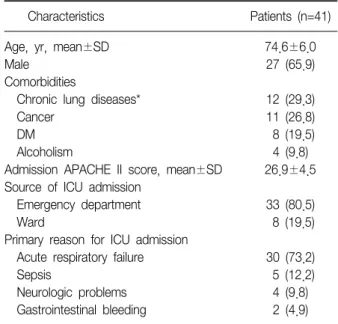
Table 1. Baseline characteristics of the patients
Characteristics Patients (n=41)
Age, yr, mean±SD 74.6±6.0
Male 27 (65.9)
Comorbidities
Chronic lung diseases* 12 (29.3)
Cancer 11 (26.8)
DM 8 (19.5)
Alcoholism 4 (9.8)
Admission APACHE II score, mean±SD 26.9±4.5 Source of ICU admission
Emergency department 33 (80.5)
Ward 8 (19.5)
Primary reason for ICU admission
Acute respiratory failure 30 (73.2)
Sepsis 5 (12.2)
Neurologic problems 4 (9.8)
Gastrointestinal bleeding 2 (4.9) SD: standard deviation; DM: diabetes mellitus; APACHE: acute physiology and chronic health evaluation; ICU: intensive care unit.
*Chronic obstructive pulmonary disease, tuberculous destroyed lung, idiopathic pulmonary fibrosis.
Values are expressed as number (percentage) unless otherwise indicated.
기관마다 달라서 담당의사가 일관성 있게 결정하기 어려 운 경우가 많다. 한국에서는 환자의 나이가 고령인 경우 에 환자 자신 혹은 가족이 중환자실에 입원하는 것을 원하 지 않거나 중환자실에 입원하더라도 기계환기나 혈액투 석 등의 적극적인 치료는 거부하는 경우가 많지만 과거에 비하면 환자의 나이가 많더라도 중환자실에서 적극적인 치료를 원하는 경우가 점차 증가하고 있다. 노인 환자 중 에는 소생할 가능성이 매우 희박하지만 단순히 생명 유지 의 수단으로 장기간 기계환기 치료를 받는 경우가 있으며 사망이 임박한 경우가 아니면 담당의사의 판단에 의해서 혹은 환자 가족의 결정에 의해서 기계환기 치료를 중단하 는 것은 현재 한국의 실정에서는 매우 어렵다. 이런 관점 에서 보면 장기간 기계환기 치료를 받는 노인 환자에 대한 연구는 향후 담당의사가 환자의 치료 방침과 예후에 대하 여 중환자실 의료진 및 환자의 가족과 원활한 의사소통을 하는데 도움이 될 것이다.
본 연구의 목적은 내과계 중환자실에 입원하여 연속해 서 30일 이상 기계환기 치료를 받은 65세 이상 노인 환자 들의 특징 및 예후를 알아보는 것이다.
대상 및 방법
2004년 4월부터 2007년 3월까지 을지대학병원 내과계 중환자실에 입원했던 환자들 중에서 연속해서 30일 이상 기계환기를 받았던 65세 이상 환자 41명을 대상으로 하였 다. 인공호흡기를 장착한 상태에서 다른 병원으로 전원을 했거나 치료를 거부하고 퇴원한 경우에는 대상에서 제외 하였다. 본원 내과계 중환자실의 병상 수는 32개이며 관 상동맥질환집중치료실과는 독립적으로 운영되었다. 중환 자실 전담의는 없으며 각 환자의 담당의사가 입원, 퇴원 및 치료 방침을 결정하였다.
본 연구는 후향적으로 진행하였으며 대상 환자들의 의 무기록을 자세히 검토하였다. 대상 환자들의 성별, 나이, 중환자실 입원 24시간 이내의 APACHE II 점수, 중환자실 입원 이유, 동반질환 등을 조사하였다. 각 환자에 대하여 중환자실 입원 경과 중 투석치료, 기관절개술, 수혈, 혈압 상승제 투여, 총 중환자실 입원 기간, 총 기계환기 기간, 사망률 등도 조사하여 사망군과 생존군 두 군간의 차이를 비교하였다. 투석치료는 급성신부전을 치료할 목적으로 시행한 경우였으며 말기신질환 환자가 정기적으로 투석 치료를 받는 경우는 제외하였다. 혈압상승제의 사용은 3 일 이상 연속해서 투여한 경우로 정의하였다.
모든 측정치는 평균과 표준편차로 표시하였으며 연속 변수는 Student's
t
-test, 범주형 변수는 Chi-square test를 이용하여 분석하였다. 통계 자료는 SPSS version 12.0을 이용하여 분석하였고 p<0.05인 경우를 통계적으로 유의 한 것으로 판정하였다.결 과
1. 대상 환자의 임상적 특징
대상 환자 41명의 평균 연령은 74.6±6.0세이었고 남자 가 27명(65.9%)이었다. 응급실에서 입원한 환자는 33명 (80.5%), 병실에서 입원한 환자는 8명(19.5%)이었다. 내 과계 중환자실로 입원한 주된 이유는 급성호흡부전 30명 (73.2%)으로 가장 많았고 패혈증 5명(12.2%), 신경계장애 4명(9.8%), 위장관출혈 2명(4.9%) 순이었다. 급성호흡부 전의 원인 질환은 폐렴 19명(46.3%), 만성폐쇄성폐질환 7명(17.1%), 특발성폐섬유증 2명(4.9%), 폐색전증 1명 (2.4%), 폐결핵 1명(2.4%) 등이었다.
평균 APACHE II 점수는 26.9±4.5이었으며 동반된 질 환은 만성폐질환 12명(29.3%), 암 11명(26.8%), 당뇨병 8
Table 2. Intensive care unit course Charateristic
Tracheostomy 22 (53.7)
Transfused patients 28 (68.3)
Dialysis in the ICU (excluding ESRD) 3 (7.3)
Use of vasopressors 29 (70.7)
Duration of ICU stay, days, mean±SD 49.3±23.0 Duration of MV, days, mean±SD 57.5±32.8
ICU mortality 25 (60.9)
ICU: intensive care unit; SD: standard deviation; ESRD: end- stage renal disease; MV: mechanical ventilation.
Values are expressed as number (percentage) unless otherwise indicated.
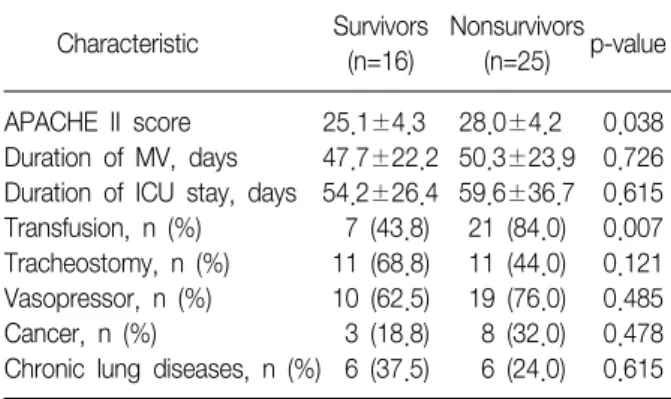
Table 3. Comparison between survivors and nonsurvivors Survivors Nonsurvivors
Characteristic p-value
(n=16) (n=25)
APACHE II score 25.1±4.3 28.0±4.2 0.038 Duration of MV, days 47.7±22.2 50.3±23.9 0.726 Duration of ICU stay, days 54.2±26.4 59.6±36.7 0.615 Transfusion, n (%) 7 (43.8) 21 (84.0) 0.007 Tracheostomy, n (%) 11 (68.8) 11 (44.0) 0.121 Vasopressor, n (%) 10 (62.5) 19 (76.0) 0.485 Cancer, n (%) 3 (18.8) 8 (32.0) 0.478 Chronic lung diseases, n (%) 6 (37.5) 6 (24.0) 0.615 APACHE: acute physiology and chronic health evaluation; SD:
standard deviation; MV: mechanical ventilation; ICU: intensive care unit.
Values are expressed as mean±SD unless otherwise indicated.
명(19.5%), 알코올중독 4명(9.8%) 등이었다(Table 1).
2. 중환자실 입원 경과
중환자실 입원기간 동안 적혈구 수혈을 받은 환자는 28 명(68.3%)이었으며 수혈 당시 평균 혈색소 수치는 7.7 g/dl이었고 중환자실 입원시부터 첫 수혈을 받기까지의 평균 기간은 6.1일이었다. 수혈 받은 이유는 낮은 혈색소 수치 24명(85.8%), 급성위장관출혈 3명(10.7%), 대량객혈 1명(3.6%) 등이었다.
기관절개술은 22명(53.7), 혈압상승제 치료는 29명 (70.7%), 투석치료는 3명(7.3%)이 시행 받았다. 대상 환 자의 중환자실 평균 입원 기간은 49.3±23.0일이었으며 기계환기의 평균 기간은 57.5±32.8일이었다. 사망한 환 자는 25명(60.9%)이었다(Table 2).
3. 사망군과 생존군의 비교
사망군과 생존군 간의 APACHE II 점수, 중환자실 입원 기간, 기계환기 기간, 치료, 동반 질환 등을 비교하였다 (Table 3). 중환자실 입원기간, 기계환기 기간, 기관절개 술, 혈압상승제 투여, 암, 만성폐질환 등은 두 군간에 유의 한 차이가 없었으나(p>0.05), APACHE II 점수(p=0.038) 와 수혈(p=0.007)은 의미 있는 차이를 보였다.
고 찰
한국은 인구 고령화가 세계에서 가장 빨리 진행되고 있 는 나라 중에 하나이다. 2003년 현재 65세 이상 노인 인구 는 전체 인구의 8.3%를 차지하고 있으며, 2030년에는
23.1%로 급격히 증가될 전망이다9. 중환자실에 입원해 있 는 환자 중 노인 환자가 많은 부분을 차지하고 있으며10 이들 중 일부는 기계환기 치료를 받고 있다. 장기간 기계 환기 치료를 받는 노인 환자들은 병원 감염 등의 합병증이 잘 발생하여 젊은 환자들에 비해 사망 위험성이 증가하는 것으로 알려져 있지만11-14 급성기를 지나면 비교적 생존율 이 양호하다는 보고15도 있다. 30일 이상 장기간 기계환기 를 받고 있는 노인 환자 중에는 원인 질환은 치료가 되었 으나 인공호흡기 이탈에 실패하여 계속 중환자실에 입원 해 있는 경우가 있고 비가역적인 저산소성 뇌손상 등과 같은 상태에서 단순히 생명 유지의 수단으로 기계환기를 받는 경우도 있다.
중환자실로 입원하는 노인 환자의 대부분이 응급실을 통하여 입원한다16. Torres 등17은 중환자실로 입원한 65세 이상 환자의 80.1%가 응급실에서 입원한다고 보고하였 다. 본 연구에서 응급실을 경유하여 중환자실로 입원한 경우가 대상 환자의 80.5%로서 이전의 연구 결과와 일치 하는 소견이었다. 중환자실에서 장기간 기계환기를 받는 노인 환자들의 예후를 알게 됨으로써 응급실에서 중환자 실로 입원하게 되는 경우와 같이 환자 상태 및 예후를 정 확하게 판단할 시간적인 여유가 없고 신속하게 입원을 결 정해야 하는 경우에 담당의사가 환자의 가족에게 예후에 대하여 비교적 명확하게 설명하는데 도움이 될 것이다.
본 연구 대상 환자의 중환자실 사망률과 병원 사망률은 각각 60.9%, 65.9%이었으며 사망에 관여하는 위험인자는 APACHE II 점수(p=0.038)와 수혈(p=0.007) 등이었다. 75 세 이상의 노인 환자를 대상으로 한 몇 연구에서 중환자실
사망률은 22∼31%이었으며 병원 사망률은 31∼42%이었 고 사망에 관여하는 인자는 APACHE II 점수, 기저질환, 병원 감염, 장기부전 등이었다18,19. 90세 이상의 초고령 환 자를 대상으로 시행한 전향적 연구에서 중환자실 사망률 이 20%이었으며 APACHE II 점수가 병원 사망률과 관련 있는 독립적인 인자로 보고되었다20. 본 연구의 사망률이 이전의 연구 결과에 비해 비교적 높게 나타났던 것은 이전 연구에서는 중환자실에 입원하는 모든 노인 환자를 대상 으로 하였기 때문에 중환자실 평균 입원 기간이 10일 미 만이었거나 기계환기를 받지 않은 환자도 포함시켰고 기 계환기를 받더라도 그 평균 기간이 10일 미만으로 짧았기 때문인 것으로 추정된다8,21. 사망률이 높게 나타났던 또 한 가지 이유는 본 연구가 내과계 중환자실만을 대상으로 했 기 때문이다. 중환자실의 종류에 따라서 사망률에도 차이 가 나는 것으로 알려져 있는데 De Rooij 등22은 내과계 중 환자실의 사망률이 외과계 중환자실의 사망률보다 높다고 보고하였다. 노인 환자의 경우에 나이 자체보다는 질병의 중증도가 중환자실 사망률에 관여하는 가장 중요한 인자로 알려져 있다18. Chelluri 등23은 중환자실로 입원한 85세 이 상의 환자를 대상으로 시행한 연구에서 APACHE II 점수가 가장 중요한 사망 예측인자라고 보고하였다.
본 연구에서 중환자실 입원 기간 동안 적혈구 수혈을 받은 환자는 28명(68.3%)이었으며 수혈을 받지 않은 환자 에 비해 사망률이 높게 나타났다. 수혈 당시 평균 혈색소 수치는 7.7 g/dl이었으며 중환자실 입원시부터 첫 수혈을 받기까지의 평균 기간은 6.1일이었다.
수혈의 빈도를 분석한 최근 수년 동안의 다기관 연구 결과에서 중환자실 입원 환자의 20∼53% 정도가 수혈을 받은 것으로 나타났으며24 수혈률은 입원 기간이 길어질 수록, 노인 환자인 경우에 증가하는 것으로 알려져 있다25. Corwin 등26은 기계환기를 받는 환자의 경우에 수혈률은 49.2%, 기계환기를 받지 않는 환자의 수혈률은 33.3% (p
<0.0001)로 보고하였으며 기계환기가 수혈률의 증가와 관계가 있다고 주장하였다. 중환자에게 시행되는 수혈은 병원 감염27, 다발성장기부전28 및 사망률의 증가25 등과 관련이 있다. 본 연구에서 대상 환자의 수혈률은 68.3%로 서 최근 수 년 동안 보고된 것보다 높게 나타났으며 그 이유는 대상 환자의 나이, 입원 기간, 기계환기 등이 수혈 률에 영향을 주었기 때문이었을 것으로 추정된다. Kha- miees 등29은 기계환기를 받는 환자의 혈색소가 10 g/dl 미만인 경우에 10 g/dl 이상인 경우 보다 발관 실패율이 5배 이상 증가한다고 보고 하였다. 그러나 다른 연구30에
의하면 기계환기 기간은 수혈을 제한한 군과 제한하지 않 은 군 사이에 차이가 없는 것으로 나타났다. 따라서 혈색 소를 높게 유지하는 것이 기계환기를 받는 환자에게 도움 이 될 것이라는 주장에 대한 근거는 현재까지 명확하지 않다. 기계환기를 받는 환자들에 대한 적절한 수혈 지침 이 없는 현재 국내 실정을 고려해 볼 때 향후 수혈이 기계 환기를 받는 노인 환자들의 예후에 미치는 영향을 알아보 기 위한 전향적 연구가 필요하다고 생각한다.
본 연구의 제한점은 첫째, 연구 기간 동안 중환자실 전 담의가 없었기 때문에 모든 대상 환자가 동일한 진료를 받았다고 간주하기 어렵다. 의료진의 수준이 환자의 생존 율과 관계가 있다는 사실을 고려해 볼 때 본 연구에서의 생존율을 일반화 하기는 어려울 것으로 생각된다. 둘째, 대상 환자수가 적었고 단일 기관에서 시행되었기 때문에 결과를 모든 환자에 적용하는 데에는 한계가 있다. 셋째, 후향적 방법을 이용했기 때문에 퇴원한 환자의 장기 추적 이 안되었다. 중환자실 퇴원 후 1년 사망률이 장기간 기계 환기를 받은 환자들의 예후를 가장 잘 반영하는 지표로 알려져 있다31. Combes 등13의 연구 결과에 의하면 14일 이상 기계환기를 받은 환자의 1년 사망률은 68%이었으며 본 연구의 경우에 대상 환자들의 1년 사망률은 기계환기 기간, 나이 등을 고려해 볼 때 이보다 더 높을 것으로 추정 된다. 넷째, 생존자에 대한 삶의 질을 평가하지 못했다.
중환자 치료의 예후 지표로 생존 여부만으로는 부족하고 삶의 질에 대한 평가가 병행되어야 한다32,33.
결론적으로 30일 이상 기계환기를 받았던 노인 환자의 중환자실 사망률은 60.9%이었으며 사망에 관여하는 위험 인자는 APACHE II 점수와 수혈 등이었다. 향후 노인 환자 들의 기계환기 치료에 대한 적절한 지침을 확립하기 위하 여 중환자실 퇴원 후 장기 사망률과 생존자에 대한 삶의 질 평가 등을 포함하는 전향적 다기관 연구가 필요하다.
요 약
연구배경: 최근 노인 인구가 급격히 증가하면서 중환자 실로 입원하는 노인 환자도 증가하는 추세이다. 내과계 중환자실에서 30일 이상 장기간 기계환기를 받은 노인 환 자들의 임상적 특징 및 예후에 대하여 알아보고자 하였다.
방 법: 2004년 4월부터 2007년 3월까지 을지대학병원 내과계 중환자실에 입원했던 환자들 중에서 연속해서 30 일 이상 기계환기를 받았던 65세 이상 환자 41명을 대상 으로 임상적 특징과 예후에 대하여 후향적으로 조사하였
다.
결 과: 대상 환자 41명의 평균 연령은 74.6±6.0세이었 고, 남자가 27명(65.9%)이었다. 중환자실로 입원한 주된 이유는 급성호흡부전 30명(73.2%)으로 가장 많았고 패혈 증 5명(12.2%), 신경계장애 4명(9.8%), 위장관출혈 2명 (4.9%) 순이었다. 평균 APACHE II 점수는 26.9±4.5이었 다. 중환자실 평균 입원 기간은 49.3±23.0일 이었으며 기 계환기의 평균 기간은 57.5±32.8일이었다. 사망한 환자는 25명(60.9%)이었으며 사망과 관련있는 인자는 APACHE II 점수(p=0.038)와 수혈(p=0.007) 등이었다.
결 론: 장기간 기계환기 치료를 받은 노인 환자들에서 호흡부전이 가장 흔한 중환자실 입원 이유이었으며 사망 률은 60.9%이었고 사망에 영향을 주는 인자는 APACHE II 점수와 수혈 등이었다.
참 고 문 헌
1. Jakob SM, Rothen HU. Intensive care 1980-1995:
changes in patient characteristics, nursing workload and outcome. Intensive Care Med 1997;23:1165-70.
2. Angus DC, Kelley MA, Schmitz RJ, White A, Popovich J Jr. Caring for the critically ill patient. Current and pro- jected workforce requirements for care of the critically ill and patients with pulmonary disease: can we meet the requirements of an aging population? JAMA 2000;
284:2762-70.
3. Hobbs F, Damon BL, Taeuber CM. Sixty-five plus in United States. Washington, D.C.: Bureau of the Cen- sus, U.S. Department of Commerce, Economics and Statistics Administration; 1996.
4. Leaf A. Sounding board. Medicine and the aged. N Engl J Med 1977;297:887-90.
5. Sage WM, Hurst CR, Silverman JF, Bortz WM 2nd.
Intensive care for elderly: outcome of elective and non-elective admissions. J Am Geriatr Soc 1987;35:
312-8.
6. Hamel MB, Phillips RS, Teno JM, Lynn J, Galanos AN, Davis RB, et al. Seriously ill hospitalized adults: do we spend less on older patients? Support Investigators.
Study to Understand Prognoses and Preference for Outcomes and Risks of Treatments. J Am Geriatr Soc 1996;44:1043-8.
7. Ely EW, Evans GW, Haponik EF. Mechanical ven- tilation in a cohort of elderly patients admitted to an intensive care unit. Ann Intern Med 1999;131:96-104.
8. Esteban A, Anzueto A, Frutos-Vivar F, Alia I, Ely EW, Brochard L, et al. Outcome of older patients receiving mechanical ventilation. Intensive Care Med 2004;30:
639-46.
9. Cho KH. The long-term care management for the eld- erly in Korea. J Korean Med Assoc 2005;48:39-47.
10. Carson SS. The epidemiology of critical illness in the elderly. Crit Care Clin 2003;19:605-17.
11. Montuclard L, Garrouste-Orgeas M, Timsit JF, Misset B, De Jonghe B, Carlet J. Outcome, functional autonomy, and quality of life of elderly patients with a long-term intensive care unit stay. Crit Care Med 2000;28:3389-95.
12. Lipsett PA, Swoboda SM, Dickerson J, Ylitalo M, Gordon T, Breslow M, et al. Survival and functional outcome after prolonged intensive care unit stay. Ann Surg 2000;231:262-8.
13. Combes A, Costa MA, Trouillet JL, Baudot J, Mokhtari M, Gibert C, et al. Morbidity, mortality, and qual- ity-of-life outcomes of patients requiring ≥ 14 days of mechanical ventilation. Crit Care Med 2003;31:1373-81.
14. Higgins TL, McGee WT, Steingrub JS, Rapoport J, Lemeshow S, Teres D. Early indicators of prolonged intensive care unit stay: impact of illness severity, physician staffing, and pre-intensive care unit length of stay. Crit Care Med 2003;31:45-51.
15. Laupland KB, Kirkpatrick AW, Kortbeek JB, Zuege DJ.
Long-term mortality outcome associated with pro- longed admission to the ICU. Chest 2006;129:954-9.
16. Boumendil A, Guidet B. Elderly patients and intensive care medicine. Intensive Care Med 2006;32:965-7.
17. Torres OH, Francia E, Longobardi V, Gich I, Benito S, Ruiz D. Short and long-term outcomes of older patients in intermediate care units. Intensive Care Med 2006;32:
1052-9.
18. Walther SM, Jonasson U. Outcome of the elderly crit- ically ill after intensive care in an era of cost contain- ment. Acta Anaesthesiol Scand 2004;48:417-22.
19. Somme D, Maillet JM, Gisselbrecht M, Novara A, Ract C, Fagon JY. Critically ill old and the oldest-old pa- tients in intensive care: short- and long-term outcomes.
Intensive Care Med 2003;29:2137-43.
20. Rellos K, Falagas ME, Vardakas KZ, Sermaides G, Michalopoulos A. Outcome of critically ill oldest-old patients (aged 90 and older) admitted to the intensive care unit. J Am Geriatr Soc 2006;54:110-4.
21. Vosylius S, Sipylaite J, Ivaskevicius J. Determinants of outcome in elderly patients admitted to the intensive care unit. Age Ageing 2005;34:157-62.
22. De Rooij SE, Govers A, Korevaar JC, Abu-Hanna A, Levi
M, de Jonge E. Short-term and long-term mortality in very elderly patients admitted to an intensive care unit.
Intensive Care Med 2006;32:1039-44.
23. Chelluri L, Pinsky MR, Grenvik AN. Outcome of in- tensive care of the "oldest-old" cirtically ill patients. Crit Care Med 1992;20:757-61.
24. Vincent JL, Piagnerelli M. Transfusion in the intensive care unit. Crit Care Med 2006;34:S96-101.
25. Vincent JL, Baron JF, Reinhart K, Gattinoni L, Thijs L, Webb A, et al. Anemia and blood transfusion in crit- ically ill patients. JAMA 2002;288:1499-507.
26. Corwin HL, Gettinger A, Pearl RG, Fink MP, Levy MM, Abraham E, et al. The CRIT study: anemia and blood transfusion in the critically ill--current clinical practice in the United States. Crit Care Med 2004;32:39-52.
27. Talyor RW, Manganaro L, O'Brien J, Trottier SJ, Parkar N, Veremakis C. Impact of allogenic packed red blood cell tranfsufion on nosocomial infection rates in the critically ill patient. Crit Care Med 2002;30:2249-54.
28. Moore FA, Moore EE, Sauaia A. Blood transfusion: an independent risk factor for postinjury multiple organ
failure. Arch Surg 1997;132:620-4.
29. Khamiees M, Raju P, DeGirolamo A, Amoateng-Adje- pong Y, Manthous CA. Predictors of extubation out- come in patients who have successfully completed a spontaneous breathing trial. Chest 2001;120:1262-70.
30. Hebert PC, Blajchman MA, Cook DJ, Yetisir E, Wells G, Marshall J. Do blood transfusions improve out- comes related to mechanical ventilation? Chest 2001;
119:1850-7.
31. MacIntyre NR, Epstein SK, Carson S, Scheinhorn D, Christopher K, Muldoon S. Management of patients re- quiring prolonged mechanical ventilation: report of a NAMDRC consensus conference. Chest 2005;128:3937- 54.
32. Chatila W, Kreimer D, Criner G. Quality of life in survi- vors of prolonged mechanical ventilatory support. Crit Care Med 2001;29:737-42.
33. Niskanen M, Ruokonen E, Takala J, Rissanen P, Kari A. Quality of life after prolonged intensive care. Crit Care Med 1999;27:1132-9.