원예과학기술지 18(6):802-807. 2000
Ri t-DNA로 형질전환된 당근 뿌리를 이용한 Arbuscular 균근균의 기내증식
조자용*․손보균1․이효연1․정순주2
남도대학 원예산업과, 1순천대학 농업생명과학대학, 2전남대학교 응용생물학부
In vitro Propagation of Arbuscular Mycorrhizal Fungi using Ri t-DNA Transformed Carrot Roots
Ja Yong Cho*, Bo-Kyoon Sohn1, Hyo-Yeon Lee1, and Soon-Ju Chung2 Dept. of Ornamental Horticulture, Namdo Provincial College, Changhung 529-850, Korea
1Dept. of Agrochemistry, Sunchon Nat’l Univ., Sunchon 540-742, Korea
2Dept. of Horticulture, Chonnam Nat’l Univ., Kwangju 500-757, Korea
*corresponding author
ABSTRACT This study was conducted to propagate the arbuscular mycorrhizal fungi in vitro using the hairy root of carrot transformed by Agrobacterium rhizogenes with Ri t-DNA. Mycorrhizal spores and roots in sudangrass plants were wet-sieved, surface-sterilized and inoculated onto the hairy root of carrot on the Modified Strullu & Romand (MSR) medium. The mycorrhizal spores of Glomus sp. propagated in vitro for 12 weeks was about 50 ㎛, and the shapes of spores were round or elliptic. Spores were formed mainly at the middle of the hyphae. Number of mycorrhizal spores propagated using dual culture of the transformed carrot roots and the mycorrhizal inoculum for 12 weeks were about 1,200 per plates.
Additional key words: Agrobacterium rhizogenes, Glomus sp., transformation
※ This research was supported by the MAF-SGRP and the KOSEF(98-11-04), 1998.
서 언
균근균(菌根菌, mycorrhizae)은 식물 뿌리와 균류간의 균근 연 합체를 의미하는 것으로 토양중의 유기․무기물질을 식물체에 공 급하여 식물의 생육을 촉진할 뿐만 아니라 근권의 수분관계를 조절 하고 병원균에 대한 조절기능을 갖는 것으로 알려져 있다(Carling 등, 1979).
현재 arbuscular 균근균(arbuscular mycorrhizal fungi; AMF)의 대량증식방법을 보면 온실내에서 폿트재배(Smith와 Read, 1997), NFT나 분무경재배(Hung과 Sylvia, 1988; Hawkins와 Eckhard, 1998) 등을 이용하여 AMF에 대한 의존성이 높은 기주작물을 재 배하여 AMF 접종원을 생산하고 있다. 그러나, 이와 같은 기존의 AMF 대량증식방법은 6개월 정도의 많은 시간이 소요되므로 원예 분야에서 AMF의 대규모적인 실용화를 제한하는 요인이 되고 있 어 이를 대체할 수 있는 새로운 배양기법이 요구되고 있다. 이러한
요구를 충족시킬 수 있는 방법으로 균근균에 감염된 기주식물의 뿌 리나 포자를 이용한 기내배양시스템을 통해 단기간에 선발균주를 증식하는 기법이 최근에 소개되고 있으나 광범위하게 활용하지 못 하고 있다(Declerck 등, 1996). 본 연구는 토착 AMF에 감염된 균 근감염 뿌리나 분리된 균근균의 단일 포자 등과 Ri T-DNA로 형 질전환된 당근의 모상근을 대치배양하여 포자형성능을 측정함으로 써 기내에서 대량생산된 AMF 접종원을 향후 실제 공정육묘나 시 설원예에 적극적으로 적용하기 위한 기초자료로 활용하기 위하여 실시하였다.
재료 및 방법
Ri t-DNA로 형질전환된 모상근 유도
당근(Daucus carota L.) 뿌리체내로의 Ri t-DNA plasmid의 삽 입은 Ark와 Thompson(1961), Tepfer와 Temp(1981) 등의 방법에 의하여 수행하여 모상근을 형성하였다. 즉, 당근의 뿌리 조직에 상 처를 내고 Agrobacterium rhizogenes를 감염시켜 Modified
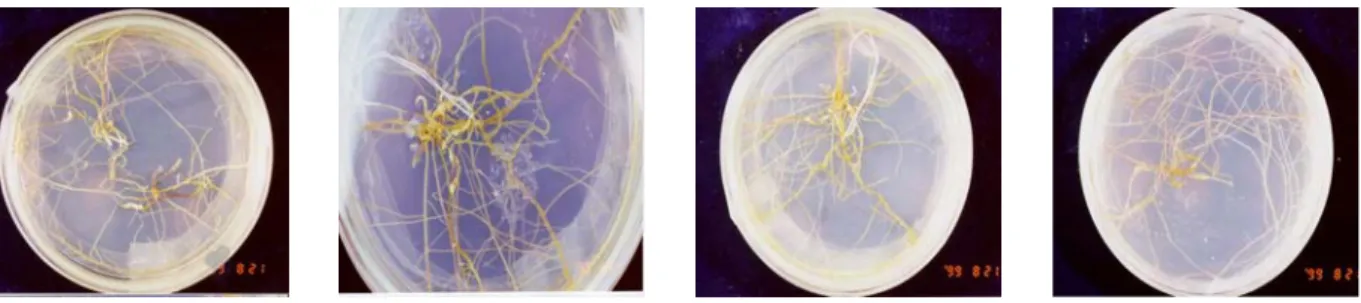
Fig. 2. Hairy roots of carrot transformed with Ri t-DNA plasmid of Agrobacterium rhizogenes.
Strullu & Romand(MSR) 배지상에서 Ri t-DNA를 갖는 형질전환 된 당근의 모상근을 유도하였다. 모상근 배양을 위한 MSR 배지 (Diop 등, 1994)의 조성은 다음과 같다. 증류수 1L당 MgSO4․ 7H2O 739㎎, KNO3 76㎎, KH2PO4 4.1㎎, Ca(NO3)2․4H2O 359㎎, NaFeEDTA 8㎎, KCl 65㎎, MnSO4․4H2O 2.45㎎, ZnSO4․7H2O 0.29㎎, H3BO3 1.86㎎, CuSO4․5H2O 0.24㎎, (NH4)6Mo7O24․4H2O 0.035㎎, Na2M oO4․2H2O 0.0024㎎, thiamine 1㎎, pyridoxine 0.9㎎, nicotinic acid 1㎎, calcium pantothenate 0.9㎎, cyanocobalamine 0.4㎎, biotine 0.9×
10-3㎎, sucrose 10,000㎎ 및 Bacto agar 8,000㎎ 등으로 조성 하였으며 pH는 5.5로 조정하였다.
기내증식을 위한 균근균 접종원
국내토착 AMF 균주를 폿트배양하였던 토양시료를 습식사별 (wet-sieving)하여 분리된 AMF 포자, 균근감염된 기주식물, 즉 수 단그라스의 뿌리 등을 AMF의 기내증식을 위한 접종원으로 이용 하였다. 포자는 4℃에서 4주 이상 저온보관하여 휴면타파 처리후 접종원으로 사용하였다. AMF 균주에 감염된 뿌리의 표면살균은 ultrasonicator(28㎑, 40분), 96% ethanol(1분), 6% sodium hypochlorite(5분), 2% Chloramine T+Tween 80/two drops(10 분), 100ppm Gentamycin+200ppm Streptomycin액(15분) 등으 로 표면살균한 후 Water agar 배지와 MSR 배지(pH는 각각 5.5로 조정, 0.8% agar) 등에 치상하여 형성된 균근균의 외부균사를 모 상근에 접종함으로써 균근균에 감염된 뿌리를 형성하였다(Diop 등, 1994). 포자의 경우는 2% Chloramine T+Tween 80/two drops(10분), 100ppm Gentamycin+200ppm Streptomycin액(15 분) 등으로 표면살균한 후 무균배지에 치상하여 AMF 포자를 발아 시켰다(Declerck 등, 1996).
대치배양(dual culture)
기내에서 균근감염된 수단그라스의 뿌리 또는 균근균 포자 등과 Ri plasmid가 삽입된 당근 모상근과의 대치배양을 이용한 균근균 포자의 대량증식은 Declerck 등(1996)과 Diop 등(1994)의 방법으 로 수행하였다(Fig. 1).
직경 9㎝의 Petri dish에 MSR 배지를 50㎖ 정도 충전하고, Ri t-DNA로 형질전환된 당근의 모상근을 70㎜ 길이로 치상하여 27℃에서 암배양하였다. 그 측면에 균근균에 감염되어 균사와 낭
상체 등에 의한 감염률이 높은 균근감염 뿌리를 5㎜ 길이로 절단 후 치상하거나 균근균 포자를 표면살균 후 접종하여 27℃(암상태) 에서 대치배양하였다. 대치배양은 10반복으로 실험을 수행하였으 며, 모상근과 균근균의 협생적 생장을 실체현미경(Olympus, PM-20)으로 검경하였다.
결과 및 고찰
Ri t-DNA plasmid가 삽입된 당근의 모상근 형성
ATCC에서 분양받은 A. rhizogenes를 이용하여 Ark와 Thompson(1961), Tepfer와 Temp(1981) 등의 방법에 의하여 당 근 뿌리에 root inducing plasmid (Ri plasmid)를 삽입하여 형성시 킨 모상근은 Fig. 2와 같다.
Ri plasmid를 갖는 A. rhizogenes는 YM 배지에서 5회 정도 계 대배양하여 균주를 활성화시킨 후, 28℃에서 48시간 정도 진탕배 양(암상태)하여 형질전환에 이용하였다. 모상근은 MSR 배지상에 서 20일 간격의 계대배양으로 대량증식시켜 균근감염뿌리, AMF 포자 등과의 대치배양에 이용하였다. 본 실험에서 Ri t-DNA로 형 질전환된 당근의 모상근은 측근의 발생이 현저히 많아졌으며, 기내 에서 연속적인 계대배양시 생장홀몬을 첨가하지 않아도 모상근이 지속적으로 생장하는 특성을 보였는데, 이는 Ark와 Thompson (1961), Tepfer와 Temp(1981) 등이 형성시킨 모상근의 생장특성
Fig. 1. Dual culture of mycorrhizal root segment (MRS) and transformed carrot root (TCR).
S
H→
CR
Fig. 3. Dual culture of germinated AMF spore and hairy root of carrot (×50) (S : AMF spore, H : hyphae, CR : carrot root).
과 일치하였다.
포자의 표면살균, 발아 및 균사유도
습식사별하여 분리된 AMF 포자는 표면살균하여 발아시킨 후 Fig. 3과 같이 모상근과의 대치배양에 이용하였다.
W ater agar 배지에 치상한 포자에서 발아되는 균사의 생장 양상 을 보면 포자에서 균사가 직선적으로 생장하는 유형, 포자와 직각 방향으로 약간 틀어지게 직선적으로 생장하는 유형 및 꼬불꼬불하 게 연속적으로 꼬여서 생장하는 유형 등으로 크게 구분되었는데, 이러한 균사의 발아 및 생장양상은 Mugnier와 Mosse(1987) 등의 연구보고와 유사하였다.
균근균의 기내증식에 관한 초기단계에서는 포자를 접종원으로 이용하려는 연구가 많았다(Strullu 등, 1991). 그러나, 포자에 미치 는 다양한 물리화학적인 배양환경의 스트레스와 포자 휴면 등으로 인해 뿌리체내의 낭상체와 뿌리내부 균사등이 많은 기주식물의 균 근감염 뿌리를 점차적으로 기내배양의 접종원으로 많이 이용하는 방향으로 전반적인 연구가 수행되었다(Strullu 등, 1991). 본 실험 의 경우도 포자를 발아시켜 배양하는 것은 확실한 균주의 속명을 구분하여 기내증식하는 이점이 있었던 반면 포자의 전반적인 발아 율이 현저히 낮아 균근감염 뿌리를 표면살균하여 기내배양을 위한 접종원으로 이용하는 측면에서 본 실험을 수행하였다.
균근감염 뿌리의 표면살균 및 균사체 유도
기내배양을 이용한 AMF 균근균 접종원의 대량생산에 대해서 지금까지 외국에서 연구보고된 결과를 보면 대부분 포자(Hepper, 1979; Hepper와 Smith, 1976; Mugnier와 Mosse, 1987), 균근균 에 감염된 기주식물의 뿌리(Declerck 등, 1998; Diop 등, 1994a, b; Plenchette 등, 1996) 등을 표면살균하여 균사체를 유도한 다음 당근 등의 모상근에 접종한 후 3 5개월의 대치배양을 통해 오염 되지 않은 순계의 AMF 접종원을 생산하고 있다.
본 실험의 경우도 AMF 포자, 균근균에 감염된 기주식물의 뿌리
등을 표면살균하여 MSR 배지에 접종하여 무균상태의 균사를 형성 한 후 당근의 모상근에 접종하여 균사와 포자 등의 AMF 접종원을 생산하는 실험을 수행한 결과, 접종원의 재료로서 포자를 이용하는 것보다는 균근감염된 기주식물의 뿌리를 이용하여 균사체를 형성 하는 것이 더 용이하다는 결과를 얻었으며, 이러한 결과는 Declerck 등(1996)과 Plenchette 등(1996)의 보고와 일치하였다.
Carling 등(1979)은 균근균에 의한 감염율이 높은 뿌리를 대치배 양의 접종원 재료로 이용하는 것이 기내에서 포자를 높은 밀도로 증식시키는 것과 밀접한 관련성을 갖는다고 보고하였다. 또한, 이 외에도 균근감염뿌리에서 분리한 낭상체와 뿌리외부에 형성되어 있는 외부균사를 이용하여 대치배양을 위한 접종원으로 이용하는 방법 등이 지금까지 보고되고 있다(Declerck 등, 1998; Diop 등, 1994; Strullu 등, 1991). 본 실험에서 포자를 무균배지상에서 발아 시키는 것이 어려웠는데 이것은 포자의 휴면타파와 관련성이 있는 것으로 생각되었다(Diop 등, 1994). 즉, 포자는 휴면타파후 발아시 켜 정상적인 활성으로 균사생장을 지속시킬 수 있는 포자의 살균방 법이 아직까지 어려웠던 반면, 균근균에 감염된 기주식물의 뿌리를 표면살균한 후에 균사체를 형성하는 방법(Diop 등, 1994)은 대체 적으로 용이했던 장점이 있어 본 실험에서 대치배양을 위한 접종원 으로서 균근감염 뿌리를 우선적으로 이용하였다(Fig. 4). 또한, 현 재 Glomus sp., Gigaspora sp. 및 Acaulospora sp. 등 다수 종의 AMF 포자를 습식사별하여 토양에서 분리하여 수분을 완전히 제 거한 후 5℃에서 5주간 저온보관하여 포자의 휴면을 타파하고 있 는 중이다. 향후 이들을 표면살균하여 Water agar 배지에서 발아 (25℃, 암실)시킨 후 당근의 모상근에 접종하여 균주의 속종별 포 자의 발아 특성을 구명할 뿐만 아니라 AMF의 종․속별 순계의 접종원을 대량생산할 필요성이 있는 것으로 생각되었다.
표면살균한 기주식물의 뿌리에서 균사가 발아되어 생장하는 양 상을 분류한 결과는 Table 1과 같다.
배지의 종류에 따라서 균근감염뿌리에서 AMF의 균사가 형성되 는 것을 보면 양분의 함량이 높은 MS 배지보다는 양분함량이 낮 은 0.5배액 MSR 배지와 양분이 거의 없는 water agar 배지에서 균사의 발생이 1 2일 정도 빨랐으나, 시간이 경과함에 따라 배지 의 종류별 균사의 생장특성은 별다른 차이가 없었다. 지금까지 기 내증식시 배지내 양분의 종류 및 함량 등과 포자증식과의 관계에 대해서 연구보고된 결과를 보면 나트륨(Hepper, 1979)뿐만 아니라 고농도의 질소, 인산 및 당 등은 균근발달에 해로운 영향을 미치며 (Becard와 Fortin, 1988), 아연과 망간 등은 포자발아를 억제하는 작용(Hepper와 Smith, 1976)을 하는 것으로 보고되고 있다. 즉, 균 근의 발달은 MS 배지 등과 같은 양분이 충분한 조건보다는 Water agar medium 등과 같이 영양분이 다소 불리한 조건하에서 균근균 과 기주체간의 공생적 발달이 왕성하게 형성되는 것으로 생각되었 다(Douds Jr, 1997; Mugnier와 Mosse, 1987; St-Arnaud 등, 1996).
H→ R
A B C D
E F G H
Fig. 4. Diurnal growth changes of hyphae for germinated arbuscular mycorrhizal fungi (×50, H : hyphae, R : ~ root).
Characteristics of the formation of AMF hyphae 1. Hyphae were formed only on the surface of the culture medium.
2. Hyphae were formed upper and/or into the culture medium.
3. Hyphae were formed mainly on the cutting surface of mycorr- hizal root. However, occasionally they were formed in the middle of the mycorrhizal root. And hyphae were mainly directed into the culture medium.
4. Hyphae were mainly formed in the middle of the mycorrhizal roots.
5. Hyphae were formed only in the ends of the mycorrhizal roots.
Table 1. Characteristics of formation and growth of AMF hyphae from the mycorrhizal roots of host plants
Cultural medium Germination of hyphae from disinfected host roots
MS medium (×1) -z
MS medium (×1/2) +
Water agar medium +++
Modified Strullu-Romand
(MSR) medium ++
z-, bad; +, good; ++, well; +++, best
Table 2. Frequency of hyphae formation as affected by the different cultural medium.
Fig. 5. AMF spores (Glomus sp.) formed using the dual culture (H : hyphae, S : spore).
Dual culture를 이용한 포자의 기내증식
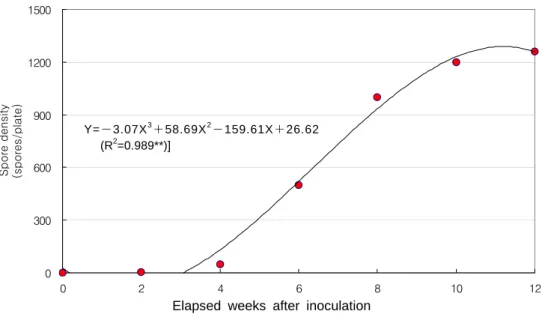
대치배양에서 가장 어려운 문제로는 균근감염 뿌리에서 나오는 균근균 이외의 세균과 진균류에 의한 오염이었다. 현재, 이에 대한 대책으로서 균근균의 균사만 분리하여 접종하는 방법을 다양한 측 면에서 비교하여 검토하고 있다. 대치배양으로 형성된 포자를 보면 Fig. 5와 같으며 포자의 크기는 직경이 약 50㎛ 정도였으며, 원형 또는 타원형의 포자가 균사의 중간에 형성되었고, 포자색은 적갈색 계통으로서, 12주 동안 plate당 평균 약 1,200개의 포자가 형성되 었다(Fig. 6).
대치배양을 통한 지금까지의 포자증식 연구를 보면 Declerck 등 (1996)은 Glomus versiforme에 감염된 leek의 뿌리를 표면살균하
여 당근 모상근에 접종한 후 5개월간 dual culture하여 약 9,500개 의 포자를 기내증식하였음을 보고하였다. 또한, Diop 등(1994)도 Glomus versiforme에 감염된 leek 뿌리를 토마토 뿌리와 3개월간 대치배양하여 약 2,000개의 포자를 증식하였음을 보고하였는데, 본 실험에서 증식된 포자밀도를 Declerck 등(1996)과 Diop 등(1994) 의 연구결과와 비교해 보면 다소 낮은 밀도로 포자가 증식되었음을 보여주었다. 또한, 포자크기를 비교해 보면 Declerck 등(1996)과 Diop 등(1994)이 증식한 포자는 직경이 약 50 60㎛ 크기로서 본 실험에서 배양된 포자크기와 거의 비슷한 결과를 보였다.
초 록
Agrobacterium rhizogenes의 Ri t-DNA로 형질전환된 당근의 모상근에 Glomus sp.를 감염시킨후 arbuscular 균근균 포자를 Modified Strullu & Romand 배지상에서 12주 동안 기내증식하였 다. 기내증식을 위한 접종원으로는 포자보다는 균근감염 뿌리가 더 좋았다. 당근 모상근과 arbuscular 균근균의 대치배양으로 증식된
A B
H→
S→
0 300 600 900 1200 1500
0 2 4 6 8 10 12
Elapsed weeks after inoculation Spore density (spores/plate)
Fig. 6. Changes in spore density of Glomus sp. in in vitro propagation during experimental periods.
Glomus sp.의 포자는 직경 약 50㎛ 정도의 원형 또는 타원형의 포 자로서 균사의 중간부위에서 형성되었다. 12주 동안 기내에서 대치 배양한 결과 plate 당 약 1,200개 정도의 arbuscular 균근균 포자를 생산하였다.
추가 주요어:Agrobacterium rhizogenes, 형질전환, Glomus sp.
인용문헌
Ark, P.A. and J.P. Thompson. 1961. Detection of hairy root patho- gen, Agrobacterium rhizogenes, by the use of fleshy roots.
Phytopathology 51:69-71.
Becard, G. and J.A. Fortin. 1988. Early events of vesicular-arbus- cular mycorrhiza formation on Ri T-DNA transformed roots.
New Phytologist 108:211-218.
Carling, D.E., M.F. Brown. and R.A. Brown. 1979. Colonization rates and growth responses of soybean plants infected by vesicular-arbuscular mycorrhizal fungi. Can. J. Botany 57:1769- 1772.
Declerck, S., D.G. Strullu, and C. Plenchette. 1996. In vitro mass-production of the arbuscular mycorrhizal fungus, Glomus versiforme, associated with Ri T-DNA transformed carrot roots.
Mycol. Res. 100(10):1237-1242.
Declerck, S., D.G. Strullu., and C. Plenchette. 1998. Monoxenic culture of the intraradical forms of Glomus sp. isolated from a tropical ecosystem: a proposed methodology for germplasm collection. Mycologia 90(4):579-585.
Diop, T.A., C. Plenchette, and D.G. Strullu. 1994. Dual axenic culture of sheared-root inocula of vesicular-arbuscular mycorr-
hizal fungi associated with tomato roots. Mycorrhiza 5:17-22.
Diop, T.A., C. Plenchette. and D.G. Strullu. 1994. In vitro culture of sheared mycorrhizal roots. Symbiosis 17:217-227.
Douds Jr, D.D. 1997. A Procedure for the establishment of Glomus mosseae in dual culture with Ri T-DNA-transformed carrot roots. Mycorrhiza 7(2):57-61.
Hawkins, H.J. and G. Eckhard. 1998. Substrate-free culture of mycorrhizal plants : Aeroponic, nutrient flow and hydroponic culture, In Mirobes : For Health Wealth and Sustainable Envi- ronment. Ed. A. Varma, pp. 809-826. MPH, New Delhi.
Hepper, C.M. 1979. Germination and growth of Glomus caledonius spores: the effects of inhibitors and nutrients. Soil Biology and Biochemistry 11:269-277.
Hepper, C.M. and G.A. Smith. 1976. Observations on the germina- tion of endogone spores. Transactions of the British Mycolo- gical Society 66:189-194.
Hung, L.L. and D.M. Sylvia. 1988. Production of vesicular-arbu- scular mycorrhizal fungus inoculum in aeroponic culture. Appl.
Environ. Microbiol. 54(2):353-357.
Mugnier, J. and B. Mosse. 1987. Vesicular-arbuscular mycorrhizal infection in transformed root-inducing T-DNA roots grown axenically. Phytopathology 77(7):1045-1050.
Plenchette, C., S. Declerck., T.A. Diop. and D.G. Strullu. 1996.
Infectivity of monoxenic subcultures of the arbuscular mycorr- hizal fungus Glomus versiforme associated with Ri-T-DNA- transformed carrot root. Appl. Microbiol. Biotechnol. 46:545- 548.
Smith, S.E. and D.J. Read. 1997. Mycorrhizal symbiosis(2nd. Ed.).
Academic Press, New York.
St-Arnaud, M., C. Hamel., B. Vimard., M. Caron. and J.A. Fortin.
Y=-3.07X3+58.69X2-159.61X+26.62 (R2=0.989**)]
Elapsed weeks after inoculation
1996. Enhanced hyphal growth and spore production of the arbuscular mycorrhizal fungus Glomus intraradices in an in vitro system in the absence of host roots. Mycol. Res.
100(3):328-332.
Strullu, D.G., C. Romand. and C. Plenchette. 1991. Axenic culture
and encapsulation of the intraradical formes of Glomus sp. J.
Microbiol. Biotechnol. 7:292-297.
Tepfer, D. and J. Temp . 1981. Production d’agropine par des racines form es sous l’action d’Agrobacterium rhizogenes, souche A4. C. R. Acad. Sci., Paris 292:153-156.