Received: May 27, 2014, Revised: July 21, 2014, Accepted: July 22, 2014 ISSN 1598-4478 (Print) / ISSN 2233-7679 (Online)
†
Correspondence to: Hee-Eun Kim
Department of Dental Hygiene, College of Health Science, Gachon University, 191, Hambangmoe-ro, Yeonsu-gu, Incheon 406-799, Korea Tel: +82-32-820-4414, Fax: +82-32-820-4370, E-mail: [email protected]
Copyright © 2014 by the Korean Society of Dental Hygiene Science
Consolidated Standards of Reporting Trials의 소개:
무작위 대조군 연구의 보고 지침
정회인⋅김희은
1†
연세대학교 치과대학 예방치과학교실, 1가천대학교 보건과학대학 치위생학과
Consolidated Standards of Reporting Trials:
The Reporting Guideline for Randomized Controlled Trials
Hoi-In Jung and Hee-Eun Kim
1†Department of Preventive Dentistry and Public Oral Health, College of Dentistry, Yonsei University, Seoul 120-752,
1
Department of Dental Hygiene, College of Health Science, Gachon University, Incheon 406-799, Korea
Recently, there are lots methodologies to improve the quality of research in medical and public health fields. One of them is to checking a process of research with a reporting guideline before reporting paper. Especially, reporting guideline for randomized controlled trials (RCTs) is the consolidated standards of reporting trials (CONSORT). Therefore, this review describes the latest version of the CONSORT statement, CONSORT 2010, including intent, background, and contents of this. The CONSORT statement comprises a checklist of essential items that should be included in reports of RCTs and a diagram for documenting the flow of participants through a trial. This report guideline aims at providing guidance to authors about how to improve the reporting of their trials. As consulting the CONSORT, authors could be strictly reported about research methods and results. From this review, we expect to elevate the quality of such research about dental hygiene and to establish the foundation for evidence-based dental hygiene.
Key Words: Clinical trial, Evidence-based practice, Randomization, Research report
서 론
수많은 연구자들은 자신이 수행한 연구 결과를 논문이라 는 형식을 빌어 보고하고, 이를 통해 독자들은 해당 연구의 가치를 판단하고 실용 가능성을 가늠한다. 특히, 의료ㆍ보 건 분야의 연구 결과는 의료정책 입안이나 공중보건사업 추 진 및 신의료기술 등재 등 관련 제도와 정책 변화에 절대적 영향력을 가질 뿐만 아니라 의학적 패러다임을 변화시킬 수 있다. 이러한 이유로 최근 들어 의료⋅보건 분야의 학술단 체는 객관적 근거를 바탕으로 연구가 수행될 수 있도록 노 력하고 있으며, 이렇게 얻어진 결과를 바탕으로 하는 근거
기반의 의사 결정을 강조하고 있다. 연구의 계획에서부터 진행 과정과 결과 보고에 이르기까지 각 수행 단계의 객관 성과 정확성 및 윤리성에 대한 모니터링은 지속적인 관심의 대상이 되고 있다. 유수의 의학연구 저널의 편집자들은 투 고된 연구 논문의 연구 방법 및 결과를 투명하게 공개하고 표준화된 지침에 따라 객관적으로 평가할 필요성을 제기하 였다. 따라서 그들은 연구 진행 중 간과될 수 있는 부분에 대 한 사전 점검을 위하여 연구 보고에 필수적인 중요 정보 제 공을 위한 보고 지침(reporting guideline)을 개발하기 시작 하였다.
우리나라 치위생 분야의 연구 동향을 분석한 선행연구에
따르면, 과거 12년 동안 한국치위생과학회지에 게재된 치위 생 연구 중 설문지법을 이용한 단면 연구가 72.3%로 분석되 어 가장 큰 비율을 차지하는 것으로 나타났다
1). 이러한 연구 경향은 치위생 분야의 타 학회지도 비슷한 상황이었다. 이 선행연구는 최근 의료ㆍ보건 계열의 전반적인 연구 동향을 볼 때, 치위생계에서도 편향된 연구 수행에서 벗어나 임상 시험이나 치위생 중재와 같은 근거 기반의 실무(evidence- based practice, EBP)를 발전시킬 수 있는 다양한 주제로의 접근이 필요하다고 하였다. 이와 더불어 한국치위생과학회 지의 논문 심사의 평가 기준을 더욱 강화하여 향후 게재될 논문의 질적 향상을 도모할 필요가 있음을 제안하였다. 이 러한 근거 기반의 연구 추세에 발맞추고 치위생 관련 학술 지의 질적 발전을 도모하기 위해서는 앞서 언급한 것처럼 연구 방법론의 정확성과 신뢰성을 갖추기 위한 제도적 장치 를 마련할 필요가 있다.
이미 New England Journal of Medicine (NEJM), Lancet, Journal of the American Medical Association (JAMA), British Medical Journal (BMJ)과 같은 세계 유수의 학술지 들은 논문 제출 시, 일정한 양식의 보고 지침을 따르도록 권 고함으로써 연구보고의 질적 향상을 도모하고 있다. 이러한 보고 지침의 대표적인 양식은 무작위 대조군 연구(rando- mized controlled trials, RCTs)를 위한 보고 지침인 con- solidated standards of reporting trials (CONSORT), 진단 정확도에 대한 연구(diagnostic accuracy studies)의 완결성 을 위한 standards for the reporting of diagnostic accuracy studies (STARD), 코호트 연구, 환자-대조군 연구, 단면 연구 등 관찰 연구의 평가 도구로 개발된 strengthening the repor- ting of observational studies in epidemiology (STROBE), 문헌 분석과 메타 분석 연구의 질을 평가하는 preferred reporting items for systematic reviews and meta-analyses (PRISMA) 등이 있다. 이들 중 특히 CONSORT는 학계 내 에서 활발히 활용되고 있는데, 현재 PubMed에 등록된 의학 잡지의 50% 이상이 이 보고 지침에 따라 연구 결과를 보고 할 것을 권고하고 있다
2,3). 이는 CONSORT의 평가 대상인 RCTs가 근거 기반적 접근의 핵심적인 방법론이기 때문으 로 생각된다. 따라서 본 연구는 CONSORT의 내용과 특징 을 소개함으로써 치위생 연구의 계획 및 수행에 도움을 주 고 더 나아가 EBP의 활성화에 기여하고자 한다.
본 론
1. CONSORT의 소개
CONSORT는 경험적 근거(empirical evidence)를 제공
하는 700여 개의 연구 자료를 기반으로 1996년에 임상 연구 자, 통계학자를 포함한 연구 방법론자, 역학자, 의학관련 학 술지 편집자 등이 참여하여 만든 RCTs를 위한 보고 지침의 일종이다
4). CONSORT는 논문 저자들에게 시험 보고를 개 선하기 위한 방법에 대한 지침을 제공하는 것을 최우선의 목적으로 한다. 이 보고 지침을 활용함으로써 연구자들은 자칫 소홀할 수 있는 임상 시험의 내ㆍ외적 타당도를 점검 할 수 있기 때문에 임상 시험 보고의 질적 향상을 도모할 수 있다.
CONSORT는 1996년 최초로 발표된 이래 끊임없이 학술 계의 제안 및 요구를 반영하여 2001년과 2010년 2회에 걸 쳐서 개정되었고, 다양한 확장판과 각 항목에 대한 배경과 근거를 자세히 기술한 해설판 등을 내놓았다
5-12). CONSORT 는 발표 1년 만에 “RCTs에 대한 더 나은 보고”
13), “근거 기 반 보건의료를 향한 중요한 한 발자국”
14), “편향되지 않은 연구를 위한 과제”
15)라는 제목으로 여러 의학 학술지에 그 내용이 소개되었다. 저자들은 논문 작성단계는 물론이고 연 구설계 시점부터 CONSORT의 각 항목을 참고함으로써 연 구의 질을 향상시키고, 독자나 편집자는 연구 결과의 도출 과정을 평가하는 데 이 보고 지침을 활용할 수 있다
16). 여러 선행연구들은 연구 진행 과정 중에 이 보고 지침을 준수하 도록 한 결과, 실제로 RCTs들의 질이 향상되었다고 보고하
였다
17,18). 이러한 성과는 RCTs 외의 다른 종류의 연구를 진
행함에 있어서도 이와 유사한 보고 지침을 따르도록 권고하 는 계기가 되었다
19).
2. CONSORT 2010 statement의 구성
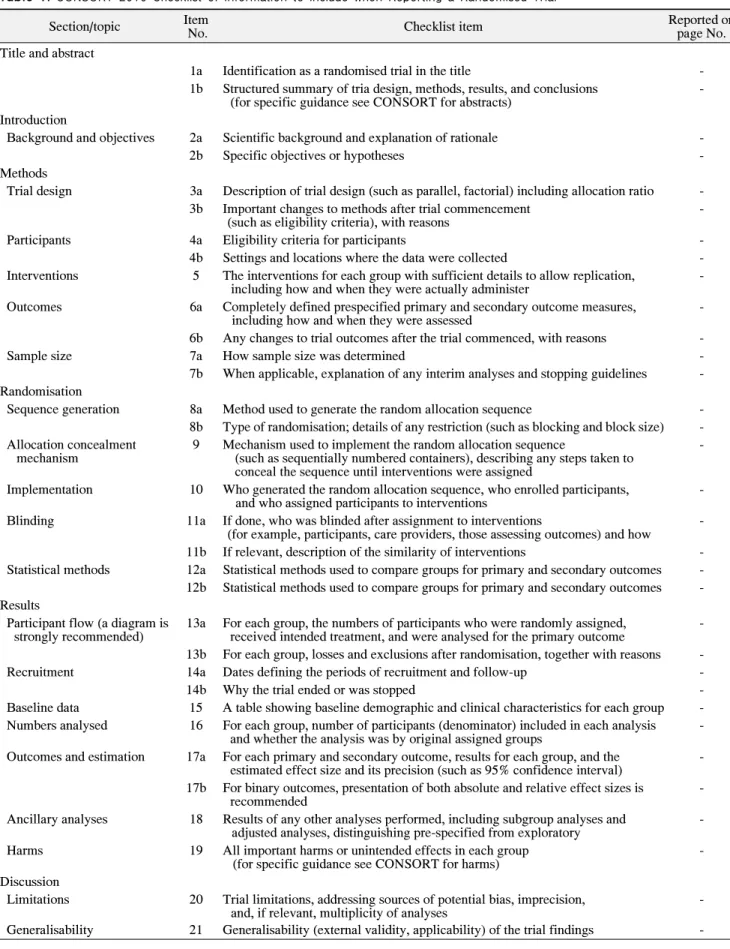
2010년에 개정된 CONSORT 2010 statement는 RCT 보 고서에 포함되어야 할 필수 항목인 체크 리스트(check list;
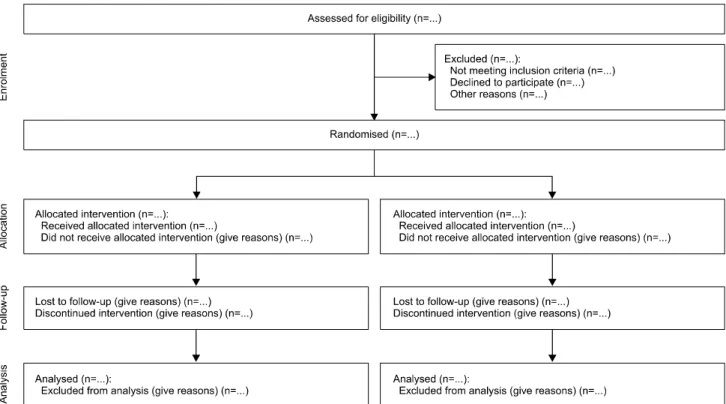
Table 1)와 피험자들이 연구에 참여한 과정을 도식화하기
위한 순서도(flow chart; Fig. 1)로 구성되어 있다
4). 체크 리
스트는 25개의 항목으로 이루어져 있는데 하나의 항목이 보
다 세분화된 항목으로 나누어져 있는 경우가 있기 때문에
이를 독립적인 것으로 볼 경우 총 37개의 항목으로 이루어
져 있고, 연구자는 각각의 항목을 근거에 입각하여 보고하
여야 한다. 순서도는 연구의 참가자가 선정되고 무작위 배
정되는 때부터 연구 종료 시점까지 피험자의 참여 사항을
연구 진행 과정과 접목하여 명확한 그림으로 나타낼 수 있
도록 구성되어있다. 일반적으로 CONSORT를 채택한 학술
지들은 CONSORT를 개발한 그룹에서 권고하는 것처럼 제
시된 양식을 변경하지 않고 그대로 사용하고 있다
20). 체크
리스트의 각 항목들은 논문 서술의 일반적 양식에 따라 제
목 및 초록, 서론, 연구방법, 연구결과, 고찰로 분류되어 구
Table 1. CONSORT 2010 Checklist of Information to include when Reporting a Randomised Trial
Section/topic Item
No. Checklist item Reported on
page No.
Title and abstract
1a Identification as a randomised trial in the title -
1b Structured summary of tria design, methods, results, and conclusions
(for specific guidance see CONSORT for abstracts) -
Introduction
Background and objectives 2a Scientific background and explanation of rationale -
2b Specific objectives or hypotheses -
Methods
Trial design 3a Description of trial design (such as parallel, factorial) including allocation ratio - 3b Important changes to methods after trial commencement
(such as eligibility criteria), with reasons -
Participants 4a Eligibility criteria for participants -
4b Settings and locations where the data were collected -
Interventions 5 The interventions for each group with sufficient details to allow replication,
including how and when they were actually administer -
Outcomes 6a Completely defined prespecified primary and secondary outcome measures,
including how and when they were assessed -
6b Any changes to trial outcomes after the trial commenced, with reasons -
Sample size 7a How sample size was determined -
7b When applicable, explanation of any interim analyses and stopping guidelines - Randomisation
Sequence generation 8a Method used to generate the random allocation sequence -
8b Type of randomisation; details of any restriction (such as blocking and block size) - Allocation concealment
mechanism 9 Mechanism used to implement the random allocation sequence
(such as sequentially numbered containers), describing any steps taken to conceal the sequence until interventions were assigned
-
Implementation 10 Who generated the random allocation sequence, who enrolled participants,
and who assigned participants to interventions -
Blinding 11a If done, who was blinded after assignment to interventions
(for example, participants, care providers, those assessing outcomes) and how - 11b If relevant, description of the similarity of interventions - Statistical methods 12a Statistical methods used to compare groups for primary and secondary outcomes - 12b Statistical methods used to compare groups for primary and secondary outcomes - Results
Participant flow (a diagram is
strongly recommended) 13a For each group, the numbers of participants who were randomly assigned,
received intended treatment, and were analysed for the primary outcome - 13b For each group, losses and exclusions after randomisation, together with reasons -
Recruitment 14a Dates defining the periods of recruitment and follow-up -
14b Why the trial ended or was stopped -
Baseline data 15 A table showing baseline demographic and clinical characteristics for each group - Numbers analysed 16 For each group, number of participants (denominator) included in each analysis
and whether the analysis was by original assigned groups - Outcomes and estimation 17a For each primary and secondary outcome, results for each group, and the
estimated effect size and its precision (such as 95% confidence interval) - 17b For binary outcomes, presentation of both absolute and relative effect sizes is
recommended -
Ancillary analyses 18 Results of any other analyses performed, including subgroup analyses and
adjusted analyses, distinguishing pre-specified from exploratory - Harms 19 All important harms or unintended effects in each group
(for specific guidance see CONSORT for harms) -
Discussion
Limitations 20 Trial limitations, addressing sources of potential bias, imprecision,
and, if relevant, multiplicity of analyses -
Generalisability 21 Generalisability (external validity, applicability) of the trial findings -
Table 1. Continued.
Section/topic Item
No. Checklist item Reported on
page No.
Discussion
Interpretation 22 Interpretation consistent with results, balancing benefits and harms, and
considering other relevant evidence -
Other information
Registration 23 Registration number and name of trial registry -
Protocol 24 Where the full trial protocol can be accessed, if available -
Funding 25 Sources of funding and other support (such as supply of drugs), role of funders - Adapted from the article of Schulz et al. (BMC Med 8: 18, 2010)
6).
CONSORT: consolidated standards of reporting trials.
Fig. 1. Flow diagram of the progress through the phases of a parallel randomized trial of two groups (that is, enrolment, intervention allocation, follow-up, and data analysis).
성되었다. 그리고 피험자 등록, 연구 진행 방법 및 연구비 지 원 기관에 대한 항목은 기타 정보로 구분되어 있다. 이들 항 목을 자세히 기술하면 다음과 같다.
1) 제목 및 초록
체크 리스트의 1a 항목은 제목에 피험자가 ‘무작위 배정’
된 연구임을 표시하도록 하였다. 이는 해당 연구의 성격을 확실하게 나타낼 수 있도록 하기 위함이다. 1b 항목은 초록 에 대한 것으로 연구 설계, 연구 방법, 연구 결과, 결론을 구 조화하여 요약하도록 하였다. 초록은 독자가 해당 논문을 평가하는 첫 번째 기준이기 때문에 간단하지만 필요한 정보
를 충분히 포함하고 있어야 한다. 초록에 대한 보다 구체적 인 지침은 별도로 기술된 문서인 초록을 위한 CONSORT
21)와 그 해설판
22)을 참고할 것을 권고한다.
2) 서론
체크 리스트의 2a 항목은 해당 연구에 대한 과학적인 배
경과 논리적 근거를 제공하도록 하였고, 필요한 경우 연구
에 적용한 중재 방법에 대한 장ㆍ단점 등을 제시하도록 하
였다. 2b 항목은 구체적인 연구 가설과 연구 목적을 구체적
으로 서술하도록 하였다. 연구 가설과 목적의 구분이 모호
할 수도 있으나, 연구 가설은 연구 목적보다 조금 더 구체적
으로 표현되도록 하였다.
3) 연구 방법
CONSORT는 연구가 적절한 방법으로 수행되도록 하고 이를 잘 보고할 수 있도록 할 목적으로 개발되었기 때문에 연구 방법과 연구 결과에 대한 권고안을 수록한 체크 리스 트의 3a에서 19까지의 항목들이 CONSORT 보고 지침의 핵심이라고 할 수 있다.
3a 항목은 병렬 설계, 요인 설계 등 연구 설계의 종류에 대 하여 기술하고 피험자들을 실험군과 대조군에 어떠한 비율 로 할당하였는지 밝히도록 하였다. 3b 항목에서는 연구 개 시 후에 연구 참여 및 제외 조건과 같이 연구 프로토콜 중에 서 중요한 부분을 변경한 경우 이 사실과 이를 변경한 이유 를 함께 명시하도록 하였다. 4a 항목은 연구 참여 및 제외 조 건을, 4b 항목은 연구 자료를 수집한 기관과 장소를 밝히도 록 하였다. 5 항목은 중재에 대한 것이다. 각 군에 적용한 중 재법을 자세히 설명하여 다른 연구에서 재현(replication)할 수 있도록 하였다. 또한 이러한 중재가 실제로 언제, 어떻게 수행되었는지를 보고하도록 하였다. 6a 항목은 일차 그리고 이차 결과변수(outcome)에 대한 정의와 이 결과들을 평가 한 방법을 기술하도록 하였다. 여기서 결과변수는 임상 연 구에서 중재의 효과를 나타내는 지표 또는 측정치이다. 6b 항목은 3b 항목과 유사하게 연구 개시 이후 연구의 결과변 수가 다른 것으로 바뀌었을 경우 변경된 사실과 그 이유를 명시하도록 하였다. 7a 항목은 표본 크기를 어떻게 결정하 였는지에 대한 것이다. 일부 임상 연구는 최종 목표로 한 표 본 크기에 이르기 전에 중간 분석(interin analysis)을 수행함 으로써 조기에 연구를 종료할 수 있는 지침을 연구 프로토 콜에 포함시키기도 한다. 7b 항목은 이러한 경우에 대한 것 이다. 8a부터 10 항목까지는 무작위 배정에 대한 항목들이 다. 무작위 배정은 사람을 대상으로 한 임상연구가 인과 관 계를 추론하기 위한 실험 연구로서 기능할 수 있도록 해주 는 핵심이다. 8a는 무작위 배정을 하기 위한 순서(sequence) 를 만든 방법을, 8b 항목은 연구에서 사용한 무작위 배정의 유형을 자세히 밝히도록 하였다. 예를 들어 블록 무작위 배 정(block randomization)을 이용한 경우 블록의 크기와 구 조 등에 대하여 기술하도록 하였다. 9 항목은 무작위 배정의 효과가 충분하게 작용할 수 있게 해주는 눈가림(blindness) 을 가능하게 하기 위하여 무작위 배정 단계에서 배정 은폐 (concealment)가 어떻게 이루어졌는지 기술하도록 하였다.
10 항목은 무작위 배정 순서를 만든 사람과 피험자를 연구 에 등록한 사람, 그리고 피험자를 각 중재로 배정한 사람을 각각 기술하도록 하였다. 11a와 11b 항목은 눈가림에 대한
것이다. 11a는 중재에 대한 배정을 마친 후 눈가림이 유지된 사람들이 누구인지 기술하도록 하였다. 12a와 12b 항목은 통계 분석 방법에 대한 것이다. 12a 항목은 중재군에 대하여 일차 결과변수와 이차 결과변수를 비교하기 위해 사용한 분 석법을, 12b 항목은 하위군(subgroup) 분석과 같은 부가적 분석을 기술하도록 하였다.
4) 연구 결과
CONSORT는 연구 결과에 피험자가 연구 진행에 참여한 과정을 도식화한 순서도를 포함시킬 것을 강력히 권장하며 구체적인 틀을 제시하고 있다(Fig. 1). 체크 리스트의 13a는 임의 배정된 피험자 수, 배정된 중재를 받은 피험자 수, 일차 결과변수 분석이 이루어진 피험자 수를 각각 기술하도록 하 였다. 무작위 배정된 피험자 수와 배정된 중재를 받은 피험 자 수, 그리고 일차 결과 분석이 이루어진 피험자 수는 서로 상이할 수 있다. 그 이유는 A 중재로 배정을 받았지만 중재 제공자의 실수로 B 중재를 받은 경우, 피험자가 추적 기간 을 포함하여 여러 번의 내원이 필요함에도 불구하고 중도에 내원을 중단한 경우 등으로 다양하다. 13b는 이와 같이 무작 위 배정 이후 발생한 중도 탈락 또는 제외된 피험자의 수와 그 이유를 기술하도록 하였다. 14a와 14b 항목은 피험자 모 집에 대한 것으로 피험자 모집 기간과 추적 기간, 연구가 완 료되거나 중도 종료된 이유에 대하여 기술하도록 하였다.
15 항목과 16 항목에서는 중재가 이루어지기 전 각 중재군 의 인구사회학적 특성 및 임상적 특성이 어떠했는지 표 형 식으로 정리하고 중재가 이루어진 후 각 분석마다 대상자 수가 어떠했는지 명시하도록 하였다. 17a와 17b 항목은 연 구의 최종 결과에 해당하는 부분으로 일차 결과변수와 이차 결과변수 측정값, 추정된 효과 크기와 그 정도(precision)를 95% 신뢰구간과 같은 형태로 기술하도록 하였고 이분형 결 과변수인 경우에는 절대적 효과 크기와 상대적 효과 크기를 모두 기술할 것을 권고하였다. 18 항목에서는 미리 계획된 분석으로서 탐색적 분석과는 구분되는 부가적 분석을 한 경 우를 기술하도록 하였다. 연구 결과 부분의 마지막 항목인 19 항목은 연구 도중 발생한 위해에 대한 것이다. 중요한 위 해와 예상하지 못했던 부작용이 있는 경우 이를 기술하도록 했으며 이에 대한 보다 구체적인 지침인 위해를 위한 CONSORT
23)를 참고하도록 제안하였다.
5) 고찰
체크 리스트의 20 항목은 연구의 한계에 대한 것으로 편
의(bias) 또는 부정확성을 발생시킬 수 있는 요인(source)을
밝히고 다중 비교에 의해 유의한 결과가 발생되었을 가능성
이 있다면 이에 대해서도 기술하도록 하고 있다. 21 항목은 연구 결과가 외적 타당도와 적용 가능성을 갖춤으로써 일반 화될 수 있는 것인지를 기술하도록 하였다. 22 항목은 연구 결과와 일치하는 해석을 제시하되 중재의 이점과 위험을 균 형 있게 기술하도록 하였고 선행 연구의 결과도 고려할 것 을 권고하였다.
6) 기타 정보
체크 리스트의 23 항목은 연구 등록 정보를, 24 항목은 최 종 프로토콜의 공개 여부를, 25 항목은 연구비 지원 정보를 기술하도록 하고 있다. 국내에서 제공되는 연구등록시스템 은 질병관리본부의 임상연구정보서비스(clinical research information service, CRIS)이다. 최종 프로토콜을 공개하 는 것은 재현 가능성을 높여주므로 외적 타당도 향상에 기 여한다.
결 론
근거 기반 의학(evidence-based medicine)은 1992년 임 상역학자인 Gordon Guyatt 등에 의해 처음으로 이름 지어 진 이래 임상의학의 주요 방법론으로서 굳건하게 자리매김 하였다
24). 현재 근거 기반적 접근(evidence-based approach) 은 근거기반 치의학, 근거 기반 보건의료, 근거 기반 간호학 등 의학 외의 보건의료 영역에서도 보편적으로 쓰이고 있으 며 이를 임상 현장에 적용하는 EBP에 대한 요구와 관심 또 한 높아지고 있다
25). 또한 건강보험심사평가원에서 근거 문 헌 활용지침을 발간하는 등 의료 정책 결정 기관에서 근거 기반의 결정을 강조함에 따라 근거기반적 접근은 치위생 실 무의 발전과 연관성이 클 것으로 생각된다.
EBP의 정의는 환자를 치료함에 있어서 최신 그리고 최선 의 근거를 이용하는 것이다. 이는 타당성 있는 연구로부터 얻어진 근거를 수집, 평가, 통합한 결과와 임상가의 전문적 의견, 환자와 환자 가족의 가치관 및 선호도를 함께 고려하 여 이를 임상적 결정에 이용함으로써 이루어진다. EBP는 여러 연구들의 결과를 적절하게 종합(synthesis)하여 내린 결론을 임상에 적용한다는 점에서 단일 연구의 결과를 임상 에 적용하는 연구 활용(research utilization)과 차이가 있다.
따라서 EBP를 임상 현장에 정립시키기 위해서는 질 평가를 거쳐서 타당성을 인정받은 연구들이 다수 필요하다. 이러한 근거 기반적 접근을 가능하게 하는 연구방법은 RCTs가 대 표적이다. 이 연구방법은 서로 다른 중재의 효과를 비교할 수 있는 가장 좋은 방법론으로서 인과 관계를 타당하게 추 론할 수 있다. 그러나 부적절하게 연구가 수행될 경우 편향
된 결과를 도출함으로써 올바른 임상 및 정책적 결정에 위 해를 가할 수 있다. 따라서 RCTs의 질적 향상을 도모하기 위하여 CONSORT를 준수하는 것은 치위생 연구의 타당성 을 인정받는 바탕이 되며, 이를 통한 질 높은 근거 기반적 접 근은 치위생 실무의 질 또한 향상시킬 것으로 생각된다. 이 와 더불어 향후 우리 치위생계에도 CONSORT와 같은 표준 화된 보고 지침을 도입하여 치위생 관련 연구 과정에 강력 한 근거를 제시함으로써 국민의 구강건강 향상은 물론이고 치위생학의 학문적 정립과 임상 치위생학의 발전을 도모할 수 있을 것으로 기대한다.
본 연구에서는 임상연구의 대표적인 형태인 RCTs에 대 한 평가 도구인 CONSORT의 내용만을 소개하였으나, 이 보고지침이 모든 임상 연구의 보고 지침이 될 수는 없다. 앞 서 언급하였듯이 다양한 형태의 임상 연구에 부합하는 여러 보고지침들이 개발되어 있기 때문에 향후에는 STROBE나 PRISMA와 같은 보고 지침에 대한 고찰도 필요하리라 생각 된다.
요 약
세계 유수의 의학관련 연구 저널의 편집자들은 제출된 원 고의 질을 관리하기 위하여 연구진행의 가이드라인 역할을 할 수 있는 보고 지침을 개발하여 평가에 적용하고 있다. 따 라서 본 연구는 RCTs를 위한 보고 지침인 CONSORT의 2010년 개정판 내용과 특징을 소개함으로써 치위생 연구의 계획 및 수행에 도움을 주고 더 나아가 EBP의 활성화에 기 여하고자 하였다. CONSORT는 시험 보고의 질을 향상시 킬 수 있도록 논문 저자들에게 보고 지침을 제공한다. 이 보 고 지침은 RCTs 보고서에 반드시 포함되어야 할 필수 항목 인 25개의 체크 리스트와 연구 과정의 도식화를 위한 순서 도를 제시한다. 저자들은 연구 설계 시점부터 CONSORT 의 각 항목을 참고함으로써 연구의 질을 향상시킬 수 있다.
따라서 우리 치위생계에서도 이러한 보고지침을 준수함으 로써 치위생 연구의 타당성을 높이고, 이러한 연구 결과를 질 높은 근거 기반적 치위생 실무로 접목시켜 발전시킬 수 있을 것으로 생각된다.
References