D I A B E T E S & M E T A B O L I S M J O U R N A L
This is an Open Access article distributed under the terms of the Creative Commons Attribution Non-Commercial License (http://creativecommons.org/licenses/by-nc/4.0/) which permits unrestricted non-commercial use, distribution, and reproduction in any medium, provided the original work is properly cited.
Gemigliptin: An Update of Its Clinical Use in the Management of Type 2 Diabetes Mellitus
Sung-Ho Kim1, Jung-Hwa Yoo1, Woo Je Lee2, Cheol-Young Park3
1LG Life Sciences Ltd., R&D Park, Daejeon,
2Department of Internal Medicine, Asan Medical Center, University of Ulsan College of Medicine, Seoul,
3 Division of Endocrinology and Metabolism, Department of Internal Medicine, Kangbuk Samsung Hospital, Sungkyunkwan University School of Medicine, Seoul, Korea
Dipeptidyl peptidase-4 (DPP-4) inhibitors are a new class of oral antidiabetic agent for the treatment of type 2 diabetes mellitus.
They increase endogenous levels of incretin hormones, which stimulate glucose-dependent insulin secretion, decrease glucagon secretion, and contribute to reducing postprandial hyperglycemia. Although DPP-4 inhibitors have similar benefits, they can be differentiated in terms of their chemical structure, pharmacology, efficacy and safety profiles, and clinical considerations. Gemi- gliptin (brand name: Zemiglo), developed by LG Life Sciences, is a potent, selective, competitive, and long acting DPP-4 inhibitor.
Various studies have shown that gemigliptin is an optimized DPP-4 inhibitor in terms of efficacy, safety, and patient compliance for treatment of type 2 diabetes mellitus. In this review, we summarize the characteristics of gemigliptin and discuss its potential benefits in clinical practice.
Keywords: Diabetes mellitus, type 2; Dipeptidyl-peptidase IV inhibitors; LC15-0444
Corresponding author: Cheol-Young Park http://orcid.org/0000-0002-9415-9965 Division of Endocrinology and Metabolism, Department of Internal Medicine, Kangbuk Samsung Hospital, Sungkyunkwan University School of Medicine, 29, Saemunan-ro, Jongno-gu, Seoul 03181, Korea
INTRODUCTION
Type 2 diabetes mellitus (T2DM) is a complex and progressive disease requiring continuous medical care, with multifactorial risk reduction strategies including glycemic control [1]. There- fore, many factors such as adverse events (AEs), disease dura- tion, life expectancy, important comorbidities, and established vascular complications should be taken into account to achieve a patient’s individualized goal. Current treatment guidelines recommend the use of dipeptidyl peptidase-4 (DPP-4) inhibi- tors as first-line therapy or second-line therapy after metfor- min due to their ease of use, low risk of hypoglycemia, weight neutrality, and favorable tolerability [2,3]. Currently, there are nine approved DPP-4 inhibitors in Korea including gemi- gliptin. Although they have some benefits in common through the incretin-based mechanism, DPP-4 inhibitors can be differ-
entiated in terms of pharmacology, efficacy and safety profiles, and clinical considerations along with their different chemical structure [4].
The development program for DPP-4 inhibitors by LG Life Sciences (Seoul, Korea) was initiated in the early 2000s, and gemigliptin was approved by the Ministry of Food and Drug Safety for treatment of T2DM in June 2012 [5]. LG Life Scienc- es signed a licensing agreement with multinational pharma- ceutical companies such as Sanofi (Paris, France) and Stendhal (Mexico City, Mexico) for 104 countries. Currently, gemigliptin has been approved in 11 countries such as India, Columbia, Costa Rica, Panama, and Ecuador, and several clinical studies are in progress in Russia, Mexico, and Thailand.
Gemigliptin is a potent, selective, competitive, and long-act- ing DPP-4 inhibitor. Various studies have shown that gemi- gliptin is an optimized DPP-4 inhibitor in terms of efficacy, http://dx.doi.org/10.4093/dmj.2016.40.5.339
pISSN 2233-6079 · eISSN 2233-6087
safety, and patient compliance for treatment of T2DM. In this article, we will review the recent clinical studies of gemigliptin and compare it to the other DPP-4 inhibitors with similarly designed clinical studies. This review includes the recent up- dates presented in PubMed, presents data for drug approvals by the U.S. Food and Drug Administration and European Medicines Agency, and summarizes the product characteris- tics and clinical data presented as oral and poster presentations at the American Diabetes Association, European Association for the Study of Diabetes, and International Diabetes Federa- tion congresses.
CHARACTERISTICS OF GEMIGLIPTIN
Rational of drug design
LG Life Sciences aimed to develop a new DPP-4 inhibitor with potent efficacy, high selectivity, and better compliance with once a day (qd) dosing compared to its competitors. At that time, the new compound could be designed based on the anal- ysis of the internally known DPP-4 crystal structure, and the lead compound could be rapidly optimized through structure- based drug design. In particular, the interaction of the active part of the S2 extensive subsite of the DPP-4 enzyme with CF3
groups on the pyrimidine piperidine resulted in an increase of the selectivity and potency of gemigliptin compared with its competitors.
Chemistry
Zemiglo (LG Life Sciences, Seoul, Korea) is the brand name of gemigliptin, which is a novel structure with pyrimidino piper- idine derivatives. The co-crystal structure of gemigliptin with the DPP-4 enzyme is shown in Fig. 1. Gemigliptin binds to the S1, S2, and S2 extensive subsites of the DPP-4 enzyme. The pi- peridinone group of gemigliptin binds to the S1 subsite, where the upside F atom on the piperidin ring forms a hydrogen bond with the side chain of Tyr631 and the downside F atom makes a hydrophobic interaction with the side chain of Tyr666 and Tyr662. In addition, the key interaction occurs between the CF3 groups on the pyrimidino piperidine and the S2 ex- tensive subsite of the DPP-4 substrate, which enhances the potency of the drug and increases its selectivity as well.
In vitro and in vivo pharmacology
Gemigliptin showed the type of reversible and competitive in- hibitor with a Ki value of 7.25±0.67 nM. In a kinetic study of
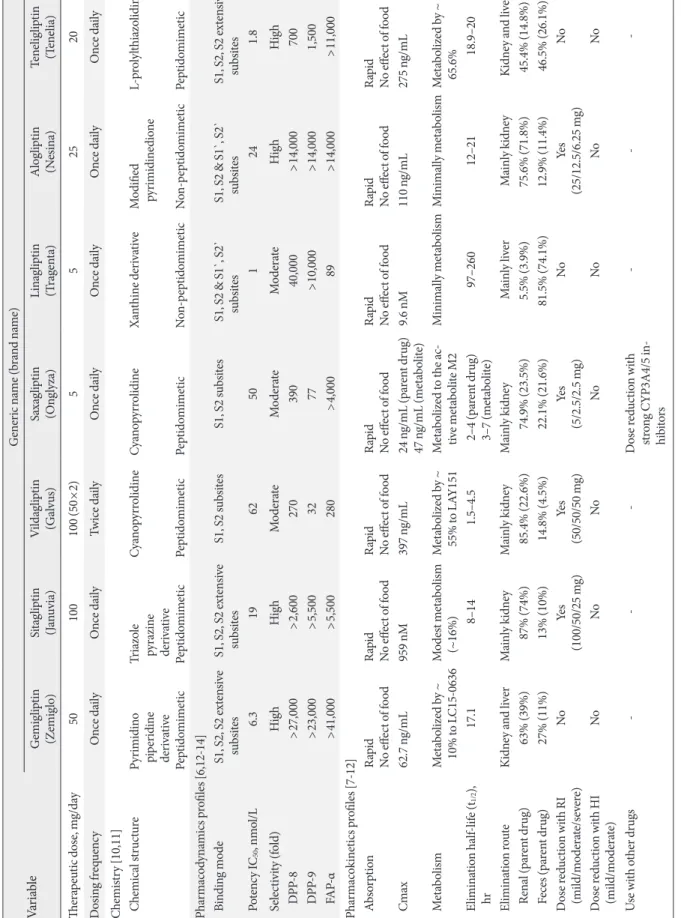
interactions between the DPP-4 enzyme and DPP-4 inhibitors, gemigliptin was characterized by a fast association and a slow dissociation, indicating that gemigliptin is a long-acting DPP-4 inhibitor. In addition, gemigliptin showed at least >23,000- fold selectivity for various proteases and peptidase including DPP-8, DPP-9, and fibroblast activation protein-α (Table 1) [6- 14]. Gemigliptin sustainably inhibited DPP-4 activity in a dose-dependent manner and exerted a more potent DPP-4 in- hibitory effect for 24 hours than that of sitagliptin at the same dose in rats, dogs, and monkeys. In in vivo studies, gemigliptin prevents the degradation of active glucagon-like peptide-1 (GLP-1) by DPP-4 inhibition, which results in improvements of glucose tolerance by increasing insulin secretion and reduc- ing glucagon secretion during oral glucose tolerance test. It also decreased in a dose-dependent manner glycosylated he- moglobin (HbA1c) and ameliorated β-cell damage in high-fat diet/streptozotocin-induced diabetic mice [6]. These results suggest that gemigliptin is a potent, selective, and long-acting DPP-4 inhibitor with strong binding to the DPP-4 enzyme.
Recent studies showed that DPP-4 inhibitors exerted pleio- tropic effects independent of their glucose-lowering properties [15,16]. The potential pleiotropic effects of gemigliptin have also been demonstrated in various disease models. Gemi- gliptin prevented diabetes-induced podocyte apoptosis and re- duced albuminuria in db/db mice [17]. It also prevented the thickening of the diabetes-induced glomerular basement membrane and reduced renal fibrosis in streptozotocin-in- duced type 1 diabetic mice [18]. In a renal fibrosis model, gemigliptin protected the renal injury via several mechanisms Fig. 1. X-ray crystallographic structure of gemigliptin (orange) bound to the active site of dipeptidyl peptidase-4 enzyme.
Table 1. Key pharmacodynamics and pharmacokinetics properties of dipeptidyl peptidase-4 inhibitor VariableGeneric name (brand name) Gemigliptin (Zemiglo)Sitagliptin (Januvia)Vildagliptin (Galvus)Saxagliptin (Onglyza)Linagliptin (Tragenta)Alogliptin (Nesina)Teneligliptin (Tenelia) Therapeutic dose, mg/day50100100 (50×2)552520 Dosing frequencyOnce dailyOnce dailyTwice dailyOnce dailyOnce dailyOnce dailyOnce daily Chemistry [10,11] Chemical structurePyrimidino piperidine derivative Peptidomimetic Triazole pyrazine derivative Peptidomimetic Cyanopyrrolidine Peptidomimetic Cyanopyrrolidine Peptidomimetic Xanthine derivative Non-peptidomimetic Modified pyrimidinedione Non-peptidomimetic
L-prolylthiazolidine Peptidomimetic Pharmacodynamics profiles [6,12-14] Binding modeS1, S2, S2 extensive subsitesS1, S2, S2 extensive subsitesS1, S2 subsitesS1, S2 subsitesS1, S2 & S1`, S2` subsitesS1, S2 & S1`, S2` subsitesS1, S2, S2 extensive subsites Potency IC50, nmol/L6.31962501241.8 Selectivity (fold)HighHighModerateModerateModerateHighHigh DPP-8>27,000>2,60027039040,000>14,000700 DPP-9>23,000>5,5003277>10,000>14,0001,500 FAP-α>41,000>5,500280>4,00089>14,000>11,000 Pharmacokinetics profiles [7-12] Absorption Rapid No effect of foodRapid No effect of foodRapid No effect of foodRapid No effect of foodRapid No effect of foodRapid No effect of foodRapid No effect of food Cmax62.7 ng/mL959 nM397 ng/mL24 ng/mL (parent drug) 47 ng/mL (metabolite)9.6 nM110 ng/mL275 ng/mL MetabolismMetabolized by ~ 10% to LC15-0636Modest metabolism (~16%)Metabolized by ~ 55% to LAY151Metabolized to the ac- tive metabolite M2Minimally metabolismMinimally metabolismMetabolized by ~ 65.6% Elimination half-life (t1/2), hr17.18–141.5–4.5 2–4 (parent drug) 3–7 (metabolite)97–26012–21 18.9–20 Elimination routeKidney and liverMainly kidneyMainly kidneyMainly kidneyMainly liverMainly kidneyKidney and liver Renal (parent drug)63% (39%)87% (74%)85.4% (22.6%)74.9% (23.5%)5.5% (3.9%)75.6% (71.8%)45.4% (14.8%) Feces (parent drug)27% (11%)13% (10%)14.8% (4.5%)22.1% (21.6%)81.5% (74.1%)12.9% (11.4%) 46.5% (26.1%) Dose reduction with RI (mild/moderate/severe)NoYes (100/50/25 mg)Yes (50/50/50 mg)Yes (5/2.5/2.5 mg)NoYes (25/12.5/6.25 mg)No Dose reduction with HI (mild/moderate)NoNoNoNoNoNoNo Use with other drugs---Dose reduction with strong CYP3A4/5 in- hibitors
--- IC50, half maximal inhibitory concentration; DPP, dipeptidyl peptidase; FAP-α, fibroblast activation protein-α; Cmax, maximum plasma concentration; t1/2, terminal half-life; RI, renal impairment; HI, hepatic impairment; CYP, cytochrome P450.
related to fibrosis, inflammation, and oxidative damage [19].
In addition, gemigliptin ameliorated the retinal vascular leak- age and loss of tight junction protein in db/db mice and re- duced retinal neovascularization in oxygen-induced retinopa- thy (OIR) mice. These effects were associated with attenuated overexpression of plasminogen activator inhibitor-1, monocyte chemoattractant protein-1, and vascular endothelial growth factor in the retinas of diabetic db/db mice and OIR mice [20].
Gemigliptin also exhibited a potent anti-glycation effect and cardiovascular protective effect in vivo and in vitro studies [21- 25]. Further clinical studies will be needed to elucidate the po- tential role of gemigliptin for micro- and macrovascular com- plications.
Pharmacokinetics
The pharmacokinetics of gemigliptin has been extensively char- acterized in healthy subjects and in patients with T2DM. After oral administration of a 50 mg dose to healthy subjects, gemi- gliptin was rapidly absorbed, with the maximum plasma con- centrations (Cmax) attained at about 1.8 hours. The Cmax and area under the curve (AUC) values were increased in a dose-propor- tional manner [7]. Following a single oral dose of gemigliptin 50 mg to healthy subjects, the mean plasma AUC of gemigliptin was 743.1 ng/hr/mL, Cmax was 62.7 ng/mL, and apparent termi- nal half-life was 17.1 hours [8]. Key pharmacokinetic parame- ters for gemigliptin are summarized in Table 2. In addition, pharmacokinetic studies indicate that gemigliptin does not ac- cumulate with multiple dosing and can be administered with or without food [7,26].
The elimination of drugs from the body involves the process of metabolism and excretion, and the main routes of excretion
generally are via urine and feces. If the clearance mechanism excessively relies onto one of the routes of elimination, or the route is impaired, the plasma concentration can be extremely changed. Therefore, pharmaceutical companies are generally looking for a drug candidate to be eliminated by multiple routes. In a mass balance and excretion study of 14C-gemigliptin in rats, the administered radioactivity was recovered equally in urine (41.2%) and feces (43.6%) [27]. In humans, 90.5% of ad- ministered radioactivity of 14C-gemigliptin was recovered:
63.4% from the urine and 27.1% from the feces. Unchanged gemigliptin was the most abundant component in urine and feces, representing 61% (39% of dose) and 41% (11% of dose) of radioactivity in urine and feces, respectively [9]. These re- sults indicated that the elimination route of gemigliptin is rela- tively balanced between metabolism and excretion through both urine and feces, while other marketed DPP-4 inhibitors are highly depended on one or two elimination pathways [10].
Special populations: renal and hepatic impairment
In an open label, non-randomized, parallel design, a single- dose study was designed to assess the pharmacokinetic profiles of gemigliptin on subjects with renal impairment (RI). In addi- tion, the extent of drug elimination by dialysis was examined in the end-stage renal disease (ESRD) group. The area under the curve from zero to time infinity (AUCinf) of the active moi- ety showed 1.10, 2.10, 1.99, and 1.98 (2.17) times higher values in mild, moderate, and severe test groups, and ESRD groups on dialysis (non-dialysis period), respectively, than values of the matching control groups. In patients with ESRD, less than 2.9% of the obtained gemigliptin was eliminated through dial- ysis sessions and there was no significant difference in the
Table 2. Summary of gemigliptin’s pharmacokinetics parameters [7-9]
Parameter Value
Area under the curve, mean±SD, ng/hr/mLa 743.1±190.6 (CV, 25.7%)
Maximum plasma concentration, mean±SD, ng/mLa 62.7±23.3 (CV, 37.1%)
Time to maximum plasma concentration, median (range), hr 1.8 (0.5–3)
Terminal elimination half-life, mean±SD, hra 17.1±1.8 (CV, 10.2%)
Plasma protein binding Low (20%–50%)
Absolute bioavailability High (>63%)
Metabolism CYP3A4
Elimination Renal: 39% unchanged drug
Liver: 11% unchanged drug SD, standard deviation; CV, coefficient of variation; CYP, cytochrome P450.
aDetermined after a single oral 50 mg dose.
pharmacokinetic profiles of gemigliptin between dialysis and non-dialysis periods. Therefore, gemigliptin did not require dose adjustment during the dialysis period [28].
In patients with mild and moderate hepatic insufficiency (according to the Child-Pugh classification), mean AUC of gemigliptin were increased approximately 50% and 80% com- pared to healthy subjects, respectively. These modest changes, within 2-fold in gemigliptin pharmacokinetics, were not con- sidered to be clinically meaningful. Consequently, gemigliptin has a relatively balanced clearance mechanism, so it is practical for use in the T2DM patient with renal and hepatic impair- ment without dose adjustment [29].
Drug interactions
In vitro studies indicated that gemigliptin is not an inhibitor of cytochrome P450 (CYP) 1A2, 2A6, 2B6, 2C9, 2C19, 2D6, 2E1, or 3A4, and it is also not an inducer of CYP1A2, 2C8, 2C9, 2C19, or 3A4. Therefore, gemigliptin is unlikely to cause inter- actions with other drugs that utilize these metabolic pathways.
In vitro studies further indicated that gemigliptin did not in- duce p-glycoprotein (p-gp), while it mildly inhibited p-gp-me- diated transport at a high concentration. Therefore, gemigliptin is unlikely to cause significant interactions with other p-gp substrates at therapeutic concentrations.
In several drug-drug interaction studies, gemigliptin did not meaningfully alter pharmacokinetics of co-medications fre- quently used to treat T2DM, such as antidiabetic agents (met- formin, pioglitazone, and glimepiride), and antihypertensive and lipid-lowering agents (irbesartan and rosuvastatin) [30- 33]. Although co-administration of ketoconazole, a potent in- hibitors of CYP3A4, resulted in a moderate increase in gemi- gliptin exposure (1.9-fold as total active moiety of gemigliptin), no dosage adjustment should be required when gemigliptin is co-administered with ketoconazole. In addition, gemigliptin exposure may be reduced when co-administered with rifampi- cin, a strong CYP3A4 inducer [34].
CLINICAL EFFICACY OF GEMIGLIPTIN
Effects on glycemic control Monotherapy
The efficacy and safety of gemigliptin monotherapy were eval- uated in two double-blind placebo controlled studies and one double-blind active-controlled study. A phase II study (study identifier: LG-DPCL002) of gemigliptin was conducted in a
randomized, double-blind, placebo-controlled, parallel group design with three doses of 50, 100, and 200 mg qd for the pur- pose of finding a dose responsiveness and an optimal dose in patients with T2DM. The mean changes of HbA1c at week 12 from the baseline were –0.98%, –0.74%, –0.78% (when adjust- ed with placebo data, –0.92%, –0.68%, and –0.72%) at 50, 100, and 200 mg, respectively [35]. Among the effective doses ob- tained from the phase II study in patients with T2DM, the 50 mg dose showed a similar efficacy as the 100 and 200 mg dos- es, within the maximum safety margin. Similar findings were reported from two phase III studies. Patients were randomized to receive gemigliptin, either a 50 mg qd (n=90) or a placebo (n=92) for 24 weeks (study identifier: LG-DPCL005; Clinical- Trials.gov registration number: NCT01601990). The placebo- subtracted changes from baseline in HbA1c were reported to be −0.71% (95% confidence interval [CI], −1.04 to −0.37) with gemigliptin 50 mg (Table 3) [35-71]. In addition, a 28-week open-label extension study was designed to evaluate the long- term safety and efficacy of gemigliptin. Among 165 patients who consented to participate in the extension period of study LG-DPCL005, 158 patients (96%) completed their treatments for 52 weeks. All patients were switched to or continued their treatments only with gemigliptin 50 mg qd during the exten- sion period. A further decrease in HbA1c was observed in the continued treatment with gemigliptin 50 mg in this extension period, and the mean change from baseline at 52 weeks (–0.87%) was still clinically and statistically significant (full analysis set analysis, P<0.0001) [72].
In another double-blind, active-controlled, phase III trial (study identifier: LG-DPCL011), eligible patients with HbA1c greater than 7.5% were randomized to receive gemigliptin 50 mg qd with metformin slow release (SR) qd (n=141), gemi- gliptin 50 mg qd (n=142), or metformin SR qd (n=150) for 24 weeks. After 24 weeks, the reduction from the baseline in HbA1c was –1.24% for gemigliptin monotherapy [37].
Initial combination therapy with metformin
The combination therapy of gemigliptin with metformin showed additional effects by increasing the plasma active GLP- 1 concentration and lowering the serum glucose level. The plasma glucagon level was also lower in combination therapy with metformin than in monotherapy [32].
In this randomized, double-blind, active-controlled, phase III trial (study identifier: LG-DPCL011, INICOM study; Clini- calTrials.gov registration number: NCT01787396), eligible pa-
tients with an HbA1c greater than 7.5% were randomized to gemigliptin 50 mg qd+metformin SR qd (n=141), gemigliptin 50 mg qd (n=142), or metformin SR qd (n=150). From weeks 2 to 6, metformin SR was uptitrated incrementally from 500 to 2,000 mg/day maximum in the gemigliptin/metformin and metformin groups. The mean daily doses of metformin at week 24 were 1,699 and 1,868 mg for the gemigliptin/metformin group and the metformin group, respectively. Mean change in HbA1c from baseline was –2.06% for gemigliptin/metformin group versus –1.24% for the gemigliptin group and –1.47% for the metformin group, respectively (P<0.0001 for all compari- sons of combination therapy vs. monotherapy) [37]. The dif- ferences in proportions achieving an HbA1c <7% or <6.5%
were also statistically significant (P<0.0001) between the com-
bination therapy and the respective monotherapy groups.
Add-on to metformin
A 24-week, multinational, randomized, double-blind, active- controlled study (study identifier: LG-DPCL006; ClinicalTri- als.gov registration number: NCT01602003) was designed to assess the efficacy and safety of gemigliptin 50 mg compared to the active control (sitagliptin) added to ongoing metformin therapy in patients with T2DM inadequately controlled with metformin alone (HbA1c, 7% to 11%) [73]. After 24 weeks, the reduction from baseline for HbA1c was 0.81% for gemigliptin 25 mg twice a day (bid) and 0.77% for gemigliptin 50 mg qd, and the differences in the least square mean changes from baseline between groups (each group of gemigliptin-sitagliptin Table 3. Efficacy of gemigliptin on glycemic control in patients with type 2 diabetes mellitus: summary of data from randomized
controlled trials
Parameter
Generic name (brand name) Gemigliptin
(Zemiglo) Sitagliptin
(Januvia) Vildagliptin
(Galvus) Saxagliptin
(Onglyza) Linagliptin
(Tragenta) Alogliptin
(Nesina) Teneligliptin (Tenelia) Monotherapy, short-term [35,37,41-51]
Week 12 18 24 12 18 - 12
Baseline HbA1c 8.24 8.04 8.56 7.9 8.1 - 7.8
Change from baseline –0.98 –0.48 –0.79 –0.90 –0.39 - –0.78
Monotherapy, long-term
Week 24 24 24 24 24 26 24
Baseline HbA1c 8.66 8.01 8.38 8.0 8.0 7.9 7.63
Change from baseline –1.24 –0.61 –0.72 –0.5 –0.44 –0.6 –0.90
Initial combination therapy with metformin [37,52-56]
Week 24 24 24 24 24 26 -
Baseline HbA1c 8.65 8.79 8.7 9.4 8.7 8.4 -
Change from baseline –2.06 –1.90 –1.8 –2.5 –1.6 –1.6 -
Combination therapy: add-on to metformin [38,57-62]
Week 52 24 24 24 24 26 16
Baseline HbA1c 7.89 7.96 8.38 8.1 8.09 7.9 7.79
Change from baseline –1.06 –0.67 –0.88 –0.7 –0.49 –0.6 –0.87
Combination therapy: add-on to metformin and sulfonylurea [39,63-66]
Week 24 24 24 24 24 - -
Baseline HbA1c 8.12 8.27 8.75 8.4 8.15 - -
Change from baseline –0.88 –0.59 –1.01 –0.74 –0.72 - -
Combination therapy: add-on to insulin [40,67-71]
Week 12a 24 24 24 24 26 -
Baseline HbA1c 8.41 8.7 8.8 8.7 8.3 9.3 -
Change from baseline –0.95 –0.6 –0.8 –0.7 –0.6 –0.7 -
HbA1c, glycosylated hemoglobin.
aSubgroup analyses in LG-DPCL015 study.
group) were −0.011% in gemigliptin 25 mg bid and 0.004% in gemigliptin 50 mg qd. The proportion of patients achieving an HbA1c <7% at week 24 (gemigliptin 25 mg bid group, 50%;
gemigliptin 50 mg qd group, 54.07%) was comparable to the results with sitagliptin 100 mg qd (48.87%). The efficacy of low- ering HbA1c in the gemigliptin group was generally consistent across the subgroups based on age (<65 or ≥65 years), gender, duration of T2DM (5, >5 to 10, or >10 years), and baseline body mass index (BMI, <25 or ≥25 kg/m2). In addition, gemi- gliptin groups led to a significantly greater inhibition of plasma DPP-4 compared to sitagliptin [38].
This study was extended by 28 weeks in order to evaluate the long-term efficacy and safety of gemigliptin. About 90% of the patients who completed 24 weeks of treatment in each group consented to continue the study to receive further treatment with gemigliptin 50 mg qd for 28 weeks. The subjects who had been treated with the active control drug (sitagliptin) were also treated with gemigliptin for the long-term extension periods.
All treatment groups showed clinically and statistically (P<
0.0001) significant improvement in glycemic control from baseline after 52 weeks. The reduction from the baseline in HbA1c was –1.06 (95% CI, –1.28 to –0.85) in the patients who continued to receive gemigliptin 50 mg qd. When sitagliptin was switched to gemigliptin at week 24, there was additional 0.1% reduction from the baseline in HbA1c at week 52 and significantly more patients receiving gemigliptin (27.3%) than sitagliptin (6.8%) achieved an HbA1c <6.5% [74]. These results show that the switching from sitagliptin to gemigliptin provid- ed the sustained glycemic improvements in patients with T2DM.
Add-on to metformin and glimepiride
In this multicenter, randomized, double-blind, phase III study (study identifier: LG-DPCL010, TROICA study; ClinicalTri- als.gov registration number: NCT01990469), eligible patients with inadequate glycemic control (7%≤HbA1c≤11%) were randomized to gemigliptin 50 mg qd (n=109) or placebo (n=
110). The baseline demographics were similar between groups (age, 60.9 years; BMI, 24.9 kg/m2; duration of T2DM, 12.9 years), with mean±standard deviation (SD) baseline HbA1c of 8.12%±
0.82% in the gemigliptin group and 8.15%±0.89% in the pla- cebo group. At week 24, the adjusted mean±standard error change for HbA1c with gemigliptin was –0.88%±0.17% (change with placebo –0.01%±0.18%; difference –0.87%±0.12%; 95% CI, –1.09 to –0.64; P<0.0001) [39].
Add-on therapy in patients with renal impairment
RI in T2DM limits the usable medications for lowering glucose level and requires frequent monitoring of renal function.
Gemigliptin has balanced elimination between urinary/fecal excretion and hepatic metabolism; therefore, it does not re- quire dose adjustment in patient with moderate to severe RI.
This study evaluated the efficacy and safety of gemigliptin in T2DM patients with moderate to severe RI. This randomized, double-blind, parallel group, phase IIIb study (study identifier:
LG-DPCL015, GUARD study; ClinicalTrials.gov registration number: NCT01968044) was composed of a 12-week, placebo controlled period, followed by a 40-week, double-blind active controlled extension period (placebo switched to linagliptin).
A total of 132 patients with moderate or severe RI were ran- domized to receive gemigliptin (n=66) or placebo (n=66). In- sulin was used as predominant background therapy (63.1%).
At week 12, the placebo-adjusted mean change in HbA1c from the baseline was –1.20% (95% CI, –1.53 to –0.87; P<0.0001) [40]. A similar profile was also observed in other glycemic control parameters (fasting plasma glucose, glycated albumin, and fructosamine).
Head-to-head comparisons between gemigliptin and other DPP-4 inhibitors
The efficacy and safety of gemigliptin was directly compared with other DPP-4 inhibitors in the three multicenter, random- ized, active-controlled studies. Two head-to-head studies be- tween gemigliptin and sitagliptin were conducted in patients with T2DM as an add-on to metformin and initial combina- tion therapy with metformin. As mentioned above, the phase III study showed non-inferiority in HbA1c reduction for gemi- gliptin compared with sitagliptin in the add-on to metformin therapy [73]. The second study was performed to assess the ef- ficacy of gemigliptin in combination with metformin for the initial treatment of drug-naïve patients with an HbA1c greater than 7.5% (study identifier: LG-DPCL012). After 12 weeks, the mean HbA1c was reduced from baseline by 2.75%, 2.24%, and 2.75% for gemigliptin 50, sitagliptin 100, and glimepiride 2 mg qd, respectively. However, there was no significant difference in HbA1c reduction between groups [75].
The other head-to-head study (study identifier: LG-DP- CL015, GUARD study; ClinicalTrials.gov registration number:
NCT01968044) that compared gemigliptin and linagliptin was performed in the T2DM patients with RI. As mentioned above, the placebo group was switched to linagliptin 5 mg qd
during the 40-week extension period. After 52 weeks, the ad- justed mean±standard error change from baseline in HbA1c was –1.00%±0.21% and –0.65%±0.22% in the gemigliptin and placebo/linagliptin groups, respectively [76]. During the 40- week extension, AEs were reported in 68.0% and 73.1% of sub- jects using gemigliptin and linagliptin, respectively. The inci- dence of hypoglycemia was similar between treatment groups (gemigliptin, 20.0%; linagliptin, 28.8%). There were no mean- ingful changes from the baseline in the body weight (gemi- gliptin, 0.28 kg; linagliptin 0.33 kg).
Effects on glycemic variability
Glycemic variability and chronic sustained hyperglycemia are the main components of dysglycemia in diabetes. The previous studies suggested that different pharmacodynamic profiles be- tween DPP-4 inhibitors have been associated with the different effects on glycemic variability [77,78]. In this study, a multi- center, randomized, active-controlled, parallel group, open-la-
bel, exploratory study was designed to evaluate the efficacy on glycemic variability and safety of initial combination therapy of gemigliptin 50 mg qd versus sitagliptin 100 mg qd, or glimepiride 2 mg qd with metformin in patients with T2DM (study identifier: LG-DPCL012, STABLE study; ClinicalTrials.
gov registration number: NCT01890629). The mean amplitude of glycemic excursions (MAGE) and SD of glucose were used for assessing glucose fluctuations from the baseline after 12 weeks of treatment. At 12 weeks, MAGE was significantly low- er in the DPP-4 inhibitor groups (gemigliptin and sitagliptin) than in the glimepiride group (–43.1, –38.3, and –21.7 mg/dL, respectively). Furthermore, the SD of mean glucose was signif- icantly lower in patients with gemigliptin when compared with sitagliptin (P=0.023) and glimepiride (P=0.0058) [75].
Beyond glucose control Effect on lipid profiles
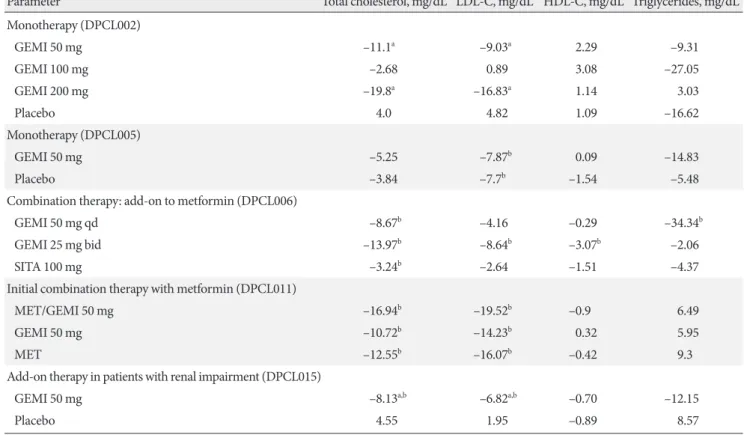
In addition to improvements in glycemic control, gemigliptin
Table 4. Lipid parameters in pivotal studies of gemigliptin
Parameter Total cholesterol, mg/dL LDL-C, mg/dL HDL-C, mg/dL Triglycerides, mg/dL
Monotherapy (DPCL002)
GEMI 50 mg –11.1a –9.03a 2.29 –9.31
GEMI 100 mg –2.68 0.89 3.08 –27.05
GEMI 200 mg –19.8a –16.83a 1.14 3.03
Placebo 4.0 4.82 1.09 –16.62
Monotherapy (DPCL005)
GEMI 50 mg –5.25 –7.87b 0.09 –14.83
Placebo –3.84 –7.7b –1.54 –5.48
Combination therapy: add-on to metformin (DPCL006)
GEMI 50 mg qd –8.67b –4.16 –0.29 –34.34b
GEMI 25 mg bid –13.97b –8.64b –3.07b –2.06
SITA 100 mg –3.24b –2.64 –1.51 –4.37
Initial combination therapy with metformin (DPCL011)
MET/GEMI 50 mg –16.94b –19.52b –0.9 6.49
GEMI 50 mg –10.72b –14.23b 0.32 5.95
MET –12.55b –16.07b –0.42 9.3
Add-on therapy in patients with renal impairment (DPCL015)
GEMI 50 mg –8.13a,b –6.82a,b –0.70 –12.15
Placebo 4.55 1.95 –0.89 8.57
All parameters are mean changes from baseline.
LDL-C, low density lipoprotein cholesterol; HDL-C, high density lipoprotein cholesterol; GEMI, gemigliptin; qd, once a day; bid, twice a day;
SITA, sitagliptin; MET, metformin.
aP<0.05 vs. placebo, bP<0.05 vs. baseline.
as mono- and combination therapy slightly decreased mean total cholesterol, low density lipoprotein cholesterol, and tri- glycerides. The result was summarized in Table 4.
Effect on albuminuria
The GUARD study also evaluated whether gemigliptin had renoprotective effects in type 2 diabetic patients with moderate to severe RI. The urinary albumin creatinine ratio mean chang- es from baseline were –339 mg/g Cr with gemigliptin com- pared with 172 mg/g Cr with the placebo (P<0.0001) after 12 weeks. This reduction in albuminuria of the gemigliptin group was observed regardless of glucose lowering effect, blood pres- sure change, and the use of a renin-angiotensin-aldosterone system blocking agent. Furthermore, urinary nephrin in the gemigliptin group were also significantly reduced compared to the placebo group [76].
Ongoing studies
Several clinical studies in LG Life Sciences are actively underway to assess the efficacy and safety as an add-on combination thera- py with insulin (with or without metformin) (ClinicalTrials.gov registration number: NCT02831361), to evaluate the efficacy and safety of gemigliptin-rosuvastatin fixed-dose combination in patients with T2DM and dyslipidemia in phase III clinical tri- als (ClinicalTrials.gov registration number: NCT02126358), and to evaluate the efficacy and safety of gemigliptin compared with vildagliptin in Russian patients with T2DM (ClinicalTrials.gov registration number: NCT02343926).
Safety and tolerability of gemigliptin
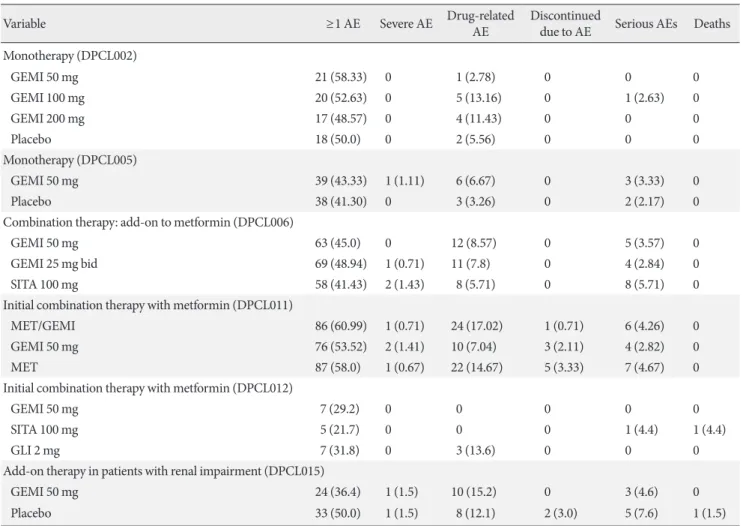
A pooled safety analysis was performed with subjects who had received the investigational product at least once in studies LG- DPCL002, LG-DPCL005, LG-DPCL006, LG-DPCL010, LG-
Table 5. Frequency of reported adverse events
Variable ≥1 AE Severe AE Drug-related AE Discontinued
due to AE Serious AEs Deaths Monotherapy (DPCL002)
GEMI 50 mg 21 (58.33) 0 1 (2.78) 0 0 0
GEMI 100 mg 20 (52.63) 0 5 (13.16) 0 1 (2.63) 0
GEMI 200 mg 17 (48.57) 0 4 (11.43) 0 0 0
Placebo 18 (50.0) 0 2 (5.56) 0 0 0
Monotherapy (DPCL005)
GEMI 50 mg 39 (43.33) 1 (1.11) 6 (6.67) 0 3 (3.33) 0
Placebo 38 (41.30) 0 3 (3.26) 0 2 (2.17) 0
Combination therapy: add-on to metformin (DPCL006)
GEMI 50 mg 63 (45.0) 0 12 (8.57) 0 5 (3.57) 0
GEMI 25 mg bid 69 (48.94) 1 (0.71) 11 (7.8) 0 4 (2.84) 0
SITA 100 mg 58 (41.43) 2 (1.43) 8 (5.71) 0 8 (5.71) 0
Initial combination therapy with metformin (DPCL011)
MET/GEMI 86 (60.99) 1 (0.71) 24 (17.02) 1 (0.71) 6 (4.26) 0
GEMI 50 mg 76 (53.52) 2 (1.41) 10 (7.04) 3 (2.11) 4 (2.82) 0
MET 87 (58.0) 1 (0.67) 22 (14.67) 5 (3.33) 7 (4.67) 0
Initial combination therapy with metformin (DPCL012)
GEMI 50 mg 7 (29.2) 0 0 0 0 0
SITA 100 mg 5 (21.7) 0 0 0 1 (4.4) 1 (4.4)
GLI 2 mg 7 (31.8) 0 3 (13.6) 0 0 0
Add-on therapy in patients with renal impairment (DPCL015)
GEMI 50 mg 24 (36.4) 1 (1.5) 10 (15.2) 0 3 (4.6) 0
Placebo 33 (50.0) 1 (1.5) 8 (12.1) 2 (3.0) 5 (7.6) 1 (1.5)
Values are presented as number (%).
AE, adverse event; GEMI, gemigliptin; bid, twice a day; SITA, sitagliptin; MET, metformin; GLI, glimepiride.
DPCL011, and LG-DPCL012. In the safety analysis, 1,080 pa- tients received an oral dose of gemigliptin 50 mg in the com- parative clinical studies, and 446 patients received other oral antidiabetic agents (OADs). The most commonly reported AEs were upper respiratory tract infection, urinary tract infec- tion, nasopharyngitis, headache, diarrhea, arthralgia, hyper- tension, and cough. Nasopharyngitis was the only AE reported in more than 5.0% of subjects, and its incidence rate was simi- lar between the two groups, with 6.7% and 6.3% in gemigliptin and other OADs groups, respectively. Table 5 shows the fre- quency of AEs and discontinuation of treatment due to AEs from clinical trials of gemigliptin. The incidence of hypoglyce- mia was similar to placebo or active control groups when gemigliptin was administered as monotherapy or combination therapy. Most events were mild to moderate in nature and did not require an additional treatment or discontinuation. In ad-
dition, treatment with gemigliptin does not increase body weight (Table 6).
Overall, gemigliptin was generally well tolerated in con- trolled clinical studies in both monotherapy and combination therapy. The incidences of AEs were generally similar to inci- dences in the placebo and active control groups.
CONCLUSIONS
Based on the findings from the studies in this review, Table 7 summarizes key points contained in the article. Gemigliptin is a potent, selective, and long-acting DPP-4 inhibitor and has been shown to be effective and well tolerated as monotherapy and combination therapy in patients with T2DM. In addition, gemigliptin is more effective in reducing glycemic variability than glimepiride and sitagliptin, and lowers albuminuria inde- Table 6. Reported hypoglycemia and change in body weight
Study Duration, wk Symptomatic hypoglycemia Asymptomatic
hypoglycemia Severe
hypoglycemia Change in weight, kg
Monotherapy (DPCL002) 12
GEMI 50 mg 0 0 0 –0.23
GEMI 100 mg 0 0 0 0.11
GEMI 200 mg 0 1 (2.86) 0 0
Placebo 0 0 0 –0.57
Monotherapy (DPCL005) 24
GEMI 50 mg 0 2 (2.22) 0 0.31a,b
Placebo 0 0 0 –0.19
Combination therapy: add-on to metformin (DPCL006) 24
GEMI 50 mg qd 0 1 (0.71) 0 –0.22
GEMI 25 mg bid 0 0 0 –0.31a
SITA 100 mg 0 2 (1.43) 0 –0.31
Initial combination therapy with metformin (DPCL011) 24
MET/GEMI 1 (0.71) 1 (0.71) 0 –0.42
GEMI 50 mg 0 0 0 –0.12
MET 2 (1.33) 1 (0.67) 0 –0.8a
Initial combination therapy with metformin (DPCL012) 12
GEMI 50 mg 0 0 0 0.52
SITA 100 mg 0 0 0 1.3
GLI 2 mg 2 (9.1) 0 0 1.53a
Add-on therapy in patients with renal impairment (DPCL015) 12
GEMI 50 mg 7 (10.6) 2 (3.0) 0 –0.31
Placebo 5 (7.6) 1 (1.5) 0 –0.15
Values are presented as number (%).
GEMI, gemigliptin; qd, once a day; bid, twice a day; SITA, sitagliptin; MET, metformin; GLI, glimepiride.
aP<0.05 vs. placebo, bP<0.05 vs. baseline.
pendent of its glucose lowering effect. Therefore, gemigliptin may provide important benefits for special populations, espe- cially patients with renal insufficiency and/or the elderly. The results from ongoing clinical studies will also provide addi- tional evidence of the clinical benefits of gemigliptin in the management of T2DM.
CONFLICTS OF INTEREST
S.H.K. and J. H.Y. are employees of LG Life Sciences, Ltd.
REFERENCES
1. American Diabetes Association. Standards of medical care in diabetes: 2014. Diabetes Care 2014;37 Suppl 1:S14-80.
2. Garber AJ, Abrahamson MJ, Barzilay JI, Blonde L, Bloomgar- den ZT, Bush MA, Dagogo-Jack S, DeFronzo RA, Einhorn D, Fonseca VA, Garber JR, Garvey WT, Grunberger G, Handels- man Y, Henry RR, Hirsch IB, Jellinger PS, McGill JB, Me- chanick JI, Rosenblit PD, Umpierrez GE. Consensus statement by the American Association of Clinical Endocrinologists and American College of Endocrinology on the comprehensive type 2 diabetes management algorithm: 2016 executive sum- mary. Endocr Pract 2016;22:84-113.
3. Inzucchi SE, Bergenstal RM, Buse JB, Diamant M, Ferrannini E, Nauck M, Peters AL, Tsapas A, Wender R, Matthews DR;
American Diabetes Association (ADA); European Association for the Study of Diabetes (EASD). Management of hyperglyce- mia in type 2 diabetes: a patient-centered approach. Position statement of the American Diabetes Association (ADA) and the European Association for the Study of Diabetes (EASD).
Diabetes Care 2012;35:1364-79.
4. Deacon CF. Dipeptidyl peptidase-4 inhibitors in the treatment of type 2 diabetes: a comparative review. Diabetes Obes Metab 2011;13:7-18.
5. Kim SH, Lee SH, Yim HJ. Gemigliptin, a novel dipeptidyl pep- tidase 4 inhibitor: first new anti-diabetic drug in the history of Korean pharmaceutical industry. Arch Pharm Res 2013;36:
1185-8.
6. Kim SH, Jung E, Yoon MK, Kwon OH, Hwang DM, Kim DW, Kim J, Lee SM, Yim HJ. Pharmacological profiles of gemi- gliptin (LC15-0444), a novel dipeptidyl peptidase-4 inhibitor, in vitro and in vivo. Eur J Pharmacol 2016;788:54-64.
7. Lim KS, Cho JY, Kim BH, Kim JR, Kim HS, Kim DK, Kim SH, Yim HJ, Lee SH, Shin SG, Jang IJ, Yu KS. Pharmacokinetics and pharmacodynamics of LC15-0444, a novel dipeptidyl pep- tidase IV inhibitor, after multiple dosing in healthy volunteers.
Br J Clin Pharmacol 2009;68:883-90.
8. Lim KS, Kim JR, Choi YJ, Shin KH, Kim KP, Hong JH, Cho JY, Shin HS, Yu KS, Shin SG, Kwon OH, Hwang DM, Kim JA, Jang IJ. Pharmacokinetics, pharmacodynamics, and tolerability of the dipeptidyl peptidase IV inhibitor LC15-0444 in healthy Korean men: a dose-block-randomized, double-blind, place- bo-controlled, ascending single-dose, phase I study. Clin Ther 2008;30:1817-30.
9. Kim N, Patrick L, Mair S, Stevens L, Ford G, Birks V, Lee SH.
Table 7. Article highlights
Gemigliptin is a reversible, potent, selective, competitive, and long-acting inhibitor of DPP-4.
Gemigliptin is orally administered 50 mg once daily either as monotherapy or in combination with other drugs. It can be taken with or without food. No dose adjustment is recom- mended for patients with renal or hepatic impairment.
Gemigliptin shows a low propensity of drug interactions with metformin, pioglitazone, glimepiride, CYP3A4 inhibitors, rosuvastatin, or irbesartan, and dose adjustment of gemi- gliptin is not required for the patients who are concomitantly receiving these drugs.
Gemigliptin decreases the mean level of HbA1c from baseline by 1.24% in monotherapy and 0.8% in add-on therapy with metformin. For gemigliptin as an initial combination with metformin, the mean reduction from baseline in HbA1c was 2.8%. In head-to-head comparisons, the mean reduction from baseline in HbA1c was 0.8% for gemigliptin with met- formin and 0.8% for sitagliptin with metformin, hence the ef- ficacy of gemigliptin is found to be comparable to sitagliptin.
Gemigliptin was shown to be more effective in reduction of gly- cemic variability than glimepiride and sitagliptin with met- formin as an initial combination therapy for drug naïve pa- tients with T2DM.
Gemigliptin is generally well tolerated in controlled clinical studies as monotherapy and as part of combination therapy.
The incidences of AEs are generally similar to those of place- bo and active control groups.
There is no significant difference in the incidence of hypoglyce- mia for gemigliptin compared to placebo or active control as monotherapy or in combination with metformin, respective- ly. Most events are mild to moderate in nature and do not re- quire an additional treatment or discontinuation.
DPP-4, dipeptidyl peptidase-4; CYP, cytochrome P450; HbA1c, gly- cosylated hemoglobin; T2DM, type 2 diabetes mellitus; AE, adverse event.
Absorption, metabolism and excretion of [14C]gemigliptin, a novel dipeptidyl peptidase 4 inhibitor, in humans. Xenobiotica 2014;44:522-30.
10. Filippatos TD, Athyros VG, Elisaf MS. The pharmacokinetic considerations and adverse effects of DPP-4 inhibitors [cor- rected]. Expert Opin Drug Metab Toxicol 2014;10:787-812.
11. Deacon CF, Lebovitz HE. Comparative review of dipeptidyl peptidase-4 inhibitors and sulphonylureas. Diabetes Obes Metab 2016;18:333-47.
12. Baetta R, Corsini A. Pharmacology of dipeptidyl peptidase-4 inhibitors: similarities and differences. Drugs 2011;71:1441-67.
13. Nabeno M, Akahoshi F, Kishida H, Miyaguchi I, Tanaka Y, Ishii S, Kadowaki T. A comparative study of the binding modes of recently launched dipeptidyl peptidase IV inhibitors in the active site. Biochem Biophys Res Commun 2013;434:191-6.
14. Morishita R, Nakagami H. Teneligliptin: expectations for its pleiotropic action. Expert Opin Pharmacother 2015;16:417-26.
15. Omar B, Ahren B. Pleiotropic mechanisms for the glucose- lowering action of DPP-4 inhibitors. Diabetes 2014;63:2196- 202.
16. Aroor AR, Sowers JR, Jia G, DeMarco VG. Pleiotropic effects of the dipeptidylpeptidase-4 inhibitors on the cardiovascular system. Am J Physiol Heart Circ Physiol 2014;307:H477-92.
17. Jung E, Kim J, Ho Kim S, Kim S, Cho MH. Gemigliptin im- proves renal function and attenuates podocyte injury in mice with diabetic nephropathy. Eur J Pharmacol 2015;761:116-24.
18. Jung GS, Jeon JH, Choe MS, Kim SW, Lee IK, Kim MK, Park KG. Renoprotective effect of gemigliptin, a dipeptidyl pepti- dase-4 inhibitor, in streptozotocin-induced type 1 diabetic mice. Diabetes Metab J 2016;40:211-21.
19. Min HS, Kim JE, Lee MH, Song HK, Kang YS, Lee MJ, Lee JE, Kim HW, Cha JJ, Chung YY, Hyun YY, Han JY, Cha DR. Di- peptidyl peptidase IV inhibitor protects against renal intersti- tial fibrosis in a mouse model of ureteral obstruction. Lab In- vest 2014;94:598-607.
20. Jung E, Kim J, Kim CS, Kim SH, Cho MH. Gemigliptin, a di- peptidyl peptidase-4 inhibitor, inhibits retinal pericyte injury in db/db mice and retinal neovascularization in mice with ischemic retinopathy. Biochim Biophys Acta 2015;1852:2618- 29.
21. Jung E, Kim J, Kim SH, Kim S, Cho MH. Gemigliptin, a novel dipeptidyl peptidase-4 inhibitor, exhibits potent anti-glycation properties in vitro and in vivo. Eur J Pharmacol 2014;744:98- 102.
22. Moon JY, Woo JS, Seo JW, Lee A, Kim DJ, Kim YG, Kim SY,
Lee KH, Lim SJ, Cheng XW, Lee SH, Kim W. The dose-depen- dent organ-specific effects of a dipeptidyl peptidase-4 inhibitor on cardiovascular complications in a model of type 2 diabetes.
PLoS One 2016;11:e0150745.
23. Choi SH, Park S, Oh CJ, Leem J, Park KG, Lee IK. Dipeptidyl peptidase-4 inhibition by gemigliptin prevents abnormal vas- cular remodeling via NF-E2-related factor 2 activation. Vascul Pharmacol 2015;73:11-9.
24. Hwang HJ, Chung HS, Jung TW, Ryu JY, Hong HC, Seo JA, Kim SG, Kim NH, Choi KM, Choi DS, Baik SH, Yoo HJ. The dipeptidyl peptidase-IV inhibitor inhibits the expression of vascular adhesion molecules and inflammatory cytokines in HUVECs via Akt- and AMPK-dependent mechanisms. Mol Cell Endocrinol 2015;405:25-34.
25. Hwang HJ, Jung TW, Ryu JY, Hong HC, Choi HY, Seo JA, Kim SG, Kim NH, Choi KM, Choi DS, Baik SH, Yoo HJ. Dipeptidyl petidase-IV inhibitor (gemigliptin) inhibits tunicamycin-in- duced endoplasmic reticulum stress, apoptosis and inflamma- tion in H9c2 cardiomyocytes. Mol Cell Endocrinol 2014;392:1- 7.
26. Choi HY, Noh YH, Kim YH, Kim MJ, Lee SH, Kim JA, Kim B, Lim HS, Bae KS. Effects of food on the pharmacokinetics of gemigliptin/metformin sustained-release 50/1,000 mg (25/500 mg x 2 tablets) fixeddose combination tablet in healthy male volunteers. Int J Clin Pharmacol Ther 2014;52:381-91.
27. Kim Y, Kim U, Kim IS, Lee SH, Lee J, Kim DH, Yoo HH. Ab- sorption, distribution, metabolism and excretion of gemi- gliptin, a novel dipeptidyl peptidase IV inhibitor, in rats. Xeno- biotica 2014;44:627-34.
28. Shon JH, Kim N, Park SJ, Oh MK, Kim EY, Lee SH, Kim YH, Shin JG. Effect of renal impairment and haemodialysis on the pharmacokinetics of gemigliptin (LC15-0444). Diabetes Obes Metab 2014;16:1028-31.
29. Zemiglo: Ministry of Food and Drug Safety (MFDS) Package insert. Available from: https://ezdrug.mfds.go.kr (cited 2016 Aug 3).
30. Choi HY, Lim HS, Kim YH, Jeon HS, Kim MJ, Lee SH, Jung JH, Lee YK, Kim HJ, Bae KS. Evaluation of the pharmacokinet- ics of the DPP-4 inhibitor gemigliptin when coadministered with rosuvastatin or irbesartan to healthy subjects. Curr Med Res Opin 2015;31:229-41.
31. Choi HY, Kim YH, Kim MJ, Lee SH, Bang K, Han S, Lim HS, Bae KS. Evaluation of pharmacokinetic drug interactions be- tween gemigliptin (dipeptidylpeptidase-4 inhibitor) and glimepiride (sulfonylurea) in healthy volunteers. Drugs R D
2014;14:165-76.
32. Shin D, Cho YM, Lee S, Lim KS, Kim JA, Ahn JY, Cho JY, Lee H, Jang IJ, Yu KS. Pharmacokinetic and pharmacodynamic in- teraction between gemigliptin and metformin in healthy sub- jects. Clin Drug Investig 2014;34:383-93.
33. Kim SE, Yi S, Shin KH, Kim TE, Kim MJ, Kim YH, Yoon SH, Cho JY, Shin SG, Jang IJ, Yu KS. Evaluation of the pharmacoki- netic interaction between the dipeptidyl peptidase IV inhibitor LC15-0444 and pioglitazone in healthy volunteers. Int J Clin Pharmacol Ther 2012;50:17-23.
34. Noh YH, Lim HS, Jin SJ, Kim MJ, Kim YH, Sung HR, Choi HY, Bae KS. Effects of ketoconazole and rifampicin on the pharma- cokinetics of gemigliptin, a dipeptidyl peptidase-IV inhibitor:
a crossover drug-drug interaction study in healthy male Kore- an volunteers. Clin Ther 2012;34:1182-94.
35. Rhee EJ, Lee WY, Yoon KH, Yoo SJ, Lee IK, Baik SH, Kim YK, Lee MK, Park KS, Park JY, Cha BS, Lee HW, Min KW, Bae HY, Kim MJ, Kim JA, Kim DK, Kim SW. A multicenter, random- ized, placebo-controlled, double-blind phase II trial evaluating the optimal dose, efficacy and safety of LC 15-0444 in patients with type 2 diabetes. Diabetes Obes Metab 2010;12:1113-9.
36. Yang SJ, Min KW, Gupta SK, Park JY, Shivane VK, Pitale SU, Agarwal PK, Sosale A, Gandhi P, Dharmalingam M, Mohan V, Mahesh U, Kim DM, Kim YS, Kim JA, Kim PK, Baik SH. A multicentre, multinational, randomized, placebo-controlled, double-blind, phase 3 trial to evaluate the efficacy and safety of gemigliptin (LC15-0444) in patients with type 2 diabetes. Dia- betes Obes Metab 2013;15:410-6.
37. Lim S, Min K, Yu JM, Chamnan P, Kim ES, Yoon KH, Kwon S, Moon MK, Lee KW, Kim DJ, Kim M, Wongtanate M, Kim EY, Kim SH, Lee MK. No. 109: Efficacy and safety of gemigliptin/
metformin initial combination therapy versus either as mono- therapy in drug-naïve patients with type 2 diabetes. Oral pre- sentation of 51st Annual Meeting of European Association for the Study of Diabetes; 2015 Sep 14-18; Stockholm, SZ.
38. Rhee EJ, Min KW, Jang HC, Nam-Goong IS, Chung CH, Park JY, Bae HY, Kim DM, Baik SH, Lee MK, Kim BJ, Chang SA, Ahn CW, Kim YS, Yoon KH, Park KS, Kim HJ, Shivane VK, Sosale AR, Dharmalingam M, Gandhi P, Gupta SK, Pitale SU, Agarwal PK, Rais N, Mohan V, Mahesh U, Kim JA, Kim PK, Kim SW. No. 1128: Efficacy and safety of gemigliptin com- pared with sitagliptin added to ongoing metformin therapy in patients with type 2 diabetes inadequately controlled with met- formin alone. Poster presentation of American Diabetes Asso- ciation 72nd Scientific sessions; 2012 Jun 8-12; Philadelphia,
PA.
39. Kim SH, Yu J, Jang H, Song Y, Ahn K, Oh T, Lee H, Lee D, Kim J, Park TS, Jeong CH, Kim BJ, Han K, Park K. No. 1169: Effica- cy and safety of gemigliptin as add-on therapy in patients with type 2 diabetes inadequately controlled on metformin and glimepiride. Poster presentation of American Diabetes Associ- ation 76th Scientific sessions; 2016 Jun 10-14; New Orleans, LA.
40. Yoon S, Han B, Kim S, Han S, Jo YI, Jeong K, Oh KH, Park H, Park SH, Kang SW, Na KR, Jang Y, Kim SH, Cha D; GUARD Study. No. 804: Efficacy and safety of gemigliptin in type 2 dia- betes patients with moderate to severe renal impairment. Post- er presentation of 51st Annual Meeting of European Associa- tion for the Study of Diabetes; 2015 Sep 14-18; Stockholm, SZ.
41. Raz I, Hanefeld M, Xu L, Caria C, Williams-Herman D, Khata- mi H; Sitagliptin Study 023 Group. Efficacy and safety of the dipeptidyl peptidase-4 inhibitor sitagliptin as monotherapy in patients with type 2 diabetes mellitus. Diabetologia 2006;49:
2564-71.
42. Dejager S, Razac S, Foley JE, Schweizer A. Vildagliptin in drug- naïve patients with type 2 diabetes: a 24-week, double-blind, randomized, placebo-controlled, multiple-dose study. Horm Metab Res 2007;39:218-23.
43. Rosenstock J, Sankoh S, List JF. Glucose-lowering activity of the dipeptidyl peptidase-4 inhibitor saxagliptin in drug-naive patients with type 2 diabetes. Diabetes Obes Metab 2008;10:
376-86.
44. Barnett AH, Patel S, Harper R, Toorawa R, Thiemann S, von Eynatten M, Woerle HJ. Linagliptin monotherapy in type 2 di- abetes patients for whom metformin is inappropriate: an 18- week randomized, double-blind, placebo-controlled phase III trial with a 34-week active-controlled extension. Diabetes Obes Metab 2012;14:1145-54.
45. Kadowaki T, Kondo K. Efficacy, safety and dose-response rela- tionship of teneligliptin, a dipeptidyl peptidase-4 inhibitor, in Japanese patients with type 2 diabetes mellitus. Diabetes Obes Metab 2013;15:810-8.
46. Aschner P, Kipnes MS, Lunceford JK, Sanchez M, Mickel C, Williams-Herman DE; Sitagliptin Study 021 Group. Effect of the dipeptidyl peptidase-4 inhibitor sitagliptin as monotherapy on glycemic control in patients with type 2 diabetes. Diabetes Care 2006;29:2632-7.
47. Pi-Sunyer FX, Schweizer A, Mills D, Dejager S. Efficacy and tolerability of vildagliptin monotherapy in drug-naïve patients with type 2 diabetes. Diabetes Res Clin Pract 2007;76:132-8.
![Table 2. Summary of gemigliptin’s pharmacokinetics parameters [7-9]](https://thumb-ap.123doks.com/thumbv2/123dokinfo/5221918.123715/4.892.79.819.843.1045/table-summary-of-gemigliptin-s-pharmacokinetics-parameters.webp)