www.krspine.org
Association of Estrogen Receptor 2(ESR 2) Gene Polymorphisms with Ossification of the Posterior
Longitudinal Ligament of the Spine
Ki Tack Kim, M.D., Sang Hun Lee, M.D., Yoon Ho Kwack, M.D.*, Eon Seok Son, M.D.†, Kyoung Jun Park, M.D., Duk Hyun Kim, M.D.,
J Korean Soc Spine Surg 2012 Mar;19(1):1-7.
Originally published online March 31, 2012;
http://dx.doi.org/10.4184/jkss.2012.19.1.1
Korean Society of Spine Surgery
Department of Orthopedic Surgery, Inha University School of Medicine
#7-206, 3rd ST. Sinheung-Dong, Jung-Gu, Incheon, 400-711, Korea Tel: 82-32-890-3044 Fax: 82-32-890-3467
©Copyright 2011 Korean Society of Spine Surgery pISSN 2093-4378 eISSN 2093-4386
The online version of this article, along with updated information and services, is located on the World Wide Web at:
http://www.krspine.org/DOIx.php?id=10.4184/jkss.2012.19.1.1
This is an Open Access article distributed under the terms of the Creative Commons Attribution Non-Commercial License (http://
creativecommons.org/licenses/by-nc/3.0) which permits unrestricted non-commercial use, distribution, and reproduction in any medium, provided the original work is properly cited.
Journal of Korean Society of
Spine Surgery
Received: August 1, 2011 Revised: December 1, 2011 Accepted: December 21, 2011 Published Online: March 31, 2012
Corresponding author: Yoon-Ho Kwack, M.D.
Department of Orthopedic Surgery, Bumin Hospital, 657 Deungchon 3-dong, Gangseo-gu, Seoul, 157-930, Korea
TEL: 82-2-2620-0003, FAX: 82-2-2620-0130 E-mail: [email protected]
“This is an Open Access article distributed under the terms of the Creative Commons Attribution Non-Commercial License (http://
creativecommons.org/licenses/by-nc/3.0/) which permits unrestricted non-commercial use, distribution, and reproduction in any medium, provided the original work is properly cited.”
Association of Estrogen Receptor 2(ESR 2) Gene Polymorphisms with Ossification of the Posterior Longitudinal Ligament of the Spine
Ki Tack Kim, M.D., Sang Hun Lee, M.D., Yoon Ho Kwack, M.D.
*, Eon Seok Son, M.D.
†, Kyoung Jun Park, M.D., Duk Hyun Kim, M.D.,
Department of Orthopedic Surgery, Kyung Hee University, Kangdong Hospital, Seoul, Korea Department of Orthopedic Surgery, Bumin Hospital, Seoul, Korea
*Department of medicine, Graduate School, Kyung Hee University
†Study Design: Genetic screening of the estrogen receptor 2 (ESR2) genes in patients with ossification of the posterior longitudinal ligament (OPLL).
Objective: We studied the relationships between ESR2 gene polymorphisms and OPLL to understand the pathophysiology of OPLL.
Summary of Literature Review: The OPLL has a strong genetic component. Several familial surveys and human leukocyte antigen (HLA) haplotype studies reveal that genetic background is an important component in the occurrence of OPLL and a large number of gene analysis studies were utilized to clarify the susceptible gene for OPLL, including COL11A2, BMP-2, TNF-α, NPPS, leptin receptor, transforming growth factor (TGF)-β, Retinoic X receptor, ER, IL-1, PTH, and VDR have been performed.
Materials and Method: Genomic deoxyribonucleic acid (DNA) samples obtained from 164 patients (93 men and 71 women) with OPLL and 219 control subjects, without the disease (105 men and 114 women) were amplified by polymerase chain reaction, and polymorphism genotypes were determined by the restriction endonuclease digestion. The distribution of genotypes was compared between the patients with the disease and the control subjects.
Results: The polymorphism of ESR2 [rs1256049, exon6, Val328Val, p=0.018, odd ratio (OR)=2.41, 95 confidence interval (CI)=1.15-5.02 in the recessive model] only showed statistically significant association between the control and the OPLL groups. The rest SNPs of ESR2 did not show any significant differences between the control and the OPLL groups.
Conclusions: Estrogen receptor 2 (ESR2) gene polymorphisms (rs 1256049) was associated with OPLL. In future studies, we will perform target SNP chip between OPLL and candidate gene.
Key Words: Spine, Ossification of the posterior longitudinal ligament (OPLL), Estrogen receptor 2 (ESR 2) gene
서 론
후종인대 골화증(Ossification of the posterior longitudinal ligament: OPLL)은 척추의 후방인대에 이소성 골화가 발생하는 골형성 질환의 하나로 경추 및 흉추부의 척수증을 유발할 수 있 는 질환으로 알려져 있다.1) 특히 일본, 한국과 같이 아시아인에 서 발생 빈도가 높아 중년 이상의 성인 중 2-4%에서 발생하는 것으로 알려져 있으며 백인의 경우에서는 0.09-0.23%의 빈도 로 현저하게 낮게 나타나고 있다.2-5) 이러한 후종인대 골화증의 병태생리학적 특징을 살펴보면 1) 인대 조직의 과형성 및 세포의 증식과 동반된 골화 현상, 2) 섬유연골 세포의 증식, 석회화, 혈관 증식에 의한 조직 흡수, 3) 후방인대의 골화와 범발성 특발성 골 격과골 증후군과 동반이 흔하며 진행시 척수증을 유발할 수 있
Ki Tack Kim et al Volume 19 • Number 1 • March 2012
www.krspine.org
2
는 특징 등이 될 수 있다. 이에 후종인대 골화증이 진행되어 척 수증이 발생할 경우 상하지의 감각 및 운동 이상, 비정상적인 반 사, 심부건 반사 항진, 대소변 기능이상 및 보행 제한 등의 증상 이 발생되어 일상 생활과 삶의 질 부분에서 심각한 문제를 야기 할 수 있는 질환이다.
후종인대 골화증의 병인에 대한 연구 및 보고는 그 동안 많이 있었으나 아직 확실한 병인 및 발병기전은 밝혀지지 않은 상태 이다. 이러한 병인에 대한 연구 중에서 다수에서는 후종인대 골 화증의 원인이 복잡한 유전자적인 요인과 환경적 요인이 관련된 다인성의 질병으로 생각되고 있을 뿐이다.2,5,6) 다만, 가족성 조사 및 Human Leukocyte Antigen(HLA) haplotype에 대한 연구에 서 유전자적인 요인이 후종인대 골화증의 발현과 강한 관련이 있는 것으로 알려져 있으며 이 중 COL11A2, BMP-2, TNF-α, NPPS, leptin receptor, TGF-β, retinoic X receptor, ER, IL-1, PTH, VDR등 많은 유전자의 관련성이 제기되고 있다.5,7-11)
여러 호르몬 중 estrogen은 골의 항상성 및 대사를 조절하는 중요한 인자로서 알려져 있다.12-14) 특히 estrogen의 결핍 및 수 용체의 변이가 있을 때 나타나는 변화를 보면 그 중요성을 알 수 있는데 동물실험에서 난소 절제 후에 발생하는 골다공증 변화, 폐경기 여성에게 나타나는 골다공증 변화 등 여성에게 나타날 수 있는 변화 외에도 testosterone이 estrogen으로 변환되는 과정 의 장애 및 estrogen 수용체 변이에 따라 남성에게 나타나는 심 한 골다공증 변화가 그 예라고 할 수 있다.15-17)
후종인대 골화증이 골형성 질환인 점과 estrogen 및 수용체가 골대사에 있어 중요한 역할을 하는 점을 생각해 볼 때 estrogen 과 후종인대 골화증 관계의 유전자와 관련된 구체적인 관계에 대한 연구는 매우 부족한 상황이다.18) 이에 본 연구는 골의 항상 성 및 대사에 있어 중요한 역할을 하는 estrogen 수용체 유전자
의 다형성과 후종인대 골화증 발생과의 연관성을 파악해 보고자 연구를 계획하게 되었다.
대상 및 방법
1. 연구 대상
본원의 외래를 방문한 환자 중에서 대상자를 선정하였다. 후 종인대 골화증은 경추 및 흉추부의 3차원 전산화 단층촬영 및 단순 방사선 검사를 통하여 진단 하였으며 증상의 유무 및 질환 의 정도와는 관계 없이 영상에서 후종인대 골화증을 보인 164명 의 연구대상군과 영상학적 검사에서 골화증 소견 및 퇴행성 질 환을 보이지 않은219명의 대조군을 선정하여 단순비교 하였다.
연구대상군은 평균61.24±10.95세, 남성은 93명, 여성은 71명의 구성을 보였고 대조군은 평균 59.28±8.01세, 남성은 105명, 여 성 114명으로 구성되었다. 이중 연구대상군은 골화의 형태에 따 라 4개의 형태로 세분하였으며 각각 연속형(continuous type):
24명(15%), 분절형(segmental type): 29명 (17%), 혼합형(mixed type): 22명(14%), 국소형(localized type): 89명(54%)으로 국소 형이 가장 많았다. 후종인대 골화증과 동반하여 나타난 증상 및 질환은 척수증이 33명 (20%), 황색인대 골화증 32명(19%), 범 발성 특발성 골격과골 증후군 4명(2.4%)이었다(Table 1).
2. 연구 방법
모든 대상자의 말초혈액을 채취하여 -70℃ deep freezer에 저 장하고 채취한 혈액으로부터 genomic DNA 추출은 QIAamp® DNA mini kit(QIAGEN, Valencia, CA)를 이용하였고, 제공 된 재료와 순서에 따라 진행하였다. QIAGEN protease stock solution으로 처리된 혈액을 제공된 buffer AL을 첨가하여 56 ℃ Table 1. Characteristics of Study Subjects (ESR2)
Patients with OPLL (n=164) Controls (n=219)
Age (years, mean ±S.D.) 60.70±10.91 59.28±14.13
Sex distribution (n, male : female) 93:71 105:114
Involved number of spines 2.43±1.38
Type of OPLL (n) Continuous Segmental Mixed Localized
24 29 22 89 Associated conditions (n)
DISH OYL Myelopathy
4 32 33
†OPLL: Ossification of posterior longitudinal ligament
†DISH: Diffuse idiopathic skeletal hyperostosis
†OYL: Ossification yellow ligament
에서 10분간 배양을 시행한 후 100% 에탄올을 첨가하고, 제공 된 QIAamp spin column를 이용하여 원심분리를 시행하였다.
buffer AW1, AW2를 차례로 첨가하여 원심분리 후 buffer AE 100 ㎕를 첨가하여 실온에서 1분간 배양시키고 원심분리하여 genomic DNA를 추출하였다.
Exon에 위치하고 있는 0.3 heterozgosity 보다 큰 Single Nucleotide Polymorphism(SNP)들 중에서 rs1256049(exon 6, Val328Val), rs928554[exon 9, 3 untranslated region (3UTR)], rs1255998(exon 9, 3UTR)등 총 3개의 ESR 2 SNP를 무작위 로 선택하였다. Genotype은 direct sequencing과 DNA를 유전 자 절단 제한효소(restriction endonuclease)로 절단하였을 때 절 단된 유전자의 길이가 개인에 따라 다양하게 나타나는 현상 인 restriction fragment length polymorphism(RFLP)에 의해 결 정하였다. Genomic DNA는 다음의 primer: rs1256049 (sense, 5’-TCA ACT CCC TAA TGG TTT GTG T-3’ antisense, 5’
-AGT GAA GGA GCT GAT GAT GCT A-3’ 395bp product), rs928554(sense, 5’-AGA AAA GGC CTC TCA AAC ACT- 3’ antisense, 5’-AAG CCT CAG CTT TCT ACA TTG G-3’
369bp product), rs1255998(sense, 5’-CGC TAA AGT GAA GAC GGA TTC T-3’ antisense, 5’-GCC CAT TTA AGT CCA GTA GCA T-3’ 310bp product)에 의해 증폭되었다.
중합효소 연쇄반응(polymerase chain reaction, PCR)은 35 cycles을 94℃에서 30초, 58℃에서 30초, 72℃에서 1분 시행하 였고 반응을 종료하기 위하여 1 cycle을 72℃에서 7분간 시행 하였다. PCR product는 1.5% agarose gel 전기영동과 ethidium bromide 염색을 통해 동정하였다. rs1256049을 싸고 있는 395bp fragment는 증폭시키고 제한 효소인 RsaI(G/G, 395 bp;
G/A, 395, 246, and 149 bp; A/A, 246 and 149 bp)을 통해 PCR
fragment를 digestion하였다. SNP의 염기 서열 분석(sequencing) 은 ABI Prism 377 automatic sequencer(PE Applied Biosystems, Foster City, CA, USA)를 이용하여 시행 하였다. 염기 서열 분석 의 자료는 SeqManII software v2.3(DNASTAR Inc., Madison, WI, USA)을 통해 분석하였다.
3. 통계 분석
ESR 2 gene의 polymorphism과 후종인대 골화증의 감수성 의 유전학적 관계를 분석하였다. 분석을 위한 성별, 나이 등의 보정을 위해 다중 logistic 회귀분석을 사용하였다. Haploview version 3.32(Broad Institute of MIT and Harvard, Cambridge, MA, USA)를 통하여 연관 불균형(linkage disequilibrium, LD) 을 차단하였고 Hardy-Weinberg equilibrium (HWE)여부는 SNPstats(Web-based software, htt://bioinfo.iconcologia.net/
SNPstats)에 의해 측정하였다. 교차비(odds ratio, OR), 신뢰 구간(Confidence interval, CI) 및 P-value등은 SNP stats, SNP analyzer(ISTECH Inc., Goyang, Korea), Helixtree(Golden Helix Inc., MT, USA)를 통해 처리하였다.
결 과
관찰된 모든 SNP genotype은 HWE를 유지하면서 발현되 었다. ESR 2 gene polymorphism SNP genotype의 분포를 보 면 rs1256049의 G/G, A/G, A/A genotypes의 발현빈도는 각 각 연구대상군에서 46.3%, 41.5%, 12.2%를 보였고 대조군에서 는 50.7%, 43.7%, 5.7%를 보였다. rs928554의 A/A, A/G, G/G genotype은 연구대상군에서 43.7%, 45%, 11.3%로 대조군에서 48.2%, 41.5%, 10.4%로 나타났다. rs1255998의 경우C/C, C/G, Table 2. Case-Control Association Study of ESR 2 gene in Patients with OPLL
SNP Genotype Control OPLL Codominant Dominant Recessive
(Locus) n (%) n (%) OR (95% CI) P OR (95% CI) P OR (95% CI) P
rs1256049 G/G 116(50.7) 76(46.3)
(exon6, Val328Val) A/G 100(43.7) 68(41.5) 1.32 (0.96-1.81) 0.085 1.20 (0.80-1.79) 0.380 2.41 (1.15-5.02) 0.018
A/A 13(5.7) 20(12.2)
rs928554 A/A 100(43.7) 79(48.2)
(exon9,3UTR) A/G 103(45) 68(41.5) 0.87 (0.64-1.18) 0.380 0.81 (0.54-1.21) 0.300 0.92 (0.48-1.77) 0.810
G/G 26(11.3) 17(10.4)
rs1255998 C/C 72(31.4) 46(28.1)
(exon9,3UTR) C/G 107(46.7) 75(45.7) 1.15 (0.88-1.52) 0.310 1.16 (0.75-1.81) 0.510 1.28 (0.80-2.05) 0.300
G/G 50(21.8) 43(26.2)
†OPLL: Ossification of posterior longitudinal ligament
Ki Tack Kim et al Volume 19 • Number 1 • March 2012
www.krspine.org
4
G/G genotype이 연구대상군에서 31.4%, 46.7%, 21.8%로 대조 군에서 28.1%, 45.7%, 26.2%로 나타났다.
이 결과를 통하여 ESR 2 다형성 SNP중 rs1256049(exon6, Val328Val, p=0.018, OR=2.41, 95 CI=1.15-5.02)의 A/A genotype이 유일하게 연구대상군과 대조군 사이에서 통계학적 으로 유의한 상관관계를 보인 것을 알 수 있었다(Table 2). 즉, rs1256049의 minor homo-genotype인 A/A genotype이 후종인 대 골화증의 발생위험과 관련성을 보였고 다른 ESR 2의 SNP는 양쪽 군에서 차이를 보이지 않았다.
고 찰
후종인대 골화증은 초기에는 경추 부위 측방 단순 방사선 검 사에서도 불분명하고 놓치기 쉬우며 진행하였을 경우에는 경추 및 흉추부의 척수증을 유발할 수 있는 질환이다. 척수증이 발생 하였을 경우에는 상하지의 감각 및 운동 이상, 비정상적인 반사, 심부건 반사 항진, 대소변 기능 이상 및 보행의 제한 등으로 인 해 일상생활에 심각한 영향을 초래하게 된다.
이러한 후종인대 골화증의 병인 및 발병기전은 밝혀지지 않은 상태로 복잡한 유전자적인 요인과 환경적 요인이 관련된 다인성 의 질병으로 생각되고 있으며 후종인대 골화증과 관련성이 있 는 것으로 알려진 비 유전적인 인자로는 기계적인 스트레스, 영
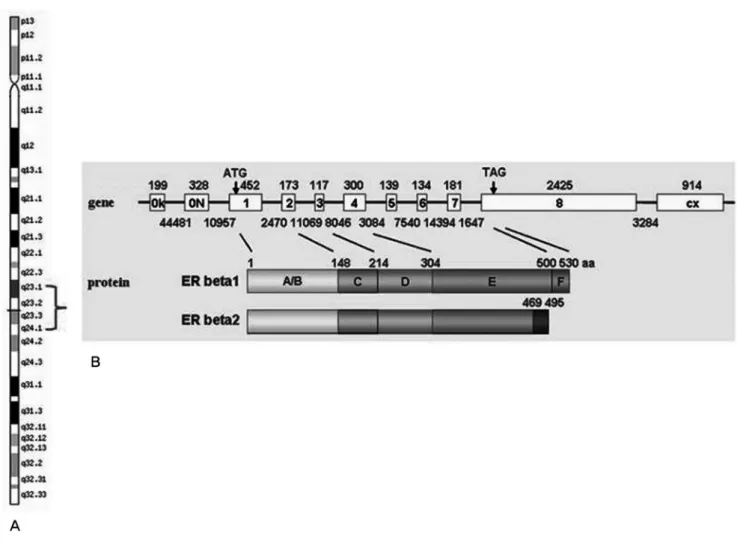
Fig.1. Summary, genomic regions, transcripts, and products of ESR 2 gene
양, 내당능, 높은 체질량지수 등이 연관성이 있는 것으로 보고되 고 있으며 칼슘 대사이상, 고령, 호르몬 이상 등도 의심할 수 있 는 인자로 생각되고 있다.5,19) 최근 유전공학기술의 발달에 따라 다양한 질환의 발현과 관련된 유전자를 발견하는 것이 가능해 졌다. 그런 결과로 알려진 후종인대 골화증과 관련된 유전자로 는 COL11A2, BMP-2, TNF-α, NPPS, leptin receptor, TGF-β, Retinoic X receptor, ER, IL-1, PTH, VDR 등이 있다.5,7-11)
ESR 유전자는 골아세포(osteoblast)와 파골세포(osteoclast) 에 모두 존재하여 발현이 증가되며 기능하는 유전자이다.20,21) 그 조절 기전으로는 estrogen이 ESR에 결합하여 활성화되면 서 다양한 성장 인자와 cytokine의 생산을 조절하여 골의 항상 성을 유지하는 방법과 골아세포 및 파골세포의 분화와 세포사 멸(apoptosis)에 직접 관여하는 방법 등을 통하여 조절하게 된
다.22,23) 이러한 작용과정 중에 estrogen의 signal이 전달되는 과
정에는 ESR 1(=ESR α), ESR 2(=ESR β) 두 가지 형태의 수 용체로 존재하며 이 둘은 핵 수용체 중에서 ligand-activated transcription factor로 존재하게 된다.21,23) 이 두 수용체는 골세 포 안에서 서로 다른 효과를 나타내는데 ESR 1은 주로 피질골
에서 존재하며 ESR 2 gene은 해면골에서 ESR 1보다 많이 분 포하면서 작용한다.23,24) 이 중 본 연구의 대상인 ESR 2 gene은 chromosome 14q23-24.1에 위치하고 8개의 exon으로 구성된 40kilobases 길이의 gene으로 ESR 1보다 짧은 길이지만 비슷한 구조를 가지고 있는 것으로 알려져 있다(Fig. 1,2).21) 비록 ESR 1 이 estrogen이 골에 작용하는데 직접적으로는 더 중요한 역할을 하지만 ESR 2는 ESR 1의 작용을 조절하는 작용을 하기 때문에 그 중요성이 크다고 할 수 있다.19)
지금까지 ESR 2 gene이 질병과 갖는 상관관계에 대한 연구는 많이 이루어 지지 못하였으며 연구 결과를 통한 진단 및 치료가 적절하게 이용이 되지 못하고 있는 것이 현재 상황이다. 현재까 지 밝혀진 바로는 ESR 2 gene과 난소 상피암, 정맥 궤양, 순환기 계 질환 등 골격계 이외의 질병에 대한 상관관계만이 보고되고 있을 뿐이다. Lurie등25)은 ESR gene중에 rs1271572, rs1256030, rs1256031 및 rs3020450 등의 다형성이 난소 상피암과의 관련성 에 대한 연구에서 rs3020450만을 제외한 모든 다형성이 관련이 있는 것을 발표하였으며 이중 rs1271572가 가장 깊다고 보고하 였다. 정맥 궤양과의 관련성에 대한 보고는 Ashworth 등이 ESR
Fig. 2. (A) location of ESR 2 gene (B) comparison between ESR 1 and ESR 2 gene
Ki Tack Kim et al Volume 19 • Number 1 • March 2012
www.krspine.org
6
2 gene의 5개의 haplotype의 발현이 정상군에 비해 정맥 궤양 환 자에게서 2배 이상 발현이 높게 되는 것을 발표 한 바 있다.26) 순 환기계에 있어서는 Rexrode등27)이 ESR 2 gene 의 다형성 중에 서 rs1271572가 여성의 순환기 질환의 발병과 관련성이 높음을 보고하였고 Maruyama등28)은 rs928554 가 임산부의 전자간증 과 관련성이 있다고 보고하였다.
하지만 앞서 언급된 연구를 비롯하여 다른 어떤 연구에서도 ESR 2 gene과 후종인대 골화증의 감수성에 대해서는 연구되지 않았고 본 연구에서 이에 대한 결과로 ESR 2 gene의 다형성 중 에서 rs1256049가 후종인대 골화증과 깊은 상관관계를 나타내 는 것을 알 수 있었다. 그러나 경∙흉추만을 대상으로 하였기 때 문에 조사되지 않은 요추부의 질병유무가 본 연구 결과에 영향 을 미쳤을 가능성에 대한 한계점과 다른 연구들과 마찬가지로 본 연구에서도 질병과의 상관관계를 알아내었지만 이를 이용한 진단 및 치료에 대한 구체적인 방법은 제시하지 못하였다는 점 은 본 연구의 한계점으로 생각 된다.
결 론
ESR 2 gene의 다형성 중 rs1256049의 A/A genotype이 후종인 대 골화증의 발생 위험과 관련성을 나타내었다. 앞으로 유전자 치료에 대한 임상적용이 가능해 진다면 본 연구의 결과가 한국 인의 후종인대 골화증 진단 및 치료에 있어 중요한 자료로 사용 될 수 있을 것으로 생각된다.
REFERENCES
1. Ono K, Yonenobu K, Miyamoto S, Okada K. Pathology of ossification of the posterior longitudinal ligament and ligamentum flavum. Clin Orthop Relat Res. 1999;359:18-26.
2. Taketomi E, Sakou T, Matsunaga S, Yamaguchi M. Family study of a twin with ossification of the posterior longitudinal ligament in the cervical spine.
Spine (Phila Pa 1976). 1992;17(3 Suppl):S55-6.
3. Okamoto K, Kobashi G, Washio M, et al. Dietary habits and risk of ossification of the posterior longitudinal ligaments of the spine (OPLL); findings from a case-control study in Japan. J Bone Miner Metab. 2004;22:612-7.
4. Sakou T, Matsunaga S, Koga H. Recent progress in the study of pathogenesis of ossification of the posterior longitudinal ligament. J Orthop Sci. 2000;5:310-5.
5. Inamasu J, Guiot BH, Sachs DC. Ossification of the posterior longitudinal ligament: an update on its biology,
epidemiology, and natural history. Neurosurgery.
2006;58:1027-39.
6. Hamanishi C, Tan A, Yamane T, Tomihara M, Fukuda K, Tanaka S. Ossification of the posterior longitudinal ligament. Autosomal recessive trait. Spine (Phila Pa 1976).
1995;20:205-7.
7. Koga H, Hayashi K, Taketomi E, et al. Restriction fragment length polymorphism of genes of the alpha 2(XI) collagen, bone morphogenetic protein-2, alkaline phosphatase, and tumor necrosis factor-alpha among patients with ossification of posterior longitudinal ligament and controls from the Japanese population. Spine (Phila Pa 1976).
1996;21:469-73.
8. Inoue I, Ikeda R, Tsukahara S. Current topics in pharmacological research on bone metabolism: Promyelotic leukemia zinc finger (PLZF) and tumor necrosis factor- alpha-stimulated gene 6 (TSG-6) identified by gene expression analysis play roles in the pathogenesis of ossification of the posterior longitudinal ligament. J Pharmacol Sci. 2006;100:205-10.
9. Tahara M, Aiba A, Yamazaki M, et al. The extent of ossification of posterior longitudinal ligament of the spine associated with nucleotide pyrophosphatase gene and leptin receptor gene polymorphisms. Spine (Phila Pa 1976).
2005;30:877-80.
10. Inamasu J, Guiot BH, Sachs DC. Ossification of the posterior longitudinal ligament: an update on its biology, epidemiology, and natural history. Neurosurgery.
2006;58:1027-39.
11. Terayama K. Genetic studies on ossification of the posterior longitudinal ligament of the spine. Spine (Phila Pa 1976).
1989;14:1184-91.
12. Geng L, Yao Z, Yang H, Luo J, Han L, Lu Q. Association of CA repeat polymorphism in estrogen receptor beta gene with postmenopausal osteoporosis in Chinese. J Genet Genomics. 2007;34:868-76.
13. Khosla S, Riggs BL, Atkinson EJ, et al. Relationship of estrogen receptor genotypes to bone mineral density and to rates of bone loss in men. J Clin Endocrinol Metab.
2004;89:1808-16.
14. Lau HH, Ho AY, Luk KD, Kung AW. Estrogen receptor beta gene polymorphisms are associated with higher bone mineral density in premenopausal, but not postmenopausal southern Chinese women. Bone. 2002;31:276-81.
15. Morishima A, Grumbach MM, Simpson ER, Fisher C, Qin
K. Aromatase deficiency in male and female siblings caused by a novel mutation and the physiological role of estrogens.
J Clin Endocrinol Metab. 1995;80:3689-98.
16. Gennari L, Merlotti D, De Paola V, et al. Estrogen receptor gene polymorphisms and the genetics of osteoporosis: a HuGE review. Am J Epidemiol. 2005;161:307-20.
17. Smith EP, Boyd J, Frank GR, et al. Estrogen resistance caused by a mutation in the estrogen-receptor gene in a man. N Engl J Med. 1994;331:1056-61.
18. Ogata N, Koshizuka Y, Miura T, et al. Association of bone metabolism regulatory factor gene polymorphisms with susceptibility to ossification of the posterior longitudinal ligament of the spine and its severity. Spine (Phila Pa 1976).
2002;27:1765-71.
19. Wang PN, Chen SS, Liu HC, Fuh JL, Kuo BI, Wang SJ.
Ossification of the posterior longitudinal ligament of the spine. A case-control risk factor study. Spine (Phila Pa 1976). 1999;24:142-4.
20. Mosselman S, Polman J, Dijkema R. ER beta: identification and characterization of a novel human estrogen receptor.
FEBS Lett. 1996;392:49-53.
21. Bord S, Horner A, Beavan S, Compston J. Estrogen receptors alpha and beta are differentially expressed in developing human bone. J Clin Endocrinol Metab.
2001;86:2309-14.
22. Sims NA, Clément-Lacroix P, Minet D, et al. A functional
androgen receptor is not sufficient to allow estradiol to protect bone after gonadectomy in estradiol receptor- deficient mice. J Clin Invest. 2003;111:1319-27.
23. Spelsberg TC, Subramaniam M, Riggs BL, Khosla S. The actions and interactions of sex steroids and growth factors/
cytokines on the skeleton. Mol Endocrinol. 1999;13:819-28.
24. Pensler JM, Radosevich JA, Higbee R, Langman CB.
Osteoclasts isolated from membranous bone in children exhibit nuclear estrogen and progesterone receptors. J Bone Miner Res. 1990;5:797-802.
25. Lurie G, Wilkens LR, Thompson PJ, et al. Genetic polymorphisms in the estrogen receptor beta (ESR2) gene and the risk of epithelial ovarian carcinoma. Cancer Causes Control. 2009;20:47-55.
26. Ashworth JJ, Smyth JV, Pendleton N, et al. Polymorphisms spanning the 0N exon and promoter of the estrogen receptor-beta (ERbeta) gene ESR2 are associated with venous ulceration. Clin Genet. 2008;73:55-61.
27. Rexrode KM, Ridker PM, Hegener HH, Buring JE, Manson JE, Zee RY. Polymorphisms and haplotypes of the estrogen receptor-beta gene (ESR2) and cardiovascular disease in men and women. Clin Chem. 2007;53:1749-56.
28. Maruyama A, Nakayama T, Sato N, Mizutani Y, Furuya K, Yamamoto T. Association study using single nucleotide polymorphisms in the estrogen receptor beta (ESR2) gene for preeclampsia. Hypertens Res. 2004;27:903-9.
Estrogen Receptor 2 유전자 다형성과 척추 후종인대 골화증의 관계
김기택 • 이상훈 • 곽윤호* • 손은석† • 박경준 • 김덕현
경희대학교 의과대학 정형외과학교실, 부민병원 정형외과*, 경희대학교 일반대학원 의학과†
연구계획: 척추 후종인대 골화증(ossification of the posterior longitudinal ligament, OPLL) 환자의 estrogen 수용체 2(estrogen receptor 2, ESR2) 유전자 에 대한 분석
목적: 후종인대 골화증의 병태생리를 이해하기 위하여 ESR유전자 이형성과의 관계를 연구 하였다.
선행문헌의 요약: 후종인대 골화증은 사람 백혈구 항원(human leukocyte antigen, HLA) 및 가계도 조사등에 의해 강한 유전적 경향을 보이는 것으로 밝 혀 졌고 많은 연구를 통하여 COL11A2, BMP-2, TNF-α, NPPS, leptin receptor, transforming growth factor(TGF)-β, Retinoic X receptor, ER, IL-1, PTH, VDR등의 유전적 관련성이 보고 되었다.
대상 및 방법: 164명의 후종인대 골화증군과 219명의 대조군에서 DNA를 채취한 후 ESR2의 rs1256049, rs928554, rs1255998 3개의 각각 유전자형을 후종인대 골화증과 상관관계를 분석하였다.
결과: ESR2의 여러 이형성 중에 rs1256049 [exon6, Val328Val, p=0.018, odd비 (OR)=2.41, 95 신뢰구간(confidence interval, CI)=1.15-5.02 in the recessive model]중 A/A genotype만이 양군에서 통계적으로 유의한 차이를 보이며 연구대상군에서 많은 발현을 보였다. 다른 이형성은 유의한 차이를 보이지 않았다.
결론: ESR 2 gene의 다형성 중 rs1256049의 A/A genotype이 후종인대 골화증의 발생 위험과 관련성을 나타내었다.
색인 단어: 척추, 후종인대 골화증, Estrogen 수용체 2 (ESR 2) 유전자 약칭 제목: ESR2 다형성과 후종인대 골화증의 관계