PGHN
Review Article
Acute Abdominal Pain in Children
Joon Sung Kim
Department of Pediatrics, Ulsan University Hospital, University of Ulsan College of Medicine, Ulsan, Korea
Acute abdominal pain is a common complaint in childhood, and it can be caused by a wide range of underlying surgical and non-surgical conditions. The most common non-surgical condition is gastroenteritis, while the most common surgical condition is appendicitis. Abdominal pain in children varies with age, associated symptoms, and pain location. Although acute abdominal pain is usually benign and self-limiting, there are uncommon but life-threatening conditions that require urgent care. Meticulous history taking and physical examinations are essential to determine the cause of acute abdominal pain and to identify children with surgical conditions such as appendicitis.
Key Words: Abdominal pain, Acute abdominal, Appendicitis, Child
Received:November 19, 2013, Revised:December 5, 2013, Accepted:December 7, 2013
Corresponding author: Joon Sung Kim, Department of Pediatrics, Ulsan University Hospital, 877, Bangeojinsunhwan-doro, Dong-gu, Ulsan 682-714, Korea. Tel: +82-52-250-7060, Fax: +82-52-250-8071, E-mail: [email protected]
Copyright ⓒ 2013 by The Korean Society of Pediatric Gastroenterology, Hepatology and Nutrition
This is an openaccess article distributed under the terms of the Creative Commons Attribution NonCommercial License (http://creativecommons.org/licenses/by-nc/3.0/) which permits unrestricted noncommercial use, distribution, and reproduction in any medium, provided the original work is properly cited.
INTRODUCTION
Acute abdominal pain is one of the most common complaints in children, and it poses a diagnostic challenge owing to the variety of underlying causes.
Acute abdominal pain is usually a self-limiting, be- nign condition, such as in gastroenteritis, con- stipation, or viral illness [1]. However, the challenge for the physician is to identify children who have un- common and potentially life-threatening conditions that require urgent evaluation and treatment, such as appendicitis, intussusception, volvulus, or adhe- sion [1,2]. The frequency of surgical intervention in patients presenting with acute abdominal pain is around 1% [3], but the possibility of overlooking a serious organic etiology is a major concern for physicians. Unfortunately, a small number of pa-
tients with acute abdominal pain may not receive a definitive diagnosis on first evaluation because of the early stage of the disease or subtle and atypical signs [3]. It is important to understand that accurate and timely diagnosis is the key to preventing sig- nificant morbidity and mortality. This article pro- vides a review of the pathogenesis, etiology, clinical evaluation, and management of children with acute abdominal pain.
PATHOGENESIS
Abdominal pain may be classified as visceral, so- matoparietal, and referred pain according to the na- ture of the pain receptors involved. Interestingly, most abdominal pain is associated with visceral pain receptors [4].
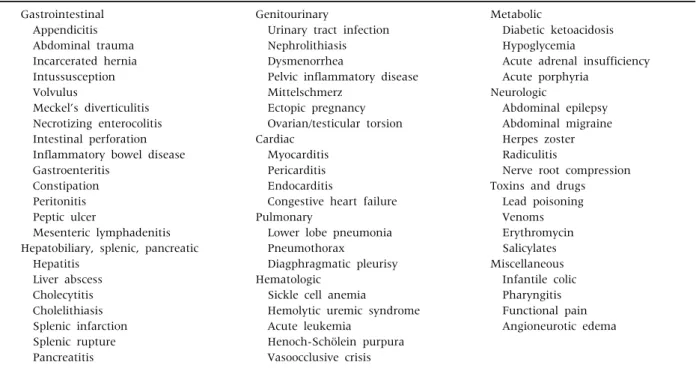
Table 1.Causes of Acute Abdominal Pain in Children Gastrointestinal
Appendicitis Abdominal trauma Incarcerated hernia Intussusception Volvulus
Meckel’s diverticulitis Necrotizing enterocolitis Intestinal perforation Inflammatory bowel disease Gastroenteritis
Constipation Peritonitis Peptic ulcer
Mesenteric lymphadenitis Hepatobiliary, splenic, pancreatic Hepatitis
Liver abscess Cholecytitis Cholelithiasis Splenic infarction Splenic rupture Pancreatitis
Genitourinary
Urinary tract infection Nephrolithiasis Dysmenorrhea
Pelvic inflammatory disease Mittelschmerz
Ectopic pregnancy Ovarian/testicular torsion Cardiac
Myocarditis Pericarditis Endocarditis
Congestive heart failure Pulmonary
Lower lobe pneumonia Pneumothorax
Diagphragmatic pleurisy Hematologic
Sickle cell anemia Hemolytic uremic syndrome Acute leukemia
Henoch-Schölein purpura Vasoocclusive crisis
Metabolic
Diabetic ketoacidosis Hypoglycemia
Acute adrenal insufficiency Acute porphyria
Neurologic
Abdominal epilepsy Abdominal migraine Herpes zoster Radiculitis
Nerve root compression Toxins and drugs Lead poisoning Venoms Erythromycin Salicylates Miscellaneous Infantile colic Pharyngitis Functional pain Angioneurotic edema
Visceral pain receptors are located on the serosal surface, in the mesentery, within the intestinal mus- cle, and the mucosa of hollow organs. These pain re- ceptors respond to mechanical and chemical stimuli, such as stretching, tension, and ischemia. Because visceral pain fibers are unmyelinated C-fibers, and enter the spinal cord bilaterally at several levels, vis- ceral pain is usually dull, poorly localized, and per- ceived in the midline. In addition, there are three broad pain areas with anatomic associations. Pain emanating from foregut structures (e.g., lower esophagus, stomach) is felt in the epigastric area, pain from midgut structures (e.g., small intestine) is felt in the periumbilical area, and pain from hindgut structures (e.g., colon) is felt in the lower abdomen.
Somatoparietal pain receptors are located in the parietal peritoneum, the muscle, and the skin. Pain resulting from inflammation, stretching, or tearing of the parietal peritoneum is transmitted through myelinated A-δ fibers to specific dorsal root ganglia.
Somatoparietal pain is characterized by sharp, more intense, and more localized sensation. Movement may aggravate the pain; thus, the child will stay still.
Referred pain is well localized but felt in distant areas of the same cutaneous dermatome as the af- fected organ. It results from shared spinal cord level for afferent neurons from different sites. For exam- ple, inflammatory conditions that affect the dia- phragm can be perceived as pain in the shoulder or lower neck area [4,5].
ETIOLOGY
The causes of acute abdominal pain in children are listed in Table 1. A wide range of surgical and non-surgical conditions can cause acute abdominal pain in children. A brief discussion of some life-threatening and common causes of acute ab- dominal pain follows.
Life-threatening causes of abdominal pain often result from hemorrhage, obstruction, or perforation of the gastrointestinal tract or intra-abdominal or- gans, and may be associated with specific clinical fea- tures [2,4]. Extra-abdominal causes of abdominal pain (e.g., diabetic ketoacidosis, hemolytic uremic syndrome, and myocarditis) also have other dis-
tinguishing clinical features. Common causes of ab- dominal pain include gastroenteritis, constipation, systemic viral illness, infections outside of the gastro- intestinal tract (e.g., streptococcal pharyngitis, lower lobe pneumonia, and urinary tract infection), mesen- teric lymphadenitis, and infantile colic [1, 5-7].
Acute appendicitis
Acute appendicitis is the most common surgical cause of acute abdominal pain in children [4,7].
Typically, children with appendicitis present with visceral, vague, poorly localized, periumbilical pain.
Within 6 to 48 hours, the pain becomes parietal as the overlying peritoneum becomes inflamed. The pain manifests itself as a well-localized pain in the right lower quadrant. However, some of these char- acteristic manifestations are frequently absent, par- ticularly in younger children [8]. Therefore, physi- cians should consider the diagnosis of appendicitis in all cases of previously healthy children who have a history of abdominal pain and vomiting, with or without fever or focal abdominal tenderness [8,9].
Abdominal trauma
Abdominal trauma may cause hemorrhage or lac- eration of solid organs, bowel perforation, organ is- chemia from vascular injury, and intramural hematoma. Blunt abdominal trauma is more com- mon than penetrating injury. Typical mechanisms of trauma include motor vehicle accidents, falling down, and child abuse.
Intestinal obstruction
Intestinal obstruction may produce a character- istic cramping pain. This clinical feature is usually associated with serious intra-abdominal conditions that require urgent diagnosis and treatment. Causes of intestinal obstruction include intussusception, malrotation with midgut volvulus, necrotizing en- terocolitis, incarcerated inguinal hernia, and post- operative adhesions [7].
Gastroenteritis
Gastroenteritis is the most common medical con-
dition of abdominal pain in children [10]. Children with acute gastroenteritis may develop fever, severe cramping abdominal pain, and diffuse abdominal tenderness before diarrhea begins. Viruses including rotavirus, Norwalk virus, adenovirus, and enter- ovirus are the most frequent causes [10]. Bacteria and parasites can also cause acute abdominal pain in children.
Constipation
Children with constipation often present with fe- cal impaction and severe lower abdominal pain.
Constipation is likely in children with at least two of the following characteristics: fewer than three stools weekly, fecal incontinence, large stools palpable in the rectum or through the abdominal wall, retentive posturing, or painful defecation [11].
Mesenteric lymphadenitis
Because mesenteric lymph nodes are usually in the right lower quadrant, this condition sometimes mimics appendicitis, except the pain is more diffuse.
Often, signs of peritonitis are absent. In one series of 70 children with clinically suspected acute appendi- citis, 16% had a final diagnosis of mesenteric lym- phadenitis established by ultrasound, clinical course, or surgery [12]. Etiologies of mesenteric lym- phadenitis include viral and bacterial gastroenteritis, inflammatory bowel disease, and lymphoma; viral infection is most common.
Infantile colic
Infants with colic, particularly those with hyper- tonic characters, may have severe abdominal pain.
Typically, infants with colic show paroxysmal crying and draw their knees up against their abdomen.
Colic is relieved with the passage of flatus or stool during the first three to four weeks of life.
CLINICAL EVALUATION
In the evaluation of a child with acute abdominal pain, the most important components are careful history taking and repeated physical examinations.
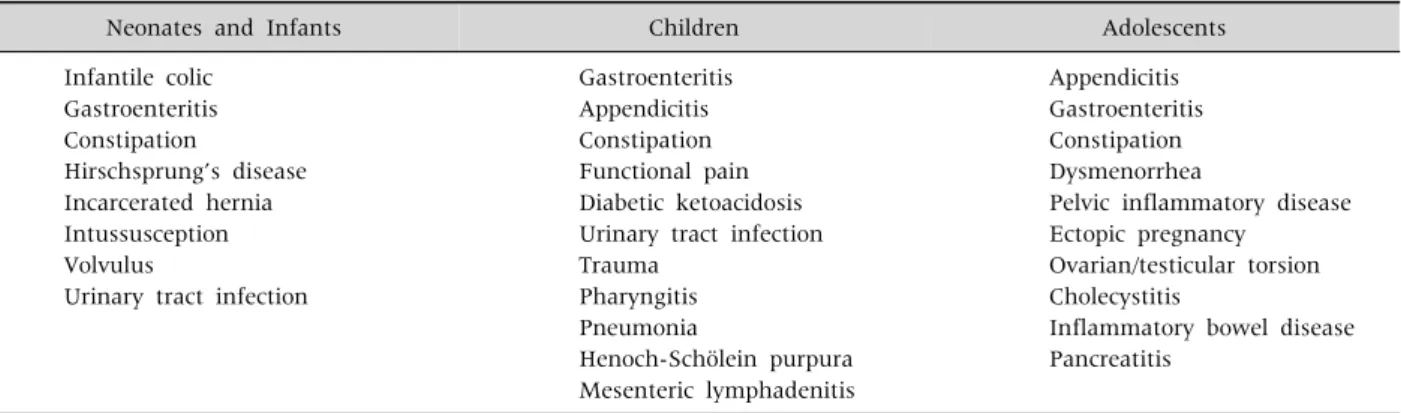
Table 2.Differential Diagnosis of Acute Abdominal Pain by Predominant Age
Neonates and Infants Children Adolescents
Infantile colic Gastroenteritis Constipation
Hirschsprung’s disease Incarcerated hernia Intussusception Volvulus
Urinary tract infection
Gastroenteritis Appendicitis Constipation Functional pain Diabetic ketoacidosis Urinary tract infection Trauma
Pharyngitis Pneumonia
Henoch-Schölein purpura Mesenteric lymphadenitis
Appendicitis Gastroenteritis Constipation Dysmenorrhea
Pelvic inflammatory disease Ectopic pregnancy
Ovarian/testicular torsion Cholecystitis
Inflammatory bowel disease Pancreatitis
Selective use of appropriate laboratory and radio- logical investigations may be necessary to establish a specific diagnosis. However, the diagnosis may re- main uncertain despite a thorough initial evaluation process. Children with acute abdominal pain should be detained in an emergency department with serial physical examinations to clarify any diagnostic uncertainty.
History taking
Important details of the history include symptom onset pattern, progression, location, intensity, char- acters, precipitating and relieving factors of abdomi- nal pain, and associated symptoms. Age of the pa- tient is a key factor in the evaluation of acute ab- dominal pain as listed in Table 2. Other important historical variables include recent abdominal trau- ma, previous abdominal surgery, and a thorough re- view of systems [4-6,10].
Pain relief after a bowel movement suggests a co- lonic condition, and improvement in pain after vom- iting may occur with conditions localized to the small bowel. In surgical abdomen, abdominal pain generally precedes vomiting, and vomiting precedes abdominal pain in medical conditions. Any infants and children presenting with bilious vomiting should be presumed to have bowel obstruction.
Physical examinations
Careful physical examination is essential for accu- rate diagnosis in children with acute abdominal
pain. Examination of external genitalia, testes, anus, and rectum should be included as part of the evalua- tion for abdominal pain. In addition, pelvic examina- tion is important in sexually active female adoles- cents.
General appearance: Children with peritoneal irri- tation remain still or resist movement, while patients with visceral pain change position frequently, often writhing with discomfort.
Vital signs: Vital signs are useful in assessing hypo- volemia and provide useful clues for diagnosis. Fever indicates an underlying infection or inflammation in- cluding acute gastroenteritis, pneumonia, pyeloneph- ritis, or intra-abdominal abscess. Tachypnea may in- dicate pneumonia. Tachycardia and hypotension sug- gest hypovolemia or third-space volume loss.
Abdominal examination: The evaluating physician should gently palpate the abdomen moving toward the area of maximal tenderness. The physician has to make efforts to determine the degree of abdominal tenderness, location, rebound tenderness, rigidity, distension, masses, or organomegaly. A rectal exami- nation provides useful information about sphincter tone, presence of masses, stool nature, hema- tochezia, or melena [13].
Investigations
Specific laboratory studies and radiologic evalua- tion are helpful to assess the patient’s physiological status and to make an accurate diagnosis [14]. A complete blood cell count and a urinalysis are gen-
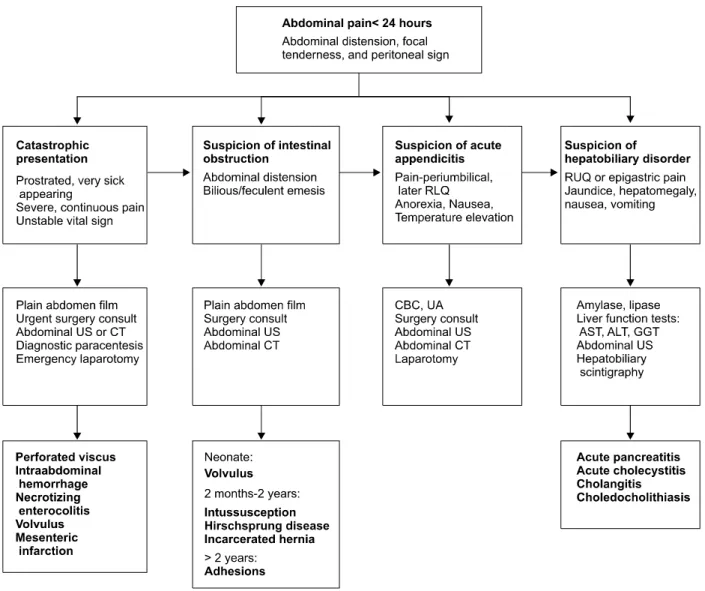
Fig. 1. Algorithmic approach to the children with acute abdominal pain requiring urgent management. RLQ: right lower quadrant, RUQ: right upper quadrant, US: ultrasonography, CT: computed tomography, CBC: complete blood count, UA: urinalysis, AST:
aspartate aminotransferase, ALT: alanine aminotransferase, GGT: γ-glutamyltransferase.
erally indicated in all patients with acute abdominal pain. Measurement of serum glucose and electrolytes helps in evaluating the patient’s hydration status and acid-base balance. A pregnancy test should be per- formed in postmenarcheal girls. An algorithmic ap- proach to children with acute abdominal pain requir- ing urgent intervention is presented in Fig. 1.
Plain abdominal radiographs are helpful if in- testinal obstruction or perforation is suspected.
Chest radiographs may help rule out pneumonia. In the emergency department, ultrasound and com-
puted tomography are widely used to identify the cause of abdominal pain [12,15-17]. Although com- puted tomography is more accurate than ultrasound, ultrasound is the preferred imaging modality for an initial evaluation of many potential causes of pedia- tric abdominal pain because it is noninvasive, radia- tion-free, and less expensive modality [17].
MANAGEMENT
Treatment should be directed at the underlying
cause of abdominal pain. As depicted in Fig. 1, ur- gent intervention and management is required for children who are prostrated and sick-appearing, have signs of bowel obstruction and evidence of peri- toneal irritation. Initial resuscitation measures in- clude correction of hypoxemia, replacement of intra- vascular volume loss, and correction of metabolic abnormalities. Gastric decompression using naso- gastric tube may be necessary if there is bowel obstruction. Empirical intravenous antibiotics are often indicated when there is clinical suspicion of a serious intra-abdominal infection. Moreover, ad- equate analgesics should be provided to patients with severe pain, preferably prior to surgical evalua- tion [18].
CONCLUSION
Acute abdominal pain is one of the most common complaints in childhood, and one that frequently re- quires rapid diagnosis and treatment in the emer- gency department. Although acute abdominal pain is typically self-limiting and benign, there are poten- tially life-threatening conditions that require urgent management, such as appendicitis, intussusception, or bowel obstruction. Meticulous history taking and repeated physical examinations are essential to de- termine the cause of acute abdominal pain and to identify children with surgical conditions.
REFERENCES
1. D'Agostino J. Common abdominal emergencies in children. Emerg Med Clin North Am 2002;20:139-53.
2. Grant HW, Parker MC, Wilson MS, Menzies D, Sunderland G, Thompson JN, et al. Adhesions after ab- dominal surgery in children. J Pediatr Surg 2008;
43:152-6.
3. Scholer SJ, Pituch K, Orr DP, Dittus RS. Clinical out- comes of children with acute abdominal pain.
Pediatrics 1996;98:680-5.
4. Ross A, LeLeiko NS. Acute abdominal pain. Pediatr Rev 2010;31:135-44.
5. Leung AK, Sigalet DL. Acute abdominal pain in children. Am Fam Physician 2003;67:2321-6.
6. Reynolds SL, Jaffe DM. Diagnosing abdominal pain in a pediatric emergency department. Pediatr Emerg Care 1992;8:126-8.
7. Carty HM. Paediatric emergencies: non-traumatic ab- dominal emergencies. Eur Radiol 2002;12:2835-48.
8. Kwok MY, Kim MK, Gorelick MH. Evidence-based ap- proach to the diagnosis of appendicitis in children.
Pediatr Emerg Care 2004;20:690-8.
9. Bundy DG, Byerley JS, Liles EA, Perrin EM, Katznelson J, Rice HE. Does this child have appendici- tis? JAMA 2007;298:438-51.
10. Mason JD. The evaluation of acute abdominal pain in children. Emerg Med Clin North Am 1996;14:629-43.
11. Loening-Baucke V, Swidsinski A. Constipation as cause of acute abdominal pain in children. J Pediatr 2007;151:666-9.
12. Vignault F, Filiatrault D, Brandt ML, Garel L, Grignon A, Ouimet A. Acute appendicitis in children: evaluation with US. Radiology 1990;176:501-4.
13. Kristinsson G, Wall SP, Crain EF. The digital rectal ex- amination in pediatric trauma: a pilot study. J Emerg Med 2007;32:59-62.
14. Kwan KY, Nager AL. Diagnosing pediatric appendici- tis: usefulness of laboratory markers. Am J Emerg Med 2010;28:1009-15.
15. Soundappan SV, Holland AJ, Cass DT, Lam A.
Diagnostic accuracy of surgeon-performed focused ab- dominal sonography (FAST) in blunt paediatric trauma. Injury 2005;36:970-5.
16. Reich JD, Brogdon B, Ray WE, Eckert J, Gorell H. Use of CT scan in the diagnosis of pediatric acute appendicitis. Pediatr Emerg Care 2000;16:241-3.
17. Saito JM. Beyond appendicitis: evaluation and surgical treatment of pediatric acute abdominal pain. Curr Opin Pediatr 2012;24:357-64.
18. Nissman SA, Kaplan LJ, Mann BD. Critically re- appraising the literature-driven practice of analgesia administration for acute abdominal pain in the emer- gency room prior to surgical evaluation. Am J Surg 2003;185:291-6.