
The Study on the Removal of Odor Emitting Environmental Fundamental Facility Lee, Byung-Kwan, Lee, Sang-Hun, Tak, Sung-Je† and Lee, Byung-Ki
6
0
0
전체 글
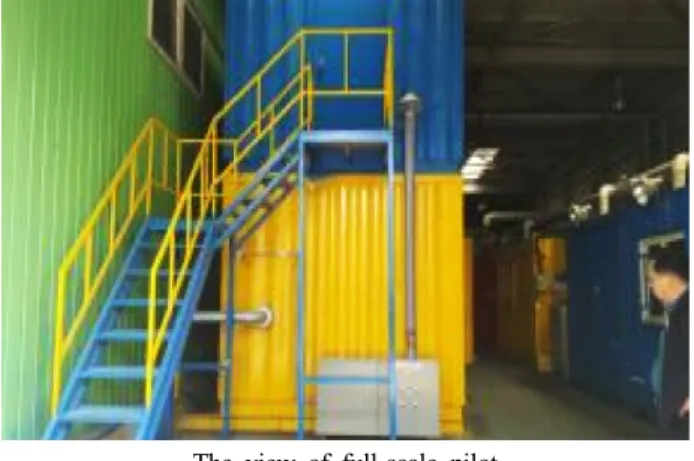
(2) ․. ․. ․. 이병관 이상훈 탁성제 이병기. 52. 를 전기화학적으로 중화시키는 이온 중화와 다공성 금속실리. Table 1. The specification of hybrid deodorization. 카를 코팅한 활성탄 흡착을 적용한 복합탈취장치로서, 이온나 이저 1단, 2단과 흡착탑 1단, 2단으로 구성되어 있고, 설계. Hybrid deodorization Factor Stage-1. 유량은 최대 3 m3/min이다. Voltage. 12 kV. kHz이며, 흡착탑의 제원은 150(W) × 300(L) × 400(H)이다.. Electric power. 30 W. 흡착탑에는 코어-쉘 구조의 다공성 금속 실리카입자를 활성. Frequency. 21 kHz. 이오나이저의 제원은 전압 12 kV, 전력 30 W, 주파수 21. Stage-2 Porous active carbon. Stage-3 15 kV 30 W 28 kHz. Stage-4 Porous active carbon. 탄의 표면에 코팅시킨 다공성 나노활성탄이 충전되어 있다.. 2.2 실험방법 및 분석 복합탈취장치의 잔류 악취가스(황화수소, 암모니아)의 제 거실험은 바이오가스 정제를 위한 Test-bed가 설치된 경기 도 소재 P 환경순환센터 내 음식물쓰레기 및 축분 혼합처 리장에서 수행되었다. 음이온 발생창치인 이오나이저의 주된 제거대상은 양이온 악취가스인 암모니아이며, 활성 탄 흡착탑의 주된 제거대상은 분자상 악취가스인 황화수 The view of full-scale pilot ( P City facility management corporation ). 소이다. 실험은 처리장 소화조로부터 직접 유입되는 악취 가스의 유량 및 유입농도를 대상으로 하였고(Table 2), 처 리된 악취가스의 분석은 (주)센서로닉사의 바이오가스측 정기(Model: GSR-400P)를 이용하였다.. 2.3 복합탈취장치의 악취가스 제거 메카니즘 2.3.1 이온중화 모든 악취원인 가스들은 이온화 되어 있는 본래 그 상태에 서만 독특한 악취 특성을 발현하고 있는 바, 공기 중에 존재 하는 물 분자를 이용하여 한정된 공간 내에 전기/화학적 방법 Hybrid deodorization system. 으로 양이온, 음이온들을 다량 생성시켜 과잉으로 존재하는 환경을 조성한 후 악취물질을 통과시키면, 이온중화 반응에 의해 악취 발현이 불가능한 새로운 전기적 중성물질 가스상 으로 변화되어 탈취되게 된다. 이온발생장치의 탈취메카니즘을 보면, 양전극에서 플라즈 마 방전에 의해 H+이 발생하고, 음극으로 이동하여 전자와 만 Table 2. Experimental condition. Ionizer. Coated active carbon. Fig. 1. Hybrid deodorization system.. Journal of Climate Change Research 2017, Vol. 8, No. 1. Run. Flow rate (m3/min). Run-1. 1.5. Run-2. 2.7. Input H2S Con. Input NH3 Con. (ppm) (ppm). ∼ 100∼199 102 202. ∼ 18∼44 14 51.
(3) 환경기초시설에서 발생하는 악취가스 제거에 관한 연구. Table 3. Specification of GSR-400P Item. Range. 53. Table 4. The nature of the composite deodorization material. Resolution Accuracy Method. 구분. 내용. H2S. ∼ 0∼100 %vol 0∼1,000/2,000/. O2. 0 25 %vol. 0.01. 2%FS. EC. Specific surface area. 0 100/1,000 ppm. 0.10. 2%FS. EC. Metal. - Iron, nickel, cobalt, cupper. Binders. - Inorganic : colloidal silica - Organic : polyvinyl alcohol. CO2. 0 50 %vol. CH4. NH3. 9,999 ppm. 전원 습도 온도. ∼. ∼. 0.10. 2%FS. NDIR. 0.10. 2%FS. NDIR. 0.01. 3%FS. EC. DC12V liteum-ion. ∼ —5∼45℃. 0 95 %RH. Component ratio (W,%). ∼. - Metal/silica particle : 1 50 - Active carbon : 50 99 - Binder material : 0.5 20. ∼ ∼. - 300 m2/g. 나서 중성의 활성수소가 생성되며, 음전극에서는 전자를 방출 하여 공기 중의 산소를 산소이온으로 대전시키게 된다. 이렇 게 이온발생장치에서 발생된 활성수소와 산소이온은 방출되 면서 악취물질과 반응하게 된다. H+ + e—. → H (양전극). O2 + e—. → O — (음전극). 4H2O. 2. → 2H O + O 2. 2. + 4H+. 2.3.2 흡착. Fig. 2. The synthesization of porous nano-composite particle.. 3.1.1 이오나이저의 제거특성. 복합 다공성 세라믹 탈취소재와 대표적인 흡착소재인 활성 탄를 복합하여 만들어진 다공성 나노복합입자 합성 촉매담체 를 흡착탑에 충전하여 잔류 악취가스를 흡착/제거하게 된다. 나노 복합탈취소재의 특성 및 합성제조는 Table 4, Fig. 2와 같다.. ∼. 이오나이저의 탈취실험 결과, 황화수소의 제거율은 0.0. 7.9%로 거의 처리되지 않는 것으로 보아, 분자 구조로 이루어 진 악취가스의 제거는 어려운 것으로 나타났다. 그러나 양이. ∼. 온인 암모니아의 제거율은 50.0 64.5%로 나타나고 있어 양 이온 악취가스의 제거에 적용이 가능한 것이 확인되었다.. 3. 결과 및 고찰 3.1 탈취장치별 제거특성. 3.1.2 흡착탑의 제거특성. ∼. 흡착탑의 탈취실험 결과, 황화수소의 제거효율은 92.7. http://www.ekscc.re.kr.
(4) ․. ․. ․. 이병관 이상훈 탁성제 이병기. 54 Table 5. Removal rate of H2S (ionizer). Table 7. Removal rate of H2S (adsorption tower). Flow rate (m3/min). Input H2S con. (ppm). Output H2S con. (ppm). Removal rate (%). Flow rate (m3/min). Input H2S con. (ppm). Output H2S con. (ppm). Removal rate (%). 1.5. 110 151. 108 139. 0 7.9. 1.5. 105 125. 5.9 7.7. 92.7 95.4. ∼. ∼. ∼. Table 6. Removal rate of NH3 (ionizer). ∼. ∼. ∼. Table 8. Removal rate of NH3 (adsorption tower). Flow rate (m3/min). Input NH3 con. (ppm). Output NH3 con. (ppm). Removal rate (%). Flow rate (m3/min). Input NH3 con. (ppm). Output NH3 con. (ppm). Removal rate (%). 1.5. 22 31. 9 21. 50.0 64.5. 1.5. 25 29. 11 16. 40.7 62.1. ∼. ∼. ∼. ∼. ∼. ∼. Fig. 5. Removal rate of H2S (adsorption tower).. Fig. 3. Removal rate of H2S (ionizer).. Fig. 6. Removal rate of NH3 (adsorption tower). Fig. 4. Removal rate of NH3 (ionizer).. ∼. 균 94%, 95%의 우수한 처리결과를 보이는 것으로 나타났으. 95.4%로 높은 제거효과를 보이고 있고, 암모니아 또한 40.7. 나, 유입농도가 165 ppm 이상에서는 제거율이 다소 낮아지는. 62.1%의 제거율을 보이는 것으로 나타났다. 이러한 결과는. 경향을 보이고 있어 복합탈취장치의 안정적인 처리를 위해서. 촉매의 무기 다공성 입자와 활성탄의 콤비네이션 효과에 기. 는 가스 유입농도 165 ppm 이하의 현장에 적용하는 것이 바. 인한 것으로 판단된다.. 람직한 것으로 판단된다. 한편, 복합탈취장치의 암모니아 제 거율은 각각 평균 74%, 85%로써 황화수소에 비해 상대적으. 3.2 복합탈취장치의 제거특성. 로 낮은 처리결과를 보이는 것으로 나타났는데, 이는 장치의. 가스 유입유량을 각각 2.7 m3/min와 1.5 m2/min로 달리하. 개별 성능평가로부터 이온중화의 낮은 암모니아 분해능 때문. 여 수행한 결과, 복합탈취장치의 황화수소 제거율은 각각 평. Journal of Climate Change Research 2017, Vol. 8, No. 1. 인 것으로 판단된다..
(5) 환경기초시설에서 발생하는 악취가스 제거에 관한 연구. 55. Table 9. Removal rate of H2S (hybrid deodorization) Flow rate (m3/min) 1.5. 2.7. Input H2S con. (ppm). Output H2S con. (ppm). 102 165. 4.4 7.7. ∼ 175∼202 105∼160 165∼199. ∼ 11∼15.8 3.2∼9.1 10.9∼14.1. Removal rate (%) 95. 94. Table 10. Removal rate of NH3 (hybrid deodorization) Flow rate (m3/min) 1.5. 2.7. Input NH3 con. (ppm). Output NH3 con. (ppm). 14 32. 1 6. ∼ 37∼51 18∼35 40∼44. ∼ 11∼15 2∼8 11∼14. Fig. 9. Removal rate of NH3 (hybrid) (flow rate 1.5 m3/ min).. Removal rate (%) 84. 74. Fig. 10. Removal rate of NH3 (hybrid) (flow rate 2.7 m3/min).. 4. 결. 론. 본 연구는 음식물쓰레기와 축산분뇨 혼합처리장으로부터 발생하는 주요 악취물질인 황화수소와 암모니아를 대상으로 Fig. 7. Removal rate of H2S (hybrid) (flow rate 1.5 m3/ min).. 하여 복합탈취장치의 악취제거 특성을 평가하고자 하였다. 그 결과, 황화수소의 제거율은 약 95%의 우수한 처리결과를 보 이는 것으로 나타났으나, 암모니아의 경우는 제거율이 상대적. ∼. 으로 낮은 74 84%를 보이는 것으로 나타났다. 이는 장치의 개별 성능평가로부터 이온중화의 낮은 암모니아 분해능 때문 인 것으로 판단된다. 또한 복합탈취장치는 유입농도가 일정 농도(황화수소 165 ppm, 암모니아 35 ppm)이상인 경우, 제거 율이 다소 낮아지는 경향을 보이고 있기 때문에, 현장 적용 시 이 점을 충분히 고려해야만 할 것으로 판단된다.. 사 Fig. 8. Removal rate of H2S (hybrid) (Flow rate 2.7 m3/ min).. 사. 본 연구는 환경부 글로벌탑환경기술개발사업 Non-CO2 온 실가스저감기술개발사업단 연구과제(과제번호 : GT-11-E-02-. http://www.ekscc.re.kr.
(6) ․. ․. ․. 이병관 이상훈 탁성제 이병기. 56 001-3)의 연구비 지원으로 수행되었습니다.. Park HK. 2008. Study on reduction of odor from food waste treatment facilities. Gangwon University.. REFERENCES. Ha NK. 2011. Removal characteristics of activated carbons with metal catalyst additives for hydrogen sulfide and. Ryu KH. 2007. Study on non-thermal plasma reactor for generation of negative ions. Inha University.. methyl mercaptan. Ulsan University. Kim JY. 2012. A study on the thermal adsorption and de-. Cho BR. 2008. Characterization of dorous elements from. sorption characteristics of industrial odorants using acti-. emission sources in Chungju. Korean Society of Envi-. vated carbon. The Korean Institute of Chemical Engineers.. ronmental Engineering.. Galera. 2007. Melvin maaliw, effects of pollutant concentra-. Oh IH. 2008. Measurement of complex odor from industries. tion ratio on the simultaneous removal of NH3, H2S and. and regulated odorous substance in public complaint areas. toluene gases using rock wool-compost biofilter. Elsevier.. of Changwon industrial complex, and its reduction countermeasure. The Korean Environmental Sciences Society.. Journal of Climate Change Research 2017, Vol. 8, No. 1.
(7)
수치


관련 문서
1 John Owen, Justification by Faith Alone, in The Works of John Owen, ed. John Bolt, trans. Scott Clark, "Do This and Live: Christ's Active Obedience as the
Han Soo Kim, Jeong Min Park, Byung No Lee, Myung Gook Moon, Jang Ho Ha, Nam Ho Lee, Young Soo Kim, Chang Goo Kang, Hyung Ki Cha, Moon Sik Chae, Jeong Ho Moon, Kyung Min Oh,
The removal efficiency of nitrate was increased with increasing of dosage of adsorbents. The NO 3 - -N removal was not affected by the pH under the experiment range of pH. The
Intraoperative photograph shows grossly total removal of tumor using the navigation system
The purpose of this study was to evaluate surface changes and abrasion of the implant fixture and TiN coated abutment screw after repeated delivery and
A laboratory experiment was performed to investigate the removal of nitrogen and phosphorus from plating factory effluent using the soil column.. Soil,
CMP characteristics such as the removal rate and WIWNU% were improved by the increase of CMP pressure; however, the electrical properties
Kim DM, Yu KD, Lee JH, Kim HK, Lee SH:Controlled trial of a 5-day course of telithromycin versus doxycycline for treatment of mild to moderate scrub typhus. Scrub
