https://doi.org/10.5763/kjsm.2017.35.2.97 pISSN 1226-3729 eISSN 2288-6028
성인에서 신체활동이 골절 발생에 미치는 영향:
한국 지역사회 코호트 자료에 기반
경희대학교병원 가정의학과
1, 경희대학교 의과대학원
2, 경희의과학연구원 통계지원실
3장민혜
1
ㆍ원장원1
ㆍ최현림1
ㆍ김선영2
ㆍ박우철1
ㆍ김동후1
ㆍ정수진3
ㆍ김병성1
Effects of Physical Activity on Fractures in Adults:
A Community-Based Korean Cohort Study
Minhye Jang 1 , Changwon Won 1 , Hyunrim Choi 1 , Sunyoung Kim 2 , Woochul Park 1 , Donghoo Kim 1 , Sujin Jeong 3 , Byungsung Kim 1
1
Department of Family Medicine, Kyung Hee University Hospital, Seoul,
2Department of Medicine, Graduate School, Kyung Hee University, Seoul,
3Statistics Support Department, Kyung Hee Medical Science Research Institute, Seoul, Korea
Regular exercise and a certain level of physical activity reduce the mortality rate in the elderly. The purpose of this study was to investigate the effect of physical activity on the prevention of fracture in the middle aged or older in Korea. The basic data are based on the Ansan and Ansung community cohort studies of the Korean Genome and Epidemiology Study conducted by the Korea Centers for Disease Control and Prevention in 2001, and the fracture data from the third survey in 2005 to the sixth survey in 2011. The physical activity of the aged in the 40s was mostly distributed in the World Health Organization (WHO) recommended range of 7.5 to 30.0 metabolic equivalent·hr/wk, and the activity was gradually divided into the low and high groups in the 50s and 60s. In the 60s, the risk of fracture was reduced to 0.63 times compared to that of the 50s when physical activity was the recommended level (odds ratio, 0.63; p<0.001). For Korean adults, there was no significant difference in fracture incidence according to the amount of physical activity in the middle-aged people. However, for the elderly aged 60 and over, the risk of fracture decreased when the WHO recommended level of activity was performed, and the risk increased when less or more activities were performed.
Keywords: Exercise, Bone fracture, Risk, Cohort studies, Adult
Received: April 7, 2017 Revised: August 2, 2017 Accepted: August 3, 2017
Correspondence: Byungsung Kim
Department of Family Medicine, Kyung Hee University Hospital, 23 Kyungheedae-ro, Dongdaemun-gu, Seoul 02447, Korea Tel: +82-2-958-8700, Fax: +82-2-958-8699
E-mail: [email protected]
Copyright ©2017 The Korean Society of Sports Medicine
CC
This is an Open Access article distributed under the terms of the Creative Commons Attribution Non-Commercial License (http://creativecommons.org/
licenses/by-nc/4.0) which permits unrestricted non-commercial use, distribution, and reproduction in any medium, provided the original work is properly cited.
서 론
성인에서 골절은 연령증가와 비례하여 발병률이 증가하는
대표적인 질환이다. 성인에서 골절발생은 장기간 일을 할 수
없도록 일상생활에 제한을 주는 주요한 질병이고 1) , 골다공증
성 골절은 중요한 질병 및 사망의 원인이 되어 사회적인 비용을
일으킨다 2) . 골다공증성 골절의 위험인자는 고령, 낮은 골밀도,
성별, 흡연, 큰 키, 골절의 과거력, 단백질 섭취 부족, 적은
신체활동량, 저체중, 근육량 부족 등이며 3) 이 중 4가지 이상의
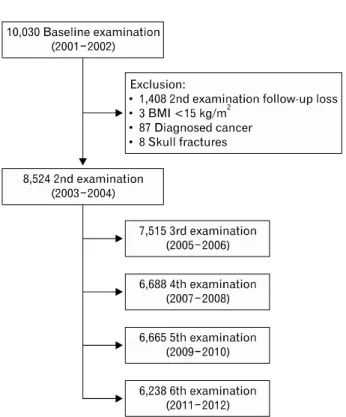
Fig. 1. Flow diagram of the study. BMI: body mass index.
요인을 만족할 때 골절의 발병률이 30배 상승한다는 기존의 연구 결과 4) 가 있다 . 상기 위험인자 중 교정 가능한 것은 신체활 동 , 체중, 체지방, 근육량 등으로 이를 개선하여 넘어짐의 위험 을 줄이고, 골절을 예방할 수 있을 것이다. 30개 코호트(cohort) 연구 결과를 분석한 메타 분석에 의하면 하지 근력 약화는 넘어짐의 위험을 1.76배, 손상성 넘어짐을 1.52배 증가시킨다 5) . 따라서 신체활동량 및 근육량의 감소와 그에 따른 넘어짐 및 골절은 서로 깊은 관련이 있을 것으로 예상된다.
규칙적인 운동과 일정 수준 이상의 신체활동이 노인에서 사망률을 감소시킨다는 것은 여러 연구 6) 를 통해 밝혀졌으나, 골절을 예방하는 효과가 있는가에 대한 연구는 드물다 . 특히, 골절 발생에 있어 인종 간 차이점이 크다고 밝혀진 바 있는데 7) , 기존에는 서양인을 대상으로 한 연구가 주를 이루고 한국인을 대상으로 한 연구는 드물어 본 연구를 계획하였다 8) .
본 연구는 안산, 안성 지역사회의 대규모 전향적 코호트 데이터 베이스에 근거하여 , 한국의 중년 이상 성인에서 신체활 동이 골절발생에 미치는 영향에 대해 조사하였으며, 이를 통해 우리나라 성인에서 골절 예방을 위한 생활 및 운동 지침을 마련하여 개개인에 유용하게 사용되고 , 사회적인 손실을 줄이 는 데 기여하고자 본 연구를 하게 되었다.
연구 방법
1. 연구 대상
본 연구는 질병관리본부의 한국인유전체 역학조사사업 (Korean Genome and Epidemiology Study) 수집 자료를 활용하 였다. 이 중 안산, 안성 지역사회 코호트 연구는 2001년부터 2012년까지 2년마다 조사하여 6기 조사까지 완료되어 공개된 것으로, 만 40–69세 남녀를 대상으로 표준화 교육을 받은 조사원이 면대면 설문조사를 하였으며 , 신장, 체중 등의 신체 계측 자료는 반복 측정하여 수집자료의 질 관리를 수행하였다 7) . 이를 통해, 2001년–2002년에 시행한 기반조사자료를 활용하 였고, 본 조사에 참여한 패널 10,030명을 연구의 대상자로 하였다(Fig. 1) 9) .
골절의 발병여부가 포함된 조사시작 시기는 2003년–2004 년이므로, 이 시기에 시행한 2기 조사에서 추적되지 않았던 대상자(1,408명)는 제외하였다. 체질량지수(body mass index [BMI]) 15 kg/m 2 미만인 자(3명)는 만성질환으로 인한 골절일 가능성이 있으므로 제외하고 5) , 악성 종양을 진단받은 사람(87 명)은 BMI와 골절에 미칠 영향을 고려하여 제외하였다. 두개
골절 (8명)은 의식장애로 인한 경우가 가장 흔하므로 제외하였 다 10) . 이에 최종 8,524명의 패널이 참가하였으며, 결측값은 제외하고 분석하였다.
본 연구는 경희대학교병원 임상시험심사위원회에 의해 승 인되었다(No. KHUH 2016-06-335-003).
2. 조사 방법
2005–2012년에 시행한 3–6기 조사에서 지난 2년간 골절 발생의 유무를 설문조사하였고 무응답인 경우 골절이 없는 것으로 간주하여 분석하였다. 신체활동 및 운동량 측정은 국제 신체활동질문지(International Physical Activity Questionnaire) 문항 11) 으로 설문조사하여 metabolic equivalent (MET) 측정법 으로 산출한 후 구간을 나누었다 . 안성, 안산 연구에서는 안정 상태 0 MET, 좌식생활 1.5 MET, 경도활동 3 MET, 중등도 활동 5 MET, 격한 활동 7 MET로 정의하고 있다. 본 연구에서는 미국보건당국의 권고사항 12) 및 기존 연구결과 6) 를 참고하여 7.5 MET 미만, 30.0 MET 미만, 30.0 MET 이상으로 나누어 비교하였다.
본 연구에서 체성분 분석은 생체 전기저항 분석법
(bioelectrical impedance analysis)으로 생체 전기저항 측정기
(Zeus 9.9; Jawon Medical, Seoul, Korea)를 사용하여 측정하였다 13) .
상기 측정값을 신장의 제곱으로 나누어 보정하여 BMI
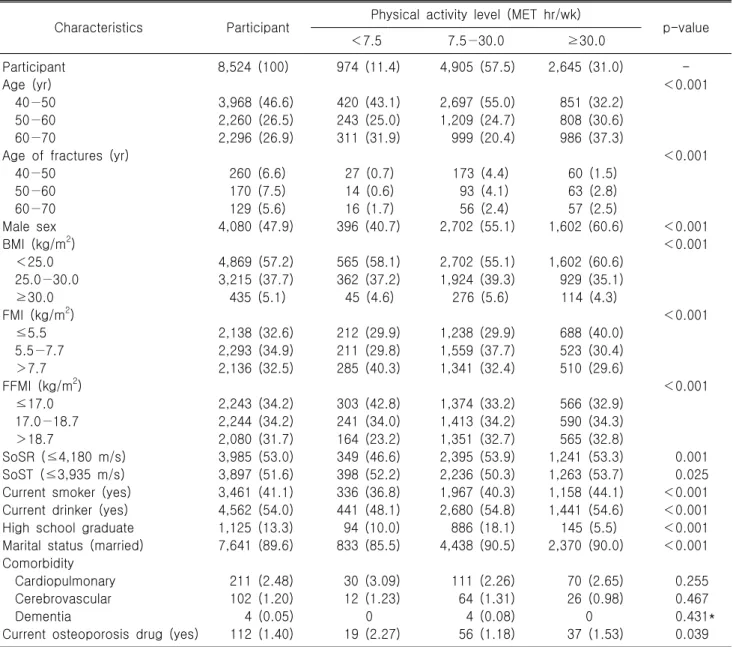
Table 1. Baseline characteristics of participants by MET-hours per week of activity in the cohort study
Characteristics Participant
Physical activity level (MET hr/wk)
p-value
<7.5 7.5−30.0 ≥30.0
Participant 8,524 (100) 974 (11.4) 4,905 (57.5) 2,645 (31.0) -
Age (yr) <0.001
40−50 3,968 (46.6) 420 (43.1) 2,697 (55.0) 851 (32.2)
50−60 2,260 (26.5) 243 (25.0) 1,209 (24.7) 808 (30.6)
60−70 2,296 (26.9) 311 (31.9) 999 (20.4) 986 (37.3)
Age of fractures (yr) <0.001
40−50 260 (6.6) 27 (0.7) 173 (4.4) 60 (1.5)
50−60 170 (7.5) 14 (0.6) 93 (4.1) 63 (2.8)
60−70 129 (5.6) 16 (1.7) 56 (2.4) 57 (2.5)
Male sex 4,080 (47.9) 396 (40.7) 2,702 (55.1) 1,602 (60.6) <0.001
BMI (kg/m
2) <0.001
<25.0 4,869 (57.2) 565 (58.1) 2,702 (55.1) 1,602 (60.6)
25.0−30.0 3,215 (37.7) 362 (37.2) 1,924 (39.3) 929 (35.1)
≥30.0 435 (5.1) 45 (4.6) 276 (5.6) 114 (4.3)
FMI (kg/m
2) <0.001
≤5.5 2,138 (32.6) 212 (29.9) 1,238 (29.9) 688 (40.0)
5.5−7.7 2,293 (34.9) 211 (29.8) 1,559 (37.7) 523 (30.4)
>7.7 2,136 (32.5) 285 (40.3) 1,341 (32.4) 510 (29.6)
FFMI (kg/m
2) <0.001
≤17.0 2,243 (34.2) 303 (42.8) 1,374 (33.2) 566 (32.9)
17.0−18.7 2,244 (34.2) 241 (34.0) 1,413 (34.2) 590 (34.3)
>18.7 2,080 (31.7) 164 (23.2) 1,351 (32.7) 565 (32.8)
SoSR (≤4,180 m/s) 3,985 (53.0) 349 (46.6) 2,395 (53.9) 1,241 (53.3) 0.001 SoST (≤3,935 m/s) 3,897 (51.6) 398 (52.2) 2,236 (50.3) 1,263 (53.7) 0.025 Current smoker (yes) 3,461 (41.1) 336 (36.8) 1,967 (40.3) 1,158 (44.1) <0.001 Current drinker (yes) 4,562 (54.0) 441 (48.1) 2,680 (54.8) 1,441 (54.6) <0.001 High school graduate 1,125 (13.3) 94 (10.0) 886 (18.1) 145 (5.5) <0.001 Marital status (married) 7,641 (89.6) 833 (85.5) 4,438 (90.5) 2,370 (90.0) <0.001 Comorbidity
Cardiopulmonary 211 (2.48) 30 (3.09) 111 (2.26) 70 (2.65) 0.255 Cerebrovascular 102 (1.20) 12 (1.23) 64 (1.31) 26 (0.98) 0.467
Dementia 4 (0.05) 0 4 (0.08) 0 0.431*
Current osteoporosis drug (yes) 112 (1.40) 19 (2.27) 56 (1.18) 37 (1.53) 0.039 Values are presented as number (%).
MET: metabolic equivalent, BMI: body mass index, FMI: fat mass index, FFMI: fat free mass index, SoSR: axial speed of sound at radius, SoST: axial speed of sound at tibia.
*Fisher exact test.
(weight/height 2 ), 체지방지수(fat mass index [FMI], fat mass/
height 2 ), 제지방지수(fat free mass index [FFMI], fat free mass/
height 2 )를 분석하였다. 골강도의 측정은 정량적초음파법을
사용하여 14,15) axial speed of sound (SoS, m/s)를 요골 원위 1/3 부위
(SoS at radius [SoSR])와 경골의 중간부위(SoS at tibia, [SoST]) 에서 각각 세 번씩 측정하여 평균을 낸 값을 사용하였다 16) .
3. 통계적 분석
신체활동량에 따른 각 변수들의 빈도 차이를 알아보기 위해
카이제곱 검정(chi-square test) 및 정확 검정(Fisher exact test)을
수행하였다. 또한, 나이에 따른 골절 횟수의 분포를 분석하기
위하여 40–60대의 연령대별 구분 후 단변량 로지스틱 회귀분
석(univariable logistic regression)과 다변량 로지스틱 회귀분석
(multivariable logistic regression)을 실시하였다. 본 자료 분석은
통계프로그램 SPSS ver. 23.0 (IBM Corp., Armonk, NY, USA)을
이용하여 분석하였고, 모든 통계량의 유의수준은 p<0.05로
하였다.
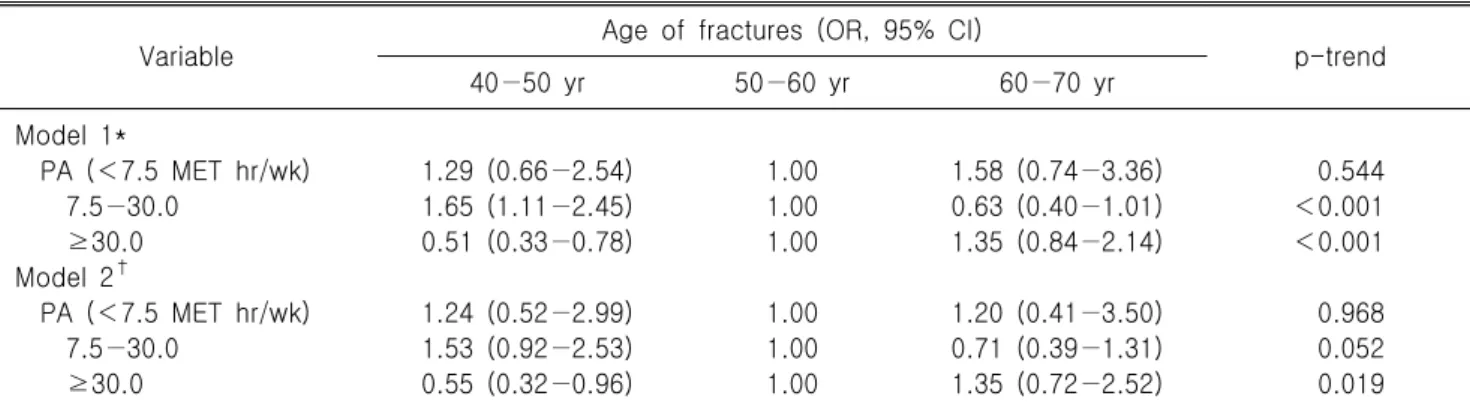
Table 2. Associations between physical activity and incidence of fractures
Variable Age of fractures (OR, 95% CI)
p-trend
40−50 yr 50−60 yr 60−70 yr
Model 1*
PA (<7.5 MET hr/wk) 1.29 (0.66−2.54) 1.00 1.58 (0.74−3.36) 0.544
7.5−30.0 1.65 (1.11−2.45) 1.00 0.63 (0.40−1.01) <0.001
≥30.0 0.51 (0.33−0.78) 1.00 1.35 (0.84−2.14) <0.001
Model 2
†PA (<7.5 MET hr/wk) 1.24 (0.52−2.99) 1.00 1.20 (0.41−3.50) 0.968
7.5−30.0 1.53 (0.92−2.53) 1.00 0.71 (0.39−1.31) 0.052
≥30.0 0.55 (0.32−0.96) 1.00 1.35 (0.72−2.52) 0.019
OR: odds ratio, CI: confidence interval, PA: physical activity, MET: metabolic equivalent.
*Model 1: not adjusted;
†Model 2: adjusted for sex, body mass index, fat mass index, fat free mass index, axial speed of sound at radius, axial speed of sound at tibia, smoking status, drinking status, education level, marital status, comorbidity, osteoporosis medication state.
결 과
연구대상자는 총 8,524명(남자 4,080명, 여자 4,444명)으로, 평균연령은 52.29세였다. 골절발생 여부 조사가 이루어진 2003 년부터 2012년까지 총 559건(6.56%)의 골절이 발생하였다 (Table 1).
각 연령대에서 골절 발생률은 40대 260명(6.6%), 50대 170명 (7.5%), 60대 129명(5.6%)이다. 40대의 신체활동량은 World Health Organization (WHO) 권장기준인 7.5–30.0 MET hr/wk 그룹에 가장 많이 분포하고 있고 , 50대와 60대로 갈수록 점차 신체활동량이 낮은 군과 높은 군으로 양분화되어 U자형의 분포를 보여주었다 . 40대와 50대에서는 신체활동량이 많을수 록 골절률이 상승하였고 , 60대는 신체활동량이 권장기준보다 낮은 경우에도 골절률이 상승하였다.
남자가 여자보다 신체활동량이 높은 군에 많이 분포하며, BMI와 FMI가 낮을수록, FFMI는 높을수록 신체활동량이 높은 군에 분포하였고, SoSR, SoST에서는 의미 있는 경향이 관찰되 지 않았다 . 흡연력이나 음주력이 있는 그룹이 권장수준 이상의 신체활동을 하는 군에 근소하게 더 많이 분포하고 있었으며, 고등학교 졸업 이상의 고학력이거나 기혼일 때 또는 현재 골다공증약을 복용하고 있는 경우에 권장수준의 신체활동을 주로 하는 것을 볼 수 있었다(p<0.05).
연령대별 골절 위험을 비교 분석한 결과에서는 권장수준인 7.5–30.0 MET hr/wk의 신체활동을 한 경우 50대에 비해 60대에 서 골절위험이 0.63배로 감소하였다(odds ratio [OR], 0.63;
confidence interval [CI], 0.40–1.01; p-trend<0.001) (model 1, Table 2). 반대로 30.0 MET hr/wk 이상 신체활동을 한 경우
1.35배로 골절위험이 증가하였고(OR, 1.35; CI, 0.84–2.14;
p-trend<0.001), 7.5 MET hr/wk 이하인 경우는 의미 있는 결과 를 보여주지 않았다. 여러 변수를 통제한 다변량 분석에서 30.0 MET hr/wk 이상인 구간만 의미 있는 결과가 나왔는데, 단변량 분석에서와 마찬가지로 고령일수록 과도한 신체활동 에 따른 골절위험이 1.35배 증가하였다(OR, 1.35; CI, 0.72–2.52;
p-trend<0.05) (model 2).
고 찰