ISSN 1225-6552, eISSN 2287-7630 https://doi.org/10.7853/kjvs.2017.40.1.41
< Original Article >
Veterinary Service
Available online at http://kjves.org
*Corresponding author: Jae-Keun Cho, Tel. +82-53-760-1300, Fax. +82-53-760-1302, E-mail. [email protected]
대구지역 개와 고양이에서 분리된 Staphylococcus pseudintermedius 의 fluoroquinolone 내성
조재근
*ㆍ김정미ㆍ김환득ㆍ김경희ㆍ양창렬
대구광역시보건환경연구원
Resistance to fluoroquinolone of Staphylococcus pseudintermedius isolated from dogs and cats in Daegu
Jae-Keun Cho*, Jeong-MI Kim, Hwan-Deuk Kim, Kyung-Hee Kim, Chang-Ryoul Yang
Kyung-Metropolitan Health & Enviornmental Research Institute, Daegu 42183, Korea (Received 2 March 2017; revised 20 March 2017; accepted 21 March 2017)
Abstract
The purpose of this study was to investigated the fluoroquinolone (FQ) resistance and presence of gyrA and grlA gene in 87 Staphylococcus pseudintermedius isolates obtained from clinical samples of dogs and cats. Also, the profiles of FQ resistance compared with methicillin resistant S. pseudintermedius (MRSP) isolates. FQ resistance was observed for enrofloxacin (41.4%), ciprofloxacin (39.1%), nor- floxacin (36.8%), ofloxacin and levofloxacin (32.2%, respectively), and moxifloxacin (31.0%).
Thirty-eight (43.7%) of 87 S. pseudintermedius isolates were resistant to more than one FQ. Twenty-six (64.5%) of 38 FQ resistant isolates were resistant to all the six FQ tested. Of 38 FQ resistant isolates, gyrA gene was detected in all isolates but grlA gene was not found. Moreover, 19 MRSP isolates were resistant to enrofloxacin (63.2%), ciprofloxacin (57.9%), norfloxacin (52.6%), and ofloxacin, levo- floxacin and moxifloxacin (47.4%, respectively). FQ resistance were highly prevalence in S. pseu- dintermedius isolates from dogs and cats. Our results emphasize the prudent use of antimicrobial agents to companion animals is necessary for prevent antimicrobial resistance.
Key words : S. pseudintermedius, MRSP, Fluoroquinolone, gyrA, grlA
서 론
Staphylococcus pseudinermedius (이전 S. intermedius) 는 기회감염균으로 개와 고양이에서 피부와 귀 감염, 요로감염 및 수술 후 상처감염의 중요한 원인체이다.
또한
S. pseudintermedius는 건강한 개와 고양이의 피부
와 점막 표면에 서식하는 정상세균총이다(van Duijkeren 등, 2011).Fluoroquinolone (FQ)은 그람양성균과 그람음성균 모두에 광범위한 항균작용을 나타내는 합성항균제로
사람과 동물의 질병치료를 위해 널리 사용되고 있다 (Heinen, 2002). Ciprofloxacin과 norfloxacin은 임상에서 최초로 승인된 FQ계 항균제이다. Enrofloxacin이 1989 년에 개와 고양이에서 최초로 사용이 승인된 이후 or- bifloxacin, difloxacin, marbofloxacin 및 pradofloxacin 등이 수의임상에서 사용되고 있다. 한편 ciprofloxacin 은 사람에서만 사용이 승인되었지만 가끔 개와 고양 이의 질병치료를 위해 사용되어지고 있다(Pallo-Zim- merman 등, 2010). 그러나 이들 항균제의 광범위한 사용으로 인한 methicillin 내성 S. pseudintermedius (MRSP)를 포함한 FQ 내성 S. pseudintermedius의 출현 은 증가하고 있어 문제가 되고 있다(Loeffler 등, 2007;
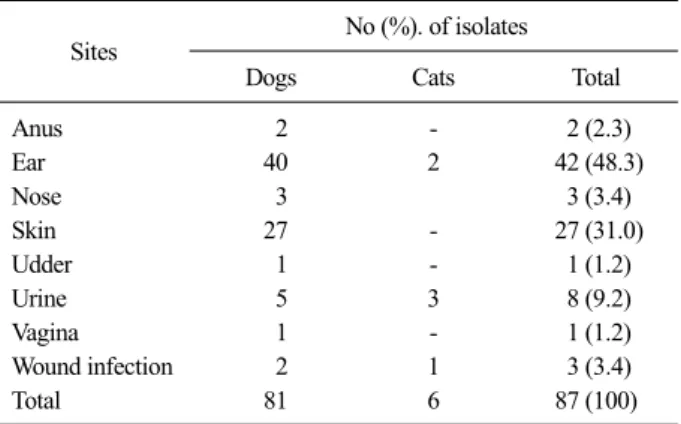
Table 1. Distribution of 87 S. pseudintermedius isolates used in this study
Sites No (%). of isolates
Dogs Cats Total
Anus 2 - 2 (2.3)
Ear 40 2 42 (48.3)
Nose 3 3 (3.4)
Skin 27 - 27 (31.0)
Udder 1 - 1 (1.2)
Urine 5 3 8 (9.2)
Vagina 1 - 1 (1.2)
Wound infection 2 1 3 (3.4)
Total 81 6 87 (100)
Zur 등, 2011; Onuma 등, 2012; Moodley 등, 2014).
FQ은 세균의 DNA 합성에 필요한 두 효소인 DNA gyrase와 topoisomerase IV의 작용을 방해하여 DNA 합성을 저해함으로써 항균작용을 나타내며, DNA gy- rase는 gryA와 gryB로 topoisomerase IV는 grlA와 grlB 로 구성되어 있다(Ruiz, 2003; Pallo-Zimmerman 등, 2010). FQ 내성은 DNA gyrase와 topoisomerase IV 유 전자의 일부인 퀴놀론 내성 결정 부위(quinolone re- sistance determining region, QRDR)의 점돌연변이, 세 포막 단백질인 porin의 구조변화 및 항균제 유출 펌 프의 작동으로 인한 약물 투과력 변화에 의해 일어나 는 것으로 알려져 있다(Ruiz, 2003; Jacoby, 2005). 그 람 양성균에서 FQ 내성과 관련된 QRDR에서 변이는
S. aureus와 S. pseudintermedius 같은 일부 그람 양성
균에서 발견되며, 이들 변이는 주로 DNA gyrase 내 Ser-84와 Glu-88 그리고 topoisomerase IV 내 Ser-80과 Glu-84번 위치에서 아미노산 변이가 가장 흔하다 (Yamagishi 등, 1996; Hooper, 2002).국내 개와 고양이 유래 S. pseudintermedius에서 FQ 계 항균제의 내성에 관한 연구는 드물다(Yoo 등, 2010; Kang 등, 2014). 최근 다양한 유래의 항생제 내 성균이 증가하고 있으며, 축산에서 사용하는 것과 동 일한 항생제가 사람에서도 사용되고 있어 동물유래 항생제 내성균이 가축, 축산물, 환경 등을 통해 사람 으로 전달될 경우 적절한 치료약제의 부재로 사회적 으로 심각한 문제가 될 수 있다.
따라서 이번 연구는 임상질환을 가진 개와 고양이 에서 분리된 S. pseudintermedius 87주에 대하여 FQ계 항균제에 대한 내성 양상을 조사하고, FQ에 내성을 보인 균주에 대해서는 내성 유전자의 검출을 실시하 였다. 또한 MRSP 균주에서 FQ에 대한 내성 양상을 알아보았다.
재료 및 방법
공시재료
2013년 1월부터 2015년 12월까지 대구지역 동물병 원에서 보건환경연구원으로 병성감정 의뢰된 개와 고양이의 가검물에서 분리하여 보관 중인
S. pseu- dintermedius 87주를 이번 시험에 사용하였다(Table 1).
항균제 감수성 시험
항균제 감수성시험은 Clinical and Laboratory Standards Institute (CLSI, 20012)의 방법에 준하여 디스크 확산 법으로 실시하였다. 항생제 디스크는 Oxoid사(UK)의 ciprofloxacin (5 g), enrofloxacin (10 g), levofloxacin (5 g), moxifloxacin (50 g), norfloxacin (10 g) 및 ofloxacin (5 g) 등 6종을 사용하였다. 공시균을 Mueller-hinton broth (Oxoid, UK)에 접종하여 37°C에 서 2∼4시간 배양하여 균 농도를 McFarland No. 0.5 로 조정한 후 멸균면봉을 이용하여 Mueller-Hinton agar (Oxoid, UK) 평판배지에 고르게 도포한 다음 항 생제 디스크를 dispenser (Oxoid, UK)로 접종하였다.
35±2°C에서 16∼18시간 배양 후 균 억제대의 크기를 측정하여 내성 여부를 판정하였다. 항균제 감수성 시 험의 표준균주로는
S. aureus ATCC 25923을 사용하
였다.MRSP 검출
이전 연구(Cho 등, 2016)에서 공시균에 대한 항생 제 감수성 시험 결과 oxacillin에 내성을 나타내고 PCR 에 의해 mecA 유전자가 검출된 S. pseudintermedius 균 주를 MRSP로 판정하였다(Moodley 등, 2014).
Genomic DNA 추출
공시균에 대한 genomic DNA 추출은 boiling법으로 실시하였다. 간단히 설명하면, tryptic soy broth (Oxoid, UK)에 접종하여 37°C에서 18∼24시간 진탕 배양하여 얻은 균 부유액 1.0 mL를 13,000 rpm에서 2분간 원심
Table 2. Fluoroquinolone resistance in 87 S. pseudintermedius isolates
Antimicrobial agents No. (%) of isolates
Resistant Intermediate Susceptible Enrofloxacin 36 (41.4) 0 (0.0) 51 (58.6) Ciprofloxacin 34 (39.1) 2 (2.3) 51 (58.6) Norfloxacin 32 (36.8) 0 (0.0) 55 (63.2) Ofloxacin 28 (32.2) 6 (8.3) 59 (67.8) Levofloxacin 28 (32.2) 0 (0.0) 59 (67.8) Moxifloxacin 27 (31.0) 1 (1.1) 59 (67.8)
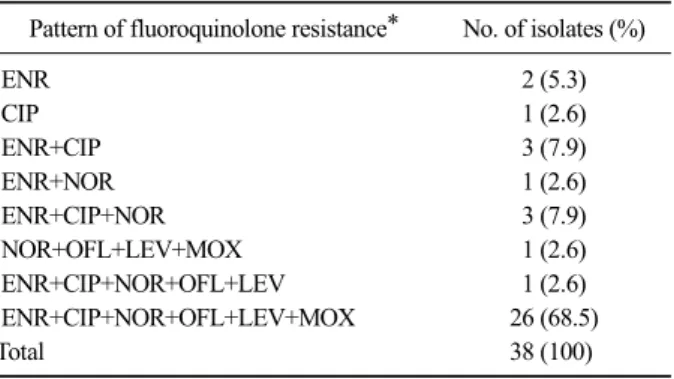
Table 3.Phenotypes of antimicrobial resistance in 38 fluoroquinolone resistant S. pseudintermedius isolates
Pattern of fluoroquinolone resistance* No. of isolates (%)
ENR 2 (5.3)
CIP 1 (2.6)
ENR+CIP 3 (7.9)
ENR+NOR 1 (2.6)
ENR+CIP+NOR 3 (7.9)
NOR+OFL+LEV+MOX 1 (2.6)
ENR+CIP+NOR+OFL+LEV 1 (2.6)
ENR+CIP+NOR+OFL+LEV+MOX 26 (68.5)
Total 38 (100)
*ENR: enrofloxacin, CIIP: ciprofloxacin, NOR: norfloxacin, OFL:
ofloxacin, LEV: levofloxacin, MOX: moxifloxacin.
분리한 후 상층액을 제거한 다음 멸균 증류수 0.5 mL 로 재 부유하였다. 균 부유액은 끓는 물에 10분간 가 열한 다음 13,000 rpm에서 10분간 원심분리한 후 상 층액을 취하여 template DNA로 사용하였다.
gryA 및 grlA 유전자 검출
gryA 유전자의 검출은 gryAs (5'-ATGAGYGTTAT- CGTKCWCGTGC-3')와 gryAas (5'-CCATW GARCCA- AAGTTACCTTG-3'), grlA 유전자의 검출은 grlAs (5'-AA- TACRYAYGATAARAATTTC CG-3')와 grlAas (5'-GT- YGTRTCATCATAGTTTGG-3) primer를 사용하여 Intorre 등(2007)의 방법에 따라 실시하였다. PCR 반응은 Maxime PCR PreMix (i-Star Taq, intron Biotech, Korea) 에 각각의 10 pmol primer 1 L와 template DNA 2 L 를 넣은 후 멸균된 증류수를 첨가하여 최종 반응량이 20 L가 되게 하여 TProfessional Thermal Cycler (Bio- metra, Germany)를 이용하여 수행하였다. PCR 조건은 94°C에서 5분간 초기 denaturation시킨 후, 94°C에서 45초간 denaturation, 50°C에서 30초간 annealing, 72°C 에서 90초간 extension 과정을 총 35회 반복하였으며, 마지막으로 72°C에서 5분간 final extension을 하였다.
PCR 산물은 1.2% agarose gel에서 전기영동을 실시한 후 gryA에서 261 bp, grlA에서 289 bp 크기의 증폭산 물을 확인하였다.
결 과
개와 고양이로부터 분리된 S. pseudintermedius 87주 를 대상으로 enrofloxacin, ciprofloxacin, norfloxacin, ofloxacin, levofloxacin 및 moxifloxacin 등 6종의 FQ계 항균제에 대한 감수성 시험을 실시한 결과는 Table 2 와 같다. S. pseudintermedius는 enrofloxacin에 41.4%
(36주)로 가장 높은 내성률을 나타내었고, 다음은 ci- profloxacin에 39.1% (34주), norfloxacin에 36.8% (32 주), ofloxacin과 levofloxacin에 각각 32.2% (28주) 순 이었다. 반면 moxifloxacin은 31.0% (27주)로 가장 낮 은 내성률을 나타내었다.
공시균 87주 중 38주(43.7%)는 한 종류 이상의 FQ 에 내성을 나타내었다. FQ에 내성인 38주를 대상으 로 다제내성 양상을 분석한 결과는 Table 3과 같다.
38주 중 26주(68.5%)는 사용된 6종의 항균제에 모두 내성을 나타내었다. 또한 5제 내성균(enrofloxacin, ci- profloxacin, norfloxacin, ofloxacin 및 levofloxacin) 및 4 제 내성균(norfloxacin, ofloxacin, levofloxacin 및 moxi- floxacin)이 각각 1주(2.6%), 3제 내성균 (enrofloxacin, ciprofloxacin 및 norfloxacin)이 3주(7.9%), enrofloxacin 과 ciprofloxacin 및 enrofloxacin 과 norfloxacin 같은 2 제 내성균은 각각 3주(7.9%)와 1주(2.6%)로 나타났다.
Enrofloxacin 및 ciprofloxacin 같은 한 종류의 항균제 에 대해서는 각각 1주(2.6%) 및 2주(5.3%)로 나타났다.
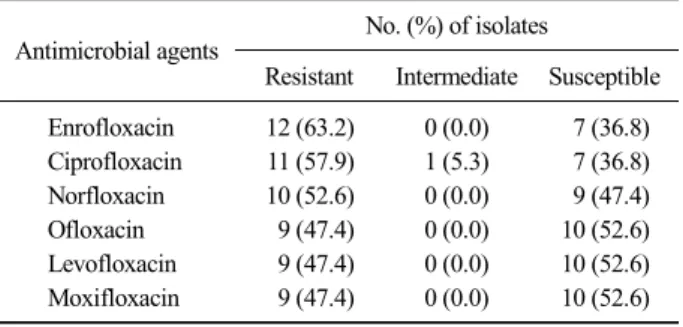
이전 연구에서 methicillin에 내성을 보인 MRSP 19 주에 대한 FQ 내성 양성은 Table 4와 같다. MRSP 균 주는 enrofloxacin에 63.2%에 가장 높은 내성률을 나 타내었고 다음은 ciprofloxacin에 57.9%, norfloxacin에 52.6% 그리고 ofloxacin, levofloxacin 및 moxifloxacin 에 각각 47.4%로 낮았다.
FQ계 항균제에 내성을 보인 38주를 대상으로 FQ 의 내성 기전으로 알려진 DNA gyrase 및 topoisomerase IV 내에서 gryA와 grlA 유전자의 검출을 시도한 결과,
gryA 유전자는 38주 모두에서 검출되었으나 grlA 유
전자는 한주도 검출되지 않았다.Table 4. Fluoroquinolone resistance in 19 MRSP isolates
Antimicrobial agents No. (%) of isolates
Resistant Intermediate Susceptible Enrofloxacin 12 (63.2) 0 (0.0) 7 (36.8) Ciprofloxacin 11 (57.9) 1 (5.3) 7 (36.8) Norfloxacin 10 (52.6) 0 (0.0) 9 (47.4)
Ofloxacin 9 (47.4) 0 (0.0) 10 (52.6)
Levofloxacin 9 (47.4) 0 (0.0) 10 (52.6) Moxifloxacin 9 (47.4) 0 (0.0) 10 (52.6)
고 찰
FQ계 항균제는 penicillin 등의 -lactam 계열의 항 생제와 더불어 가장 많이 사용되고 있는 항생제이다 (EMA, 2014). 이번 연구에서는 개와 고양이에서 분리 된
S. pseudintermedius에서 FQ 항균제에 대한 내성
양상과 FQ 내성과 관련이 있는 gryA와 grlA 유전자의 검출을 시도하였다.이번 연구의 결과 동물에서 사용이 승인된 enro- floxacin (41.1%)에 가장 높은 내성을 나타내었다. 이 는 FQ계 항균제 중 enrofloxacin의 사용량이 가장 많 은 것과 관련이 있다. 반면 moxifloxacin (31.0%)에 가 장 낮은 내성을 보였다. 더욱이 levofloxacin과 moxi- floxacin은 동물에서 사용되고 있지 않음에도 불구하 고 내성을 나타낸 것은 FQ이 화학적, 구조적 유사성 으로 인해 사람과 동물에서 사용 되고 있는 약제에서 동시 내성이 일어날 수 있음을 의미한다(Yoo 등, 2010).
한편 ciprofloxacin은 enrofloxacin의 대사산물로 두 약 제의 활성 영역은 유사다(Pallo-Zimmerman 등, 2010).
이번 연구에서 ciprofloxacin에서 중간 내성을 고려할 때 이들 두 약제의 내성률은 같았다.
이번 연구의 결과는 Yoo 등(2010)이 농피증과 외이 염 증상을 보인 개에서 enrofloxacin에 27.0%, ciproflo- xacin에 25.7%, ofloxacin에 24.3%, levofloxacin에 20.3%
및 moxifloxacin에 18.9%의 성적 보다 높았다. 이는 국내 동물병원에서 퀴놀론 항균제에 대한 엄격한 사 용 규제의 미비에 따른 항생제 남용과 오용의 결과로 생각된다. 반면 Kang 등(2014)이 건강한 개와 안질환 을 가진 개에서 enrofloxacin에 38.8%, ciprofloxacin에 40.8%, ofloxacin에 38.8%, levofloxacin에 34.4% 및 moxi- floxacin에 4.1%의 성적과 비교해 볼 때 enrofloxacin, ciprofloxacin, ofloxacin 및 levofloxacin과는 유사한 결 과를 얻었다. 그러나 moxifloxacin의 경우 이번 연구 에서 상당히 높은 내성률을 보였다. 이에 대해서는
추가적인 조사가 필요할 것으로 생각된다.
질병 치료를 위해 항생제를 투여한 개에서 분리된 세균이 치료를 하지 않은 개에서 분리된 세균보다 높 은 내성을 나타낸다(Rantala 등, 2004). 건강한 개와 고양이 유래
S. pseudintermedius에서 Intorre 등(2007)
은 이탤리에서 ciprofloxacin, enrofloxacin, levofloxacin, norfloxacin 및 ofloxacin에 각각 1.5%, moxifloxacin에 0%, Rubin과 Chirino-Trejo (2011)은 캐나다에서 enro- floxacin, ciprofloxacin 및 moxifloxacin에 각각 0%, Pri- yantha 등(2016)은 ciprofloxacin, levofloxacin 및 moxi- floxacin에 각각 0%의 성적을 보고하여 매우 낮은 내 성률을 나타내었다. 반면 농피증, 외이도염 같은 임 상증상을 나타낸 개와 고양이 유래S. pseudinterme- dius에서 FQ에 대한 내성률은 매우 다양하게 나타났
다. Pedersen 등(2007)은 덴마크에서 enrofloxacin에 1%, Kawakami 등(2010)은 일본에서 oflofloxacin에 62.9%, norfloxacin에 61.2%, Dziva 등(2015)은 Trinidad 에서 enrofloxacin에 18.5%, ciprofloxacin에 20.0% 및 norfloxacin에 23.1%의 성적을 보고하였다. 이와 같은 항균제 내성율의 차이는 항생제 사용량, 질병의 유무, 시료채취 시기, 시료채취 부위 등 여러 가지 요인에 기인한 것으로 생각된다.이번 연구에서 공시균의 43.7%가 한 종류 이상의 FQ계 항균제에 내성을 나타내었다. 특히 FQ 내성균 의 68.5% (26주)는 moxifloxacin을 포함한 사용된 6종 의 항균제에 모두 내성을 나타내어
S. pseudinterme- dius에서 다제 내성균의 출현이 심각함을 확인하였다.
개와 고양이에서 FQ 내성균의 출현율을 감소시키기 위해 동물병원에서 올바른 치료 약제의 선정을 위해 반드시 항생제 감수성 시험을 수행 후 치료가 행하여 져야 한다. 아울러 원 헬스(One Health)의 관점에서 반려동물을 대상으로 항생제 사용실태 조사와 더불 어 내성균 모니터링 사업이 필요하다고 생각된다.
개와 고양이 유래 MRSP 균주는 대부분 초기에 개 발된 FQ계 항균제에 높은 내성을 나타내었다. Loeffler 등(2007)은 enrofloxacin에 100%, Wang 등(2012)은 en- rofloxacinn에 57.6%, Vigo 등(2015)은 ciprofloxacindp 42.8%, Kizerwetter-Świda 등(2016)은 enrofloxacin과 ci- profloxacin에 각각 94.7%의 높은 내성률을 보고하였 다. 이번 연구에서 MRSP 균주는 enrofloxacin에 63.2%, ciprofloxacin에 57.9%의 내성률을 나타내어 내성률에 서는 다소 차이가 있었지만 유사한 결과를 얻었다.
MRSP와 FQ의 높은 내성률은 밀접한 관련이 있는 것 으로 보고되고 있지만 출현 기전은 명확하지 않지 않
다(Bisognano 등, 2000; Loeffler 등, 2007).
FQ 내성은 DNA gyrase와 topoisomerase IV와 관련 이 있다. 오래된 FQ계 항균제의 경우 DNA gyrase는 그람 음성균에서 topoisomerase IV는 그람 양성균에서 주요한 표적이다(Hooper, 2002; Blondeau, 2004). 반면 gatifloxacin과 moxifloxacin 같은 새로운 계열의 FQ는 그람 양성균에서 DNA gyrase와 topoisomerase IV 모 두 억제한다(Lu 등, 1999; Peterson, 2001). 이번 연구 에서 FQ 내성 유전자는 DNA gyrase의 gyrA 유전자만 검출되었고, topoisomerase IV의 grlA 유전자는 검출되 지 않았다. 따라서 S. pseudintermedius의 FQ 내성은 DNA gyrase와 관련이 있는 것으로 나타났다. 반면 Intorre 등(2007)은 S. intermedius에서 FQ 내성은 gryA 와 grlA 내에서 이중 돌연변이와 관련이 있다고 하였 다. 이번 연구에서는 실시하지 않았지만 DNA gyrase 의 gyrA 내 돌연변이 양상에 대해서는 향후 추가적인 조사가 필요할 것으로 생각된다.
S. pseudintermedius에서 FQ 내성균의 높은 출현은 향후 치료 약제의 선택에 어려움을 줄 수 있다. 또한 반려동물 증가와 반려동물에 대한 인식변화로 사람 과 밀접하게 생활하는 패턴이 보편화됨에 따라 반려 동물에서의 항생제 내성이 사람에게 전달 가능성이 증가될 수 있어 항생제의 신중한 사용이 요구된다.
결 론
개와 고양이로부터 분리된 S. pseudintermedius 87주 를 대상으로 6종의 FQ 항균제에 대한 내성양상과 이 들 항균제에 내성을 보인 38주에 대해 FQ 내성 유전 자인 gryA와 grlA의 검출을 실시한 결과는 다음과 같 다. S. pseudintermedius는 enrofloxacin에 41.4%, cipro- floxacin에 39.1%, norfloxacin에 36.8%, levofloxacin과 ofloxacin에 각각 32.2% 그리고 moxifloxacin에 31.0%
의 내성률을 나타내었다. 공시균 87주 중 38주(43.7%) 가 사용된 한 종류 이상의 FQ에 내성을 나타내었다.
이들 38주 중 35주(92.1%)는 두 종류 이상의 항균제 에 내성을 나타내었고, 26주(68.5%)는 사용된 6종의 항균제에 모두 내성을 나타내었다. gryA는 FQ에 내성 을 보인 38주 모두에서 검출되었으나 grlA는 한주도 검출되지 않았다. MRSP 19주는 enrofloxacin에 63.2%, ciprofloxacin에 57.9%, norfloxacin에 52.6% 그리고 ofloxacin, levofloxacin 및 moxifloxacin에 각각 47.4%
의 내성률을 나타내었다.
REFERENCES
Bisognano C, Vaudaux P, Rohner P, Lew DP, Hooper DC. 2000.
Induction of fibronectin-binding proteins and increased adhesion of quinolone-resistant Staphylococcus aureus by subinhibitory levels of ciprofloxacin. Antimicrob Agents Chemother 44: 1428-1437.
Blondeau JM. 2004. Fluoroquinolones: mechanism of action, clas- sification, and development of resistance. Surv Ophthalmol 49: S73-S78.
Cho JK, Lee MR, Kim JM, Kim HD. 2016. Methicillin-resistant or susceptible Staphylococcus pseudintermedius isolates from dogs and cats. Korean J Vet Serv 39: 175-181.
CLSI. Clinical and Laboratory Standards Institute. 2012. Perfor- mance standards for antimicrobial susceptibility testing;
Twenty-second informational supplement. M100-S22.
Wayne, Pa, USA.
Dziva F, Wint C, Auguste T, Heeraman C, Dacon C, Yu P, Koma LM. 2015. First identification of methicillin-re- sistant Staphylococcus pseudintermedius strains among coagulase-positive staphylococci isolated from dogs with otitis externa in Trinidad, West Indies. Infect Ecol Epidemiol 5: 29170-http://dx.doi.org/10.3402/iee.v5.29170.
EMA. 2014. Sales of veterinary antimicrobial agents in 26 EU/EEA countries in 2012(Fourth ESVAC report).
European medicines agency. London, United Kingdom.
Heinen E. 2002. Comparative serum pharmacokinetics of the flu- oroquinolones enrofloxacin, difloxacin, marbofloxacin, and orbifloxacin in dogs after single oral administration.
J Vet Pharmacol Ther 25: 1-5.
Hooper DC. 2002. Fluoroquinolone resistance among gram-pos- itive cocci. Lancet Infect Dis 2: 530-538.
Intorre L, Vanni M, Di Bello D, Pretti C, Meucci V, Tognetti R, Soldani G, Cardini G, Jousson O. 2007. Antimicrobial susceptibility and mechanism of resistance to fluo- roquinolones in Staphylococcus intermedius and Staphy- lococcus schleiferi. J Vet Pharmacol Ther 30: 464–469.
Jacoby GA. 2005. Mechanisms of resistance to quinolones. Clin Infect Dis 41: S120-126.
Kang MH, Chae MJ, Yoon JW, Lee SY, Yoo JH, Park HM.
2014. Resistance to fluoroquinolones and methicillin in ophthalmic isolates of Staphylococcus pseudintermedius from companion animals. Can Vet J 55: 678-682.
Kawakami T, Shibata S, Murayama N, Nagata M, Nishifuji K, Iwasaki T, Fukata T. 2010. Antimicrobial susceptibility and methicillin resistance in Staphylococcus pseu- dintermedius and Staphylococcus schleiferi subsp. coagu- lans isolated from dogs with pyoderma in Japan. J Vet Med Sci 72: 1615-1619.
Kizerwetter-Świda M, Chrobak-Chmiel D, Rzewuska M, Binek M. 2016. Resistance of canine methicillin- resistant Sta- phylococcus pseudintermedius strains to pradofloxacin. J Vet Diagn Invest 28: 514-518.
Loeffler A, Linek M, Moodley A, Guardabassi L, Sung JM,
Winkler M, Weiss R, Lloyd DH. 2007. First report of multiresistant, mecA-positive Staphylococcus intermedius in Europe: 12 cases from a veterinary dermatology re- ferral clinic in Germany. Vet Dermatol 18: 412-421.
Lu T, Zhao X, Drlica K. 1999. Gatifloxacin activity against qui- nolone-resistant gyrase: allele- specific enhancement of bacteriostatic and bactericidal activities by the C-8-me- thoxy group. Antimicrob Agents Chemother 43: 2969- 2974.
Moodley A, Damborg P, Nielsen SS. 2014. Antimicrobial resist- ance in methicillin susceptible and methicillin resistant Staphylococcus pseudintermedius of canine origin: liter- ature review from 1980 to 2013. Vet Microbiol 171:
337-341.
Onuma K, Tanabe T, Sato H. 2012. Antimicrobial resistance of Staphylococcus pseudintermedius isolates from healthy dogs and dogs affected with pyoderma in Japan. Vet Dermatol. 23: 17-22.
Pallo-Zimmerman LM, Byron JK, Graves TK. 2010. Fluoroquino- lones: then and now. Compend Contin Educ Vet 32:
E1-9.
Pedersen K, Pedersen K, Jensen H, Finster K, Jensen VF, Heuer OE. 2007. Occurrence of antimicrobial resistance in bac- teria from diagnostic samples from dogs. J Antimicrob Chemother 60: 775-781.
Petersen U. 2001. The evolution of quinolone: from nalidixic acid to the quinolones of the third generation. Pharm Unserer Zeit 30: 376-381.
Priyantha R, Gaunt MC, Rubin JE. 2016. Antimicrobial suscepti- bility of Staphylococcus pseudintermedius colonizing healthy dogs in Saskatoon, Canada.Can Vet J 57: 65-69.
Rantala M, Lahti E, Kuhalampil J, Pesonen S, Järvinen AK, Saijonmaa-Koulumies, Honkanen- Buzalski T. 2004. An- timicrobial resistance in Staphylococcus spp., Escherichia coli and Enterococcus spp. in dogs given antibiotics for chronic dermatological disorders, compared with non-
treated control dogs. Acta Vet Scand 45: 37-45.
Rubin JE, Chirino-Trejo M. 2011. Prevalence, sites of colo- nization, and antimicrobial resistance among Staphylococcus pseudintermedius isolated from healthy dogs in Saskatoon, Canada. J Vet Diagn Invest 23: 351-354.
Ruiz J. 2003. Mechanisms of resistance to quinolones: target al- terations, decreased accumulation and DNA gyrase protection. J Antimicrob Chemother 51: 1109-1117.
van Duijkeren E, Catry B, Greko C, Moreno MA, Pomba MC, Pyörälä S, Ruzauskas M, Sanders P, Threlfall EJ. Torren- Edo J, Törneke K. 2011. Review on methicillin-resistant Staphylococcus pseudintermedius. J Antimicrob Chemo- ther 66: 2705-2714.
Vigo GB, Giacoboni GI, Gagetti PS, Pasterán FG, Corso AC.
2015. Antimicrobial resistance and molecular epidemiol- ogy of Staphylococcus pseudintermedius strains isolated from dog clinical samples. Rev Argent Microbiol 47:
206-211.
Wang Y, Yang J, Logue CM, Liu K, Cao X, Zhang W, Shen J, Wu C. 2012. Methicillin-resistant Staphylococcus pseu- dintermedius isolated from canine pyoderma in North China. J Appl Microbiol 112: 623-630.
Yamagishi J, Kojima T, Oyamada Y, Fujimoto K, Hattori H, Nakamura S, Inoue M. 1996. Alterations in the DNA topoisomerase IV grlA gene responsible for quinolone resistance in Staphylococcus aureus. Antimicrob Agents Chemother 40: 1157-1163.
Yoo JH, Yoon JW, Lee SY, Park HM. 2010. High prevalence of fluoroquinolone- and methicillin- resistant Staphylococcus pseudintermedius isolates from canine pyoderma and oti- tis externa in veterinary teaching hospital. J Microbiol Biotechnol 20: 798-802.
Zur G, Elad D, Sterenzy-Agiv N. 2011. Increased resistance of Staphylococcus pseudintermedius to the commonly used antibiotics in canine dermatology. Israel J Vet Med 66:
143-150.