• 검색 결과가 없습니다.

Estimation of Solar Radiation Potential in the Urban Buildings Using CIE Sky Model and Ray-tracing

N/A
N/A
Protected

Academic year: 2021

Share "Estimation of Solar Radiation Potential in the Urban Buildings Using CIE Sky Model and Ray-tracing"

Copied!
11
0
0

로드 중.... (전체 텍스트 보기)

전체 글

(1)

Estimation of Solar Radiation Potential in the Urban Buildings Using CIE Sky Model and Ray-tracing

Yoon, Dong Hyeon

1)

· Song, Jung Heon

2)

· Koh, June Hwan

3)

Abstract

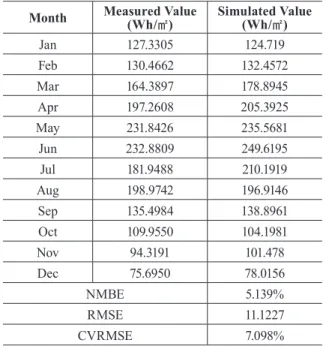
Since it was first studied in 1980, solar energy analysis model for geographic information systems has been used to determine the approximate spatial distribution of terrain. However, the spatial pattern was not able to be grasped in 3D (three-dimensional) space with low accuracy due to the limitation of input data. Because of computational efficiency, using a constant value for the brightness of the sky caused the simulation results to be less reliable especially when the slope is high or buildings are crowded around. For the above reasons, this study proposed a model that predicts solar energy of vertical surfaces of buildings with four stages below. Firstly, CIE (Commission Internationale de l'Eclairage) luminance distribution model was used to calculate the brightness distribution of the sky using NREL (National Renewable Energy Laboratory) solar tracking algorithm. Secondly, we suggested a method of calculating the shadow effect using ray tracing. Thirdly, LOD (Level of Detail) 3 of 3D spatial data was used as input data for analysis. Lastly, the accuracy was evaluated based on the atmospheric radiation data collected through the ground observation equipment in Daejeon, South Korea. As a result of evaluating the accuracy, NMBE was 5.14%, RMSE 11.12, and CVRMSE 7.09%.

Keywords : Solar Radiation Potential, Renewable Energy, 3D GIS, Sky Model, Ray-tracing

1. Introduction

In Korea, the use of new renewable energy is intended to be increased by approximately 35% of primary energy composed by wind and solar energy until 2040 (MOTIE, 2017). For this purpose, the paradigm is changing from the existing centralized generation method based on fossils and nuclear fuels to the distributed generation method using new and renewable energy. The city of Seoul is consuming approximately 62% of the total energy in business and residential buildings, and other big cities show a similar tendency (KEEI, 2018). This energy is predominantly composed of electric energy in the net utilization phase

and heat energy. The consumption of energy, which is used in this manner, is very similar to the pattern of solar power generation (Rüther et al., 2008). According to these characteristics, solar energy is considered as new renewable energy, which can be developed by distributed development and as a future energy solution (Hofierka and Kaňuk, 2009).

In addition, solar radiation data are essential for diverse studies that have been recently conducted in South Korea including those for new and renewable energy resource map making and crop yield forecasting (Choi et al., 2015).

Therefore, it is important to select models appropriate to the purpose of the study and the study area (Song et al., 2015).

Accordingly, it is difficult to perform accurate estimation in

Received 2020. 03. 27, Revised 2020. 04. 14, Accepted 2020. 04. 27 1) Cal. Lab, Hypersensing Inc. (E-mail: [email protected]) 2) Cal. Lab, Hypersensing Inc. (E-mail: [email protected])

3) Corresponding Author, Member, Professor, Dept. of Geoinformatics, University of Seoul (E-mail: [email protected]) Journal of the Korean Society of Surveying, Geodesy, Photogrammetry and Cartography

Vol. 38, No. 2, 141-151, 2020

https://doi.org/10.7848/ksgpc.2020.38.2.141

ISSN 1598-4850(Print) ISSN 2288-260X(Online) Original article

This is an Open Access article distributed under the terms of the Creative Commons Attribution Non-Commercial License (http://

(2)

Journal of the Korean Society of Surveying, Geodesy, Photogrammetry and Cartography, Vol. 38, No. 2, 141-151, 2020

142

a city because production and consumption of energy could be affected by diverse physical factors such as solar radiation analysis from urban context, urban heat, long wavelength energy exchange between buildings, vegetation, etc. (Kim, 2014). Moreover, the existing studies on urban solar energy analysis were performed on the basis of the isotropic sky sphere model by focusing on the solar radiation on the rooftop and ground surface. The purpose of these studies are to analyze the energy change in a building rooftop and ground surface by using the DTM (Digital Terrain Model) as entry data.

Solar radiation analysis models which are generally applied in the field of Geographic Information System are ESRI ArcGIS Solar Analyst and r.sun of GRASS GIS (Hofierka and Zlocha, 2012; Suri and Hofierka, 2004). One of main disadvantages of ESRI ArcGIS Solar Analyst is that it projects the sky sphere in 2D (two-dimensional) instead of 3D, and therefore, geometric error occurs due to space warp during the transformation of the entry topography model (ESRI, 2019). To resolve the 2D projection structure, GRASS GIS r.sun calculates the direct radiation under 3D geometry to resolve the 2D projection structure. However, as it calculates the diffuse radiation by assuming the isotropic sphere, it has a disadvantage that the accuracy is lower when compared to the anisotropic model (Muneer, 2004).

when compared to the anisotropic model Perpiñán (2012), Navarte and Lorenzo (2008) has calculated the shadow from each position of the Sun first, and then calculated the reduction effect with the shadow to calculate the shadow loss. Yet, this method includes an excessively complicated calculation process, and has a disadvantage that errors occur when the model is simplified to resolve this problem. These studies principally proposed to calculate shadow effects of PV (Photo Voltaics) panels nearby. to nearby areas. One of disadvantages for these models is that it is not able to be applied for more complicated and combined shadows in urban areas while accurate calculation is possible in case of regular geometrical forms such as awning. Thus, this study hereby proposes a solar energy analysis model considering the physical characteristics of urban buildings. This model calculates the solar radiation by dividing the buildings as an analysis unit based on the model proposed by Robinson and

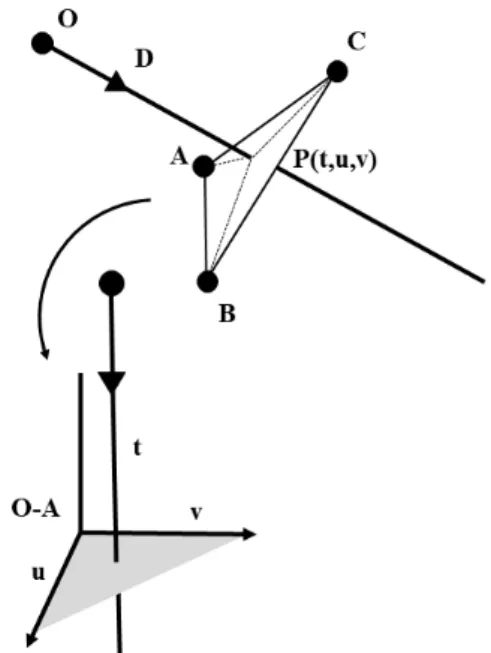
Stone (2005). The entered 3D spatial information data for this model were performed with the LOD 3, degree of precision, and CIE standard model was used for a sky luminance model. Additionally, to analyze shadow effects of buildings in a 3D space, the algorithm of Möller and Trumbore was applied (1997). This study suggests a model with the entry of 3D spatial information by overcoming and deviating from the existing topography-based energy analysis method of Geographic Information System. It was necessary to consolidate algorithms which were used in diverse fields such as spatial information data, spatial information analysis, atmosphere environment, etc. during the development of this model. In the future, this model can be used and applied as an analytical tool for solar energy analysis in urban buildings.

2. Overview

2.1 Related Works

To analyze the solar radiation on PV panels in a city, Erdélyi et al. (2014) applied all weather sky model of Perez et al. (1993) and the ray-tracing which traces all the ray lines on the ground surface. Compared to previous studies, these studies which used the ray line tracing algorithms showed relatively high accuracy while tracing limited ray lines by setting a PV panel as an object.

First of all, we decided it is not appropriate in the current system to apply ray line tracing algorithm to an entire area such as a wide metropolis In addition, we decided applying ray line tracing algorithm to an entire area such as a wide metropolis is not appropriate in the current system. However, the study results of Robinson and Stone (2005) include the clue on how to increase efficiency of solar energy analysis model. When used the pre-divided analysis grid and object search method of a ray tracing algorithm instead of the existing inclined plane, the deduced results could be similar to SVF (Sky View Factor) in the 2D space.

Solar energy analysis model is used to estimate how much

solar radiation can be collected in a certain location of the

ground surface. Most existing models generally do not

consider the effects of urban shadows. The solar radiation

reached to the ground surface is composed by direct radiation

(radiation energy directly delivered from the Sun), diffuse

(3)

Estimation of Solar Radiation Potential in the Urban Buildings Using CIE Sky Model and Ray-tracing

radiation (radiation energy delivered after being scattered in the air) and the reflected energy. Most of the radiation energy analyses ignore the reflected radiation energy (HEMI, 2000).

In this study, the model was developed which applies the shadow effect of neighbor buildings by using the divided analysis grids of 3D spatial information and ray tracing algorithm after the anisotropic CIE standard sky sphere model was applied. The sky luminance model calculates the solar radiation on the analysis grid, and the shadow layer calculated by the ray tracing algorithm is applied for the integral calculus of solar radiation for sky luminance model.

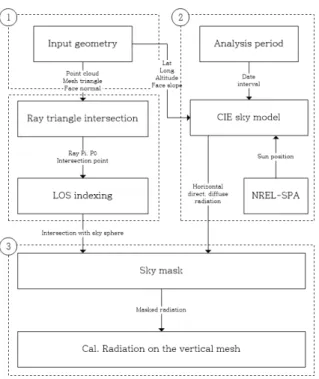
Fig. 1. Flowchart of the solar radiation model

The model proposed in this paper is composed as stated in Fig. 1.

The data processing procedure suggests the below. First, 3D spatial information entry module: divides a three- dimensionally composed building into defined analysis units. The divided grid calculates the grid ID, normal vector, inclination angle, longitude and latitude coordinate,

and relative coordinate of zenith/peak. Second, setting of analysis scope and time: defines the period and interval to perform the analysis with 1 hour interval and the maximum for a week. Third, ray triangle intersection: searches the grid which applies shadow effect in each grid unit. The calculated ray line is saved as intersect point data. Lastly, CIE sky luminance model: calculates the analysis grid on the basis of the solar tracing algorithm of NREL-SPA (NREL-Solar Position Algorithm, 2017) and the 3D spatial information.

Based on the calculated solar location information, the sky luminance distribution is calculated. TMY (Typical Meteorological Year) 3 data in Daejeon, South Korea was utilized for the calculation of sky luminance distribution.

2.2 Spatial Data Collection

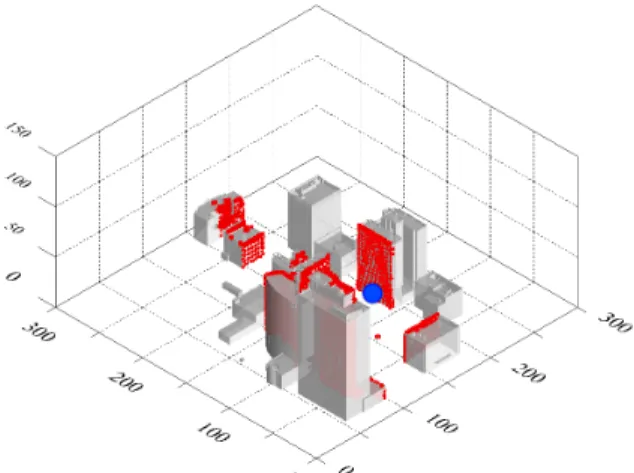
To calculate solar energy on a building surface in 3D space, study area of 300m and 3D models which are similar to the actual buildings were chosen (Fig. 2). With an advantage that the result analysis was easier as the area was located at 2km away from a solar radiation observation point, the area had high density and buildings with diverse planes which were proper to experiment the difference of solar radiation according to the azimuth. To analyze the model with a city as the subject, the database from 10 buildings composed by 36,400 units were applied. The 3D model based on aerial photogrammetry data with 0.6m resolution has LOD3 precision degree, and the experiment was performed after eliminating the unnecessary and errors

Fig. 2. 3D building geometry in the research area

(4)

Journal of the Korean Society of Surveying, Geodesy, Photogrammetry and Cartography, Vol. 38, No. 2, 141-151, 2020

144

through preprocessing. The purpose of using the precise 3D model is to verify the spatial pattern by realistically expressing the solar radiation distribution in the vertical plane of the building. The obstacles such as trees were not considered in this paper, and the grid unit was sampled by 3

× 3m spatial resolution.

3. Methodology

3.1 Calculation of the Sky Luminance

To calculate solar radiation on a building surface, it is necessary to have inclination of each surface, horizontal plane, and data on the direct radiation. The total solar radiation from the sphere on a ground surface and building is composed of direct and diffuse radiation. While it is usually estimated by using the horizontal plane overall solar radiation data, the direct radiation and diffuse radiation were calculated by the sky luminance model in this work. The solar location information such as solar altitude by time, solar azimuth, surface incidence angle which are necessary for the sky luminance distribution model were calculated by using the NREL-SPA library.

CIE overcast sky luminance distribution model of Moon and Spencer (1942) is the first sky sphere model which was designated as standard model of CIE. This model assumes the luminance ratio between the horizontal plane and the sky sphere as 1:3, and the calculation of the respective model is stated in Eq. (1).

 

  

  sin

  

  cos

  

 

   

 

  

 sin

 ∙   

 

  cos

 

  

 

   

 

   

 

   

  arccoscos

cos  sin

cos

 

       exp exp 

   

 

    exp

  exp 

   

      

    ⋅

           

          

             

    

               

               

           

 

 

   

 

 

       

 

 

 

 

  

    

   

 

     

    

   

 

 

     × 

⋅ 

 

 

 

  × 

⋅ 

  × 

⋅ 

  × 

⋅  ≡   ⋅ 

 

 ⋅ 

 ⋅ 

 ⋅ 

   × 

   × 

, (1)

CIE clear sky model by Kittler (1967) calculates luminance distribution in the clear sky which is calculated as Eq. (2).

 

  

  sin

  

  cos

  

 

   

 

  

 sin

 ∙   

 

  cos

 

  

 

   

 

   

 

   

  arccoscos

cos  sin

cos

 

       exp exp 

   

 

    exp

  exp 

   

      

    ⋅

           

          

             

    

               

               

           

 

 

   

 

 

       

 

 

 

 

  

    

   

 

     

    

   

 

 

     × 

⋅ 

 

 

 

  × 

⋅ 

  × 

⋅ 

  × 

⋅  ≡   ⋅ 

 

 ⋅ 

 ⋅ 

 ⋅ 

   × 

   × 

is the luminance (cd/㎡) in the sky element, and

 

  

  sin

  

  cos

  

 

   

 

  

 sin

 ∙   

 

  cos

 

  

 

   

 

   

 

   

  arccoscos

cos  sin

cos

 

       exp exp 

   

 

    exp

  exp 

   

      

    ⋅

           

          

             

    

               

               

           

 

 

   

 

 

       

 

 

 

 

  

    

   

 

     

    

   

 

 

     × 

⋅ 

 

 

 

  × 

⋅ 

  × 

⋅ 

  × 

⋅  ≡   ⋅ 

 

 ⋅ 

 ⋅ 

 ⋅ 

   × 

   × 

is the luminance in the zenith (cd/㎡) while

 

  

  sin

  

  cos

  

 

   

 

  

 sin

 ∙   

 

  cos

 

  

 

   

 

   

 

   

  arccoscos

cos  sin

cos

 

       exp exp 

   

 

    exp

  exp 

   

      

    ⋅

           

          

             

    

               

               

           

 

 

   

 

 

       

 

 

 

 

  

    

   

 

     

    

   

 

 

     × 

⋅ 

 

 

 

  × 

⋅ 

  × 

⋅ 

  × 

⋅  ≡   ⋅ 

 

 ⋅ 

 ⋅ 

 ⋅ 

   × 

   × 

is the elevation angle of the sky element according to the horizontal plane (Fig. 3). Z means the zenith interval angle with the sky element

 

  

  sin

  

  cos

  

 

   

 

  

 sin

 ∙   

 

  cos

 

  

 

   

 

   

 

   

  arccoscos

cos  sin

cos

 

       exp exp 

   

 

    exp

  exp 

   

      

    ⋅

           

          

             

    

               

               

           

 

 

   

 

 

       

 

 

 

 

  

    

   

 

     

    

   

 

 

     × 

⋅ 

 

 

 

  × 

⋅ 

  × 

⋅ 

  × 

⋅  ≡   ⋅ 

 

 ⋅ 

 ⋅ 

 ⋅ 

   × 

   × 

and it can be calculated as

 

  

  sin

  

  cos

  

 

   

 

  

 sin

 ∙   

 

  cos

 

  

 

   

 

   

 

   

  arccoscos

cos  sin

cos

 

       exp exp 

   

 

    exp

  exp 

   

      

    ⋅

           

          

             

    

               

               

           

 

 

   

 

 

       

 

 

 

 

  

    

   

 

     

    

   

 

 

     × 

⋅ 

 

 

 

  × 

⋅ 

  × 

⋅ 

  × 

⋅  ≡   ⋅ 

 

 ⋅ 

 ⋅ 

 ⋅ 

   × 

   × 

. CIE clear sky model by Kittler (1967) calculates luminance distribution in the clear sky which is calculated as Eq. (2).

 

  

  sin

  

  cos

  

 

   

 

  

 sin

 ∙   

 

 cos



  

 

  

 

 

 

   

  arccoscos

cos  sin

cos



     exp exp 

   



    exp

  exp 

   

      

    ⋅

          

          

            

    

              

              

           

 

 

   

 

 

      

 

 

 

 

  

   

  

 

   

   

 

 

     × 

⋅ 

 

 

 

  × 

⋅ 

  × 

⋅ 

  × 

⋅  ≡   ⋅ 

 

 

 

 ⋅ 

 ⋅ 

 ⋅ 

   × 

   × 

, (2)

CIE standard sky model, S011/2003, classifies the indicatrix and gradation into 15 types of spheres, and it explains the constants such as a, b, c, d, e according to the status of the Sun and the sky sphere (Kittler, 2006).

 

  

  sin

  

  cos

  

 

   

 

  

 sin

 ∙   

 

 cos

 

  

 

   

 

   

 

   

  arccoscos

cos  sin

cos

 

       exp exp 

   

 

     exp

  exp 

   

      

    ⋅

           

          

             

    

               

               

            

 

 

   

 

 

       

 

 

 

 

  

    

   

 

     

    

   

 

 

     × 

⋅ 

 

 

 

  × 

⋅ 

  × 

⋅ 

  × 

⋅  ≡   ⋅ 

 

 

 

 ⋅ 

 ⋅ 

 ⋅ 

   × 

   × 

is the luminance (cd/㎡) in the random sky element, while

 

  

  sin

  

  cos

  

 

   

 

  

 sin

 ∙   

 

 cos

 

  

 

   

 

   

 

   

  arccoscos

cos  sin

cos

 

       exp exp 

   

 

     exp

  exp 

   

      

    ⋅

           

          

             

    

               

               

            

 

 

   

 

 

       

 

 

 

 

  

    

   

 

     

    

   

 

 

     × 

⋅ 

 

 

 

  × 

⋅ 

  × 

⋅ 

  × 

⋅  ≡   ⋅ 

 

 

 

 ⋅ 

 ⋅ 

 ⋅ 

   × 

   × 

means the angular distance between the Sun and the sky element.

 

  

  sin

  

  cos

  

 

   

 

  

 sin

 ∙   

 

 cos

 

  

 

   

 

   

 

   

  arccoscos

cos  sin

cos

 

       exp exp 

   

 

     exp

  exp 

   

      

    ⋅

           

          

             

    

               

               

            

 

 

   

 

 

       

 

 

 

 

  

    

   

 

     

    

   

 

 

     × 

⋅ 

 

 

 

  × 

⋅ 

  × 

⋅ 

  × 

⋅  ≡   ⋅ 

 

 

 

 ⋅ 

 ⋅ 

 ⋅ 

   × 

   × 

is zenith distance from the Sun. The CIE standard sky model, S011/2003, classifies the indicatrix and gradation into 15 types of spheres, and it explains the constant such as a, b, c, d, e according to the status of the Sun and the sky sphere (Kittler, 2006).

Fig. 3. Angles defining the position of the sun and a sky element

Here, the constant "a" decides the brightness of the relative luminance from the sky to the horizon, and "b" decides the inclination of relative luminance change in the horizon while

"c" demonstrates the size around the Sun and the intensity.

The constant "d" is the size of circumference of the Sun, and "e" means the relative intensity of the back scattering of the ground surface. In the representative sky element according to each coefficient, CIE standard sky model, and in the random sky element

 

  

  sin

  

  cos

  

 

   

 

  

 sin

 ∙   

 

 cos

 

  

 

   

 

   

 

   

  arccoscos

cos  sin

cos

 

       exp exp 

   

 

     exp

  exp 

   

      

    ⋅

           

          

             

    

               

               

            

 

 

   

 

 

       

 

 

 

 

  

    

   

 

     

    

   

 

 

     × 

⋅ 

 

 

 

  × 

⋅ 

  × 

⋅ 

  × 

⋅  ≡   ⋅ 

 

 

 

 ⋅ 

 ⋅ 

 ⋅ 

   × 

   × 

the luminance ratio

 

  

  sin

  

  cos

  

 

   

 

  

 sin

 ∙   

 

 cos

 

  

 

   

 

   

 

   

  arccoscos

cos  sin

cos

 

       exp exp 

   

 

     exp

  exp 

   

      

    ⋅

           

          

             

    

               

               

           

 

   

 

 

       

 

 

 

 

  

    

   

 

     

    

   

 

 

     × 

⋅ 

 

 

 

  × 

⋅ 

  × 

⋅ 

  × 

⋅  ≡   ⋅ 

 

 

 

 ⋅ 

 ⋅ 

 ⋅ 

 × 

 × 

can be

수치

Fig. 1. Flowchart of the solar radiation model
Fig. 3. Angles defining the position of the sun  and a sky element
Fig. 4. Translation and change of base of the ray origin
Fig. 5. The result points of triangle intersection
+4

참조

관련 문서

Pooling Cross-section and Time Series Data in the Estimation of a Dynamic Model: The Demand for Natural Gas. Econometric Analysis of Panel Data, second

Assessments of the economic factors (cost-benefit, Net Present Value), resource availability of the solar and wind energy, ground stability analysis for

웹 표준을 지원하는 플랫폼에서 큰 수정없이 실행 가능함 패키징을 통해 다양한 기기를 위한 앱을 작성할 수 있음 네이티브 앱과

After first field tests, we expect electric passenger drones or eVTOL aircraft (short for electric vertical take-off and landing) to start providing commercial mobility

1 John Owen, Justification by Faith Alone, in The Works of John Owen, ed. John Bolt, trans. Scott Clark, "Do This and Live: Christ's Active Obedience as the

The data are corrected for temperature error due to solar radiation and the effect of low temperature on the anerod capsule and curvature of the surface of

Therefore, in this paper, the solar array of HST is modeled as a simple model with beams and membranes, and the phenomenon of thermal induced vibration is verified and

The major contributions of this study are identifying the influence on the performance of venture business by means of structural equation model and the