저작자표시-비영리-변경금지 2.0 대한민국 이용자는 아래의 조건을 따르는 경우에 한하여 자유롭게
l 이 저작물을 복제, 배포, 전송, 전시, 공연 및 방송할 수 있습니다. 다음과 같은 조건을 따라야 합니다:
l 귀하는, 이 저작물의 재이용이나 배포의 경우, 이 저작물에 적용된 이용허락조건 을 명확하게 나타내어야 합니다.
l 저작권자로부터 별도의 허가를 받으면 이러한 조건들은 적용되지 않습니다.
저작권법에 따른 이용자의 권리는 위의 내용에 의하여 영향을 받지 않습니다. 이것은 이용허락규약(Legal Code)을 이해하기 쉽게 요약한 것입니다.
Disclaimer
저작자표시. 귀하는 원저작자를 표시하여야 합니다.
비영리. 귀하는 이 저작물을 영리 목적으로 이용할 수 없습니다.
변경금지. 귀하는 이 저작물을 개작, 변형 또는 가공할 수 없습니다.
P h a s e II S tu d y o f D o c e ta x e l C is p la tin an d S - 1 T rip le t C o m b in a tio n C h e m o th e ra p y in P at ie n ts w it h A d v a n ce d G a s tr ic C an c e r
장 원 영
2 0 2 0 년
8 월
Phase II Study of Docetaxel, Cisplatin,
박 사 학 위 논 문
계 명 대 학 교 대 학 원
의 학 과
장 원 영
지 도 교 수 김 진 영
2 0 2 0 년 8 월
and S-1 Triplet Combination
Chemotherapy in Patients
with Advanced Gastric Cancer
Phase II Study of Docetaxel, Cisplatin,
장 원 영
지 도 교 수 김 진 영
이 논 문 을 박 사 학 위 논 문 으 로 제 출 함
2 0 2 0 년 8 월
계 명 대 학 교 대 학 원 의 학 과 내 과 학 전 공
and S-1 Triplet Combination
Chemotherapy in Patients
with Advanced Gastric Cancer
장원영의 박사학위 논문을 인준함
주 심 박 건 욱
부 심 김 진 영
부 심 도 영 록
부 심 허 미 화
부 심 김 종 광
계 명 대 학 교 대 학 원
2 0 2 0 년 8 월
Acknowledgement
의과대학 수업을 들으며 혈액종양내과에 흥미를 느꼈고 학문적 호기심으 로 혈액종양내과를 선택하여 박사과정을 마쳤습니다. 저에게는 처음 가보는 길이어서 한 걸음씩 힘들게 걸어와야 했지만 제가 어려움에 허덕이고 있을 때마다 먼저 챙겨주시고 도와주신 교수님들 덕분에 그 시간들을 무사히 이 겨내고 여기까지 올 수 있었습니다.
든든한 버팀목이 되어 주시는 도영록 교수님, 늘 아낌없이 격려해주시는 박건욱 교수님, 항상 물심양면으로 지도해주시는 김진영 교수님, 힘들 때마 다 옆에서 큰 힘이 되어 주시는 허미화 교수님, 심사위원을 맡아주신 김종 광 교수님께 깊은 감사를 드립니다.
저에게 쉽지 않았던 시간들을 잘 버티고 견뎌낼 수 있도록 도와주신 양 가 부모님, 저에게 항상 큰 힘이 되어 주는 사랑하는 부인 이미란과 사랑하 는 딸 세연이, 아들 세준이에게 진심으로 감사한 마음을 전합니다. 이 분들 의 도움으로 제가 할 수 있었습니다.
저의 사랑하는 가족들에게 이 논문을 바칩니다.
2020년 8월
장 원 영
Table of Contents
1. Introduction ··· 1
2. Materials and Methods ··· 3
3. Results ··· 8
4. Discussion ··· 18
5. Summary ··· 22
References ··· 23
Abstract ··· 27
국문초록 ··· 29
List of Tables
Table 1. Baseline Characteristics of Patients ··· 11
Table 2. Observed Adverse Events Associated with Chemotherapy ··· 13
Table 3. Treatment Efficacy ··· 14
Table 4. Patients with Conversion Surgery ··· 15
List of Figures
Figure 1. Kaplan-Meier analysis for overall survival ··· 16
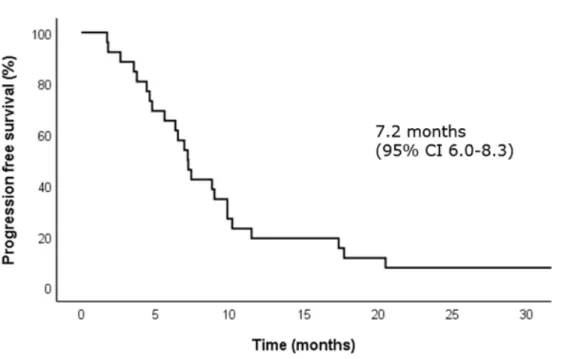
Figure 2. Kaplan-Meier analysis for progression free survival ··· 17
1. Introduction
Gastric cancer is the fifth most common cancer and the third most common cause of cancer related death globally (1). In Korea, gastric cancer ranks second in cancer incidence and third in cancer mortality (2). Standard chemotherapy for advanced gastric cancer (AGC) employs first-line 5-fluorouracil (5-FU) or its derivatives plus platinum agent combination regimens. Despite the worldwide adoption of two-drug fluorinated platinum-based chemotherapy as optimal initial chemotherapy for AGC, there is uncertain benefit for adding a third chemotherapy agent. Trastuzumab, human epidermal growth factor receptor 2 (HER-2) monoclonal antibody, is added to first-line chemotherapy in HER2-positive disease. The addition of trastuzumab to standard chemotherapy significantly improved all endpoints of overall response rate (ORR), progression-free survival (PFS), and overall survival (OS) in the ToGA trial (3). However HER-2 overexpression is observed in less than 30%, current survival of patients with AGC is still not good.
Docetaxel is a good candidate agent for triplet combination strategy
because this drug has demonstrated efficacy in patients with metastatic
or recurrent AGC, either as a single agent or as a doublet
chemotherapy. In 2006, the V325 phase 3 trial reported the superiority of
triplet chemotherapy with docetaxel, cisplatin, and fluorouracil (DCF)
over doublet chemotherapy with cisplatin plus fluorouracil for patients
with AGC; the median OS was 9.2 months versus 8.6 months with a
risk reduction of 32%, in an era where few options for second-line
treatment were available. However, this triplet regimen has not been
accepted globally as a standard treatment due to its severe
hematological toxicity, 82% incidence of grade 3–4 neutropenia and 29%
incidence of febrile neutropenia, and small survival benefit (4).
Many modified DCF regimens that aim to reduce toxicity while retaining the efficacy of DCF have been investigated in patients with metastatic or recurrent AGC. S-1, an oral xuoropyrimidine derivative developed in Japan, is active against AGC as a single agent or in combination with cisplatin in phase III trials. These trials suggested that S-1 was not inferior to 5-FU, with less toxicity, and can replace 5-FU for the treatment of AGC (5,6). Docetaxel, cisplatin, and S1 (DCS) combination chemotherapy has replaced DCF as a triplet regimen. First reported in 2007, the DCS triplet regimen had a higher ORR than S-1 plus cisplatin (7). In this phase 1 study, patients received oral S-1 40 mg/m
2bid on days 1-14, intravenous cisplatin 60 mg/m
2and docetaxel 60, 70 or 80 mg/m
2depending on dose-limiting toxicity (DLT) on day 8 every three weeks. The recommended dose of docetaxel was defined as 60 mg/m
2. The DLT was neutropenia. A phase II study showed quite high clinical efficacy, with an 87.1% total response rate, including 3.2%
showing complete response, 25.8% of patients achieving down-staging, and 22.6% undergoing a conducted curative surgical treatment (8).
Because intravenously administered docetaxel effectively penetrates
ascites, a systemic regimen involving docetaxel would be ideal for
treating patients with peritoneal metastasis (PM). This phase II DCS
therapy (oral S-1 40 mg/m
2bid on days 1-14, intravenous cisplatin 60
mg/m
2and docetaxel 60 mg/m
2depending on DLT on day 8 every three
weeks) also showed a high incidence of grade 3/4 hematologic toxicities,
such as 77.4% neutropenia, as well as grade 3 non-hematologic
toxicities, such as 35.3% anorexia and 32.3% nausea. To reduce DLT
and achieve best response rate, we conducted a phase II study of
modified DCS, using a reduced dose of docetaxel.
2. Materials and Methods
2.1. Study Design:
This trial was a single-arm phase II study evaluating triplet combination chemotherapy with DCS in AGC patients who were not treated with chemotherapy except adjuvant chemotherapy. The primary end point was ORR, and the secondary end points were OS, PFS, response duration, and assessment of toxicity. The investigation was performed in accordance with the Declaration of Helsinki, and the protocol was approved by the institutional review boards of Keimyung University Dongsan Medical Center (No. 2011-11-031).
2.2. Patient Eligibility:
Patients with pathologically proven unresectable recurrent or metastatic
gastric adenocarcinoma were assessed for eligibility. The major inclusion
criteria were as follows: measurable disease based on Response
Evaluation Criteria in Solid Tumors (RECIST) version 1.0, age 18–70
years, an Eastern Cooperative Oncology Group (ECOG) performance
status of 0–2, adequate bone marrow function (defined by an absolute
neutrophil count of 1500 /mm
3or greater, a platelet count of (100,000
/mm
3or greater), adequate renal function (serum creatinine level below
1.5 mg/dL or creatinine clearance > 60 mL/min), and adequate hepatic
function (bilirubin level below 2.0 mg/dL, and aspartate aminotransferase
(AST) and alanine aminotransferase (ALT) levels threefold or less of
the reference value). Prior radiotherapy was permitted if it had been
completed at least 1 year before enrollment of the patient into the study.
Patients in whom adjuvant chemotherapy containing cisplatin had been completed at least 1 year before recruitment were enrolled. However, patients with recurrence after adjuvant S-1, docetaxel-based chemotherapy were not eligible for the study regardless of the time to recurrence.
Patients with brain metastasis, obvious bowel obstruction, or serious gastrointestinal bleeding were excluded. Each patient provided written informed consent before study enrollment.
2.3. Assessment:
At the time of enrollment, all patients had a medical history assessment and physical examination, including evaluation of performance status, complete blood cell counts, serum chemistry profiles, creatinine clearance, urinalysis, electrocardiogram, chest X-ray and computed tomography (CT), or magnetic resonance imaging scan. Complete blood cell counts, liver function tests, and renal function tests were assessed at least once per cycle during treatment. CT scanning and imaging of measurable disease were performed every two cycles. Adverse events were assessed according to the National Cancer Institute Common Toxicity Criteria (NCI-CTC, version 4.0).
2.4. Treatment Schedule:
S-1 was administered orally at 40 mg/m
2twice daily on days 1-14, a dose calculated according to the patient’s body surface area as follows:
< 1.36 m
2, 50 mg; 1.36-1.57 m
2, 60 mg; 1.58-1.78 m
2, 65 mg; 1.79-1.92
m
2, 70 mg; 1.93-2.07 m
2, 75 mg; and > 2.08 m
2, 80 mg. Cisplatin was
administered by intravenous infusion for 2 h at 60 mg/m
2in 5%
glucose, followed by docetaxel (Taxotere
®) at 40 mg/m
2in 5% glucose on day 1. Prophylactic dexamethasone and anti-histamine were prescribed to prevent potential hypersensitivity reactions to docetaxel. To avoid cisplatin-induced renal dysfunction, adequate hydration of normally more than 2000 mL of normal saline on day 1 was administered. Antiemetic prophylactics were routinely used to prevent nausea and vomiting when cisplatin was administered according to American Society of Clinical Oncology (ASCO) guidelines. Granulocyte colony stimulating factor was administered to treat neutropenic events. Cycles were repeated every three weeks. Treatment with this regimen was continued for six cycles.
Patients received at least two cycles of DCS unless disease progression was noted. Subsequently, patients with no sign of disease progression were then given a two more cycles, with a maximum of eight cycles as per investigator’s decision.
2.5. Dose Modifications:
Dose modifications were done according to the study protocol.
Initiation of the next course was postponed until recovery and fulfillment of the following criteria: ANC 1500 /mm
3and platelets 100,000 /mm
3. Docetaxel, cisplatin, and S-1 doses were reduced when the following adverse events occurred in the previous course: febrile neutropenia, grade 4 neutropenia, grade 4 thrombocytopenia, grade 2 or higher elevated AST/ALT, and grade 3 or 4 fatigue. The S-1 dose was reduced in the event of grade 3 or 4 diarrhea, or grade 3 stomatitis.
The dosage of S-1 was reduced by 60 mg/m
2/day for related grade 3-4
toxicity, for the second occurrence of the same grade 3 toxicity, or for
the third occurrence of the same grade 2 toxicity. The doses of docetaxel and oxaliplatin were reduced by 50% of the initial dose for related grade 4 toxicity, for the second occurrence of the same grade 3 toxicity, or for the third occurrence of same grade 2 toxicity. Treatment was delayed for up to 2 weeks if patients had insufficient hepatic, cardiac, renal, or bone marrow function (i.e., ANC < 1,500 /mm
3, platelets < 100,000 /mm
3, fever with grade 3 to 4 neutropenia, or non-hematologic toxicity grade 3). Treatment was discontinued if recovery did not occur within 14 days.
2.6. Statistical Analysis:
According to Simon’s optimal two-stage design (9), 35 patients were required for enrollment to test the null hypothesis that the true ORR is 20% versus the alternative hypothesis that the true ORR is at least 45%, at a significance level of 0.05 with a power of 90%. If six or more responses were observed among 19 patients in the first stage, the study was continued with additional patients included. As the drop-out rate was assumed to be 10%, the number of patients necessary for sufficient statistical power was calculated to be 39.
The intention-to-treat (ITT) population included all of the patients,
and the per-protocol (PP) population excluded those patients who
received treatment for less than six weeks for reason other than disease
progression or death. The duration of a complete response (CR) or
partial response (PR) was defined as the time from the first day that
measurement criteria were met for complete response or partial response
until the first documentation of progressive disease or recurrence (by
referencing the smallest measurements recorded since the treatment
started). We measured OS as from the date of first administration of DCS chemotherapy to the date of the death or last follow-up. We measured PFS as from the date of first administration of DCS chemotherapy to the date of detection of progression or death from any cause. The time to the event end points was analyzed with Kaplan–
Meier survival methods. All P values lower than 0.05 were considered to
indicate statistical significance.
3. Results
3.1. Patient Characteristics:
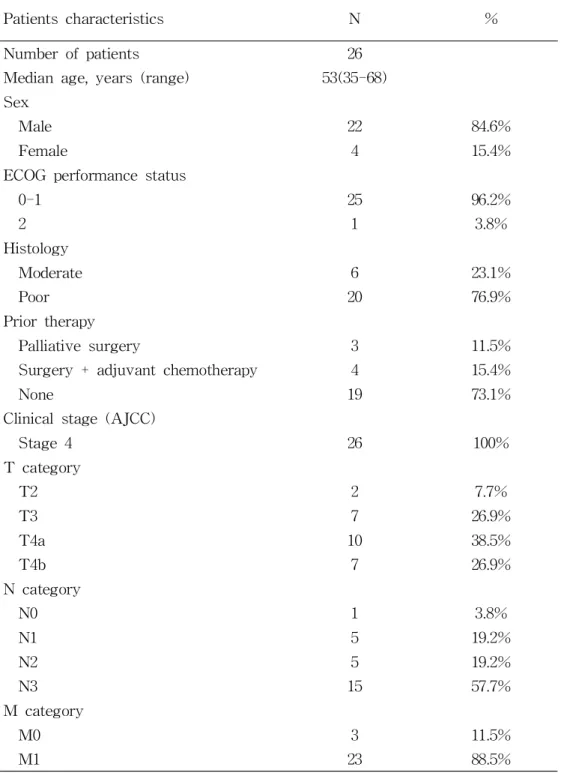
From July 2011 to June 2016, 26 patients who met the inclusion criteria were enrolled in this study. The demographic and pathologic characteristics of the patients are described in Table 1. The median age was 53 years (range 35-68 years). Twenty-two patients (84.6%) were male, and only one patient (3.8%) had an ECOG performance status of 2. Twenty-three patients (88.5%) had metastatic disease. Twenty-two (84.6%) had an initial diagnosis of stage 4 AGC, and 4 patients (15.4%) had recurrent gastric cancer after curative surgery with adjuvant chemotherapy. Twenty patients (76.9%) had poorly differentiated adenocarcinoma, and the most common metastatic sites were the peritoneum (46.2%), distant lymph nodes (38.4%), and the liver (23.0%).
The median number of metastatic organs was 2 (range 0–3).
3.2. Treatment Delivery:
A total of 142 cycles of DCS chemotherapy (median 6; range 1–8 per
patient) were administered. Three patients had to discontinue use of
S-1, because of grade 3/4 fatigue and diarrhea and they received
increased doses (130%) of docetaxel and cisplatin doublet therapy for 3
of 6 cycles. One patient did not complete the first cycle of chemotherapy
because of loss to follow-up. Seventeen patients (65.4%) received six or
more cycles of chemotherapy. Five patients (19.2%) required dose
reductions or delays. The mean relative dose intensities (ratio of the
dose received to the dose planned) of docetaxel, cisplatin, and S-1 for all of the cycles administered were 1.03 (95% confidence interval (CI) 0.99–1.06), 1.0 (95% CI 0.98–1.02), and 0.92 (95% CI 0.84–1.0), respectively. The most common reasons for dose reduction and delay were grade 3/4 neutropenia and diarrhea.
3.3. Toxicity:
Seventeen patients (65.4%) completed the six planned cycles of DCS.
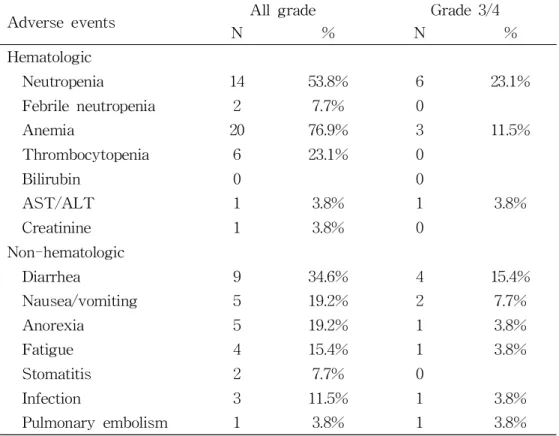
The reasons for chemotherapy discontinuation were patient refusal (n = 1), delayed recovery from an adverse event (n = 1), and disease progression (n = 7). Toxicities during treatment are listed in Table 2.
The common hematologic toxicities were anemia (76.9%), neutropenia (53.8%), and thrombocytopenia (23.1%). Among them, grade 3 or 4 adverse events that occurred in more than 10% of the patients were neutropenia (23.1%), diarrhea (15.5%), and anemia (11.5%). No patient experienced grade 3 or 4 febrile neutropenia. In addition, one patient had a grade 3 pulmonary embolism, and another patient had a grade 3 pneumonia. All treatment related toxicities resolved with appropriate management, and no treatment related deaths occurred.
3.4. Response to Chemotherapy:
Of the 26 patients, 25 patients were eligible for response evaluation.
One patient was not available for response evaluation because of loss
during follow-up. Tumor responses are summarized in Table 3. A total
of 142 cycles of DCS chemotherapy (median 6; range 1–8 per patient)
were administered. All 26 patients had measurable lesions, with CR
achieved in 1, PR achieved in 16, and SD achieved in seven patients.
The confirmed ORR was 65.4% in the ITT population (n = 26) and 68.0% in the PP population (n = 25). The disease control rate was 92.3% in the ITT population and 96.0% in the PP population. The median time to response was 1.4 months (95% CI 1.1-1.7 months] and median duration of response was 5.6 months (95% CI 1.7-12.9 months).
At the time of survival analysis, the median follow-up period for censored (surviving) patients was 11.2 months (range 1.7–80.0 months).
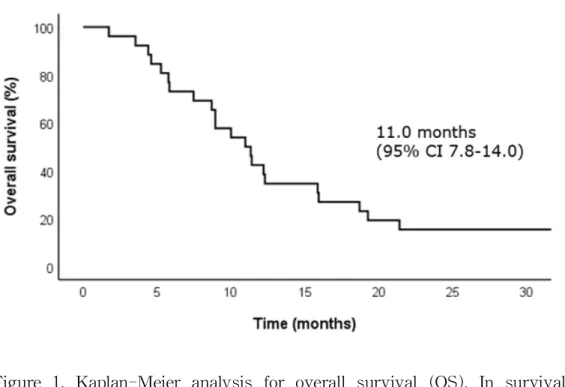
The median PFS was 7.2 months (95% CI 6.0-8.3 months), and the
median OS was 11.0 months (95% CI 7.8-14.0 months) in the ITT
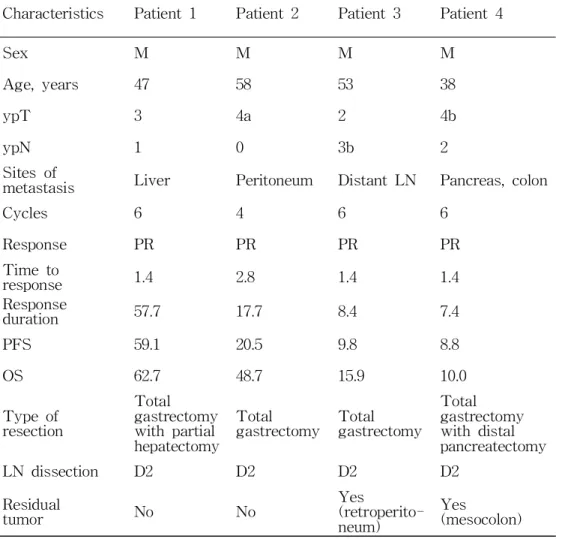
population (Figure 1&2). Of the 26 patients, 4 patients (15.4%) received
conversion surgery because of disappearing distant metastasis and/or
down-staging (Table 4). Two of 4 patients who received conversion
surgery underwent curative gastrectomy. The metastatic lesions in 2
patients completely disappeared after surgical gastrectomy with lymph
node. Another 2 patients showed residual tumor at the time of surgery,
one in the retroperitoneal place and the other in the mesocolon.
Table 1A. Baseline Characteristics of Patients
Patients characteristics N %
Number of patients 26
Median age, years (range) 53(35-68) Sex
Male 22 84.6%
Female 4 15.4%
ECOG performance status
0-1 25 96.2%
2 1 3.8%
Histology
Moderate 6 23.1%
Poor 20 76.9%
Prior therapy
Palliative surgery 3 11.5%
Surgery + adjuvant chemotherapy 4 15.4%
None 19 73.1%
Clinical stage (AJCC)
Stage 4 26 100%
T category
T2 2 7.7%
T3 7 26.9%
T4a 10 38.5%
T4b 7 26.9%
N category
N0 1 3.8%
N1 5 19.2%
N2 5 19.2%
N3 15 57.7%
M category
M0 3 11.5%
M1 23 88.5%
Table 1B. Baseline Characteristics of Patients (continued)
Patients characteristics N %
Peritoneal carcinomatosis
Yes 12 46.2%
No 14 53.8%
Number of metastases
0 4 15.4%
1 9 34.6%
2 6 23.1%
≥3 7 26.9%
Involved organ
Peritoneum 12 46.2%
Distant lymph node 10 38.4%
Liver 6 23.0%
Bone 4 15.4%
Lung 3 11.5%
Adrenal gland 2 7.6%
Ovary 1 3.8%
Others 2 7.6%
AJCC: The American Joint Committee on Cancer; ECOG: Eastern
Cooperative Oncology Group.
Table 2. Observed Adverse Events Associated with Chemotherapy
Adverse events All grade Grade 3/4
N % N %
Hematologic
Neutropenia 14 53.8% 6 23.1%
Febrile neutropenia 2 7.7% 0
Anemia 20 76.9% 3 11.5%
Thrombocytopenia 6 23.1% 0
Bilirubin 0 0
AST/ALT 1 3.8% 1 3.8%
Creatinine 1 3.8% 0
Non-hematologic
Diarrhea 9 34.6% 4 15.4%
Nausea/vomiting 5 19.2% 2 7.7%
Anorexia 5 19.2% 1 3.8%
Fatigue 4 15.4% 1 3.8%
Stomatitis 2 7.7% 0
Infection 3 11.5% 1 3.8%
Pulmonary embolism 1 3.8% 1 3.8%
ALT: alanine aminotransferase; AST: aspartate aminotransferase.
Table 3. Treatment Efficacy
Treatment efficacy
N %Complete remission (CR) 1 3.8%
Partial remission (PR) 16 61.5%
Stable disease (SD) 7 26.9%
Progressive disease (PD) 1 3.8%
Response rate (95% CI) 65.4%
Table 4. Patients with Conversion Surgery
Characteristics Patient 1 Patient 2 Patient 3 Patient 4
Sex M M M M
Age, years 47 58 53 38
ypT 3 4a 2 4b
ypN 1 0 3b 2
Sites of
metastasis Liver Peritoneum Distant LN Pancreas, colon
Cycles 6 4 6 6
Response PR PR PR PR
Time to
response 1.4 2.8 1.4 1.4
Response
duration 57.7 17.7 8.4 7.4
PFS 59.1 20.5 9.8 8.8
OS 62.7 48.7 15.9 10.0
Type of resection
Total gastrectomy with partial hepatectomy
Total
gastrectomy Total gastrectomy
Total gastrectomy with distal pancreatectomy
LN dissection D2 D2 D2 D2
Residual
tumor No No Yes
(retroperito- neum)
Yes
(mesocolon)
LN: lymph node; OS: overall survival; PFS: progression free survival;
PR: partial response.
Figure 1. Kaplan-Meier analysis for overall survival (OS). In survival
analysis, the median OS was 11.0 months (95% CI 7.8-14.0
months) in the ITT (intention-to-treat) population.
Figure 2. Kaplan-Meier analysis for progression free survival (PFS). In
survival analysis, the median PFS was 7.2 months (95% CI
6.0-8.3 months) in the ITT (intention-to-treat) population.
4. Discussion
The best choice of first-line chemotherapy in patients with HER-2 negative AGC is still debated, although a platinum-based regimen is generally used in clinical practice with scientific evidences. Wagner et al. (10) reported that a significant survival benefit with the combination chemotherapy compared with single agent chemotherapy. In addition, triplet regimen combination chemotherapy such as docetaxel based regimen (DCF) showed a better survival than a doublet regimen chemotherapy, but with a higher grade of hematologic toxicity (4). Veer et al. also showed that taxane based triplet regimen (taxane, fluorouracil and cisplatin, or oxaliplatin) was better efficacy for PFS than a doublet regimen (11). One of the triplet regimen for AGC, the original DCS therapy was first conducted by Takayama et al. with a very good response rate of 88%, but it also had severe toxicities (7). Hence, we used modified dose of docetaxel that was evaluated in a multicenter phase III study for AGC and in a phase II study in preoperative chemotherapy for gastric cancer with extensive lymph node metastasis (12,13).
We conducted to investigate the clinical efficacy of DCS and the
degree of adverse event after dose modification for docetaxel in a DCS
regimen. A previous phase II study described the high clinical efficacy
of a DCS regimen with 87.1% ORR showing 7.5 months of PFS and
22.9 months of OS (8). However, toxicities were also high, with
incidences of 77.4% for neutropenia and 35.5% for anorexia, as the most
common grade 3/4 hematologic and non-hematologic toxicities, respectively
(8). In this study, the modified DCS also showed a high clinical efficacy
with 65.4% ORR including one case of CR and 15.3% for a conversion
surgery. The median PFS (7.2 months) was not inferior to that of DCS (7.5 months). Neutropenia, the most common grade 3/4 toxicities, were present in 23.1% of patients, less toxic than previous DCS (77.4%), and grade 3/4 febrile neutropenia was not present in modified DCS. In addition, neutropenia was usually short lasting, and its incidence was reduced by prophylactic G-CSF. Non-hematological toxicities also showed a trend of reduced toxicity. Grade 3/4 diarrhea was observed in 15.4%
of patients (16.1% for DCS), nausea and vomiting in 7.7% of patients (32.3% for DCS), and anorexia in 3.8% of patients (35.5% for DCS).
Although each of three drugs had the shared myelosuppressive effect, these finding suggests that dose reduction of decetaxel had relieving effects of hematologic and non-hematologic toxicities. In addition, despite the high development of toxicities, the median cycles of DCS regimen was 6 with favorable compliance. Hence, dose modification for decetaxel in DCS regimen had a positive effect in both hematologic and non-hematologic toxicities, representing equivalent efficacy and less toxicity in patients with advanced gastric cancer.
In a phase I study with DCS regimen which was designed to evaulate the optima dose and DLT, the recommended dose of cisplatin was determined to be 70 mg/m
2(14). However, the reduced dose of cisplatin with 60 mg/m
2was used in the present phase II study, since other phase II study of DCS therapy reported that grade 1 or higher renal dysfunction occurred in 26% of the patients (15). This reduced dose of cisplatin was related to less toxicity, with no change in the response rate.
Generally, high ORRs achieved by various other combination regimens
for AGC have failed to translate into major survival benefits (16-18). In
this study, the median OS was estimated to be 11 months, which is
inferior and disappointing compared with that reported for the DCS
regimen (22.9 months). In the original DCS study, good survival data may be partly influenced by adjuvant surgery performed in 29.0% of the patients. The survival benefit of chemotherapy followed by radical surgery in the conversion from unresectable to resectable gastric cancer has been reported. Triplet combination chemotherapy was developed as a regimen with high antitumor effect. Conversion therapy combined with intensive chemotherapy is a strategy that looks promising as a possible cure for unresectable AGC. These findings suggest that a triplet DCS regimen is suitable for attempting conversion therapy with a high anti-tumor effect sufficient to eliminate distant metastasis, including micro-metastasis. In our study, two patients received curative conversion therapy, they showed survival benefit over two years. DCS with a reduced dose of docetaxel may offer short-term control of AGC, and influence sequential curative conversion therapy by its high disease control capacity.
Our study has some limitations. Primarily, we did not successfully recruit and retain enough patients. This may lead to a reduced statistical power. Second, our patients were young and had a relatively good general status, as only one patient had a performance status of 2.
Third, three patients had to discontinue use of S-1 because of grade 3/4 fatigue and diarrhea, and they received increased doses (130%) of docetaxel and cisplatin doublet therapy for 3 of 6 cycles.
In conclusion, modified DCS triplet combination chemotherapy, using a
reduced dose of docetaxel (40 mg/m
2), appears to be effective as a
first-line treatment in AGC and has an acceptable safety profile, but
close monitoring of adverse events is also needed. The high response
rate and long PFS of this regimen enabled treatment with a curative
intent, even in a metastatic setting. To confirm the therapeutic
practicality of modified DCS regimen for the first-line chemotherapy of
patients with AGC, we should further evaluate long-term patient safety
and survival in DCS therapy with longer follow-up times and larger
sample sizes.
5. Summary
With the high prevalence of AGC, it remains a common cause of cancer-related mortality worldwide. Systemic chemotherapy is regarded as the main treatment option for AGC with the survival benefit.
Although triple agents chemotherapy in AGC have been active and
many trials have been performed, there is no accepted first-line
treatment against AGC. To achieve best response rate with minimal
DLT, we conducted a phase II study of triple combination chemotherapy
with modified DCS, using a reduced dose of docetaxel. This trial was a
single-arm phase II study evaluating triplet combination chemotherapy
with DCS in AGC patients who were not treated with chemotherapy
except adjuvant chemotherapy. In survival analysis, the median PFS
was 7.2 months and the median OS was 11.0 months in the ITT
population. The common hematologic toxicities were anemia, neutropenia,
and thrombocytopenia. No patient experienced grade 3 or 4 febrile
neutropenia. All treatment related toxicities resolved with appropriate
management, and no treatment related deaths occurred. The combination
chemotherapy with modified DCS may be less toxic and was effective
for patients with AGC.
References
1. Torre LA, Bray F, Siegel RL, Ferlay J, Lortet-Tieulent J, Jemal A:
Global Cancer Statistics, 2012. CA Cancer J Clin 2015; 65: 87-108.
2. Jung KW, Won YJ, Oh CM, Kong HJ, Lee DH, Lee KH: Cancer Statistics in Korea: Incidence, Mortality, Survival, and Prevalence in 2014. Cancer Res Treat 2017; 49: 292-305.
3. Bang YJ, Van Cutsem E, Feyereislova A, Chung HC, Shen L, Sawaki A, et al: Trastuzumab in combination with chemotherapy versus chemotherapy alon for treatment of HER2-positive advanced gastric or gastro-oesophageal junction cancer(ToGA): a phase 3, open-label, randomised controlled trial. Lancet 2010; 376(9742):
687-97.
4. Van Cutsem E, Moiseyenko VM, Tjulandin S, Majlis A, Constenla M, Boni C, et al: Phase III study of docetaxel and cisplatin plus fluorouracil compared with cisplatin and fluorouracil as first-line therapy for advanced gastric cancer: a report of the V325 Study Group. J Clin Oncol 2006; 24: 4991-7.
5. Boku N, Yamamoto S, Fukuda H, Shirao K, Doi T, Sawaki A, et al:
Fluorouracil versus combination of irinotecan plus cisplatin versus S-1 in metastatic gastric cancer: a randomised phase 3 study.
Lancet Oncol 2009; 10: 1063-9.
6. Ajani JA, Rodriguez W, Bodoky G, Moiseyenko V, Lichinitser M,
Gorbunova V, et al: Multicenter phase III comparison of cisplatin/S-1 with cisplatin/infusional fluorouracil in advanced gastric or gastroesophageal adenocarcinoma study: the FLAGS trial. J Clin Oncol 2010; 28: 1547-53.
7. Takayama T, Sato Y, Sagawa T, Okamoto T, Nagashima H, Takahashi Y, et al: Phase I study of S-1, docetaxel and cisplatin combination chemotherapy in patients with unresectable metastatic gastric cancer. Br J Cancer 2007; 97: 851-6.
8. Sato Y, Takayama T, Sagawa T, Takahashi Y, Ohnuma H, Okubo S, et al: Phase II study of S-1, docetaxel and cisplatin combination chemotherapy in patients with unresectable metastatic gastric cancer. Cancer Chemother Pharmacol 2010; 66: 721-8.
9. Simon R: Optimal two-stage designs for phase II clinical trials.
Control Clin Trials 1989; 10: 1-10.
10. Wagner AD, Grothe W, Haerting J, Kleber G, Grothey A, Fleig WE.
et al: Chemotherapy in advanced gastric cancer: a systemic review and meta-analysis based on aggregate data. J Clin Oncol 2006;
24(18): 2903-2909.
11. Ter Veer E, Haj Mohammad N, van Valkenhoef G, Ngai LL, Mali RM, Anderegg MC, et al: The efficacy and safety of first-line chemotherapy in advanced esophagogastric cancer: a network meta-analysis. J Natl Cancer Inst 2016; 108(10): 1-13.
12. Ito S, Sano T, Mizusawa J, Takahari D, Katayama H, Katai H,
Kawashima Y, et al: A phase II study of preoperative chemotherapy with docetaxel, cisplatin, and S-1 followed by gastrectomy with D2 plus para-aortic lymph node dissection for gastric cancer with extensive lymph node metastasis: JCOG1002. Gastric cancer 2017;
20: 322-331.
13. Hosoda K, Azuma M, Katada C, Moriya H, Mieno H, Ishido K, et al: A phase II study of neoadjuvant chemotherapy with docetaxel, cisplatin, and S-1, followed by gastrectomy with D2 lymph node dissection for high-risk advanced gastric cancer: Results of the KDOG1001 trial. Gastric cancer 2019; 22(3): 598-606.
14. Nakayama N, Koizumi W, Sasaki T, Higuchi K, Tanabe S, Nishimusa K et al: A multicenter, phase I dose-escalating study of docetaxel, cisplatin and S-1 for combination therapy for advanced gastric cancer (KDOG0601). Oncol 2008; 75(1-2): 1-7.
15. Koizumi W, Nakatama N, Tanabe S, Sasaki T, Higuchi K, Nishimura K et al: A multicenter phase II study of combined chemotherapy with docetaxel, cisplatin, and S-1 in patients with unresectable or recurrent gastric cancer (KDOG 0601). Cancer Chemother Pharmacol 2012; 36: 407-413
16. Ohtsu A: Chemotherapy for metastatic gastric cancer: past, present, and future. J Gastroenterol 2008; 43: 256-64.
17. Ross P, Nicolson M, Cunningham D, Valle J, Seymour M, Harper P,
et al: Prospective randomized trial comparing mitomycin, cisplatin,
and protracted venous-infusion fluorouracil (PVI 5-FU) With
epirubicin, cisplatin, and PVI 5-FU in advanced esophagogastric cancer. J Clin Oncol 2002; 20: 1996-2004.
18. Thuss-Patience PC, Kretzschmar A, Repp M, Kingreen D,
Hennesser D, Micheel S, et al: Docetaxel and continuous-infusion
fluorouracil versus epirubicin, cisplatin, and fluorouracil for advanced
gastric adenocarcinoma: a randomized phase II study. J Clin Oncol
2005; 23: 494-501.
Phase II Study of Decetaxel, Cisplatin, and S-1 Triplet Combination Chemotherapy
in Patients with Advanced Gastric Cancer
Jang, Won Young Department of Internal medicine
Graduate School Keimyung University
(Supervised by Professor Kim, Jin Young)
Despite the worldwide adoption of two-drug fluorinated platinum-based
chemotherapy as optimal initial chemotherapy for advanced gastric
cancer (AGC), there is uncertain benefit for adding a third chemotherapy
agent. To reduce the incidence of adverse events, we conducted a phase
II study of modified triplet regimen using docetaxel, cisplatin, and S-1
(DCS), using a reduced dose of docetaxel. This was a single-arm phase
II study evaluating triplet combination chemotherapy with DCS in AGC
patients who were not treated with chemotherapy. Of the 26 patients, 25
patients were eligible for response evaluation. The confirmed ORR was
65.4% and disease control rate was 92.3% in the intention-to-treat
(ITT) population. The median time to response was 1.4 months (95% CI
1.1-1.7 months) and median duration of response was 5.6 months (95%
CI 1.7-12.9 months). At the time of survival analysis, the median PFS
was 7.2 months (95% CI 6.0-8.3 months), and the median OS was 11.0
months (95% CI 7.8-14.0 months) in the ITT population. Grades 3 or 4
included adverse events of neutropenia (23.1%), diarrhea (15.5%), and
anemia (11.5%). In conclusion, modified DCS triplet combination
chemotherapy, using a reduced dose of docetaxel, was effective against
AGC with less toxicity.
진행성 위암 환자에서 Doxetaxel과 Cisplatin과 S-1 복합화학요법에 대한 2상 임상 연구
장 원 영 계명대학교 대학원 의학과 내과학 전공
(지도교수 김 진 영)