• 검색 결과가 없습니다.

Effects of Ground Obstacle Walking Combined with Treadmill Training on Gait Ability in Chronic Stroke Patients -A Preliminary Study-

N/A
N/A
Protected

Academic year: 2021

Share "Effects of Ground Obstacle Walking Combined with Treadmill Training on Gait Ability in Chronic Stroke Patients -A Preliminary Study-"

Copied!
15
0
0

로드 중.... (전체 텍스트 보기)

전체 글

(1)

| Abstract |

Purpose: Gait training for stroke patients focuses on adjusting to new environments to facilitate outdoor walking. Therefore, the purpose of this study was to identify the effects of various ground obstacle walking combined with treadmill walking on the gait parameters and functional gait ability of chronic stroke patients.

Methods: Twenty-four chronic stroke patients were divided into two groups: an experimental group (n = 12) and a control group (n = 12). The experimental group received a combined gait training using various ground obstacle walking and treadmill walking (VGOW) five times/week for four weeks. The control group received traditional treadmill training (TW) five times/week for four weeks. Patients were evaluated using the figure-8 walk test (F8WT) and the Functional Gait Assessment (FGA) before and after each intervention.

Results: The ANCOVA results showed that both treatments significantly influenced F8WT steps, F8WT time, and FGA score.

The paired t-test results showed a significant improvement in F8WT steps, F8WT time, and FGA score in the experimental group compared to those in the control group.

Conclusion: Combined gait training using various ground obstacle walking and treadmill walking can improve gait ability in chronic stroke patients.

Key Words: Gait, Outdoor walk, Stroke, Treadmill, Various ground obstacle

†Corresponding Author : Young-Keun Woo ([email protected])

Original Article Open Access

Effects of Ground Obstacle Walking Combined with Treadmill Training on Gait Ability in Chronic Stroke Patients

-A Preliminary Study-

Young-Il Jung, P.T., MSc.⋅Young-Keun Woo, P.T., Ph.D. 1† ⋅Jong-Im Won, P.T., Ph.D. 1 ⋅ Yong-Wook Kim, P.T., PhD. 1

15)

Department of Rehabilitation Center, Dreamsol Hospital

1 Department of Physical Therapy, College of Medical Sciences, Jeonju University Received: July 22, 2021 / Revised: August 9, 2021 / Accepted: August 9, 2021

ⓒ 2021 Journal of Korea Proprioceptive Neuromuscular Facilitation Association

This is an Open Access article distributed under the terms of the Creative Commons Attribution Non-Commercial License

(http://creativecommons.org/licenses/by-nc/3.0) which permits unrestricted non-commercial use, distribution, and reproduction

in any medium, provided the original work is properly cited.

(2)

Ⅰ. Introduction

Stroke is caused by ischemic or hemorrhagic vascular injury in the brain due to abnormal blood supply. It is characterized by physical and psychological disabilities with neurologic symptoms as a result of inadequate blood supply to the brain and loss of cerebral functions (Peurala et al., 2007). Patients develop sensory, motor, and visual disabilities depending on the cause, location, and scope of injury; mobility-related disabilities have an impact on their activities of daily living and ultimately limit their participation in community-based activities of daily living (Wilkinson et al., 1997; Yates, et al., 2002).

One of the most typical disabilities caused by stroke is the loss of gait ability (Yang et al., 2008). Stroke patients suffer from diminished overall motor control, and the gap between the paralytic and non-paralytic sides induces an asymmetrical body alignment, thereby affecting ambulation (Dean et al., 2000). They also show abnormal gait pattern due to inefficient movement and short stance phase in the paralytic side and quicker push-off in the stance phase compared with non-injured individuals (Olney et al., 1991). In an analysis of gait mechanisms in stroke patients by Jaffe et al. (2004), stroke patients showed markedly weaker force in the lower limb joints with narrower movement of both the paralytic and non- paralytic sides compared with non-injured individuals.

Reduced lower limb strength in the paralytic side rapidly transitions the body’s centre of mass from the paralytic to the non-paralytic side, shortening the stance phase of the paralytic side and swing phase of the non-paralytic side. This results in different step lengths between the two sides, thereby slowing down the gait cycle and velocity (Wagenaar & Beek, 1992). Approximately 70%

of stroke patients are able to walk, but they have such gait disturbance and need assistive devices for walking.

This makes their gait slow and unstable, eventually serving

as the major factor in hindering their independent daily living activities (O’Sullivan et al., 2014).

Gait rehabilitation is a key interest among stroke patients, and multiple studies have examined the impact of treadmill-based gait training for restoring motor functions in stroke patients (Polese, et al., 2013).

O’Sullivan et al. (2014) reported significant improvements in the gait features after treadmill walking training combined with routine exercise therapy. In particular, treadmill training had a significant effect on gait velocity and gait distance. According to Ada et al. (2003), the patients who underwent treadmill walking training showed significantly greater improvement in gait speed and distance compared with the patients who underwent only muscle and balance training. Ivey et al. (2011) reported significant improvement in gait distance in the treadmill group compared with that in the stretching group after 26 weeks of exercise, and Weng et al. (2006) reported that the treadmill training led to significantly better improvement in gait velocity compared with the routine exercise and repeated step training. In a study comparing the effects of over-ground gait training and treadmill training, Pohl et al. (2002) shed light on the importance of speed control in treadmill to increase gait velocity.

Clinical trials on chronic stroke patients have reported that treadmill walking significantly increases strength and reduces energy consumption (Smith, et al., 1998; Smith, et al., 1999), and that treadmill training is associated with walking speed and gait characteristics (Macko, et al., 1997; Macko, et al., 2001).

Although evidence suggests that existing treadmill

walking training is useful for improving endurance,

represented by gait speed and distance, there is little

evidence supporting its effect on boosting gait abilities,

required in actual daily living, such as the ability to walk

on curved roads, roads with obstacles, and unstable

ground. Adjusting to a new environment is an important

(3)

issue in gait training for stroke patients. In other words, patients are at a lower risk of falling in the rehabilitation room than that outside the hospital, and the question is whether they will be able to walk well outside the hospital environment. Adjustment to the outdoor environment depends on the similarity of the training environment to the outdoor environment (Young & Schmidt, 1992).

Moreover, studies reported that patients showed better motor learning for the new environment when the interventions in the training environment were similar to the actual environment (Winstein, 1991). According to a study on community ambulation in stroke patients by Perry et al. (1995), a gait speed of 48 m/min was required for community ambulation. Kwong et al. (2017) reported that stroke patients need physical endurance to be able to walk, the ability to walk up stairs or balance, and dorsiflexion strength without a risk of falling while walking in the community. Hill et al. (1997) suggested that a gait speed of 48 m/min or higher, physical endurance to walk 500 m without rest, a functional independence measure (FIM) of 5, and a functional ambulation category (FAC) of 5 or higher are required for community ambulation. These environmental aspects must be considered for gait rehabilitation after stroke, and a gait training involving an environment similar to the community is essential.

This study aims to present various adjustments to multiple ground conditions and training environments.

Furthermore, it proposes a treatment for improving functional gait, and curve walking by analysing the effects of a combined gait training using various ground obstacles that provide an environment similar to a community environment and treadmill walking training, whose therapeutic effects have already been documented, on gait ability using the Functional Gait Assessment (FGA) and figure-of-8 walk test (F8WT).

Ⅱ. Method

1. Participants

Total 24 stroke patients underwent inpatient rehabilitation at the Rehabilitation Hospital in J city, Republic of Korea between September 2018 and October 2018. Among them, 24 patients who understood the purpose of the study and consented to participate in the study were enrolled. The minimum total sample size for statistical significance was computed to be 24 using G*Power 3.1.2 software (2007). The inclusion criteria were as follows: patients i) with hemiplegia due to stroke that occurred at least six months prior to the study, ii) with the Korean-Mini Mental Status Examination (K-MMSE) score of ≥24 who are able to understand and follow the instructions given, iii) who are able to walk at least 10 m independently, iv) with a functional ambulation category (FAC) of ≥3. Patients with ≥2 episodes of stroke, orthopaedic problem that may affect walking, vestibular injury that affects walking, and other neurologic defects were excluded. This study was approved by the institutional review board of Jeonju University (JJIRB-180509-HR-2018-0712).

2. Experimental procedures

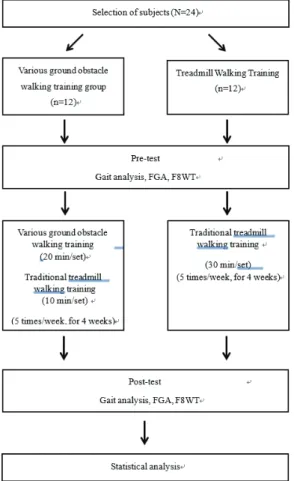
Participants were randomly assigned to receive ground

obstacles walking combined with treadmill training

(VGOW) or only treadmill walking training (TW) with

reference to male-to-female ratio, age, type and date of

stroke with a 4 week intervention. Both the VGOW group

and TW group consisted of 12 participants. The outcome

measures used were gait analysis, functional gait

assessment and figure 8 walking test. Subjects in the

experimental group participated in 4 weeks of using

VGOW for 30 minutes per day, 5 times per week. Each

(4)

suhjects in the control group participated in 4 weeks of using TW for 30 minutes per day, 5 times per week (Fig. 1).

Fig. 1. Flowchart of participants of this study.

3. Instrumentation and measurement

1) Gait analysis

Gait ability was analysed using Zebris FDM-S (Zebris Medical GmbH, Germany). Gait was measured using an electronic mat containing two plates with 10,240 pressure sensors. Measurement speed was adjusted by 0.1 km/h increments between 0.22 and 22 km/h. When a participant walked on the mat, the pressure under the sole of the

foot was recorded at 120 Hz. The recorded pressure signals as well as the centre of pressure during walking or standing were presented as spatial visual measurements using a 2D/3D graph. This device is highly reliable for measuring step length, velocity, and cadence. Step length was defined as the distance between the heel strike of one foot and the heel strike of other foot. Velocity was computed by dividing distance walked by time. Cadence was calculated as the number of steps per minute. Participants were instructed to walk 10 m along a tape on the floor of the therapy room. Two plates were placed 4–7 m apart such that participants could walk past them. Three measurements were obtained, and the mean value was used for analysis. Data were collected at 50 Hz sampling rate. Segmentation and analysis of the recorded data were performed using WinFM software (Zebris Medical GmbH, Germany), a commercial software used for comparing the force necessary to support body weight and the duration of contact.

2) Functional gait assessment

The functional gait assessment (FGA) was developed by adding items to and modifying the dynamic gait index developed by Wrisley et al. (2004). This test mitigated ceiling effect, which affects a test’s discriminatory power, detected even minor changes in stability, and assessed older adults with a high risk of fall. FGA consisted of the following 10 items: gait on a level surface, change in gait speed, gait with horizontal head turns, gait with vertical head turns, gait with pivot turn, step over an obstacle, gait with a narrow base of support, gait with eyes closed, ambulating backward, and steps. Each item was rated on a four-point scale (3 = no impairment, 2

= mild impairment, 1 = moderate impairment, and 0 =

severe impairment). A higher score indicated a better

ability to perform each functional gait, and the maximum

(5)

score was 30. The intra-rater reliability and inter-rater reliability of total FGA score were high at Intraclass Correlation Coefficient (ICC) = 0.97 and ICC = 0.94, respectively. Similar to a previous study, the reliability for single item was ICC =0 .93 (Thieme et al., 2009).

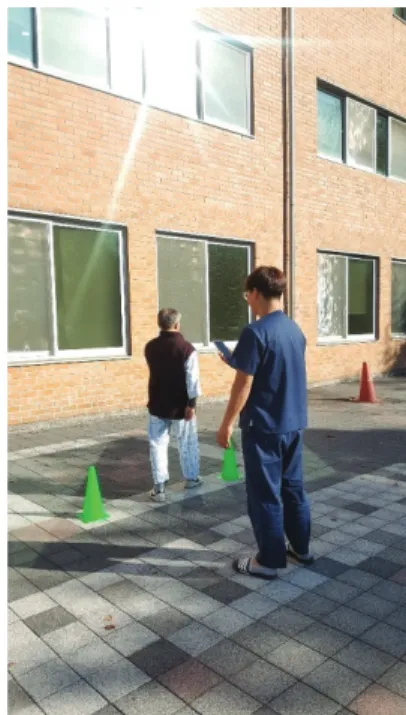
Carvalho et al. (2010) reported differences in gait ability in an indoor environment, set environment in the therapy room, and outdoor environment in the community. In this study, we assessed participants’ gait ability in an outside environment similar to the actual community environment in order to evaluate the differences in functional gait in the community (Fig. 2).

Fig. 2. Functional gait assessment in outdoor.

3) Gait and balance assessment

We assessed gait and balance using F8WT. Two cones were placed at approximately 1.5 m apart. Participants were instructed to i) stand midway between the cones facing away from the plane of the cones, ii) choose the direction of curved walking, iii) walk at their normal speed when prepared, and iv) then come back to the starting position (Fig. 3). We assessed the following parameters:

i) speed (time required for completing the course), ii) number of steps taken during the measurement, iii) accuracy (ability to stay within the 60 cm boundary), and iv) the naturalness of gait. The quality of walk was rated based on pause, hesitation, and difficulty in changing speed while walking (0 = pause, 1 = no pause; 0 =

hesitation, 1 = no hesitation; 0 = difficulty in changing speed, 1 = no difficulty in changing speed (Hess et al., 2010). The inter-rater reliability for speed and number of steps taken during F8WT was ICC =0 .90 and ICC

= 0.92, respectively. The test–retest reliability for speed and number of steps taken during curved walking was ICC = 0.82 and ICC = 0.82, respectively (Jpsephson et al., 1991). Compared with flat ground in indoor environment, various ground conditions in the community require patients to maintain balance while walking to prevent falling due to potential environmental risks (Wolf et al., 1999). We assessed the quality of outdoor walking to investigate patients’ gait abilities in various ground environments in the community’.

Fig. 3. Figure 8 walking test in outdoor.

4. Interventions

All patients underwent conventional physical therapy

at the hospital. The VGOW group additionally underwent

(6)

a combined gait training using various ground obstacle walking and treadmill walking training for 30 min/day, 5 days/week, for 4 weeks. The VGOW group received a 10-minute treadmill walking training and a 20-minute various ground obstacles walking training (VGOW). The TW group only underwent a 30-minute treadmill walking training. The details of the VGOW and treadmill walking training are described below.

1) A combination of various ground obstacle walking and treadmill walking training

A program combining various ground obstacle walking (VGOW) and treadmill walking was developed based on the program used by Dean et al. (2000) and by modifying the various ground conditions and walking courses used by Shin et al. (2015). Participants walked on a treadmill for 10 min in a comfortable state. The maximum speed used in the previous session was set for the first 5 min, after which the speed was increased or decreased depending on the participant’s gait ability. For the remaining 20 min, patients were instructed to walk around the walking course in the therapy room designed to have multiple obstacles and unstable base of support.

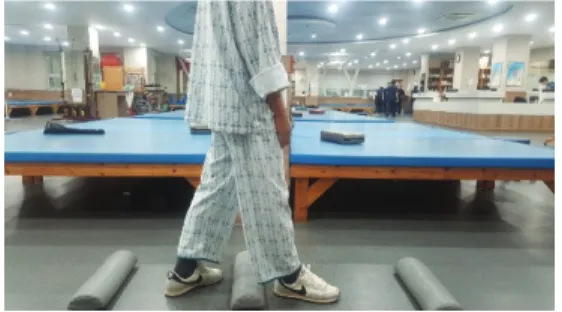
Participants were allowed to rest when they were tired on a mat or chair on the inner side in the walking course before resuming training. The locations of the obstacles were changed daily, or the distances between the obstacles were narrowed weekly to adjust the difficulty of the training. The types of ground obstacle walking used in this study are described below (Fig. 4a – 4g).

(1) Walking over a low obstacle

Soft foam rollers (3 cm in height) were placed at intervals of 3, 5, and 8 cm. The distances between the obstacles were varied weekly to provide various environments.

Fig. 4a. Low obstacle walking.

(2) Walking over a high obstacle

Plastic hurdles (30 cm in height) were placed at intervals of 3, 5, and 8 cm. The distances between the obstacles were varied weekly to provide various environments.

Fig. 4b. High obstacle walking.

(3) Stepping up and down a wood platform

Participants were instructed to step up and down a

Fig. 4c. Wooden scaffolding.

(7)

wood platform (50 cm in width, 40 cm in length, and 15 cm in height’) while walking. Initially, a 5 cm platform was used, which was replaced with a taller one from week 2.

(4) Unstable base of support

Balance training for stroke patients was performed using a Kybounder mat with 1m depth (Kybun, Roggwil, Switzerland), and participants were instructed to walk on it.

Fig. 4d. Unstable ground walking.

(5) Going up and down a slope

A slope (K-ramp, Korea Ramp System Co., Korea) was created by attaching two slopes of 70 cm in width, 22 cm in height, and 50 cm in in length and participants were instructed to walk up the slope.

Fig. 4e. Slope road walking.

(6) Avoiding cone obstacles

Three cone obstacles were placed at intervals of 1 m until week 2, and the intervals were shortened by 20 cm weekly thereafter resulting in intervals of 60 cm by week 4.

Fig. 4f. Avoid cones walking.

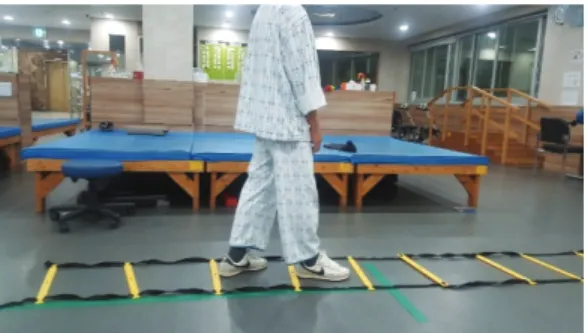
(7) Ladder obstacles

A rope ladder (35-cm width, 5-m length, 35-cm interval between ladders) was placed to have the participants walk over the ladder by alternating stepping on their foot in each ladder.

Fig. 4g. Ladder obstacle walking.

2) Treadmill walking (TW) training

A treadmill (FITEX T-6070, Hasin Sports, Korea) was

used for TW training. For a 30-minute training, the

(8)

maximum speed at which subjects could maintain stable walking was applied for the first 5 min (Pohl et al., 2002).

After 5 min, the speed was gradually increased at 5%

increments such that subjects were able to walk independently and stably for 25 min (Yang et al., 2008).

If subjects could not maintain the speed, felt insecure or their walking became unstable, or began to shake, the speed was reduced to the previous level. In the subsequent session, the initial speed was set to the maximum speed used in the previous session. To prevent falls and ensure safety during the training, the therapist stood behind patients throughout the training.

5. Analysis

All statistical analyses were performed using PASW 22.0 software for Windows (IBM/SPSS Inc., Chicago, IL, USA). The Kolmogorov–Smirnov test for normality was performed for dependent variables. The differences over time (after 4 weeks) within each group were compared with a paired t-test, and the differences between

the two groups over time were analysed with analysis of covariance (ANCOVA). The covariates were set to baseline values. The statistical significance was set at α

= 0.05 for all data.

Ⅲ. Results

1. General characteristics of subjects

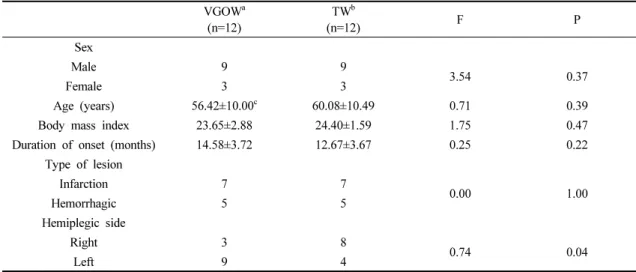
Participants’ general characteristics are shown in Table 1. The VGOW group consisted of nine men and three women (age: 56.42±10.00 years, body mass index:

23.65±2.88), and the TW group consisted of nine men and three women (age: 60.08±10.49 years, body mass index: 24.40±1.59). With regard to the type of stroke, both the groups included seven patients with cerebral infarction and five patients with cerebral hemorrhage. In the VGOW group, there were three patients with right hemiplegia and nine patients with left hemiplegia. In the TW group, there were eight patients with right hemiplegia

VGOW a

(n=12) TW b

(n=12) F P

Sex

Male 9 9

3.54 0.37

Female 3 3

Age (years) 56.42±10.00 c 60.08±10.49 0.71 0.39

Body mass index 23.65±2.88 24.40±1.59 1.75 0.47

Duration of onset (months) 14.58±3.72 12.67±3.67 0.25 0.22

Type of lesion

Infarction 7 7

0.00 1.00

Hemorrhagic 5 5

Hemiplegic side

Right 3 8

0.74 0.04

Left 9 4

a Various ground obstacle walking training

b Treadmill walking training

c Mean±standard deviation

Table 1. General characteristics of subjects (N=24 )

(9)

and four patients with left hemiplegia. The mean duration from the onset of stroke was 14.58 and 12.67 months for the VGOW and TW groups, respectively. There were no significant differences in participants’ general characteristics except hemiplegic side between the two groups (p>0.05).

2. Comparison of gait parameters before and after intervention between the VGOW and TW groups

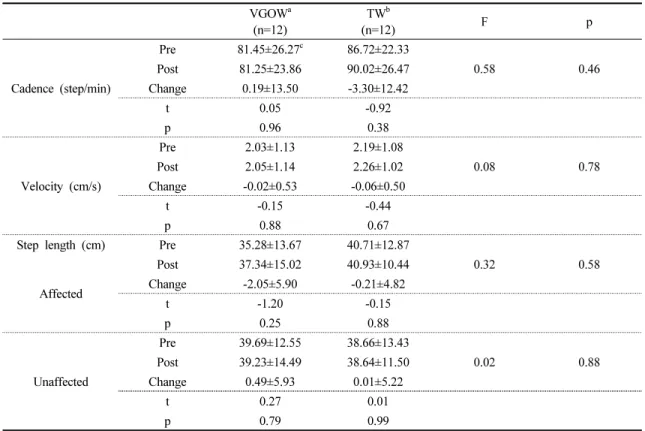
Table 2 shows the comparison of gait parameters between the VGOW group and TW group over 4 weeks of intervention. Both the groups showed mild increases

in step length, cadence, and velocity, but the changes were not statistically significant (p>0.05).

3. Comparison of functional gait parameters in an outdoor environment after the intervention between the VGOW and TW groups

Table 3 shows the results of FGA for the VGOW and TW groups over 4 weeks of intervention. Although both the groups showed a significant increase in FGA score (the VGOW group: from 16.67 to 20.42, p<0.05; the TW group:

from 17.75 to 18.75, p<0.05), the increase in FGA score after the intervention was significantly greater in the VGOW group compared with that in the TW group (p<0.05).

VGOW a

(n=12) TW b

(n=12) F p

Cadence (step/min)

Pre 81.45±26.27 c 86.72±22.33

0.580.46

Post 81.25±23.86 90.02±26.47

Change 0.19±13.50 -3.30±12.42

t 0.05 -0.92

p 0.96 0.38

Velocity (cm/s)

Pre 2.03±1.13 2.19±1.08

0.080.78

Post 2.05±1.14 2.26±1.02

Change -0.02±0.53 -0.06±0.50

t -0.15 -0.44

p 0.88 0.67

Step length (cm) Pre 35.28±13.67 40.71±12.87

0.32 0.58

Affected

Post 37.34±15.02 40.93±10.44

Change -2.05±5.90 -0.21±4.82

t -1.20 -0.15

p 0.25 0.88

Unaffected

Pre 39.69±12.55 38.66±13.43

0.02 0.88

Post 39.23±14.49 38.64±11.50

Change 0.49±5.93 0.01±5.22

t 0.27 0.01

p 0.79 0.99

a Various ground obstacle walking training

b Treadmill waking training

c Mean±standard deviation

Table 2. Comparison of pre- and post-training outcome measures of gait analysis within and between groups (N=24)

(10)

4. Comparison of functional balance parameters in an outdoor environment after the intervention between the VGOW and TW groups

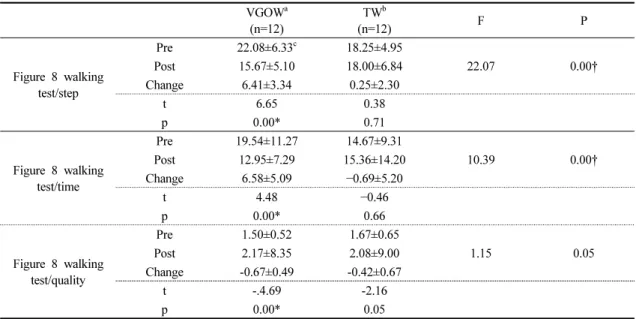
Table 4 shows the results of functional balance

assessment over 4 weeks of intervention for the VGOW and TW groups. In terms of F8WT steps, the VGOW group showed a significant improvement, as the number of steps decreased from 22.08 steps to 15.67 steps (p<0.05). Furthermore, compared with the TW group, the

VGOW a

(n=12) TW b

(n=12) F P

Figure 8 walking test/step

Pre 22.08±6.33 c 18.25±4.95

22.07 0.00†

Post 15.67±5.10 18.00±6.84

Change 6.41±3.34 0.25±2.30

t 6.65 0.38

p 0.00* 0.71

Figure 8 walking test/time

Pre 19.54±11.27 14.67±9.31

10.39 0.00†

Post 12.95±7.29 15.36±14.20

Change 6.58±5.09 −0.69±5.20

t 4.48−0.46

p 0.00* 0.66

Figure 8 walking test/quality

Pre 1.50±0.52 1.67±0.65

1.15 0.05

Post 2.17±8.35 2.08±9.00

Change -0.67±0.49 -0.42±0.67

t -.4.69 -2.16

p 0.00* 0.05

a Various ground obstacle walking training

b Treadmill waking training

c Mean±standard deviation

*Significant difference between pre- and post-intervention within the group (p<0.05)

†Significant difference between the change values among the groups (p<0.05)

Table 4. Comparison of pre- and post-training outcome measures of gait ability within and between groups in outdoor environment (N=24)

VGOW a

(n=12) TW b

(n=12) F p

Functional gait Assessment

Pre 16.67±6.80 c 17.75±5.25

14.80 0.00†

Post 20.42±7.89 18.75±5.57

Change −3.75±2.37 −1.00±1.04

t −5.47 −3.32

p 0.00* 0.01*

a Various ground obstacle walking training

b Treadmill waking training

c Mean±standard deviation

*Significant difference between pre- and post-intervention within the group (p<0.05)

†Significant difference between the change values among the groups (p<0.05)

Table 3. Comparison of pre- and post-training outcome measures of functional gait ability within and between groups

in an outdoor environment (N=24 )

(11)

VGOW group showed a significantly better improvement in the number of steps after the intervention (p<0.05).

The time required to complete the test representing gait velocity also significantly reduced from 19.54 s to 12.95 s in the VGOW group (p<0.05), which was also significantly better improvement compared with that observed in the TW group (p<0.05). The VGOW group showed a significant increase in accuracy from 1.50 to 2.17 (p<0.05), but there was no significant difference in accuracy after the intervention between the two groups’

(p>0.05).

Ⅳ. Discussion

This study aimed to provide reference data for devising intervention strategies to improve stroke patients’ gait ability and promoting their community participation. In this study, we designed a training program combining treadmill walking and various ground obstacle walking to help stroke patients to adjust to various walking environments that resemble the actual community environment. Our results confirmed that the combined training program is more effective than the traditional treadmill training in improving functional gait and functional balance in an outdoor environment in chronic stroke patients.

The VGOW and TW groups showed an increase in FGA score from 16.67 to 20.42 and from 17.75 to 18.75, respectively. Although both the groups exhibited significant improvements in FGA score, the VGOW group, which underwent various ground obstacle walking training based on task-based walking training, showed a significantly better improvement compared with the TW group. In a study comparing task-based walking training and treadmill walking training, Yoon et al. (2016) found that both the training programs were effective in

improving gait abilities. Studies on task-based circuit walking training utilized tasks related to activities of daily living and reported that training patients to perform those tasks using various strategies significantly improved their gait parameters, including functional gait, velocity, and endurance. When patients undergo group training, task-based circuit walking training promotes a sense of competition among them (Silsupadol et al., 2006). This would motivate patients to be more engaged in training, ultimately promoting communication among them and improving their social skills, which are often undermined after the onset of stroke (Silsupadol et al., 2006).

Furthermore, circuit training as a part of community rehabilitation program for stroke patients has been reported to increase patients’ self-efficacy and decrease depression by helping patients share their health knowledge and good examples with other patients (Kim, 2013). The ground obstacle training used in this study was designed based on task-related circuit walking training. During task-based circuit training, patients perform various tasks as they walk around. One benefit of this training is that patients encounter multiple environments as they perform various tasks, which enables them to perform various physical activities (Kang et al., 2004). This is believed to have a contribution to the significant improvement of FGA in the VGOW group, which includes several walking tasks.

In the F8WT, the number of steps and the time required

to complete the test decreased from 22.08 steps to 15.67

steps and from 19.54 s to 12.95 s in the VGOW group,

respectively. Furthermore, accuracy improved from 1.50

to 2.17 in the VGOW group. However, these

improvements observed in the VGOW group were not

significantly different compared with those in the TW

group. Most tasks in the ground obstacle walking training

require an ability to maintain balance. Obstacle training

can enhance balance because various sensations that help

(12)

maintain balance, such as visual, vestibular, proprioceptive, and somatosensory senses, are stimulated while patients try to perform tasks and can improve nervous plasticity’ (Hwang, 2015). In other words, the task-based circuit training using ground obstacles may be more effective to improve patients’ gait balance than the traditional treadmill training, as patients are required to utilize visual information obtained by moving and looking at various tasks, vestibular information obtained to restore centre of mass that is shifted while walking on ground obstacles’, and somatosensory information. In the present study, we encouraged patients to control their muscle activity and to repeatedly practice thinking and decision making to complete tasks in various environments. Providing an environment that resembles the actual community environment might have contributed to improving gait balance and functional gait. Most rehabilitation therapies for stroke patients are focused on facilitating neurological recovery by stimulating potential neuroplasticity based on motor learning (Miller et al., 2002). Motor learning is goal-oriented, and it requires the ability to interact with the environment to generate the targeted movement appropriate for the changing environment in order to produce efficient and sophisticated gait. Moreover, to promote flexible movement that copes with various environments, gait training in a continuously changing environment is recommended as opposed to motor learning in a flat, simple, and safe rehabilitation environment (Nudo, 2003).

In contrast, simple walking training on a treadmill may have a negative impact on facilitating motor learning for various community environments because patients are forced to adjust their bodies to continuous movement on a treadmill created by the treadmill belt as opposed to thinking on their own (Kim et al., 2011). In fact, while walking in the community, there are times when one has to jump over a gutter, walk along a curved path, go up

and down a slope, avoid a person or obstacle, and walk up and down the stairs (Ada, et al., 2003; Shumway et al., 2002). Stroke patients are able to walk independently along a flat surface, but they often find it challenging to adapt to various community environments (Holsbeeke et al., 2009). Therefore, training utilizing various environments to help stroke patients think and resolve tasks on their own must be provided to improve their ability to walk in various environments and ultimately promote their community participation.

However, the VGOW group did not show a significant difference in TW group beside of FGA and F8WT in our study. VGOW received variable tasks during walking interventions. Comparing VGOW, TW received treadmill training that previously proved effects of walking ability, and also TW did not receive variable obstacle walking interventions. And also, we attempted to increase the difficulty of the training weekly by shortening the distance between the obstacles in the ground obstacle walking training. According to motor control and learning science, variable practical conditions, difference environments and task conditions help the learner facilitate a flexible adaptation and performance ability in their skills (Schmidt

& Lee, 2011). Both groups received walking interventions, but VGOW took more time to intensive variable walking with tasks and conditions. So, VGOW may reflect a potentially beneficial effect of the variable conditions during functional assessment of walking rather that general walking ability.

This study had a few limitations. First, this study was

performed only on patients who were from a particular

region and capable of walking outdoors. The sample size

was small, and the duration of intervention was also

relatively short (4 weeks); hence, the findings of this study

have limited generalizability. Furthermore, we focused

on examining patients’ gait abilities in an outdoor

environment, but gait parameters were measured indoors

(13)

as opposed to an actual outdoor environment due to the difficulty of using reliable equipment. Unlike previous studies, no significant differences in gait velocity were found in this study, suggesting shortcomings in our training process. Subsequent studies should address these issues and modify their design to be able to generalize the findings to all stroke patients and measure changes in gait parameters of community ambulation.

Ⅴ. Conclusion

We divided enrolled stroke patients into the VGOW and TW groups; the former group underwent a 30-minute training combining ground obstacle walking (20 min) and treadmill walking (10 min), whereas the latter group underwent only treadmill walking training (30 min) 5 times/week for 4 weeks. We compared the changes in step length of the affected and non-affected sides, cadence, and velocity in an indoor environment as well as FGA and F8WT scores recorded in an outdoor environment.

Both the VGOW and TW groups showed significant improvements in FGA score. However, FGA score was significantly greater in the VGOW group compared with that in the TW group. Moreover, the VGOW group exhibited significant improvements in F8WT steps and time than the TW group. The VGOW group showed significant improvement in the accuracy in F8WT although this improvement was not significantly different between the groups. The results of this study suggest that a combination of various walking environments and treadmill training improve functional balance and outdoor walking in stroke patients, which is a crucial ability for social participation.

References

Ada L, Dean CM, Hall JM, et al. A treadmill and overground walking program improves walking in persons residing in the community after stroke: a placebo-controlled, randomized trial. Archives of Physical Medicine and Rehabilitation. 2003;84(10):

1486–1491.

Carvalho C, Sunnerhagen KS, Willén C. Walking speed and distance in different environments of subjects in the later stage post-stroke. Physiotherapy Theory and Practice. 2010;26(8):519-546.

Dean CM, Richards CL, Malouin F. Task-related circuit training improves performance of locomotor tasks in chronic stroke: a randomized, controlled pilot trial. Archives of Physical Medicine and Rehabilitation. 2000;81(4):

409–417.

Faul F, Erdfelder E, Lang AG, et al. G*Power 3: a flexible statistical power analysis program for the social, behavioral, and biomedical sciences. Behavior Research Methods. 2007;39(2):175-191.

Hess RJ, Brach JS, Piva SR, et al. Walking skill can be assessed in older adults: validity of the figure-of-8 walk test.

Physical Therapy. 2010;90(1):89-99.

Hill K, Ellis P, Bernhardt J, et al. Balance and mobility outcomes for stroke patients: a comprehensive audit. Australian Journal of Physiotherapy. 1997;43(3):173–180.

Holsbeeke L, Ketelaar M, Schoemaker MM, et al. Capacity, capability, and performance: different constructs or three of a kind? Archives of Physical Medicine and Rehabilitation. 2009;90(5):849–855.

Hwang H. The effect of obstacle training in aqua and land for chronic stroke patients for balance and muscles activation. Daegu University. Dissertation of Master’s Degree. 2015.

Ivey FM, Ryan AS, Hafer-Macko CE, et al. Improved cerebral

vasomotor reactivity after exercise training in

(14)

hemiparetic stroke survivors. Stroke. 2011;42(7):

1994–2000.

Jaffe DL, Brown DA, Pierson-Carey CD, et al. Stepping over obstacles to improve walking in individuals with poststroke hemiplegia. Journal of Rehabilitation Research and Development. 2004;41(3A):283-292.

Josephson KR, Fabacher DA, Rubenstein LZ. Home safety and fall prevention. Clinics in Geriatric Medicine.

1991;7(4):707-738.

Kang H, Kim W, Kim J, et al. Development and effect of east-west self-help group program for rehabilitation of post-stroke clients: a preliminary study. Korean Journal of Adult Nursing. 2004;16(1):37-48.

Kim B. The effect analysis: group and individual task-oriented circuit training affect the gait ability and mental health of chronic stroke patients. Korea University.

Dissertation of Master’s Degree. 2013.

Kim CY, Park IM, Oh DW. Comparison of the effect of treadmill gait training and overground gait training on gait function in stroke patients. Korean Journal of Neuromuscular Rehabilitation. 2011;1(1):13-20.

Kwong PWH, Ng SSM, Chung RCK, et al. A structural equation model of the relationship between muscle strength, balance performance, walking endurance and community integration in stroke survivors. Public Library of Science One. 2017;12(10): e0185807.

Macko RF, DeSouza CA, Trette LD, et al. Treadmill aerobic exercise training reduces the energy expenditure and cardiovascular demands of hemiparetic gait in chronic stroke patients: a preliminary report. Stroke.

1997;28(2):326–330.

Macko RF, Smith GV, Dobrovolny CL, et al. Treadmill training improves fitness reserve in chronic stroke patients.

Archives of Physical Medicine and Rehabilitation.

2001;82(7):879–884.

Miller EW, Quinn ME, Seddon PG. Body weight support treadmill and overground ambulation training for two

patients with chronic disability secondary to stroke.

Physical Therapy. 2002;82(1):53–61.

Nudo RJ. Adaptive plasticity in motor cortex: Implications for rehabilitation after brain injury. Journal of Rehabilitation Medicine. 2003;35(41):7–10.

Olney SJ, Griffin MP, Monga TN, et al. Work and power in gait of stroke patients. Archives of Physical Medicine and Rehabilitation. 1991;72(5):309-314.

O’Sullivan S, Schmitz TJ, Fulk GD. Physical rehabilitation, 6th ed. Philadelphia. FA Davis Company. 2014.

Perry J, Garrett M, Gronley JK, et al. Classification of walking handicap in the stroke population. Stroke. 1995;

26(6):982-991.

Peurala SH, Könönen P, Pitkänen K, et al. Postural instability in patients with chronic stroke. Restorative Neurology and Neuroscience. 2007;25(2):101–108.

Pohl M, Mehrholz J, Ritschel C, et al. Speed-dependent treadmill training in ambulatory hemiparetic stroke patients.

Stroke. 2002;33(2):553–558.

Polese JC, Pinheiro MB, Faria CD, et al. Strength of the respiratory and lower limb muscles and functional capacity in chronic stroke survivors with different physical activity levels. Brazilian Journal of Physical Therapy. 2013;17(5):487-493.

Schmidt RA, Lee TD. Motor control and learning, 5th ed.

Champaign. Human Kintics. 2011.

Shin S, Demura S, Watanabe T, et al. Age-related and obstacle height-related differences in movements while stepping over obstacles. Journal of Physiological Anthropology. 2015;34(1):15-25.

Shumway CA, Patla AE, Stewart A, et al. Environmental demands associated with community mobility in older adults with and without mobility disabilities. Physical Therapy. 2002;82(7):670–681.

Silsupadol P, Siu K, Shumway-Cook A, et al. Training of

balance under single and dual-task conditions in older

adults with balance impairment. Physical Therapy.

(15)

2006;86(2):269–281.

Smith GV, Macko RF, Silver KHC, et al. Treadmill aerobic exercise improves quadriceps strength in patients with chronic hemiparesis following stroke: a preliminary report. Neurorehabilitation and Neural Repair.

1998;12(3):111–118.

Smith GV, Silver KHC, Goldberg AP, et al. Task-oriented exercise improves hamstring strength and spastic reflexes in chronic stroke patients. Stroke.

1999;30(10):2112–2118.

Thieme H, Ritschel C, Zange C. Reliability and validity of the functional gait assessment (German version) in subacute stroke patients. Archives of Physical Medicine and Rehabilitation. 2009;90(9):1565-1635.

Wagenaar RC, Beek WJ. Hemiplegic gait: a kinematic analysis using walking speed as a basis. Journal of Biomechanics. 1992;25(9):1007-1015.

Weng CS, Wang J, Pan XY, et al. Effectiveness of backward walking treadmill training in lower extremity function after stroke. Zhonghua Yi Xue Za Zhi. 2006;86(37):

2635-2638.

Wilkinson PR, Wolfe CD, Warburton FG, et al. A long-term follow-up of stroke patients. Stroke. 1997;28(3):507–

512.

Winstein CJ. Knowledge of results and motor learning:

implications for physical therapy. Physical Therapy.

1991;71(2):140–149.

Wolf SL, Catlin PA, Gage K, et al. Establishing the reliability and validity of measurements of walking time using the Emory Functional Ambulation Profile. Physical Therapy. 1999;79(12):1122–1133.

Wrisley DM, Marchetti GF, Kuharsky DK, et al. Reliability, internal consistency, and validity of data obtained with the functional gait assessment. Physical Therapy.

2004;84(10):906–918.

Yang YR, Tsai MP, Chuang TY, et al. Virtual reality-based training improves community ambulation in individuals with stroke: a randomized controlled trial.

Gait and Posture. 2008;28(2):201–206.

Yates JS, Lai SM, Duncan PW, et al. Falls in community- dwelling stroke survivors: an accumulated impairments model. Journal of Rehabilitation Research and Development. 2002; 39(3):385–479.

Yoon H, Oh D. Comparison of the effects of task-oriented circuit training and treadmill training on walking function and quality of life in patients with post-stroke hemiparesis: randomized controlled pilot trial.

Physical Therapy Korea. 2016;23(2):1-10 Young DE, Schmidt RA. Augmented kinematic feedback for

motor learning. Journal of Motor Behavior. 1992;

24(3):261-273.

수치

Fig.  1.  Flowchart  of  participants  of  this  study.
Fig. 3. Figure 8 walking test in outdoor.
Fig.  4a.  Low  obstacle  walking.
Fig.  4f.  Avoid  cones  walking.
+4

참조

관련 문서

The purpose of this study was to compare the effects of underwater treadmill gait training (UTGT) and overground treadmill gait training (OTGT) on the gait, balance

Therefore, the purpose of this study was to investigate the effects of backward gait training on an under- water treadmill on strength, proprioception, balance and

Results: After treadmill training, treadmill with patella taping training group showed a significant improvement in gait abilities, including velocity, cadence, paretic

Effects of Inclined Treadmill Walking Training with Rhythmic Auditory Stimulation on Balance and Gait in Stroke Patients: A pilot study.. Yoon Sungkyeung, PT 1 ․ Kang

Judging from the results, the side walking training conducted three weeks due to chronic stroke hemiplegic patient's ability to balance and showed a

Abstract The purpose of this study was to examine the effect of backward walking training on the balance capability(Functional Gait Assessment; FGA, Timed Up &amp; Go Test;

Purpose: The aim of this study was to investigate the effect of goal-oriented side walking training on balance and gait in chronic stroke patients.. Methods: This study

Purpose: The purpose of this study was to examine the effects of resistant gait training with proprioceptive neuromuscular facilitation (PNF) on the walking and balancing