A THESIS
FOR THE DEGREE OF DOCTOR OF PHILOSOPHY
MOLECULAR PHYLOGENY AND NATURAL
HYBRIDIZATION OF COBITID FISHES IN KOREA
REZA MALEKZADEH VIAYEH
DEPARTMENT OF MARINE BIOTECHNOLOGY
GRADUATE SCHOOL
CHEJU NATIONAL UNIVERSITY
2005.12
MOLECULAR PHYLOGENY AND NATURAL
HYBRIDIZATION OF COBITID FISHES IN KOREA
REZA MALEKZADEH VIAYEH
(SUPERVISED BY PROFESSOR CHOON BOK SONG) A thesis submitted in partial fulfillment of the requirements for
The degree of Doctor of Philosophy 2005. 12
This thesis has been examined and approved by
DEPARTMENT OF MARINE BIOTECHNOLOGY GRADUATE SCHOOL
DEDICATION
I WOULD LIKE TO DEDICATE THIS WORK IN GRATITUDE TO MY FATHER MR. HASAN MALEKZADEH AND MY MOTHER
MRS. SEYYEDEH BANOO MOOSAVI FOR THEIR AND
TABlE OF CONTENTS
List of Figures……… vii
List of Tables……….… ix
Summary……… 1
Summary In Korean……… 4
1. INTRODUCTION………. 6
1.1. Cobitid Fishes; Ichthyological Aspects and Occurrence In Asiatic Waters……… 6
1.2. Hybridization, Ploidy and Speciation In Cobitidae……… 15
1.3. Outline of Systematic Studies in Cyprinformes and Cobitid Fishes……… 22
2. MATERIALS AND METHODS……….. 28
2.1. Sample Collection……….… 28
2.2. Total DNA Extraction……… 28
2.3. Amplification of Cytochrome b Gene……… 29
2.4. Cloning of the PCR Product………...… 30
2.5. Sequencing………..… 31
3. RESULTS……….. 37
3.1. Base Composition Bias……… 37
3.2. SequenceEvolution……… 38
3.3. Saturation Analysis……… 48
3.4. Outgroups Comparisons……… 51
3.5. Ingroup Sequence Comparisons……… 52
3.6. Phylogenetic Analysis……… 56 4. DISCUSSION……… 66 REFERENCES……… 80 Acknowledgments……… 95 Appendix 1……… 97 Appendix 2……… 99 Vita………100
LIST OF FIGURES
Figure 1. Two hypotheses concerning the phylogeny of
Cypriniformes (Adapted from Liu et al., 2002)……… 13 Figure 2. Distribution of cobitid fishes In Korean peninsula. The
distinct areas of distribution for different species are shown by
different colours……… 22 Figure 3. Map of five main river systems In the southern part of Korean peninsula and the distribution of sampling localities of
cobitid fishes used In this study……… 35 Figure 4. Strategy for PCR amplification and sequencing of the
cytochrome b gene and its flanking tRNA genes……….. 36 Figure 5. Pairwise sequence comparison scatterplots indicating
absolute number of transitions and transversions against percentage sequence divergence (Kimura-two parameter) for the sequence data of cytochrome b gene at first (A) and second (B) codon
Positions……… 49 Figure 6. Pairwise sequence comparison scatterplots indicating absolute number of transitions and transversions against percentage sequence divergence (Kimura-two parameter) for the sequence data of
cytochrome b gene at third codon position alone (A) and all three codon positions (B)……… 50 Figure 7. The tree constructed from 78 cytochrome b sequence data of 19 species of family Cobitidae and three outgroups from two families of Balitoridae and Cyprinidae by neighbor-joining (NJ) method, considering both transitional and transversional substitutions and based on Kimura-two parameter distance model……….. 60 Figure 8. The tree constructed from 78 cytochrome b sequence data of 19 species of family Cobitidae and three outgroups from two families of Balitoridae and Cyprinidae by maximum parsimony (MP) method, considering both transitional and transversional substitutions and based on Kimura-two parameter distance model……… 61
Figure 9. The 50% majority-rule consensus tree obtained from NJ analysis and base on Kimura-two parameter distance model using cytochrome b sequence data of cobitid fishes and
The outgroups……… 62 Figure 10. The 50% majority-rule consensus tree obtained from MP analysis and base on Kimura-two parameter distance model using 78 cytochrome b sequence data of cobitid fishes and
The outgroups……… 63 Figure 11. The 50% consensus tree recovered from NJ analysis
for part of closely related ingroup taxa to resolve the accuracy
of general topology……… 64 Figure 12. The 50% consensus tree recovered from MP analysis for part of closely related ingroup taxa to resolve the accuracy
LIST OF TABLES
Table 1 Species names and their abbreviate forms (Abr.), sampling localities and GeneBank accession numbers of the Cobitid,
Balitorid and Cyprinid fishes examined in this study……… 33 Table 2. The sequences of the primers used in PCR and
Sequencing of the cytochrome b gene……… 36 Table 3. Total base composition and estimated base composition bias at each codon position In the sequences of cytochrome b gene of the studies fish species considering their sampling
localities……….. 40 Table 4. The average numbers of Identical, transitional and
Transversional base substitution at different codon positions of the cytochrome b sequences of the studied fish groups..…………. 46 Table 5. The average frequencies of codons and their
Corresponding encoded amino acids in Cytochrome b gene
sequences………. 47 Table 6. Percentage Inter-familial sequence divergence
(p-distance) ranges among three examined families..……….. 51 Table 7. Sequence divergence (p-distance) ranges estimated
Among the studied fish goups……… 54 Table 8. Summarized Intergeneric sequence divergence
SUMMARY
The family Cobitidae (Cypriniformes) comprises 16 genera and about 200 species of freshwater fishes, distributed in Eurasia and northern Africa (Kim et al., 2002). In Korea, 16 species belonging to six genera of Misgurnus, Cobitis, Iksookimia, Koreocobitis, Niwaella, and Kichulchoia have been ascribed to this family (Kim et al., 2003). To date, the systematic ranking of cobitid fishes have mainly been based on their morphological and phenotypic features. In a few molecular studies on Cobitid lineages in Korea, only a limited number of taxa have been examined (Kim et al., 2002; Kitagawa et al., 2005). In this study, the phylogenetic relationships among Korean cobitid fishes have been investigated by comparison of their DNA sequences of mitochondrial cytochrome b gene. The genomic DNAs of all 16 identified cobitid species of Korea were extracted and their entire cytochrome b gene was PCR amplified using Glu-F3 and Pro-R as forward and reverse primers, respectively. The purified PCR products were then cloned and sequenced. A total of 78 complete 1140bp long cytochrome b sequences, including 10 GeneBank deposited data were used for the analyses. Three outgroups were chosen from two families of Balitoridae and Cyprinidae. Hybrids of two species of Cobitis hankugensis and Iksookimia longicorpa were also included in our specimens. DNAssist, MEGA 3.0 and PAUP 4.0d54 were used for sequencing and the phylogenetic analyses. Phylogenetic trees were constructed according to the neighbor-joining (NJ) and maximum parsimony (MP) methods in 1000 replications. All codon positions and both transition and transversion were considered in the analyses.
In the total sequence data, G and T had the lowest and the highest contents respectively, while C and A had almost equal rates. The phylogenetic trees had a general congruency and in some cases conflict with the current systematic scheme of the family Cobitidae. The polyphyly of the genus Iksookimia was notable. The positional proximity and the low sequence divergence between I. longicorpa and I. hugowolfeldi, suggested that they may not in fact be two distinct taxa at the species level. The association of I. longicorpa with two groups of C. hankugensis and the hybrid samples in the molecular phylogeny can be explained by a possible gene flow among these three taxa through the process of natural hybridization. I. pumila was the sister group of I. koreensis with a high bootstrap support (100%). The monophyly of two taxa of C. lutheri and C. tetralineata observed in this study was obtained in previous reseraches. However, the paraphyly of C. lutheri has raised a question over its taxonomy. One considerable outcome was that the examined species of Genus Niwaella from Korea (N. multifasciata) had a distant position and high genetic difference to its congener from Japan (N. delicata). Some questionable relationships within the genus Misgurnus were also uncovered. M. mizolepis did not fall into the branch composed of its congeners and had a relatively high sequence divergence to M. anguillicatatus and M. fossilis. The distant position of C. sinensis from C. hankugensis was considerable. Within the ingroup taxa, Koreocobitis occupied the most basal position in almost all the generated trees.
In conclusion, the obtained phylogeny provides a new insight into the relationships among cobitid fishes. Further researches are needed to answer the question of incongruencies between traditional and
molecular approaches. Especially the relationships among the taxa belonging to Genus Iksookimia, the systematics and nomenclature of Niwaella, the relationships within Misgurnus group and also the unusual positioning of Cobitis lineages. Using more molecular and cellular markers can lead to the construction of a more realistic phylogeny for this taxonomically complicated family.
요약
미꾸리과(Cobitidae)는 잉어목에 포함되며 세계적으로 16 속, 약 200 종이 담수역에 분포한다(Kim et al., 2002). 한국산 미꾸리과 어류의 계통분류학적 연구는 70 년대부터 시작되어서 다수의 연구가 진행되 었으 며(Kim et al, 2003) 현재 우리나라의 미꾸리과 어류는 6 속(Misgurnus, Cobitis, Iksookimia, Koreocobitis, Niwaella, 그리고 Kichulcho a), 16 종으로 보고되고 있다. 미꾸리과 어류의 계통분류학적 연구는 주로 형태 적 특징과 표현형 특징을 대상으로하여 수행되어 왔으며, 이들에 관한 분자적 연구의 경우, 한국산 미꾸리과 어류 중 일부를 대상으로 한 연구(e.g. Kim et al., 2002; Kitagawa et al., 2005)가 수행된 바었으나 우리나라 서식하는 미꾸리과 전체 어종을 대상으로 한 연구는 없는 실정이다. 따라서 본 연구는 미토콘드리아 cytochrome b 유전자 서열을 이용하여 한국산 미꾸리과 어류의 분자계통분류학적 관계성를 조사하였다. i 본 연구에서는, 한국산 미꾸리과 어류, 16 종로부터 genomic DNA 를 분 리한 후 Glu-F3 와 Pro-R 를 이용한 PCR 을 통해서 전체 cytochrome b 유전자 서열을 증폭하였다. 증폭된 PCR 산물은 정제를 한 후 cloning 하였다. GenBank 에 등록된 10 개의 어류를 포함하여 총 78 개체의 전체 cytoch-
rome b 유전자인 1141 bp nucleotide 를 이용하여 분자계통분류학적 관계
성를 조사하였으며 참조분류군으로 종개과와 잉어아과 어류를 이용하였다. 또한 잡종(hybrid)인 2 개의 종 Cobitis hankugensis 와 Iksookimia longicorpa 를 이 연구에 포함하였다. 분자계통분류학적 분석은 MEGA 3.0 과 PAUP 4.0d54 프로그램을 이용하여 수행하였다. 계통수는 neighbor-joining (NJ)와 maximum parsimony (MP) 방법으로 통해서 작성하였으며 계통수 분지의 통계학적 검정을 위하여 1000 회 boostrap-ing 실시하였다. 그리고 각 염기조성을 계산하였고 transition 과 transver- sion 의 포화수준을 조산한 후 계통수 작성을 하였다.
미꾸리과 어류의 염기조성에 있어서, G 함량(14.9%)은 낮은 값을 나타냈고 T 함량(31.3%)은 높은 값을 나타났으며 C 함량(26.3%)과 A 함량(27.4%)은
유사한 값을 보였다. 작성된 계통수는 현재 사용하고있는 형태적인 분류체계와 일반적으로는 유사하게 나타났지만 몇몇의 분류군에 있어서는
차이를 보였다. ksookimia 속은 polyphyletic group 를 형성하여 흥미로운
결과가 나타났으며 I. longicorpa 와 I. hugowolfeldi 사이에 낮은 sequence divergence (0-2%)가 나타나 종 수준에서의 구별된 으로 보기에는 어렵다고 생각되었다. 계통분석에서 I. longicorpa 는 두개의 C. hankugensis 의 잡종 그룹과 같이 묶이는 현상이 나타났고 이들 어종 간 자연적 잡종을 통해서 일어나는 3 개의 집단간 유전자 흐름을 확인할 수 있었다. 두개의 분류군인 I. pumila 와 I. koreensis 은 구분되며 단진화군을 형성하였다. C. lutheri 와 C. tetralineata 는 같은 그룹을 형성하여 대부분 단진화군 임을 관찰할 수 있었지만 탐진강에서 채집된 C. lutheri 는 paraphyletic group 를 형성하여 한강과 함평에서 채집된 개체와 유전적 차이를 관찰 할 수 있었다. 한국산 Niwaella 속(N multifasciata)을 일본산 (N. delicata)과 비교한 결과 계통학적 위치로나 유전적으로 분명한 차이를 나타냈다. 또한 Misgurnus 속내의 계통분류학적 관계성는 불분명하였는데, 특히 M.
mizolepis 는 Misgurnus 속 그룹과 묶이지 않았으며 M.anguillic-
audatus 와 M. fossilis 와 비교한 결과 높은 sequence divergence (15.6-16.5%)를 나타내였다. C. hankugensis 는 C. sinensis 와 계통수에 있어서 분자계통유전학적으로 분명한 차이를 나타내었으나 Koreocobitis 속은 단 화군을 형성하였다. I . 이 연구는 한국산 미꾸리과 어류 전체 종과 약간의 중국, 그리고 일부 일본산 미꾸리과 이들를 대상으로 이들 어류 사이의 분자계통분류헉인 관계를 조사하였다. 이 연구의 결과, Iksookimia, Niwaella 속 분류와 명명법 및 Misgurnus 그룹 내의 관계에 대하여 기존분류체계의 문제점을 제시하였고 이를 통해서 미꾸리과 어류의 분류체계의 재정립을 시도하였다.
1. INTRODUCTION
1.1. Cobitid Fishes; Ichthyological Aspects and Occurrence In Asiatic Waters
The spined loaches, Family Cobitidae, (Order Cypriniformes) comprise 16 genera and about 200 species of freshwater fishes, distributed in Eurasia and northern Africa (Kim et al., 2002). Nelson (1994) introduced the members of Family Cobitidae as having wormlike to fusiform bodies with subterminal mouth, 3-6 pairs of barbels, eractile spine below their eye, one row of pharyngeal teeth and a maximum body length of 40cm. Similar to the other members of the order Cyprinifomes, the Weberian apparatus, typical of Ostariophysi (Jamieson, 1991), is present in this family.
Liu et al. (2002) studied the phylogenetic relationships of Cobitidae with the other families of the order Cypriniformes by using their sequences of the mitochondrial control region gene. Two proposed intra-ordinal relative positions of the families of Cypriniformes is illustrated in the cladogram of Fig 1.
Several morphological traits which have generally been used in identification of genera and species within the family Cobitidae include body coloration, the appearance and arrangement of Gambetta zone on the body sides, presence and structure of suborbital spine, number, position and length of barbels, dark- color spots on the base of caudal fin, predorsal swelling, the arrangement of subdorsal scales, the structure of mouth, metric and meristic measures, shape and size of pectoral fin, the elongate second pectoral fin ray in some males, the number of branched rays in the caudal fin, and most specifically, the number and shape of an ossified plate-like extension on the base of the
second pectoral fin ray, referred to as the scale of Canestrini or lamina circularis, in the males (Sezaki et al., 1994; Kim and Park, 1997; Erkakan et al., 1998; Erkakan et al., 1999; Kotusz, 2000; Perdices and Doadrio, 2001; Ludwig et al., 2001; Kim et al., 2002; Kim et al., 2003). In addition, it has been noted that sexual dimorphism in cobitid fishes can cause considerable morphological differences between sexes (Kim et al., 1976; Kotusz, 2000; Vladykov, 2005).
Nelson (1994) divided Cobitidae into two subfamilies of Cobitinae, comprised of 15 genera with one pair of rostral barbels and a rounded caudal fin, and Botiinae including three genera which posses two pairs of rostral barbels and a deeply forked caudal fin. Recently, Kim et al. (2003) described the subfamily Cobitinae as having 16 genera and about 100 species, which are widely distributed in the Old World. Kim and Lee (2000) introduced this subfamily as small freshwater fishes with an elongate body, minute scales, and a small suborbital spine, occurring through Europe and Asia. Cobitis is the most specious genus in the family Cobitidae, with about 50 valid species known at present (Kim et al., 2003). All species of the genus Cobitis have the peculiar lamina circularis at the base of their pectoral fin in the males as a secondary sexual characteristic, microstructures which are important in the identification of the cobitid species (Kim et al., 2002).
Cobitids are bottom dwelling species (Nelson, 1994), and they live at down, middle or up stream of the rivers with mostly sandy or somewhat muddy bottoms (Kim et al., 2005). Besides the biological roles of Cobitidae in freshwater ecosystems, some members of the family are considered as nutritious food items (e.g. mud loach, Misgurnus mizolepis; Kim et al., 1997; Nam et al., 2001). Some cobitid
fishes are highly demanded by the ornamental-fish traders (e.g. eel loaches Genus Pangio; Ruzainah et al., 2003). Also, cobitid fishes have been found to be useful organisms for biological control of pests in the agriculture fields (Lee, 2000). Some of them live in extreme and peculiar environmental conditions such as caves, resulting in acquisition of special morphological and physiological features, mainly losing optical sense (ascribed to ‘eyeless’ fish) (Greenwood, 1976; Romero and Green, 2005). Further more, some of the species of this family are facing the high risk of extinction and are included in the list of endangered fish fauna (Baillie et al., 2004), being considered for intensive conservation programs. Many scientists are interested to employ cobitid fishes as model organisms in biological and genetic researches, because of their several attractive characteristics such as small body size, transparent embryo, fast embryonic development, short generation time, superior tolerance to low oxygen tension and diseases, year-round spawning under control conditions, and high fecundity (Noh et al, 2003; Kim et al., 2004). The earliest fossil records for cobitid fishes are found in the Miocene and are dated to an age of about 15 million years (Ludwig et al., 2001). Perdices and Doadrio (2001), following the molecular clock estimation, concluded that the major lineages of the genus Cobitis originated mainly during a period of the Miocene between 8 and 9.3 million year ago (Mya), where as the within-lineage speciation occurred during Pliocene (5.8-3.9 Mya). Eastern as well as southern Asian freshwater fish fauna represent the richest ichthyofauna in the Sino-Indian region. There are more than 25 primary freshwater fish families described with at least 12 families endemic to the Asiatic waters (Perdices et al., 2004). The fishes of
order Cypriniformes, that are the largest component of the Ostariophysans (Liu et al., 2002), have their greatest diversity in Southeast Asia (Jamieson, 1991). The species richness of Cyprinidae, the largest fish family, has been found to be the highest in East Asia (He et al., 2004). A number of 13 valid species in the genus Cobitis was described in Eastern Asia, which inhabit China, Korea, Laos, Russia and Vietnam (Kim et al., 2002). Erkakan et al. (1998) marked this area as having undergone large transformational events and consequently faster species evolution. Zoogeographic studies on the European freshwater fish fauna have suggested the eastern Asiatic origin of the European Cobitidae based on the high cobitid diversification in this area (Kim et al., 2002).
The Korean peninsula bears a pronounce part of fish diversity and endemism of East Asia, with having its own exclusive ichthyofauna. The number of identified freshwater fishes in Korea is about 212 species, by which some 50 species are distinguished to be endemic to the fluvio-lacustrine systems of the peninsula (Kim and Park, 2002). Lee (2004), based on analyzing the fossil records of some cyprinid fishes, concluded that this group of fish might have existed on the Korean peninsula since the early Pliocene (More than 5 million years ago). This region is also considered as a pathway for biogeographic convergence, speciation, and evolutionary processes. It has been presumed that most of the Japanese species have originated from the Korean Peninsula (Kitagawa et al., 2005). Like wise, Kitagawa et al. (2003) proposed that the Japanese Cobitis species were introduced to Japan from the Asian continent through the Korean peninsula when the country and the Asian mainland were joined by a land bridge. Kim et al.
(2003) suggested that endemism richness in Korea might have resulted from long-term isolation in this area.
In Korea, the scientific name of the Cobitid fishes has been confused for a long time owing to their misidentification. The history of records on systematic studies of Family Cobitidae in Korea exceeds 70 years (Kim et al., 2003). In one of the earliest reports on cobitid fishes of Korea, they were all categorized as a single species of Cobitis taenia Linnes which having different colour patterns (Kim, 1975). Later, several discriminative characteristics were discovered in this group of fishes, and new species were erected by detail morphological analysis of the specimens (i.e. Kim, 1975; Kim et al., 1976; Kim and Son, 1984; Kim and Lee, 1995; Kim and Park, 1997).
The genus Niwaella was introduced as a new taxon that differed from the other cobitids by having a small head, sucker-like mouth with small barbels and lack of a lamina circularis in the pectoral fin of the males (Kim and Lee, 1995). By the year 1993, the number of genera in Korean Cobitidae had been raised to three genera of Cobitis, Misgurnus and Niwaella. In this year, Iksookimia was erected as a new genus based on its characteristics including an elongated first pectoral fin ray and the absence of four Gambetta zone on the body sides (Kim and Park, 1997). Koreocobitis is the latest emerged genus of Korean Cobitidae, which has been introduced as a distinct taxon, according to its diagnostic characteristics of the body colour patterns and its moveable suborbital spine (Kim et al., 2000). Currently, the family Cobitidae in Korea includes 16 species in six genera of Misgurnus, Cobitis, Iksookimia, Koreocobitis, Niwaella, and Kichulchoia, of which, three genera and 12 species are endemic to Korea (Kim et al., 2003).
Kim et al. (2002) suggested Korean Cobitidae belonged to two subfamilies of Cobitinae including Cobitis and Nemacheilonae including Orthrias. As for Genus Cobitis, nine species and subspecies are native to Korea, and of them five are endemic (Sezaki et al., 1994; Kim and Lee, 1995). During the past decades, several cobitid species have been transferred to other genera from the genus Cobitis, and now, four species are presented in the genus Cobitis of Korea (Kim et al., 2003). An illustrative literature of Korean ichthyofauna, including cobitid fishes, has been provided by Kim et al. (2005).
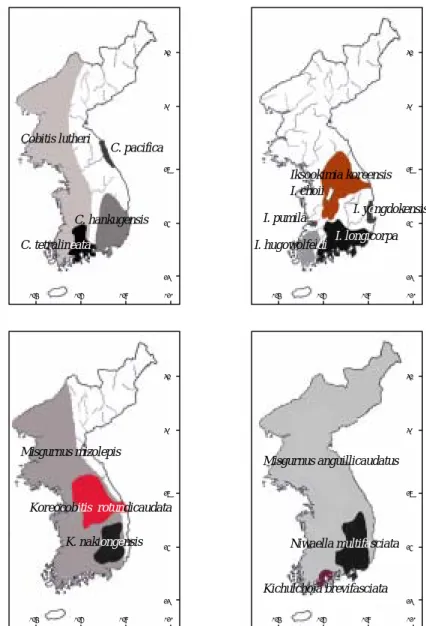
Several hypotheses have been presented considering the biogeographical distribution of freshwater fishes in the Korean peninsula (Jeon, 1986). In the case of cobitid fishes of Korea, an obvious disjunct occurrence of different species has been discovered in the peninsular waters (Kim and Park, 1997; Kim et al., 2003). Figure 2 demonstrates the distribution of species of Family cobitidae in different localities of Korea. As can be seen in the figure some of the species such as Misgurnus anguillicaudatus and M. mizolepis have large ranges of distribution, while some others like Ikssokimia pumila and I. choii occur in limited geographic areas.
To date, the location and nomenclature of genera and species in the systematic scheme of the family Cobitidae have been mainly determined based on their morphological and phenotypic structures. Park and Lee (1991) studied the differences in populations of Nemacheilus toni, a putative cobitid fish, by using genetic variations in their mitochondrial DNA (mtDNA). Kim et al. (1999) carried out a chromosomal study on Korean cobitid Iksookimia yondokensis. Molecular systematics of some Korean cobitid fishes was studied based
on their mitochondrial cytochrome b sequences by Kim et al. (2002). Kim et al. (2003) published a review on the species of Genus Cobitis of Korea. The karyotype of I. hugowolfeldi and a bibliography of the cytological studies on the genus Iksookimia during the years 1986-1999 were presented by Kim et al. (2003). In a study by Saitoh et al. (2004), the mitochondrial gene introgression was observed in a hybrid loach and its parents sampled from Korea.
Cyprinidae Homalopterina Gastromyzontina Noemacheilinae Cobitidinae Botiinae Catostominae Ictiobinae Gyrinocheilida
Fig.1. Two hypotheses concerning the phylogeny of Cypriniformes (Adapted from Liu et al., 2002). Note that Cobitididae Is an alternative incorrect spelling of Cobitidae (Nelson, 1994).
I. yongdokensis I. longicorpa C. tetralineata 42⁰ 40⁰ 38⁰ 36⁰ 34⁰ 131⁰ 129⁰ 127⁰ 125⁰ C. hankugensis C. pacifica Cobitis lutheri
K. naktongensis Koreocobitis rotundicaudata Misgurnus mizolepis 42⁰ 40⁰ 38⁰ 36⁰ 34⁰ 131⁰ 129⁰ 127⁰ 125⁰
Niwaellamultifasciata Kichulchoia brevifasciata 42⁰ 40⁰ 38⁰ 36⁰ 34⁰ 131⁰ 129⁰ 127⁰ 125⁰ Misgurnus anguillicaudatus I. hugowolfeldi 42⁰ 40⁰ 38⁰ 36⁰ 34⁰ 131⁰ 129⁰ 127⁰ 125⁰ I. pumila I. choii Iksookimia koreensis
Fig. 2. Distribution of cobitid fishes In Korean peninsula. The distinct areas of distribution for different species are shown by different colours.
1.2. Hybridization, Ploidy and Speciation In Cobitidae
Natural hybridization is now increasingly seen as an important evolutionary factor to initiate speciation and adaptive radiations (Hanfling et al., 2005). The presence of hybrids in a population is usually inferred when sympatric specimens are found that are morphologically intermediate between two species (Kim and Lee, 1990). Berrebi (1995) proposed that hybrids form a buffer population between the two species, so that, this ‘hybrid zone’ is stable in time and the space.
Hybrids are deemed to occur in 56 families of fishes, and are most common within the Salmonidae (Salmoniformes), Esocidae (Esociformes), Cyprinidae and Catostomidae (Cypriniformes), Centrarchidae and Percidae (Perciformes) (Le Comber and Smith, 2004). The fishes of Family Cobitidae demonstrate some rates of the intergeneric and interspecific hybridization. This hybridization has been stated as being associated with the generation of all-female triploid or some times diploid clones of one species which reproduce by gynogenesis (Sezaki et al., 1994).
Kim and Lee (1990), in their study on the cobitid fishes of the Nakdong River system in Korea, observed many individuals having intermediate forms and found them to be the hybrids between two species of Cobitis sinensis and C. longicorpus. These hybrids were almost always females, outnumbering the parent species at some localities, and occurring as both diploids and triploids. Biological aspects, ploidy complexes, and artificial hybridization of this hybrid were investigated by Kim and Lee (1995) and Kim and Lee (2000). In Korea, one other natural hybrid between two species of Cobitis
longicorpus and Misgurnus anguilocaudatus was introduced by Hwang et al. (1995). On the other hand, Bohlen and Ritterbusch (2000) proposed that mating of the females of each of the spined loaches Genus Cobitis with the male of any other fish species is most unlikely, because of the late spawning season and the specific spawning habits in this group of fish. Sezaki et al. (1994), by using biochemical genetic evidences, proved the hybrid origin of the Japanese cobitid, C. taenia taenia. Hubbs (1955) proposed that occurrence of natural hybrids is correlated with evolutionary expectation, in that, they were most likely to be found in (1) disturbed environments; (2) localities where one parental species had been introduced; (3) localities where one parental species was rare and the other abundant; and (4) areas of stress where heterosis would enhance abundance. He also noted that hybridization was inversely associated with fish diversity. So that in freshwater fish it occurs more than in marine fish. Tsigenopoulos et al. (2002) and Toth et al. (2005) suggested that the natural process of hybridization is facilitated by the changes of environmental condition and human activities. Briolay et al. (1998), as an evolutionary interpretation of this phenomenon, concluded that true hybrids occur between individuals whose last common ancestor is as old as 10-15 million year ago or more. More over, hybrids have been called as being rather the by-products of an accidental secondary contact of different evolutionary lineages, which are not fully isolated reproductively (Kotusz, 2005; pers.com).
In fish, some families such as Cyprinidae or Cobitidae are known for containing polyploid or polyploid-origin species or populations (Kitagawa et al., 2003). Many ichthyologists and herpetologists have
concentrated on the evolutionary biology of polyploids. This field of study is attractive, not only because of the particular mode of speciation, but also it provides insights into the evolution of higher vertebrates by gene duplication (Saitoh et al., 2000). Polyploidy has been linked to carcinogenesis in mammals, but occurs widely in some groups of fishes (Lingenfelser et al., 1997). In some instances, polyploidy in fish involves entire taxa above the level of species. These include the tetraploid Salmondae and Catostomidae and the tetraploid and hexaploid Barbus (Berrebi, 1995).
In the Moscow River drainage of Russia, the diploid-polyploid complex of Genus Cobitis was described as a gynogenetic form or hybridization (Kim and Lee, 2000). In a similar report, a triploid- tetraploid gynogenetic form of the genus Cobitis including two bisexual species, Cobitis taenia and C. granoei was introduced from the Moscow River (Kim and Lee, 1990). Slechtova et al. (2000) explored the occurrence of two ploid complexes of cobitid fish in Czech. Like wise, a combination of different ploidy in Genus Cobitis has been observed in the natural waters of Poland (Kotusz, 2000). Hybridization between C. taenia and other cobitid fishes resulted in polyploid offspring (Sezaki et al., 1994). The aforementioned Korean hybrid species of C. sinensis-longicorpus found to be of the two levels of ploidy (diploid-triploid) (Kim and Lee, 1990; Kim and Lee, 1995). In an artificial hybridization between Misgurnus mizolepis and M. anguillicaudatus some triploid individuals were produced together with diploid ones (Park and Kim, 2000). Among the known hybrid vertebrates, only for M. anguillicaudatus simultaneous production of haploid and triploid eggs had been reported (Alves et al., 2004)
Nelson (1994) suggested that a diploid chromosome number of 48 might be primitive for the all fish of order Cypriniformes. In C. sinensis-longicorpus, the parental species have 2n chromosome numbers of 48 and 50, while the chromosome number of diploid and triploid forms of this hybrid estimated to be 49 and 73 or 74, respectively (Kim and Lee, 2000). A chromosome number of 100 was obtained from Iksookimia yongdokensis, suggesting that at least part of the populations of this species in Korea may exist as tetraploid (Kim et al., 1999). Karyotypic studies revealed the existence of at least two different types of mud loach, tetraploid (in China) and diploid (in Japan) (Alam and Rahman Khan, 2001). Cobitis biwae also includes the tetraploid form, which has 96 chromosomes, as well as the diploid form with 48 chromosomes. In the latter species, two ploidy forms have been represented as a single nominal species (diploid-tetraploid complex), because of a lack of critical morphological differentiations between them (Kitagawa et al., 2003).
The occurrence of unisexual (all-female) populations of hybrid
origin in some of the loaches, which contain diploid-polyploid complexes, is emphasized to be a source of establishment of gonochoric tetraploid population (Saitoh et al., 2004). Triploid offspring resulting from the hybridization between C. sinensis and C. longicorpus accounted for approximately 40% of the cobitid fishes in Nakdong River and related streams (Sezaki et al., 1994). Polyploid females were estimated as 87% of the spined loach, C. taenia, population from the middle Dnieper basin, Ukraine (Mezhzherin and Chudakorova, 2002). A high rate (6.9%) of triploid individual of loach Misgurnus anguillicaudatus has been reported to be among the samples
from a fish farm in Japan (Arai et al., 2000). Bohlen and Ritterbusch (2000) hypothesized that the numerical dominance of polyploids in nature is likely because of their higher reproductive rates or an advantage in competition.
At present, alloploidy is the only way of speciation that has been experimentally confirmed. This phenomenon is rare in vertebrates, and among these, is restricted to poikilotherms. One of these rare examples is a species complex that is conventionally termed spined loach, Cobitis taenia, and actually represents a polyploidy series of diploids, triploids, tetraploids, and possibly, pentaploid. Two to three percent of all individuals of a population of this loach species are identified as pentaploids (Mezhzherin and Chudakorova, 2002). Mable (2004) suggested that polyploidy should be more common in temperate than in tropical breeders because environmental fluctuations can promote unreduced gamete formation.
Polyploid forms usually display characteristics that are intermediate between the diploid parental species, which confirms their hybrid origin (Kotusz, 2000). Recent studies have shown that several polyploid species of the genus Cobitis are of hybrid origin (Kitagawa et al., 2003). Polyploidy in fish has been associated with traits including large body size, fast growth rate, long life, sterility, higher survival rate and ecological adaptability (Cogswell et al., 2002). In some of triploid fishes, suppression in gonadal development and reproductive processes has been reported (Krisfalusi et al., 2000; Felip et al., 2001; Le Comber and Smith, 2004). Fish having different ploidy also showed differences in some blood factors (i.e. triploid fish had larger erythrocytes, increased hemoglobin content, and less erythrocyte count than diploid
fish; Cogswell et al., 2002). A review on the physiological and behavioral impacts of ploidy in fish has been issued by Benfey (1999).
Le Comber and Smith (2004) claimed that polyploidy effects all levels of the genome, from the chromosome to DNA sequence, and can have important consequences for both the arrangement of sequences within the genome and for the sequences themselves. The presence of three different genomes was discovered in the hybrid complex of C. taenia, C. melanoleuca and C. sp. (Slechtova et al., 2000). Lingenfelser et al. (1997) identified fish of the different ploidy by comparison of the genomic DNA contents in their blood cells. Kotusz (2000) found significant differences in some hematological factors and metric measures among the fish of different ploidy levels. Mezhzherin and Chudakorova (2002) suggested that using morphological analysis of hybrids makes it more likely to find out the origin of polyploid loaches, because polyploids are similar in appearance to the nominative species if its genome is prevalent in the polyploid genome. In biochemical study of particular enzyme systems, polyploid fish showed asymmetrical intensity distribution of individual isozyme having more than two separate alleles in the respective locus. Such individuals were then assumed to be triploids or tetraploids (three or four different alleles, respectively) (Slechtova et al., 2000). However, no differences were observed between diploid and tetraploid specimens of C. biwae in the starch gel electrophoretic and isoelectric focusing patterns of sarchoplasmic proteins (Sezaki et al., 1994). Guo et al. (2004) proposed that mitochondrial genes are very useful in the analysis of the genetic relationship in the polyploid fish. In contrast, Berrebi (1995) reached different conclusions by using both allozymic and molecular markers
for studying on polyidy in fish and concluded that mitochondrial markers were of no use in this respect. Saitoh et al. (2000) following the use of mtDNA as a marker of divergence among fish having different levels of ploidy, suggested that the depths of mitochondrial branches between tetraploids and their closest diploid relatives were usually much smaller than branches among diploids, indicating a recent establishment of tetraploids. Guo et al. (2004) found that even after eleven generations the examined F11 allotetraploid fish and its female parent had the identical amino acid sequences of the mitochondrial ATPase8 and ATPase6 genes. Measurement of DNA content of blood or body cells by flow cytometry (FCM) has been found as a confident approach to distinguish fish with different levels of ploidy (Lingenfelser et al., 1997; Lamatsch et al., 2000; Iguchi et al., 2003; Alves et al., 2004). The other conventional methods for ploidy determination are known to be estimating the size of erythrocytes nucleus area (Felip et al., 2001; Toth et al., 2005) and analysis of hemoglobin content by spectrophotometry (Cogswell et al., 2002). However, the most reliable way of ploidy estimation seems yet to be karyotyping for chromosome counts as Lamatsch et al. (2000) did on Poecilia Formosa, and Saitoh et al. (2000) and Kim and Lee (1990) applied on cobitid fishes of Japan and Korea, respectively.
1.3. Outline of Systematic Studies In Cyprinformes and Cobitid Fishes
Knowledge of the correct phylogenetic relationships among animals is crucial for the valid interpretation of evolutionary trends in biology (Chen et al., 2004). Freshwater fishes are particularly informative for the study of historical events, because the island-like property of freshwater habitats, the relative instability of these habitats, the impacts of climatic changes on rivers and lakes and the availability of geological data for aquatic systems (Salzburger et al., 2003). Not surprisingly, and in accordance with the prominent numerical (inclusion nearly 80% of all species of the order Cypriniformes; Howes, 1991) and commercial superiority of the family Cyprinidae, most taxonomic, phylogenetic and biogeographic studies on the Cypriniformes have been concentrated on this family and its subfamilies. In this regard, external and phenotypic parameters of fish have been the preliminary applied character states. Phylogenetic relationships of Cyprinid fish were investigated by using morphological and osteological aspects (Nam and Yang, 1998; Dimmick and Burr, 1999; Chen and Chen, 2001). Similarly, morphological and osteological traits such as body colour patterns, shape and size of the pectoral fin, structure of the suborbital spine, structure of the mouth and the shape of lamina circularis have so far been the main criteria in species identification of Family Cobitidae (Sezaki et al., 1994; Erkakan et al., 1998; Erkakan et al., 1999; Kotusz, 2000; Perdices and Doadrio, 2001; Kim et al., 2002; Kim et al., 2003). It has also been realized that special host-parasite interactions can lead to an understanding of phylogenetic relationships in some cyprinid fish (Xiao et al., 2001).
Jamieson (1991) and Kim et al. (1998), following their ultrasructural studies on some variable means of spermatozoa such as tail length, the relative position of the centrioles, and the number of mitochondria, proposed the existence of a correlation between phylogeny and sperm structure, especially its number of mitochondria.
Among the vertebrates, fish have perhaps been the most intensely studied group for local and regional genetic structure, largely due to the sustained long-term interest in the geographical structure of intraspecific diversity for fishery management (Bernatchez and Wilson, 1998). Cytogenetic surveys on phylogeny of ciprinid fishes are limited primarily to visualizations of the chromosomal nucleolus organizer regions (NORs). In most extensive cases, NORs variations have been examined within and among sixty-nine North American cyprinids, which the obtained results highlighted the applicability of these regions as taxonomic or systematic characteristics in the analyzed fish (Buth et al., 1991).
An increasingly sophisticated realm of techniques has been developed since the mid-1970s to study the molecular similarities of organisms (Kocher and Stepien, 1997). Molecular studies of fish populations commenced some thirty-five years ago (Imsiridou et al., 1998). The advances in molecular biology during the past decade led to the accumulation of a considerable amount of sequence data of ray-finned fish in the GeneBank (Chen et al., 2004). Further more, the improvements in molecular biology (e.g. DNA cloning) have opened frontiers in evolutionary biology (Buth et al., 1991). Also, it has been taken into consideration that since molecular characteristics are less likely related to adaptive evolution than morphologic traits (Briolay et
al., 1998), they could be useful to resolve the evolutionary dependence among organisms.
At the protein level, allozymes have been used in phylogenetic studies of some cyprinid fishes (Dimmick and Burr, 1999; Laroche et al., 1999; Hanfling and Brandl, 2000; Tsigenopoulos et al., 2002). However, the utility and power of allozyme sequence data for deep splits within studied fish found to be doubtful (Hanfling and Brandl, 2000). During the past decade, geneticists and taxonomists have used restriction endonuclease, rather than sequencing to examine variation within and between species in specific segments of DNA (Kocher et al., 1989). In the study of Hwang et al. (2002), beta-actin gene was employed to resolve the phylogeny of cyprinid fishes.
Most evolutionary or systematic studies, which have focused upon differences at the sequence level, have employed mitochondrial DNA (mtDNA). Several unique properties of mtDNA make it particularly useful for molecular investigations: (1) it is relatively small, circular molecule ranging in size from 16.2 to 19.5 kilobases (kb) in fishes; (2) it is highly compact with few non-coding regions, and its gene content and order appear to be conserved in all vertebrates; (3) it is maternally and clonally inherited without recombination, and usually exists in only one genotype per individual, although there are exceptions; and (4) in vertebrates, it evolves five to ten times as rapidly as scnDNA (single
copy nuclear DNA). Because of its rapid evolution, mtDNA usually
varies among individuals within a species. This variability, coupled with haploid inheritance, makes mtDNA a sensitive marker for analyses of population genetic structure and estimates of gene flow between populations (Buth et al., 1991).
Several mitochondrial genes have been used to explore the phylogenetic and systematic relationship among members of order Cypriniformes and to construct their phylogenetic trees. For instance, 12S (Harris and Mayden, 2001) and 16S (Gilles et al., 1998; Dimmick and Burr, 1999; Gilles et al., 2001; Harris and Mayden, 2001) ribosomal DNA mitochondrial genes, and mitochondrial ATPases 6 and 8 genes (Machordom and Doadrio, 2001). Some other mitochondrial genes, which their sequences have been used in phylogenetic analyses, are ND4L, ND4, ND2 and tRNA genes (Dimmick and Burr, 1999; Xiao et al., 2001). The comparative sequences of some other component of mitochondria such as the control region (Gilles et al., 2001; Liu et al., 2002; Salzburger et al., 2003; Zhou et al., 2004) and the D-loop region (Imsiridou et al., 1998) were applied to find out the extent and sort of convergence in different cyprinid lineages.
Among the 37 protein-coding genes in mtDND, cytochrome b gene codes for one of the several factors responsible for electron transport in electron-chain phosphorylation (Fuchs et al., 2000). The cytochrome b gene has been widely used in systematic studies to resolve divergences at many taxonomic levels and to answer many systematic questions, from ‘deep’ phylogeny to the population and recent divergence levels. It has been considered as one of the most useful genes for phylogenetic researches, and is probably the best-known mitochondrial gene with respect to structure and function of its protein product (Farias et al., 2001). It has also been found to provide phylogenetic resolution among a variety of fish groups (Zardoya et al., 1999). A growing number of scientists have recruited partial sequences (Gilles et al., 1998; Durand
et al., 1999; Fuchs et al., 2000; Gilles et al., 2001; Tsigenopoulos et al., 2002) as well as complete sequences (Zardoya and Doadrio, 1998; Briolay et al., 1998; Zardoya et al., 1999; Tsigenopoulos and Berrebi, 2000; Xiao et al., 2001; Machordom and Doadrio, 2001; Durand et al., 2002; Kim et al., 2002; Berendzen et al., 2003; Zhou et al., 2004; Perdices et al., 2004; He et al., 2004) of the cytochrome b gene to address the systematic and phylogenetic relationships among members of the order Cypriniformes at different taxonomic levels.
In the case of molecular works in cobitid fish, Perdices and Doadrio (2001) studied the molecular systematics and biogeography of European cobitids based on their mtDNA sequences. Ludwig et al. (2001) studied the phylogenetic relationships and historical biogeography of the members of two cobitid genera of Cobitis and Sabanejewia by analyzing their 12S rRNA gene sequences. Alam and Rahman Khan (2001) examined the intraspecific genetic variation in the Japanese loach (Misgurnus anguillicaudatus) by the aid of RAPD analysis. The phylogeny of the fishes order Cypriniformes (including some species of Cobitidae) was studied by Liu et al. (2002) through the comparison of the sequence variation of their mitochondrial DNA control region. Arai et al. (2000) certified the clonal nature of the gynogens produced from M. anguillicaudatus by analyzing their DNA fragments. Saitoh et al. (2000) searched for the relationships among the populations of different ploidy complexes of Japanese loach. Ruzainah et al. (2003) applied random amplified polymorphic DNA (RAPD) in taxonomy of two eel loch species. Kitagawa et al. (2003) studied the phylogeography and maternal origin of a tetraploid Cobitis biwae from Japan by means of mtDNA analysis. Most recently, the relationships
among the spined loaches sampled from Japan and Korea were analyzed by Kitagawa et al. (2005), by comparisons of some segments of their mitochondrial DNA.
Regarding molecular systematics of Cobitidae, and biogeography and phylogenetic classification of the whole family based on the genetic parameters, the existing literature attests an apparent scarcity of information. Meanwhile, no former study subjected the phylogenetic relationship among all cobitid fishes of Korean peninsula in molecular level.
In this study we aimed to examine the phylogenetic relationships in the fishes of Family Cobitidae in Korea by comparison of their complete sequences of mitochondrial cytochrome b gene with a review on previous works on taxonomy and nomenclature of this fishes.
2. MATERIALS AND METHODS
2.1. Sample Collection
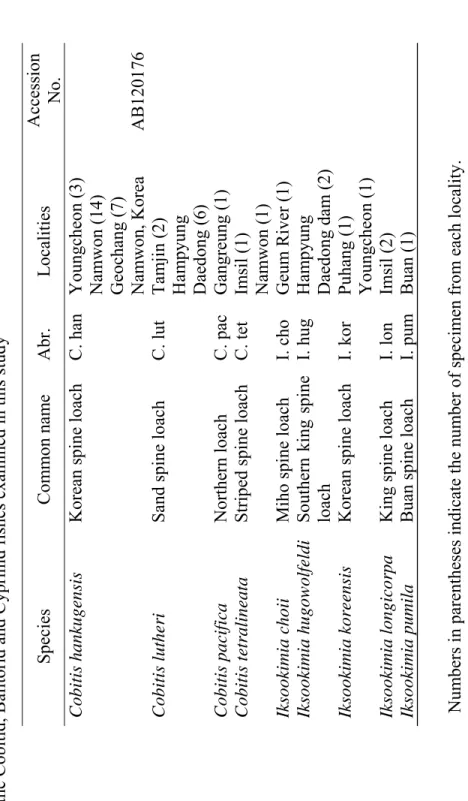
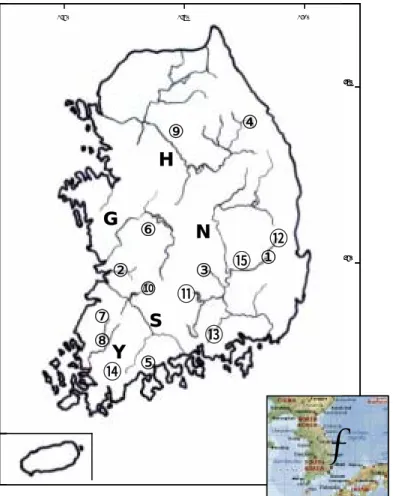
The list of fish species used in this study and their sampling localities are presented in Table 1. In total, all 16 identified cobitid species, in Korean waters, were sampled and their genomic DNAs were extracted. For some localities more than one specimen of each species were examined. Besides, the sequences of some Asiatic cobitid and cyprinid fishes were taken from the GeneBank, under their corresponding accession numbers (Table 1) to extend our tree accuracy and to delineate inter and intra-familial relationships. Three species of Lefua costata from the family Balitoridae, and Cyprinus carpio and Carassius auratus from the family Cyprinidae, were used as outgroups. These outgroup species were selected because of their relative closeness to the family Cobitidae in conventional taxonomic ordering. Further more, a number of 4 fish were sampled as suspected to be hybrids between two species of Cobitis hankugensis (revised C. sinensis) and Iksookimia longicorpa as reported by Kim and Lee (1990). The distribution of sampling localities is indicated in Figure 3.
2.2. Total DNA Extraction
Total cellular DNA was extracted from the muscle of deceased samples or part of the fin of the live fishes, using an AccuPrep Genomic DNA Extraction Kit (BIONEER corporation) according to the kit manual instruction. Briefly, a section of 25 to 50 mg tissue was disrupted and placed in a 1.5 ml tube, suspended in 200µl tissue lysis buffer (TL) plus 20µl proteinase K and incubated at 60ºC for 3 hours or more for protein digestion. The sample in the tube was resuspended in 200µl biding
buffer (GC) and incubated once more at 60ºC for 10 min. The procedure was followed by adding 100µl Isopropanol, transferring the sample to a spin column, washing the extra residual, and eluting the bound DNA from the glass fiber column of the tube by 100µl elution buffer (EL). The concentration of the final extracted DNA was determined by electrophoresis of products loaded on a 0.8% agarose gel.
2.3. Amplification of Cytochrome b Gene
The entire cytochrome b gene of each sample including parts of tRNA regions (the 3' end of the glutamine transfer RNA, the complete threonine transfer RNA, and the 5' end of proline transfer RNA), was amplified with the flanking tRNA primers including the forward primer of Glu-F3 and the reverse primer of Pro-R. (Fig.4). The sequence structures of these primers are displayed in Table 2. The PCR reaction was performed in a final volume of 50µl in 0.5 ml PCR tubes containing 1-4µl of genomic DNA depended on its concentration, 2.5µl each of forward and reverse primers, 5µl 10x reaction buffer, 5µl PCR nucleotide mixture (containing the sodium salts of dATP, dCTP, dGTP, and dTTP), and 1µl (1 unit/µl) Ex Taq polymerase (Takara Bio Inc.). The remaining volume up to 50µl was completed with ddH2O. Approximately 2 drops of mineral oil from a 200µl micropipette tip was added prior to the initiation of cycling, to serve as an evaporation barrier. The amplification was performed in a Programmable Thermo Controller (PTC-100, MJ Research Inc.). Typical PCR protocol used in this study to amplify cytochrome b gene consisted of an initial denaturating step at a temperature of 94ºC for 2 min, followed by 29 or 35 cycles of DNA denaturation at 94ºC for 45 sec, primer annealing at
43ºC or 45ºC for 1 min, primer extension at 72ºC for 1.5 min, and a final extension at 72ºC for 7min. The size of PCR product was checked against a 1kb DNA ladder on a 0.8% agarose gel (Agarose LE, Promega Co.), stained with a 0.5µl ethidium bromide in 1x TAE buffer. The initial PCR product was purified by electrophoresis on a low-melt stained agarose gel. The gel slice that contained the desired band was cut out as small as possible and purified using AccuPrep Gel Purification Kit (Bioneer Corp.), according to the manual instruction.
2.4. Cloning of the PCR Product
For cloning of the PCR product pBluescript II SK (Stratagene) was used as host or vector. To prepare the vector for hosting, 2.5 µl of it was digested with Hinc II restriction enzyme at 37ºC for 2 hour. The digested vector was purified after running on an agarose gel, by using a gel purification kit (Bioneer Corp.), according to the manufacturer recommendation. Consequently, the concentration of the restricted vector was determined and compared with that of the PCR product of each sample by electrophoresis. Ligation was carried out with 12µl reaction mixtures containing 1µl of the restricted vector, 1.5 to 9µl of gel purified DNA (according to the relative concentration or band brightness in electrophoresis), 1µl of 10x T4 ligation buffer and 1 unit of T4 ligase (Takara Bio Inc.). The mixture was incubated at 16ºC for 18 hours for a complete insertion of DNA into vector.
In the next step, five microliter of each ligated product was mixed with 50µl of E. coli XL1-blue competent cells and the mixture was left for 40 min in ice, with latter heat-shocks by putting at 42ºC and then in ice for 1.5 and 2 min, respectively. This procedure was followed by
adding a volume of 95µl of LB broth to the tube components and mixing them by pipette. The final mixture was incubated at 37ºC for 30 min.
The tube content was spread on a Luria-Bertani (LB) agar plate containing ampicillin, X-gal, and IPTG, and the medium was incubated overnight at 37ºC. The produced colonies, having white colour, were scratched and inoculated into a 4 ml LB broth solution containing ampicillin, and were left to grow for 16-18 hours at 37ºC in a shaking incubator. Finally, the plasmid DNAs of potential clones were isolated by using a Plasmid Miniprep Kit (Dyne Bio Inc. Korea), according to the kit manual, and prepared for sequencing after checking their size by a further electrophoresis on the agarose gel.
2.5. Sequencing
The sequencing of purified selected DNA fragments was accomplished by handing over a volume of 15µl genomic DNA of each individual to a commercial sequencing company (Macrogen, Korea). The sequencing has been done based up on our recommended protocol by using a Pbluescript II SK vector in a concentration of 0.10 µg/µl, and two specific cytochrome b forward and reverse primers of T3 and T7, respectively. The structural sequences of these primers are displayed in Table 2.
2.6. Sequence Analysis
A total of sixty-eight complete 1140 bp long cytochrome b from 16 species of Family Cobitidae and one species of Balitoridae sensu Kim et al. (2005), plus 10 GeneBank-deposited sequences with their
corresponding accession numbers (Table 1), were aligned manually using a DNAssist alignment editor (shareware, version 2.2; Patterton and Graves, 2000). The base composition bias, pattern of substitution for pairwise comparisons and codon arrays were computed by applying MEGA 3.0 software (Kumar et al, 2004). Phylogenic trees were constructed according to the maximum parsimony (MP; Fitch, 1971) and Neighbor-joining (NJ; Saitou and Nei, 1987) methods, using MEGA 3.0 and PAUP 4.0d54 (Swofford, 1998) programs. To take into account the ratio of transition to transversion (TS/TV) bias and intrasequence base composition bias, pairwise distances between nucleotide sequences were assessed according to Kimura’s (1980) two-parameter model and Tamura and Nei’s (1993) distance model. A combination of several models and methods were tested using first, second and third codon positions separately or in conjugation to evaluate the possible effect of the application of each data set and also to eliminate the noise resulted from saturated data. The statistical significance of branching orders was calculated by the bootstrap resampling process (Felsenstein, 1985), in a replication number of 1000. In order to increase the level of accuracy in our phylogeny, and have a better comparison between two different tree-making methods, consensus trees were recovered using both NJ and MP methods. It has been achieved by giving a priority to the topologies supported with replication units higher than 50%.
Table 1. Species nam
es and their ab
breviate form
s (Abr
.), sam
pling localities and GeneBank accession numbers of
the Cobitid, Balitorid and Cyprinid fishes exam
ined in this study
S pe ci es C om m on nam e A br . L oc al it ie s Accession No. Youngcheon (3) Nam w on (14) Geochang (7) Cobitis hankugensis
Korean spine loach
C. han Nam w on, Korea AB120176 Tam jin (2) Cobitis lutheri
Sand spine loach
C. lut Ha m pyung Daedong (6) Cobitis pacifica Northern loach C. pac G angreung (1) Im sil (1) Cobitis tetralineata
Striped spine loach
C. tet
Nam
w
on (1)
Iksookimia choii
Miho spine loach
I. cho Geum River (1) Ham py un g Iksookimia hugowolfeldi
Southern king spine loach
I. hug
Daedong dam
(2)
Iksookimia koreensis
Korean spine loach
I. kor Puhang (1) You ng ch eo n (1 ) Iksookimia longicorpa
King spine loach
I. lon
Im
sil (2)
Iksookimia pumila
Buan spine loach
I. pum
Buan (1)
Num
bers in parentheses indicate the num
ber of specim
en from
each locality.
Table 1. Continued Species Com m on nam e Abr. Localities Accession No. Iksookimia yongdokensis
Eastern spine loach
I. y on Angang (2) Kichulchoia brevifasciata Little loach K. bre Geogeum -do (2) Koreocobitis naktongensis
Spotted white nose loach
K. nak
Suncheong (1)
Koreocobitis rotundicaudata
White nose loach
K. rot
Han River (1) Nakdong River (1) China
AF051868 Misgurnus anguillicaudatus Muddy loach M. ang Aom
ori, Iwaki, Japan
AB080185 M isgurnus mizolepis Chinese m uddy loach M. m iz Im sil (1) Misgurnus fossilis Weather fish M. fos Japan E28664 Geochang (1) Niwaella multifasciata
Su su Miguri (Korean nam
e) N. m ul Suncheong (1) Niwaella delicata Ajim e loach N. del Japan AB039352 China AY625699 Taiwan AY526868 Cobitis sinensis Siberian spiny loach C. sin Taiwan NC007229 *Lefua costata
Eight barbell loach
L. cos Im sil (1) *Cyprinus carpio Com m on carp C. car Taiwan NC001606 *Carassius auratus
Red crucian carp
C. aur Jeju-Korea c.f. Hy brid H yb S un ch eo ng (4 ) Nam w on ,K or ea A B 12 01 77 34
126° 128° 130° 36° 38° 34° ① ② ③ ④ ⑤ ⑥ ⑦ ⑧ ⑨ ⑩ ⑪ ⑫ ⑬ ⑭ ⑮ H N G S Y
É
126° 128° 130° 36° 38° 34° ① ② ③ ④ ⑤ ⑥ ⑦ ⑧ ⑨ ⑩ ⑪ ⑫ ⑬ ⑭ ⑮ H N G S Y 126° 128° 130° 36° 38° 34° ① ② ③ ④ ⑤ ⑥ ⑦ ⑧ ⑨ ⑩ ⑪ ⑫ ⑬ ⑭ ⑮ H N G S YÉ
Fig. 3. Map of five main river systems in the southern part of Korean peninsula and the distribution of sampling localities of cobitid fishes used in this study. River systems are shown by letters: H: Han River; N: Nakdong River; G: Geum River; S: Samjin River; Y: Youngsun River. Sampling localities: 1. Angang; 2. Buan; 3. Geochang; 4. Gangreung; 5. Geogeumdo; 6. Geum River; 7. Hampyungdaedong; 8. Hampyungdaedong dam; 9. HanRiver; 10. Imsil; 11. Namwon; 12. Puhang; 13. Sancheong; 14. Tamjin; 15. Youngcheong.
Cytochrome b Glu Thr ro P 5´ t Glu-F3 s 5´ Pro-R 1140bp
Fig. 4. Strategy for PCR amplification and sequencing of the cytochrome b gene and its flanking tRNA genes (Glu, Pro and Thr). Arrows denote the primers. Glu: glutamine; Pro: proline; Thr: threonine.
Table 2. The sequences of the primers used in PCR and sequencing of the cytochrome b gene
Primer Position Gene Sequence
Glu-F3 tRNAGlu 5'-ACCACCGTTGTHNTTCAACTA-3'
Pro-R tRNAPro 5'-TAGAATYYTRGCTTTGGGAG-3'
T7 5'-TAATACGACTCACTATAGGG-3'
3. RESULTS
3.1. Base Composition Bias
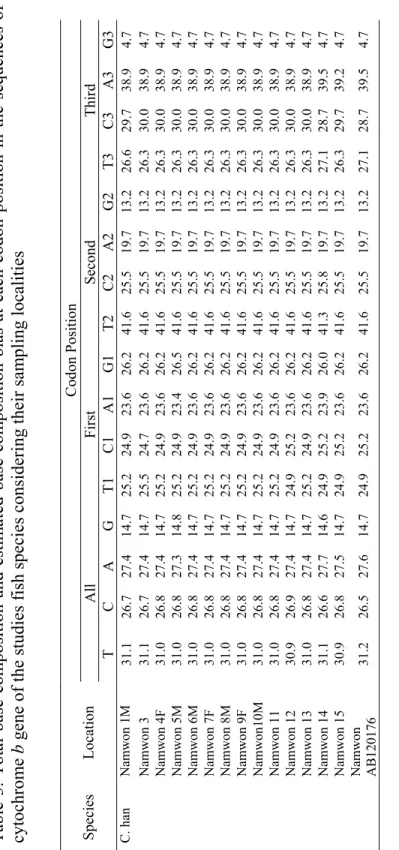
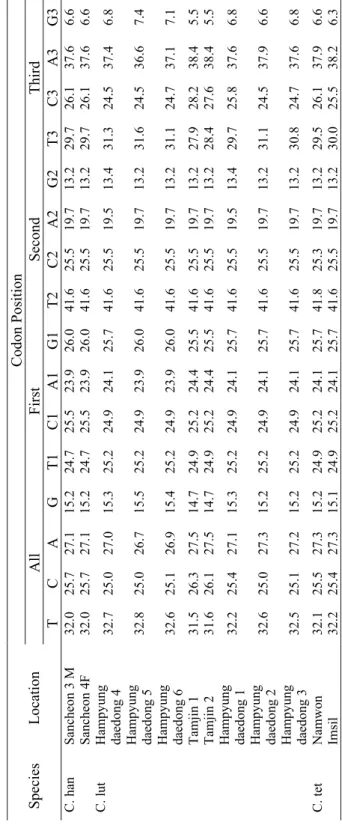
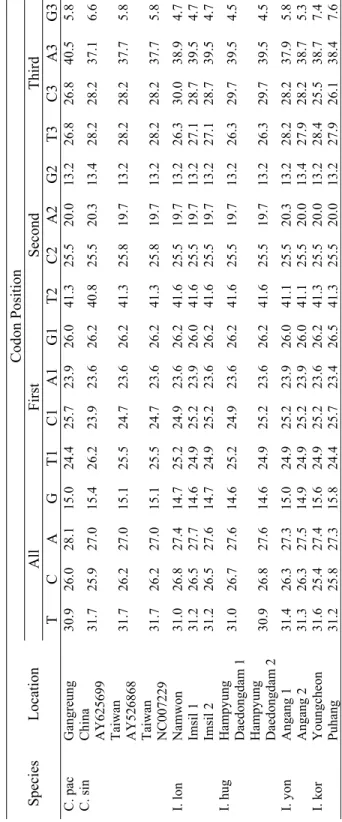
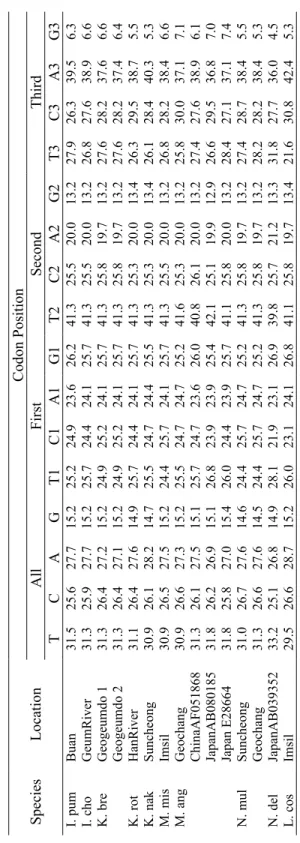
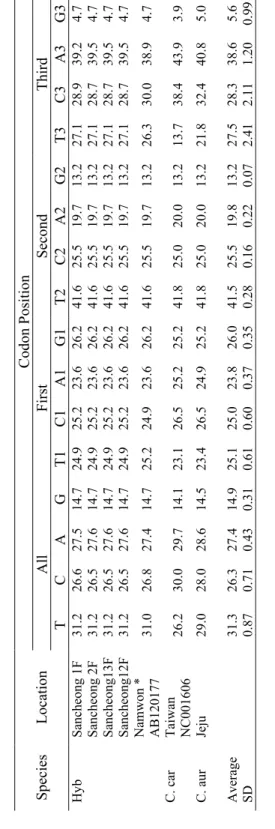
In total, the complete cytochrome b (1140bp) of 22 species, besides the sequences of a group of putative hybrids (having intermediate phenotype of two species of C. hankugensis and I. longicorpus), were used for phylogenetic analyses. Base compositions biases were analyzed to interpret the total and positional frequencies of each of four bases in individual DNA sequences regarding their sampling locality (Table 3). The results of base composition in all studied fish revealed low average G content (14.9%), high T content (31.3%) and almost equal rates of C and A (26.3% and 27.4%, respectively). Mean contents of G at first, second and third codon positions were 26.0%, 13.2% and 5.6%, respectively. The average rates of T at first, second and third codon positions estimated to be 25.1%, 41.5% and 27.5 %, respectively. The average contents of C at the first, second and third codon positions were 25.0%, 25.5% and 28.3%, respectively. The average rates of A at the first, second and third codon positions were 23.8%, 19.8% and 38.6%, respectively. According to these results, the low G content could be due to its low rate at the third and second codon position, while at the second codon position T has the highest rate compare to the other three bases. As is revealed in the table, the contents of all four bases at the first codon position were almost similar, whereas the rate of A was largest at the third codon position. There was a relative homogeneity in the content of each of four bases among the sequences. So that, T contents ranged from 26.2 to 33.2%, C and A had rates between 25.0 and 30.0% and the content of G varied between 14.1 and 15.8%. In the fishes examined, the second codon position showed the
least interspecific variability (standard deviation-SD- ranged from 0.07 to 0.28), while in the third codon position the rates of base composition had the highest variations (SD valued between 0.99 and 2.41). Results showed a relative homology in base composition within each family. So that, for instance, the content of T in cobitid fishes varied from 30.9 to 32.8%, in balitorid fishes ranged from 28.0 to 31.5% and in examined cyprinid fishes fluctuated between 26.2 and 29.0%. Similarly, the content of G in Cobitidae ranged from 14.5 to 15.8%, in Balitoridae ranged from 15.2 to 18.5% and in Cyprinidae varied between 14.1 and 14.5%.
3.2. Sequence Evolution
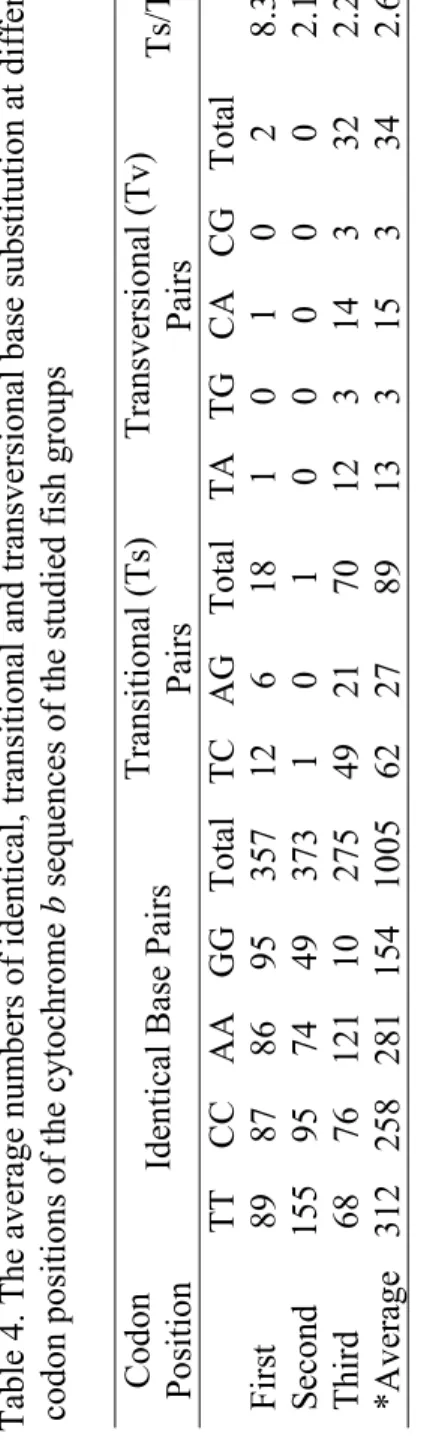
Except for two Genebank-deposited species of M. anguillicaudatus (Accession No. AB080185) and N. delicata (Accession No. AB039352) with partial cytochrom b sequences, no size differences were observed among the 22 species examined. Of the 1140 nucleotide site, 479 were variable and 403 were phylogenetically informative for parsimony analysis. Evidently, the remaining number out of variable sites have been considered as conserved positions in all specimens (661 nucleotide sites). As was predictable, the third codon position was the most variable site in the aligned data. The average numbers of identical, trasitional and transversional base pair substitutions at each of the three codon positions of the sequence data are indicated in Table 4. According to the table, the total numbers of identical base pair substitution in all codon positions were much higher than those of trasnsitional and transversional nucleotide substitutions. However, the number of identical base substitution at the third codon position was
lower than those at two other positions. The estimates of transition to transversion ratios ranged from 2.1 in the second codon position to 8.3 in the first codon position (Table 4).
Aligned cytochrome b gene sequences showed a starting codon of ATG (encoding methionine amino acid) and a termination codon of CTT (encoding leucine) in all studied fish groups. Table 5 illustrates the average frequencies of different triplet amino acid mediating-codons arrays in cytochrome b sequence data of examined fishes. As is evident in table 4, although only two base arrays encoding each of the amino acids of ‘isoleucine’ and ‘phenylalanine’ are included in the sequences, these codons have the highest frequencies among all other arrangements of codons, while in contrast, ‘arginine’ and ‘serine’ with several encoding arrangements occurred with low rates in the sequences. The average number of codons in all examined sequence data was 378.
Table 3. Total base com
position and
estim
ated base com
position bias at each codon position in the sequences of
cytochrom
e
b
gene of
the studies f
ish species considering their sam
pling localities Codon Position Al l F irst S ec on d Thi rd S pe ci es L oc at io n T C A G T1 C1 A1 G1 T 2 C 2 A2 G2 T3 C3 A3 G3 Namwon 1M 31 .1 26 .7 27.4 14.7 25.2 24.9 23.6 26.2 41 .6 25 .5 19 .7 13.2 26.6 29.7 38.9 4.7 Namwon 3 31.1 26.7 27.4 14.7 25.5 24.7 23.6 26.2 41 .6 25 .5 19.7 13.2 26.3 30.0 38.9 4.7 Namwon 4F 31.0 26.8 27.4 14. 7 25.2 24.9 23.6 26.2 41 .6 25 .5 19 .7 13.2 26.3 30.0 38.9 4.7 Namwon 5M 31.0 26.8 27.3 14.8 25.2 24.9 23. 4 26.5 41 .6 25 .5 19 .7 13.2 26.3 30.0 38.9 4.7 Namwon 6M 31.0 26.8 27.4 14.7 25.2 24.9 23. 6 26.2 41 .6 25 .5 19 .7 13.2 26.3 30.0 38.9 4.7 Namwon 7F 31.0 26.8 27.4 14. 7 25.2 24.9 23.6 26.2 41 .6 25 .5 19 .7 13.2 26.3 30.0 38.9 4.7 Namwon 8M 31.0 26.8 27.4 14.7 25.2 24.9 23. 6 26.2 41 .6 25 .5 19 .7 13.2 26.3 30.0 38.9 4.7 Namwon 9F 31.0 26.8 27.4 14. 7 25.2 24.9 23.6 26.2 41 .6 25 .5 19 .7 13.2 26.3 30.0 38.9 4.7 N am w on 10 M 31 .0 26.8 27.4 14.7 25.2 24.9 23.6 26.2 41 .6 25 .5 19.7 13.2 26.3 30.0 38.9 4.7 Namwon 11 31.0 26.8 27.4 14.7 25.2 24.9 23.6 26.2 41 .6 25 .5 19.7 13.2 26.3 30.0 38.9 4.7 Namwon 12 30.9 26.9 27.4 14.7 24.9 25.2 23.6 26.2 41 .6 25 .5 19.7 13.2 26.3 30.0 38.9 4.7 Namwon 13 31.0 26.8 27.4 14.7 25.2 24.9 23.6 26.2 41 .6 25 .5 19.7 13.2 26.3 30.0 38.9 4.7 Namwon 14 31.1 26.6 27.7 14.6 24.9 25.2 23.9 26.0 41 .3 25 .8 19.7 13.2 27.1 28.7 39.5 4.7 Namwon 15 30.9 26.8 27.5 14.7 24.9 25.2 23.6 26.2 41 .6 25 .5 19.7 13.2 26.3 29.7 39.2 4.7 C. han Namwon AB120176 31 .2 26 .5 27.6 14.7 24.9 25.2 23.6 26.2 41 .6 25 .5 19 .7 13.2 27.1 28.7 39.5 4.7
Refer to Table 1 for species abbreviations. F: fem
ale; M: m
Table 3. Continued Codon Position Al l F irst S ec on d Thi rd S pe ci es L oc at io n T C A G T1 C1 A1 G1 T 2 C 2 A2 G2 T3 C3 A3 G3 Geochang 1M 30.9 26.9 27.3 14. 8 25.2 24.9 23.4 26.5 41 .6 25 .5 19 .7 13.2 26.1 30.3 38.9 4.7 Geochang 2 31.0 26.8 27.4 14. 7 25.2 24.9 23.6 26.2 41 .6 25 .5 19 .7 13.2 26.3 30.0 38.9 4.7 Geochang 3 31.2 26.5 27.6 14. 7 24.9 25.2 23.6 26.2 41 .6 25 .5 19 .7 13.2 27.1 28.7 39.5 4.7 Geochang 4 31.2 26.5 27.6 14. 7 24.9 25.2 23.6 26.2 41 .6 25 .5 19 .7 13.2 27.1 28.7 39.5 4.7 Geochang 5 31.2 26.5 27.6 14. 7 24.9 25.2 23.6 26.2 41 .6 25 .5 19 .7 13.2 27.1 28.7 39.5 4.7 Geochang 6 31.2 26.4 27.5 14. 8 24.7 25.3 23.7 26.3 41 .6 25 .5 19 .7 13.2 27.4 28.4 39.2 5.0 Geochang 7 31.0 26.8 27.4 14. 7 25.2 24.9 23.6 26.2 41 .6 25 .5 19 .7 13.2 26.3 30.0 38.9 4.7 Youngcheon 1M 31.2 26.5 27.6 14. 7 24.9 25.2 23.6 26.2 41 .6 25 .5 19 .7 13.2 27.1 28.7 39.5 4.7 Youngcheon 2M 31.9 25.8 27.1 15. 2 24.7 25.5 23.9 26.0 41 .6 25 .5 19 .7 13.2 29.5 26.3 37.6 6.6 Youngcheon 1F 32.0 25.7 27.1 15. 2 24.7 25.5 24.1 25.7 41 .6 25 .5 19 .7 13.2 29.7 26.1 37.4 6.8 Youngcheon 2F 32.0 25.7 27.1 15. 2 24.7 25.5 23.9 26.0 41 .6 25 .5 19 .7 13.2 29.7 26.1 37.6 6.6 Sancheon 1 F 31.9 25.8 27.1 15. 2 24.7 25.5 23.9 26.0 41 .6 25 .5 19 .7 13.2 29.5 26.3 37.6 6.6 Sancheon 1 M 31.9 25.8 27.1 15. 2 24.7 25.5 23.9 26.0 41 .6 25 .5 19 .7 13.2 29.5 26.3 37.6 6.6 Sancheon 2 F 31.9 25.8 27.1 15. 2 24.7 25.5 23.9 26.0 41 .6 25 .5 19 .7 13.2 29.5 26.3 37.6 6.6 Sancheon 2 M 32.0 25.7 26.9 15. 4 24.7 25.5 23.4 26.5 41 .6 25 .5 19 .7 13.2 29.7 26.1 37.6 6.6 C. han Sancheon 3 F 31.9 25.8 27.0 15. 3 24.7 25.5 23.6 26.2 41 .6 25 .5 19 .7 13.2 29.5 26.3 37.6 6.6
Table 3. Continued Codon Position Al l F irst S ec on d Thi rd S pe ci es L oc at io n T C A G T1 C1 A1 G1 T 2 C 2 A2 G2 T3 C3 A3 G3 Sancheon 3 M 32.0 25.7 27.1 15. 2 24.7 25.5 23.9 26.0 41 .6 25 .5 19 .7 13.2 29.7 26.1 37.6 6.6 C. han Sancheon 4F 32.0 25.7 27.1 15. 2 24.7 25.5 23.9 26.0 41 .6 25 .5 19 .7 13.2 29.7 26.1 37.6 6.6 Hampy ung daedong 4 32 .7 25 .0 27.0 15.3 25.2 24.9 24.1 25.7 41 .6 25 .5 19 .5 13.4 31.3 24.5 37.4 6.8 Hampy ung daedong 5 32 .8 25 .0 26.7 15.5 25.2 24.9 23.9 26.0 41 .6 25 .5 19 .7 13.2 31.6 24.5 36.6 7.4 Hampy ung daedong 6 32 .6 25 .1 26.9 15.4 25.2 24.9 23.9 26.0 41 .6 25 .5 19 .7 13.2 31.1 24.7 37.1 7.1 Tamjin 1 31.5 26.3 27.5 14.7 24.9 25.2 24. 4 25.5 41 .6 25 .5 19 .7 13.2 27.9 28.2 38.4 5.5 Tamjin 2 31.6 26.1 27.5 14.7 24.9 25.2 24. 4 25.5 41 .6 25 .5 19 .7 13.2 28.4 27.6 38.4 5.5 Hampy ung daedong 1 32 .2 25 .4 27.1 15.3 25.2 24.9 24.1 25.7 41 .6 25 .5 19 .5 13.4 29.7 25.8 37.6 6.8 Hampy ung daedong 2 32 .6 25 .0 27.3 15.2 25.2 24.9 24.1 25.7 41 .6 25 .5 19 .7 13.2 31.1 24.5 37.9 6.6 C. lut Hampy ung daedong 3 32 .5 25 .1 27.2 15.2 25.2 24.9 24.1 25.7 41 .6 25 .5 19 .7 13.2 30.8 24.7 37.6 6.8 N am w on 32 .1 25.5 27.3 15.2 24. 9 25.2 24.1 25.7 41 .8 25 .3 19.7 13.2 29.5 26.1 37.9 6.6 C. tet Im si l 32 .2 25.4 27.3 15.1 24.9 25.2 24.1 25.7 41 .6 25 .5 19 .7 13.2 30.0 25.5 38.2 6.3