약학뢰지 제36권 저)4호 291*-302(1992) Yakhak Hoeji Vol. 36, No. 4
영화아연이 생쥐의 면역반응에 미처는 영향
안영근* • 김정훈• 채병숙• 차광재
원광대학교 약학대학 (Received June 15. 1992)
Effects of Zinc Chloride on the Immune Response in ICR Mice
Young Keun Ahn*, Joung Moon Kim, Byung Sook Chae and Kwang Jae Cha
College of Pharmacy, WonKwang University, Iri 570-749, Korea
Abstract—Effects of Zinc chloride on the immune responses were studied in ICR mice. ICR male mice were divided into 5 groups(10 mice/group) and Zinc chloride at doses of 0.3, 1.2, 4.8 and 19.2 mg/kg were orally administered to ICR male mice once a day for three weeks. Mice were sensitized and challenged with sheep red blood cells(S-RBC).
The results of this study were summarized as follows: (1) Zinc chloride significantly increased the body weight rate, the weight ratios of spleen and thymus to body weight and the number of circulating leukocyte, but significantly decreased them at the high dose of it, and increased dose-dependently the weight ratio of liver to body weight. (2) Zinc chloride significantly increased hemagglutination titer, Arthus reaction and plaque forming cell related to humoral immunity, but significantly decreased them at the high dose of it (3) Zinc chloride significantly increased delayed- type hypersensitivity reaction and rosette forming cell related to cellular immunity, but significantly decreased them at the high dose of it. (4) Zinc choride significantly enhanced phagocytic activity, but significantly decreased according to the increase of its dose.
These results suggest that high dose of zinc chloride decreased humoral, cellular and non-specific immune responses.
Keywords □ Zinc chloride, hemagglutination titer, Arthus reaction, hemolytic plaque forming cell, delayed-type hypersensitivity reaction, rosette forming cell, phagocytic activity, number of circula
ting leukocyte.
아연은 동 • 식물 및 인간의 성장, 성 적 발 육 ,^효 소의 촉매작용;* ® 중금속(Cd, Pb, Hg)의 해득작 용 단 백 질 및 핵산의 함 성 조 절 작 용 ,생 체 막 의 안정화 작용,® 각종 호르몬의 활성화작용^* 및 면역 계의 필수적 요소로 작용한다.
아연에 대한 면역학적인 보고로서 Dowd 등 은 일부 cytokine(interleukin 1, interleukin 2, interfe- rone)외 작용이나 생산을 아연이 좌우한다고 보고하 였고, Grekas 등"«은 만성신부전증 환자에 있어서 아연투여는 단핵구외 기능을 증가시켜 세포성 면역
* 본 논문에 관한 문외는 이 저자에게로.
장애를 희복시켰다고 보고하였고, Duchateau 등^®은 인체외 노년기에 있어서는 아연투여로 T cell, IgG 및 DTH가 증가되어 면역반응이 향상되었으나, 청년 기에 있어서는 아연으로 인한 면역반응에 변화가 없 었다고 보고하였고, Marone 등™은 생리적농도(7X lCr*4nol//)의 아연이 anti-IgE활성에 외해 유발되는 uptake를 경쟁적으 로 차단하는' histamine 및 leukotriene외 방출을 억제시키고 체액성 면역을 증 가시켰다고 보고하였고, Edmund 등2®은 갓 태어난 흰쥐에 dexamethasone을 주사하므■로써 간외 아연과 metallothioneine 농도가 현저히 감소되었다고 보고 하였고, Beach 등2®은 자기면역에 걸리기 쉬운 생쥐
안 영 근 • 김 정 훈■채 병숙• 차광재
에게 아연섭취를 제한하므로서 자기면역의 발현을 예방 또는 연장시켰다고 보고하였고, Amiraian 등2«은
최적외 Ca2+, 농도에서 낮은 농도외 아연은
guinea pig 보체의 용해작용을 증가시켰다고 보고하 였다.
아연 결핍으로 인한 면역학적인 보고로서 흉선위 측,® adrenal gland버대,® cytotoxic cell활성억제,때 자기면역장애와 Down syndrome증7P *등이 보고되 었고, Fraker 등29-3»은 생쥐에 있어서 아연결핍으로 natural killer(NK) cell 활성저하, T helper cell 기 능저하, lymphocyte와 phagocyte수 감소, DTH 감소 를 초래하였으며, 또한 임신기간동안 아연결핍은 수 세대에 면역결핍 증을 지속시켰다고 보고하였고, Cha- ndra"2>은 유전적 아연 흡수부전으로 오는 장성선단 피부염(acrodermatitis enteropethica)®* 환자에서 흉 선위측, helper T cell외 감소 및 mitogen에 대한 증식반웅 감소 등을 보고하였고, Ballester 등피은 아 연결핍으로 겸상적혈구빈혈증(sickle cell anemia)환 자외 DTH와 NK cell 활성이 저하되었다고 보고하 였고, Fraker 등해은 leuenkephalin과 ct-endorphine은 미성숙 B cell을 성숙하게 하는 trinitrophenylated-li- popolysaccharides(TNP-LPS)활성을 억제하는데 아연 결핍으로 월씬 더 억제되었다고 보고하였고, Cunni- ngham-Rundles 등®은 혈청중 아연농도가 낮으면 내인성 폐동맥 섬유화톨 유발하다고 보고하였고, Brummerstedt 등체은 cattle에서 lethal trait A-46은 유전적인 위장관 아연 흡수불능증으로 대부분 감염에 의하여 조기사망을 한다고 보고하였고, DePasqual- Jardieu 등3^>은 성숙한 생쥐에 있어서 아연결핍은 혈중 corticosteroid농도를 월등히 증가시켰다고 보고 하였고, Fabris 등®>은 AIDS환자의 경우 T helper cell수와 혈청중 아연농도가 낮다고 보고하였고, Moy- nahan 등^>은 아연을 투여하므로써 장성선단피부염 환자외 아연결핍증이 완전히 치료되었다고 보고하였 다.
아연외 과량섭취로 인한 면연득성에 대한 보고로써 Montgomery 등 은 아연외 생리학적 범위의 고농 도에서는 in wYro에서 면앙적혈구에 대한 보체의 용 헤작용이 억제되었다고 보고하였고, Chandra^® 와 Hooper 등 은 건강한 성인에게 과량의 아연을 투 여시 high density lipoprotein(HDL) cholesteros 농 도의 감소, lymphocyte와 neutrophil 기능장애 및
세포증 Ca2+의 축적량 감소가 나타났다고 보고하였고, Canicatti 등 은 아연의 고농도에서 척추동물의 적 혈구에 대한 Holothuria polii의 coelomic fluid 와 coe- lomocyte lysate외 용혈력이 억제되었다고 보고하였 다.
아연외 루여량에 따른 암에 대한 상반된 보고로써, Fong 등®은 흰쥐에 있어서 아연결핍은 methyl ben
zyl nitrosaminc으로 유빌■된 esophageal carcinoma^
발생을 증가시켰다고 보고하였고, Wallenius 등^®은 흰쥐에 있어서 고용량의 아연이 암의 발생과 진행을 증가시켰다고 보고하였으나, Duncan 등^>은 흰쥐와 생쥐에 있어서 고용량외 아연이 암외 발생을 감소시 켰다고 보고하였고, Pories 등■*«은 아연결핍된 흰쥐와 생쥐에 있어서 암성장의 감소와 생존기간이 연장되 었으며 고용량의 아연은 화학물질로 유발된 구강암에 대헤서 보호작용이 있는 반면에 암이 진행된 후 아 연투여는 암성장을 촉진시켰다고 보고하였다.
위와 같은 보고로 보아 아연의 투여 량이 면역반응에 상이한 영향을 꺼철 것으로 사료되어, 본 실험을 실 시한 결과 아연의 투여량에 따른 유의한 결과를 얻 었기에 이를 보고하는 바이다.
실 험 방 법
실 험 동 물 一생후 5~6주령, 체중 17~21g외 수컷 ICR 생쥐를 경남축산{경기도 화성소재)에서 분앙받아 시관사료(제일사료 제품 : 조단백질 22.5% 이상, 조지 방 35% 이상, 조섬유 7.1% 이하, 조희분 10.0% 이하, 칼슘 0.7% 이상)로 1주간 급식시켜 적응시킨 후에 10 마리를 1군으로 하고 전체를 5군으로 나누어 온도 23
±2°C, 습도 50~60%로 유지되는 항온, 항습 사육설 에서 3주간 사육하였다.
ZnCh용 액 의 조 제 및 투 여 一 ZnCWSigma, Co., LTd)를 생리식염수에 용해시켜 체중 Kg당 0.3, 1.2, 4.8 및 19.2 mg썩을 3주간 1일 일정한 시 각에 경구 투여하였다.
체 중 및 장 기 의 중 량 게 측 " 실험동물외 체중은 공 시약물투여 개시일과 최종일 약 24시간 전에 절식시킨 후 동일한 시간에 측정하였다. 최종 약물투여 1일 후에 실험동물외 경동맥을 절단하고 채혈한 후 간장, 비장 및 흉선을 각각 적출하여, 그 중량을 측정하여 대체중백분비를 구하였다.
]. Pharm. Soc. Korea
염화아연이 생쥐외 면역반웅에 미처는 영향
항원조제一본 실험에서는 면앙적혈구(Sheep* red blood cell 이하 S-RBC)룔 사용하였는데, 그 방법은 웅성면앙외 경동맥으로부터 heparin 처리 주사기로 채혈한 후, 동량의 Alserver's씨액(pH6 . 1)을 가하여 4°C 에서 보존하여 2주일 이내에 사용하였다. 보존중인 S-RBC를 사용할 때에는 사용 직전 PBS로 3희 원심 세척한 후 적절한 농도로 Hanks balanced salt solu- tion(이하 HBSS : Gibco Laboratories Co., Ltd.) 에 부유시켜 사용하였다.
면역_ 원심 세척한 S-RBC를 Reed 등 의 방법을 참고하여 HBSS 에 1X10® S-RBC/m/의 농도로 부유 시키고 부유액 0.1m/(lX10^ S-RBC)를 생쥐의 미정 맥에 주사하여 1차면역을 유도하였다. 2차면역은 1
차면역 4일 후에 생쥐외 좌측후지족척피내에 2X10^
S-RBC/m/ 부유액 0.05m/(lXl(y* S-RBC) ^ 주사하여 면역하였다.
혈청의 분러 및 버동화■생쥐의 경동맥을 절단하여 혈액을 채 루 고 시 킨 후, 원심 분리하여 혈청을 분리 하고 5b V ,서 30분간 비동화시 컨 후 4°C 에 서 보존하여 사용하였다,
적혈구웅집소가(Hemagglutination titer 이하 :HA titer)의 측정^•*>>-S-RBC외 응집소가를 microtitra
tion trayCNunclon micro test tray)룔 사용하여 다옴 과 같이 설시하였다. 즉, 각 실험동물로부터 얻은 각 비동화 혈청을 각 Well에 HBSS로 2배 계열로 희석한 후, HBSS에 부유한 0.5% S-RBC 0.025 m/를 잘 혼 함한 다옴 37°C 에서 18시 간 정처하여 적 혈구외 응집 유형을 관찰관득하였으며, 응집을 일으키는 혈청의 희고 희석도를 그 혈청의 응집소가로 하였다.
적혈구 2-Mercaptoethanol(2-IVIE) 내성옹집소가의 측정_ 각 혈청의 2-ME내성응짐소가를 판정하기 위 하여 0.15 N 2-ME(Eastman Kodak Co., LTd)로 혈 청을 처리하여, 2-ME내성항체를 immunoglobulin G (IgG)항체로, 2-ME로 처리하기 전의 항체를 2-ME감 수성 항체 또는 IgM항체로 판득하였는데, 판득방법은 다음과 같이 실시하였다. 즉 혈청의 2-ME처러는 0.15 N 2-ME가 함유된 HBSS로 혈청을 희석하고, 증발 하지 않도록 tray를 밀폐하여, 37°C 에 서 30분간 방 처한 후, S-RBC를 가하여 응집소가를 상기한 방법 으로 검사하였다.
족척종창반웅 측정 (Footpad swelling test) —Arthus 반응 및 지연형 과민반응(delayed-type hypersensiti
vity reaction 이 하 : DTH)을 측정하기 위하여 Yoshi- kai 등®^*이 기술한 방법에 준하여 다음과 같이 실시 하였다. 즉, 1차면역 4일후에 S-RBC 0.05m/(lX10«) 를 생쥐의 좌측후지족척에 피내주사하였다. 주사후 얼정시간 경과한 후 종창외 두께를 0 . 0 1 mm 눈금 mi- crocaliper(Mitutoyo Mfg. Co., Ltd.)로 측정하였으며, 증창정도의 측정가는 측정에 따른 오차롤 피하기 위 하여 2회 측정한 수치를 평균하였다. 관득기준은 Su- gimoto 등^>의 관득기준에 따라, 3시간 경과 후의 반응을 Arthus 반웅, 24시간 경과 후외 반응을 지연 형과민반응(DTH)으로 간주하였다.
Footpad swelling index =
종창두께_ 정상두께
정상두께 -X100
버장세포 부유액의 조제" ^비장을 생쥐로부터 무 균적으로 적출하여 Minimum essential medium(이 하 : MEM : Gibco Laboratories Co., Ltd.)조심스럽 게 분쇄한 후 nylon mesh로 여과하여 사세포괴룔 제거 하였으며, 한냉 MEM으로 4 t 에서 3회 원심 세척한 후, 비장세포 수가 2X10"cells/m/가 되도록 HBSS에 부유시켰다. 매 설험 때마다 비장세포외 생존율 검 사를 실시하였는데, 이 검사는 trypan blue exclusion method로 다움과 같이 하였다. 즉, 시험관에 0.3 m/외 세포 부유액을 넣은 후, 0 . 1 m/의 trypan blue dye용 액을 가하여 5분 경과 후 백혈구게산판에서 무색 생 세포와 적색으로 염색된 사세포 수를 측정한 후, 그 백분율을 계산하였다. 이때 세포생존율이 95% 이상 되었다.
버장세포의 rosette 형성세포수(이하 : R FC )의 측 정~비장세포의 rosette 형성세포수의 검사는 Garvey 등 및 Elliott 등®이 기술한 방범에 준하여 다옴과 같이 실시하였다. 즉 비장세포 부유액(2XKF cells/m/) 0.025 m/를 시 험 관에 넣온 후, HBSS에 부유한 S-RBC (2 X10» cells/m/) 0.025 m/를 넣고 흔합하여 200X G 에서 12분간 원심분리한 후, 4°C 에서 2시간 방처하 였다. 그후 조심스럽게 흔들어 재부유시킨 후, 이 부 유액 1적을 혈구계산관에 떨어뜨리고 RFC를 검경 관찰하였다. 검경시 비장세포에 S-RBC가 3개 이상 부착한 세포를 RFC로 판정하여 다옴 식에 준하여 계산하였다.
Vol. 36, No. 4, 1992
안영근• 김정훈• 채병숙• 차광재
Rosette forming cell(%)=
No. of rosette forming cell Total cell counted X % viability XlOO 버 장세포의 용혈 반형 성 세포수(plaque forming cell 이하 : PFC)의 측정■비장세포의 용혈반형성세포수 의 측정은 Cunningham^씩 방범을 이용하여 다음과 같이 행하였다. 적출한 비장을 빙냉의 HBSS와 함께 분쇄하여 비장세포를 유티시키고, 4(X)XG에서 5분간 원심분리하였다. 상등액을 제거 후 37 t 의 0.83% NH4
C1 용액에 부유시켜 3분간 정치하여 적혈구를 용해시 켰다. 다시 원심분리하여 빙냉의 PBS에 부유시켜 적혈구 제거 비장세포수를 혈구계산관에 검경 관찰 하였다. S-RBC를 PBS로 4희 세척하고(400XG, 5분) 마지막 세척 후 PBS에 4X10"S-RBC/m/의 농도로 부유시 켰다. 4X10® S-RBC 250 |j/, guinea pig comp- Iement(Gibco Lab. Co., Ltd.) 500 |j/를 흔합하여 ice bath 상에서 30분간 정처 후 사용하였다. 상기 guinea pig complement와 4X10으 S-RBC 흔함액 150 나/, 비 장세포 부유액 650 |j/를 잘 흔함하여 microchamber (Takahashi Giken Glass 76X26 mm)에 100 |i/썩 주 입하고 wax-vaseline(l ! 1)으로 밀봉하여 CO2 incu- bator(37t)에서 1시간 배양후 형성된 용혈반 형성세 포(plaque forming cells)수를 간접광선하에서 측정하 였다 백만개의 비장세포 중 용혈반형성세포수(PFC/
total spleen cells)를 다옴 식에 따라 계산하였다.
PFC/10® spleen cells = - N
C-V.- XIO^
PFC/total spleen cells = ( PFC
)*C*Vs
1 0® spleen cells 단, 650배양흔합액중의 비장세포 부유액의 비율)
800
N : the number of plaque observed in micro
chamber
C : the count of spleen cells in 1 m/ of spleen cell suspension
Nm : volume of incubation mixture filled into a microchamber(ni/)
V5 : total volume of spleen cell suspension(m/) 대식세포활성도의 측정■대식세포의 탐식능력을 측정하고자, 본 실험에서는 Biozzi 등^가이 기술한 방
법에 준하여 다옴과 같이 실시하였다. 즉, 최종 약물 투여 2일후에 rotring ink를 멸균증류수에 녹인 1% gelatin액으로 6배 희석한 현탁액을 조제하여 37 t 에 보관하였다. 위와 같이 조제한 colloid상 탄소현탁액을 생쥐체중 g당 0.0 1m/썩 생쥐의 미정맥내로 주사하였 다. 그 후 생쥐의 안와후부정맥혈관총(retro-orbital plexus)-#- calibrated heparinized capillary tube( 2 0
|ji : micro-hematocrit)로 천자하여 2 0 ( i의 혈액을 1 0
분, 20분, 30분 간격으로 채혈하여 0.1% sodium car- bonate용액 2 m/가 든 vial에 넣어서 적혈구가 용헤 되도록 잘 흔화하였다. 이어서 흡광도를 600nm에서 측정하고 다음 공식에 따라 계산하였다. 실험동물의 체중, 간장 및 버장의 무게를 측정하고, 이들로부터 phagocytic coefficient, corrected phagocytic index를 계산하였다.
Corrected phagocytic index B L+S B ; body weight
L : liver weight S : spleen weight
K : phagocytic coefficient(측정농도의 10배수를 log로 전환하고 시간에 대하여 plot한 graph곡 선)
말초순환백혈구수의 측정■생쥐의 안구정맥총으로 부터 말초혈액을 채혈하여 Tiirk액으로 희석하여 혈 구계산판상에 적하한 후, 백혈구 총수를 측정하였 다.
통계학적 분석* * 모든 자료는 mean± standard error(S.E.)로 나타냈으며, 유의성 검사는 Student's t-test로 행하였다.
실험결과
Zinc chloride가 생쥐의 면역반응에 미처는 영향에 대한 실험결과는 다음과 같다.
체중의 번화"각군의 체중번화는 Table I에서와 같다. 대조군의 체중증가율이 39.51± 12.31%인데 비 해 ZnCl2 1.2 mg/kg 투여군에 서는 44.32± 10.30%(p<
0.05)로 유의 하게 증가하였으나, ZnCl2 19.2 mg/kg 투여군에서는 35.88± 7.96%(p<0.05)로 유외성있는 체중버 감소를 보였다.
/ Pharm. Soc. Korea
염화아연이 생쥐의 면역반응에 미처는 영향
Table I —Effects of zinc chloride on the body weight in ICR mice
Group (mg/kg) Increasting rate (%)
control 39.51± 12.31
ZC 0.3 39.56± 7.41
ZC 1.2 44.32± 10.30*
ZC 4.8 40.77± 10.26
ZC 19.2 35.88± 7.96*
Zinc chloride (ZC; 0.3, 1.2, 4.8 and 19.2 mg/kg) were administered to ICR mice orally once daily for 21 con
secutive days.
Each value represents the mean± S.E. from 10 mice.
The significances of the difference as compared as co
ntrol group: *, p<0.05.
Table I I —Effects of zinc chloride on the liver weight in ICR mice
Group (mg/kg) k ' T Body wt. XlOO
control 4.2610.21
ZC 0.3 4.45±0.25**
ZC 1.2 4.48+0.12*'^
ZC 4.8 4.63±0.15**
ZC 19.2 4.82±0.13**
Each value represents the mean± S.E. from 10 mice.
Other legends and methods are the same as in Table I (**, p<0.01).
간장의 중랑변화■각군의 간장중량변화는 Table II에서와 같다. 대조군의 간장의 대 체중중량비가 4.26
±0.21% 인데 비 해 ZnCl2 0.3, 1.2, 4.8 및 19.2 mg/kg 투여군에서는 각각 4.45± 0.25%(p<0.01), 4.48± 0.12
%(p<0.011), 4.63±0.15%(p<0.01) 및 4.82±0.13%(p
<0.0 1)로 용량외존적으로 유외성 었는 증가를 보였 다.
버장과 홍선의 중량변화■각군외 비장 및 흉선의 체중대 중량비는 Table III에서와 같다. 비장외 체중대 중량비는 대조군의 0.56±0,07%인데 비해 ZnCl2 0.3 및 4.8 mg/kg 투여군은 각각 0.59± a03%(p<0.01), 0.
64± 0.14%(p<0.01)로 유외성있는 증가를 보였으나, ZnCk 19.2 mg/kg 투여군에서는 0.55± 0.04%로 유의 성 없는 감소룔 보였다.
한편, 흉선의 체중 대 중량비는 대조군이 0.13± 0.01
%인데 비해 ZnCl2 0.3 mg/kg 투여군에서 0.15± 0.02%
Table I I I —Effects of zinc chloride on the spleen and thymus weights in ICR mice
Group (mgAg) Y T ^ XIOO T h y m u ^ . ^ 데 Body wt. Body wt.
control 0.56+ 0.07 0.13± 0.01 ZC 0.3 0.59± 0.03** 0.15± 0.02**
ZC 1.2 0.57 ± 0.04 0.12+ 0.03**
ZC 4.8 0.64± 0.14** 0.1 1±0.0 2**
ZC 19.2 0.55 ± 0.04 0.08± 0.0 2**
Each value represents the mean± S.E. from 10 mice.
Other legends and methods are the same as in Table I (**, p<0.01).
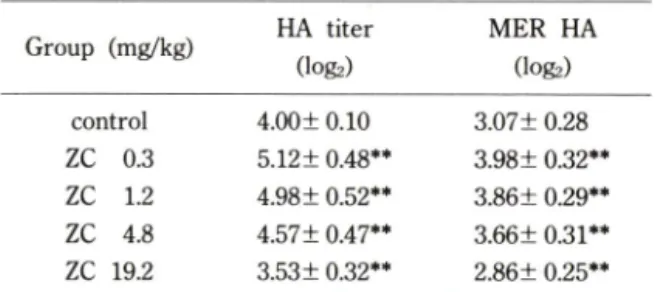
Table IV —Effects of zine chloride on the antibody pro
duction in ICR mice
Group (mg/kg) HA titer (log2)
MER HA (lofe) control 4.00±0.10 3.07± 0.28 ZC 0.3 5.12 ±0.48** 3.98± 0.32**
ZC 1.2 4.98± 0.52•타 3.86± 0.29**
ZC 4.8 4.57± 0.47** 3.66± 0.31**
ZC 19.2 3.53± 0.32** 2.86 ±0.25**
**HA: Hemagglutinin, MER-HA: 2-Mercaptoethanol-re- sistant HA
Mice were challenged with 10® SRBC 4 days after sen
sitization.
On the 5th day, HA and MER HA titers were assayed.
Each value represents the mean± S.E. from 10 mice.
Other legends and methods are the same as in Table I (**, p<0.01).
(p<0.0 1)로 유외성있는 증가를 보였으나, ZnCl2 1.2, 4.8 및 19.2 mg/kg 투여군에서는 각각 0.12± 0.03%
(p<0.0 1), 0.1 1± 0.0 2%(p<0.0 1), 0.08± 0.0 2%(p<0.0 1) 로 유의성있는 감소를 보였다.
적혈구웅집소가와 2-iTiercaptoethanol(2-!VIE) 내성 웅접소가에 머처는 영향一각군외 적혈구 응집소가 및 2-ME내성응집소가외 결과는 Table IV와 같다. 적혈 구응집소가는 대조군이 4.001; 0.10인데 비 헤 ZnCl2 0.
3, 1.2 및 4.8 mg/kg 투여군에서는 각각 5.12± 0.48(p<
0.01), 4.98± 0.52(p<0.01) 및 4.57± 0.47(p<0.01)로 유의 성 있는 증가룔 보였으나, ZnClz 19.2 mg/kg 무여 군에서는 3.53± 0.32(p<0.01)로 유외성 있는 감소를 보였다.
Vol. 36, No. 4, 1992
296 안영근• 김정훈• 채병숙• 차광재
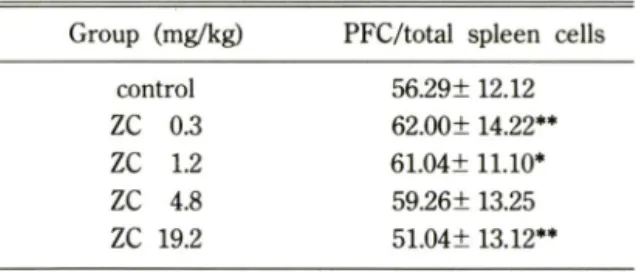
Table V—Effects of zinc chloride on the Arthus reac Table VI — Effects of zinc chloride on the lemolytic tion in ICR mice plaque forming cell (PFC) in ICR mice
Group (mg/kg) FPSI Group (mg/kg) PFC/total spleen cells
control 15.81±3.06 control 56.29+ 12.12
ZC 0.3 21.30±2.75** ZC 0.3 62.00± 14.22**
ZC 1.2 19.55± 2.47** ZC 1.2 61.04± 11.10*
ZC 4.8 19.84 ± 2.79** ZC 4.8 59.26± 13.25
ZC 19.2 14.96+ 1.58* ZC 19.2 51.04± 13.12**
Mice were challenged with 10*공 SRBC on left hind foot
pad 4 days after sensitization. Footpad thickness was measured immediately before challenge and 3 hr after challenge.
Footpad swelling index (FPSI)= ^ 으 X 100 Where, To is the left hind footpad thickness immedia
tely before challenge and T3 is the left hind footpad thickness 3 hr after challenge.
Each value represents the mean± S.E. from 10 mice.
Other legends and methods are the same as in Table I (*, p<0.05 and p<0.01).
또한, 2-ME내성웅집소가는 대조군이 3.07±0.28인 데 비해 ZnCl2 0.3, 1.2 및 4.8 mg/kg 투여군에서는 각각 3.98± 0.32(p<0.01), 3.86± 0.29(p<0.01) 및 3.66
± a31(p<0.01)로 유외성있게 증가하였으나, ZnCk 19.2 mg/kg 투여군에서는 2.86± a25(p<0.01)로 유의 성있게 감소하였다.
Arthus반용에 미처는 영향"A rthus반응외 결과는 Table V에서 보는 것같이 대조군이 Arthus 반응이 15.81± 3.06인데 비 해 ZnCi2 0.3, 1.2 및 4.8 mg/kg 투여군에서는 각각 21.30+2.75(p<0.01), 19.55소2.47 (p<0.01) 및 19.84±2.79(p<0.01)로 유외성있는 증가 를 보였으나, ZnCl2 1 9.2 mg/kg 투여군에서는 14.96
± 1.58(p<0.05)로 유의성었는 감소를 보였다.
용혈반형성세포수에 미처는 영향■버장세포외 용 혈반형성세포수에 대한 결과는 Tsble VI에서 보는 바와 같이, 1 0*^농도의 비장세포에서는 대조군의 용혈 반형성세포수가 56.29± 12.12인데 비해 ZnCl2 0.3 및 1.2 mg/kg 투여군에서는 각각 62.00± 14.22(p<0.01) 및 61.04± lL10(p<0.05)로 유의성있는 증가를 보였 으나, ZnCl2 19.2 mg/kg 투여군에서는 51.04± 13.12 (p<a05)로 유외성있는 감소룔 보였다.
지연형과먼반뭄에 미처는 영항一 지 연형과민반응외 결과는 Table VII에서 보는 바와 같이, 대조군 지연
Each value represents the mean± S.E. from 10 mice.
Other legends and methods are the same as in Table I (*, p<0.05 and **, p<0.01).
Table VII — Effects of zinc chloride on the delayed- type hypersensitivity (DTH) reaction in ICR mice
Group (mg/kg) FPSI
control ZC 0.3 ZC 1.2 ZC 4.8 ZC 19.2
8.1811.19 12.16± 1.78**
10.93+ 2.58**
9.85± 2.52**
8.1 0+ 1.06 Mice were challenged with 10® SRBC on left hind foot
pad 4 days after sensitization. Footpad thickness was measured immediately before challenge and 24 hr after challenge.
. T24~To
.
Footpad swelling index (FPSI)=
To ^XIOO Where, To is the left hind footpad thickness immedia
tely before challenge and T24 is the the left hind foot
pad thickness 24 hr after challenge.
Each value represents the mean± S.E. from 10 mice.
Other legends and methods are the same as in Table I (**. p<0.01).
형과민반응이 8.18±1.19인데 비해 ZnCl2 0.3, 1.2 및 4.8 mg/kg 투여군에서는 각각 12.16± L78(p<0.01), 10.98± 2.58(p<0.01) 및 9.85± 2.52(p<0.01)로 유의 성 있는 증가를 보였으나 용량외존적으로 감소하는 경 향을 보였고, ZnCl2 19.2 mg/kg 투여군에서는 8.100소 1.06로 유외성 없는 감소를 보였다.
버장세포의 rosette형성능(RFC)에 미처는 영향~
각군에서 관찰한 비장세포의 RFC를 %로 환산측정한 결과 Table VIII에서 보는 바와 같이, 대조군의 RFC가 4.42±1.42%인데 비 해 ZnClz 0.3 및 1.2 mg/kg 투여 군에서는 각각 6.26± 1.26(p<0.01) 및 6.05±1.96%(p
J. Pharm. Soc. Korea
염화아연이 생쥐의 면역반응에 머처는 영향 297
Table V III-Effects of zinc chloride on the rosette for- Table X —Effects of zinc chloride on the number of ming cell (RFC) in ICR mice circulating leukocyte in ICR mice
Group (mg/kg) RFC (%) Group (mg/kg)Number of circulating leukocyte(No./mm^)
control 4.42 ±1,42 control 7,495 ± 339
ZC 0.3 6.26± 1.26** ZC 0.3 7,513± 850
ZC 1.2 6.05± 1.96*-^ ZC 1.2 7,136±473**
2C 4.8 4.85± 1.66 ZC 4.8 6,123± 305후*
ZC 19.2 3.52±0.72** ZC 19.2 6,181±341**
Mice were challenged with 10^ SRBC on left hind foot
pad 4 days after sensitization. On the 5th day, RFC assay was performed.
No. of rosette forming cell Total cell counted X % viability
Each value represents the mean± S.E. from 10 mice.
Other legends and methods are the same as in Table I (**, p<0.01).
RFC(%) = - XIOO
Table IX—Effects of zinc chloride on the phagocytic activity in ICR mice
Group (mg/kg) Corrected phagocytic index
control 5.01±0.70
ZC 0.3 5.25± 0.65*
ZC 1.2 5.03 ± 0.37
ZC 4.8 4.69± 0.40**
ZC 19.2 4.48± 0.28**
Corrected phagocytic index is a constant obtained from a formula relating the cube root K to the ratio of body weight to the weight of the liver and spleen.
Each value represents the mean± S.E. from 10 mice.
Other legends and methods are the same as in Table I (*, p<0.05 and **, p<0.01).
<0.01)로 유외성있는 증가를 보였으나, ZnCl2 19.2 mg/kg 투여군에서는 3.52±0.72%(p<0.01)로 유외성 있는 감소를 보였다.
대식세포의 활성에 미처는 영향一대식세포의 탐식 능을 측정하여 corrected phagocytic index로 환산한 결과는 Table IX 에서 보는 바와 같다. 대조군외 대 식세포활성이 5.01± 0.70인데 비 헤 ZnCl2 0.3 mg/kg 투여군에서는 5.25± 0.65(p<0.05)로 유의한 증가를 보였으나, ZnCl2 4.8 및 19.2 mg/kg 투여 군에 서는 각각 4.69± 0.40(p<0.01) 및 4.48± 0.28(p<0.01)로 유의 한 감소를 보였다.
말초순환백혈구수에 미처는 영향■ 말초순환백혈구 수에 대한 결과는 Table X 에서 보는 바와 같이, 대
Each value represents the mean± S.E. from 10 mice.
Other legends and methods are the same as in Table I {**, p<0.01).
조군의 백혈구수가 7,495+339인데 버해 ZnCl2 1.2, 4.8 및 19.2 mg/kg 투여군에서는 각각 7,136± 473(p<
0.01), 6그23± 305(p<0.01) 및 6그81± 341(p<0.01)로 유의성있는 감소를 보였다.
고 찰
ZnCl2 투여량이 생쥐외 면역반응에 상이한 영향을 미칠 것으로 기대되어 실시한 본 실험결과에 대한 고찰은 다음과 같다.
본 실험에서 실험동물외 체중번화는 대조군에 비해
ZnCl2 1 . 2 mg/kg투여군에서 체중증가율이 유의하게
중가하였으나, ZnCk 19.2 mg/kg투여군에서는 유의한 감소를 보였는데(Table I), 이는 쇠약한 유아에게 아 연을 투여하므로써 체중이 증가되었다는 Castillo-Du- ran 등®*의 보고로 미루어, 아연이 성장을 촉진시킨 것으로 사료되나, 고용량의 아연투여로 구리의 흡수 장애, 적혈구 생명기간 단측 및 Fe간저장 감소등이 유발되 었다고 보고한 Van Campen 등®®과 Settlemire 등6 1,62)으로 미루어_ 고용량외 아연이 빈혈을 초래하 므로써 체중이 감소된 것으로 사료된다.
간장의 중량번화는 ZnCl2외 앙에 따라 비례하여 유의성있는 증가를 보였는데(Table II), 이는 아연의 증가가 비점상적인 cholesterol 대사를 일으켰다는 Marshall*®과 Hooper 등"®의 보고로 미루어, 고용량의 아연이 간의 cholesterol 이상대사를 촉진시킴으로써 간비대를 일으킨 것으로 생각된다.
흉선의 중량번화는 대조군에 비헤 ZnCl2 0.3 mg/kg 투여군에서는 유외성었는 증가를 보였으나, ZnCl2 1.2, 4.8 및 19.2 mg/kg 투여군에서는 용량외 증가에 따라 비례하여 유외하게 감소하였cKTable III). 이는 아연
Vol. 36. No. 4, 1992
안 영 근 • 김 정 훈 • 채 병 숙• 차광재
이 thymulin의 활성화작용이 있다는 Dardenne®^*의 보7■로 머루어, 상용량의 아연이 흉선의 중량을 중 가시 킨 것으로 생각되나, 고용량의 아연투여로 T-ly- mphocyte 활성이 저하되었다는 Chandra 등 의 보 고로 미루어, 고용량의 아연투여는 흉선을 위측시킨 것으로 사료된다.
비장의 중량변화는 대조군에 비해 ZnCl2 0.3 및 4.8 mg/kg 투여군에서는 유의성있는 증가를 보였으나, ZnClz 19.2 mg/kg 투여군에 서는 약간의 감소를 보였 cKTable III). 이는 아연이 말초혈액과 비장에서 hu- man B cell의 blastogenesis를 유도한다고 하는 Cun- nihghan-Rundles 등®®의 보고로 미루어, 아연이 B cell 기능을 항진시켜 버장의 중량을 증가시킨 것으로 생각되나, 고용량외 ZnCl2 투여는 B cell 기 능 에 ,영 향을 미처지 못하는 것으로 사료된다.
체액성 면역반응인 적혈구응집소가 및 2-ME내성 응집소가반응은 면앙적혈구에 대한 항체와 항원과의 반웅으로써 T-dependent antigen에 대한 면역항체의 앙을 나타내는 지 표 인 데 본 실험결과 적혈구응집 소가 및 2-ME내성응짐소가는 대조군에 비해 ZnClz 0.3, 1.2 및 4.8 mg/kg 투여군에서 유외성있게 중가 하였으나, ZnCl2 19.2 mg/kg 투여군에서는 유의성 있게 감소되었다(Table IV). 이는 아연이 in w'/ro에서 mi- togen에 대한 T 및 B lymphocyte 특히 helper T cell 중식을 증진시켰다는 Chesters 등®®파 Fraker 등®"의
■V 미루어, 아연이 helper T cell을 항진시 켜 항 체생산이 증가된 것으로 사료되나, 고용량의 아연이 helper T cell 기능을 억제시킴으로써 항체생산이
억제된 것으로 사료된다.
Arthus 반응은 감작숙주에 주입된 항원이 항원-항 체면역복합체를 형성하여 조직에 침착하고 보체를 활성화시키며, 항원에 의헤 자국된 버만세포로부터 유리된 histamine 및 leukotriene이 다형핵백혈구외 유주작용을 증가시키고, 유주하여 온 다형핵백혈구가 lysosomal enzyme을 유리하여 염증반응을 촉진시키 는 현상으로* 대조군에 비해 ZnCla 0.3, 1 . 2 및 4.8 mg/kg 투여군에서는 유의한 증가를 보였으나, ZnCl2
19.2 mg/kg 투여군에서는 유의한 감소를 보였다(Ta- ble V). 이는 아연이 macrophage와 다형핵백혈구를 중가시켰다는 Chvapil 등®®외 보고와 l(T"~KrMVI 농도의 Z n S a 가 면역복합체와 보체(Cl^) 결함을 증 진시켰으나, 고농도인 l(T3~ l ( r2M 외 ZnS0 4는 면
역복함체와 Cl«와외 걸함도 억제시켰다는 Easterb- rook-Smith®*의 보고로 미루어, 아연이 보체계, mac
rophage 및 다형핵백혈구 등을 중가시킨 것으로 사 료되나, 고농도외 아연은 보체계의 활성을 저하시킨 것으로 사료된다.
비장세포의 용혈반형성세포(PFC)는 대조군에 버헤 ZnCl2 0.3 및 1.2 mg/kg 투여군에서는 유의 한 중기볼 보였으나, ZnCk 19.2 mg/kg 투여군에서는 유의한 감 소를 보였다(Table VI). 이는 in wYro에서 아연이 hu- man plaque forming cell을 증가시켰다는 Cunni- ngham-Rundles 등®의 ? ■.?. 미루어, 아연이 lym- phocyte 기능을 항진시켜 PFC을 증가시킨 것으로 사료되나, 고용량의 아연투여로 lymphocyte 기능장 애가 나타났다는 Chandra 등^®외 보고로 미루어, 고 용량의 아연이 T 의존성 B cell의 항체를 감소시킨 것으로 사료된다.
족척종창반응에 의헤 측정한 DTH 반응은 감작임 파구에 외한 lymphokines의 화학적 전달인자의 유 리에 의해서 성립되며 특히 대식세포가 깊이 관여하는 것으로 알려져 있는 바, 본 실험에서 대조군에 버헤 ZnCl2 0.3, 1.2 및 4.8 mg/kg 투여군에서는 유의성 있는 중가를 보였으나, ZnCl2 19.2 mg/kg 투여군에서는 약 간의 감소를 보였다<Table VII). 이는 인체외 노년기에 있어서 아연이 DTH를 상승시킨1+는 Duchateau 의 보고와 일처하는 점과 아연이 흰쥐에서 IL-2 생 산에 영향을 준다고 한 Mengheri 등™>의 보고로 미 루어, 아연이 lymphokines를 증가시킨 것으로 생각 되나, 고용량의 아연은 lymphokines을 억제시켜 DTH 반응을 감소시킨 것으로 사료된다.
비장세포의 rosette 형성세포(RFC)는 대조군에 비 해 ZnCl2 0.3 및 1.2 mg/kg 투여군에 서는 유의 한 증 가룔 보였으나, ZnCl2 19.2 mg/kg 투여군에서는 유외 한 감소를 보였다(Table VIII). 이는 아연이 thymulin 활성을 항진시켜 T cell을 증가시켰다는 Dardenne 등64)외 보고로 미루어, 아연이 T lymphocyte 기능을 항진시켜 비장세포외 RFC을 증가시킨 것으로 생각 되나, 고용량외 아연이 phytohemagglutining에 대한 자극도를 감소시켰다는 Chandra 등^«외 보고로 미루 어, 고용량외 아연이 T cell 기능을 억제시켜 세포성 면역반응을 저하시킨 것으로 사료된다.
대식세포의 활성은 항원에 외한 면역능의 발현 및 interleukines의 분비에 중요한 역할을 하며 그 탐식
J. Pharm. Soc. Korea
염화아연이 생쥐의 면역반웅에 미처는 영향
능이 망상조직내피계에 대한 영향의 측정치표로서 이용되고 있는 바, 본 실험에서 ZnClz 0.3 mg/kg 투 여군은 대조군에 버헤 유외성있는 증가를 보였으나, ZnCl2 4.8 및 19.2 mg/kg 투여군에서는 유의성있는 감소를 보였다<Table IX). 이는 아연이 결핍된 생쥐 에서 Trypanosoma cruzi°\] 대헤 억제된 macro
phage 가 아연투여로 상승되었다는 Fraker 등'^외 보 고로 머루어, 아연이 macrophage외 면역능을 활성화 시킨 것으로 사료되나, 고용량외 아연이 bacteria의 다형 핵백혈구외 chemotaxis와 phagocytosis를 감소시 켰다는 Chandra 등®외 보고로 미루어, 고용량의 아 연이 macrophage의 증식을 억제시킴으로써 대식세 포의 활성이 감소된 것으로 사료된다.
말초순환백혈구수는 대조군에 비해 ZnCl2외 양에 따라 비례하여 유외성있는 감소를 보였다(Table X).
이는 sickle cell anemia 환자에 있어서 고용량의 아 연투여가 심한 구리감소를 일으켜 erythrocyte micro- cytosis와 leukopenia를 발현시켰다는 Corman구®과 Prasad대의 보고와 일처하는 점으로 미루어, 고용량의 아연이 골수의 혈구생성을 억제시킴으로써 백혈구수 가 감소된 것으로 사료된다.
결 론
Zinc chloride(0.3~ 19.2 mg/kg, 경구투여)가 생쥐의 면역반옹에 미처는 영향에 관하여 실험한 결론은 다 움과 같다.
1. Zinc chloride는 체중증가율, 비장과 흉선의 대 체중비 및 말초순환백혈구수를 유의성었게 증가시켰 으나 고용량에 서는 유의 성 있는 감소를 보였고, 간장의 대 체중비를 용량외존적으로 중가시켰다.
2. Zinc chloride는 체액성면역과 관계되는 적혈구 응집소가, Arthus 반웅 및 plaque forming cell에 대 헤 유외성있게 증가시켰으나, 고용량에 있어서는 유외한 감소를 보였다.
3. Zinc chlorid는 세포성면역에 관게되는 rosette froming cell과 지연형과민반응에 대하여 유의성있게 증가시켰으나, 고용량에 있어서는 유의한 감소를 보 였다.
4. Zinc chloride는 대식세포의 활성을 유의성있게 증가시켰으나, 용량외 증가에 따라 유의한 감소룰 보였다.
이상의 결과로 보아 고용량의 Z in c ch lo rid e는 체 액성, 세5 ;성 및 비특이적 면역반응을 감소시켰다.
문 헌
1) Hathcock, J.N.: Nutritional Toxicology II, p. 226 (1987).
2) Miller, WJ.: Zinc nutrition of cattle; A review, J.
Diary Sci., S3, 1123 (1970).
3) Elcoate, P.V., Fischer, M.L, Mawscon, C.A. and Mi
llar, MJ.: The effect of zinc deficiency on the male genital system. / Physiol. 129, 53 (1955).
4) Venugopal, B. and Luckey, T.D.: Metal Toxicity in Mammals 2.: Chemical Toxicity of Metals and Meta
lloids. p. 69 (1978).
5) Blazsek, I. and Mathe, G.: Zinc and immunity. Bio
medicine Pharmacother., 38, 187 (1984).
6) Beach, R.S., Gershwin, M.E. and Hurley, L.S.: Zinc, copper, and manganese in immune function and experimental oncogenesis. Nutr. Cancer 3, 172 (1982).
7) Hathcock, J.N.: Nutritional Toxicology I. p. 170 (1982).
8) Calabrese, E.J.: Nutrition and Environmental Hea
lth, Vol. 2, Minerals and Macronutrients, p. 176 (1981).
9) Surcel, D., Ossian, A., Anca, Z., Ramboiu, S. and Abraham, A.: Effect of Pb + Zn simultaneous expo
sure cell-mediated function. Spurenelem. Syp., 4, 349 (1983).
10) Kruse-Jarres: Review; The significance of zinc for humoral and cellar immunity. J. Trace Elem. Elect
rolytes Health Dis., 3, 1 (1989).
11) Falchuk, K.H., Fawcett, D.W., and Vallee, B.L.: Role of zinc in cell division of euglena gracilis. J. Cell Sci, 17, 57 (1975).
12) Prasad, A.S., Liss, A,R. and Prasad, A.S.: In Clinical Biochemical and Nutritional Aspects of Trace Eleme
nts. New York, NY. p. 46 (1982).
13) Cunningham-Rundles, S. and Cunningham-Rund- les, W.F.: Zinc modulation of immune response.
No. Nutr. Immunol Contemp. Issues Clin. Nutr..
2, 197 (1988).
14) Dowd, P.S., Kelleher, J. and Guillon, P.J.: T-lym-
Vol. 36. No. 4, 1992
안 영 근 • 김 정 훈 • 채 병 숙 • 차광재
phocyte subsets and interleukin 2 production in zinc-deficients rats. Br. J. Nutr., 55, 59 (1986).
15) Flynn, A., Loftus, M.A. and Finke» T.H.: Production of interleukin-1 and interleukin-2 in allogeneic mi
xed lymphocyte cultures under copper, magnesium and zinc deficient conditions. Nutr. Res., 4, 673 (1984).
16) Frake, PJ., Hildebrandt, K. and Luecke, R.W.: Al
teration of antibody-mediated responses of suck
ling mice to T-celUdependent and independent an
tigens by maternal marginal zinc deficiency: Resto
ration of responsivity by nutritional repletion. J.
Nutr., 114 , 170 (1984).
17) Salas, M. and Kirchner, H.: Induction of interferon- gamma in human leukocyte cultures stimulated by Zn요\ Clin. Immunol. Immunopathoi, 45, 139 (19 87).
18) Winchurch, R.A., Togo, J. and Adler, W.H.: Supple
mental zinc restores antibody formation in cultures of aged spleen cells III. Impairment of IL-2 media
ted responses. Clin. Immunol. ImmunopathoL, 49, 215 (1988).
\19) Grekas, D., Tsakalos, N., Giannolpoulos, Z. and Tourkantonis, A.: Effect of zinc treatment on cell mediated immunity of chronic renal failure patie
nts. Proc. EDTA-ERA., 2 1. 825 (1984).
20) Duchateau, J., Dlepesse, G., Vrijens, R. and Collet, H.: Beneficial effects of oral zinc supplementation on the immune response of old people. Am. J.
Med., 70, 1001 (1981).
21) Marone, G., Colombo, M., De Paulis, A., Cirillo, R. Giugliano, R. and Condorelli, M.: Physiological concentrations of zinc inhibit the release of hista
mine from human basophils and lung mast cells.
Agents and Actions 18, 103 (1986).
22) Edmund, M.K., Gauthier, T. and Cherian, G.: Effe
cts of dexamethasone injection on body retention and hepatic distribution of zinc, cadmium and me- tallothionein in newborn rats. Toxicol, 4 1, 267 (1986).
23) Beach, R.S., Gershwin, M.E. and Hurley, L.S.: Nut
ritional factors and autoimmunity I, immunopatho- logy of zinc deprivation in New Zealand mice. /.
Immunol, 126, 1999 (1981).
24) Amirarian, K., Mckinney, J.A. and Tuchna, Li.: Ef
fect of zinc and cadmium on guinea-pig comple
ment. Immunol, 25, 1135 (1974).
25) Miller, E.R., Luecke, R.W., Ullrey, D.E., Baltzer, B.V., Bradley, B.L. and Hoeffer, JA : Biochemical skeletal and allometric changes due to zinc deficie
ncy in the baby pig. /. Nutr., 95, 278 (1968).
26) Hansen, M A, Fernandes, G. and Good, R.A.: Nut
rition and immunity: The influence of diet on au
toimmunity and the role of zinc in the immune response. Ann. Rev. Nutr., 2, 151 (1982).
27) Iwata, T., Incefy, G„ Tanaka, T., Fernandes, G., Menendez-Botet, C.J., Pih, K. and Good, R.A.: Cir
culating thymic hormone levels in zinc deficiency.
Cell Immunol, 47, 100 (1979).
28) Keen, C.L.: Zinc deficiency and immune function.
Annu. Rev. Nutr., 10, 415 (1990).
29) Fraker, PJ., Medina, C.A. and Li, G.: Impact of zinc deficiency on immune function.; A role for the neuroendocrine system. Essent. Toxic Trace Elem. Hum. Health Dis., 18, 295 (1988).
30) Fraker, PJ., Zwickle, C.M. and Leucke, R.W.; Dela
yed-type hypersensitivity in zinc deficient adult mice. J. Nutr., 3, 309 (1982).
31) Fraker, PJ., Gershwin, M., Good, R. and Prasad, A.S.: Interrelationships between zinc and immune function. Federation Proc., 45, 1474 (1985).
32) Chandra, R.K.: Acrodermatitis enterophathica: Zinc levels and cell-mediated immunity. Pediatr., 66, 789 (1980).
33) Danbolt, N. and Closs, K.: Acrodermatitis entero- phathica. Acta. Derm. VeneresoL, 23, 127 (1942).
34) Ballester, O.F. and Prasad, A.S.: Anergy, zinc defi
ciency and decreased nucleoside phosphorylase ac
tivity in patients with sickle cell anemia. Ann. In
tern. Med., 98, 180 (1983).
35) Cunningham-Rundles, S., Cunningham-Rundles, C., Dupont., B. and Good, R.A.: Zinc-induced activation of human B lymphocytes. Clin. Immunol. Immuno- pathoL, 16. 115 (1980).
36) Brummerstedt, E., Andresen, E., Basse, A. and Flagstad, J.; Lethal Trait A-46 in cattle. Immunolo
gical investigatins. Nord-Vet Med., 25, 279 (1974).
37) DePasquale-Jardieu, P. and Fraker, PJ.: The role
J. Pharm. Soc. Korea
염화아연이 생쥐의 면역반응에 미치는 영향 301
of corticosterone in the loss of immune function in zinc deficient A/J mice. J. Nutr., 109, 1847 (1979).
38) Fabris, N., Mocchegiani, E., Galli, M., Irato, L., Laz- zarin A. and Moroni, M.: AIDS, zinc deficiency and thymic hormone failure. JAMA 259, 839 (1988).
39) Moynahan, EJ. and Barnes, P.M.: Zinc deficiency and a synthetic diet for lactose intolerance. Lancet 1, 676 (1973).
40) Montgomery, D.W., Don, L, Zukoski, C.F. and Ch
vapil, M.: The effect of zinc and other metals on complement hemolysis of sheep red blood cell in vitro. Proc. Soc. Exp. BioL Med., 145, 263 (1974).
41) Montgomery, D.W., Chvapil, M. and Zukoski, C.F.;
Effects of zinc chloride on guinea pig complement component activity in vitro; Concentration-depen
dent inhibition and enhancement. Infect. Immun,, 23, 424 (1979).
42) Chandra, R.K.: Excessive intake of zinc impairs immune responses. J. Am. Med. Assoc., 252, 1443 (1984).
43) Hooper, P.L, Visconti, L, Garry, P.J. and Johnson, G.E.: Zinc lowers high density lipoprotein-choles- terol levels. JAMA, 1980, 224 (1960).
44) Canicatti, C. and Grasso, M.: Biodepressive effect of zinc on humoral effector of the Holothuria polii immune response. Marine BioL, 99, 393 (1988).
45) Fong, L.Y., Sivak, A. and Newberne, P.M.: zinc de
ficiency and methylbenzylnitrosamine-induced eso
phageal cancer in rats. JNCI 61, 145 (1978).
46) Wallenius, K., Mathur, A. and Abdullar, M.; Effect of different levels of dietary zinc on development of chemically induced oral cancer in rats. Int. J.
Oral Surg., 8, 56 (1979).
47) Duncan, J.R. and Dresosti, I.E.: Zinc intake, neop
lastic DNA synthesis and chemical carcinogenesis in rats and mice. J. Natl Cancer Inst, 55, 195 (1975).
48) Pories, WJ., DeWys, W.D., Flynn, A., Mansour, E.
G., Strain, W.H.: Implications of the inhibition of animal tumors by dietary zinc deficiency. Adv. Exp.
Med BioL, 91, 243 (1978).
49) Reed, N.D., Crowie, P.K. and Ha, T.: Use of mast cell deficient mice to study host parasite relation
ships in immuno-deficient animals. B. Ssordet ed.
Karger Baselip, p. 1884 (1984).
50) Coombs, R.R.A. and Fiset, M.L.: Detection of com
plete antibodies to egg albumin by means of sheep red cell egg albumin antigen unit. Brit J. Exp.
Path., 35. 472 (1954).
51) Stavistsky, A.B.: Micromethods for the study of proteins and antibiotics. J. Immunol, 72, 360 (19 54).
52) Yoshikai, Y., Maike, S., Matsumoto, T., Nomoto, K.
and Takeya, K.: Effect of stimulation and blokade of mononuclear phagocyte system on the delayed- footpad reaction to SRBC in mice. Immunol, 38, 577 (1979).
53) Sugimoto, M., Kojima, A.M., Yaginuma, K. and Ga- shira, Y.E.: Cell mediated and humoral immunity in mice. Jpn. J. Med. Sci. BioL, 28, 32 (1975).
54) Garvey, J.S., Cremer, N.E. and Sussclorf, D.H.: Me
thods in Immunology. Benjamin, 3, p. 449 (1980).
55) Elliott, B.E. and Haskill, J.S.: Characteristics of th
ymus-derived bone marrow-derived rosette for
ming lymphocytes. Eur. J. Immunol., 3, 68 (1973).
56) Cunningham, A.: Plaque assay for antibody produ
cting cells. Allergy 17, 5 (1973).
57) Biozzi, G., Benacerraf, B., Stiffel, C. and Halpern, B.N.: Etude quantitative du Tacivite granulopexi- que du systeme reticuloentherial chezla souris. C.
R. Soc Biol. Paris 148, 43 (1954).
58) Snedecor, G.W. and Cochrane, W.G.: Statistical Methods, 6th ed., Iowa State University Press, Iowa, p .l (1967).
59) CastilloDuran, C., Heresi, G., Fisberg, M. and Uauy, R.: Controlled trial of zinc supplementation during recovery from malnutrition: Effects on gro
wth and immune function. Am. J. Clin. Nutr.. 45, 602 (1987).
60) Van Campen, D.R. and Scaife, P.V : Zinc interfere
nce with copper absorption in rats. J. Nutr., 91, 473 (1967).
61) Settlemire, C.T. and Matrone, G.: In vivo interfere
nce of zinc with ferritin iron in the rat. J. Nutr., 92, 153 (1967).
62) Settlemire, C.T. and Matrone, G.: In vivo effect of zinc on iron turnover in rats and life span of
Vol. 36, No. 4, 1992
안 영 근•김 정 훈•채 병 숙 • 차광재
the erythrocyte. ]. Nutr. 92, 159 (1967).
63) Marshall, C.W.: Vitamins and Minerals. Philadel
phia. Stickley, (1983).
64) Dardenne, M., Pleau, J.M., Nabaira, B., Lefrancier, P., Derrien, M., Choay, J. and Bach, J.F.: Concent
ration of zinc and other metals to the biological activity of serum thymic factor. Proc. Natl. Acad.
Sci, 79, 5370 (1982).
65) Cunningham-Rundles, S., Cunningham-Rundles, C., Siegal, F.P., gupta, S., Smithwick, E.M., Kosloff, C.
and Good, R A : Defective cellular immune respo
nse in vitro in common variable immunodeficiency.
/ Clin. Immunol., 1. 65 (1981).
66) Chesters, J.K. and Will, M.: Some factors control
ling food intake by zinc deficient rats. Br. /. Nutr., 30, 555 (1973).
67) Fraker, PJ., DePasquaie-Jardieu, P., Zwickle, C.M.
and Luecke, R.W.: Regeneration of T-cell helper function in zinc-deficient adult mice. Pro. Nati.
Acad Sci, USA. 75. 5660 (1978).
68) Chvapil, M., Zukoski, C.F., Hattler, B.G., Stankova, L, Montgomery. D., Carlson E.C, and Ludwig, J.C.:
Prasad A.S. (ed); Trace Elements in Human Health and Disease. Vol. I. Zinc and Copper, New York, Acad. Press, p. 259 (1976).
69) Easterbrook-Smith, S.B.: Activation of the binding of Clfl to immune complexes by zinc. Federation European Biochem. Soc., 162, 117 (1983).
70) Mengheri, E., Bises, G. and Gaetani, S.: Differen
tiated cell-mediated immune response in zinc de- feciency and in protein malnutrition. Nutrition Res., 8, 801 (1988).
71) Fraker, PJ., Caruso, R. and Kierszenbaum, F.: Al
teration of the immune and nutritional status of mice by synergy between zinc deficiency and infe
ction with Try pansoma cruzi. J. Nutr., 112, 1224 (1982).
72) Corman, L.C.: Effects of specific nutrients on the immune response selected clinical application. Med.
Clin. North. Am., 69, 759 (1985).
73) Prasad, E.S.: Effect of vitamin E supplementation on leukocyte function. Am. J. Clin. Nutr., 33, 606 (1980).
J. Pharm. Soc. Korea