• 검색 결과가 없습니다.

The Efficacy and Safety of GCWB104 (Flos Lonicera Extract) in Functional Dyspepsia: A Single-Center, Randomized, Double-Blind, Placebo-Controlled Study

N/A
N/A
Protected

Academic year: 2021

Share "The Efficacy and Safety of GCWB104 (Flos Lonicera Extract) in Functional Dyspepsia: A Single-Center, Randomized, Double-Blind, Placebo-Controlled Study"

Copied!
12
0
0

로드 중.... (전체 텍스트 보기)

전체 글

(1)

Background/Aims: The Flos Lonicera extract GCWB104 has been shown to have significant protective effects against gastritis and gastric ulcers in vivo. The aim of this study was to investigate the efficacy and safety of GCWB104 in sub- jects with functional dyspepsia (FD). Methods: In this single- center, double-blind, randomized clinical trial, 92 subjects di- agnosed with FD using the Rome III criteria were allocated to either the test group (300 mg of GCWB104, containing 125 mg of Flos Lonicera extract, twice daily) or the placebo group (300 mg placebo, twice daily). The total score improvement on the Gastrointestinal Symptom Rating Scale (GSRS) for individual symptoms, changes in antioxidant levels, changes in dyspepsia-related quality of life according to the Nepean Dyspepsia Index (NDI), and adverse effects were compared before and after 8 weeks of treatment. Results: The differ- ences in total GSRS scores and score improvements after 8 weeks of treatment were significant between the GCWB104 and control groups (p=0.0452 and p=0.0486, respectively).

Thirteen of 15 individual symptoms on the GSRS improved in the GCWB104 group, while six symptoms improved in the control group. In addition, statistically significant changes in rumbling, loose stool, and stool urgency were observed in the GCWB104 group. Blood 8-hydroxy-2’-deoxyguanosine (8- OHdG) levels, known as antioxidants, showed significant re- ductions after 8 weeks of administration of GCWB104. There were no adverse events related to treatment with GCWB104.

Conclusions: GCWB104 safely contributed to improve- ments in mild to moderate FD and irritable bowel syndrome symptoms. Antioxidant effects of GCWB104 were also sug- gested (Clinicaltrials.gov number NCT04008901). (Gut Liver 2020;14:67-78)

Key Words: Lonicera; Dyspepsia; Antioxidant INTRODUCTION

Dyspepsia is a common symptom that accounts for up to 5% of patients who visit their primary health care provider, and functional dyspepsia (FD) accounts for 60% to 80% of all patients with dyspepsia.

1,2

FD is a common syndrome in which chronic, repetitive gastrointestinal (GI) symptoms occur predominantly in the upper GI tract, with no apparent underly- ing disease. Rome III criteria categorize FD as two subtypes:

postprandial distress syndrome and epigastric pain syndrome, according to symptoms of postprandial fullness, early satiety, stomach pain, and epigastric soreness. In a recent nationwide study of FD following the Rome III criteria, the prevalence of FD was 10.3% in Korea, with prevalence of a postprandial distress syndrome subtype of 7.3%, prevalence of an epigastric pain syndrome subtype of 5.5%, and approximately 25% of FD pa- tients categorized with overlap syndrome.

3

The pathophysiological mechanisms of FD may be multi- factorial and remain to be fully elucidated, although widely recognized mechanisms are gastroduodenal dysmotility, gastro- duodenal acid exposure, visceral hypersensitivity, autonomic/

central nervous system dysfunction, Helicobacter pylori infec- tion, and psychosomatic factors.

4,5

Standard management of FD has not yet been established, and satisfactory pharmacotherapy is also unavailable. Anti-secretory drugs, such as proton pump inhibitors, prokinetics, histamine receptor antagonists, and an- tidepressants, have been evaluated extensively for FD therapy despite little evidence of efficacy.

6

Natural product extracts have

This is an Open Access article distributed under the terms of the Creative Commons Attribution Non-Commercial License (http://creativecommons.org/licenses/by-nc/4.0) which permits unrestricted non-commercial use, distribution, and reproduction in any medium, provided the original work is properly cited.

The Efficacy and Safety of GCWB104 ( Flos Lonicera Extract) in Functional Dyspepsia: A Single-Center, Randomized, Double-Blind, Placebo-Controlled Study

Yonghoon Choi

1

, Nayoung Kim

1,2

, Gi Tark Noh

1

, Ju Yup Lee

3

, and Dong Ho Lee

1,2

1

Department of Internal Medicine, Seoul National University Bundang Hospital, Seongnam,

2

Department of Internal Medicine and Liver Research Institute, Seoul National University College of Medicine, Seoul, and

3

Department of Internal Medicine, Keimyung University School of Medicine, Daegu, Korea

Correspondence to: Nayoung Kim

Department of Internal Medicine, Seoul National University Bundang Hospital, 82 Gumi-ro 173beon-gil, Bundang-gu, Seongnam 13620, Korea Tel: +82-31-787-7008, Fax: +82-31-787-4051, E-mail: [email protected]

Received on August 13, 2019. Revised on November 10, 2019. Accepted on November 26, 2019.

pISSN 1976-2283 eISSN 2005-1212 https://doi.org/10.5009/gnl19283

(2)

recently attracted attention, since they have comprehensive treatment effects and are relatively safe.

GCWB104 is a newly formulated extract obtained from Flos Lonicera, a dried bud of the genus Lonicera japonica thunberg belonging to the family Caprifoliaceae. Flos Lonicera extracts are known to have been used as a crude medicine for abdominal symptoms in East Asia since the Ming Dynasty of China. The major component of Flos Lonicera is chlorogenic acid, which has been shown to have significant anticarcinogenic, anti- inflammatory, antioxidant, and analgesic effects in an animal gastritis, gastric ulcer model. In addition, Flos Lonicera extracts showed excellent gastric motor improvement in the gastric emitting and GI transmission model.

7-9

Therefore, ingestion of GCWB104 is expected to protect and improve the function of the stomach. In addition, in reflux esophagitis model, which is related to FD, the Flos Lonicera extract improved the esophageal lesion score and histopathologic changes.

10,11

From this back- ground, the aim of this study was to investigate the efficacy of GCWB104 on the improvement of mild to moderate FD symp- toms compared with placebo.

MATERIALS AND METHODS 1. Study participants

This trial recruited a total of 92 people from February 2017 to July 2018. Male and female subjects >19 years of age who had mild to moderate FD were eligible. They had baseline endo- scopic screening, and subjects without active lesions (peptic ul- cer disease or gastric erosions) were enrolled. Written informed consent was obtained from all participants.

Exclusion criteria included: allergic history to natural sub- stances and ingredients, need for medical therapy for reflux esophagitis (above LA-A), acute gastritis or gastric ulcers on esophagogastroduodenoscopy, inability to undergo endoscopy, history of esophageal or gastric surgery that could affect GI mo- tility, continuation of steroids, nonsteroidal anti-inflammatory drugs, or other daily medications that can cause ulcers, severe liver disease (above 2.5 times the upper limit of normal for aspartate aminotransferase, alanine aminotransferase, gamma glutamyl transferase), chronic kidney disease, renal failure, severe cardiovascular or pulmonary diseases, unregulated dia- betes, cerebrovascular diseases, need for surgery during the test period, administration of proton pump inhibitors, H2-receptor antagonist, gastroesophageal reflux disease treatment medica- tion within 2 weeks of endoscopic examination or 1 week be- fore the first visit, pregnant or breastfeeding females, planning conception or disagreement with proper contraception methods, and participation in other human trial within 4 weeks before the trial. The number of remnant products was counted in visit 3 and visit 4, and the lower limit of trial food compliance was 80%. Subjects with compliance less than 80% were considered as non-compliance group and excluded from the study.

2. Study design

This study was a single-center, double-blind, randomized, placebo-controlled clinical trial conducted in South Korea. The study protocol was approved by the Seoul National University Bundang Hospital Institutional Review Board (IRB number:

BST104-01), and this trial was registered with Clinicaltrials.

gov (number: NCT04008901) and the Korean Clinical Research Information Service (number: KCT0004085). FD was defined by Rome III criteria as person with one or more symptoms of epigastric pain or soreness, postprandial fullness, or early satiety for the past 3 months with symptom onset at least 6 months prior to diagnosis; no evidence of structural disease that was likely to explain symptoms; and no organic lesion detected by endoscopic examination. Screening tests were conducted on each person before 1 week of the scheduled first administration, and exclusion of those who were not suitable was based on the inclusion and exclusion criteria. The registered subjects were given an oral dose of GCWB104 or placebo for 8 weeks after random assignment, and the efficacy and safety were assessed by visiting the institution at 4 weeks and 8 weeks after adminis- tration.

3. Number of target subjects and basis of calculation The number of subjects was calculated as follows: referring to the prior study about the efficacy of Abexol using GSRS score,

12

the study showed that the average change of GSRS in placebo group was –2.7 after 8 weeks, and the average change of GSRS in Abexol group was –6.1. The difference of change of GSRS between the trial group and the placebo group was –3.4.

The effect of GCWB104 was estimated to –2.5, about 73.5% of Abexol, and the standard deviation was estimated to 3.4, the maximum standard deviation in the reference text. And the number of participants in each group required for this study was calculated to 30, referring to the central limit theorem, which states that even if the population does not follow a normal dis- tribution, if the sample size is 30 or higher, the distribution of the sample mean is approximated to the normal distribution.

In addition, we assumed the dropout rate for each group to be 34%. A total of 92 people would be needed, considering that the efficacy of GCWB104 was assumed to be 73% that of Abexol with an approximately 34% elimination rate; in addition, a type I error of 5% and type II error of 20% were assumed, referring to the previous clinical trial focusing on the efficacy of Abexol in subjects with FD.

12

4. Methods of efficacy measurement

A week before administering the drug, collection of the

consent form, checking of the vital signs, pregnancy tests, and

blood and urine tests were performed. After random assign-

ment, 300 mg of GCWB104 (including 125 mg of Flos Lonicera

(3)

extract) or placebo was administered per oral twice daily, after a meal, for a total of 8 weeks. At 4 and 8 weeks after administra- tion, vital signs and compliance were checked, and symptom evaluation was performed using a Gastrointestinal Symptom Rating Scale (GSRS) questionnaire. At 8 weeks after administra- tion, physical examination and urea breath test for H. pylori were performed. Random assignment was performed using the permuted block randomized method, and the trial was designed as double-blind to minimize bias. During the trial period, medi- cations that could affect clinical trials were prohibited, and the individual history of drug dosing was checked through a ques- tionnaire at each visit.

The primary efficacy was defined as the total GSRS score improvement after 8 weeks of administration compared to baseline. The GSRS is a symptom-specific instrument of 15 items combined into five symptom clusters depicting reflux, abdominal pain, indigestion, diarrhea, and constipation. It has a 4-point graded Likert-type scale where 1 represents the absence of troublesome symptoms and 4 represents very troublesome symptoms, and the reliability and validity of the GSRS are well documented.

13

In addition, the second efficacy was defined as the improvement rate in GSRS score (total GSRS [%], the per- centile improvement rate, converted value of each of the 15 items to % together), the improvement of individual symptoms, the change of serum antioxidant biomarker levels, and the im- provement of dyspepsia-related quality of life using the Nepean Dyspepsia Index (NDI) after 8 weeks of administration compared to baseline. The NDI questionnaire consisted of five categories

and 25 questions of GI symptoms, with each question rated on a 5-point Likert scale. And an additional analysis was done based on 90% compliance, to check the relationship between higher compliance and signiticant efficacy. Totally 59 subjects showed compliance over 90%, 33 in the GCWB104 group and 26 in the control group.

5. Measurement of antioxidative markers

Blood samples from a forearm vein were drawn with the sub- jects in a fasting state (i.e., fasting for at least 8 hours prior). The serum samples were immediately separated by centrifugation at 3000 g for 10 minutes and were stored at –80°C for further analysis, based on a previous study on antioxidative biomark- ers.

14

Commercially available assay kits were used to perform the assay for 8-hydroxy-2’-deoxyguanosine (8-OHdG), thiobar- bituric acid reactive substances, and high sensitivity C-reactive protein (Cayman Chemical Co., Ann Arbor, MI, USA). All analy- ses were performed at the same laboratory (GC LabCell, Yongin, Korea).

6. Safety issues

The adverse events, adverse drug reactions, and significant adverse events that occurred after drug exposure were investi- gated, and the rate differences of adverse events, abnormal drug reactions, and significant adverse events were compared and analyzed among treatment groups. Changes in vital signs, and laboratory tests were also compared and analyzed after 4 weeks and 8 weeks of administration.

8 Excluded from PP set:

1 Inclusion/exclusion criteria 2 Adverse reaction

1 Consent withdrawal

1 Participate in other clinical test 1 Prohibited concomitant

medication 1 Inspection missing 1 Visit date violation

10 Excluded from PP set:

2 Inclusion/exclusion criteria 2 Adverse reaction

1 Consent withdrawal 1 Participate in other clinical

test

4 Inspection missing 46 Inculded in ITT set 45 Inculded in ITT set

38 Inculded in PP set 35 Inculded in PP set 46 Test group 46 Placebo group

92 Randomized subjects 99 Screened

subjects

7 Screening failure

1 Excluded from safety set No treatment

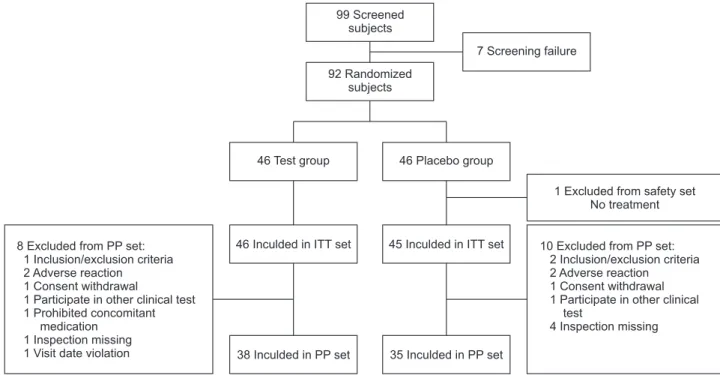
Fig. 1. Flowchart showing enrolled subjects and dropouts from the study. Adverse reaction definitely related to study drug: rash (n=1). Adverse reactions not related to study drug: musculoskeletal pain (n=1), dyspepsia (n=1) and nasal obstruction (n=1).

ITT, intention-to-treat; PP, per protocol.

(4)

7. Statistical analysis

The data obtained from the subjects of this trial were ana- lyzed in three main forms: safety, full analysis (FA), and per protocol (PP). The safety group was defined as being randomly

assigned to this human trial and took trial products at least once. The FA group was defined as having data of the efficacy evaluation collected more than once after administration of the trial product. The PP group was defined as the FA group who completed this human testing without significant plan viola- tions, and in this case, only the following randomly assigned

Table 1. Baseline Characteristics of Study Participants

Variable GCWB104

(n=38) Control

(n=35) Total

(n=73) p-value*

Sex 0.1065

Male 10 (26.32) 4 (45.95) 14 (19.18)

Female 28 (73.68) 31 (54.05) 59 (80.82)

Age, yr 50.87±11.20 50.43±12.40 50.66±11.71 0.8901

Height, cm 161.98±9.26 159.95±5.45 161.01±7.69 0.5801

Weight, kg 61.04±11.16 55.86±7.44 58.56±9.84 0.0421*

Drinking 0.3357

Current 16 (42.11) 11 (31.43) 27 (36.99)

Ex 1 (2.63) 0 1 (1.37)

Never 21 (55.26) 24 (68.57) 45 (61.64)

Current medical history

-

Hypothyroidism 1 (2.63) 0 1 (1.37)

Chronic gastritis 18 (47.37) 8 (22.86) 26 (35.62)

Diverticulum 1 (2.63) 0 1 (1.37)

Duodenal ulcer 3 (7.89) 0 3 (4.11)

Gastric xanthoma 1 (2.63) 0 1 (1.37)

Gastritis 1 (2.63) 1 (2.86) 2 (2.74)

Erosive gastritis 4 (10.53) 9 (25.71) 13 (17.81)

Hiatus hernia 2 (5.26) 0 2 (2.74)

Intestinal metaplasia 4 (10.53) 1 (2.86) 5 (6.85)

Gastric mucosal hypertrophy 0 1 (2.86) 1 (1.37)

Gastric polyps 0 1 (2.86) 1 (1.37)

Gastroesophageal reflux disease 0 1 (2.86) 1 (1.37)

Drug hypersensitivity 1 (2.63) 0 1 (1.37)

Food allergy 0 1 (2.86) 1 (1.37)

Diabetes mellitus 1 (2.63) 1 (2.86) 2 (2.74)

Hyperlipidaemia 3 (7.89) 6 (17.14) 9 (12.33)

Osteoporosis 1 (2.63) 2 (5.71) 3 (4.11)

Back pain 0 1 (2.86) 1 (1.37)

Skin papilloma 1 (2.63) 0 1 (1.37)

Gastrointestinal submucosal tumor 0 2 (5.71) 2 (2.74)

Hypertension 2 (5.26) 4 (11.43) 6 (8.22)

Staphyloma 0 1 (2.86) 1 (1.37)

Headache 0 1 (2.86) 1 (1.37)

Benign prostatic hyperplasia 0 1 (2.86) 1 (1.37)

Cystitis 1 (2.63) 0 1 (1.37)

Data are presented as number (%) or mean±SD.

*p<0.05; p-value indicates statistical significance for continuous variables tested with the Mann-Whitney U-test; categorical variables tested with

Pearson chi-square test; smoking tested with Fisher exact test.

Overlap of multiple diseases in the same patient included.

(5)

targets were excluded from the PP analysis. The efficacy data were analyzed for both the FA and PP groups but mainly for the PP group. The evaluation of safety data was conducted on the safety group, and the demographic and baseline character- istics were analyzed for the PP group. As descriptive statistics, the number, mean, standard deviation, median, minimum, and maximum values were presented for continuous variables, and the number and percentage of the test subjects and frequency,

if needed, were presented for categorical variables. The signifi- cance of the difference between treatment groups at each visit time was analyzed using the independent two-sample t-test or Mann-Whitney U-test for continuous variables and Pearson chi- square test or Fisher exact test for categorical data. The signifi- cance of the difference between treatment groups between the two measurement points was analyzed using the independent two-sample test or Mann-Whitney U-test for continuity vari-

Table 2. Total GSRS Scores of Both Groups at Baseline, the 4th, and the 8th Week

Variable Treatment Baseline 4 Weeks 8 Weeks

Abdominal pain Placebo 1.29±0.52 1.14±0.36 1.11±0.32

GCWB104 1.50±0.76 1.18±0.39* 1.08±0.27

Acidity & heartburn Placebo 1.63±0.73 1.20±0.41

1.17±0.45

GCWB104 1.87±0.84 1.37±0.54

1.13±0.34

§

Acid reflux Placebo 1.49±0.66 1.20±0.41* 1.26±0.44

GCWB104 1.68±0.77 1.53±0.65 1.24±0.43

Sensation of stomach emptiness Placebo 1.49±0.66 1.14±0.36* 1.17±0.45*

GCWB104 1.63±0.79 1.47±0.60 1.08±0.27

Nausea & vomiting Placebo 1.31±0.53 1.17±0.38 1.09±0.28*

GCWB104 1.42±0.60 1.32±0.53 1.05±0.23

Abdominal noises Placebo 1.46±0.70 1.31±0.53 1.34±0.54

GCWB104 1.66±0.78 1.29±0.46

1.08±0.27

§

Abdominal bloating Placebo 1.77±0.60 1.46±0.56* 1.40±0.50

GCWB104 2.03±0.88 1.61±0.64

1.32±0.47

§

Eructation Placebo 1.54±0.56 1.34±0.48 1.29±0.46*

GCWB104 1.79±0.81 1.50±0.51* 1.24±0.43

§

Flatulence Placebo 1.77±0.55 1.43±0.56* 1.26±0.44

GCWB104 1.92±0.67 1.53±0.56

1.53±0.68

Slow intestinal transit Placebo 1.34±0.59 1.20±0.47 1.20±0.58

GCWB104 1.39±0.64 1.21±0.47* 1.16±0.37

Accelerated intestinal transit Placebo 1.11±0.32 1.09±0.28 1.06±0.24

GCWB104 1.24±0.43 1.24±1.47 1.11±0.31

Soft feces Placebo 1.23±0.55 1.31±0.47 1.20±0.41

GCWB104 1.58±0.60 1.47±0.51 1.26±0.45*

Hard feces Placebo 1.71±1.05 1.43±0.70 1.37±0.81

GCWB104 1.34±0.67 1.50±0.86 1.29±0.52

Urgency for defecation Placebo 1.17±0.38 1.20±0.41 1.23±0.49

GCWB104 1.45±0.65 1.29±0.52 1.13±0.41*

Sensation of incomplete emptiness Placebo 1.69±0.72 1.51±0.61 1.51±0.61

GCWB104 1.71±0.61 1.66±0.67 1.37±0.49

Upper abdominal pain Placebo 11.97±2.74 9.97±2.12

9.83±2.27

GCWB104 13.58±3.75 11.26±2.70

9.21±1.58

§

Whole score Placebo 22.00±4.40 19.14±3.26

18.66±4.30

GCWB104 24.21±5.26 21.16±4.29

18.05±2.84

§

Data are presented as mean±SD.

GSRS, Gastrointestinal Symptom Rating Scale.

*p<0.05,

p<0.01,

p<0.001,

§

p<0.0001; p-value indicates significant changes, comparisons with baseline tested with the Wilcoxon test for matched

samples; comparisons with placebo tested with the Mann-Whitney U-test.

(6)

ables and Pearson chi-square test or Fisher exact test for cat- egorical data. The significance of change within each treatment group was analyzed using the paired t-test or Wilcoxon signed rank test for continuity variables, and McNemar test or McNe- mar exact test for categorical data. Analysis of the change in

GSRS scores over the period of administration of the trial food was performed using repeated measure analysis of variance. All statistical analyses were conducted with the SAS Program ver- sion 9.4 (SAS Institute Inc, Cary, NC, USA). A one-sided test was performed for the significance test of the functional assessment,

Table 3. GSRS Score Changes after 8 Weeks of Treatment

Change of GSRS GCWB104 (n=38) Control (n=35) p-value*

GSRS total –6.16±5.52

–3.34±6.00

0.0452*

GSRS total, % –22.85±15.62

–12.20±26.16

0.0486*

Upper abdominal pain –4.37±3.77

–2.14±3.38

0.0134*

Abdominal pain –0.42±0.76

1.19±2.42 0.1696

Heartburn –0.74±0.89

–0.46±0.85

0.1506

Acid regurgitation –0.45±0.76

–0.23±0.77 0.1525

Sensation of stomach emptiness –0.55±0.80

–0.31±0.68* 0.1706

Nausea & vomiting 1.42±0.60

1.31±0.53* 0.4524

Rumbling –0.58±0.79

–0.11±0.80 0.0146*

Abdominal distension –0.71±0.84

–0.37±0.65

0.0626

Eructation –0.55±0.80

–0.26±0.56* 0.1337

Increased flatus –0.39±0.75

–0.51±0.70

0.4957

Decreased passage of stools –0.24±0.49

–0.14±0.60 0.4500

Increased passage of stools –0.13±0.47 –0.06±0.34 0.4158

Loose stools –0.32±0.66* –0.03±0.71 0.0353*

Hard stools –0.05±0.70 –0.34±1.24 0.1109

Urgency for defecation –0.32±0.70* –0.06±0.54 0.0147*

Sensation of incomplete emptiness –0.34±0.71

–0.17±0.75 0.4924

Data are presented as mean±SD.

GSRS, Gastrointestinal Symptom Rating Scale.

*p<0.05,

p<0.01,

p<0.001, p-value indicates statistically significant changes; intragroup comparisons tested with the Mann-Whitney U-test; com- parisons with baseline tested by the Wilcoxon test for matched samples.

Table 4. Differences between the GCWB104 and the Control Groups According to Repeated Measurements

GSRS Time Mann-Whitney U-test RM-ANOVA*

Test group Control group p-value F p-value

GSRS total 4 weeks–baseline –3.05±5.20 –2.86±4.06 0.842 3.769 0.032*

8 weeks–baseline –6.16±5.52 –3.34±6.00 0.045 8 weeks–4 weeks –3.11±3.64 –0.49±4.49 0.004

Sensation of stomach emptiness 4 weeks–baseline –0.16±0.79 –0.34±0.73 0.300 15.011 0.039*

8 weeks–baseline –0.55±0.80 –0.31±0.68 0.171 8 weeks–4 weeks –0.39±0.55 0.03±0.45 0.001

Rumbling 4 weeks–baseline –0.37±0.71 –0.14±0.69 0.140 10.105 0.023*

8 weeks–baseline –0.58±0.79 –0.11±0.80 0.015 8 weeks–4 weeks –0.21±0.47 0.03±0.57 0.061

Urgency need for defecation 4 weeks–baseline –0.16±0.68 0.03±0.45 0.226 1.962 0.024*

8 weeks–baseline –0.32±0.70 0.06±0.54 0.015 8 weeks–4 weeks –0.16±0.44 0.03±0.45 0.088 Data are presented as mean±SD.

GSRS, Gastrointestinal Symptom Rating Scale; RM-ANOVA, repeated measure analysis of variance.

*p<0.05; p-value indicates statistical significance; intragroup comparison tested by RM-ANOVA.

(7)

and a two-sided test was performed for baseline information of subjects and safety assessment. A p-value less than 0.05 was regarded as significant.

RESULTS

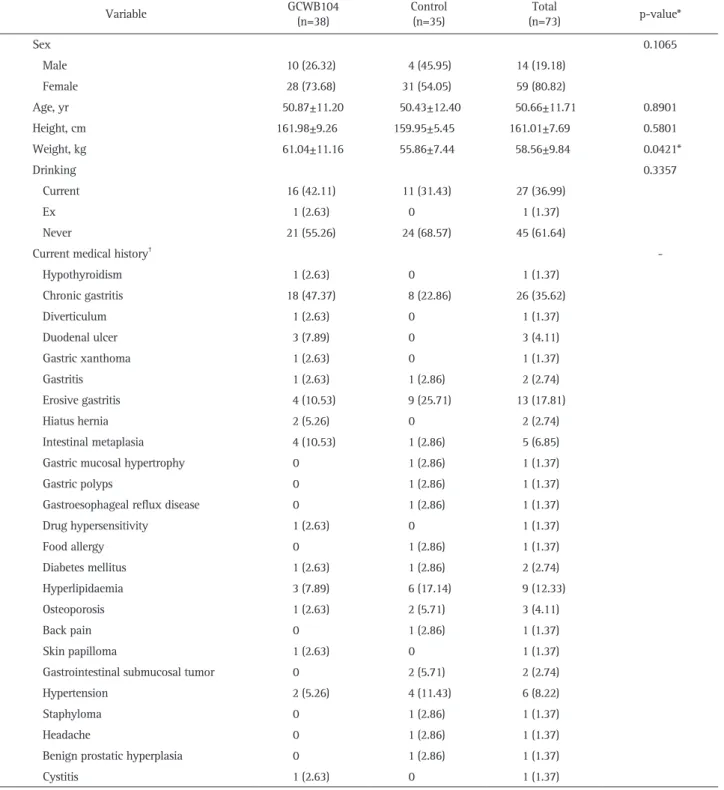
1. The state of participation and demographic characteristics Fig. 1 presents a flowchart of subjects progression through the study with reasons for premature discontinuation. Screening was conducted on a total of 99 subjects, and a random assign- ment was made to 92 of the subjects, excluding seven subjects by the selection/exclusion criteria; 46 subjects were assigned to each group (GCWB104 group, control group). Among these sub- jects, 91 subjects (46 in the GCWB104 group, 45 in the control group) were included in the FA group, except one who with- drew consent. During the trial, 18 people were eliminated due to violation of the selection/exclusion criteria, adverse effects, violation of the test protocol, and omission of test results, and ultimately, 73 subjects (38 in the test group, 35 in the control group) were included in the PP group. The baseline character- istics of each group are demonstrated in Table 1. There were no significant differences in sex, age, height, or drinking habit between the two groups, and only weight showed statistically significant differences between the two groups.

2. Validity evaluation 1) Primary efficacy evaluation

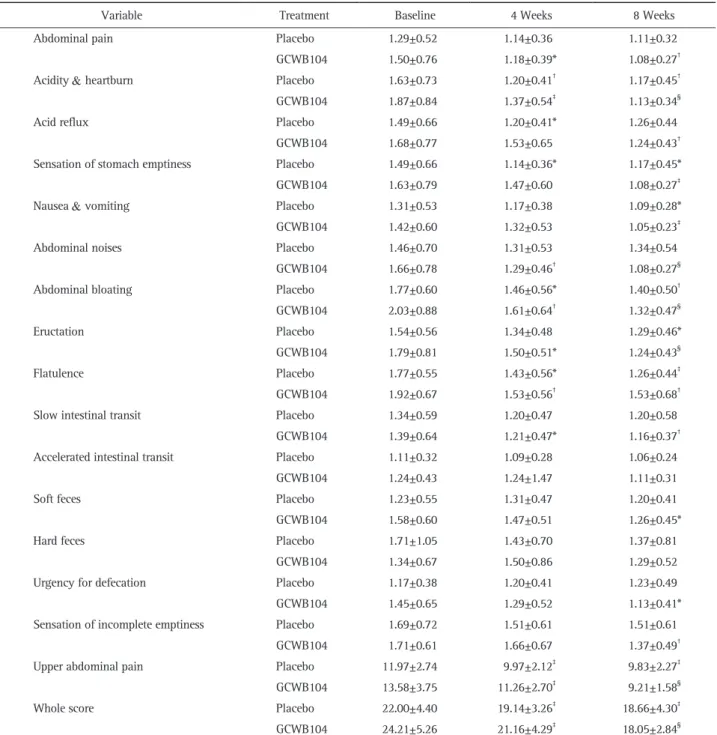
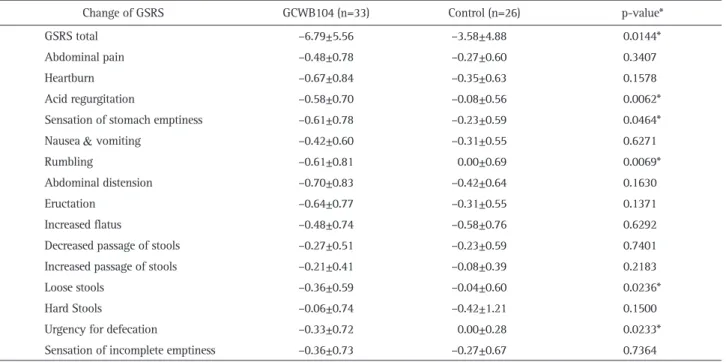
The average GSRS score at baseline was 24.21±5.26 in the GCWB104 group and 22.00±4.40 in the control group, with no statistically significant difference between the two groups. The improvement in GSRS score in each group was –6.16±5.52 in the GCWB104 group and –3.34±6.00 in the control group. The difference in GSRS score improvement between the two groups was statistically significant (p=0.045). Total GSRS scores of both groups at baseline, 4th, 8th week are shown in Table 2, and changes in total and individual symptoms of GSRS after 8 weeks of administration are shown in Table 3.

2) Secondary efficacy evaluation (1) GSRS score improvement rate

In the PP analysis, the GSRS score improvement rate af- ter administration of trial food compared to baseline was –22.85±15.62 in the trial group and –12.20±26.16 in the con- trol group, and the GSRS score improvement rate between the two groups also showed a statistically significant difference (p=0.049).

(2) Improvement of individual symptoms of GSRS

In the analysis of improvements in individual symptoms of GSRS, a total of 13 symptoms were improved after administra- tion of human trial food in the test group, while six were im- proved in the control group. As shown in Table 2, of 15 individ-

Table 5. GSRS Score Changes with 90% Medication Compliance after 8 Weeks of Treatment

Change of GSRS GCWB104 (n=33) Control (n=26) p-value*

GSRS total –6.79±5.56 –3.58±4.88 0.0144*

Abdominal pain –0.48±0.78 –0.27±0.60 0.3407

Heartburn –0.67±0.84 –0.35±0.63 0.1578

Acid regurgitation –0.58±0.70 –0.08±0.56 0.0062*

Sensation of stomach emptiness –0.61±0.78 –0.23±0.59 0.0464*

Nausea & vomiting –0.42±0.60 –0.31±0.55 0.6271

Rumbling –0.61±0.81 0.00±0.69 0.0069*

Abdominal distension –0.70±0.83 –0.42±0.64 0.1630

Eructation –0.64±0.77 –0.31±0.55 0.1371

Increased flatus –0.48±0.74 –0.58±0.76 0.6292

Decreased passage of stools –0.27±0.51 –0.23±0.59 0.7401

Increased passage of stools –0.21±0.41 –0.08±0.39 0.2183

Loose stools –0.36±0.59 –0.04±0.60 0.0236*

Hard Stools –0.06±0.74 –0.42±1.21 0.1500

Urgency for defecation –0.33±0.72 0.00±0.28 0.0233*

Sensation of incomplete emptiness –0.36±0.73 –0.27±0.67 0.7364

Data are presented as mean±SD.

GSRS, Gastrointestinal Symptom Rating Scale.

*p<0.05; p-value indicates statistical significance; intragroup comparisons tested by the Mann-Whitney U-test.

(8)

ual symptoms, rumbling, loose stool, and fecal urgency showed statistically significant improvement. In these symptoms, both GSRS score improvement in the trial group before and after administration of GCWB104, and GSRS score improvement be- tween the trial and control groups were statistically significant.

Individual symptoms can be divided into symptoms of the upper, and lower abdomen, and stomach pain, heartburn, acid reflux, hunger pain, nausea and vomiting, rumbling, bloat- ing and eructation are symptoms of the upper abdomen that correspond to the stomach. In the statistical analysis of upper abdominal symptom GSRS score improvement, there was sig- nificant improvement in the GCWB104 group compared to the placebo group (p=0.013).

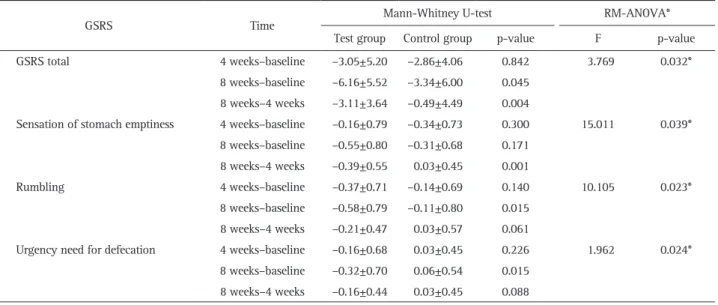
(3) Improvement by compliance and duration of administration When comparing the change from baseline to the 4th week of administration and the change from the 4th week to the end point, there was significant improvement in the GCWB104 group over time compared to the placebo group (p=0.032) (Table 4).

In the analysis of the efficacy evaluation according to com- pliance, a total of 59 subjects with 90% compliance were ran- domly assigned to two groups, namely, GCWB104 (n=33) and placebo (n=26), which were subsequently considered for analy- sis. After 8 weeks of treatment, GCWB104 significantly reduced the whole GSRS score compared with baseline and placebo (p=0.014). Compared to placebo, administration of GCWB104 decreased symptom scores significantly in each symptom as- sociated with upper abdominal pain, such as hunger pain, acid reflux, and rumbling. Lower abdominal symptoms, such as

loose stools and urgency for defecation, were also decreased in the GCWB104 group (Table 5).

(4) Improvement of antioxidative markers

The changes in antioxidative markers are presented in Table 6.

In the analysis of the changes in inflammatory and antioxida- tive markers, there was a statistically significant improvement in 8-OHdG in the test group compared to the control group (p=0.032). However, there was no significant difference in cyto- kine high sensitivity C-reactive protein, thiobarbituric acid reac- tive substances or total antioxidant levels.

(5) Improvement of dyspepsia-related quality of life

In the analysis of the improvement of dyspepsia-related qual- ity of life using NDI, there were statistically significant changes in both trial and control groups, after 8 weeks of administration compared to baseline. However, there was no significant differ- ence between the two groups (Table 7).

3. Safety

In this trial, there were 18 adverse events, seven adverse drug reactions, and 22 unexpected adverse drug reactions, in addi- tion to four adverse events that caused cessation and one major adverse event (Table 8). However, no significant adverse reac- tion was associated with the test product including one major adverse event, ankle bone fracture, and no statistically signifi- cant differences in intergroup comparisons were observed.

In the analysis of vital signs, changes in systolic blood pres- sure within the control group and changes in pulse rates within

Table 6. Blood Biomarker Level Changes after 8 Weeks of Treatment

Change of GSRS GCWB104 (n=38) Control (n=35) p-value

TBARS 0.91±5.07 0.41±4.51 0.2245

8-OHdG –0.21±0.43 0.01±0.43 0.0324*

Total antioxidant –0.01±0.12 0.03±0.16 0.2182

Data are presented as mean±SD.

GSRS, Gastrointestinal Symptom Rating Scale; TBARS, thiobarbituric acid reactive substances; 8-OHdG, 8-oxo-2-hydroxydeoxyguanosine.

*p<0.05; p-value indicates statistical significance; intragroup comparisons tested with the Mann-Whitney U-test and independent two-sample t- test.

Table 7. Nepean Dyspepsia Index Changes after 8 Weeks of Treatment

Week GCWB104 (n=38) Control (n=35)

Baseline 53.55±16.93 47.37±13.76

8 Weeks 35.00±11.84 32.37±7.18

Change at 8 weeks from baseline –18.55±15.03 –15.00±15.36

p-value 0.0001* 0.0001*

p-value 0.3448

Data are presented as mean±SD.

*p<0.05; p-value indicates statistical significance; intragroup comparisons tested with the paired t-test and Wilcoxon signed rank test; intergroup

comparisons tested with the Mann-Whitney U-test.

(9)

the test group showed statistically significant differences but were considered to be within the normal range and have no clinical implications. In hematological and biochemical analy- ses, significant differences in alkaline transferase, glucose, and aspartate aminotransferase levels between the trial and control groups were observed at the time of screening. Significant differences in triglyceride and low density lipoprotein levels between the trial and control groups were observed at the 8th week of the trial, and significant differences in red blood cell, hemoglobin, hematocrit, alanine aminotransferase, and gamma glutamyl transferase were observed between the trial and con- trol groups at the time of screening and the 8th week of the trial. Significant differences were observed in changes in albu- min levels in the trial group, changes in total bilirubin levels in the control group, and changes in albumin levels between the

trial and control groups. However, the changes were within the normal range and were considered to have no clinical implica- tions.

DISCUSSION

In this study, we aimed to verify the validity and safety of GCWB104, a health functional food based on Flos Lonicera ex- tract, in subjects with mild to moderate FD. The results showed statistically significant differences in improvement of GSRS total points over placebo, and the analysis of individual symp- toms also identified improvements in rumbling, loose stool, and fecal urgency.

FD is a chronic, relapsing, and remitting disorder. The current standard for the diagnosis of FD is the Rome III criteria, which Table 8. Adverse Events during the Study

Adverse event GCWB104

(n=46) Control

(n=45) Total

(n=91) Summary of adverse experiences

Total adverse event 8 10 18

ADR 2 5 7

Unexpected ADR 10 12 22

Adverse events that caused cessation 2 2 4

Serious adverse event 1 0 1

Adverse experiences

Eye disorders 1 (2.17) 0 1 (1.10)

Cataract 1 (2.17) 0 1 (1.10)

Gastrointestinal disorders 3 (6.52) 3 (6.67) 6 (6.59)

Constipation 2 (4.35)* 0 (0.00) 2 (2.20)

Nausea 1 (2.17) 1 (2.22) 2 (2.20)

Dyspepsia 0 2 (4.44)* 2 (2.20)

Musculoskeletal and connective tissue disorders 3 (6.52) 2 (4.44) 5 (5.49)

Back pain 1 (2.17) 1 (2.22) 2 (2.20)

Musculoskeletal pain 1 (2.17) 1 (2.22) 2 (2.20)

Neck pain 1 (2.17) 0 1 (1.10)

Respiratory, thoracic and mediastinal disorders 1 (2.17) 0 1 (1.10)

Nasal obstruction 1 (2.17) 0 1 (1.10)

General disorders and administration site conditions 0 1 (2.22) 1 (1.10)

Edema 0 1 (2.22)* 1 (1.10)

Infections and infestations 0 2 (4.44) 2 (2.20)

Viral upper respiratory tract infection 0 2 (4.44) 2 (2.20)

Skin and subcutaneous tissue disorders 0 2 (4.44) 2 (2.20)

Rash 0 1 (2.22)* 1 (1.10)

Urticaria 0 1 (2.22)* 1 (1.10)

Total patients with adverse event 7 (15.22) 9 (20.00) 16 (17.58)

Total of ADR* 2 (4.35) 5 (11.11) 7 (7.69)

Data are presented as number or number (%).

GCWB, gastrointestinal symptom rating scale; ADR, adverse drug reactions.

*ADR reported as possibly related, probably related and definitely related by the investigator. Constipation in the test group was probably related.

(10)

consist of a sensation of pain or burning in the epigastrium, early satiety, and fullness during or after a meal, or a combina- tion of these symptoms. Treatment of FD is difficult, since it is a group of heterogeneous symptoms involving various ele- ments of pathogenesis, and a combination of drugs that corrects the underlying pathology that can cause symptoms is needed.

Treatments such as H. pylori eradication therapy, acid suppres- sion therapy, prokinetic agents, antidepressants, and psycho- logical therapy are available, but the overall rate of symptom resolution is only approximately 50%.

15

Approximately 15% to 20% have persistent symptoms, and the remaining 30% to 35%

suffer fluctuations in their symptoms. In this regard, biologic drugs and health functional foods are notable. Biologic drugs and health functional foods can be superior to medicine that functions using only one mechanism, and recent studies show the effects of biologic products in FD.

16

For example, DA-9701, a biological drug based on Corydalis tuber and Pharbitis seed extract, showed its effectiveness in improving gastric emptying and GI tract passage by antagonizing dopamine D2 receptors and acting on 5-HT

4

receptors, and it is used in the treatment of FD.

17

Rikkunshito and STW-5 also showed the effect of improv- ing GI motility and visceral pain.

18

In a trial of 247 subjects, 8 weeks of Rikkunshito treatment had the effect of improving epigastric pain and postprandial satiety.

19

STW-5 has been used for about 50 years as a treatment for dyspepsia, and a study of 315 subjects with FD showed significant improvement in GI symptoms after 8 weeks of STW-5 treatment compared to pla- cebo.

20,21

In this study, improvements in the GSRS total score and GI symptoms were identified after administration of GCWB104 for 8 weeks. A larger scale of improvement in the GSRS total score was observed in the trial group compared to the control group.

In addition, in the analysis of individual symptoms of GSRS, significant improvements were observed in 13 of the 15 GSRS symptoms in the test group, while only six symptoms were improved in the control group. Of the individual symptoms, significant improvements were observed in the test group over the control group, particularly in rumbling, loose stool and fe- cal urgency, suggesting the ability of GCWB104 to improve GI motility in FD and irritable bowel syndrome.

The 15 individual symptoms of GSRS can be divided into up- per and lower abdominal symptoms, and significant improve- ments in upper abdominal symptoms, including epigastric pain, heartburn, reflux, sensation of stomach emptiness, nausea and vomiting, rumbling, abdominal distention and eructation were observed in the test group compared to the control group. Since Flos Lonicera extracts have been reported to have gastric mu- cosal protective effects and to be effective in improving stom- ach function in animal experiments,

8

this trial demonstrated the improvement of upper abdominal symptoms in the GCWB group, which is a meaningful result. In addition, there were also improvements in lower GI symptoms, including loose stool and

fecal urgency. In a recent study of the effect of DA-9701 in a postoperative ileus animal model, DA-9701 improved GI transit and lowered plasma adrenocorticotropic hormone levels by the central corticotropin-releasing factor pathway.

22

We think this can be similarly possible in GCWB104, improving GI transit by influencing the gut-brain axis. However, so far, there have been no reported research results or evidences, so further study about the pharmacologics and mechanisms of GCWB104 on the gut- brain axis in irritable bowel syndrome subjects is suggested.

It has been reported that the higher the dose compliance of the trial drug, the more effective it is,

23-26

given that the drug needs a certain amount of time to act and improve symptoms in FD.

27

In previous clinical studies on FD, proton pump inhibi- tors often showed positive results in the relatively short-term period of 2 weeks, while the duration of trials with prokinetics or psychotropic drugs tended to be longer and heterogeneous, approximately 4 to 12 weeks.

28,29

In this study, we set the trial period to 8 weeks, considering that GCWB104 was a health functional food with complex ingredients, and additional evalu- ation was performed at 4 weeks after administration to confirm the change in symptoms. In the analysis of the effects according to the duration of the administration, when a total of 8 weeks of testing was divided into 0 to 4 weeks and 4 to 8 weeks, signifi- cant improvement in symptoms could be seen over time in the test group. In addition, in the analysis of the effects according to the regimen compliance, the degree of symptom improve- ment in groups with a dose of 90% was found to be signifi- cantly greater. These results are thought to be the evidence that GCWB104 improves GI symptom.

In the analysis of antioxidative biomarkers, a significant de- crease in the 8-OHdG concentration in blood in the trial group compared to the control group was found. 8-OHdG, which can be measured in blood (serum) and urine, is a representative bio- marker of oxidative DNA damage. Increased levels of 8-OHdG are known to be associated with an elevated risk of DNA muta- tion and cancer.

30

Several studies have revealed the correlation of 8-OHdG with Barrett’s esophagus, adenocarcinoma of the esophagus and stomach, gastric atrophy and intestinal meta- plasia.

31,32

Therefore, this result is thought to be a demonstration of the antioxidative and gastric protective effect of GCWB104, because 8-OHdG has been significantly decreased in the test group, although it is difficult to interpret that it contributes di- rectly to improving GI function.

There were no safety issues with GCWB104. In this trial, there

were 18 adverse events, seven adverse drug reactions, and 22

unexpected adverse drug reactions, with four adverse events

that caused cessation and one major adverse event. However,

no significant adverse reaction was associated with the test

product, and no statistically significant differences in inter-

group comparisons were observed. In the analysis of vital signs,

changes in systolic blood pressure within the control group, and

changes in pulse rates within the test group showed statistically

(11)

significant differences, but were considered to be within the normal range and have no clinical implications. In hematologi- cal and biochemical analyses, there were some statistically sig- nificant changes, but all were within the normal range and were considered to have no clinical implications.

There were limitations in this study. The improvement of dys- pepsia-specific quality of life after administration was observed, but there was no statistically significant difference between the trial and control groups. It is disappointing that the improve- ment in quality of life due to improvement of indigestion symp- toms after administration of GCWB104 has not been statisti- cally demonstrated, but since the scale of changes in NDI has been greater in the test group, it is necessary to reanalyze NDI through a larger study in the future. In addition, H. pylori status was analyzed by the urea breath test in the registered subjects (27 in the test group, 27 in the control group) after changing the protocol of the trial. Neither the test group nor the control group showed any significant changes. It is necessary to analyze the impact of GCWB104 on H. pylori, as H. pylori eradication is known to improve symptoms in FD.

33

In this study, FD was evaluated using the translated Korean version of the validated Rome III criteria (Rome III-K questionnaire). However, Rome IV criteria were revised after confirmation of this study design, so additional studies using Rome IV criteria should be followed.

In conclusion, the results of this trial showed the potential efficacy of GCWB104 in improving GI symptoms in mild to moderate FD subjects. It also reduced some of irritable bowel symptoms, and showed antioxidant effects. So we suggest that it could be a good candidate for functional GI disorders.

CONFLICTS OF INTEREST

No potential conflict of interest relevant to this article was reported.

ACKNOWLEDGEMENTS

This work was supported by the Seoul National University Bundang Hospital Research fund (grant number: 06-2016-115).

In addition, the clinical study was supported by Green Cross Wellbeing Corporation.

AUTHOR CONTRIBUTIONS

Collection, analyzation of the data and draft of the article: Y.C.

Design, supervision and edition of the manuscript: N.K. Provi- sion of the table and figures: G.T.N., J.Y.L. Study supervision:

D.H.L.

ORCID

Yonghoon Choi https://orcid.org/0000-0002-1331-969X

Nayoung Kim https://orcid.org/0000-0002-9397-0406 Gi Tark Noh https://orcid.org/0000-0002-3805-4835 Ju Yup Lee https://orcid.org/0000-0003-0021-5354 Dong Ho Lee https://orcid.org/0000-0002-6376-410X

REFERENCES

1. Knill-Jones RP. Geographical differences in the prevalence of dys- pepsia. Scand J Gastroenterol Suppl 1991;182:17-24.

2. Tack J, Talley NJ, Camilleri M, et al. Functional gastroduodenal disorders. Gastroenterology 2006;130:1466-1479.

3. Kim SE, Kim N, Lee JY, et al. Prevalence and risk factors of functional dyspepsia in health check-up population: a nation- wide multicenter prospective study. J Neurogastroenterol Motil 2018;24:603-613.

4. Tack J, Bisschops R, Sarnelli G. Pathophysiology and treatment of functional dyspepsia. Gastroenterology 2004;127:1239-1255.

5. Choi MG, Jung HK. Health related quality of life in functional gastrointestinal disorders in Asia. J Neurogastroenterol Motil 2011;17:245-251.

6. Oh KH, Nam Y, Jeong JH, Kim IK, Sohn UD. The effect of DA- 9701 on 5-hydroxytryptamine-induced contraction of feline esophageal smooth muscle cells. Molecules 2014;19:5135-5149.

7. Li Y, Cai W, Weng X, et al. Lonicerae japonicae flos and Lonicerae flos: a systematic pharmacology review. Evid Based Complement Alternat Med 2015;2015:905063.

8. Bang BW, Park D, Kwon KS, et al. BST-104, a water extract of Lonicera Japonica, has a gastroprotective effect via antioxidant and anti-inflammatory activities. J Med Food 2019;22:140-151.

9. Jung DH, Choi EJ, Jeon HH, Lee YH, Park H. Effects of GC7101, a novel prokinetic agent on gastric motor function: ex vivo study. J Neurogastroenterol Motil 2014;20:469-474.

10. Kang JW, Lee SM. Protective effects of chlorogenic acid against experimental reflux esophagitis in rats. Biomol Ther (Seoul) 2014;22:420-425.

11. Ku SK, Seo BI, Park JH, et al. Effect of Lonicerae flos extracts on reflux esophagitis with antioxidant activity. World J Gastroenterol 2009;15:4799-4805.

12. Rodríguez I, Illnait J, Terry H, et al. Effects of Abexol (beeswax alcohols) on gastrointestinal symptoms in middle-aged and older subjects. Revista CENIC Ciencias Biologicas 2019;40:147-154.

13. Dimenäs E, Glise H, Hallerbäck B, Hernqvist H, Svedlund J, Wiklund I. Well-being and gastrointestinal symptoms among patients referred to endoscopy owing to suspected duodenal ulcer.

Scand J Gastroenterol 1995;30:1046-1052.

14. Tsai MC, Huang TL. Thiobarbituric acid reactive substances (TBARS) is a state biomarker of oxidative stress in bipolar patients in a manic phase. J Affect Disord 2015;173:22-26.

15. Talley NJ, Ford AC. Functional dyspepsia. N Engl J Med 2015;373:1853-1863.

16. Holtmann G, Talley NJ. Herbal medicines for the treatment of

functional and inflammatory bowel disorders. Clin Gastroenterol

(12)

Hepatol 2015;13:422-432.

17. Kwon YS, Son M. DA-9701: a new multi-acting drug for the treat- ment of functional dyspepsia. Biomol Ther (Seoul) 2013;21:181- 189.

18. Holtmann G, Adam B, Vinson B. Evidence-based medicine and phytotherapy for functional dyspepsia and irritable bowel syn- drome: a systematic analysis of evidence for the herbal prepara- tion Iberogast. Wien Med Wochenschr 2004;154:528-534.

19. Suzuki H, Matsuzaki J, Fukushima Y, et al. Randomized clini- cal trial: rikkunshito in the treatment of functional dyspepsia. A multicenter, double-blind, randomized, placebo-controlled study.

Neurogastroenterol Motil 2014;26:950-961.

20. Ottillinger B, Storr M, Malfertheiner P, Allescher HD. STW 5 (Iberogast

®

): a safe and effective standard in the treatment of functional gastrointestinal disorders. Wien Med Wochenschr 2013;163:65-72.

21. von Arnim U, Peitz U, Vinson B, Gundermann KJ, Malfertheiner P.

STW 5, a phytopharmacon for patients with functional dyspepsia:

results of a multicenter, placebo-controlled double-blind study.

Am J Gastroenterol 2007;102:1268-1275.

22. Jo SY, Hussain Z, Lee YJ, Park H. Corticotrophin-releasing factor- mediated effects of DA-9701 in postoperative ileus guinea pig model. Neurogastroenterol Motil 2018;30:e13385.

23. Fass R, Johnson DA, Orr WC, et al. The effect of dexlansoprazole MR on nocturnal heartburn and GERD-related sleep distur- bances in patients with symptomatic GERD. Am J Gastroenterol 2011;106:421-431.

24. Lamprecht M, Bogner S, Schippinger G, et al. Probiotic supple- mentation affects markers of intestinal barrier, oxidation, and inflammation in trained men; a randomized, double-blinded, placebo-controlled trial. J Int Soc Sports Nutr 2012;9:45.

25. Maki KC, Reeves MS, Farmer M, et al. Green tea catechin con- sumption enhances exercise-induced abdominal fat loss in over- weight and obese adults. J Nutr 2009;139:264-270.

26. Lambert MNT, Thorup AC, Hansen ESS, Jeppesen PB. Combined Red Clover isoflavones and probiotics potently reduce menopausal vasomotor symptoms. PLoS One 2017;12:e0176590.

27. Lee HH, Jung HK, Choi MG. Guideline recommendation for end- points used in clinical trials for functional dyspepsia. Korean J Gastroenterol 2018;72:170-178.

28. Ford AC, Luthra P, Tack J, Boeckxstaens GE, Moayyedi P, Talley NJ. Efficacy of psychotropic drugs in functional dyspepsia: sys- tematic review and meta-analysis. Gut 2017;66:411-420.

29. Yang YJ, Bang CS, Baik GH, et al. Prokinetics for the treatment of functional dyspepsia: Bayesian network meta-analysis. BMC Gas- troenterol 2017;17:83.

30. Wu D, Liu B, Yin J, et al. Detection of 8-hydroxydeoxyguanosine (8-OHdG) as a biomarker of oxidative damage in peripheral leu- kocyte DNA by UHPLC-MS/MS. J Chromatogr B Analyt Technol Biomed Life Sci 2017;1064:1-6.

31. Kauppi J, Räsänen J, Sihvo E, et al. Increased oxidative stress in the proximal stomach of patients with Barrett’s esophagus and adenocarcinoma of the esophagus and esophagogastric junction.

Transl Oncol 2016;9:336-339.

32. Albayrak F, Uyanik MH, Dursun H, et al. Should increased lev- els of urinary 8-hydroxydeoxyguanosine in chronic gastritis imply intestinal metaplasia or gastric atrophy? South Med J 2010;103:753-757.

33. Du LJ, Chen BR, Kim JJ, Kim S, Shen JH, Dai N. Helicobacter

pylori eradication therapy for functional dyspepsia: systematic

review and meta-analysis. World J Gastroenterol 2016;22:3486-

3495.

수치

Fig. 1. Flowchart showing enrolled subjects and dropouts from the study. Adverse reaction definitely related to study drug: rash (n=1)
Table 1. Baseline Characteristics of Study Participants
Table 2. Total GSRS Scores of Both Groups at Baseline, the 4th, and the 8th Week
Table 4. Differences between the GCWB104 and the Control Groups According to Repeated Measurements
+3

참조

관련 문서

But when divide experimental group by BMI index, age, and compliance, less than BMI 27 kg/m 2 group decreased body weight, body fat mass and more than BMI 27 kg/m 2

In the analysis of differences, the TFGL group showed a statistically significant improvement regard- ing changes from baseline in the total cholesterol, HDL-C, LDL-C,

A study including patients with severe obesity (BMI &gt;30 kg/m 2 ) could have yielded more obvious results. Third, the study sample size was relatively small and the duration of

This study will compare Wasong extract and placebo. Primary outcomes are the ratio of NK cells/total lymphocytes and the ratio of T-helper

The primary outcome is change in height, and the secondary outcomes are growth rate, height standard deviations, Insulin-like growth factor-1 (IGF-1), Insulin-like