Journal of Internet Computing and Services(JICS) 2019. Oct.: 20(5): 67-77 67
The Effects of E-Brochure Functions and Attitudes to E-Brochures on Self-Efficacy and Salespeople Job Satisfaction in Pharmaceutical
Companies ☆
최 건 동
1이 화 정
2함 상 우
3*Kun-Dong Choi Hwa-Jeong Lee Sang-Woo Hahm
ABSTRACT
Today, companies are making efforts to improve the performance of workers by utilizing various IT-based mobile and internet devices. In pharmaceutical companies, salespeople are using the e-brochure to search for diverse expertise in real time. Through the e-brochure, pharmacists and doctors can be provided with the information they need, thereby increasing confidence in pharmaceuticals and salespeople. Salespeople can also use e-brochures to improve their work performance and to be more satisfied with their jobs. This study examines which functions of e-brochures satisfy salespeople and what attitudes to the e-brochures they need to have. This paper explains the effect of satisfaction and attitude to the e-brochures on job satisfaction through self-efficacy with statistical analysis. As a statistical result, the functions of e-brochures (professional knowledge, massive amount of data, easy searching, information updates, and the reflection of feedback) and attitudes to the e-brochures (importance, intention to use, belief in improvement, efficacy to use, and negative cognition) influence on self-efficacy of salespeople. Further, self-efficacy has mediating effects on the relationship between the functions of e-brochures / attitudes to e-brochures and job satisfaction. Exceptionally, the mediating effect of self-efficacy was not significant in relation to information updates / reflection of feedback and job satisfaction.
These results will explain what functions should be focused for the future development of e-brochures. It will also suggest what attitudes the salespeople should have about e-brochures. Through these efforts, salespeople will be able to utilize new technology of e-brochures to satisfy their jobs and improve their performance.
☞
keyword : e-brochure, job satisfaction, self-efficacy, salespeople1. Introduction
Recently, most Korean pharmaceutical companies use mobile-based technologies such as e-brochures. These mobile-based information systems or technologies usually increase a firm’s performance [1]. Hence, companies should utilize particular mobile-based technologies like e-brochures
1 Purchasing Team, Kwang Dong Pharmaceutical Co., Ltd. Seoul, 06650, Korea
2 College of Business Administration, Soongsil University, Seoul, 06978, Korea.
3 College of Business Administration, Soongsil University, Seoul, 06978, Korea.
* Corresponding author ([email protected])
[Received 17 June 2019, Reviewed 15 July 2018(R2 23 August 2019), Accepted 17 September 2019]
☆ A preliminary version of this paper was presented at ICONI 2018 and was selected as an outstanding paper.
for organizational performance and management [2]. An e-brochure contains complex information on a variety of drugs and has the capacity to update new and changing information in real time. The e-brochure is a technology that can be continuously improved by reflecting opinions of not only workers, but also pharmacists and doctors. Pharmacists and doctors can get information quickly and accurately through e-brochures. Thus, they can be more confident and satisfied with salespeople, drugs, and pharmaceutical companies. In addition, when salespeople use e-brochures to satisfy pharmacists and doctors, their work performance will also improve.
This study focuses on the importance of the e-brochure and suggests ways to develop it.
First, the e-brochure involves a variety of functions. There are more important or necessary functions for salespeople.
Having these specific functions of the e-brochure will improve ISSN 1598-0170 (Print) / ISSN 2287-1136 (Online)
http://www.jics.or.kr
Copyright ⓒ 2019 KSII
salesperson self-efficacy and job satisfaction [3], [4]. Further, understanding the important functions for salespeople will help to understand the direction of improvement of e-brochures.
Second, there are certain attitudes of workers to new technologies [5]. Having specific attitudes to the e-brochures will affect worker behavior. For example, workers with a more positive attitude toward the e-brochure will use this technology more to achieve high performance. Thus, workers who have specific attitudes to the e-brochure will be able to utilize this technology to have higher self-efficacy and job satisfaction.
Knowing the specific attitudes that influence self-efficacy and job satisfaction will allow the company to improve performance by facilitating salespeople to take on these attitudes.
It is important to understand what functions are required for e-brochures and to further develop them so that workers have a positive attitude to this technology. Through these efforts, e-brochures will evolve to perform better, and salespeople will be better equipped to use the technology.
Therefore, salespeople's performance will also improve.
Doctors and pharmacists will also be more confident and satisfied with salespeople utilizing this technology. These results will lead to the improvement of pharmaceutical companies' information systems and their performance, and also improve corporate performance in sales, corporate image, trust in organization and the like.
2. Literature Review
2.1 E-brochure
E-brochures are responsible for the brochure function of the product, giving accurate information such as article services and insurance reviews to the customer and improving the salesperson's knowledge of the product.
E-brochures feature information such as product categories, core item information, latest updated item information lists, product displays, product descriptions, clinical data, advertising, and insurance information.
Because pharmacists and doctors need to take care of their patients, they cannot spend a lot of time searching and studying information about drugs. Salespeople can provide more accurate and up-to-date information via e-brochures.
2.2 Functions and Self-efficacy
This study describes five functions of e-brochures. The e-brochure is a tool for sales workers to distribute information about drugs. Thus, it has basic advantageous functions such as professional information about drugs, a massive amount of information, an ease of information retrieval, quick updates and feedback from users. If workers are satisfied with the various functions of the e-brochure, they will have confidence that they can improve their work performance (self-efficacy).
2.2.1 Functions of the e-brochure
First, professional knowledge refers to the degree to which the e-brochure has expertise information that a doctor or pharmacist needs. Doctors and pharmacists may want more specialized knowledge, but salespeople may not have the expertise on their own. Therefore, it is necessary to find more specialized and accurate knowledge and provide it to pharmacists and doctors.
Second, the amount of information that doctors and pharmacists need may be a massive amount of data. One salesperson faces a variety of doctors and pharmacists. In addition, they will be facing even more patients. Therefore, pharmacists, doctors, and patients may want more information than a salesperson has prepared or available. A vast amount of information will help salespeople answer various questions and unexpected problems.
Third, easy searching means that workers can search for information easily and quickly. Doctors and pharmacists do not meet only one salesperson. They meet a number of salespeople from various pharmaceutical companies and in turn look after even more patients. Hence, salespeople need to provide information faster to doctors and pharmacists.
Accurate information, along with rapidly supported information, will enhance the satisfaction of physicians and pharmacists.
Fourth, information updates means the degree to which new
information and changes are updated quickly. E-brochures
should have new information in a variety of rapidly changing
environments, such as new test results for pharmaceuticals,
changes in insurance calculation methods, and new
regulations. Salespeople, doctors, and pharmacists will be
satisfied with the belief that the e-brochure has the latest
information.
Fifth, reflection of feedback refers to the degree of reflection of opinions, complaints, and suggestions of users (workers). It is necessary to compensate for the problems perceived by salespeople using e-brochures. In addition, e-brochures should be developed to be more worker-friendly.
E-brochures that reflect the opinions of salespeople will improve both their satisfaction and performance.
2.2.2 Self-efficacy
Self-efficacy is the belief that performance can be achieved in a given situation and improves motivation [3]. Self-efficacy refers to a person’s belief and confidence in their ability or capacity to succeed in tasks. Self-efficacy can be increased when an individual successfully achieves goals [6]. Those who have high self-efficacy are more likely to trust that they can successfully complete what they are doing, and will make a greater effort and actively seek solutions when faced with challenges or facing difficult problems. Conversely, when self-efficacy is low, this effort is absent and difficult situations are considered negative. People with low levels of self-efficacy often seem helpless and have a poor sense of accomplishment.
Therefore, self-efficacy is an important factor in explaining differences in motivation, attitudes, learning and the performance of tasks among individuals [7]. Self-efficacy refers to people's belief in their abilities to produce a specific level of performance. These beliefs create various effects on cognitive, emotional, motivational and selection processes [8].
Therefore, self-efficacy influences the behavior and performance of workers [9]. Workers who have greater self-efficacy are more likely to accept new challenges. In addition, an effective perspective promotes deeper commitment and creativity to work. Also, these variables are able to increase employees' efforts to overcome frustration and failure. Therefore, self-efficacy increases performance levels and reduces negative factors such as stress and depression [8], [10].
2.2.3 Functions of the e-brochure and Self-efficacy
The various functions of e-brochures and salespeople’s’
satisfaction to it will enhance their self-efficacy.
First, if a salesperson believes that the knowledge or information in e-brochures is correct, workers will be able to have confidence in the information that he or she provides to doctors and pharmacists. Hence, they will be more confident about their work and they will be able to improve self-efficacy [3], [6].
Second, a massive amount of data can enhance the ability of salespeople to solve unexpected problems. If workers experience success in solving their problems through e-brochures, they will increase the efficacy of their work [6], [8].
Third, easy searching helps salespeople find information quickly and easily. Workers who have the experience of being able to solve their tasks faster will have a positive expectation of their ability to complete their work [3], [6], [8]. Therefore, workers will be able to have self-efficacy in their work performance being improved.
Fourth, information updates is related to the belief that e-brochures have the latest information. Hence, salespeople have the assurance that the information they can provide through the e-brochure is accurate and current. The confidence that the information supports their work will have a direct bearing on their job performance. Therefore, workers who have accurate information will have higher efficacy in their work.
Fifth, the reflection of feedback is accompanied by inconvenience or opinion felt directly by salespersons.
Salespeople will be able to improve their e-brochures in the direction they want. When workers have the skills they need, their confidence in work will rise [3], [6], [8]. Therefore, a work system that reflects workers' opinions will improve both satisfaction and self-efficacy.
Based on the relationship between these five functions and self-efficacy, the following hypotheses were set.
h1 The functions of the e-brochures will increase self-efficacy
h1.1 Professional knowledge will increase self-efficacy
h1.2 Massive amount of data will increase self-efficacy
h1.3 Easy searching will increase self-efficacy
h1.4 Information updates will increase self-efficacy
h1.5 The reflection of feedback will increase self-efficacy
2.3 Attitudes and Self-efficacy
2.3.1 Attitudes toward the e-brochure Workers can have five certain crucial attitudes for new technologies such as big data, AI, and IoT related to the Fourth Industrial Revolution These five attitudes are importance, intention to use, belief in improvement, efficacy to use, and negative cognition [5].
First, importance is the degree to which workers think that the e-brochure is important to their work. If workers believe the e-brochures are important to their work, they will utilize it for work.
Second, even if a company recommends e-brochures to workers, it is unlikely that all workers would prefer to use it. The intention to use means an employee's attitude toward making more use of the e-brochure in their work.
Third, belief in improvement is the belief that the e-brochure will help improve salespeople's work and performance. Workers who believe that the e-brochure is helpful to them will use this technology to improve their performance.
Fourth, as the e-brochure has different preferences, the ability to utilize the e-brochure will vary from employee to employee. Efficacy to use means the belief in one's ability to work better than the e-brochure in one's work.
Fifth, not everyone will always have a positive attitude toward new technology. Just as AI threatens a temporary job, the e-brochure can be perceived as negative for certain workers. Negative cognition refers to an employee's attitude that the e-brochure may not be helpful or may even be interfering with their work.
2.3.2 Attitudes toward the e-brochure and self-efficacy
Performance-related factors such as efficacy may increase if workers have certain attitudes to technologies and factors such as big data, AI, IoT, and cloud computing [5]. Thus, specific attitudes toward the e-brochure will also improve self-efficacy.
First, importance means the degree to which workers consider the e-brochure valuable to own work. Salespeople will be able to use e-brochures as much as they are valuable
to them, which will improve their performance. Experience in improving work performance directly increases self-efficacy [3, 6]. In addition, salespeople who believe that the e-brochure is helpful to their work will become more aware of the importance of the e-brochure. Therefore, the e-brochure will have a positive effect on the performance of the salesperson and furthermore, on self-efficacy.
Second, intention to use is the willingness of salespeople to use the e-brochure more. If the e-brochure does not help their business, workers will not be willing to use them. On the other hand, workers who believe that the e-brochure is helpful to their work have the intention to use it. Thus, intention to use will have a positive relationship with self-efficacy, as the willingness to use the e-brochure implies that this technology is related to worker performance.
Third, belief in improvement means that the e-brochure directly enhances the work performance. Therefore, a salesperson who believes that the e-brochure has improved his or her work performance will become self-confident and will increase in self-efficacy.
Fourth, efficacy to use is the belief in one's ability to use the e-brochure well. A high efficacy to use presupposes that people have adequate abilities to use the product. It also means that people have enough training or experience to use the e-brochure. Hence, a salesperson with a high efficacy to use would have use the e-brochure in his or her work, and it is likely that the worker also experiences performance improvements. Therefore, efficacy to use will have a positive relationship with self-efficacy.
Fifth, negative cognition means workers' perception that the e-brochure is not helpful to their work. A company or team suggests that salespeople use the e-brochure. However a salesperson who believes the e-brochure does not help them will not believe that this technology can improve own performance. Thus, the negative perception of the e-brochure will result in an inhibition of job performance and a decrease in self-efficacy. Based on these relationships, the following hypotheses were established:
h2 Attitudes to the e-brochures will increase (decrease) self-efficacy
h2.1 Importance will increase self-efficacy
h2.2 Intention to use will increase self-efficacy
h2.3 Belief in improvement will increase self-efficacy h2.4 Efficacy to use will increase self-efficacy h2.5 Negative cognition will decrease self-efficacy
2.4 Self-efficacy and Job Satisfaction
2.4.1 Job satisfaction
Job satisfaction refers to the form of attitude that a member has about a job. Job satisfaction is a state of pleasantness or good emotions obtained by an individual evaluating his or her job or experience gained through work [4]. Job satisfaction is defined as the emotional reaction resulting from the comparison between the expected and actual outcomes of job performance [11].
Although the definition of job satisfaction is somewhat different according to the researcher, it can be said that job satisfaction means the affective and emotional preference of how much people like their job as one of their attitudes toward their own job.
2.4.2 Self-efficacy and job satisfaction Workers experiencing success have a high sense of efficacy in their work. [3], [6], [7]. Having the belief that people can better accomplish their work will improve their performance, and also and make them more satisfied with their job [12].
Self-efficacy affects actual success and this success improves satisfaction with the job [13]. Likewise, workers with self-efficacy can overcome problems when they face difficulties or problems in their work [14]. Therefore, workers with high self-efficacy are more likely to value their work [12].
As mentioned earlier, the satisfaction of salespeople with regard to the e-brochure functioning and specific attitudes toward the e-brochure will enhance self-efficacy. Workers with high self-efficacy will be more satisfied with their jobs.
Therefore, the satisfaction of salespeople with regard to the functionality of e-brochures and specific attitudes toward them will enhance job satisfaction through self-efficacy. Based on these relationships, hypotheses about the immediate effect of self-efficacy in the relationship between the satisfaction of salespeople about e-brochure functions and specific attitudes toward e-brochures and job satisfaction were set as follows.
h3 Self-efficacy will mediate the relation between functions of e-brochure and job satisfaction
h3.1 Self-efficacy will mediate the relation between professional knowledge and job satisfaction
h3.2 Self-efficacy will mediate the relation between a massive amount of data and job satisfaction
h3.3 Self-efficacy will mediate the relation between easy searching and job satisfaction
h3.4 Self-efficacy will mediate the relation between information updates and job satisfaction
h3.5 Self-efficacy will mediate the relation between reflection of feedback and job satisfaction
h4 Self-efficacy will mediate the relation between attitudes e-brochures and job satisfaction
h4.1 Self-efficacy will mediate the relation between importance and job satisfaction
h4.2 Self-efficacy will mediate the relation between intention to use and job satisfaction
h4.3 Self-efficacy will mediate the relation between belief in improvement and job satisfaction
h4.4 Self-efficacy will mediate the relation between efficacy to use and job satisfaction
h4.5 Self-efficacy will mediate the relation between negative cognition and job satisfaction
(그림 1) 연구모형 (Figure 1) Research model
3. Participants and Measurement
Data was collected from 150 salespeople from
pharmaceutical companies in Korea. Demographic information
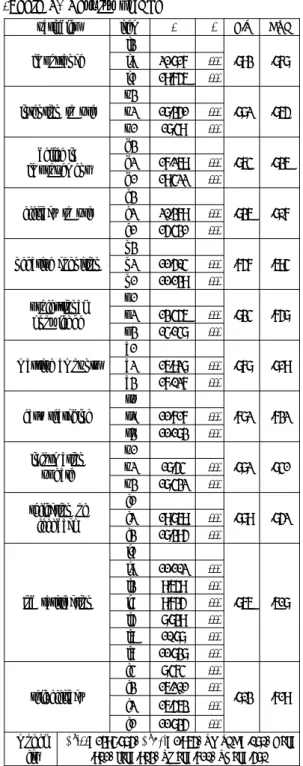
variables item t p C.R AVE
importance
i3
.893 .878 i2 21.817 ***
i1 19.756 ***
intention to use u3
.882 .865 u2 18.351 ***
u1 18.49 ***
belief in improvement
h3
.864 .836 h2 17.269 ***
h1 19.422 ***
efficacy to use e3
.836 .807 e2 20.379 ***
e1 15.431 ***
negative cognition n3
.757 .694 n2 11.504 ***
n1 11.139 ***
professional knowledge
p1
.834 .758 p2 13.456 ***
p3 14.148 ***
massive amounts a1
.878 .819 a2 16.928 ***
a3 17.027 ***
easy searching s1
.782 .732 s2 11.717 ***
s3 11.183 ***
information update
u1
.882 .841
u2 18.54 ***
u3 18.432 ***
reflection of feedback
f1
.889 .852 f2 19.869 ***
f3 18.395 ***
job satisfaction j1
.866 .618 j2 11.102 ***
j3 9.659 ***
j4 9.735 ***
j5 8.839 ***
j6 10.88 ***
j7 11.838 ***
self-efficacy
f4 8.474 ***
.803 .719 f3 16.201 ***
f2 16.563 ***
f1 11.835 ***
model fit
X
2(p): 1394.885, X
2/df: 1.965, RMSEA: .080, CFI:
.901, IFI: .903, PNFI: .710, PGFI: .580 on these 150 workers is as follows: In terms of gender, there
were 137 males (91.3%) and 13 females (8.7%). In terms of their types of organizations, 87 worked for pharmacies (58%), and 63 worked for hospitals (42%). In terms of age, 26 were in their twenties (17.3%), 81 were in their thirties (54%), 42 were in their forties, and 1 was fifty or older (.7%). In terms of academic background, 139 had bachelor degrees (92.7%), and 11 had masters degrees (7.3%). In regards to their length of employment, 9 had worked for less than 1 year (6%), 65 had worked 1-5 years (43.3%), 30 had worked 5-10 years (20%), and 46 had worked longer than 10 years (30.7%).
In addition, all items were measured on a Likert 7-point scale. First, the five functions of the e-brochure were each measured by 3 items. (See appendix).
Second, the five attitudes to the e-brochures were each measured by 3 items [5]. For example, importance included
“I believe e-brochures are valuable to me”, and “E-brochures play an important role in my work”. Intention to use included
“I am willing to use e-brochures”, and “I will use e-brochures for my work”. Belief in improvement involved “I think e-brochures are helpful for my job”, “E-brochures will help me improve my performance”. Efficacy to use involved “I have an ability to use e-brochures”, and “I can use e-brochures well in my work”. Negative cognition included “I do not think e-brochures helps me”, “E-brochures will have a negative impact on my work and job”.
Third, self-efficacy was measured by 4 items, including,
“I am confident that I can successfully perform any tasks assigned to me on my current job”, and “I am not as well prepared as I could be to meet all the demands (r)” [15].
Fourth, job satisfaction was measured by 7 items’
including, “I receive recognition for a job well done”, and
“I feel good about my job” [16].
4. Analysis
For statistical analysis, this study used a confirmatory factor analysis (CFA) for validity, Cronbach's α for reliability and correlation, and structural equation modeling for mediating effect. Table 1 shows the results of the CFA. The results indicate the measurements of this study have significant validity.
(표 1) 확인적 요인분석 결과 (Table 1) Results of CFA
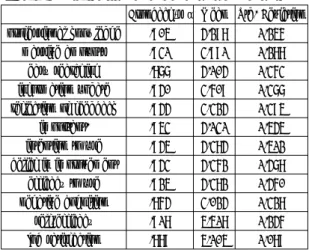
Table 2 indicates the results of reliability and descriptive
statics. All variables has greater than 0.8 Cronbach's α values.
Cronbach's
αMean Std. Deviation professional knowledge .905 4.298 1.256
massive amounts .931 3.991 1.288
easy searching .877 4.104 1.363
information update .940 3.609 1.377
reflection of feedback .944 3.324 1.395
important. .953 4.131 1.545
intention to use .945 4.384 1.512
belief in improvement .943 4.362 1.478
efficacy to use .925 4.382 1.460
negative cognition .864 3.024 1.328
self-efficacy .918 5.518 1.246
job satisfaction .889 5.105 1.089
01 02 03 04 05 06 07 08 09 10 11 12
01 - 02 .755*** - 03 .613*** .672*** - 04 .559*** .671*** .709*** - 05 .523*** .632*** .656*** .743*** - 06 .473*** .468*** .464*** .418*** .469*** - 07 .572*** .506*** .512*** .456*** .492*** .881*** - 08 .521*** .481*** .534*** .423*** .505*** .854*** .910*** - 09 .443*** .378*** .518*** .395*** .441*** .808*** .853*** .865*** - 10 -.300*** -.225** -.276** -.224** -.269** -.486*** -.516*** -.542*** -.522*** - 11 .216** .193* .218** .068 .105 .208* .173* .241** .233*** -.265*** - 12 .224** .301*** .298*** .175* .228** .283*** .256** .315*** .301*** -.197* .757*** -
loading p X2(p) X2/df TLI CFI IFI PNFI PGFI 06 -> 11 .234 .005
206.220 2.787 .913 .929 .930 .728 .591 11 -> 12 .804 ***
06 -> 12 .122 .027 07 -> 11 .187 .026
182.053 2.460 .927 .941 .842 .736 .599 11 - >12 .810 ***
07 -> 12 .119 .030 08 -> 11 .263 .02
192.757 2.605 .919 .934 .935 .730 .589 11 -> 12 .800 ***
08 -> 12 .125 .026 90 -> 11 .231 .007
193.983 2.621 .914 .930 .631 .726 .596 11 -> 12 .807 ***
09 -> 12 .111 .050 10 -> 11 -.277 .001
227.507 3.074 .884 .906 .907 .705 .579 11 -> 12 .826 ***
10 -> 12 -.026 .659 01 -> 11 .255 .003
184.935 2.499 .917 .932 .933 .726 .600 11 -> 12 .820 ***
01 -> 12 .050 .391 02 -> 11 .219 .011
172.545 2.332 .929 .942 .943 .735 .606 11 -> 12 .796 ***
02 -> 12 .164 .003 03 -> 11 .209 .018
194.384 2.627 .908 .925 .926 .720 .594 11 -> 12 .800 ***
03 -> 12 .156 .007 04 -> 11 .063 .469
195.749 2.645 .915 .931 .932 .727 .599 11 -> 12 .824 ***
04 -> 12 .145 .008 05 -> 11 .097 .258
186.319 2.518 .922 .937 .937 .732 .600 11 -> 12 .816 ***
05 -> 12 .167 .002