292 책임저자:김영민, 305-811, 대전시 유성구 전민동 461-6
한남대학교 생명과학과
Tel: 042-629-8753, Fax: 042-629-8751 E-mail: [email protected]
접수일:2008년 12월 3일, 게재승인일:2008년 12월 16일
Correspondence to:Young-Min Kim
Department of Biological Sciences, Hannam University Daedeok Valley Campus, 461-6 Jeonmin-dong, Yuseong-gu, Daejeon 305-811, Korea Tel: +82-42-629-8753, Fax: +82-42-629-8751
E-mail: [email protected]
Possible Relationship between AMPK and Apoptosis in HT-29 Colon Cancer Cells Treated with CLA
Song Yi Park1, Yun-Kyoung Lee2, Won Sup Lee3, Ock Jin Park2 and Young-Min Kim1 Departments of 1Biological Sciences, 2Food and Nutrition, Hannam University, Daejeon 305-811,
3Department of Internal Medicine, Gyeong-Sang National University Hospital, Jinju 660-702, Korea
Conjugated linoleic acid (CLA), an essential fatty acid linoleic acids (LA), has been shown to suppress cancer cell proliferation and induce apoptosis in several cancer cells. AMP-activated protein kinase (AMPK), a highly conserved protein in eukaryotes, function as an intrinsic regulator of mammalian cell cycle and primarily as a sensor of cellular energy level. In this study, we have examined the effect of CLA on apoptosis and the regulatory effect of AMPK and cyclooxygenase-2 (COX-2) pathway in HT-29 colon cancer. Treatment of CLA (20∼320μM) for 24 h inhibited proliferation of cancer cells and increased chromatin condensation levels represented apoptotic death. These apoptotic effects seemed to be related to AMPK-COX-2 pathways. CLA strongly activated AMPK at the concentration of 40μM and above and in the same condition, COX-2 expression was decreased in cancer cells. ROS is a possible upstream signal of AMPK. CLA generated reactive oxygen species (ROS) at the concentration of 40μM and 160μM in HT-29 colon cancer cells. These observations suggest that AMPK has an important role in cancer cell apoptosis induced by CLA and further AMPK-COX-2 pathway may be a possible target in cancer control. (Cancer Prev Res 13, 292-296, 2008)
Key Words: CLA (conjugated linoleic acid), HT-29 colon cancer cells, Modulating AMP-activated protein kinase, AMPK-COX-2 pathway
INTRODUCTION
Colon cancer is one of common cancers exhibiting high incidence all the world.1) In Korea, the morbidity of colon cancer is increasing because of changes by lifestyle such as diet.2) Many cancer cells including colon cancer cell often have disruptive apoptosis pathway, therefore the use of natural materials as chemotherapeutic agents should be considered for regulating apoptosis.3) Apoptosis is thought to be regulated by various types of protein kinases that modulate the intercellular signal pathway connected to apoptosis.4) As an anticancer agent, the attention has been drawn to CLA of LA found in ruminant animals, or animal products such as lamb, beef and dairy.5,6) CLA isomers in the c9, t11-CLA and t10, c12-CLA,
are shown to suppress the proliferation of cancer cells, which can lead to apoptosis.7) They exhibit chemoprotective effects in several cancer cells and animal models. Furthermore, rats fed CLA-enriched butter fat had reduced mammary tumor size.5∼7) According to recent reports, COX-2 expression was high level in colon cancer,8) and regulation in COX-2 expression by CLA supplementation was discussed.9)
AMPK is a cellular energy sensor by controlling AMP:ATP ratio and its activation takes place by the increased AMP level.
AMPK is also activated by heat shock, oxidative stress, ischemia and hypoxia.10) Controlling AMPK not only cellular level but also whole body level appeared to be important as physiological events.11) There is emerging evidence that AMPK activation is necessary for controlling cancer progression and involved in cancer cell apoptosis.4) AMPK is modulated by an
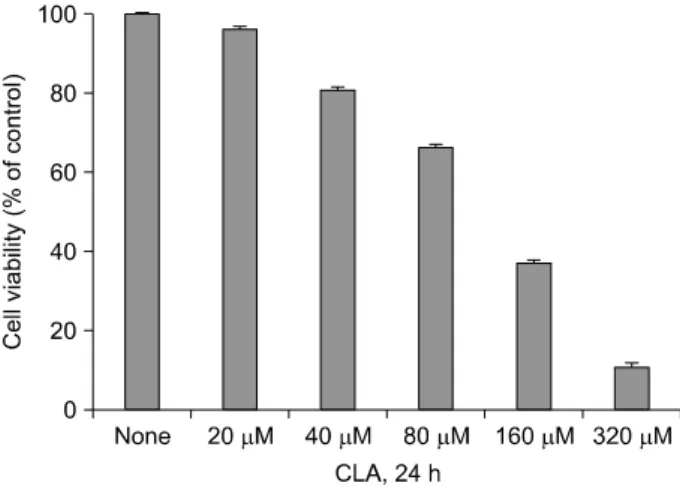
Fig. 1. CLA increases cell proliferation inhibition in HT-29 colon cancer cells. Cells were treated at different concentrations (20
∼320μM) with CLA and then cell death patterns of CLA-treated cells were measured by MTT assay.
upstream signal LKB1, a tumor suppressor kinase LKB1, and mutation in LKB1 protein is found in the rare form of genetic cancer.12) According to recent reports, AMPK phosphorylation by LKB1 processed in liver, heart and exercising skeletal muscle, and phosphorylation process by LKB1 promotes fatty acid oxidation and regulates angiogenesis.13) Importance of modulating AMPK possibly through LKB1 by dietary factors such as CLA might present promising mechanism of con- trolling neoplastic diseases.14) Chemical inactivation of LKB1 seems to interrupt antagonistic proliferatory signals delivered by growth factors, oncogenes and insulin.15)
In this study, the relation of AMPK in CLA-induced apoptosis in HT-29 colon cancer cells and AMPK signal pathways, including COX-2 expression, was investigated. In addition, we have found that ROS is the upstream of AMPK in this process, and further investigation can clarify its possibility as a cancer therapeutic agent.
MATERIALS AND METHODS 1. Cell culture and reagents
HT-29 cells were obtained from the American Type Culture Collection (Manassas, VA) and grown in RPMI 1,640 medium containing 10% fetal bovine serum at 37oC in 5% CO2
atmosphere. CLA was purchased from Sigma-Aldrich (St. Louis, MO, USA). Compound C was obtained from Calbiochem (San Diego, CA, USA). Specific antibodies that recognize the phosphorylated forms of AMPK Thr172, ACC Ser79 and COX-2, and β-actin were obtained from Cell Signaling Technology (Danvers, MA, USA).
2. Measurement of cell viability
Cells were seeded on 96-well micro plates at 4,000 cells/well and were incubated with CLA at the indicated concentrations.
The medium was removed and the cells were then incubated with 100μl of MTT [(4,5-dimethylthiazol-2-yl)-2,5 diphenyl- tetrazolium bromide] (Sigma-Aldrich, St. Louis, MO) solution (2 mg/ml MTT in phosphate-buffered saline (PBS)) for 4 h.
Optical densities of the solutions were determined by an enzyme-linked immunosorbent assay (ELISA) reader.
3. Detection of apoptosis by Hoechst 33342 chromatin staining
Cells were stained with 10μM Hoechst 33342 dye (Sigma-
Aldrich) for 30 min and then, fixed with 3.5% formaldehyde for 15 min. After washing with PBS, the fluorescence intensity was assessed using a fluorescence microscope.
4. Protein extract and western blotting
The cells were washed with PBS, scraped into lysis buffer (50 mM Tris-HCl [pH 7.4], 1% NP-40, 0.25% sodium deoxy- cholate, 150 mM NaCl, 1 mM EDTA, 1 mM PMSF, 1 mM sodium orthovanadate, 1 mM NaF, 1μg/ml aprotinin, 1μg/ml leupeptin, and 1μg/ml pepstatin), and subjected to western blot analysis with specific antibodies.
5. Detection of reactive oxygen species
HT-29 cells were treated with 10μM 2', 7' dichloro- fluorescein diacetate (DCFH-DA) (Sigma-Aldrich) for 30 min after treatment of CLA, and then cells were fixed with 3.5%
formaldehyde for 15 min. After washing with PBS, fluorescence intensity was assessed using fluorescence microscope.
RESULTS
1. CLA inhibits proliferation in HT-29 colon cancer cells
We examined the effect of CLA on the growth of HT-29 colon cancer cells. Cells were treated with the different concentrations (20∼320μM) of CLA for 24 h and cell viability was evaluated by MTT assay. As shown Fig. 1, CLA induced growth inhibition of HT-29 cells in a dose-dependent manner.
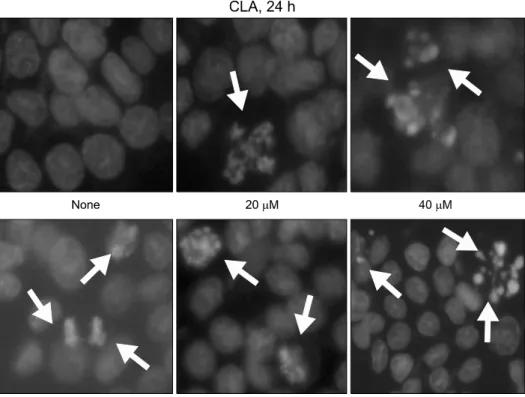
Fig. 2. Apoptotic effects of CLA in HT-29 colon cancer cells. HT-29 colon cancer cells were treated at different concentration with CLA (20∼320μM) for 24 h and mea- sured by Hoechst 33342 staining.
Fig. 3. The effects of CLA on AMPK activation and COX-2 expression in HT-29 colon cancer cells. HT-29 colon cancer cells were treated with the different concentrations (20∼320μ M) of CLA and then incubated for 24 h (A) and cells were treated with compound C (10μM) for 30 min prior to treatment with CLA 40μM for 6 h (B). Protein levels of phosphorylated ACC (p-ACC), COX-2 and AMPK (p-AMPK) were determined by Western blot.
2. CLA induced apoptosis in HT-29 colon cancer cells
We investigated effects of CLA on induction of apoptosis.
HT-29 cells were treated with CLA for 24 h and apoptosis was examined by Hoechst 33342 staining. CLA increased chromatin condensation indicated apoptotic cell death in a dose-dependent manner (20∼320μM) in HT-29 colon cancer cell (Fig. 2).
3. CLA regulates AMPK cascade in HT-29 colon cancer cells
Recently, AMPK cascade has emerged as one of the important pathway in controlling apoptosis of cancer cells.
Therefore, we have examined the effect of CLA on AMPKα1 activation and inhibition of COX-2 proteins. HT-29 cells were exposed to the different concentration of CLA for 6 h and phosphorylation levels of AMPKα1, Acetyl CoA Carboxylase (ACC) expression level of COX-2 were determined. As shown Fig. 3A, CLA activated AMPKα1 as well as ACC, and down-regulated COX-2 expression. We further tested the role of AMPK with an AMPK inhibitor, Compound C (Fig. 3B).
HT-29 cells were exposed to the 40μM concentration of CLA for 6 h and phosphorylation levels of AMPKα1 and ACC, and
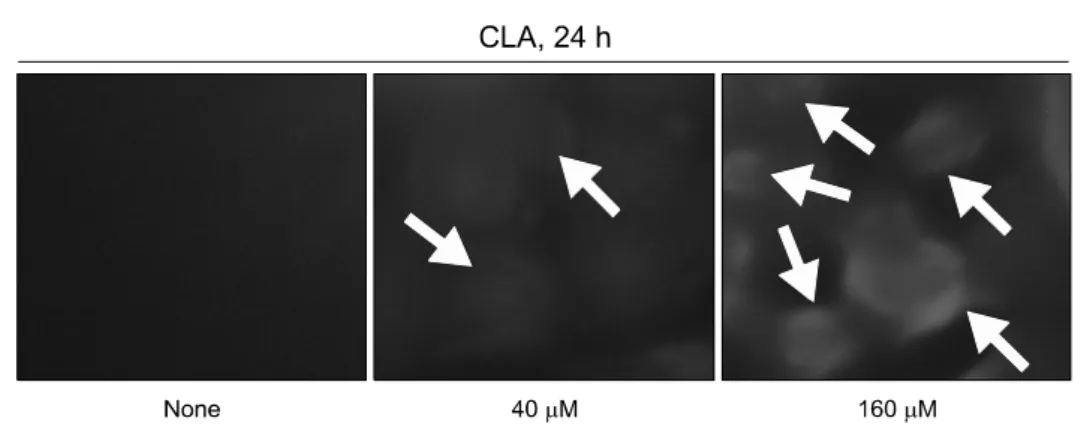
Fig. 4. Generation of ROS in CLA-treated HT-29 colon cancer cells. ROS generation by CLA in HT-29 colon cancer cells was determined by DCFH-DA staining. Cells were treated with CLA (40, 160μM) for 24 h. And cells were treated with 10μM DCFH-DA dye for 30 min and fixed with 3.5% formaldehyde and fluorescence intensity was measured by fluorescent microscope.
COX-2 expression level were determined and COX-2 ex- pression seemed to be AMPK-dependent.
4. ROS is upstream of AMPK activation in cells treated with CLA
In several previous reports, ROS could trigger upstream signal leading to AMPK activation.22) Therefore, we investigated whether CLA treatment resulted in an increased level of ROS.
Measurement of H2O2 production using DCFH-DA showed that incubation of cells with CLA led to the increased production of ROS (Fig. 4). These results suggest that CLA- generated ROS is a possible upstream of AMPK activation.
DISCUSSION
Colon cancer morbidity has been increased worldwide.16) Risks of colon cancer of Koreans also has been increased due to the changes of lifestyle, specially food intakes.17) The elevated COX-2 expression in colon cancer is well known.18) According to the recent reports, several phytochemicals such as selenium, epigallocatechin gallate (EGCG) reduced COX-2 levels through AMPK activation.3,4) AMPK is a sensor of cellular metabolisms and it is activated in low intracellular ATP levels. Even as cells were exposed to stress such as heat shock, hypoxia, hypoglycemia, and ischemia, then it rapidly decreased intracellular ATP volumes, and arose apoptotic cell death.19) Activated AMPK was also involved in control of cell proli- feration mediated by peroxisome proliferator-activated receptor (PPAR)-γ.20)
Therefore, we investigated the role of AMPK in CLA-
inhibited COX-2 expression. CLA is a natural compound in ruminants and it has a several isomers. According to recent reports, both c9, t11-and t10, c12-CLA isomers exerted anti-cancer effects in many cancerous cells.5,6,21)
In this study, we examined the effects of CLA on cell proli- feration. Our data showed that CLA inhibited cell proliferation in HT-29 colon cancer cells and also it exerted the apoptotic effect. CLA has shown to have anti-cancer ability in other several cancer cells such as MCF-7 breast cancer cells and M21-HPB human malignant melanoma and in animal tumor models of mouse epidermal tumors, mouse forestomach cancer and rat mammary cancer.5) These anti-proliferatory and apoptotic effects of CLA seemed to be related the AMPK activation. Our data showed that CLA strongly activated AMPK in a dose-dependent manner and also inhibited COX-2 expression. Furthermore, we examined whether COX-2 inhi- bitory effect of CLA was induced through AMPK activation, therefore, we used Compound C, a synthetic AMPK inhibitor and the results showed that AMPK was necessary for the modulation of COX-2 by CLA. According to previous reports, other several phytochemcals such as resveratrol, EGCG and selenium also elevated AMPK activity and they led to the inhibition of COX-2 in HT-29 colon cancer cells.3,4,14) ROS is important signaling molecule and related to cancer promotion as well as cancer inhibition. It has been known that the high dose of ROS led to inhibition of proliferation and induction of apoptosis in several cancer cells.22) In addition, recent reports have suggested that ROS is a possible upstream signal of AMPK.14) Our data suggested that CLA strongly generated ROS at 40, 160 uM and it may be involved in the
activation of AMPK in HT-29 cancer cells. Finding safe natural inhibitors of chemoresistant cancer cells can provide promising rationale for developing preventive measures of various cancers.
CLA has a potential to modulate AMPK-COX-2 cascade, which appears to be important in cancer control. CLA is a safe dietary component, and can be applied as one of modalities to overcome cancer cell control through anti-proliferative or proapoptotic mechanism involving AMPK.
In conclusion, we investigated the apoptotic effects of CLA and their related mechanisms. We showed that CLA induced the inhibition of cell proliferation and activated AMPK through generation of ROS and it led to down-regulation of COX-2 levels. Therefore, a cascade involving AMPK and COX-2 will probably be target in cancer controlling. Furthermore, the exact mechanisms of CLA induced apoptosis should be investigated.
ACKNOWLEDGEMENT
This work was supported by the Korea Science and Engineering Foundation (KOSEF) grant funded by the Korea government (MEST) (No. R01-2008-000-20131-0)
REPERENCES
1) Rudolf E, Králová V, Cervinka M. Selenium and colon cancer-from chemoprevention to new treatment modality.
Anticancer Agent Med Chem 8, 598-602, 2008.
2) Myung SJ, Kim IH. Role of prostaglandins in colon cancer.
Korean J Gastroenterol 51, 274-279, 2008.
3) Hwang JT, Kim YM, Surh YJ, Baik HW, Lee SK, Ha J, Park OJ. Selenium regulates cyclooxygenase-2 and extra- cellular signal-regulated kinase signaling pathways by activating AMP-activated protein kinase in colon cancer cells.
Cancer Res 66, 10057-10063, 2006.
4) Hwang JT, Ha J, Park IJ, Lee SK, Baik HW, Kim YM, Park OJ. Apoptotic effect of EGCG in HT-29 colon cancer cells via AMPK signal pathway. Cancer Lett 247, 115-121, 2007.
5) MacDonald HB. Conjugated linoleic acid and disease pre- vention: a review of current knowledge. J Am Coll Nutr 19(2 Suppl), 111S-118S, 2000.
6) Ip MM, Masso-Welch PA, Ip C. Prevention of mammary cancer with conjugated linoleic acid: role of the stroma and the epithelium. J Mammary gland Biol Neoplasia 8, 103-118, 2003.
7) Ip C, Dong Y, Ip MM, Banni S, Carta G, Angioni E, Murru E, Spada S, Melis MP, Saebo A. Conjugated linoleic acid isomers and mammary cancer prevention. Nutr Cancer 43, 52-58, 2002.
8) Gupta RA, Dubois RN.Colorectal cancer prevention and treatment by inhibition of cyclooxygenase-2. Nat Rev Cancer 1, 11-21, 2001.
9) Degner SC, Kemp MQ, Hockings JK, Romagnolo DF. Cy- clooxygenase-2 promoter activation by the aromatic hydro- carbon receptor in breast cancer mcf-7 cells: repressive effects of conjugated linoleic acid. Nutr Cancer 59, 248-257, 2007.
10) Kemp BE, Stapleton D, Campbell DJ, Chen ZP, Murthy S, Walter M, Gupta A, Adams JJ, Katsis F, van Denderen B, Jennings IG, Iseli T, Michell BJ, Witters LA. AMP-activated protein kinase, super metabolic regulator. Biochem Soc Trans 31, 162-168, 2003.
11) Kahn BB, Alquier T, Carling D, Hardie DG. AMP-activated protein kinase: ancient energy gauge provides clues to modern understanding of metabolism. Cell Metab 1, 15-25, 2005.
12) Hezel AF, Bardeesy N. LKB1; linking cell structure and tumor suppression. Oncogene 27 6908-6919, 2008.
13) Young LH, Li J, Baron SJ, Russell RR. AMP-activated protein kinase: a key stress signaling pathway in the heart. Trends Cardiovasc Med 15, 110-118, 2005.
14) Hwang JT, Kwak DW, Lin SK, Kim HM, Kim YM, Park OJ. Resveratrol induces apoptosis in chemoresistant cancer cells via modulation of AMPK signaling pathway. Ann N Y Acad Sci 1095, 441-448, 2007.
15) Wagner TM, Mullally JE, Fitzpatrick FA. Reactive lipid species from cyclooxygenase-2 inactivate tumor suppressor LKB1/STK11: cyclopentenone prostaglandins and 4-hydroxy- 2-nonenal covalently modify and inhibit the AMP-kinase kinase that modulates cellular energy homeostasis and protein translation. J Biol Chem 281, 2598-2604, 2006.
16) Rovera F, Dionigi G, Boni L, Masciocchi P, Carcano G, Benevento A, Diurni M, Dionigi R. Colorectal cancer: the role of laparoscopy. Surg Oncol 16(1 Suppl): S65-67, 2007.
17) Sung JJ, Lau JY, Goh KL, Leung WK. Increasing incidence of colorectal cancer in Asia: implications for screening. Lancet Oncol 6, 871-876, 2005.
18) Gupta RA, Dubios RN. Cololectal cancer prevention and treatment by inhibition of cyclooxygenase-2. Nat Rev Cancer 1, 11-21, 2001.
19) Motoshima H, Goldstein BJ, Igata M, Araki E. AMPK and cell proliferation--AMPK as a therapeutic target for athero- sclerosis and cancer. J Physiol 574, 63-71, 2006.
20) Hwang JT, Lee MS, Kim HJ, Sung MJ, Kim HY, Kim MS, Kwon DY. Antiobesity effect of ginsenoside Rg3 involves the AMPK and PPAR-gamma signal pathways. Phytother Res 2008.
21) Belury MA. Dietary conjugated linoleic acid in health:
physiological effects and mechanisms of action. Annu Rev Nutr 22, 505-531, 2002.
22) Zhang R, Humphreys I, Sahu RP, Shi Y, Srivastava SK. In vitro and in vivo induction of apoptosis by capsaicin in pancreatic cancer cells is mediated through ROS generation and mitochondrial death pathway. Apoptosis 13, 1465-1478, 2008.